
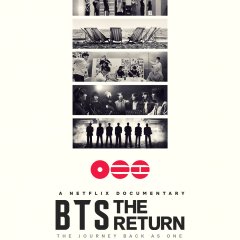
Directed by Bao Nguyen, the documentary follows BTS as they reunite in Los Angeles to make music together, returning to a shared creative space after being shaped by time apart and personal change. The film explores "how to begin again, how to honor the past without being bound by it, and how to move forward together." It promises unprecedented behind-the-scenes access to the creative process, showing moments of doubt, reflection, and rediscovery as the seven members navigate their reunion. (Source: Forbes) Edit Translation
- English
- Русский
- Português (Brasil)
- Italiano
- Native Title: BTS: 더 리턴
- Also Known As:
- Genres: Music, Documentary
Where to Watch BTS: The Return

Subscription (sub)
Cast & Credits






Photos


Reviews

Happy to be home.
I had the strongest feeling of coming home. I remember the day that the announcement came that they were gonna go on hiatus, and it was such a, such a bad day. And I honestly did not think I would make it, but here I am four years later, and I get to experience BTS coming back in real time. And I'll tell you, there is no stronger feeling than coming home. That's it. This whole documentary was so insightful and so beautiful, and my chest is feeling so heavy. And it wasn't even like a sad, depressing documentary. No, it was showcasing everything they have been through, everything they did to get here, and it was utterly beautiful. It was like coming home. It was like watching a family movie, because they are our family. It's watching people you love be happy, be sad, be in pain, and achieve everything they have dreamed of. I really don't know how to explain it, except that it felt like coming home.Was this review helpful to you?

WHAT REALLY WERE THEY TRYING TO DO WITH ARIRANG?
What were they really trying to do with *Arirang*?I’ve been an ARMY for seven years. I love BTS, and I was extremely excited for their new album and documentary—unfortunately, I didn’t enjoy either.
*Arirang* felt very different from what I’m used to. I understand they were aiming for a more mature sound, but it ended up feeling more like a product than BTS. They’ve done mellow songs before—“House of Cards,” “Black Swan,” and “Life Goes On”—but “Swim,” the lead single, felt like the wrong choice. It was too low-energy and lacked impact.
Since the album is called *Arirang*, I expected more Korean-inspired sounds. Instead, it felt geared toward a global—especially Western—audience. Even in the documentary, BTS seemed to want to focus on Korea, while HYBE pushed for a more global direction. As a non-Korean fan, I was drawn to BTS because of their Korean music. I didn’t know their names or personalities at first—I just loved songs like “Boyz with Fun” and “Attack on Bangtan.” The “K” in K-pop matters, and it feels like companies are starting to forget that.
The documentary constantly emphasized “going global,” but at what cost? Why frame something like “Arirang” for Western validation when it’s a deeply Korean cultural piece? It made me question what the project was really about. Some people may call me a hater or a fake fan, but I believe criticism is part of being a real fan. Chart numbers and views don’t necessarily reflect genuine appreciation—BTS are musicians, and their music should come first.
It also felt like the documentary tried to make *Arirang* appeal to everyone except Koreans themselves, which came across as distasteful. For example, when they mentioned the story of seven Korean boys who went to Washington, D.C. in the 1800s, they left out the fact that most institutions rejected them—except Howard University. That context matters. The lack of acknowledgment felt disappointing, especially given the historical significance.
Even visually, there seems to be a pattern of appealing more to Western audiences. For an album like *Arirang*, I expected stronger Korean representation, but that wasn’t always the case. It raises the question: were they celebrating their culture, or trying to reshape it for Western approval?
I’m still a fan, and I’ll always support BTS, but these are important conversations to have. *Arirang* isn’t a bad album—it’s just not their best. You can disagree, because music is subjective, but we shouldn’t place artists above criticism. Critiquing them is part of appreciating them—it shows we understand the difference between loving BTS and loving their music.
Was this review helpful to you?