K-Drama

- Italiano
- English
- magyar / magyar nyelv
- dansk
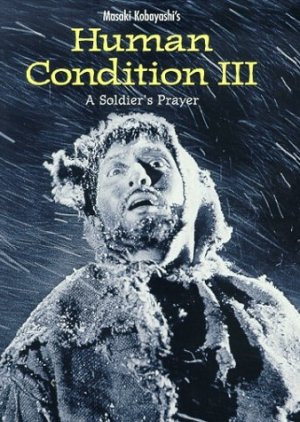
- Native Title: 人間の條件・完結篇
- Also Known As: Guerra e Humanidade III: Uma Prece de Soldado , Ningen no Joken
- Screenwriter & Director: Kobayashi Masaki
- Screenwriter: Matsuyama Zenzo
- Genres: Historical, Psychological, Life, War
Cast & Credits
-
") Nakadai Tatsuya Main Role
Nakadai Tatsuya Main Role -
") Kawazu YusukeTeradaSupport Role
Kawazu YusukeTeradaSupport Role -
") Kitamura KazuoKitagoSupport Role
Kitamura KazuoKitagoSupport Role -
") Nihonyanagi HiroshiNogeSupport Role
Nihonyanagi HiroshiNogeSupport Role -
") Hara IzumiSawamuraSupport Role
Hara IzumiSawamuraSupport Role -
") Sue TakashiOguraSupport Role
Sue TakashiOguraSupport Role




Photos

Reviews

"That kind of thinking justifies anything"
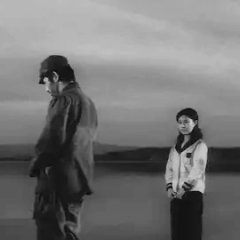
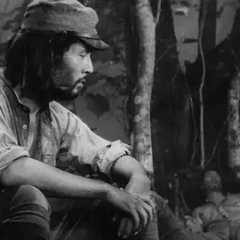
Rarely do I find every film in a trilogy compelling. Even more rare is when the whole is greater than the parts. The Human Condition III: A Soldier’s Prayer brought the total of 579 minutes to a proper and fitting ending for a devastating and insightful story.Kaji and two other survivors of the Soviet onslaught, struggle to find their way out of enemy territory. When they enter a seemingly endless forest, they discover a handful of Japanese evacuees. Kaji shares their meager supplies with the starving people. “It’s like meeting Buddha in hell.” The little troop dwindles as starvation and suicide whittles away at their numbers. After Kaji’s crew finally escapes Fangorn Forest, they stumble across a group of soldiers and are rebuked for surviving the annihilation of their squad. The men must later face Chinese armed militia and Soviet soldiers on the road home, even literally jumping through fire to survive.
Nakadai Tatsuyo, like Kaji, carried this trilogy on the back of his extraordinary performance. Throughout the films Kaji fought for all people to be treated with respect regardless of which side of the barbed wire fence they were on. Nakadai immersed himself in Kaji’s hope, determination, resiliency, flaws, and desire. This trilogy would not have succeeded so well in the hands of a less talented actor. Outside of Black River’s ensemble this was his first real main meaty role and he devoured it without overacting.
In the first film, Kaji dealt with how the Japanese inhumanely treated their prisoners. In the second film, Kaji sought to overcome the Japanese military culture of violence on Japanese soldiers. In this final film, the humanity lesson came full circle only this time it was foreign violence perpetrated on Japanese prisoners. Regardless of the power structure in charge, Kaji never backed down from demanding fair and humane treatment for everyone. His idealistic views were shattered when he discovered that the Soviet’s “promised land” of socialism was every bit as capable of inequality, cruelty, and exploiting prisoners as slave labor. Kaji came to understand that socialism being better than fascism wasn’t enough to keep his men alive. The only thing keeping him alive was Michiko and his promise to return to her. “I’m still walking on.”
The film was based on an autobiographical novel that resonated with director Kobayashi’s own view of the military and war. If you are planning on watching it strap in, as with the first two, there were no moments of levity. Although I did take perverse pleasure when Kaji gave the sadistic Kirihara a graphic demonstration of Jayne Cobb’s (Firefly 2002) chain of command philosophy.
Kaji found that whatever political or social philosophy one adhered to, human nature was the great contaminator. Wherever he went the strong preyed on the weak, and the weak did whatever was necessary to survive. Starvation and desperation drove people to lose sight of societal norms. How would they ever return to their old way of life after the ethical compromises made? “We’re all ruined.” The Human Condition films were long and harrowing, exploring what it meant to be human when the veneer of civilization had been stripped away and brutality was rewarded. Could one still find ways to be kind, show respect, and have courage in a pit with the merciless? What did it truly mean to be human? This was an extraordinary trilogy that grew stronger as it progressed with the message that ultimately, war has few winners and the price for most is catastrophically high.
26 February 2026
Trigger warning: Corpses with bugs, suicide, and rape off-screen.
Happy place note in a trilogy centered on pain and deprivation: Favorites Ryu Chishu and Takamine Hideko led a group of refugees in a Japanese settlement. Poor Ryu was only 57 but they made him up to look like 87.
Was this review helpful to you?