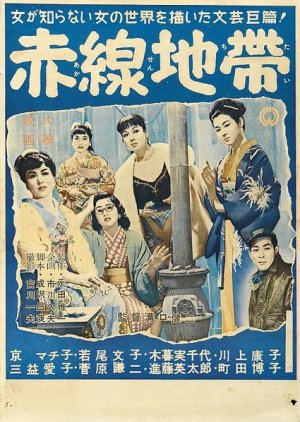
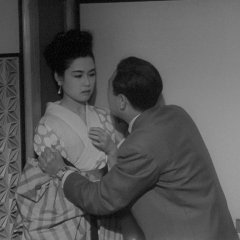
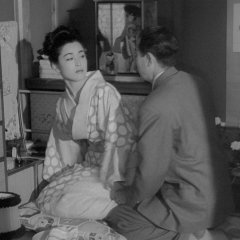
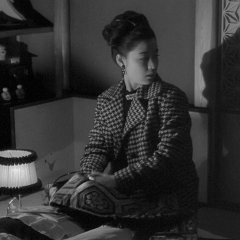
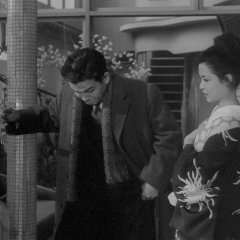
This gritty drama of six working girls in one brothel in Tokyo's Yoshiwara red-light district explores how the women came to work in such a place -- trying to pay for their children's education, trying to bail their fathers out of prison, trying to support their out-of-work husbands -- and how they fight to maintain their dignity in spite of the degradations of their profession. Edit Translation
- English
- magyar / magyar nyelv
- dansk
- Norsk
- Native Title: 赤線地帯
- Also Known As: Akasen chitai
- Director: Mizoguchi Kenji
- Screenwriter: Narusawa Masashige
- Genres: Historical, Business, Life, Drama
Cast & Credits
-
 Kyo MachikoMickeyMain Role
 -
 Wakao Ayako Main Role
 -
 Kogure MichiyoHanaeSupport Role
 -
 Mimasu AkioYumekoSupport Role
 -
 Shindo EitaroTaya KurazoSupport Role
 -
 Urabe KumekoOtaneSupport Role






Reviews

 1
1"You are merchandise"
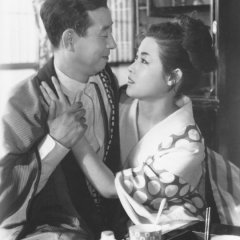
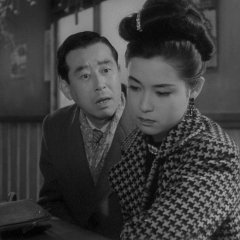
Mizoguchi Kenji’s Street of Shame was a chaotic stream of emotions. Women who worked as prostitutes for different reasons were faced with the loss of their profession when the government threatened to make it illegal.The Yoshiwara “shop” has been open for 300 years and is facing the end if the government makes prostitution illegal. The owners have loans to pay off and the women who work there are either living in poverty, providing money for family members, or are deeply in debt. With few good paying jobs for women available and sullied reputations, they are truly between a rock and a hard place. Yume is aging and wants to live with the son she has provided for since the death of her husband. Yorie has a boyfriend who makes clogs, but doesn’t know what she does for a living. Hanae has an infant son and ailing husband. Before her new job they had discussed family suicide as they couldn’t provide for their baby. Yasumi is the #1 Girl and uses her wiles to receive extra money from men. She ended up in the trade arranging bail for her father who went to jail for embezzlement. New girl Mickey, was a delinquent who acted out against her father and can’t stop herself from going into debt buying nice things. Shizuko’s family sent her to the house in order for her to send them money. The terrified girl has nowhere else to turn. No one really wants to be there but none of them have viable options.
The scaffolding of this film was the threat of making prostitution illegal thereby shutting down the “shops” and leaving the prostitutes debt ridden, homeless, and unemployed. The owner said he was running a social service by providing them with jobs. How magnanimous, especially with him taking the lion’s share of the women’s cut. The film briefly touched on the lack of employment opportunities for women and the dearth of social safety nets. As one prostitute found out, marriage wasn’t exactly a step up in some aspects.
The women were discussed as merchandise by others and themselves. When society offers women few alternatives, they can’t then demonize them for selling the only thing they have of value, even if it chips away at the fabric of their being. Mizoguchi didn’t shame the prostitutes, but that didn’t mean they didn’t suffer from it. “If I’m a whore, what does that make you?” When a woman is desperate enough to sell her only asset, the situation is usually dire. The shame is not on her, but on the society that created the untenable situation in most respects. The “shops” only increased the personal debt for most of the women as they became trapped in a vicious cycle.
The legislation threatening the women’s profession wasn’t the real problem, the real problem was far more difficult to fix, an underlying social framework that doomed these women to turn tricks to keep themselves and/or their families fed and sheltered. As much as I could appreciate what Mizoguchi was attempting to do, I found myself somewhat distanced from the women and their trials. I was not emotionally reeled in until near the end of the film when the bills came due, especially the final scene which was devastatingly poignant. Definitely worth a try if you enjoy old films or Mizoguchi in particular.
24 February 2026
Trigger warnings: Alludes to sexual encounters but nothing shown and no nudity. Attempted suicide and suicide alluded to.
Musical note: The music was odd to say the least. It sounded like music from an old UFO or sci fi film.
Was this review helpful to you?
Recommendations
There have been no recommendations submitted. Be the first and add one.