 Zhao Lu Si, Dylan Wang, Tan Jian Ci among celebs condemning use of their likenesses in AI dramas
"There are people who think, ‘As long as it brings money, it doesn’t matter how things are done — everything is forgiven." — Director Lee Hae Young.
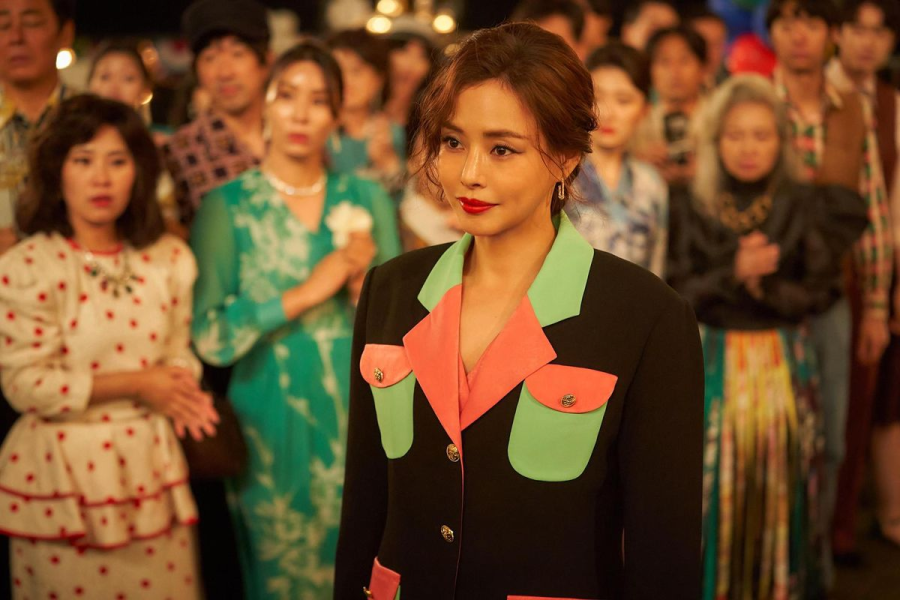
Recently, a roundtable interview was conducted with Lee Ha Nee, aka Honey Lee, for the Netflix series Aema via a video call.
Set in the 1980s, against the backdrop of the Chungmuro era, Aema tells the story of a top star actress and a rookie actress who fight against the harsh realities women face in Korean cinema.
At its heart, Aema portrays the solidarity of women resisting an era when it “was” considered natural to disgrace women, bringing to light the absurd and unjust reality that women of “that” time faced.
Lee Ha Nee introduced her character by saying, “In fact, Hee Ran is, in a way, someone who already had it all in that era. She was someone who remained silent to protect what she had, but then declares that she will no longer stay silent, and transforms.”
“Just as there were independence fighters during the Japanese colonial era, in every age, there must have been people who fought. I believe it is thanks to such people that we live as we do today.” “And I was fascinated by Hee Ran in that she chose not to remain silent about the things one must not stay silent about.”
Lee continued, “Why wouldn’t there be unjust things in this [or any other] field? Of course, I can’t call out everything as unfair, but I tend to speak up when I need to. But, I’ve found that speaking up doesn’t always lead to change.” She added, “Even if things don’t change just because you speak up, I believe that the attempts and struggles of those who dared to challenge are what eventually become history."
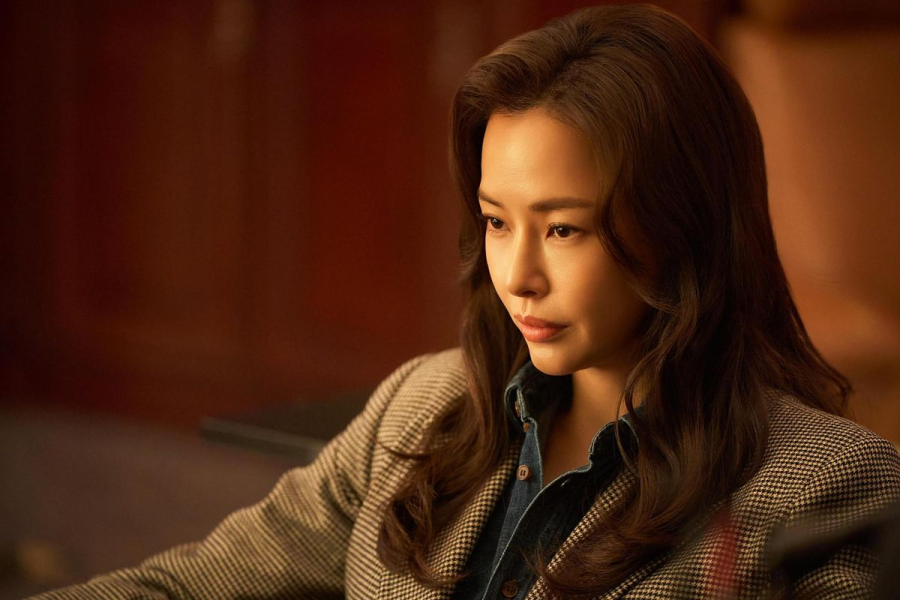
“How did you try to express Hee Ran's transformation?” “Joo Ae grows, but Hee Ran also has her own growth arc. In fact, at the beginning of episode 4, when she encounters Joo Ae at the banquet hall, I too was surprised. I think that shows how one can grow accustomed to even injustice. When you’re systemically forced into injustice and it becomes ingrained in you, even if you want to speak against it, you end up being unable to. I think Hee Ran was the same. She may have compromised, and she remained silent because she wanted to protect what she had and didn’t want to lose it. But from that day onward, she began to make a bit of a resolution. Such encounters became turning points for Hee Ran.”
When asked if she had ever felt she was being treated unfairly as an actress, she replied, “Is it only actresses who have it hard in South Korea? I think unfairness still exists in every sector of society. Rather than it being just because I’m an actress, it seems to be that everyone living in this era is facing hardships.” “Being an actor feels like having a job where waves come frequently. And among them, there are waves you simply cannot avoid.”
Sharing her experiences of motherhood, Lee Ha Nee said, “There’s this saying, ‘women are women's worst enemies.’ But after becoming a mother, I’m really experiencing an entirely new world. Women who are usually defensive seem to let their guard down once they become mothers, and there’s this sense of solidarity that comes.” “People say that if women don’t hate or envy one another, the world becomes a better place. But I think it’s less about issues between women themselves and more about how much a person can embrace another person when they meet. How well can you accept someone who is the complete opposite of you. I believe that kind of solidarity and capacity for acceptance becomes increasingly important the more we live on.”
“In some ways, as times change, the world becomes easier to live in, and in other ways, it becomes harder. And since I’ve had a child, [my thoughts] no longer stop with my own generation. I want the next generation to live in a better world.”
“What kind of appeal do you think the series might have for global viewers?” “I’m really curious about that. It’s a very local story, but it’s also about people struggling, no matter where they are. Whether big or small, such struggles are constantly taking place everywhere. In the 1980s, people expected a new world to open, but the world remained the same. And we have to endure and live through such a world. That’s why we need to become stronger. Joo Ae says something like that too. This happens everywhere. Not staying silent in the face of the injustices, and taking a step forward toward a better world, even if it’s just a little bit — that is a really difficult thing to do. Aema also has elements that feel almost like fantasy. What would it mean to take such a bold step? A few years ago, with the #MeToo movement and other incidents, cultural shifts came about, and social systems also started to change. Things that would have been unimaginable ten years ago are now happening. Someone has to speak up with courage. I think that aspect is still very much in place today. Even though the [drama’s] subject matter is very local, at its core it carries a message that connects to the ongoing history of struggle.”
Aema is streaming on Netflix.
Source (1)