
Love's Ambition surpasses a popularity index of 32,000 on Tencent Video, setting a new record for urban dramas on the platform.
Love's Ambition revolves around the sham marriages and the predicaments of urban elites. It follows Xu Yan (Zhao Lusi), who was raised by her grandmother and harbors emotional estrangement from her parents. By relying on her status as a host and a fabricated background, she marries Shen Hao Ming (William Chan), a man in control of everything. After experiencing the collapse of their marriage and setbacks in her career, the two tear off their masks, draw close to each other again, and embark on a journey of rediscovering themselves.
In the drama, Wan Peng plays Qiao Lin, Xu Yan's (Zhao Lu Si) sister, who grew up pampered with love from their parents. The actress sits for an interview with The Paper, sharing character insights and what made the role a particularly difficult one to play.
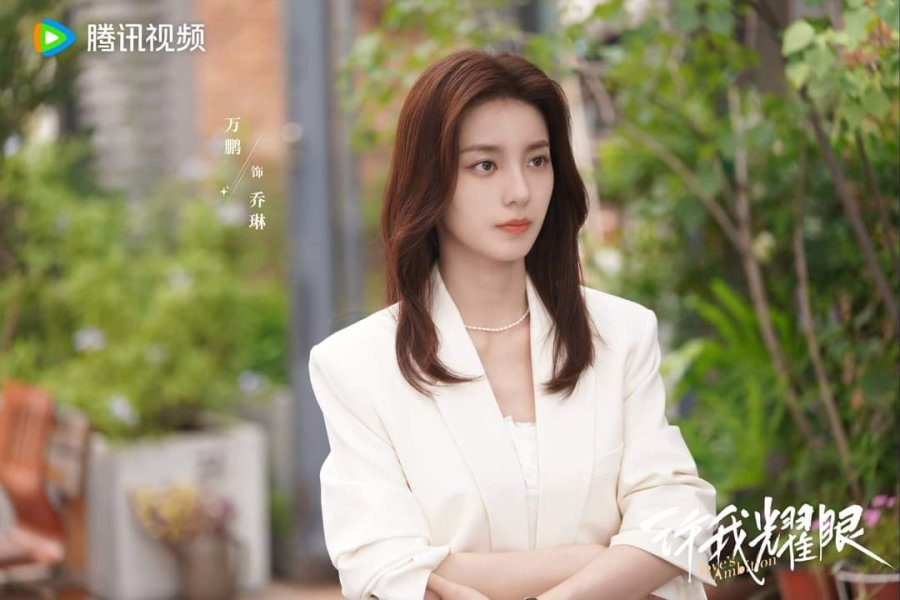 The Paper: Describe Qiao Lin in three words.
Wan Peng: Simple, straightforward, and righteous.
The Paper: What about her attracts you the most?
Wan Peng: I think it's her straightforward nature. Qiao Lin is the kind of person who reacts in the moment. She often makes choices based on intuition and emotion. She can be reckless at times, but she's never unclear when it comes to right and wrong. For the people she cares about or loves, she's very loyal and protective. And that's why I find her very appealing.
The Paper: The original novel was titled Big Qiao, Little Qiao. In the story, the two sisters serve as each other's anchors. How do you view their sisterly relationship?
Wan Peng: In terms of how the TV series adapts the original work, I think Love's Ambition places more emphasis on a sense of "modern-day relevance," both in its portrayal of sisterhood and of women's relationships in general. I'm not sure if viewers have noticed, but in the drama version, regardless of whatever happened in the past, when Qiao Lin comes to the bustling big city and sees the kind of life her younger sister is living, she never shows a hint of jealousy, nor does she harbor thoughts like "I want to live like that too." [Her attitude is], "I am who I am. I'll work when I have to work, and live when I have to live."
I recently saw a lot of people discussing a particular scene — the one where Qiao Lin is taken by her younger sister to have a meal with Shen Hao Ming. When she hears all those fancy, extravagant dish names, she doesn't show the kind of inferiority complex that's often depicted in dramas. Instead, she was thinking about protecting her sister, not letting her get exposed.
Although Qiao Lin comes from a small county and doesn't have a high educational level, she possesses a sense of self-worth and firmly holds onto her values. She believes that through her own hard work, she can live a better life, as seen later when she and her friends start a business together. When it comes to love, she doesn't develop any negative feelings just because Yu Yi Ming once liked her sister. She's open-hearted, straightforward, and proactive. When she likes something, she goes after it; when she wants to protect someone, she steps up and does it.
I hope this drama can break certain stereotypes about sisterhood and women's relationships. Between women, there doesn't have to be jealousy, rivalry, or competition. They don't need to measure themselves against anyone or feel compelled to outperform one another. They can just choose the way of living that feels right or comfortable for them. And that, I think, is one of the aspects of how this drama improved in terms of adaptation.
The Paper: You just mentioned "a sense of worthiness." Qiao Lin also shows a kind of courage — the bravery to break free from the constraints of marriage. Do you think that confidence comes from her parents' love?
Wan Peng: In the drama, Qiao Lin is a very straightforward person. I don't think her confidence comes from her parents' love but rather from her straightforward nature. For instance, when she calls off her engagement or decisively chooses the kind of life she wants to live — these are simply the kinds of choices any normal person might make in that [kind of] moment. It's just part of who she is by nature.

The Paper: How similar are you to Qiao Lin?
Wan Peng: The similarity might be that we're both quite good-looking (laughs). Just kidding! I think we both are straightforward, bold, take responsibility [for our actions], not overly twisted or complicated, and do what we think is right.
The Paper: At first, Qiao Lin wasn't exactly a likable character. Many viewers commented that your performance imbued her with charm. What are your thoughts on this?
Wan Peng: First of all, I'm truly grateful for everyone's recognition. I really mean that from the bottom of my heart. When I first received the script, I actually thought this role was quite challenging. Because of the limited scope of the character, it was difficult for me to fully internalize Qiao Ling's persona and act without questioning her choices. Many of Qiao Lin's actions, ways, and words were, at first, quite difficult for me to understand.
Then we discussed it together. While filming certain scenes, I brought up many questions and ideas. However, making changes wasn't always possible, as it could have affected the storyline or elements that had already been established. In that situation, I didn't want to just force myself to act through it. That probably wouldn't have turned out well. Yet the character felt so fragmented and conflicted that I had to do a lot of homework, thinking deeply and experimenting with ways to portray this "not-so-likable" person well, or at least in a way that didn't make me feel conflicted while performing her.
I hope that through the drama, through my role — even if it is relatively "thin" or limited [in scope] — audiences could see how parental favoritism in real life can affect and wound some people's growth. It could make more people aware of such unfairness and favoritism and even prompt so-called "beneficiaries" of that favoritism to reflect and undergo a shift in perspective. If that happens, perhaps we can protect more Xu Yans.
Some people may not even realize that their actions can cause such harm to others. Maybe by bringing it to the screen, we can help more parents like those of Qiao Lin's understand and realize the consequences of this kind of behavior. If it can gradually shift people's perspectives, or at least just spark the beginning of change, then that's the significance of this character's existence.
That's why I sometimes thought about portraying her more extremely. Honestly, there were moments when I, too, wondered, "Why is Qiao Lin like this?" — I even wanted to beat her up at times. For example, when she gives her sister the MP3 but can't help adding that sharp remark, or when she secretly slips money to a patient's family.
But since I'd already taken on this character, I strove to amplify her endearing qualities through my performance. I tried to express emotions — joy, anger, sorrow, and delight — based on her reactions in the moment. Whether it's through taking certain action or rolling eyes, I hoped to make her more vivid, maybe a little happier, or even take on some of the comic moments.
The Paper: Later in the series, we also see elements of female solidarity.
Wan Peng: Yes. One of the things worth appreciating about this script is that the emotional connections between women shouldn't be limited to jealousy or rivalry — whether it's between sisters, best friends, or just ordinary women.
Take Xu Yan, for example. She has resilience, perseverance, and abilities. Those are what make her admirable. As for Qiao Lin, she's candid, straightforward, bold, and dares to take responsibility and live fully in the moment. Her sense of self-worth and determination are also some of her best qualities. And the same goes for the other female characters in the show; each of them has something that makes them worthy of appreciation.
Extending that to real life, I think we can all try to discover more of the beauty within ourselves and also see the beauty in other women. If we look at things from a different perspective, we might find something new and wonderful.
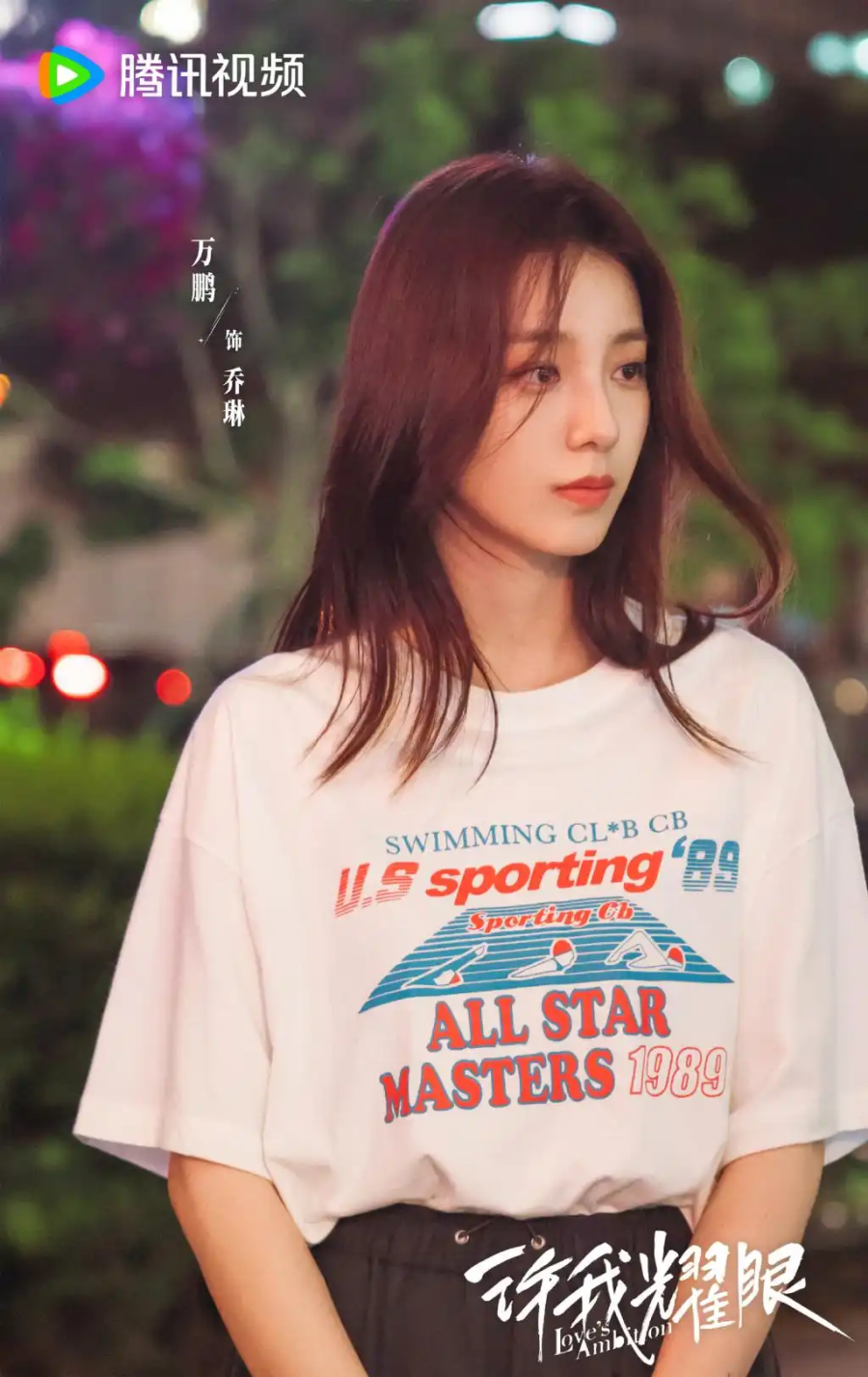
The Paper: Some people say that Qiao Lin feels like an old-school idol drama heroine. Do you agree?
Wan Peng: That honestly caught me by surprise, because it's quite different from what I felt when I first read the script. The way she ultimately came across on screen seems a bit different from how I initially understood her.
I've watched a lot of those classic idol dramas — characters like Shan Cai or Yuan Xiang Qin. I used to think they were really cute. Watching them years later, some of their actions can make you grit your teeth or feel a bit absurd. But that's perfectly normal. Because, to put it bluntly, idol dramas are about creating a fantasy. If the characters behaved too logically or realistically, it wouldn't be an idol drama. Besides, most film and television works reflect their times. Audiences' [tastes] keep evolving, and it's not really fair to judge past works through today's standards.
As for Qiao Lin, it may seem like she has it too easy. How can someone be so carefree and unconcerned about so many things? Many of her actions and the things she says do feel like something out of an idol drama. In a sense, she's creating a fantasy, stepping away from reality to give a certain perception. But clearly, the mindset of today's viewers has long since surpassed this character's.
The Paper: How do you view this character's growth arc?
Wan Peng: Qiao Lin is very straightforward. I think the most important part of her growth is that she learns how to use her straightforwardness effectively. Early on, her blunt, forthright personality and actions led to a lot of negative consequences, even though her intentions are good.
At first, she might not have been aware of it or didn't know how to handle it. But later, after she arrives in the big city and interacts with people like her sister and Yu Yi Ming, her personality undergoes significant changes. She learns to channel her traits in more appropriate ways, using them to protect the people she cares about and to achieve the things she wants to accomplish.
The Paper: Let's talk about your upcoming drama, Wan Gu Zui Qiang Zong. What kind of personality does your character Lu Qian Qian have?
Wan Peng: She's a character from ancient times. At first, she comes across as cold, cool, and very direct. But this kind of directness is different from Qiao Lin's. It's more about accomplishing her own mission independently.
However, after I finished portraying her and had spent three or four months experiencing her life, I came to see her as a vivid, pure, and kind-hearted person. Her initial attitude is actually a form of self-protection. Perhaps, at first, she doesn't trust others easily, isn't very approachable, and finds it hard to open up — reserved in a sense.
But this cold exterior begins to soften once she interacts with characters like the one played by Peng Yuchang and other disciples in her sect. Living and working alongside them gradually reveals her vivid personality. Beneath her cold exterior lies a warm heart, and she slowly begins to radiate kindness. This is precisely what makes the character so endearing and lovable.

The Paper: You've acted in many modern dramas and also tried period dramas. Are there any other types of dramas or roles you'd like to challenge yourself with?
Wan Peng: There are two completely different types of roles I really want to take on. One is a realistic character, deeply rooted in real life — grounded, realistic characters that resonate with history or the times, characters with turbulent fates or the imprint of reality, very grounded and relatable.
The other is the complete opposite: very fantastical roles in science fiction or post-apocalyptic settings, characters that are far removed from conventional values. Once you go beyond the constraints of the real world and conventional perspectives, there's so much room for creativity, which really stimulates imagination and inventiveness.
The Paper: Can you recommend a drama you've watched recently?
Wan Peng: Black Mirror Season 7. I've mostly been watching sci-fi.
Love's Ambition is streaming on Viki and WeTV.
Source: The Paper


