
Lee Je Hoon sits for an interview ahead of Taxi Driver Season 3 premiere.
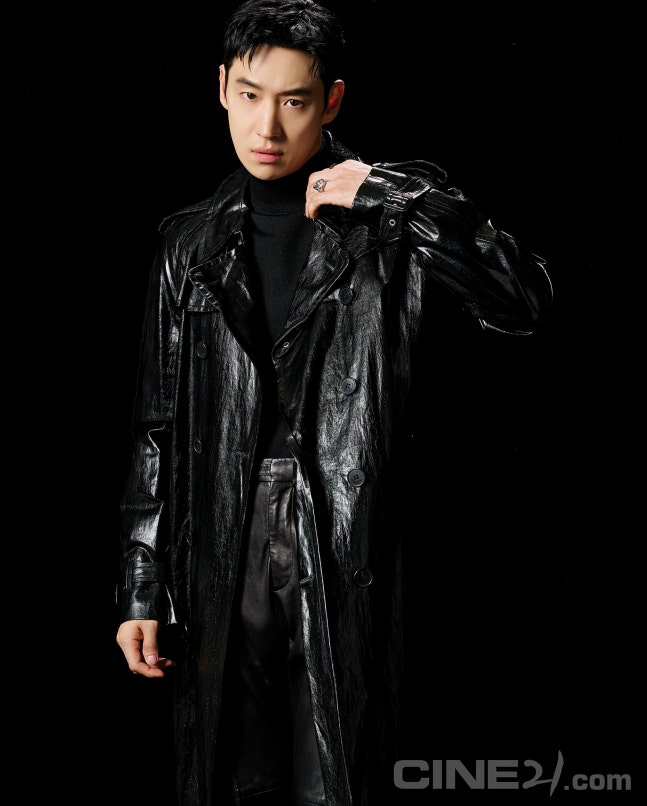
Taxi Driver series tells the story of Kim Do Gi (Lee Je Hoon), a taxi driver, and team at the secretive company Rainbow Taxi, who deliver revenge on behalf of the wronged.
Here is the Q&A with Lee Je Hoon:
From the beginning of the series, Taxi Driver Season 3 expanded its stage overseas, with over 80% of its dialogue in Japanese and English. How was it working in foreign languages?
I really, reaaally didn't want to do it (laughs). Since Kim Do Gi's alternate characters received so much love last season, you'll get to see newly "colored" versions this time as well. I read the script smoothly enough, but when it came time to actually perform, it was so difficult. I had to emphasize the uniqueness of each character while still fully demonstrating Do Gi's linguistic abilities, so the pressure was huge. I couldn't just gloss over scenes, not even a single one. So I struggled with languages in the beginning.
Especially actor Kasamatsu Show, who plays Matsuda, with whom I had many scenes, often modified his lines on set, and he would signal the end of lines with his eyes so we could keep the conversation flowing naturally. In a way, he's a guest in the project, yet he paid meticulous attention to everything. I'm really grateful [to him].
In each episode, Do Gi dynamically changes his way of speaking, behavior, and rhythm according to the situation. That's why in this season, Do Gi as a teacher, Do Gi as a yakuza, and Do Gi in his original personality all have different tones and manners. How do you identify and distinguish the characters for each situation?
The script doesn't clearly lay out the defining traits of the alternate characters. It only gives information such as the situation or occupation, and from there, I redesign them myself. First of all, I strongly hope that the alternate characters don't overlap in their tendencies. I want each one to have a distinctly pronounced image, so I apply different acting styles and even take different approaches to styling, makeup, and hair. That's why, up until season 2, I felt like I had poured out everything I could do, as if I was totally drained. But then once the new season started, something new came out again (laughs). It's fun to keep creating something through acting.
Does drawing from what's inside yourself ultimately mean you observe the people around you and ordinary people quite a lot?
That's right. I have my own library. I record the inner and outer traits and impressions of the people I observe through videos or writing, and from those, I build concrete characters. And it's not only about the people I see [right in front of me]. I get a lot of inspiration from films as well. When people recognize that a character was inspired by a certain work, it makes me so happy. I try really hard to pile on many layers so it won't be noticeable (laughs).
From the very first episode, Kim Do Gi's spectacular action becomes a major highlight — his duel with the sumo wrestler, the fistfight with Matsuda at the train station, and the final battle at the ryokan.
The drama contains both serious and comedic elements, so action was important for catharsis. I understood that we had to fully bring that out in the direction as well. That's why, even if the action sequences aren't long, I wanted to show an intensity that would make your chest burst open even in the briefest moments. For example, in the early scene where he fights one against many, I put power into each punch to condense the force of the action. I think the goal of the directing was to show that no matter what kind of villain appears, Kim Do Gi cannot be easily overpowered.
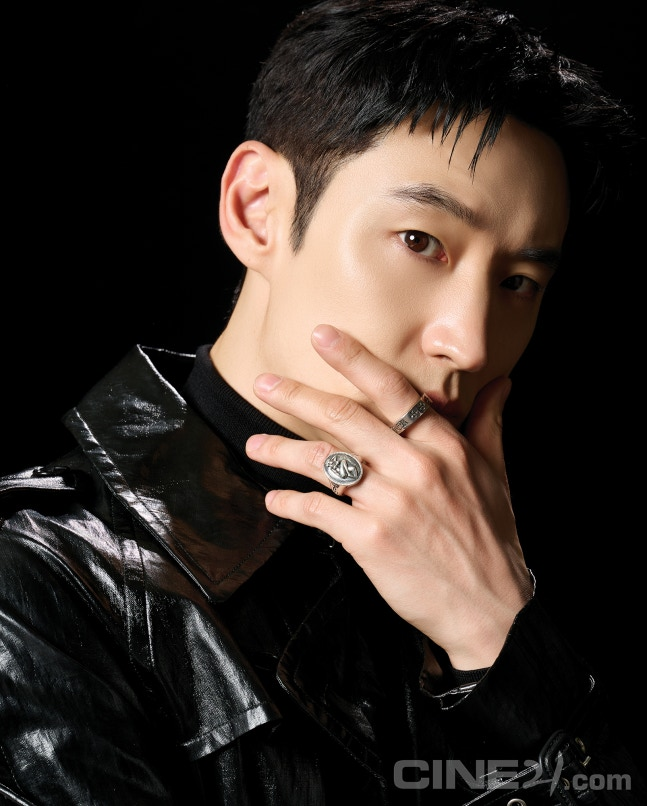
During this conversation, the word "direction" came up several times. Is that because you place importance on having a directorial perspective?
That's right. I've learned a lot by watching how individual cuts come together to form a scene on set. In that process, I tried to listen closely and work accordingly so that the director's intentions and the way he structured the scene could be realized as intended. As an actor, rather than simply working as I'm told, if I understand the director's gaze and point of view, I can take one step forward and grasp what I can contribute. As time goes on, I can feel that the amount of time given on set keeps getting shorter, which makes having that kind of perspective even more necessary.
It seems like you have a very clear idea of the kind of actor you want to be. On the other hand, is there something you don't aspire to become?
As I've walked this long path as an actor, many people have come to understand me through the sum of my filmography. Because of that, acting itself has now become a given. Beyond the expectations and curiosity about my acting, I wonder, what else might people want to see from me? What more can I do? I think that might be the ability to choose good projects. When someone watches a work and says, "He acts well, but the project isn't interesting…" — everything turns critically fragile. Just as an actor expresses insight into the world through performance, I hope that same sensibility can extend to my choice of projects. I became an actor because I love cinema very much. That's why I want to keep going. The moment I start to feel too relaxed, my fans notice it immediately.
For a show like Taxi Driver to continue all the way to Season 3 means that many people have spent a long time with Kim Do Gi. At that point, the lead actor has to wonder whether to show something new or to continue the familiar aspects.
The formula of Taxi Driver is clear: an unjustly harmed victim appears, and the Rainbow Taxi family carries out revenge on the bad guys. The reason so many viewers love Taxi Driver is obvious. But I grew up watching American dramas, and I've experienced many times the disappointment of seeing long-running series lose their foundation as the seasons went on.
So while it'll be necessary for Taxi Driver to offer wider enjoyment in the future, that isn't the value that matters most to us. What's more important is preserving the direction and message we've upheld until now, as well as the exhilaration and the vicarious satisfaction.
That's what I really hope for for Taxi Driver to keep going and release further seasons.
Taxi Driver Season 3 is set to premiere on November 21. The K-drama will air on Viki and Viu (select regions).
Source (1)


