

Feel What You Feel

A place to discuss the original novel, compare it with the drama adaptation, and help better understand the source material through shared translations, excerpts, and background context.
Love and Punishment by the Weiming Lake (未名湖畔的爱与罚) by Ni Lü Zhuren (逆旅主人) is often treated not only as BL but also as gay literature, as the author is widely regarded within reader communities as a gay man, and the story feels grounded in real experience. The characters are generally understood to be composites, drawing from people the author encountered as well as his own experiences. The novel consists of 80 chapters.
There is also an afterward written as a separate short story titled Remembering My Chen Ke (怀念我的陈可) by Ni Lü Zhuren (逆旅主人). I strongly recommend not reading it or even looking up the synopsis until you have finished Love and Punishment by the Weiming Lake, as it reframes the entire story.
Note: All my posts below contain my own translations. Use the following link to access the novel chapter translations.
Section | Commentary | Release Status |
Prologue | Released | |
Chapter 1: Yu Lei | Part of the release | Released |
Chapter 2: Yu Lei (NC) | Part of the release | Released |
Chapter 3: Chen Ke | Part of the release | Released |
Chapter 4: Chen Ke | Part of the release | Released |
Chapter 5: Chen Ke and Yu Lei's Chance Encounter | Part of the release | Released |
Chapter 6: Ye Lei | Part of the release | Released |
Chapter 7: Chen Ke | Part of the release | Released |
Chapter 8: Chen Ke and Yu Lei's Chance Encounter | Part of the release | Released |
Chapter 9: Voice Over | Part of the release | Released |
Chapter 10 | In progress |
| Book Introduction |
| Love and Punishment by the Weiming Lake is a romance novel written by Ni Lü Zhuren (“Master of the Journey”). It was serialized from 2005 to 2006 on the literature section of the website Friends, Don’t Cry. Set at Peking University, the story follows the four-year emotional entanglement between two students, Yu Lei and Chen Ke. It offers a profound portrayal of their relationship as it evolves from mutual affection into mutual torment, while also depicting their experiences with those around them on campus. During its online serialization, the novel attracted widespread attention and became one of the most popular BL works of the year. It was later reposted on numerous websites by readers. The novel adopts a composite narrative structure, combining third-person narration with first-person perspectives, and uses overlapping timelines to reveal the characters’ inner worlds. It was originally scheduled to be serialized on an unofficial BBS at Peking University, but the forum shut down before the work could be posted. In 2013, it was compiled and published as a book. The novel explores the possibilities and complexities of love, tracing Chen Ke’s melancholic, inward nature alongside Yu Lei’s very different sense of responsibility. According to a Peking University alumnus, some of the real-life inspirations for the characters have since married and started families in the United States, while others live alone. |
| 🌊 What is “Weiming Lake”? |
| Weiming Lake (未名湖) is a famous lake located inside Peking University. It is one of the most recognizable landmarks of Peking University. The U-shaped artificial lake is located in the northern part of campus. |
| 💻 What is the “BBS”? |
| A BBS (Bulletin Board System) is an early type of online forum, popular in China in the 1990s–2000s before modern social media. At Peking University, students ran their own unofficial campus BBS forums, where people would:
|
| Novel Preface |
| This work records the story of two young men, Yu Lei and Chen Ke. It follows their love, their conflicts, and the 40 months they spent at Peking University together with the people around them. I first began writing their story many years ago. At the time, a close friend was very active on the BL section of an unofficial BBS at Peking University, which was then one of the largest forums in China. I showed him some of my early drafts. He found them interesting and suggested I continue and serialize the story there. Before I could post even the first part, the forum was shut down by the authorities, and Peking University lost what had been its last open space for free expression. I stopped writing soon after. No writer wants to continue without readers. A few years ago, I paused my work and found myself with more free time. By chance, I came across these old drafts again. Reading them after so many years, the words felt unfamiliar, yet the people and events still moved me. I decided to revise what I had written and rethink the unfinished parts. I simply wanted to complete the story, to bring a sense of closure to those past years. As someone trained in the humanities, having spent several years immersed in the poetic and romantic atmosphere of Peking University, I know how difficult writing can be. A novel written like a ledger can be approached almost like an assignment, since after a thousand years of fiction, the same few tropes appear again and again. But when one truly tries to express something, especially the truths of human nature and the helplessness of emotion, it becomes very difficult to put into words. |
| First Author‘s Note |
| Mutuality, or rather the punishment that love brings to both the lover and the beloved, is the theme of this work. Many in the community often say, “We have the right to love.” But love is not a right. A right always points to a specific object, and that object only has meaning when the right is realized. Can you say you have the right to secretly love someone? That is clearly absurd, because such love does not need to be realized. If your love remains hidden in your heart, and you are willing to accept that solitude, then it exists only within your own world. There is no object, and therefore no question of rights. Rather than a right, love is a possibility, one that is open to everyone. It is like walking along a road. You might meet the one who belongs to you. You might meet him and then lose him. You might lose him and then rush to search, only to find someone else. You might even be so absorbed in looking at him that you are struck by an oncoming car, and in another life become someone else’s “him.” Do not forget that any possibility is only one side of a coin. In pursuing the possibility of love, you must also face the other side. Before understanding this, do not speak lightly of rights. Even if you are fortunate enough to glimpse the possibility of love on the journey of life, that is only the beginning. The lack of understanding between people is constant. This is the true crux of the matter. Precisely because we can never truly know another person, love carries a sense of mystery and danger. It promises happiness, or destruction. It is love, and it is punishment. If you have the patience to continue, I believe you will see this heart-wrenching quality in Chen Ke and Yu Lei. |
| Second Author‘s Note |
| Times have changed. I have no intention of setting my characters in some “prehistoric” age of same-sex love simply for dramatic effect, as many are inclined to do. As it is written in A Tale of Two Cities: “It was the best of times, it was the worst of times.” On the better side, no one today would feel so ashamed of being gay as to take their own life, because it has become socially unacceptable to use homosexuality as a way to attack others. Declaring one’s tolerance toward homosexuality has become fashionable among intellectuals, even though many of them still do not truly believe in the existence of same-sex love. On the worse side, to be frank, we live in an age of sexual excess. It is easy to find sex and satisfy physical desire. If one is willing to treat this almost crude behavior as a prelude to love, then even “love” itself becomes easy to find. Among this generation, who still treats sex as something serious? Michel Foucault once said that when sex steps out of its sacred halo, human civilization takes a great step forward. Whether that is true is not for me to judge. The fact is, I have no ability to prevent any character in this novel from pursuing physical pleasure, so long as it does not exceed their own moral boundaries. No one has that ability. I feel it is necessary to distinguish this work, into which I have poured all the passion of those years, from so-called “passion novels.” But please do not view the people and events in it through a puritanical lens. |
| Third Author’s Note |
| Structurally, this work largely follows the conventions of traditional fiction, maintaining its dramatic tension and a narrative that moves toward a defined ending, much like a “road novel.” In terms of narration, it is built primarily around an omniscient third-person perspective, with elements of first-person woven in, in the hope of capturing the many angles of emotional experience, the misunderstandings between people, and the absence of anything truly perfect. The timeline is not entirely linear; as the narrative perspective shifts, moments in time inevitably overlap. Form aside, the author’s only wish is to offer, from as close a vantage point as possible, a kind of annotation to the people and events, the scenes and emotions, the joys and sorrows, the loves and resentments encountered over the years. Yet what exactly has been written, even the author cannot clearly say. That is left to the reader to discern. Finally, it should be noted that all people, events, and times described in this work do not refer to any real individuals or occurrences. The so-called “Weiming” means precisely this: unnamed, without designation, referring to nothing in particular. Readers may take these stories as they wish, as passing talk not meant to be taken too seriously. These brief notes serves both as an explanation and as a preface to the work as a whole. The writing is not meant to weigh heavily. I hope you will enjoy reading it. Ni Lü Zhuren Spring, Year of Yiyou (2005) |
| Prologue Commentary |
| The Prologue is set at Peking University, one of China’s most prestigious universities. It is often referred to as “Beida,” a shorthand formed from university name 北京大学 (Beijing Daxue). The first character (Bei, 北) in Beijing and the first character (Da, 大) in the word 大学 meaning College. The English abbreviation “PKU” is also widely used. The campus is known for its traditional landscape design, where plants are labeled with small signs. These reflect both an educational purpose and a broader cultural emphasis on learning even in everyday surroundings. The “South Gate” mentioned here is one of the university’s main entrances. The broad road just inside it is a familiar route for students moving between classrooms and the library, making it a common setting for daily encounters. The road names “May Fourth Road” and “Democracy Road” reflect the political and intellectual climate historically associated with the campus. “May Fourth” refers to the May Fourth Movement, which began with protests led in part by Peking University students and later came to symbolize cultural reform and intellectual awakening in modern China. “Democracy Road” is not so much a specific landmark but rather a representative kind of name. Such names such as these were widely used in earlier decades to express political ideals. By the time of the narrator’s recollection, these names already carry a sense of the past, which adds to the tone of nostalgia. |
KhairinaIvanatul:
where will you release it?
I plan to update first few chapters here directly, it will show in the table in the first post on this discussion. Any changes to posting location will be noted for the future. For now though once it releases there will be the name of the chapter and the link listed under the translation link column for the corresponding chapter. Click the hyperlink text to access the chapter. Example. Prologue is already available click the hyperlink text that says pastebin link above.
I have completed the translation for chapter 1. Use the following link, also found in the first post above, to access.
I have completed the translation for chapter 2. Use the following link, also found in the first post above, to access. Due the nature of the chapter (NC) for now I can only post it on my main account. Maybe one day I’ll be able to get a domain for these types of translations. For now its just at the passion project stage, I hope you all enjoy.

I already now the spoiler but idk it's true or not because i just ask gemini AI about how the novel and what's going to happen( like about his roommate that stabbed him because envy or something ) but idk if the series going same as the novel bc many Chinese BL now is changing the novels plot( Like Sammy's Children Day that the series and novel is really different and many that in series not really have it in novel )
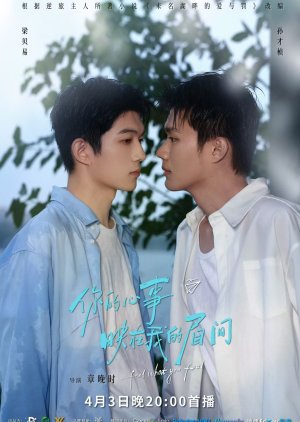
Details
- Title: Feel What You Feel
- Type: Drama
- Format: Standard Series
- Country: Hong Kong
- Episodes: 8
- Aired: Apr 3, 2026 - May 8, 2026
- Aired On: Friday, Saturday
- Original Network: Viki
- Duration: 40 min.
- Genres: Romance, Youth
- Tags: Gay Male Lead, Gay Romance, 2000s, Secondary Couple, University, LGBTQ+, School Setting, Roommates' Relationship, Adapted From A Web Novel, Cousins' Relationship
- Content Rating: 15+ - Teens 15 or older
Statistics
- Score: 8.0 (scored by 3,614 users)
- Ranked: #2838
- Popularity: #2366
- Watchers: 10,185
- Favorites: 0
Top Contributors


Popular Lists
Related lists from users

![[BL/gay/LGBTQ+] dramas](https://i.mydramalist.com/JpZzot.jpg)
![[BL/gay/LGBTQ+] dramas](https://i.mydramalist.com/wZRBJ_4t.jpg)
![[BL/gay/LGBTQ+] dramas](https://i.mydramalist.com/rN0JAj_4t.jpg)
![[BL/gay/LGBTQ+] dramas](https://i.mydramalist.com/xO623_4t.jpg)
![[BL/gay/LGBTQ+] dramas](https://i.mydramalist.com/gZRBXt.jpg)

Recently Watched By


