


9 The People.
Koreans are a joy – and they will want to get involved in your trip. We suggest you let them.
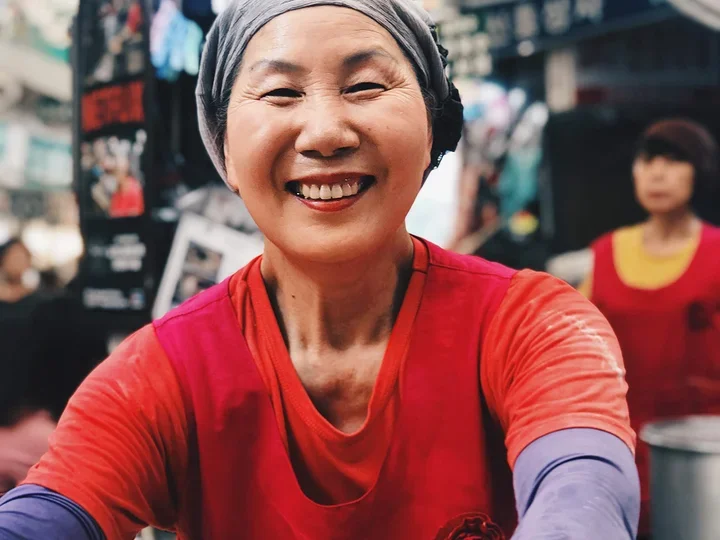
Koreans are among the friendliest and most open people in Asia. That first bellowing call across a busy restaurant will be the waitress shouting across “I have a spare table here for you”. The second from the man two tables down “Hey new friends, join me for a drink” and the third from his wife “Try this dish with the drink, it will taste amazing”.
It can take a little getting used to, but you soon love the rowdiness of Korean people. They'll tell you what to eat and laugh if it's too spicy for you, yell loudly as you cheers (geonbae!) and welcome you into their mix. They are a real boisterous, fun and bonkers lot.
Being fun, open and friendly is part of Korea’s DNA.
 (Taken and copied from some site on the internet)
10 Jeju Island – the Hawaii of South Korea
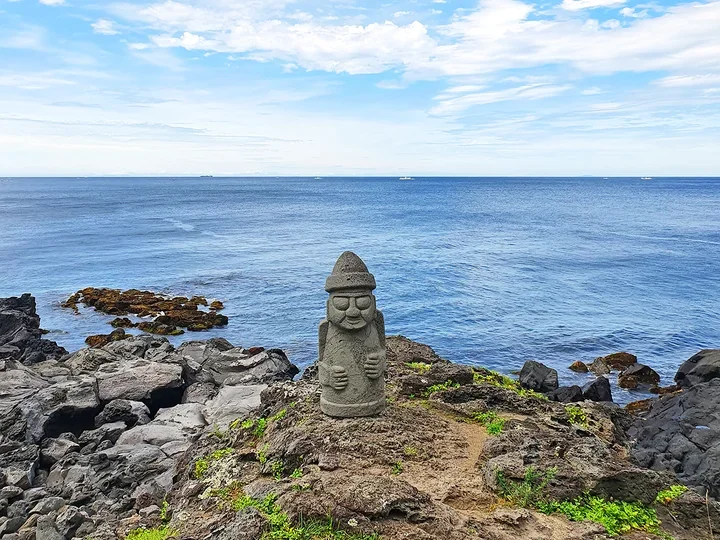
It’s hard to overstate beauty of Jeju Island. Though just an hour’s flight from Seoul, Jeju has a rich, indigenous culture all of its own.
Jeju is best known for its startlingly beautiful countryside, which all races up to Korea’s highest mountain – 1,950 metre-high Hallasan (it’s not that hard to climb if the weather agrees). Landscaped gardens filled with cacti and bonsai, staggeringly beautiful waterfalls, ringed by beaches, museums dedicated to everything from teddy bears to sex to modern art, a volcano to climb... honestly, we could go on and on. Even the two cities, Jeju City and Seogwipo, are lovely.
And your island adventure need not start and finish with Jeju; a short ferry-ride away is Udo, which somehow contrives to be even more bucolic, and makes a grand place for a bike or buggy ride. Connected to Udo is the tiny islet of Biyangdo (current population: two), which was once a base for the haenyeo, Jeju’s most famous residents: the legendary, free-diving “sea women”, some of whom still ply this perilous trade well into what most would call retirement years.

Mexico
1. Monte Alban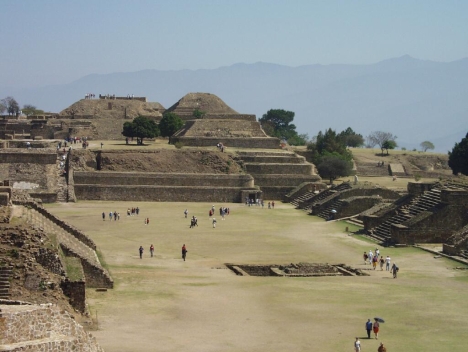
Monte Albán is one of the most significant pre-Columbian archaeological sites in the Americas. It is a large, ancient city located in the Oaxaca Valley in southern Mexico, about 9 kilometers from the modern city of Oaxaca .
The city was founded by the Zapotec people around 500 BC on an artificially flattened mountain ridge. Its strategic, elevated location provided defense and stunning views of the surrounding valley . For over a thousand years, Monte Albán served as the Zapotec capital and a dominant political and economic center in the region . At its peak (around 200-600 AD), it was home to as many as 17,000 to 35,000 people .
Today, the site is famous for its impressive Main Plaza, large pyramids and platforms, a ball court, and an arrowhead-shaped observatory known as Building J . It is also renowned for its intricate carved stone monuments, particularly the "Los Danzantes" (The Dancers), which are now believed to depict tortured captives, and for the discovery of Tomb 7, which contained a treasure trove of Mixtec gold, jade, and turquoise artifacts . After its decline around 700 AD and abandonment by 900 AD, the site was later reused by the Mixtec people as a sacred burial ground . In 1987, it was designated a UNESCO World Heritage Site, recognized for its outstanding cultural and historical value .
The yellow circle shows the Oaxaca City Cathedral and the far panoramic view of Oaxaca City nowadays. Clearly Monte is mount, Monte Albán is on the top of a mountain.

2.Santa Catalina Island Rattlesnake
 The Santa Catalina Island rattlesnake is endemic to Isla Santa Catalina in the Gulf of California. It is an exceptionally slender, medium size rattlesnake. Among rattlesnakes, it is unique in that it lacks a functioning rattle-- the base "button" falls off with every new shed, preventing growth of the rattle.
Small mammals and lizards provide a stable food source for this species. It is also remarkable in that it is the most arboreal of the known rattlesnake species, often using trees and shrubs to hunt. Experts believe that this species arose from red diamond rattlesnakes (Crotalus ruber) which washed ashore on Isla Santa Catalina long ago.
It faces extinction due to illegal poaching and invasive predators (such as feral cats). Crotalus catalinensis
The largest football stadium in Mexico is the Estadio Azteca in Mexico City, with a capacity of 87,523 people.
Key Facts
Location: Coyoacán/Tlalpan area, Mexico City
Capacity: 87,523 seats
Home Teams: Club América and the Mexico national football team
Significance: Largest stadium in Latin America and eighth-largest football stadium globally, famous for hosting the 1970 and 1986 World Cup finals. ( lol...how could one forget THAT goal!


4) tacos
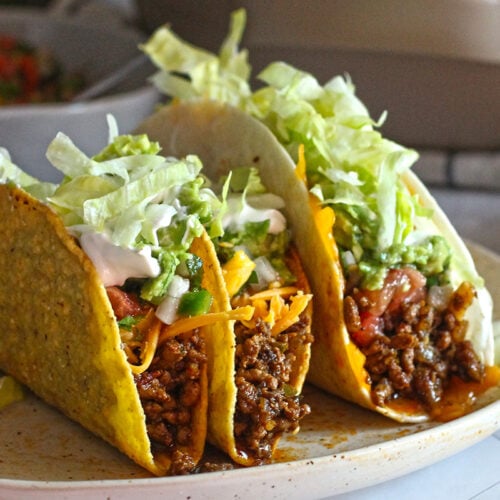 A taco is a traditional Mexican street food built around a small, hand-sized corn or flour tortilla folded around a wide variety of savory fillings. At its core, authentic Mexican taco culture focuses on the quality and preparation of the meat—such as slow-roasted pork (al pastor), grilled steak (carne asada), or braised beef (birria)—complemented simply with finely chopped raw onions, fresh cilantro, a squeeze of lime juice, and a spoonful of red or green salsa. Traditional tortillas are soft, warm, and often doubled up to hold the heavy, juicy fillings without breaking, delivering a tender and flavor-focused bite rather than a crunch.
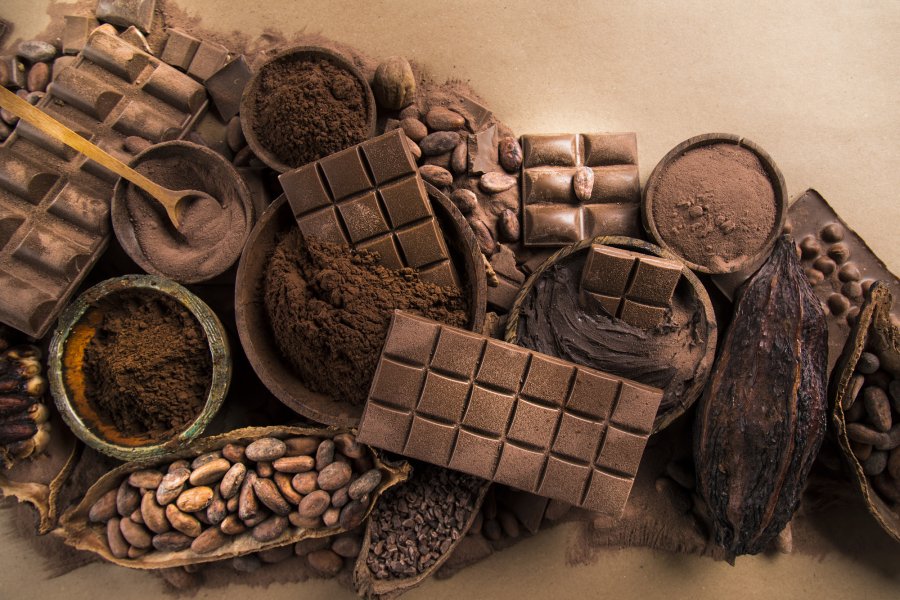
5) chocolate is originally from Mesoamerica, which includes modern-day Mexico and Central America, with ancient roots traced back over 4,000 years to early civilizations like the Olmec and Mokaya.
When we think of chocolate we often think of the luxurious and indulgent modern-day confections from Belgium, Switzerland and Germany, or fond childhood memories of the American classics like Hershey’s Bars. There is however one country that can proudly lay claim to being the home of chocolate, albeit in a very different form to that enjoyed across the world today. That country is of course Mexico. While there is some academic debate regarding the exact origin of the precious cacao trees used to create chocolate, any Mexican will tell you that chocolate not only hails from Mexico but is a key part of its history and heritage.
6.Mexico city
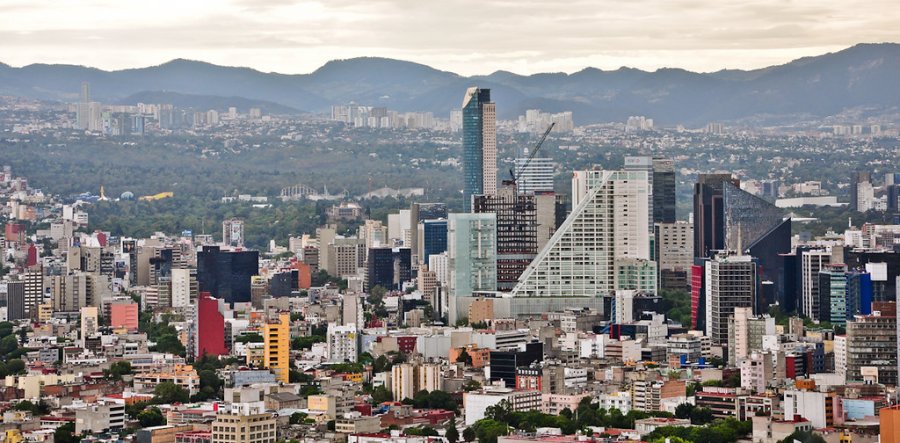
Mexico City is the oldest city in North America
There are lots of cool facts about Mexico’s history, but here’s one that’s bound to surprise people. The Spanish founded Mexico City in 1521 — but actually, it’s been populated for a lot longer than that.
Before Mexico City came along, the settlement was known as Tenochtitlán, and it was the capital of the Aztec Empire. You can still see some ruins from the days of the empire around the city today, including the impressive Templo Mayor, where the Aztecs worshipped the gods of rain and war.
…and it’s sinking every year
This has to be one of the most surprising facts about Mexico! When you think about cities sinking, the one that usually comes to mind is Venice. However, despite being far inland, Mexico City is losing a pretty serious 20 inches a year.
The reason for this is simple: for centuries, urban planners have drawn the city’s water supply from underground. As the population has exploded, the underground aquifer has been drained, causing Mexico City to sink. You can even see some hints of this above the ground, with uneven streets and a remarkably bumpy airport runway.
Mexico City is in no danger of becoming the new Atlantis. Even with its loss of altitude, it remains the 8th highest capital city in the world. Politicians and city leaders are continuously searching for new, sustainable sources of water to keep the capital afloat.
7) Día de los Muertos (Day of the Dead)
:max_bytes(150000):strip_icc()/Dia-De-Los-Muertos-opener-MAG-1124-e4357a3902f84f649cfa58f3341ebcae.jpg) A vibrant Mexican holiday celebrated annually from November 1st to November 2nd. Rather than a time of mourning or a spooky occasion like Halloween, it is a joyful reunion between the living and the spirits of departed loved ones. According to tradition, the boundary between the spirit world and the physical world dissolves during these two days, allowing souls to return and celebrate alongside their families.
A vibrant Mexican holiday celebrated annually from November 1st to November 2nd. Rather than a time of mourning or a spooky occasion like Halloween, it is a joyful reunion between the living and the spirits of departed loved ones. According to tradition, the boundary between the spirit world and the physical world dissolves during these two days, allowing souls to return and celebrate alongside their families.
The centerpiece of the celebration is the ofrenda, a home altar lovingly built to welcome visiting spirits. These altars are adorned with vibrant orange marigolds (cempasúchil), framed photographs of the deceased, candles to guide their path, and offerings of their favorite foods and beverages. Families also prepare special items like pan de muerto (a sweet yeast bread decorated with bone-like shapes) and intricate sugar skulls (calaveras).
5) chocolate is originally from Mesoamerica, which includes modern-day Mexico and Central America, with ancient roots traced back over 4,000 years to early civilizations like the Olmec and Mokaya.
When we think of chocolate we often think of the luxurious and indulgent modern-day confections from Belgium, Switzerland and Germany, or fond childhood memories of the American classics like Hershey’s Bars. There is however one country that can proudly lay claim to being the home of chocolate, albeit in a very different form to that enjoyed across the world today. That country is of course Mexico. While there is some academic debate regarding the exact origin of the precious cacao trees used to create chocolate, any Mexican will tell you that chocolate not only hails from Mexico but is a key part of its history and heritage.
And we drink it even today as some people in other countries drink the coffee, with hot water and no milk and sugar that was what Spaniards did for controlling the acidity of the original Aztec, Zapotec, Mayan and many other aboriginal cultures drink.
8) Sana sana colita de rana
Here is what I mean by that:
In Mexico, if you get sick, a neighbor you barely know will show up at your door with a mug of hot atole or te de manzanilla without you asking. If you are crying, an elderly aunt or even a stranger on the street will place a hand on your shoulder, look you in the eye, and say "échale ganas" (hang in there) with a sincerity that feels like a hug. If a child falls and scrapes their knee, the immediate response isn't just a band-aid—it is the ritual of "sana sana colita de rana" while someone rubs your back.
What Mexicans abroad miss is the physicality and immediacy of that communal warmth.
In the U.S., Canada, or Europe, when you are struggling, people give you "space." They text you "let me know if you need anything" (which you will never actually ask for). They respect your privacy.
In Mexico, they invade your privacy with love. They show up. They touch you. They sit with you in silence. They feed you. They don't ask for permission to care for you; they just do it.
Mexicans who live abroad for a while often find themselves deeply lonely not because they lack friends, but because they miss the unspoken permission to be vulnerable in public and the spontaneous, tactile response of a community that treats your problems as their problems. They miss a culture where "how are you?" isn't a greeting, but a genuine invitation to share your burden—and where the other person will physically stay until that burden feels a little lighter.
When I searched with "why people love Mexico"?
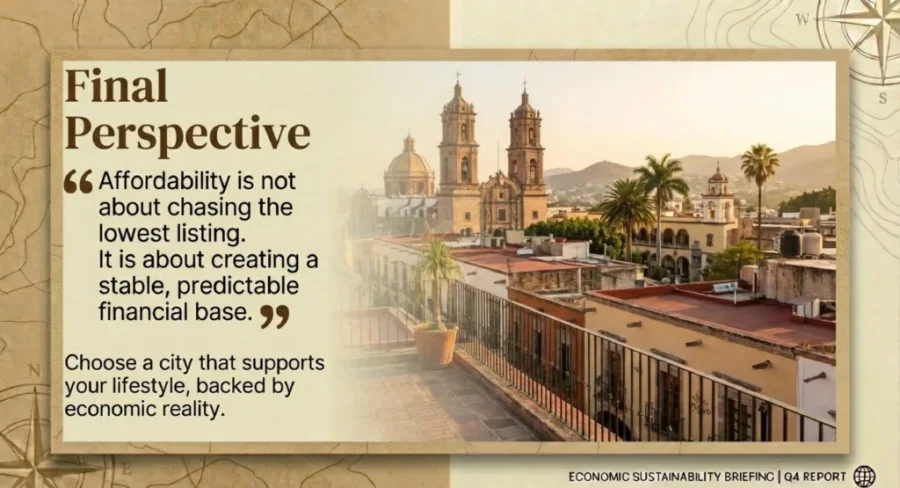
The first answer I got was "affordability".
9) affordability
Daily expenses, travel costs, and local dining remain budget-friendly compared to North America and Western Europe
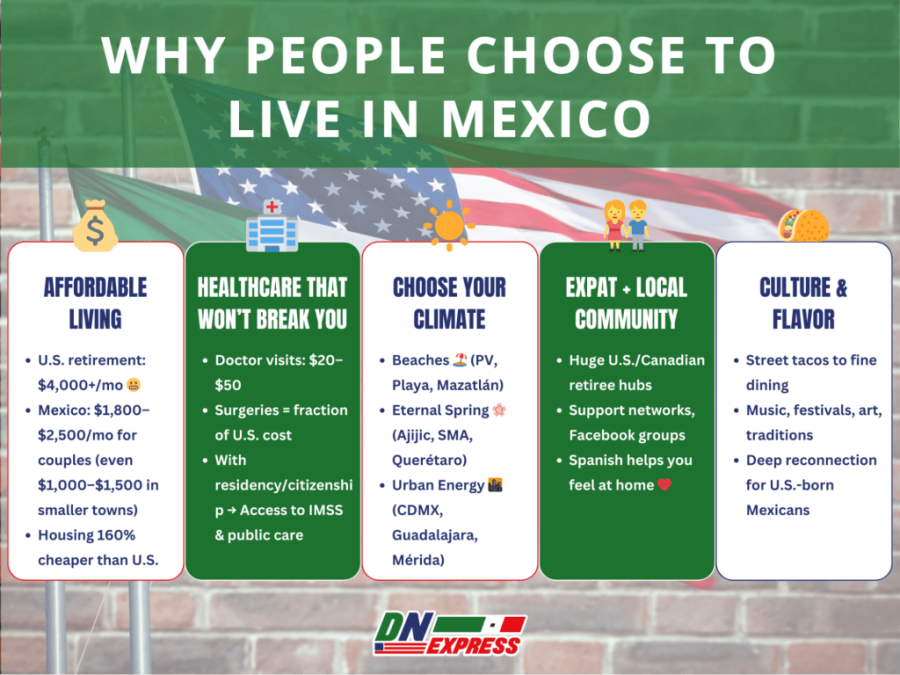
Mexico remains an affordable destination with a cost of living roughly 36% lower and rent over 54% lower than in the United States. A single person typically spends about $723 to $1,300 monthly (excluding rent), while a comfortable lifestyle for a couple ranges from $1,600 to $2,200 per month.
10) Tequila
Tequila is a distilled spirit deeply tied to Mexican heritage, made exclusively from the heart of the blue Weber agave plant (Agave tequilana). By Mexican law, authentic tequila can only be produced in designated regions—primarily the state of Jalisco, along with specific municipalities in Guanajuato, Michoacán, Nayarit, and Tamaulipas. This Designation of Origin ensures that the spirit reflects the unique terroir, soil, and climate of west-central Mexico.
Tequila falls into several distinct categories based on aging. Blanco (or Silver) is unaged or aged briefly for less than two months, offering a crisp, agave-forward flavor with bright herbal and citrus notes. Reposado is aged in oak barrels for two months to a year, gaining a soft golden hue and subtle notes of vanilla and oak. Añejo is aged between one and three years, yielding a deeper amber color and richer, whiskey-like characteristics, while Extra Añejo ages for over three years for maximum complexity. Whether enjoyed neat as a sipping spirit or shaken into classic cocktails like the Margarita or Paloma, tequila remains one of the world's most versatile and celebrated spirits.
Timor-Leste
1) Tais textiles
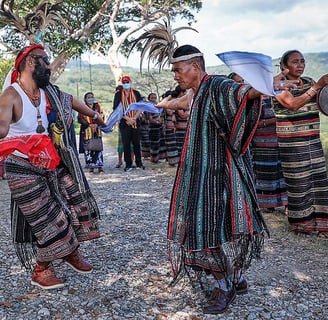
Tais is the traditional handwoven cloth of Timor-Leste, serving as an essential symbol of the nation’s cultural identity, heritage, and social fabric. Primarily crafted by women using backstrap looms, Tais weaving is an art form passed down through generations. The textiles are created using dyed cotton threads to form vibrant colors and intricate geometric patterns, each representing specific ancestral lineages, clans, and municipalities across the country.
Beyond their visual beauty, Tais textiles hold deep ceremonial and social significance in Timorese life. They play a central role in life events—such as weddings, births, and funerals—and are frequently presented as official gifts of respect and welcome to honored guests. The motifs embedded in the cloth often depict local folklore, sacred symbols like the crocodile (a revered figure in Timorese origin stories), and historical events.


