

 1
1



This review may contain spoilers
A five-minute conversation away from a masterpiece
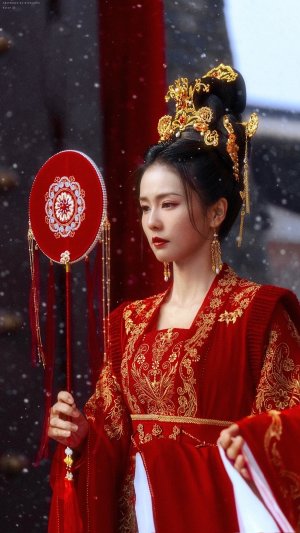
Love in the Clouds began with a bang, a grand, sweeping fantasy anchored by Ming Xiang, once the unrivaled warrior of the Six Realms. She’s painted as mighty, undefeated, burdened with destiny; the kind of heroine who carried storms in her palms and refused to bow to fate. Yet the first episode already shows her at a low point, defeated by Ji Bozai after being poisoned. That fall was supposed to set the stage for a fierce redemption arc where she’d reclaim her strength, title, and sense of self. Instead, what followed was a slow erosion of the bold woman I met. The warrior’s drive gave way to infatuation, her goals fading into the background as the story reduced her to a lovesick figure. The “this could’ve been solved with one honest conversation” trope really needs to retire. It’s wild how even in the big year 2025, so many dramas still hinge on a single tragic misunderstanding instead of, you know, a five-minute chat.
What makes it worse is how hollow the central love story becomes. Ji Bozai says he loves her, but every choice he makes screams doubt. After everything she’s done, risking her life repeatedly, protecting him even when it cost her reputation and safety, he still defines her by that one desire: the Golden Millet Dream. That kind of selective belief makes his love feel conditional, almost performative. The love imprint was supposed to symbolize emotional reciprocity, a bond that transcends words. So when only she feels his pain and he can’t sense hers, that’s not just inconsistent writing; it undermines the entire emotional system the show built. Either they’re equals in love or they’re not, and that imbalance was never explained in a way that made sense. All the evidence of her love is right there, yet instead of asking why she wants the elixir, he turns away. And Ming Yi, for all her heart, can’t seem to explain herself because love has become a battlefield where her words no longer matter. And Twenty-Seven’s unnecessary sacrifice? That one stings. He had insight and agency. The writers could’ve used him as a moral bridge to restore understanding, but instead they went for shock value, robbing both Ming Yi and the audience of closure that would’ve made sense.
The early episodes promised a smart, morally gray romance. What I got was another story that confuses suffering for depth. Still, I can’t even be mad at the cast; they bodied that mess. They acted so well that I was genuinely pissed at them instead of the writers. Lu Yu Xiao sold every ounce of Ming Yi’s heartbreak, and Hou Ming Hao played “emotionally stunted man who should’ve just listened” a little too convincingly. Their chemistry was fire, which almost made me forget how ridiculous the script was. And then there’s Situ Ling, the quiet pillar of sanity, steady, kind, unwavering. He sees Ming Yi for who she truly is and stands by her without demanding or doubting. He’s everything the supposed “great love” should have been.
I’m on episode 23 of 36 now, and I’m still hoping for a turnaround, for Ming Xiang to reclaim her fire and remind both Ji Bozai and the audience that love should elevate strength, not erase it.
_______________________________________________________________________________________________
I’m at episode 29 😅😅 She gets her mojo back and everything looks on rails.
Moral of the story : patience is a vertue I should practice more 🫣
What makes it worse is how hollow the central love story becomes. Ji Bozai says he loves her, but every choice he makes screams doubt. After everything she’s done, risking her life repeatedly, protecting him even when it cost her reputation and safety, he still defines her by that one desire: the Golden Millet Dream. That kind of selective belief makes his love feel conditional, almost performative. The love imprint was supposed to symbolize emotional reciprocity, a bond that transcends words. So when only she feels his pain and he can’t sense hers, that’s not just inconsistent writing; it undermines the entire emotional system the show built. Either they’re equals in love or they’re not, and that imbalance was never explained in a way that made sense. All the evidence of her love is right there, yet instead of asking why she wants the elixir, he turns away. And Ming Yi, for all her heart, can’t seem to explain herself because love has become a battlefield where her words no longer matter. And Twenty-Seven’s unnecessary sacrifice? That one stings. He had insight and agency. The writers could’ve used him as a moral bridge to restore understanding, but instead they went for shock value, robbing both Ming Yi and the audience of closure that would’ve made sense.
The early episodes promised a smart, morally gray romance. What I got was another story that confuses suffering for depth. Still, I can’t even be mad at the cast; they bodied that mess. They acted so well that I was genuinely pissed at them instead of the writers. Lu Yu Xiao sold every ounce of Ming Yi’s heartbreak, and Hou Ming Hao played “emotionally stunted man who should’ve just listened” a little too convincingly. Their chemistry was fire, which almost made me forget how ridiculous the script was. And then there’s Situ Ling, the quiet pillar of sanity, steady, kind, unwavering. He sees Ming Yi for who she truly is and stands by her without demanding or doubting. He’s everything the supposed “great love” should have been.
I’m on episode 23 of 36 now, and I’m still hoping for a turnaround, for Ming Xiang to reclaim her fire and remind both Ji Bozai and the audience that love should elevate strength, not erase it.
_______________________________________________________________________________________________
I’m at episode 29 😅😅 She gets her mojo back and everything looks on rails.
Moral of the story : patience is a vertue I should practice more 🫣
Was this review helpful to you?


