
 News
News 


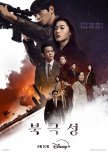
I would watch a second season
IMO Tempest was actually a pretty good political thriller. The writer(s) incorporated a lot of (international and domestic) intertwined elements to create a complex world of espionage. It must have been a challenge for the director to juggle them all to keep us guessing who was really pulling the strings. I admit to some confusion over the various connections at times - and I feel like I was paying close attention.I, frankly, didn’t see much difference between Tempest’s world of espionage and a similar world in one of the Mission Impossible films - which, by the way, is a compliment. Many of the action scenes were over the top (just like MI) but we’re in dramaland not real life. We want the MLs to survive, right? We look forward to the adrenaline rush watching how they survive each extreme situation.
The cast:
The Main Leads did an excellent job.
This is my first Kang Dong Won drama. I would hire SanHo any day!!! I’ll be watching more of KDW. Jun Ji Hyun is a great actress and she did not disappoint as Munju. They had excellent chemistry together. The romance was nicely done for the type of story and I didn’t think it took away from it - especially for SanHo. His feelings for MunJu were the reason he protected her the way he did. Hats off to the full supporting cast. It was refreshing to see a non/cheesy international cast. John Cho was well cast as Anderson Miller.
The OST blended perfectly with the story. The cinematography was top notch!
I would recommend Tempest to anybody interested in an intriguing political thriller.
I would definitely watch a second season - they set the stage for a new and what could be an even more interesting story. And bring back John Cho!
Was this review helpful to you?
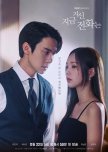
Heavy, gripping, suspenseful, and touching
I was fully imersed in this drama. Our ML, Sa-eon, and FL, Hee-joo, were amazing together. The story concept was a very clever way for these two to literally get to know each other. It was heavy, gripping, suspenseful, and touching all at the same time.I enjoy a good mystery and appreciated the suspense of not knowing what was really happening until the appropriate time.
The OST was excellent. i have watched this drama twice and will eventually watch it again in another year or so.
- Potential spoiler -
In real life, though, I’d be furious at Sae-on for being so cold and indifferent every day for three years while secretly loving me. He may have thought he was creating a safe place for Hee-Joo but it was the same prison, different location for her. Unexpressed love is not love, it’s something else. But that was the story. What was it going to take for both of them to surrender to their love?
Was this review helpful to you?
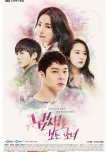
Light but engaging.
The actual title, The Girl Who Sees Smells, didn’t appeal to me so I bypassed it for a long time. But then I started enjoying Namkoong Min’s dramas and decided to watch this one for him. I stayed for all the main leads.Having recently finished some much more complicated, heavy dramas, TGWSS was an inviting, imaginative, enjoyable watch for me. A good drama to balance out my watch history lately, if you know what I mean. I found myself interested the entire time even binging a few too many episodes at a time.
Park Yoo Chun (Detective Choi) Shin Sae Kyeong (Oh Cho Rim) Nam-koong Min (Chef Kwon) and Yoon Jin-Seo (Lt. Yeom) all delivered very good performances. I was most impressed by PYC (my first drama with him) whom I believe stood out above the rest and I also felt he carried the whole drama. PYC and SSK had great chemistry - they had several truly funny and serious/tender moments together. SSK has a great acting range, delivering a fun and engaging Oh Cho Rim. It’s not my favorite role of his but NKM was a great sinister villain. He acts with his eyes so well. YJS was a no-nonsense but endearing Lt. Yeom, the kind of boss you want to do your best for.
I was somewhat disappointed in the supporting cast, their acting was not terribly convincing - I don’t think their humor always fit the story - comedy/drama detectives can and should be funny where the story needs it but also need to be on their (detective) game where it counts and I didn’t feel they ever truly delivered on the latter. That part gave me a dissatisfied feeling many times. Some of this criticism is on the writing and directing, too.
The OST fit the scenes and was not loud or overpowering.
I definitely recommend TGWSS for someone who is looking for a light but still intriguing Rom-Com/Mystery. However it’s not a drama would feel the need to rewatch.
8/10
Was this review helpful to you?
This review may contain spoilers
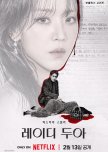
I feel like I was being conned
Into Episode 4 I felt like I, the view, was on a wild goose chase trying to solve the case of who killed the woman in the sewer. That was such an awful, sad scene, I could hardly look at her. That scene and many others just speaks to how well the production was in this drama.I love thriller/mystery/crime/legal/medical/and similar dramas. I take notes sometimes to keep things straight because, like most likeminded people, I try to figure it out before the big reveal. I even took a picture of Prosecutor Hwang Si Mok’s whiteboard, in Stranger S1, of his collection of suspects and all their possible connections so I could follow and stay on top of the story. That made that particular drama most enjoyable.
The Art of Sarah was a straight-up thriller, with an interesting plot, and was very well acted. BUT it left me with a unsatisfied feeling in the end. The chronic deception and twisting of names and identities was almost over the top. I felt we were introduced to Kim Mi Jeong a bit late. At what point of the story was Shin Hae Sun not Sarah Kim /Kim Eun Jae? Or was she SK all along?
All the related supporting characters identified her as SK or KEJ. Never did we see where a related supporting character identified a different female in their story telling, the girl named. Kim Mi Jeong (Lee E Dam), as SK. So when we are introduced to Kim Mi Jeong, the writer eventually wants us to believe she is actually Sarah Kim?!?! I realize this is a vain of thriller storytelling, but the story got convoluted and I gave up trying to figure out who she actually was and just let the story play out - which in the end didn’t tell me anything. Hence, the unsatisfying feeling. Even though confusing a couple times (I know, they were meant to be), the interrogation scenes between Park Mu Gyeong and ‘Sarah Kim’ were well done. He wasn’t going to be conned. But did he succeed?
It was difficult to have much empathy for the real person behind Sarah Kim. Her justifications for how she ended up where she was were beyond having to pay back a loan shark. To me they were rooted in FOMO. Coveting the very thing that brings momentary pleasure (not even happiness) blinded her and was only going to be her downfall. I think Sarah Kim knew the length of her journey was not going to be long, though.
I did get tired of all the lines of ‘wisdom’. I suppose it was the writer’s intention to show what a flawed sense of superior intellect does to a person’s psyche.
All that aside, the acting was excellent. Shin Hae Sun and Lee Jung Hyuk were great!!! They are both exceptional talents and it was a pleasure to see them together in a drama again. Shout out to Jung Jin Young and Kim Jae Won for their great performances also.
The music fit the story for the most part. It didn’t distract me. While I don’t feel the need to rewatch it, I do recommend it to those who like a thriller.
Was this review helpful to you?
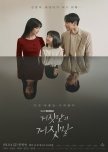
Finished in one sitting!
This is the first 16 episode drama I watched in one sitting. I enjoyed it that much.Interesting way to deliver a romance, though. Just sayin’. The attraction level needed for a true romance was lacking. They were attracted but tense, maybe even fearful of each other (not in a dangerous way). I know that’s clumsy but I find my meaning difficult to put into words. Maybe it’s better said that their initial attraction was more realistic for two hurt, nearly 40-year old adults. But later on the attraction didn’t move upward on the meter like I believe it should have.
The best chemistry IMO was between father and daughter. This is my first time watching Yeon Jung Heon and he was great as a dad, journalist, friend, and potential husband. He had a quiet confidence as an investigative journalist. I said out loud, to myself, around episode 7 about Ji Min, “can this guy get any nicer!?!?”
Go Na Hee as Woo Hoo was truly delightful. At her age, she nailed her main lead role and was every bit as good as the other leads.
Eun Soo had a difficult character arc and I believe Lee Yoo Ri delivered the role quite well and in the way it was intended. One couldn’t help but feel sorry for her. She had good chemistry with Ji Min just not great chemistry.
The villains were really good villains. Definitely didn’t like Kim Ho Ran. Se Mi needed to get a grip on reality - she burned her bridge down completely and there was no coming back. I liked Yeon Joon but his character wasn’t given much depth. He was more of a plot device.
The story ,itself, along with the father/daughter duo are what compelled me to keep watching. OST wasn’t especially memorable but it didn’t distract either. I probably won’t rewatch the entire drama, maybe select parts.
It’s a very nice story overall. 8.5/10
Was this review helpful to you?
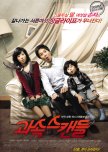
This review may contain spoilers
Good but a bit choppy
I recently watched The Great Show so I decided to watch the story in its original form. As you might expect, in 2026 it’s very dated. But still, it’s a pretty good film.I wasn’t drawn to this story like I was to its drama remake.
It came across as choppy going from scene to scene, at times, meaning the editing could have been smoother.
Was this review helpful to you?
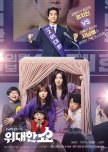
Loveable characters - sweet story
The Great Show is a well told, tender hearted story. Even with its predictable plot, it was told realistically and with sincerity. The very talented Song Seung Heon brought Wi De Han to life in a charming, realistic, believable way. We’re given enough backstory to understand how WDH’s youth shaped him in the present day. He was on his way back to the National Assembly but had to navigate the shock of a lifetime to get there. WDH’s journey showed how difficult it is to maintain integrity in the cutthroat world of politics.He’s probably one of the most imperfect yet transparent guys you can’t help but like. He just couldn’t get a break on his road to the NA. Yes he had a temper. Yes he said things he’d later regret. Yes he made decisions that could cost him that goal. But he humbly owned his mistakes and that set him apart from every other politician.
I loved the contract between Da Jung and WDH as well as the household constitution.
“A happy household isn’t made by perfect people, but it’s made when people with weaknesses try to fill in for each other’s weaknesses. We all have weaknesses, but in order to become a perfect family we should try hard together.”
Da Jung’s siblings were charming including Tak. Soo Hyun was an excellent friend/confident/support to De Han, Da Jung and the children (well played by Lee Sun Bin). All the supporting characters added to the story. I was pulled into the market community so much, at times, I found the student of business in me thinking of ways to help if I were there.
I would agree it’s a predictable drama, but TGS’s evolution still had the element of surprise when most of those predictable moments did happen. I felt the story was well paced. Each episode was eventful and I didn’t feel it dragged anywhere too long.
I liked this story so much that tolerated the ads on TUBI to watch it. I recommend The Great Show to anybody looking for a light but meaningful slice of life story with lots of heart.
Was this review helpful to you?
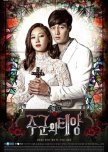
This review may contain spoilers
My So Ji Sub fix while waiting for week 3 of Agent Kim Reactivated
This review is being written in July, 2026, thirteen years after The Master's Sun aired. I understand it was a hit when it aired and catipaulted the most excellent So Ji Sub's career. To be fair to the writer, neither Netflix nor Viki had great subtitles. Sometimes, I was confused about what exactly Joong Won was saying to Tae Young. Maybe my review is stunted due to the subtitles because I know the Korean language has much more depth than English with fewer words, causing cultural nuances to be missed entirely.Before I continue, I have to stop here and say So Ji Sub has aged very gracefully ;-). I did watch this for So Ji Sub so I wouldn't go through withdrawl between episodes of Agent Kim Reactivated, and I stayed not only because of him but because I am a die-hard watcher who seldom drops a KDrama.
The story itself was good but not great (noting the subtitling issue). I have watched many dramas from the same time period that were much better in terms of character development, acting and overall storyline. Most of the characters in TMS were 1-dimentional, with the exception of KHJ whom I felt brought much more depth to Gong Shil than Ji Sub brought to Joong Won. Having said that, Kong Hyo Jin and So Ji Sub were both good in their respective roles - acting as the writer and director wanted. However, because of the stiffness of Joong Won's character, I wasn't convinced of the chemisty between SJS and KHJ. Ji Sub was stiffer than I've seen him in other dramas so I had to atribute his peformance here more to the directing than to him. I also didn't see much of a change in JW's character arc even in the last episode. Love makes people do crazy things, some that are utterly contrary to their character. I was expecting to see, at least a couple times, where he completely crumbled in her presence, casting all fear and/or pride aside. I actually didn't feel any attraction to Joong Won.
I remarked to my sister a number of times how Gong Shil was fearful but bold; (1) in her fearful reaction to the ghosts followed by her absolute need to help them in spite of JW's objections; and (2) how she touched Joong Won out of shear desparation regardless of his efforts to push her away. She even endured JW's aunt's lectures and Yi Ryung's bullying without backing down. I loved how she was comfortable with Kang Woo. To me, they were the better match. Yes, I had Second Male Syndrome. His warm, loyal, protective personality was no match for the abrassive, needy, empty Yi Ryung (Kim Roo Yi).
Gong Shil's mysterious past was mentioned enough times raising more than a little of curiosity about her - and in my mind, full anticipation that we'd find all thar out. With 17 episodes, almost no time was devoted as to why she was able to see ghosts. That would have been worth parts of 2 or 3 episodes to see flashbacks of her in the mountains, being rescued, and the ensuing recovery. In Episode 15 or 16 we should have seen flashbacks of her spirit traveling with photographer Woo Jin Woo (where is the most hansome Lee Chun Hee these days??). We needed more details to feel greater empathy for and understand of her. It would have been nice to hear Kang Woo (good early acting by Seo in Guk) or Secretary Kim (by the wonderful Choi Jung Woo) tell Joong Won what really happened to her 7 years ago and to see his reaction when he learned she spent 3 years in a coma. Scenes with these details are what would have brough greater depth to our ML's. As it was Won Jin Woo's introduction into the story felt like a weak segway into yet another delay to the final climax of them becoming a couple. WJW's character was more than just a segway, he was critical to the next part of GS's growth journey. He almost gave me Third Male Lead syndrome, BTW.
There were plenty of flashback (teasers) aboutJoong Woon and his past, and yet. not enough understanding about the deeper reason why he had no relationship with his father who appeard to be useless to the plot. The actress who played Han Na was utterly unconvincing which made the entire culmination of the main plot about Cha Hee Ju also unconvincing. The poor acting for me caused this part of the story to fall completely apart - and then we came to the immediate segway of Gong Shil leaving with WJW.
The production itself (cinematography, sets, camera angles, etc.) lacked, as the settings appeard to be actual film sets and not true offices, living rooms, or bedrooms. The costuming was also not up to par with other dramas of the same period. It appeard to me this drama was in production as it was being aired (like 3 or 4 episodes ahead of airing). The music itself was good, supporting emotions as appropriate and not distracting to the story, I can get through a mediocre production if the story and the acting are both good. However, the story had a good premice but the execution was mediocre. The acting by the cast as a whole was mixed as I didn't feel most of the actors' performances and interactions came off as natural.
You might like it better than me. because, well..., So Ji Sub is still So Ji Sub.
7/10
Was this review helpful to you?

One of Korea’s painful moments told with sincere honesty
The core story behind Ransomed is heart wrenching and inspirational at the same time. While the movie itself is a loose characterization of the facts, it is well executed and authentically presented as it pulls you in for a turbulent ride in 1987 Lebanon. IMO it is an excellent film. I dare say Hollywood could have done better.The duo Ha Jung Woo and Ju Ji Hoon were funny, sincere, and believable as Diplomat Lee Min Joon and taxi driver Km Pan Su. They had great chemistry together and were supported by a wonderfully diverse mix of actors who held their own in each of their respective roles. I was impressed by the realistic use of several languages. None of the actors came off cheesy when speaking English, which so often is the case in foreign films.
While not attractive due to the film’s setting, the cinematography was excellent. The OST blended with and supported the film so well it was never a distraction .
Korea has a fascinating history including its recent, more modern period. This story is part of that and I appreciate and applaud Korea’s film industry for tackling even its painful moments with sincere honesty.
I highly recommend this film.
10/10
Was this review helpful to you?
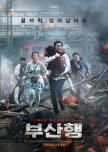
What a ride it was!
I can’t critically review this one effectively. I agree with them, so can’t add any more to the other well written 9 & 10 star reviews.All I can say is, for someone who shies away from horror and zombie movies, I loved Train to Busan! I highly recommend it to anybody who likes this genre.
The acting was perfect but honestly, the Zombies were the best. I believe the reviewers who said this is the best Zombie movie anywhere.
As a side note:
I cracked up during Episode 7 of Guardian: The Lonely and Great God (Goblin) where Kim Sin and Eun Tak go to the movies to see Train to Busan. Kim Sin cannot contain his fright at watching Seok Woo trying to protect his daughter from the zombies.
I read where that scene was an inside joke by the writers. For those who are unaware, Kim Sin and Seok Woo are both played by Gong Yoo. The behind the scenes of that scene in Goblin are even more hysterical to watch.
Was this review helpful to you?
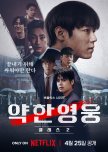
not for the faint at heart
This drama is not for the faint at heart and not one I suggest watching close to bedtime. it was highly violent and whenever PJH came out with a pen and used it, I gasped LOUDLY like I was standing right there.the story did lack depth, though. we needed more story to be truly invested in the lives of these boys. Nevertheless, I was hooked to the point of wanting a positive resolution/ending. But I needed more to emphasize with their choices and actions - with all the flashbacks I don’t think I fully understood why Baek Jin chose that path.
I hate to pick dramas apart too much, but the idea that such a level of bullying along with all that violence could continually occur in a highschool in a fully developed country, especially one with such high academic standards, without the teachers, and other adults on campus (let alone the parents) not knowing is mind boggling. does this really happen to this degree in Korea? where were the police?
I have to say the acting was excellent. EVERYONE did a great job especially Park Ji Hoon, Ryeo Un, and Bae Na Ra, our main villain.
The music added to the overall tone and did not distract. I personally won’t be rewatching this one because of the excessive violence. having said that, the fight scenes were so realistic (props to the choreographer) I felt some of those boys should have ended up with brain damage or worse. I won’t wait with baited breath but if/when Class 3 comes out, I will watch it…., once.😉
Was this review helpful to you?
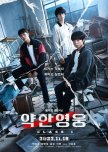
This review may contain spoilers
Park Ji Hoon is ahead of his time
I’m not into heavy violence but made an exception this time. i don’t very often watch highschool dramas but also made an exception this time. this is a really good story - the characters are fleshed out and the actors really brought life to them. PJH is ahead of his time. I think he is 22 or 23 in Season 1 - and his acting chops are like that of someone in their mid to upper 30’s. I love his character so much so that I wished happiness for him but I’m afraid he’ll have to graduate HS before he finds it because HS is definitely not going to be remembered as the good old days for him.hats off to the whole cast and crew!!!
the fight scenes are very realistic - too realistic for me, but like I said I made an exception. I doubt that I will rewatch this one for that reason.
Was this review helpful to you?
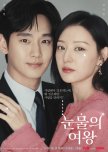
This review may contain spoilers
Love may be sparked by feeling but Love is an action word motivated by commitment.
Queen of Tears is being re-released marathon-style this weekend (6/3-5/26) in Korea. This feels like the perfect opportunity to revisit and review one of my favorite dramas and also respond to some of the criticism I’ve seen out there.To those who have thoughtfully articulated their criticisms on various sites, I respect you for clearly explaining your perspectives. However, to those who gave this drama a low rating after dropping it within the first three episodes, to keep ratings fair, I would respectfully suggest placing those early impressions in the comments section rather than the review section.
—The Acting
I believe the director of Queen of Tears used a restrained acting style between Kim Soo-Hyun and Kim Ji-Won for Baek Hyun-woo’s and Hong Hae-in’s characters. Meaning there was more silence and less dialogue, with much of the communication happening through eyes, facial expressions, delayed reactions, and unspoken emotions. I can see were this approach drew viewers into Baek/Hong's thoughts and feelings, making us experience their emotional journeys alongside them.
For me, much of the drama’s suspense came from these moments rather than from cliffhangers at the end of episodes. IMO, both Kim Ji-won and Kim Soo-hyun portrayed their characters with remarkable refinement and skill. Each displayed the wide acting range necessary to create truly multidimensional characters, the kind that we all love to watch.
Not only can Kim Soo-hyun portray profound sorrow, but he also excels at restraint. He masterfully utilizes subtle gestures and micro-expressions, communicating volumes without words. I’ve seen most of his dramas as well as Secretly Greatly. Never have I seen him display more varied gestures, expressions, or personality traits within a single character than he did with Baek Hyun-woo. As BHW, he convincingly portrayed boyish innocence, explosive anger, intense longing, devastating heartbreak, emotional collapse, and everything in between.
To the critics, how is that not great acting? But Kim Soo-hyun needs no defense from me.
Kim Ji-won has evolved into an exceptionally dynamic actress. I first enjoyed her performance in Descendants of the Sun, but there is a night-and-day difference between her acting range then and what she delivered in Queen of Tears. She gave us a subtly layered Hong Hae-in: a strong, uncompromising Type-A personality who is fiercely defiant but too proud to openly express emotions that might be perceived as weakness. Some of her funniest moments came through her indirect expressions of affection; asking leading questions, offering backhanded compliments, or scolding Hyun-woo before admitting he made her heart flutter. These moments, in my view, highlighted just how difficult it was for her to communicate genuine romantic feelings. As Hae-in’s journey with her illness and her relationship with BHW progressed, Kim Ji-won revealed her character’s deepest vulnerabilities at precisely the right moments and in exactly the right measure, making her both believable and relatable.
Queen of Tears would not have been the same story without both Kim Soo-hyun and Kim Ji-won. They were equals as actors, just as their characters were equals as man and wife. To reviewers or critics who say they had little or no chemistry is, in my opinion, to not have watched it or to have watched it with a heavy bias against one or both actors.
—The Character Development
*Kim Soo-hyun once remarked in an interview that Baek Hyun-woo begins the story as a loser. He was right. Hyun-woo was passive, submissive, and immature in his understanding of love. He believed enduring mistreatment without protest was an expression of devotion. Being constantly wounded by the Hong family—including his wife—became unbearable. He couldn't fight his circumstances so he convinced himself that he hated her as was revealed in the meeting with his psychiatrist (oh, the clever irony seeing Oh Jung Se as the psychiatrist. )
It would be no surprise that with that mindset, divorce was his only escape. Then came the shocking realization of Hae-In's impending death. We are to believe life with HHI and the Hongs was that unbearable. Again with his mindset, this would conveniently solve his problems. I agree with KSH and other critics, he was a loser and a coward.
*Hae-in sounded as though she understood what love was when she spoke to Eun-sung when he asked her about their relationship. In reality, she was every bit as immature as her husband. She seemed to believe that as long as Hyun-woo remained “by her side,” they would be alright. He said he would always be there, didn’t he?
At the beginning of the story, we see how thoroughly she has adopted her family’s arrogant sense of superiority, which justifies mistreating those of lower status for personal gain, even when that person is her husband. In the nursery removal scene, she hid behind that arrogance as a way of coping with the miscarriage.
These Baek-Hong warts are the foundation of QOT.
*While utterly foolish, Yang-gi’s suggestion that Hyun-woo pretend to love Hae-in in order to secure a place in her will became a blessing in disguise. Or…, perhaps it was a calculated move by Yang-gi to help his best friend see the truth beneath all the hurt. I doubt the latter, but it shows how much Yang-gi is in his BFF's court because he has witnessed BHW's life for the last 3+ years,
*Even though Hyun-woo cannot truly pull off hating Hae-in, he remained a coward by resisting the urge to start anything romantically with her. As her condition deteriorates, however, his resolve gradually crumbles and we see that buried love for her begin to reignite because, well, he never hated her to begin with. I loved when his mother scolded him later on when he confessed HHI's terminal condition. She was a strong woman with a gentle, loving spirit. If I had her for a mother, because I knew she loved me so much, that scolding would have been worse than any beating or rant.
*Of course, the pivotal moment for BHW comes in Germany. With both completely defeated, he deliberately provokes a divorce battle from Hae-in, not because he wants to leave her but because he desperately wants her to live. He gives her something to fight for, even if it is not with him. I believe this is where Baek Hyun-woo embraces what love truly is—not merely a feeling, but a choice and a commitment expressed through action.
In helping the Hong family escape to Yongdu-ri, Hyun-woo proves that love by devoting himself completely to protecting Hae-in and her family. We later learn that he contacted hundreds of cancer centers around the world in search of treatment options for her because he is desperate to keep her alive.
*Hae-in’s growth begins when she finally “wins” the divorce (props to Vincenzo / Song Joong Ki). It's at that point she begins to examine herself honestly and see Hyun-woo for who he truly is, the only man she could ever love. She realizes that he gives her a reason to live and that she cannot bear the thought of a future without him, in life or in death. For a fiercely independent and emotionally guarded woman, this was enormous character development.
When she found herself separated from the pressures of her corporate life in Yongdu-ri, Hae-in dropped her guard and, around Hyun Woo, she revealed a softer side she may never have known existed. The ultimate expression of her selfless love for HW came during the press conference, where she exposed Eun-sung's deeds in order to protect him.
Beyond Baek-Hong, the overall family relationships ultimately reinforced one of the drama’s central themes: that love outweighs money, status, and power. When they lost it all, they could finally see and appreciate each other.
*Beom-ja, although initially too eccentric to be taken seriously, became a scene-stealer, who consistently provided much-needed comic relief. She had been right along about Moh Seul-hee.
*Yang-gi also stole nearly every scene he appeared in (loved him). For me, his final scene with Hyun-woo in the car was one of the most memorable moments involving any supporting character in the entire drama. He was the friend to the end and he didn't want to lose him.
*Eun-sung’s, wonderfully portrayed by Park Sung-hoon,character arc never truly evolved beyond his obsession with possessing Hae-in and controlling Queens Group. He was still a juvenile wearing a 5,000,000 KRW suit. Despite the writers’ efforts, I don't believe viewers ever developed meaningful sympathy for him or for his mother, Moh Seul-hee. We were reminded how terrible a mother she was, more times than necessary.
Eun-sung did nothing to weaken the Baek-Hong relationship. If anything, he strengthened it. Despite all their resentment and misunderstandings, neither Hyun-woo nor Hae-in looked elsewhere. Eun-sung was never going to have a chance.
—The Story, the Second Half, HHI's Illness, Plot Extremes, and Valid Criticisms
Queen of Tears was approximately two years in the making, including about a year of filming. Across its roughly 23-hour runtime, Studio Dragon delivered a beautiful story about two people who had forgotten how deeply they loved each other and who rediscovered that buried love after a life-threatening tragedy nearly ended their relationship forever. It’s worth remembering that the drama was reportedly inspired, in part, by the real-life story of a Samsung heiress who married a regular employee.
Stories, fables, and even biblical narratives often use extreme or unrealistic circumstances to communicate deeper truths. I view many K-dramas through a similar lens. Not every detail needs to be realistic or true to life if the emotional truth resonates. This is why I can accept some of the more exaggerated elements of Queen of Tears. Even if one could dismiss parts of the story as unrealistic (real life often proves stranger than fiction, by the way), as someone who loved the drama, I can acknowledge its flaws.
* IMO too much screen time was devoted to the mechanics of the conspiracy against the Hong family. The writer and director likely felt it necessary to illustrate the lengths psychopaths will go to in pursuit of power and wealth, but I was not heavily invested in all of the related side characters and their storylines. Some of that time could have been spent further developing the Baek-Hong relationship.
* The Hong family—excluding Hae-in—sometimes came across as baphoonery in their trust of people who clearly sought to exploit them. Also, I found it difficult to believe, at first, that Hae-in’s mother remained trapped in grief over her son’s death for so many years, but truthfully, some people never fully recover from such losses.
* Grandfather, who trusted every word Baek said, suddenly placed his faith in a complete stranger and eventually removed Hyun-woo from the board. That transition felt uncharacteristic and unrealistically abrupt.
* The collapse of Queens Group and the attempted destruction of Hyun-woo’s legal reputation is where some viewers felt the drama lost focus. With so many moving parts, keeping track of everything started to get challenging. Grace’s role as a double agent often felt like a wrench thrown into the machinery of the plot.
* The exile to Yongdu-ri introduced additional storylines, some of which felt unnecessary.
Yet, the central focus did remain the Baek-Hong relationship. Every major event either contributed to or reflected their gradual surrender to the love they had spent years suppressing, even burying.
* Critics who argue that Hae-in’s illness lacked realism make a very fair point. It did show some of her illness’ effects, but the drama could and should have done more to show more of the effects of her illness. She was in the hospital once, briefly, but recouped amazingly quick. But wait…., she’s dying, isn’t she she? Also, her post-surgery recovery was far more glamorous than reality would allow. Still, those shortcomings were not deal-breakers for me. KDramas tend to lack that medical realism unless it's actually a medical drama.
* The arrest in Germany, the kidnapping, the hit-and-run, Hyun-woo somehow leaving the emergency room in one piece, and the winter gunshot sequence all pushed the boundaries of plausibility. But most of these 2nd half plot twists or narrative devices were designed to intensify the emotional climax between Baek Hyun-woo and Hong Hae-in. They forced the building of a new relationship between two people who thought they knew each other but, in some respects, were strangers.
Alchemy of Souls was pure fantasy (one of my least favorite genres) yet audiences embraced it because they connected emotionally with the characters. The same principle applies here.
—Why I Still Rate It So Highly
Even someone who loves Queen of Tears can acknowledge its flaws and still give it a 9 or 10.
Why?
Because, taken as a whole, the drama speaks to the heart.
I have never been wealthy, nor did I marry into a wealthy family. Yet the relationship between Baek Hyun-woo and Hong Hae-in reminded me of my own marriage. Both our love for each other was immature in the beginning and we definitely experienced our share of dramatic and difficult moments. Then, in our sixth year together, my husband began suffering life-altering medical episodes while still appearing healthy on the outside. A year later, he died. Looking back on our life together, I felt like I could have been a better partner and blamed myself for a long time over mostly trivial things. What I wanted was for him to come back. Anyway, I eventually realized something important: he never held my shortcomings or my mistakes (big and little) against me. He had made plenty of his own. And I never held his mistakes against him either. In retrospect, we always understood that about each other, even during our worst moments.
That realization changed how I viewed Queen of Tears. Forgiveness and acceptance are two of the highest forms of love in action.
—Why is Queen of Tears a treasured story for many?
I am certain I am not the only viewer who found pieces of their own life reflected in this drama.
Queen of Tears may contain over-the-top moments, but many viewers accept them because extraordinary moments exist in ordinary lives. We just don’t read about them every day. In the end, despite its plot holes, detours, and occasional excesses, Queen of Tears succeeds where it matters most:
It reminds us that love is not merely something we feel. Love is a choice. It is an action word. And it is not for the faint of heart.
Was this review helpful to you?
This review may contain spoilers
My Dearest (1&2) joins the ranks of the classics
This drama is everything the 9/10 star reviews say!Gil Chae was a brat at first and Jung Hyun ‘held his cards close’ for good reason. Gil Chae needed to grow up and she finally did. Their individual stories are equally interesting. They both put others ahead of themselves in their own ways. Both were extraordinary people in their own right ultimately becoming each other’s match.
Gil Chae, especially, proved to be very resourceful in nearly every situation she faced. Yes, she was afraid many times, but didn’t have time to give into her fear, keeping one foot in front of the other. I loved how JH was her silent, secret hero several times throughout. Jung Hyun, having seen corruption his whole life, was a master negotiator. A pascifist at heart, he made his actions count for the good of the innocents.
Part 2 explores their journeys even more as the events around them force their trajectories in opposite directions until they come full circle back to each other. I love how honorable they are, not bending to the pressures around them with the lives of others their highest priorities.
Gil Chae’s husband - a liar we will discover - was similar to Yeon Jun - loyal to tradition and an emotionally bankrupt king (YJ was better than him though). How he could leave her in China and not look back was horrible as it showed how some men only valued their women to the extent that they fell within specific expectations - even those outside their control. (This general mindset is not unique to historical or modern day Korea.)
Again, Namkoong Min and Ahn Eun Jin were equally exceptional and perfectly cast in this drama. Neither outshined the other as they played their own roles as well as into each other’s roles perfectly. AEJ gave such believable, intense emotions - I could feel what she was feeling. Sometimes I was even breathing like her, my heart wanting to leap out of my chest (last 15 minutes last episode the most recent example). Jung Hyun had a full basket of sides to his character and NMK delivered each side perfectly. You could you feel his heart for the captives, his coyness much of Part 1, and that unmistakable, unabashed desire for Gil Chae.
Lee Hak Joo as Yeon Jun and Lee Da In as Eun-Ae were also excellent as the second main leads. YJ was honorable to a fault - so blinded by his loyalty to an emotionally corrupt King. I wanted to write him off more than once. Eun-Ae was loving and loyal to both YJ and GC to the end. I appreciated Yeon Jun’s character arc where he finally saw through the traditions that wrecked havoc on innocent lives, including his own wife’s life.
Ryang Eum was kind and wholly devoted to JH. But in Part 1 he was a mixed bag of hlove, loyality, and deceit. Once the deceit issue resolved, he remaied loyal to and protective of JH. Even though I was angered by his deceit, my heart went out to him - he was literally lost without Jung Hyun.
I was so emotionally invested in this story, I had to stop watching Episode 10 (20) when the Princess of Qing let Jung Hyun go. I recalled the very first episode and knew the story was going to turn south and I couldn’t handle Jung Hyun’s demise. It took nearly 2 months for me to return to it and finish the last episode and a half.
To my delight it had an unexpected, lovely and perfect ending.
This is a beautiful story complete with all the feels! Watch if that appeals to you. You will not be disappointed as this is a new classic among KDramas.
Did I mention the very handsome Namkoong Min has the most beautiful eyes???
Was this review helpful to you?

This review may contain spoilers
Part 1 is incomplete without Part 2
This is everything the 9/10 star say!Gil Chae is a brat at first and Jung Hyun ‘held his cards close’ for good reason. Gil Chae needed to grow up before he was going to confess his heart to her. Their individual stories are equally interesting - putting others ahead of themselves. They were both extraordinary people in their own right ultimately becoming each other’s match.
Namkoong Min and Ahn Eun Jin were equally exceptional and perfectly cast in this drama. Neither outshined the other as they played their own roles - as well as into each other’s roles - perfectly. AEJ gave such believable intense emotions. I could feel what she was feeling. Sometimes I was even breathing like her, my heart wanting to leap out of my chest (last 15 minutes last episode the most recent example). NMK was a full basket of sides to his character and he delivered each side perfectly. You could feel his heart for the captives, his contempt for the dysfunctional king, his annoyance at the hypocrisy in the nobles, and his love for Gil Chae.
Lee Hak Joo as Yeon Jun and Lee Da In as Eun-Ae were also excellent as the second main leads. YJ was honorable to a fault - so blinded by his loyalty to an emotionally corrupt King. I wanted to write him off more than once. Eun-Ae was loving and loyal to both YJ and GC to the end. Such a wonderful character.
Ryang Eum was kind and wholly devoted to JH but in Part 1 a mixed bag of that love, loyalty, and deceit.
This is a beautiful story complete with all the feels! Watch if that appeals to you. You won’t be disappointed.
Did I mention the very handsome Namkoong Min has the most beautiful eyes????
Part 1 is incomplete without Part 2. See part 2 review for more thought.
Was this review helpful to you?


