
 News


 1


This review may contain spoilers
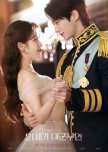
A royal contract marriage with perfect visuals
This was a long anticipated drama for me! Did I expect it to be better? Maybe a little, but honestly I still liked it a lot. It may not become one of my all-time favorite dramas, but I definitely consider it a very decent and enjoyable watch. I have a soft spot for royal dramas and contract marriages, so this was already a combination I was bound to enjoy.There were many comments about Byeon Woo-seok’s acting, but personally I think he did a very decent job, and IU is always a rom-com queen to me. Their chemistry was also very nice — not overly explosive to the point where dating rumors would overshadow the drama, but natural and comfortable. They genuinely seemed to get along well on screen.
I also loved the second couple and the aides; they were such a sweet and refreshing presence throughout the story. I’m especially happy that Hui Ju’s relationship with her father and brother became warmer by the end. Not perfect — because that would honestly feel unrealistic after everything — but definitely healthier and more heartfelt. Ironically, in When Life Gives You Tangerines IU played a daughter with one of the warmest father-daughter relationships ever, while here they practically felt like enemies for most of the drama 😭 I also loved the relationship between her brother and sister-in-law; they were genuinely sweet together.🩷
Now about the villains: the Queen Mother did terrible things for most of the story, and for a long time her intentions were difficult to understand. At least by the end she showed remorse and some emotional growth. That doesn’t suddenly make her a good person, but it makes her feel more human and layered. People are rarely completely good or completely bad, and I appreciated that complexity. Even in episode 12 she’s still demanding as a mother, but at least there was some progress.
The one character I really couldn’t justify was the Prime Minister. He was a true villain, and I honestly expected a stronger explanation for his actions than simply “don’t drag Seong Hui Ju into this.” Like… why exactly? She was never his in the first place 😭 He knew her for 30 years and still ended up destroying everything because of his obsession? I needed more depth there.
I liked the overall story and especially the idea of the Crown Prince wanting to live more like a normal person and eventually stepping down from the crown. Also, can we talk about the Iloom advertisement scene I laughed so hard because it instantly reminded me of the original ad with Byeon Woo-seok and Chae Soo-bin — especially the table in the rain 🤣
And honestly, Byeon Woo-seok looked his best in episode 12. He was handsome throughout the drama of course, but the casual styling suited him so much more than the royal outfits. Visually, he and IU were also a gorgeous pairing.
Overall, I’m glad I watched this drama and I’d recommend it to anyone looking for something mostly light and entertaining, while still touching on heavier emotional themes at times.
Was this review helpful to you?

This review may contain spoilers
An electrifying rom com
Overall, this was a fun and entertaining watch, even more than I expected, to be honest!The plot is based on a webtoon, so naturally, it includes quite a few clichés. But honestly, which K-drama doesn’t have its fair share of clichés? It’s a fantasy rom-com, so they’re pretty much expected! And, of course, since it’s a fantasy, it’s not supposed to be realistic. That’s perfectly understandable, I’d say! So, if you’re someone who only enjoys realistic stories, this probably isn’t the drama for you!
Personally, I found it lighthearted and incredibly enjoyable! I had so much fun watching it, and I laughed so much throughout the show!
Actually, I’ve heard some people say that they could predict everything that happened, but that wasn’t the case for me! Naturally, I expected a happy ending, and I had a feeling that Bo-bae would somehow lose her powers, but that was about it! I definitely couldn’t predict everything that happened in the middle of the series!
Now, about the characters!
Na Bo-bae is such a cutie and a genuinely warmhearted person! She has her own struggles, both personally and professionally, and her powers have made it difficult for her to have normal physical contact with other people, which adds another layer to her character.
Baek Ho-rang might seem cold at first glance, but he’s actually such a pookie and an absolute sweetheart!
The second male lead was also such a good person! I really liked his character, and honestly, he would have been a great choice for Bo-bae if Ho-rang had turned out to be a red flag! I almost developed second-lead syndrome!
As for the second female lead and the cousin, they were both extremely narcissistic and selfish characters who were willing to commit crimes just to get their way! My main problem with them was that I couldn’t really see any character development or even the slightest hint of remorse. Their complete lack of empathy made them seem almost sociopathic! I would have liked to see them face some consequences for their actions, to be honest!
And that’s about it for the main characters!
Now, let’s talk about the actors!
They were all great! Even the actors playing the villains were incredibly convincing! I genuinely couldn’t stand their characters, which is a good sign because it means they did their jobs really well!
Cha Woo-min was such a pleasant surprise, and I really liked him! I’ve officially become a fan, and I hope to see him as a male lead soon! He definitely deserves it!
And now… Kim Young-kwang and Chae Soo-bin!
Their chemistry wasn’t overbearing or forced. It felt natural, effortless, and excellent! It was just so, so good! I APPROVE!
Kim Young-kwang… how we’ve missed seeing his romantic side! His charm was very much appreciated in this drama! His microexpressions are genuinely impressive, and he delivered such a lovely performance!
Chae Soo-bin was amazing as well! She’s the queen of rom-coms, and she portrayed Bo-bae beautifully! She was absolutely hilarious at certain points!
Although, I can confidently say that her characters clearly haven’t watched Vincenzo, because both Hee-joo and Bo-bae seem perfectly willing to drink from whatever bottle they find in a car! 😅
Choi Min-ho was another pleasant surprise! I really liked the parallel between the bodyguard and CEO dynamic, and it actually made me want to see Chae Soo-bin in a drama with a similar concept! I’d love to see her playing a cold CEO or even an evil character for a change! I genuinely think she could nail either role!
Final thoughts!
All in all, I think this is a lighthearted, warm, and funny drama! It’s entertaining, charming, and simply a good time! It’s not the kind of show you should overanalyze or take too seriously, especially considering that it’s a fantasy rom-com!
Sometimes, a drama doesn’t need to be groundbreaking or completely unpredictable to be enjoyable. Sometimes, all it needs to do is make you smile, laugh, and have a good time!
And for me, this drama did exactly that! 💗
Was this review helpful to you?
This review may contain spoilers
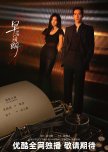
The romance story I’d be glad I never experienced in real life!I don’t know, maybe this is an unpopular opinion, considering how many critics have praised this kind of relationship. And okay, I can accept the fact that it’s realistic. We’re talking about two people with flaws, after all.
But… this relationship is early winter, not early spring!
It’s toxic!
Luke is arrogant, harsh, controlling, and manipulative most of the time, although he can occasionally be protective. You can never really tell whether he genuinely loves Flora or simply enjoys being the one who hurts her, as long as nobody else gets to.
And perhaps that’s what makes his character so frustrating. He may care deeply for Shang Zhitao, but he struggles to give her the emotional reassurance and security she needs. His problem isn’t necessarily a lack of love. It’s his inability to love her in a way that makes her feel valued.
And isn’t that just as important as love itself? Because what good is loving someone if the way you treat them constantly makes them question their own worth?
Here’s a man who is supposed to establish and enforce boundaries at work, setting all these rules for everyone else, yet somehow he’s the one who gets to break them by entering into a “secret relationship” with a newbie!
Even his choice of Flora is interesting. Out of all the beautiful women around him, he chooses the one he can control most easily because she’s young and deeply insecure. Was it really love, or was it a strategic choice?
At one point, he even tells her to her face that she’s the easiest person to manipulate! And then he has the audacity to get angry with her for not telling him she was sexually harassed.
I wonder why!
Even after they get together, he takes almost every opportunity to belittle her whenever something goes wrong.
But, of course, Luke isn’t the only one who contributes to this unhealthy relationship. Flora has her own share of responsibility, too.
She knowingly enters a relationship with her boss, fully aware that it will have to remain a secret and that, at least initially, it will be limited to weekends. How much clearer could the warning signs have been?
And after all the miscommunication, the belittling, the constant undermining of her personality, and the devaluation of her feelings, she chooses to stay. Over and over again. All it takes is a few crumbs of affection and reassurance from him, and she’s willing to give the relationship another chance.
So, is she responsible for some of her choices? Yes.
Is she insecure and lacking confidence in herself? Also yes!
But there’s another side to this. Flora repeatedly hides things from Luke and lies to him. And while that behavior isn’t healthy, I can understand where it comes from.
Every time she keeps something from him, it’s usually because he has already judged, insulted, or belittled her. Out of pride, she refuses to give him another reason to confirm his negative opinion of her.
She wants to protect herself, preserve her dignity, and prove that she has value. And that desire is perfectly healthy!
But the fact that she has to hide things from her own boyfriend just to maintain her self-respect? That is anything but healthy.
Another thing that bothers me is how Luke is portrayed in comparison with the other men around him. He’s certainly no saint, but almost every potential competitor turns out to be unethical, manipulative, or downright villainous. Take Alex, for example.
It’s almost as if the story needs to make everyone else look worse so that Luke can appear to be the better choice.
But being better than someone terrible doesn’t automatically make you good!
And here’s the thing: relationships like this, and people like Luke and Flora, exist everywhere.
It could be you. It could be me. It could be your friend, your colleague, or the person living next door.
But just because something is realistic doesn’t mean it should be acceptable.
The problem isn’t that these characters have flaws. Of course they do! Everyone does. Expecting perfection from a partner would be completely unrealistic.
But, to my way of thinking, that’s not what a relationship is supposed to be about.
Your partner should be the person who gives you a break from the harshness of reality. A shoulder to lean on. A source of comfort and reassurance. Someone who accepts you for who you are, including your imperfections, and helps soften your insecurities rather than exploiting them.
And for me, that is non-negotiable.
We don’t get to choose our families. They are who they are, with all their virtues and flaws, and we have little control over that.
But we do choose our partners and our friends.
And those choices say something about who we are, what we value, and the kind of people we want to become.
So, even if Luke and Flora’s relationship is passionate, intense, and perhaps even rooted in genuine love, I don’t think it’s mature or healthy enough to realistically become an endgame relationship.
And if someone isn’t looking for a lasting relationship and simply wants to follow their instincts and enjoy the passion, that’s perfectly fine, too—as long as neither person ends up hurting themselves or the other.
But passion alone doesn’t make a relationship worth keeping.
And that brings me to another famous example of a toxic yet passionate romance: Christian Grey and Anastasia Steele.
Did they end up together? Yes.
Was their happy ending more of an exception than the rule? Also yes!
But is that really the kind of romance you could expect to find next door, with a realistic chance of ending the same way?
Definitely not!
Because, at the end of the day, I can understand why a toxic relationship might make for an addictive romance novel.
But I don’t believe that a love story being compelling to read makes it a love story worth living.
Thank you if you actually made it through this entire review! 😂
Of course, this is just my personal opinion, and trust me, I’m someone who often finds herself drawn to red-flag characters! But this time, it was simply too much for me, especially when it came to the relationship dynamics and the way the characters’ psychological profiles were developed.
That being said, huge congratulations to the actors! Their performances were incredibly convincing, and their chemistry was undeniable. They really brought these complicated characters and their relationship to life!💛
Was this review helpful to you?

This review may contain spoilers
Where the power struggle begins
I would say that where The Mask Ends has a rather unique story. I also read the novel, but I actually preferred the drama. I can’t quite put my finger on what was missing from the novel, but the drama brought the struggles, politics, and palace intrigues to life in a much more compelling way. Most importantly, it portrayed just how difficult it was for a woman to survive, assert herself, and take control of her own destiny in that era.
I was absolutely obsessed with this drama!
I know many people compared it to The Pursuit of Jade, especially because of Tian Xiwei, but I have to admit that I enjoyed where The Mask Ends much more. I don’t know whether I’m in the minority here, but I found its story far more interesting.
And although many viewers loved Tian Xiwei’s chemistry with Zhang Linghe, I personally thought her interactions with Yan An were absolutely perfect and incredibly sweet.
Now, let’s talk about the story.
Wei Rao is a wealthy, spoiled young woman who was separated from her mother at a very early age . She has a terrible personality, treats her maids and everyone beneath her very poorly, and can be downright malicious.
When an arranged marriage threatens to tie her to a gravely ill man who is expected to die soon, she refuses to accept her fate. She has no intention of becoming a widow, so her aunt devises a plan to find another girl who looks exactly like her and have that girl take her place.
A-Tsu, on the other hand, is an extremely poor young woman who is equally desperate to escape her circumstances. She has worked since childhood, suffered mistreatment at the hands of her family, and lived in miserable conditions. Her situation becomes even more tragic when a man, whom her supposed father has deliberately put in her path, attempts to rape her. In defending herself, she ends up killing him.
Because she is poor and has no one to protect her, she faces the death penalty.
This is when Wei Rao’s aunt approaches her with an offer. Desperate to survive, A-Tsu agrees to impersonate Wei Rao and marry Lu Zhuo, a gravely ill war hero who has returned from battle physically and emotionally traumatized.
Everyone expects Lu Zhuo to die soon. His grandmother, however, insists on the marriage because she believes it will bring good fortune and help her grandson recover.
And that is how everything begins.
Lu Zhuo already knows about Wei Rao’s terrible reputation and has absolutely no desire to marry her. So when he wakes up and finds the woman he believes to be Wei Rao lying beside him, he is furious.
And so begins their complicated relationship.
What makes A-Tsu so different from the Wei Rao everyone knows is her intelligence, kindness, and strong sense of justice. She treats people with respect regardless of their social status and cannot tolerate seeing others mistreated simply because they are poor or powerless.
She isn’t hysterical or unnecessarily dramatic. She is thoughtful, resourceful, and determined. Above all, she simply wants to live.
And that is what makes her character so touching. She cannot understand why something as basic as the right to live should be so difficult to obtain simply because she was born poor.
Lu Zhuo, meanwhile, constantly questions her intentions and repeatedly puts her to the test. Yet, little by little, his suspicion gives way to curiosity, admiration, and eventually affection.
Their relationship goes through many difficulties. They separate, reunite, and eventually remarry. Along the way, A-Tsu discovers the truth about her identity: she is actually the real Wei Rao.
The woman who has been living as Wei Rao all these years is her cousin, her aunt’s daughter. Her aunt orchestrated the entire deception after the real Wei Rao was abducted as a little girl.
And isn’t that tragic?
The real Wei Rao spent her entire life living in poverty, only to return to her own world as an impostor. She had to pretend to be someone she had actually been all along.
For me, however, the most fascinating aspect of this drama is the deeper meaning behind its story.
When you consider the position of women in Chinese society during that era, you realize just how limited their choices were. A woman could be forced into marriage without having any say in her own future. If her husband died, she could be expected to remain a widow for the rest of her life, sacrificing her happiness and freedom to satisfy society’s expectations.
And for poor women, servants, and maids, life could be even more unbearable. Their social status determined how they were treated, what opportunities they had, and sometimes even whether their lives were considered worth protecting.
Interestingly, Wei Rao’s own mother is an example of a woman who refused to accept those expectations.
In a way, she was the one who started it all!
She was ambitious and wanted glory and power. After becoming a widow, she wanted to marry the Emperor rather than spend the rest of her life mourning her deceased husband.
Many people judged her for that decision, and even Wei Rao was judged simply for being her daughter. Her mother was also condemned for abandoning her child in pursuit of the life she wanted.
Of course, Wei Rao resented her mother, especially for failing to recognize her and questioning her identity. She wanted to be part of her mother’s life, to live with her, and to receive the love and recognition she had been denied for so many years.
But I don’t think Wei Rao ever truly judged her mother for wanting to live her own life.
On the contrary, I believe she understood that aspect of her mother’s personality very well. After all, Wei Rao herself repeatedly said that all she wanted was to live.
And isn’t that one of the most interesting parallels between mother and daughter?
Both women wanted to escape the limitations imposed on them. Both wanted the freedom to decide their own futures, even if their choices were not always understood or accepted by others.
Wei Rao was certainly not a perfect character. She used people when necessary, manipulated situations to her advantage, and did whatever she could to secure support and make her plans succeed.
But that doesn’t mean she was heartless.
Quite the opposite, actually.
She genuinely cared about the people around her. She simply didn’t want to become overly emotional or reveal too much of herself. She had a somewhat tsundere personality, often hiding her affection behind a cold attitude, sharp words, or apparent indifference.
I think she was someone who didn’t really know what love was or how to deal with it when it was finally offered to her.
And this becomes especially obvious in her relationship with Lu Zhuo.
When he opened his heart to her, she didn’t know how to respond. She was so accustomed to protecting herself, calculating her next move, and relying on her own intelligence that accepting someone’s unconditional affection was almost frightening.
I know many viewers criticized Lu Zhuo for his behavior toward her. Some even argued that he lacked self-respect because he kept pursuing a woman who didn’t always give him the emotional reassurance he wanted.
And I can understand where that criticism comes from, especially when it comes to the novel.
In fact, I found this aspect of their relationship much more frustrating in the novel. Wei Rao rarely shows vulnerability or affection. Most of the emotions she expresses toward Lu Zhuo seem to be anger, irritation, or negativity. As a result, I sometimes struggled to understand why he remained so emotionally vulnerable and devoted to her.
In the drama, however, I saw their relationship very differently.
I think Lu Zhuo simply came to accept Wei Rao for who she was.
He understood that she wasn’t someone who could easily express her feelings or show vulnerability. Of course, he wanted more from her. He wanted reassurance, affection, and some confirmation that his love was reciprocated.
But he also understood her personality and accepted that she expressed herself differently.
And I found that rather romantic.
The drama’s version of Lu Zhuo was sweet, devoted, and perhaps a little insecure when it came to her feelings for him. He wanted to know for certain that she loved him, and eventually, he managed to get that reassurance.
To me, that didn’t make him pathetic. It made him someone who was deeply in love with a complicated woman and was genuinely trying to understand her.
And this brings me to what I consider one of the biggest differences between the novel and the drama: the depth of Wei Rao’s character.
In the drama, Wei Rao is so much more than a beautiful woman.
She helps people. She takes care of those around her. She can be manipulative, calculating, and occasionally selfish, but she also genuinely loves her maids and the people who support her.
She loves her mother and brother, even though her relationships with them are complicated. She cares about her grandmothers, Lu Zhuo, and his family.
She is someone who fights for her life and refuses to surrender to her circumstances.
She trusts people and gets betrayed. She makes mistakes, takes offense easily, and sometimes overreacts. At other times, her anger is completely justified.
She is intelligent, ambitious, stubborn, and emotionally guarded. She wants power, not simply for the sake of having it, but because she understands just how powerless a woman can be without it.
And that is exactly what made her so interesting to me.
In the novel, unfortunately, I didn’t find that same depth. All I could see was a beautiful woman, nothing more and nothing less. She could be easily offended, sometimes overreacted, and occasionally had every right to be angry, but I never truly felt that I was following the journey of a woman gradually gaining power and control over her own life.
The drama gave her something more meaningful.
It portrayed a woman who had experienced poverty, injustice, betrayal, and rejection, yet continued fighting for a better future.
A woman who learned how to survive in a world where survival itself was never guaranteed for someone of her social standing.
And most importantly, a woman who could be both calculating and compassionate, strong and vulnerable, loving and emotionally distant.
That complexity is what made her feel human.
I also absolutely loved the chemistry between the two leads. Tian Xiwei and Yan An looked beautiful together, and their interactions had a natural sweetness that made their relationship even more enjoyable to watch. I even watched some behind-the-scenes clips, and I have to say, they were incredibly sweet there as well!
Ultimately, where The Mask Ends was much more than a romance for me. It was a story about identity, survival, ambition, class inequality, and the limited choices available to women in a society that constantly tried to control their lives.
It was about a woman who was denied her identity, her family, and her rightful place in the world, yet somehow managed to reclaim them all.
And perhaps what I loved most was that Wei Rao didn’t have to become a completely different person to deserve love. She remained stubborn, complicated, guarded, and sometimes difficult, but she was also capable of kindness, loyalty, and genuine affection.
She was not a perfect heroine, and that was precisely what made her so fascinating.
An absolutely addictive drama overall! I was obsessed from beginning to end!
Was this review helpful to you?
This review may contain spoilers
Romance thrillers are the best
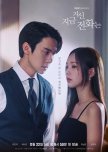
Overall ImpressionWhen the Phone Rings stands out as a highly engaging thriller with a strong emotional core. Despite its darker themes, it has significant rewatch value, largely due to the strength of its central relationship and character development.
Characters and Performances
The highlight of the drama is the dynamic between the leads, played by Yoo Yeon-seok and Chae Soo-bin. Their chemistry is convincing and carries much of the narrative. Yoo Yeon-seok delivers a layered performance, portraying a character shaped by identity struggles and emotional restraint. Chae Soo-bin is equally effective, particularly in her use of sign language and non-verbal expression, which adds depth to her role and enhances the emotional impact of the story.
Character Development
Sa-eon is written as a character who struggles with emotional expression due to his upbringing and lack of personal identity. His initially distant behavior toward Hui-ju reflects this internal conflict rather than simple indifference. While some of his decisions—such as going to a war zone—can seem extreme, they are consistent with his psychological state and past experiences. His development becomes more apparent after key events, particularly as he begins to confront his own emotional limitations.
Hui-ju’s character arc is equally significant. Her low self-esteem and silence are rooted in her upbringing, making her one of the more complex characters in the narrative. Her gradual shift toward asserting herself and seeking change provides an important counterbalance to Sa-eon’s development.
Plot and Structure
The drama effectively combines thriller and romance elements. One of its strengths is the gradual revelation of information, which maintains suspense across episodes. The use of incomplete information encourages viewer engagement and adds tension to the narrative.
However, certain plot points rely on heightened drama and may feel less grounded. While these moments can be justified within the emotional logic of the story, they occasionally weaken the overall realism.
Themes
A central theme of the drama is the importance of communication in relationships. Despite the strong emotional bond between the main characters, their inability to express their thoughts and feelings creates conflict and distance. The story suggests that emotional connection alone is not sufficient without clear communication.
Supporting Characters
The second leads are handled in a restrained way, avoiding unnecessary romantic conflict with the main couple. This decision helps maintain focus on the central relationship. While their own chemistry is less pronounced, their presence supports the overall narrative without becoming a distraction.
Conclusion
When the Phone Rings succeeds primarily due to its strong performances and emotionally compelling central relationship. While some narrative choices rely on dramatic exaggeration, the consistency of the characters’ emotional arcs allows the story to remain engaging. Its combination of suspense and romance, supported by effective acting, makes it a memorable and rewatchable drama.
Was this review helpful to you?

This review may contain spoilers
I can’t believe I have to say this, but I can’t finish this… at least not now 😭 I’m a huge fan of Ahn Hyo Seop, but this drama is… a bit boring to me. The story feels so uninteresting and predictable.It’s my first time seeing the female lead and she’s okay, but the chemistry feels a bit off. I just can’t say I’m invested in their couple. Honestly, I find the secondary couples more interesting, and I think that’s a problem.
Also, although I love Kim Beom… why did they waste him so much? 😭 The triangle feels completely unnecessary. The main romance isn’t even interesting enough for a triangle in the first place, and his character feels more like a side character.
So the biggest problem for me is definitely the plot. Like… really? It feels like a very basic drama with nothing special, and it reminds me so much of The Potato Lab and Hometown Cha-Cha-Cha.
I have to drop this, but I’ll still cheer for them in the future 🥲 I think it’s just not everyone’s cup of tea.
Was this review helpful to you?
This review may contain spoilers
Mozart vs salieri
I think many people can relate to Kang Pi O because he represents someone who works incredibly hard but constantly finds himself overshadowed by someone more naturally gifted. No matter how much effort he puts in, he always seems to come second to Jeong Yo. And honestly, there’s something heartbreaking about that.But what frustrated me the most was how his own family treated him! Even if Jeong Yo was the more talented pianist, why did Pi O have to be constantly belittled and made to feel inadequate? His mother’s actions were particularly upsetting, and his grandfather only became something resembling a father figure towards the very end, after Pi O had spent his entire life desperately seeking love and recognition.
Yes, Pi O came from a privileged background and didn’t experience the same tragedies as Jeong Yo, especially losing his mother. But that doesn’t mean he had an easy life emotionally! Financial security doesn’t compensate for emotional neglect, constant criticism, or growing up feeling that you’re never good enough. Suffering shouldn’t be a competition, and Pi O’s struggles shouldn’t be dismissed simply because they were different.
Even his teacher frustrated me! I understand that classical music is an extremely demanding field where talent, discipline, and criticism are essential. But there’s a difference between constructive criticism and constantly making someone feel inferior. Especially in the beginning, instead of suggesting that Pi O find another teacher or making him feel as though he should give up, why couldn’t someone simply guide him differently? Why not tell him to stop obsessing over technical perfection and finally learn to feel the music? He was clearly dedicated and willing to improve. Didn’t that deserve at least some encouragement?
And that’s what bothered me most about the drama’s treatment of talent versus hard work. Of course, extraordinary talent can allow someone to make history and achieve greatness that hard work alone might never accomplish. I have absolutely nothing against celebrating that kind of brilliance. But does that mean the dedication of people who aren’t naturally gifted should count for nothing?
Not everyone is born a genius, and not everyone will become the greatest musician of their generation. But why should that make their dreams any less meaningful? Why should someone be discouraged so harshly simply because they don’t possess exceptional talent? Pi O didn’t necessarily need to surpass Jeong Yo to become a good pianist or find fulfillment in music.
Perhaps it’s just my personal belief, but I think hard work deserves recognition, even when it doesn’t lead to extraordinary success. We can admire the most gifted individuals without dismissing everyone else’s efforts. Appreciating one person’s brilliance shouldn’t require making another person feel worthless! I couldn’t always tell whether the drama was criticizing this obsession with natural talent or unintentionally reinforcing it.
I also found the ending somewhat confusing. What exactly was Pi O and Jeong Yo’s relationship supposed to be? Friends? Something romantic? There was definitely emotional tension between them, but I wish the drama had given us a clearer understanding of their feelings. I’m not particularly into BL dramas, but I wouldn’t have minded that direction if it was what the story intended. I simply wanted their relationship to feel more emotionally resolved.
And what was the point of Hong Jae In’s character? Was she really supposed to be one of the leads? Did Pi O ever genuinely like her? She often felt like a third wheel, and I wish she’d been given more meaningful development rather than remaining so underexplored.completely unnecessary character
Overall, I still think 4 Hands, 2 Sonatas was a good drama, but these things really bothered me. I appreciated that Pi O’s grandfather eventually recognized his mistakes and tried to make things right, but why did it have to take so much pain for someone to finally acknowledge his worth?
What makes Pi O’s story so heartbreaking isn’t simply that he was less talented than Jeong Yo. It’s that the people around him made him believe his worth depended on whether he could ever catch up.
He wasn’t asking to be treated like a genius. He just wanted someone to believe in him, appreciate his efforts, and love him for who he was.
Because being second-best at something should never mean being second-best as a person.
I want to give credits to all the actors especially since it’s the come back of song kang!they were both very good and Lee Jun young had eventually to act as 2 different people!because the jeong yo that returned to Korea after the years to achieve his nemesis was a complete different one from his original character!that was interesting although that seems that he didn’t know or trust pio that much!he believed he would do anything to become the best!and I don t know how to feel about that for whatever their relationship was!
Also congrats to the mother and grandfather!they were both horrible so they were great at their roles!
Was this review helpful to you?
This review may contain spoilers
Relevant social issues
Overall, it is a very good drama about school violence and much more. It addresses various issues and situations that arise between parents, students, and teachers. Unfortunately, this has become a reality and has evolved into both a social and moral problem.🥲The series does use the “eye for an eye” approach, which I am generally not in favor of. However, in these particular cases, because of the extreme personalities and circumstances involved, it is presented as the only viable solution. One quote from the main character in the first episode really stayed with me: “Some people learn through words, while others are taught through actions.” There is a lot of truth in that.
Of course, I wish that extreme measures like those shown throughout the episodes were never necessary. However, in some situations, dialogue alone is not enough, and it often leads to a vicious cycle rather than a solution.
Since similar incidents have been increasingly observed in my own country—not just in Korea—and because the education system is often struggling to function effectively, I believe the issues explored in this drama represent a global plague that continues to worsen over the years, especially with the rise of technology. School violence, cyberbullying, abuse of power, drugs and institutional failure are no longer local issues but worldwide concerns that affect countless young people.
Naturally, even within the story, our inspector protagonist—who lost his fiancée—manages to carry out this mission with the support of his future father-in-law, who is a minister, along with a team of two additional assistants. Even here, the drama subtly suggests that without support from the political sphere, such an undertaking would not be possible.
I particularly appreciated the minister’s attitude. Despite losing his daughter, his goal was not to use his power to destroy the perpetrator or seek revenge. Instead, he chose to use his influence to continue the work his daughter had dedicated her life to as a worthy and passionate educator before her murder. He refused to let her sacrifice be in vain.
In the midst of unimaginable grief, he chose to see things in a positive light and tried to do the right thing. Rather than abusing his authority for personal reasons, he used it to serve the greater good. To me, that is the true greatness of a father who made the conscious decision to respond in such a way. It is extremely rare. Even rarer is the fact that he is a politician who chose not to put his power and influence first. If there were even one person like him in every country, the world would be a slightly better place.
I also believe this drama has excellent character development and feels very realistic,when it comes to that. The former soldier and fiancé who lost the woman he loved initially wanted to kill her murderer, but his father-in-law convinced him otherwise and brought him into this mission. Years later, he is still struggling with his anger—which is completely understandable—yet he constantly tries to do what is right. Throughout the story, he is also forced to confront the very person responsible for his fiancée’s death, making his internal conflict even more intense as he struggles between his desire for revenge and his commitment to justice. This emotional battle is one of the strongest aspects of his character arc.
Then there is his hot-tempered assistant, who was also a victim of bullying. He saved her, and ever since, despite her impulsive personality and short temper, she has dedicated herself to helping other victims and fighting against the same injustices she once experienced.
Finally, there is the quiet, nerdy assistant, a highly skilled computer expert who contributes to the team in his own way through his technical knowledge, investigative abilities, and mastery of technology. While he may not be as physically or emotionally expressive as the others, he plays a crucial role in the team’s success.
Another aspect I really appreciated was the consistency in the way the perpetrators were portrayed and how their behavioral patterns were handled throughout the story. The drama did not take the simplistic approach of having every bully suddenly change their ways after a single confrontation or emotional moment. Instead, it realistically showed that people with deeply rooted issues, traumas, insecurities, or personality disorders do not change easily and that genuine growth requires time, effort, and self-awareness.
I particularly liked that some of the perpetrators remained completely unrepentant until the very end. This felt far more realistic and believable, as not everyone is willing to acknowledge their mistakes or take responsibility for the harm they have caused. The series recognized the diversity of human personalities and the different psychological complexes that drive people’s behavior, making both the victims and the perpetrators feel like multidimensional characters rather than simple stereotypes.
This level of consistency in character writing added to the realism of the drama and made its exploration of school violence and human behavior even more compelling.
Overall, the drama delivers a powerful message about school violence, justice, trauma, grief, and the long-lasting consequences of abuse. It presents a compelling and believable cast of characters whose personal struggles are just as engaging as the cases they investigate. Beyond being an entertaining thriller, it serves as a thought-provoking commentary on a growing global issue and highlights the importance of standing up for victims while striving for justice rather than revenge. A truly outstanding drama with meaningful themes, strong character development, and an important social message.
It is a good drama overall and I will definitely rewatch it at some point!🩷
Was this review helpful to you?
This review may contain spoilers
The Phantom Lawyer starts with an intriguing premise and, while it has its flaws, I found it to be an overall enjoyable and engaging watch—especially because of its strong character dynamics and emotional core. One of my main issues was how the main character was portrayed as a lawyer. At times, he felt a bit too naïve for someone in that role, which made it difficult to take the legal aspects seriously.
The romance was another element that didn’t work for me. It felt unnecessary and distracting, taking attention away from what could have been a more focused and engaging storyline.In fact, I found myself more interested in the possibility of the female lead ending up with the second male lead, which felt like it might have offered a more organic emotional arc. Because The Phantom Lawyer isn’t primarily a romance, I found myself judging that aspect more critically.
That said, there were parts I genuinely enjoyed. The collaboration between the male and female leads was a strong point, and their teamwork added some nice moments. I also really liked the bromance dynamic with his brother-in-law—their interactions were genuinely funny and brought a lot of charm to the show.
However, one of the biggest issues is that the show tries to include too many elements—legal drama, romance, and supernatural themes—but doesn’t manage to balance them well. Some plot points felt poorly justified, which made parts of the story frustrating. At times, the pacing also slowed down, making the drama feel a bit boring.
When compared to Oh My Ghost Clients, the difference in writing becomes more noticeable. In that series, the supernatural aspect—especially the idea of being forced into possession—felt more meaningful and better integrated into the story. I think it had more logical aspects and I enjoyed the bromance and teamwork! Another strong point is that the possessed character already had an established, complicated marriage. This works better because he isn’t always himself, so a new romance would feel less believable!in The Phantom Lawyer, the voluntary possession doesn’t make as much sense, especially since it doesn’t seem to lead to clear consequences or rewards (like proper payment), which weakens the stakes.
As for the performances, Yoo Yeon-seok handled the challenge of playing multiple characters quite well. However, because many of these characters are written as very edgy, there are moments where you can clearly feel the “acting,” unlike in some of his previous roles where his performances felt more natural and effortless, almost like he was playing himself. Here, the distinction is more noticeable—not necessarily in a bad way, but it does change how immersive the performance feels.
I also thought Esom did a decent job. This was my first time seeing her in a drama and while she may not have stood out strongly, she delivered a solid and convincing performance.
Overall, The Phantom Lawyer has some enjoyable character dynamics and moments of potential, but it struggles with focus and consistency. The mix of genres, underdeveloped ideas, and weaker narrative execution make it less engaging than it could have been—especially when compared to stronger, better-written series in the same space.
Even so, I’d still rate it around an 7,5/10. I’m aware that my comparison to Oh My Ghost Clients may have influenced my perspective, and I might have judged it a bit more harshly because of that.
Was this review helpful to you?
The law drama that I didn t know I needed
Pro Bono turned out to be a really engaging drama. I didn’t expect to get so invested in it, but it completely drew me in from the beginning.I was really expecting every single episode!What I appreciated the most was how the drama balanced legal cases with deeper social issues. Each case wasn’t just about the law—it highlighted real struggles and gave a voice to people who are often overlooked. That made the story feel both important and emotionally impactful.
The character development was also very well done. Watching the main lead grow and gradually change his perspectives!That added a lot of depth to the story. Their journey felt realistic and satisfying.
I also liked that the drama didn’t rely heavily on romance, but instead focused more on justice, morality, and personal growth. It’s definitely one I would recommend to anyone who enjoys character-driven stories with meaningful messages.
I could say this is my favorite drama of Jung Kyung-ho.
P.S. The performances were excellent, and the cast really brought their characters to life.
Was this review helpful to you?

This review may contain spoilers
A truly excellent drama
I started watching this drama with low expectations, and I’m glad I did! It was really good!Firstly, I want to talk about the plot because it was truly captivating. It had everything in the right proportion — drama, comedy, action, fantasy, and romance (not too much romance, which I liked). I think it was inspired by Mengele’s medical experiments conducted at Auschwitz and other camps in Europe, or at least something similar, since the kids were called “Wunderkinder” (“wonder kids”). Just like the Nazis believed that Aryans were the pinnacle of humanity, the Wunderkinder in this drama wanted to eliminate “defective” people.
It felt very original for a K-drama, and I found the similarities with Europe’s dark history quite intimidating but also very well depicted. The plot was interesting, the funny moments were entertaining, the friendship between the four main characters was beautiful, and the family bonds were very strong as well. The drama also touches on child abuse and how children are manipulated by scientists in order to serve a purpose. They are convinced until their very last breath that they are doing the right thing and being useful to the “father” scientist.
I also liked the four different personalities of the main characters:
* Eun Chae-ni: A girl with heart failure who is on the verge of death at the beginning of the drama. She dies, but her superpowers give her a second chance at life. She no longer just wants to survive — she wants to live life to the fullest. Park Eun-bin was excellent once again!🫶🏻
* Lee Un-jong: One of the Wunderkinder who no longer wants to participate in their plans. He clearly has deep family trauma and is used to being alone. At first, he tries to find his family by using Chae-ni, but later he discovers the meaning of companionship. His character development was really impressive.
* Son Gyeong-un: A cowardly man who complains all the time. He loves his family, but he embarrasses them because he strongly believes in conspiracy theories. He just wants to live peacefully, but eventually he has to use his superpowers to save people and care more about his team.
* Kang Robin: A kind-hearted but powerless man. He is Chae-ni’s true friend and was bullied a lot at school. He sees himself as useless, but after getting his superpowers he tries to prove himself and become a hero.
The romance between Chae-ni and In-jong was not overwhelming. I think it had the perfect balance, and at times it really added meaning to the story.
All the actors did a great job, and I especially want to give credit to Cha Eun-woo. He was superb in this role! Usually, he chooses strange projects, and I wasn’t a fan of him in True Beauty like most people(actually I wasn t a fan of true beauty in general)but here he was really good — and honestly, more handsome than ever.
Excellent drama overall. I don’t know if the meanings I interpreted were the intended ones, but that’s how I received this drama. One of the best K-dramas I’ve watched!💕
Was this review helpful to you?
This review may contain spoilers
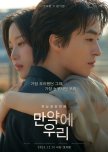
The colors of love
A realistic love story between two former lovers who meet again after years apart and finally discuss their past. The film moves between the present and memories, gradually showing how their relationship unfolded and why it ended.Moon Ga-young is very good at mature romance dramas and movies, and I think she should do more of them. This is the first role of hers that I truly loved, although I haven’t watched all of her projects. So far, I’ve seen True Beauty, The Interest of Love, Law and the City, and My Dearest Nemesis. While The Interest of Love also dealt with realistic relationships, it didn’t feel the same to me. In fact, I didn’t find it nearly as realistic as this film.
As Jeong-won, Moon Ga-young was excellent. It felt as if she was playing a real person rather than a character. You could feel her desperation, discomfort, pain, happiness, anxiety, and hope. Every emotion felt genuine, and she delivered a wonderful performance.
I also think this is the best chemistry she has ever had with a co-star, at least among the dramas and films I’ve watched. She has good chemistry with all of her co-stars, but I believe every actor has that one acting partner with whom everything clicks perfectly. For me, that person is Koo Kyo-hwan. I know many people ship her with Cha Eun-woo, but for me, her chemistry with Koo Kyo-hwan was on another level. They felt natural and comfortable together, and their interactions never seemed forced.
Koo Kyo-hwan is also a fantastic actor. I recently watched We’re All Trying Here and loved him in it. His chemistry with Go Youn-jung was good, but his chemistry with Moon Ga-young was extraordinary. Of course, this is a melodrama where their relationship is the heart of the story, but they completely carried it.
The story itself follows a friends-to-lovers trope. Eun-ho was sweet from the beginning. He became Jeong-won’s friend, fell in love with her, and supported her dreams. He cared deeply about her, and together they built a happy relationship. However, after they moved, things changed. Work pressures overwhelmed him, and he gradually became toxic. He grew nervous, easily irritated, and sometimes said hurtful things. Even small moments, such as turning the fan toward himself without thinking about her, made Jeong-won realize how much he had changed.
Eventually, she left. Eun-ho realized what was happening and ran after her. He reached her at the station, but in the end, he didn’t get on the train. That was the moment their paths separated.
During the years apart, both of them achieved their dreams. In the present, they discuss different “what if” scenarios and come to the conclusion that, despite loving each other deeply, they probably would have broken up eventually no matter what. I found that idea both heartbreaking and realistic.
I also loved the symbolism involving the video game. Earlier, Jeong-won says that when the girl leaves the boy, everything turns black and white. The director reflects that idea in the present-day scenes, which are shown in black and white. Then, after Jeong-won reads Eun-ho’s father’s letters and experiences the ending of the video game, color returns. It felt like a visual representation of closure, healing, and acceptance.
What I loved most is that this is a love story without a traditional happy ending. They do not end up together, but they become the people they are because of their relationship. They found comfort in each other when they needed it most, drifted apart when life changed them, and eventually forgave one another. They accepted their pain, found closure, and embraced the memories they shared.
In the end, they may no longer be together, but they can look back and say: “Once, we were us.”
Was this review helpful to you?

This review may contain spoilers
My comfort drama?
Tomorrow is a truly powerful drama. Honestly, I didn’t expect to enjoy it this much, but it completely surprised me—and it’s definitely a show I would rewatch many times.Before starting it, I was a bit hesitant because I thought there might be a romance between Kim Hee-sun’s character and Rowoon, which I wasn’t really interested in. I’m so glad I gave it a chance anyway, because I would have missed out on something really special.
What stood out the most to me were the meaningful cases, the harsh but real truths they presented, and the way each intervention led to genuine changes in people’s perspectives. I found myself getting emotional in every episode. The sense of catharsis at the end of each story was incredibly impactful.
The character development is strong, and the plot is thoughtfully written. This drama really makes you reflect on life and the value of every individual’s story.
Also, huge credit to the cast—they all did an amazing job.
P.S. Lee Soo-hyuk was especially captivating in this role. I might have a soft spot for tsundere characters, but I also appreciated how his character gradually confronted and overcame his trauma.
Was this review helpful to you?

This review may contain spoilers
Long live independence✊?
Overall, this is an exceptional period drama! It strikes the perfect balance between romance, sociopolitical developments, idealism, and the fighting spirit of its characters. The characters were incredibly well-written, and their transitions from cowardice to courage felt believable and gradual rather than happening overnight.Although I'm not Korean, my own country's history shares similar historical experiences, which makes a drama like this particularly moving to me. It's deeply touching to see people step outside their comfort zones and abandon the safety and convenience of their lives to defend their ideals and the dream of a free homeland, risking both their own lives and those of their loved ones.
Of course, in a drama like this, we expected casualties, but unfortunately, there were far more than I had anticipated. 🥲 I was hoping for a happy ending for our main leads, which, of course, I didn't get. Mr. Sunshine Vol. 2, for those who remember! 😣 I'm genuinely speechless!
The entire cast was outstanding! Kim Yoo-jung was exceptional once again. She portrayed Lee Ga-kyung beautifully, capturing all her human weaknesses and strengths, her remarkable inner strength, and the emotional scars she carried.
Park Jin-young was equally impressive! His yearning for Ga-kyung, his struggle with his dual identity, his pain regarding his adoptive mother and the father who raised him but saw him merely as a tool, his inner conflict over who he was and how he was supposed to act — he conveyed it all beautifully. Τheir chemistry was wonderful! Just the right amount, never exaggerated, yet with exactly the intensity it needed. I'd definitely ship them! 💕
Shinichi Sato was absolutely phenomenal as well! I have no words for how utterly detestable his character was, which is a testament to how exceptional the actor is at his job. He seems like such a sweet person in real life, and I've seen him portray both good and evil characters in other productions. I really have to give him credit! I can only imagine how challenging it must be for a Korean actor to portray a Japanese colonial oppressor and make the character so convincing.
Philip and So-ran were also excellent, each conveying the emotions their respective roles demanded. So-ran went from being a woman whose main concern was her family to someone who lived for revenge and a cause she had previously been unwilling to embrace at the cost of sacrificing her child.
Philip, as a Korean living abroad, was driven by the ideal of a free homeland. A truly brave man! Thankfully, the romantic element between them wasn't overdone, as it was important to maintain a believable balance given So-ran's personal history.
Of course, all the other actors deserve recognition as well, but there are simply too many to mention individually! They absolutely deserve the credit, though. The entire cast was exceptional!
Overall, I don't know if I'll ever be able to rewatch this drama. Both this one and Mr. Sunshine took a heavy emotional toll on me and left me deeply saddened. Nevertheless, such greatness of spirit deserves to be recognized, and this masterpiece deserves nothing less than a 10/10!
It's an emotionally heavy drama, with even weightier ideals and values at its core. It's certainly not for everyone, especially those looking for something lighthearted.
Hats off to the entire cast! Every single actor was exceptional! 🫶🏻👏🏻
Was this review helpful to you?
This review may contain spoilers
What is your goal in life?
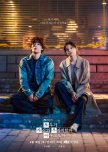
This is an exceptionally human drama, and I loved it from beginning to end. What impressed me most was how deeply developed the characters were by the end! You can actually feel the momentum of their growth as the story progresses, and that’s something surprisingly rare. Every character changes, struggles, and learns, and those transformations feel completely earned.At its core, the drama is about friendship, ambition, life goals, and the dreams we spend years chasing. Dong-man is such a profoundly human character. He is flawed, desperate, insecure, and often lost, but that is exactly what makes him so relatable. He carries a deep inferiority complex and constantly wants to be seen as an equal to those around him. In his own unorthodox way, he keeps trying to prove his worth, even when his methods are questionable. You can feel how desperately he wants to make a movie and prove himself. Through his journey, the drama explores a truth many people experience: we often believe that achieving a certain goal will finally make us happy, only to discover that reality is more complicated. The accomplishment feels good, but it is not exactly what we imagined. What matters most is the person we become in the process. By the end, Dong-man has truly found himself and finally overcomes many of the insecurities that have defined him for so long.
One of my favorite aspects of the drama was Dong-man’s relationship with Park Yeong-sae. Their friendship feels painfully real. They were best friends when they stood on equal ground, but once one of them became successful while the other was seen as a failure, everything changed. They became competitors as much as friends. They judged each other, compared themselves constantly, and gradually lost parts of the people they used to be. It is an uncomfortable but honest portrayal of how relationships can be affected by success, failure, and insecurity.
His relationship with Euna is also worth mentioning. He genuinely cares about her, relates to her in many ways, and often wants to be her protector. Euna carries her own trauma surrounding abandonment, and it is heartbreaking to watch how much she struggles with her sense of self. Despite her pain, she remains a voice of kindness and empathy. She instinctively understands the feelings of others, even though she has spent much of her life cutting through people’s stories and emotions with harsh honesty—a trait that was even considered a talent in her profession.
As the drama progresses, she becomes increasingly aware of how deeply words can wound others, and there is a visible discomfort whenever she is forced to do that again. At the same time, she struggles to understand her own emotions. She is deeply sensitive and easily hurt by criticism, rejection, and the inhumanity she encounters in others. Her journey is one of self-discovery and emotional awareness. By the end of the drama, her growth is remarkable: she is finally able to recognize, understand, and name her feelings instead of expressing them only through physical symptoms. Her character development is subtle, realistic, and incredibly moving.
The drama understands that life is messy. We all have goals. We all carry trauma. We compare ourselves to others, even when we know we shouldn’t. We are hurt by people’s words, and yet we keep trying. Every character in this story is fighting for something, and every struggle feels meaningful.
The relationship between Dong-man and his older brother was particularly moving. The two brothers are almost opposites. While Dong-man still clings to dreams and possibilities, his brother is focused entirely on survival. His desperation is heartbreaking. He works endlessly just to fill the gaps in his life and keep going. He doesn’t live to enjoy life anymore; he lives simply to endure it. Their contrast feels very true to the experience of many siblings. The older one often carries burdens that are different from those of the younger one, but both are trying in their own way. That simple act of continuing to try becomes one of the drama’s most powerful themes.
If I were rating purely based on rewatch value, I would probably give it a 5/10. Not because it isn’t excellent, but because it is such a heavy and emotionally exhausting watch. You can feel the characters’ desperation, disappointment, and hopes as if they were your own. It activates your empathy in a way few dramas manage to do. I genuinely don’t know if I’ll be able to rewatch it, because it hurts in a way that feels almost too real. 🥲
Ultimately, this is a drama about people trying their best despite failure, disappointment, and uncertainty. It is deeply human, deeply compassionate, and unforgettable. I don’t know if I’ll ever rewatch it, but I know I won’t forget it. Few dramas have made me empathize so deeply with every character’s struggles, failures, and hopes. It hurt, but in the best possible way.
Was this review helpful to you?


