 Editorials
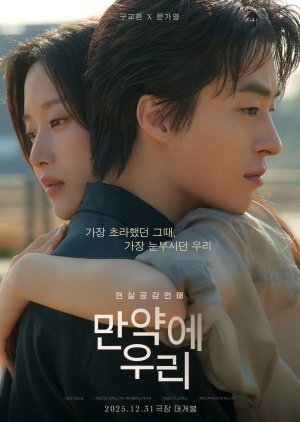
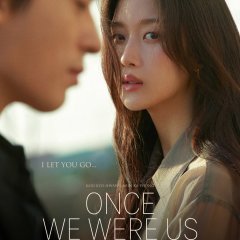
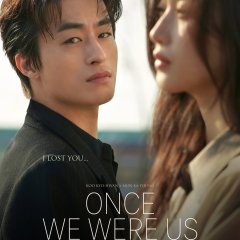
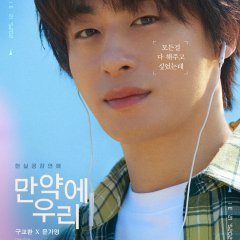
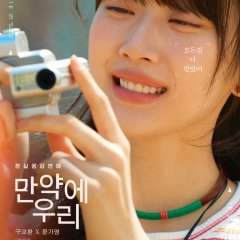
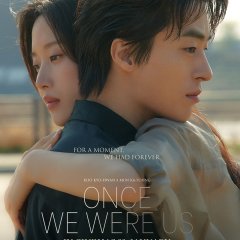
An unexpected reunion rekindles bittersweet memories of a past love. Seoul, 2008. On a bus heading to their hometown, fate brings Eun Ho and Jeong Won together, sparking an unlikely friendship. While battling a bustling and weary city life, they find themselves sharing lofty dreams and a love that comes to feel extraordinary. But, eventually, the harsh realities of life lead them to part ways. Over a decade after the separation, the two unexpectedly reunite on a flight back to Korea, where they reflect on their lost time. (Source: Showbox) Edit Translation
- English
- Українська
- Русский
- Português (Brasil)
- Native Title: 만약에 우리
- Also Known As: If We , Manyage Uri , Meon Husnal Uri , The Distant Future, We , Us and Them , 먼 훗날 우리
- Director: Kim Do Young
- Screenwriter: Yeom Moon Kyung
- Genres: Romance, Life, Melodrama
Where to Watch Once We Were Us

Subscription (sub)
Cast & Credits
-
 Koo Kyo HwanLee Eun HoMain Role
 -
 Mun Ka YoungHan Jeong WonMain Role
 -
 Lee Sang YeobKang Min Jae [Jeong Won's ex-boyfriend]Support Role
 -
 Lim Jae HyeokO Gyeong Seok [Eun Ho's friend]Support Role
 -
 Shin Jung Keun[Eun Ho's father]Support Role
 -
 Kang Mal Geum[Eun Ho's mother]Support Role







Reviews

"A Delicate Romance Where Time Plays Its Part"
Once We Were Us is a romance that doesn’t aim to impress with big plot twists but with the subtlety of its emotions. It’s a film about time, memories, and above all, how love can remain alive even when it is no longer present in our daily lives. It tells a simple story — two young people meet, fall deeply in love, separate, and then reunite years later — but it treats it with tenderness and sensitivity, giving it real depth.One of the most beautiful aspects of the film is how it portrays the beginnings of a relationship. The youth scenes are bright, almost warm, with a spontaneous energy that feels authentic. Shared laughter, late-night conversations, and naïve dreams make the ordinary moments feel precious. It’s not dramatic declarations that leave a mark, but small everyday moments elevated by the direction. You can feel the fragile excitement of first love, a mix of innocence and ambition that makes everything seem possible.
The chemistry between Koo Kyo-hwan and Moon Ga-young is central to the film’s success. Their connection is natural rather than theatrical. They seem genuinely comfortable with each other, making their interactions believable and moving. The silences are as important as the dialogues. In the present-day scenes, their performances are more subtle and restrained. Gazes linger longer, smiles are more fragile, and you can feel the weight of years, choices, and regrets in every exchange. This evolution in their dynamic is one of the film’s strongest points.
The narrative structure, alternating between past and present, enhances the nostalgic feeling. Each memory sheds new light on their current relationship. The visual contrast is also well executed: warm, vibrant tones of the past against the cooler, subdued palette of the present. This emphasizes how the past always seems brighter in our memories, even if it wasn’t quite that way at the time. This duality gives the film a consistent bittersweet atmosphere.
Another particularly beautiful aspect is how the film handles dreams and personal ambitions. It shows how love, no matter how sincere, can be challenged by professional realities, social expectations, and the pressure to succeed. The film doesn’t assign blame for the separation; it simply shows how two people can deeply love each other while moving in different directions. This maturity in the writing makes the story feel realistic and emotionally resonant.
However, the film remains fairly traditional in its structure. Some situations may feel predictable to viewers familiar with Korean romances. The deliberately contemplative pace can feel slow at times. But this slowness also contributes to the emotional experience: it allows feelings to settle and gives the viewer time to reflect.
What makes Once We Were Us particularly beautiful are the quiet moments: a look exchanged on a train, a conversation interrupted by emotion, a smile hiding sadness. These small details give the film its sincerity. It doesn’t try to force tears; it simply lets emotions emerge naturally.
In conclusion, Once We Were Us is a gentle, melancholic, and mature romance. It doesn’t reinvent the genre, but it masters it with elegance. It’s a film about memories, timing, and what it means to love someone at different stages of life, leaving a delicate and lasting impression after the credits roll.
Was this review helpful to you?

An Honest Portrait of Love and Choices
I’ll start by saying that I did not watch the original Chinese film, so this review is based solely on the Korean adaptation.It’s rare to find movies that feel both deeply emotional and genuinely relatable at the same time. In that regard, Once We Were Us hits hard. If you’re expecting a simple, idealized romance, this may not be the film for you. But if you want something that feels closer to a real relationship ~ complete with its highs, lows, and complicated emotions ~ then this movie delivers.
One of its strongest aspects is the direction and visual presentation. The film shows a great deal of care in its cinematography and scenery, with clear attention to detail throughout. The story may not always take you where you expect or even where you hope it will go, but there’s a sincerity and emotional honesty that remains present from start to finish.
The cast also performs exceptionally well. The performances are strong across the board, and even supporting characters are given enough space to either shine on their own or help elevate the leads. This balance helps the relationships feel more grounded and believable.
Some viewers may struggle with certain choices the characters make. In a few moments, exploring their internal struggles more explicitly might have helped clarify those decisions. Personally, though, the film gave me enough emotional context to stay fully invested in the journey.
The OST complements the film nicely. It’s often subtle, but it appears at just the right moments to enhance the emotional weight of key scenes. The movie also makes powerful use of silence ~ certain moments feel especially heavy because the soundtrack steps back. These scenes highlight how pivotal the characters’ decisions are, emphasizing that sometimes people make choices not because they truly want to, but because they feel they have no other path forward.
If melodrama is your thing, this is a film I can easily recommend. It’s an emotional ride, but one that feels sincere and grounded in the complexities of real relationships.
Was this review helpful to you?