



“A Medical Tension That Never Quite Takes Off"
Really wanted to like Doctor on the Edge. With Lee Jae Wook and Shin Ye Eun leading the cast, plus the unique setting of a doctor working on a remote island, it had all the ingredients for a heartwarming medical drama.
The first few episodes were genuinely promising. The island setting was refreshing, the medical cases were interesting enough, and I was curious to see how the characters would grow. Unfortunately, that's where the excitement ended.
After the strong start, the drama quickly loses its momentum. The plot barely moves forward, the conflicts feel repetitive, and the romance lacks the emotional spark needed to keep me invested. By episode 9, watching it had started to feel like a chore rather than something I looked forward to every week.
Lee Jae Wook and Shin Ye Eun do their best with the material they're given, but even their performances can't save a script that feels painfully slow and uneventful. Their chemistry is decent, yet it never reaches the level that makes you root for them.
The cinematography is beautiful, and the peaceful island atmosphere is definitely one of the drama's strongest points. Sadly, gorgeous scenery isn't enough to make up for a story that spends too much time going in circles instead of building meaningful character development or compelling drama.
Overall, Doctor on the Edge is a frustrating watch. It had plenty of potential and started on the right foot, but it gradually became dull and repetitive. I'm still watching out of curiosity, hoping the ending will redeem the journey, but as of episode 9, it hasn't lived up to its promising beginning.
Was this review helpful to you?
"A Predictable Fantasy Romance"
“No Tail to Tell" revisits a very familiar K-drama trope: the gumiho, a nine-tailed fox caught between the supernatural and human worlds. The problem isn’t the myth itself, but how it’s handled here—very conventionally, without originality or depth. This story has been told before, and often much better.The plot follows Eun-ho, a gumiho who refuses to become human, until an incident involving Kang Si-yeol, a world-famous football star, forces her to live as a mortal. This premise could have explored themes like identity loss, human fragility, and the choice between immortality and love, but the drama settles for predictable situations, artificial conflicts, and a romance that develops without genuine emotional tension.
The writing is shallow. Eun-ho’s transformation, which should be a major turning point, is quickly normalized. The dilemmas exist, but they’re never explored in depth. Emotional scenes lack impact, and several episodes feel more like filler than meaningful story progression.
The main cast does their best. Lomon brings charisma to his role, though Kang Si-yeol remains a stereotypical cold, controlling athlete who eventually softens. Kim Hye-yoon delivers subtlety and nuance as Eun-ho, especially in her more vulnerable moments. Their chemistry is decent but can’t make up for the weak writing.
The supporting cast is particularly underwhelming. Many secondary characters are underdeveloped or unnecessary. The shaman, who could have been pivotal in the supernatural and mythological elements, contributes almost nothing, seeming included merely for folklore flavor without any narrative purpose.
Lee Hoon’s character also had the potential to add real tension or depth but is poorly utilized. His role is minimal, with little impact on the story, leaving viewers feeling like an opportunity for meaningful conflict was wasted.
Even the production can’t elevate the series. The fantasy atmosphere is there, but it never reaches intensity. The drama never takes risks and stays firmly in its comfort zone.
In short, “No Tail to Tell" fails to stand out either in originality or writing quality. The gumiho premise feels overdone, the supporting cast is weak, and certain characters—like the shaman and Lee Hoon—are largely wasted. Despite the efforts of the lead duo, the drama remains bland and forgettable.
Was this review helpful to you?

This review may contain spoilers
“Surely Tomorrow… But Not Today”
I had high expectations for *Surely Tomorrow*, especially with Park Seo Joon returning in a more emotional role. Unfortunately, this drama turned out to be a real disappointment for me. Despite a polished atmosphere and a promising cast, I never managed to emotionally invest in the story.The relationship between Lee Gyeong-do (Park Seo Joon) and Seo Ji-woo (Won Ji-an) is supposed to be the heart of the narrative, but it left me indifferent. Their breakup, built on unspoken words and differing life choices, lacks real impact. Everything feels too smooth, too restrained, as if the drama deliberately refused to confront its emotions. Conflicts are never fully addressed, making their separation frustrating rather than moving.
Park Seo Joon does what he can with the material given to him. His performance is fine, sometimes subtle, but his character keeps going in circles. His struggles become repetitive and eventually tiresome. As for Seo Ji-woo, she could have been a strong character, but the story reduces her too often to her past romance, without giving her any meaningful personal development.
Their reunion, which I had been looking forward to, ended up being one of the drama’s biggest weaknesses for me. It lacks tension, confrontation, and, above all, emotional sincerity. Important discussions are avoided, wounds are barely explored, and the final decisions fail to generate any strong emotion or satisfaction.
The slow and sometimes empty pacing doesn’t help either. Many scenes drag unnecessarily, giving the impression that the drama is trying to fill time rather than tell something meaningful. In the end, I felt no deep attachment to the characters and no genuine emotion.
In summary, *Surely Tomorrow* is a drama I did not enjoy. It’s not disastrous, but it’s bland, predictable, and too cautious to leave a lasting impression. Even Park Seo Joon’s presence wasn’t enough to save a story that sorely lacked audacity and emotional depth.
A viewing I will have no trouble forgetting.
Was this review helpful to you?
"A Delicate Romance Where Time Plays Its Part"
Once We Were Us is a romance that doesn’t aim to impress with big plot twists but with the subtlety of its emotions. It’s a film about time, memories, and above all, how love can remain alive even when it is no longer present in our daily lives. It tells a simple story — two young people meet, fall deeply in love, separate, and then reunite years later — but it treats it with tenderness and sensitivity, giving it real depth.One of the most beautiful aspects of the film is how it portrays the beginnings of a relationship. The youth scenes are bright, almost warm, with a spontaneous energy that feels authentic. Shared laughter, late-night conversations, and naïve dreams make the ordinary moments feel precious. It’s not dramatic declarations that leave a mark, but small everyday moments elevated by the direction. You can feel the fragile excitement of first love, a mix of innocence and ambition that makes everything seem possible.
The chemistry between Koo Kyo-hwan and Moon Ga-young is central to the film’s success. Their connection is natural rather than theatrical. They seem genuinely comfortable with each other, making their interactions believable and moving. The silences are as important as the dialogues. In the present-day scenes, their performances are more subtle and restrained. Gazes linger longer, smiles are more fragile, and you can feel the weight of years, choices, and regrets in every exchange. This evolution in their dynamic is one of the film’s strongest points.
The narrative structure, alternating between past and present, enhances the nostalgic feeling. Each memory sheds new light on their current relationship. The visual contrast is also well executed: warm, vibrant tones of the past against the cooler, subdued palette of the present. This emphasizes how the past always seems brighter in our memories, even if it wasn’t quite that way at the time. This duality gives the film a consistent bittersweet atmosphere.
Another particularly beautiful aspect is how the film handles dreams and personal ambitions. It shows how love, no matter how sincere, can be challenged by professional realities, social expectations, and the pressure to succeed. The film doesn’t assign blame for the separation; it simply shows how two people can deeply love each other while moving in different directions. This maturity in the writing makes the story feel realistic and emotionally resonant.
However, the film remains fairly traditional in its structure. Some situations may feel predictable to viewers familiar with Korean romances. The deliberately contemplative pace can feel slow at times. But this slowness also contributes to the emotional experience: it allows feelings to settle and gives the viewer time to reflect.
What makes Once We Were Us particularly beautiful are the quiet moments: a look exchanged on a train, a conversation interrupted by emotion, a smile hiding sadness. These small details give the film its sincerity. It doesn’t try to force tears; it simply lets emotions emerge naturally.
In conclusion, Once We Were Us is a gentle, melancholic, and mature romance. It doesn’t reinvent the genre, but it masters it with elegance. It’s a film about memories, timing, and what it means to love someone at different stages of life, leaving a delicate and lasting impression after the credits roll.
Was this review helpful to you?
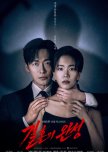
Namkoong Min, the Best Part of the Drama
“The Husband" had an interesting premise and a cast that could have made it really compelling, but unfortunately, the final result left me feeling quite mixed. The drama had potential, but I felt that the writing and especially the pacing didn’t always allow it to reach that potential.
The biggest positive for me was definitely “Namkoong Min". As always, he brings a lot to his character through his acting. He manages to convey emotions very naturally, even in scenes where the writing lacks depth. I particularly enjoyed the way he handled the more intense moments and gave his character a strong presence.
Namkoong Min has this ability to make a character captivating simply through his expressions, his eyes, and the way he conveys emotions without overacting. You can tell that he fully understands his character and tries to give him more complexity, even when the script doesn’t necessarily give him enough material to work with. For me, he was easily one of the strongest aspects of the drama.
The rest of the cast also did a decent job overall. The performances were generally convincing, and some scenes worked mainly because of the actors’ performances. However, I sometimes felt that the supporting characters weren’t developed enough and lacked depth. This made some of the relationships and conflicts feel less impactful than they could have been.
That was ultimately my main disappointment: “the performances were better than the writing". There were good ideas, talented actors, and especially Namkoong Min carrying a large part of the drama, but the script didn’t always live up to them. Some slow parts and certain writing choices made it difficult for me to stay fully invested in the story.
I wouldn’t say “The Husband" was a bad drama, but rather a drama that could have been much better. With stronger writing, more developed characters, and better pacing, it could have been far more memorable.
Was this review helpful to you?
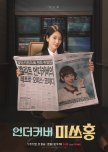
“An undercover comedy that works"
“Undercover Miss Hong" is a drama that
blends comedy, investigation, and romance with a very enjoyable energy. From the first episodes, the series sets a light and entertaining tone while gradually building a more serious storyline. This contrast works quite well and makes the drama very easy to watch. It’s the kind of show you find yourself following every weekend, curious to see what will happen in the next episode.
The story is built around a fairly classic concept: an undercover mission that forces the female lead to hide her real identity. While the premise isn’t entirely new in the world of K-dramas, the series manages to keep things interesting thanks to a good pace and several small twists along the way. The episodes are structured in a way that maintains curiosity, especially as clues and revelations slowly start to come together. Some moments can be a bit predictable, but it doesn’t really take away from the overall enjoyment of the story.
One of the drama’s biggest strengths is its characters. Hong is a charismatic and very likable protagonist. She is determined, brave, and smart, but she can also be clumsy and occasionally overwhelmed by the situations she finds herself in. This balance makes her feel very human and relatable, which makes it easy for viewers to become attached to her journey.
The supporting characters also add a lot of charm to the drama. They create a fun team dynamic and bring several comedic moments that help keep the story light. Some characters even surprise the audience with their development, making the interactions between the cast more engaging as the story progresses.
The romance remains relatively subtle, but it adds a nice emotional layer to the drama. It develops gradually, often through small gestures and quiet moments rather than overly dramatic scenes. This approach makes the relationship feel more natural and believable. The chemistry between the characters also helps make these moments feel warm without overshadowing the main storyline.
Another successful aspect of the drama is the balance between humor and tension. Some scenes are genuinely funny, especially because undercover situations often lead to awkward or unexpected moments. At the same time, the main plot introduces more serious moments that remind the audience of the stakes behind the mission. This balance keeps the drama engaging and prevents it from becoming repetitive.
That said, the drama does have a few minor weaknesses. Some side plots could have been explored in more depth, and a few characters fade out of the story a bit too quickly. The pacing can also feel slightly uneven in the middle of the series, with certain episodes moving the plot forward faster than others.
Overall, *Undercover Miss Hong* is a very entertaining drama that successfully combines humor, suspense, and romance. It may not be the most groundbreaking story, but it works well thanks to its charming characters, light tone, and engaging atmosphere. It’s an easy and enjoyable watch, especially for viewers who enjoy undercover stories with comedic moments and a soft touch of romance.
Was this review helpful to you?
This review may contain spoilers
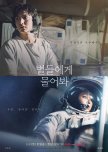
“I woke up from the dream. You should too.”
Eve tells us so well in this quote: we too should wake up from this dream, because for me, this kdrama is a dream… well, more like a nightmare. The budget was huge for such a mediocre kdrama. It feels like there are really no screenwriters here, I can't believe that actors can agree to play in such a production.From the first episode, I saw that this kdrama was going to be bad, but I never thought it would be this bad. Although the soundtrack is excellent, with beautiful melodies and great artists like Jin from BTS or Seungkwan from Seventeen, these are the main positive points of this kdrama, with the aesthetics and the visuals in space that offer beautiful scenes.
Now let's move on to the last episode which nails the show. Honestly, it's a pretty sad episode, especially when we learn that Eve didn't survive and gave life to her daughter in space. I definitely had tears in my eyes during the scenes of life with the OST in the background, it was super moving.
Anyway, this kdrama had everything to be an excellent drama: great actors, a good soundtrack, but unfortunately such poor writing that today, we probably end up with one of the worst kdramas in Korean history.
What I remember here are Gong Ryong's words at the beginning of the show:
“I have always thought of the universe as a womb. Now I wonder if it is a tomb. Instead of a place of birth, perhaps it is a place of death.” - Gong Ryong
Was this review helpful to you?
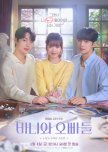
“Promising Start, But Fails to Deliver"
*Crushology 101* starts off with some promising aspects, especially its beautiful soundtrack, with the intro OST being particularly captivating and well-suited to the atmosphere of the drama. The settings are also visually appealing, with well-chosen locations that create a pleasant and cozy vibe, perfect for a romantic K-Drama.However, despite these strengths, *Crushology 101* ultimately falls short. The plot quickly becomes predictable, filled with clichés and unoriginal twists, and the characters lack depth. The performances, while not disastrous, feel shallow and lack sincerity, making it hard to form a connection with the characters. The emotional moments fall flat, which detracts from the drama's impact.
*Crushology 101* offers a beautiful soundtrack and pleasant visuals, but its predictable story and lackluster performances make it hard to fully enjoy. It ends up being a disappointing experience, leaving you wishing for more.
Was this review helpful to you?

Where Memories Resurface and Hearts Learn to Love Again
There are dramas that we enjoy in the moment, and then there are those that stay with us long after the final episode. *Love For You* is definitely part of the second category.
From the very first episode, I was completely drawn into the story and quickly became attached to the characters. I laughed, I teared up, and I smiled at the simplest moments. This is exactly the kind of drama that manages to make us feel a whole range of emotions.
The biggest strength of this drama is undoubtedly the chemistry between the two leads. Song Weilong and Zhang Jingyi make an incredibly believable couple. Their connection feels so natural through their looks, smiles, silences, and small gestures of affection. Their relationship develops gradually, without feeling rushed, which makes it even more touching.
Both actors deliver wonderful performances. They portray their characters with a lot of sincerity and sensitivity. The emotions come through effortlessly in their expressions and their eyes, without ever making the scenes feel exaggerated.
The production is also beautiful. The cinematography, colors, and carefully crafted shots create a soft and warm atmosphere that makes the drama even more enjoyable to watch.
It is impossible not to mention the soundtrack, which perfectly complements every important moment. The OST performed by Lars Huang has become a true favorite of mine. His voice brings an incredible softness and adds even more intensity to the most memorable scenes. It is the kind of song I continue listening to even after finishing the drama.
I also really enjoyed the pacing of the story. It takes the time to develop the characters and their relationships without ever becoming boring. The balance between the lighthearted moments, romance, and emotional scenes is perfectly handled.
The ending completely satisfied me. It beautifully concludes the characters’ journey while leaving that little emptiness that only dramas that truly touch our hearts can create.
Thank you for everything, *Love For You*. Song Weilong and Zhang Jingyi, what a beautiful duo you have created. 🫶🏻
Was this review helpful to you?
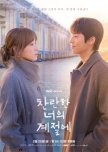
In Your Radiant Season – A Gentle, Introspective Romance
In Your Radiant Season is a drama that unfolds at a deliberately slow, contemplative pace, prioritizing subtlety and emotion over action or dramatic plot twists.This measured tempo may feel unusual at first, but it perfectly serves the story, allowing the relationship between Ha-ran and Chan to develop naturally and authentically, while giving the characters space to grow and reveal themselves gradually.
The central romance is built through silences, glances, and small everyday moments rather than dramatic confrontations or high-stakes tension. This approach makes every step in their relationship feel genuine and deeply touching, reflecting the show’s core theme: emotional healing and personal growth after past traumas.
The acting is one of the drama’s strongest points.
Lee Sung-kyung delivers a subtle and nuanced performance as Ha-ran, conveying pain, vulnerability, and inner strength through the smallest expressions. Chae Jong-hyeop brings warmth and sincerity to Chan, portraying a gentle and calming presence without exaggeration. Together, their chemistry is understated yet profoundly moving, making their relationship feel real and heartfelt.
Supporting characters also add depth to the story. The family dynamics, in particular, are thoughtfully developed: the grandmother, sisters, and other secondary characters create nuanced relationships, sometimes tense and often marked by unspoken wounds. This humanizes the narrative, even though some secondary arcs could have been explored further.
The soundtrack is another highlight. Filled with soft ballads and delicate piano pieces, the OST complements each scene with subtlety, enhancing the emotions without ever becoming intrusive. Many of the drama’s most poignant moments are elevated by this carefully integrated musical backdrop.
Visually, the drama is beautifully crafted. Soft tones, natural lighting, and contemplative camera work create an almost poetic atmosphere, emphasizing the introspective and melancholic nature of the story. This visual approach immerses viewers in a world that is simultaneously gentle, nostalgic, and emotionally resonant, perfectly matching the show’s measured pace.
The main drawback is its slow rhythm, which may frustrate viewers expecting a faster, more event-driven plot. Some narrative threads are underdeveloped, leaving certain secondary arcs feeling incomplete.
Despite these minor flaws, In Your Radiant Season remains a sincere, emotionally powerful, and deeply human drama—perfect for those who appreciate slow-building romances, introspective storytelling, and an emphasis on emotional resonance.
Was this review helpful to you?
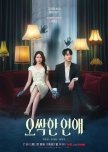
A Great Idea, But Not Entirely Convincing
I had a good time watching Spooky Love, even though I came away from it with rather mixed feelings. The drama had some good ideas and an interesting mix of romance, comedy, and supernatural elements, but I felt that some aspects could have been developed further.
The story is enjoyable to follow, and I particularly liked the overall atmosphere. The supernatural aspect adds a little originality and helps the drama stand out from more typical romance dramas. However, I sometimes felt that this aspect wasn’t explored enough and that certain explanations were given a little too quickly.
When it comes to the romance, I really enjoyed the dynamic between Park Eun-bin and Yang Se-jong. Their chemistry works quite well, and their characters gradually become more endearing. I liked watching their relationship develop and seeing the little moments they shared, although I would have liked their feelings to be explored more deeply. Some stages of their relationship felt a little rushed, and I wish I had been able to feel more emotion from their romance.
As for the acting, Park Eun-bin convinced me once again. She does a great job of conveying the different emotions of her character, whether in lighter, romantic, or more emotional scenes. I especially enjoyed her expressions and the way she managed to make her character feel genuinely lovable.
Yang Se-jong was also convincing in his role. I liked the way he portrayed his character, especially his development throughout the story. His chemistry with Park Eun-bin works well and makes their scenes together enjoyable to watch. There were a few moments where some emotions felt slightly less natural to me, but overall, the main cast did a good job.
The supporting characters were interesting as well, although I think they could have been developed more. Some of them clearly had potential, and I would have liked to learn more about them instead of seeing them sometimes used mainly to move the main plot forward.
The pacing was also one of the aspects that bothered me a little. Some episodes were really interesting and made me want to keep watching, while others were slower and sometimes felt like the story was going around in circles. This doesn’t make the drama bad, but it does prevent the story from being as engaging as it could have been.
I also enjoyed the direction and visual atmosphere. The overall mood fits the combination of romance and supernatural elements very well, and some scenes were particularly beautiful. The soundtrack also complemented the important moments nicely without being too overwhelming.
Overall, Spooky Love is a pleasant drama with good chemistry between its leads, an enjoyable romance, and an interesting supernatural concept. Unfortunately, I think the story could have been developed further, and some of the characters deserved more depth.
It’s not a drama that completely stayed with me, but I definitely don’t regret watching it. I would recommend it to people who enjoy Korean romances with a touch of the supernatural and are looking for something relatively light and easy to watch.
Was this review helpful to you?
This review may contain spoilers
- Between Life and Regrets -
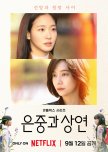
"You and Everything Else" is an emotionally charged drama that will leave you reflecting on life, regrets, and the passage of time.You and Everything Else is a deeply moving drama, carried by the exceptional performances of Park Ji Hyun (Sang Yeon) and Kim Go Eun (Eun Jung). This is not just a story of rivalry or secrets, but an exploration of life through time, from childhood to the forties, in all its emotional complexity. We follow these two characters across decades, from adolescence to their thirties and finally into their forties, as they face the sometimes brutal realities of existence.
The drama unfolds like a true coming-of-age story, where we witness the pivotal moments that shape the personality and fate of Sang Yeon and Eun Jung. Their lives intertwine and cross paths at each important stage of their journey, marked by friendship, rivalry, broken dreams, and regrets. Sang Yeon, a strong woman, fights against illness and life's hardships, while Eun Jung, full of ambition and dreams, faces personal struggles that will forever mark her. Both characters evolve over time, and as the series progresses, we feel the depth of their emotions and the fragility of their choices.
The most poignant aspect of this drama is how it captures the evolution of the characters and the way life can both break and strengthen them. Sang Yeon’s battle with cancer, a central theme of the drama, is not just an illness but a metaphor for the passage of time, inevitable death, and the losses one endures along the way. It is through this struggle that we see the evolution of the characters and better understand the sacrifices they’ve made to get where they are.
Over the years, we watch the characters go through the different stages of life: childhood, where everything seems possible, the twenties, full of promises and disillusionment, the thirties, where reality sets in, and finally the forties, a period filled with regrets and more tangible losses. This journey through the ages is accompanied by tough choices, human connections, and breakups, creating an atmosphere that deeply resonates with the viewer.
The ending of the drama is both tragic and liberating. Sang Yeon, confronted with her illness, finally finds inner peace, but this reconciliation comes too late in her life. She does not have the time to fix all the regrets or fully embrace this peace. The series thus shows that sometimes, despite all our efforts and struggles, reconciliation and peace come too late to repair all the pain we carry.
What makes *“You and Everything Else”* beautiful is that the series offers a sincere look at life, with its moments of happiness, sadness, regret, and resilience. It’s not simply a story of rivals or hidden secrets but a true immersion into the lives of Sang Yeon and Eun Jung, two women who grew up together, lost each other, and finally found each other again, understanding one another in a deep, emotional way by the end.
A big thank you to Kim Go Eun and Park Ji Hyun, whose performances transcended the screen. Their portrayals of Sang Yeon and Eun Jung are nothing short of incredible. Their ability to bring out the emotional depth of their characters, especially in the most difficult moments, makes this series a memorable and moving experience. Thank you for this story, for these characters, and for all the beauty you brought to this series.
Goodbye “You and Everything Else" 🫶🏻
Was this review helpful to you?

This review may contain spoilers
When Culinary Passion Transcends History and Romance…
“Bon Appétit, Your Majesty" is a rare gem that manages to captivate, move, and comfort viewers in just a few episodes. It feels like a mini-drama but carries the heart, depth, and quality of a full-length series.The story follows Yeon Ji-yeong, a talented modern chef specializing in French cuisine, who wins a prestigious competition only to be mysteriously transported back to the Joseon era. There, she is thrust into an unfamiliar world and quickly comes face to face with Yi Heon, a feared, perfectionist, and enigmatic king. She becomes his personal chef, tasked with satisfying his demanding palate by blending traditional Korean flavors with modern techniques.
This reversal of the usual trope (not a king transported to the present, but a modern woman in the past) is a total success. The contrast between Ji-yeong and the rigid, codified, and sometimes dangerous royal court leads to moments both funny and heartfelt. This is more than just a romance it’s a story of adaptation, gentle resistance, culinary passion, and the meeting of two lonely souls.
One of the drama’s greatest strengths is **Lee Chae Min’s incredible acting** as King Yi Heon. He perfectly embodies a ruler who is at once cold and fascinating, gradually softened by Ji-yeong’s tenderness, honesty, and humanity. He moves seamlessly between dramatic intensity, contained vulnerability, and subtle comedic moments. His on-screen presence is magnetic every glance and silence counts. This is undoubtedly one of his most memorable roles to date and probably one of the best male performances of 2025.
Opposite him, the lead actress (Yoona) delivers an equally convincing performance. She is radiant, authentic, naturally funny without overdoing it, and her love for cooking shines through every gesture. Together, they form a strong, endearing, and deeply human duo. Their relationship develops slowly, filled with unspoken words, meaningful looks, and subtle gestures never forced or clichéd.
Visually, the drama is stunning. The Joseon-era sets are magnificent, the costumes refined, and the lighting carefully crafted. But what really makes you hungry is the presentation of the food. Each episode is a visual feast. The textures, colors, and cooking sounds are filmed with genuine love for gastronomy. Food becomes a language of its own between the characters a means of expression, survival, emotion, and love.
And then there’s the OST Doyoung (NCT) delivers a simply breathtaking song. His voice, soft and sincere, perfectly accompanies the drama’s most emotional moments. It acts as an emotional thread throughout the episodes. The soundtrack lingers long after the series ends, like a bittersweet memory you never want to forget.
*Bon Appétit, Your Majesty* doesn’t aim for spectacle, but it hits all the right notes. It talks about simple yet essential things the need to be seen, understood, loved… and well-fed. It’s comforting without being naive, romantic without being predictable, and funny without ever becoming ridiculous.
This drama skillfully combines fantasy, slice-of-life, historical romance, and gastronomy with remarkable fluidity.
Honestly, it’s arguably one of the best K-Dramas of 2025. It has everything a well-crafted story, a perfect cast, meticulous direction, a beautiful soundtrack, and above all… soul.
Thank you and goodbye, “Bon Appétit, Your Majesty."
You will definitely be missed. 🫶🏻
Was this review helpful to you?
This review may contain spoilers
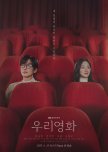
Lee Da-eum: A Star That Shines Until the End
*Our Movie* is a deeply moving K-drama that skillfully blends melodrama with a profound reflection on life, illness, and artistic creation. The story follows Lee Je-ha (Namgoong Min), a talented director facing a personal crisis, and Lee Da-eum (Jeon Yeo-bin), an actress battling a terminal illness. Their encounter changes the course of their lives as they come together to undertake an ambitious project: creating a film that reflects their experiences and innermost emotions.
What makes this series so captivating is the way it portrays the complexity of human emotions with great accuracy. The finely crafted script avoids typical clichés and delivers nuanced, believable, and deeply relatable characters. Each episode invites the viewer to dive into the protagonists’ psyche, experiencing their doubts, hopes, and pain.
Namgoong Min delivers a masterful performance, expressing with controlled intensity Lee Je-ha’s vulnerability and inner strength. His portrayal is both subtle and powerful, giving authentic depth to a character seeking redemption. Jeon Yeo-bin, on the other hand, brings a heartbreaking sincerity to Lee Da-eum, a woman whose physical fragility contrasts with an unwavering will to live fully. Their on-screen chemistry is palpable, making every interaction touching and memorable.
The direction adopts a contemplative and poetic style, offering carefully composed shots that enhance the intimate atmosphere of the series. The sometimes slow pace is an artistic choice that allows full immersion into the characters’ emotional worlds.
Another highlight of *Our Movie* is its soundtrack, understated yet highly effective. The music accompanies scenes with remarkable delicacy—sometimes melancholic, sometimes hopeful. The score plays a key role in the overall mood, supporting the dramatic intensity without ever overshadowing the story. Instrumental pieces blend seamlessly with the narrative, amplifying emotions without distracting the viewer.
Ultimately, *Our Movie* is much more than a drama about illness or filmmaking. It is a profound meditation on human resilience, the healing power of art, and the desire to leave a lasting mark. The series also emphasizes the importance of emotional connections, compassion, and hope even in the darkest moments.
Was this review helpful to you?

Between wounds and softness, we keep trying
We Are All Trying Here is the kind of drama that never tries to impress with huge plot twists or overly dramatic scenes. Instead, the series shines through its sincerity, softness, and deeply human way of portraying emotional wounds, loneliness, and the need to be loved and understood. As the episodes go on, you naturally grow attached to the characters, to the point where it feels like you’re becoming part of their daily lives.One of the drama’s greatest strengths is obviously the duo formed by Koo Kyo-hwan and Goo Yoon-jung. Their chemistry is simply incredible. Nothing between them ever feels forced: their looks, silences, and small everyday interactions are enough to convey so many emotions. Their relationship develops with a lot of naturalness and tenderness, which makes every scene even more touching. It becomes impossible not to grow attached to Dong Man and Eun A because their story feels so sincere and realistic.
And honestly, Koo Kyo-hwan delivers an exceptional performance here. His acting is subtle, nuanced, and deeply emotional. He manages to portray his character’s pain, emotional exhaustion, and vulnerability with disarming simplicity. On the other hand, Goo Yoon-jung brings so much softness and sensitivity to the drama. Together, they completely carry the series and make every moment memorable.
The supporting cast also deserves a lot of praise. No character feels useless or poorly written. Every relationship adds something meaningful to the story, whether it’s lightheartedness, comfort, or more melancholic moments. The drama truly takes its time developing the supporting characters, which makes the world feel even more alive and immersive.
The OST is also beautiful. The music perfectly supports the emotions of each scene without ever feeling overwhelming. Some songs make the romantic moments even more intense, while others strengthen the melancholic and comforting atmosphere of the series. It’s definitely the kind of soundtrack you keep listening to long after finishing the drama because it leaves such a strong impression.
As for the ending, I have mixed feelings about it. Even though it stays consistent with the realistic and melancholic tone of the drama, I found it slightly frustrating. After becoming so emotionally attached to the characters, I expected a conclusion that felt a little stronger emotionally and more satisfying for certain storylines. The ending intentionally leaves a feeling of emptiness, which may deeply affect some viewers, while for others it may feel somewhat incomplete.
Despite that, We Are All Trying Here remains a deeply human and comforting drama, carried by an exceptional cast, incredible chemistry between the leads, and an emotional atmosphere that stays with you long after the final episode. It’s the kind of soft and melancholic series that manages to touch your heart without ever falling into exaggeration.
Was this review helpful to you?


