

 2
2 1
1 1
1


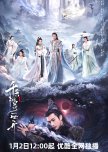
A Bloom of Peach Blossoms: Beautiful Drama, Flawed Ending
This drama is adapted from the Chinese novel of the same title: 千朵桃花一世開. I began watching it coincidentally while a family member was listening to the novel being read aloud online, which gave us the chance to compare notes and notice the changes in the storyline.
The production is impressive: excellent acting, good-looking lead actors and actresses, beautiful theme songs, elegant costumes, authentic sets, and commendable cinematography. I recalled the two strikingly handsome leads: Zhang BinBin, known from Ten Miles of Peach Blossoms, and Wang Duo, from Bloody Romance. The lead actresses Zhang Ya Qin and Sun Zhen Ni are very pretty.
The drama opens with Mu XuanLing, the enigmatic Saintess of the Dark Realm, swooping in to rescue Xie XueChen, the current Alliance Leader, from the clutches of demon king Sang Qi. Her reason? He reminds her of her 'old brother,' the only one who once treated her with genuine kindness. Yet beneath her playfulness and flirting lies a clear disdain for Gao QiuMin, daughter of the former Alliance Leader. At the same time, another twist surfaces—Xie XueChen has a doppelgänger in Zhao Ming, a fallen deity condemned for slaughtering the gods of heaven. How do these threads intertwine? Do Mu XuanLing and Xie XueChen have a life together in the past? As the story unfolds, layers of secrets, betrayals, and hidden ties slowly come to light, binding the fates of these characters in unexpected ways.
For the most part, I thoroughly enjoyed the story - the story is very well woven and very intricate. However, towards the end, the introduction of a “time merge” to kill an antagonist disrupted the narrative. From a logical perspective, if someone is killed in the past, their existence in the present or future becomes impossible. The subsequent development felt weak and confusing.
I suspect this change was made to appease the censors in China, aligning with the preferred stance that deities should not exist 无神论 - all deities are destroyed and even the supreme Vast Heaven is killed.
This departure from the novel was notable. In the original, Zhao Ming realises the truth as soon as Xie XueChen merges with him. There was no “Vast Heaven” and no time merge. I believe I would enjoy the original story a lot more.
During my viewing, someone remarked that Luo YunXi might have been exceptional in the lead role. On reflection, I agree. Luo was remarkable in Till the End of the Moon, portraying the God of War (kind and gentle), the fallen prince (pitiful and tragic), and the Demon King (evil and cunning) with equal brilliance. Nevertheless, Zhang BinBin also delivered a strong performance here.
I have always lamented how English translations of Chinese drama titles often strip away their original poetic charm. This drama, I feel, would be better named A Thousand Blossoms in A Lifetime to be closer to the original Chinese titles.
In the end, despite its flawed conclusion, this remains an engaging drama worth watching.
The production is impressive: excellent acting, good-looking lead actors and actresses, beautiful theme songs, elegant costumes, authentic sets, and commendable cinematography. I recalled the two strikingly handsome leads: Zhang BinBin, known from Ten Miles of Peach Blossoms, and Wang Duo, from Bloody Romance. The lead actresses Zhang Ya Qin and Sun Zhen Ni are very pretty.
The drama opens with Mu XuanLing, the enigmatic Saintess of the Dark Realm, swooping in to rescue Xie XueChen, the current Alliance Leader, from the clutches of demon king Sang Qi. Her reason? He reminds her of her 'old brother,' the only one who once treated her with genuine kindness. Yet beneath her playfulness and flirting lies a clear disdain for Gao QiuMin, daughter of the former Alliance Leader. At the same time, another twist surfaces—Xie XueChen has a doppelgänger in Zhao Ming, a fallen deity condemned for slaughtering the gods of heaven. How do these threads intertwine? Do Mu XuanLing and Xie XueChen have a life together in the past? As the story unfolds, layers of secrets, betrayals, and hidden ties slowly come to light, binding the fates of these characters in unexpected ways.
For the most part, I thoroughly enjoyed the story - the story is very well woven and very intricate. However, towards the end, the introduction of a “time merge” to kill an antagonist disrupted the narrative. From a logical perspective, if someone is killed in the past, their existence in the present or future becomes impossible. The subsequent development felt weak and confusing.
I suspect this change was made to appease the censors in China, aligning with the preferred stance that deities should not exist 无神论 - all deities are destroyed and even the supreme Vast Heaven is killed.
This departure from the novel was notable. In the original, Zhao Ming realises the truth as soon as Xie XueChen merges with him. There was no “Vast Heaven” and no time merge. I believe I would enjoy the original story a lot more.
During my viewing, someone remarked that Luo YunXi might have been exceptional in the lead role. On reflection, I agree. Luo was remarkable in Till the End of the Moon, portraying the God of War (kind and gentle), the fallen prince (pitiful and tragic), and the Demon King (evil and cunning) with equal brilliance. Nevertheless, Zhang BinBin also delivered a strong performance here.
I have always lamented how English translations of Chinese drama titles often strip away their original poetic charm. This drama, I feel, would be better named A Thousand Blossoms in A Lifetime to be closer to the original Chinese titles.
In the end, despite its flawed conclusion, this remains an engaging drama worth watching.
Was this review helpful to you?


