
 Editorials

 2
2 1
1 1
1


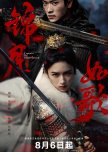
When the splendid moon sings
He Yan dons a mask and assumes the identity of the eldest son of the He family, taking the place of her frail and seemingly dying stepbrother, He Rufei, to safeguard the family’s inheritable noble title. Trapped in this false identity and desperate to escape an arranged marriage to another woman, she chooses the battlefield instead. Years later, she returns as a celebrated war hero and is personally rewarded by the Emperor with the title of General Feihong. Glory, however, proves short-lived. Her stepbrother recovers, covets her achievements, and conspires with their father to steal her title and rewards, leaving her blinded and presumed dead.
Against all odds, He Yan survives. With the help of her former tutor, she gradually recovers her sight and reinvents herself once again, this time joining the Xiao Army under an assumed name. The army is led by Xiao Jue, her former classmate, who fails to recognise her without the mask. Still, he quickly grows suspicious. Her military skills far exceed those of a new recruit, and his doubts deepen when he discovers that she is a woman. Yet, ability speaks louder than gender, and He Yan proves her worth repeatedly on the battlefield.
In Yezhou, she befriends Chu Zhao, a gentle and refined scholar who is also a student of the Chancellor, a political adversary of Xiao Jue. Friend or foe, Chu Zhao occupies a precarious position in the larger struggle. As life-and-death experiences bind the trio together, both Xiao Jue and Chu Zhao fall in love with He Yan. The question then becomes not only who will win her heart, but who will survive the ruthless game of power surrounding them.
Despite the generally positive reviews, it took me a long time before I finally started watching this drama. The English drama title initially reminded me too strongly of Mulan, a name that has become almost synonymous with the trope of a woman disguising herself as a man to go to war. Mulan herself is a fictional figure, and I have little interest in yet another retelling of that story; I have watched more than enough variations already.
Ancient Chinese history offers few documented examples of outstanding female generals and none had disguised as a man. For a delicate woman to pass off as a man for prolong period, it needs her comrades to have vision problem and the premise stretches realism. Furthermore, cross-dressing heroines are an extremely overused trope in historical dramas.
That said, once I finally began watching, I found the drama surprisingly entertaining. It ticks all the essential boxes: attractive leads, strong performances, exquisite costumes, evocative theme music, polished cinematography, and impressive CGI. The story itself is engaging and filled with suspense. There is little mystery regarding the villains, as their identities are obvious from the outset. Instead, the appeal lies in watching the battle of wits unfold and holding one’s breath to see which side key characters will ultimately choose.
What truly stood out for me was the second male lead, portrayed by Zhang Kang Le. Although he has appeared in dramas I have watched before, this was the first time he truly caught my attention. He delivers a convincing performance as a pivotal character whose choices can tip the balance between victory and defeat. Torn between following the corrupt path of his tutor or adhering to his own moral compass, his internal struggle adds considerable depth to the narrative. I do, however, lament how harshly the drama treats him in the end. After all his efforts to live an upright and principled life, he deserved a more compassionate resolution. While he does make a grave mistake later in the story, he already pays dearly through emotional loss and a deeply fractured love life. The emperor should not blame him for his own error in decision which is the consequence of his own suspicion and mistrust of his generals.
In most dramas built around a love triangle, the suspense is often squandered far too early. The endgame pairing is telegraphed either through the narrative itself or, worse, through trailers and promotional material. What could have been a delicious source of tension instead becomes a foregone conclusion. Sadly, this drama falls into the same trap. The writers could easily have made He Yan’s choice far less obvious, allowing viewers to genuinely speculate about where her heart would land. After all, Xiao Jue treats her abysmally for much of the story, while Chu Zhao makes no secret of his efforts to court her with patience, warmth, and respect. A little narrative misdirection here would have elevated the emotional stakes considerably and made the romantic arc far more compelling.
Finally, I must comment on the English translation of the drama’s title. It is uninspired, unimaginative, and painfully mundane. In fact, it was the main reason I delayed watching the series in the first place. A more poetic title, something along the lines of 'When the Splendid Moon Sings', much nearer to the Chinese title, would have better captured the spirit of the story and perhaps enticed viewers sooner.
Against all odds, He Yan survives. With the help of her former tutor, she gradually recovers her sight and reinvents herself once again, this time joining the Xiao Army under an assumed name. The army is led by Xiao Jue, her former classmate, who fails to recognise her without the mask. Still, he quickly grows suspicious. Her military skills far exceed those of a new recruit, and his doubts deepen when he discovers that she is a woman. Yet, ability speaks louder than gender, and He Yan proves her worth repeatedly on the battlefield.
In Yezhou, she befriends Chu Zhao, a gentle and refined scholar who is also a student of the Chancellor, a political adversary of Xiao Jue. Friend or foe, Chu Zhao occupies a precarious position in the larger struggle. As life-and-death experiences bind the trio together, both Xiao Jue and Chu Zhao fall in love with He Yan. The question then becomes not only who will win her heart, but who will survive the ruthless game of power surrounding them.
Despite the generally positive reviews, it took me a long time before I finally started watching this drama. The English drama title initially reminded me too strongly of Mulan, a name that has become almost synonymous with the trope of a woman disguising herself as a man to go to war. Mulan herself is a fictional figure, and I have little interest in yet another retelling of that story; I have watched more than enough variations already.
Ancient Chinese history offers few documented examples of outstanding female generals and none had disguised as a man. For a delicate woman to pass off as a man for prolong period, it needs her comrades to have vision problem and the premise stretches realism. Furthermore, cross-dressing heroines are an extremely overused trope in historical dramas.
That said, once I finally began watching, I found the drama surprisingly entertaining. It ticks all the essential boxes: attractive leads, strong performances, exquisite costumes, evocative theme music, polished cinematography, and impressive CGI. The story itself is engaging and filled with suspense. There is little mystery regarding the villains, as their identities are obvious from the outset. Instead, the appeal lies in watching the battle of wits unfold and holding one’s breath to see which side key characters will ultimately choose.
What truly stood out for me was the second male lead, portrayed by Zhang Kang Le. Although he has appeared in dramas I have watched before, this was the first time he truly caught my attention. He delivers a convincing performance as a pivotal character whose choices can tip the balance between victory and defeat. Torn between following the corrupt path of his tutor or adhering to his own moral compass, his internal struggle adds considerable depth to the narrative. I do, however, lament how harshly the drama treats him in the end. After all his efforts to live an upright and principled life, he deserved a more compassionate resolution. While he does make a grave mistake later in the story, he already pays dearly through emotional loss and a deeply fractured love life. The emperor should not blame him for his own error in decision which is the consequence of his own suspicion and mistrust of his generals.
In most dramas built around a love triangle, the suspense is often squandered far too early. The endgame pairing is telegraphed either through the narrative itself or, worse, through trailers and promotional material. What could have been a delicious source of tension instead becomes a foregone conclusion. Sadly, this drama falls into the same trap. The writers could easily have made He Yan’s choice far less obvious, allowing viewers to genuinely speculate about where her heart would land. After all, Xiao Jue treats her abysmally for much of the story, while Chu Zhao makes no secret of his efforts to court her with patience, warmth, and respect. A little narrative misdirection here would have elevated the emotional stakes considerably and made the romantic arc far more compelling.
Finally, I must comment on the English translation of the drama’s title. It is uninspired, unimaginative, and painfully mundane. In fact, it was the main reason I delayed watching the series in the first place. A more poetic title, something along the lines of 'When the Splendid Moon Sings', much nearer to the Chinese title, would have better captured the spirit of the story and perhaps enticed viewers sooner.
Was this review helpful to you?


