

 2
2 1
1 1
1


Under the Vast Sky of Altai
I was utterly spellbound by the ending theme song. It is the kind of melody that seeps quietly into your heart and refuses to leave. Beautiful, lyrical, sentimental, romantic and richly ethnic, it carries the vastness of the land within its notes. As it plays, you can almost imagine yourself lying in the endless grasslands of Altai, gazing up at the open sky, breathing in freedom itself. For those curious, you can listen to it here: https://www.youtube.com/watch?v=LiUbJKGKiP4.
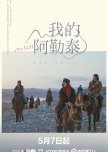
I first heard about this drama while travelling in Xinjiang, when our tour guide mentioned it almost in passing. At the time, it felt like one of those fleeting travel anecdotes you tuck away and forget. Yet it lingered somewhere in my mind, and over a year later, I finally tracked it down on iQIYI. Its Chinese title is My Altai. Set in the Altai region of Xinjiang, the drama is a rare linguistic tapestry, with much of the dialogue in Kazakh, interwoven with Mandarin spoken by Han Chinese characters, all supported by English subtitles. This alone gives the series an authenticity that immediately sets it apart.
Xinjiang is a multilingual, multicultural land, and Altai is among its most breathtaking regions, often described as the Switzerland of China. Watching this drama felt less like viewing a story and more like revisiting a place. The sweeping landscapes, roaming herds, and quiet rhythms of nomadic life stirred memories of the people and the raw beauty of the region.
At the heart of the story is Li Wenxiu, a Han Chinese girl with dreams of becoming a writer. Her life in Urumqi, however, proves deeply unsatisfying. Burdened by failure and grief, she travels to Altai to join her mother, who is mourning the loss of her husband and has retreated to this remote land to survive and heal. There, Wenxiu befriends the locals and helps her mother run a small shop to make ends meet. It is in this rugged yet gentle world that she meets Batay, a free-spirited nomadic young man who dreams of becoming a horse trainer. Their bond grows quietly but deeply, shaped by shared moments under wide skies. Love blossoms, only to be tested by a sudden accident and the pull of diverging ambitions. Fate drives them apart, leaving the lingering question: will their paths cross again?
In this short drama, you are confronted with a heart-rending moment when a man is forced to shoot the horse he loves and has nursed back to health in order to save the woman he loves. In that instant, the audience grieves alongside them both, sharing their unbearable loss and sacrifice.
The setting is raw and rugged, reflected in the landscape and the people who inhabit it. Most of the cast appear naturally sun-tanned, as though shaped by wind and weather. The male lead (Chinese name: Yu Shi), of Mongolian descent, embodies this environment perfectly, ruggedly handsome with a presence that feels both grounded and authentic. I hope to see more of him in future dramas.
Beyond romance, the drama paints a moving portrait of nomadic life and the cultural tensions beneath its surface. It explores cross-cultural relationships, generational conflict, and the painful choices faced by the young. Modern life beckons with promises of stability and opportunity, tempting them to abandon the wandering traditions of their ancestors. Meanwhile, the older generation clings fiercely to the old ways, holding on for as long as their bodies and spirits allow.
This is not the kind of drama I usually gravitate towards. I confess that I am easily drawn to glittering costumes, poetic dialogue, and visually polished casts. At first, this drama felt slow, understated, and even a little dull to me. Yet, almost without realizing it, I found myself completely absorbed. What began as mild curiosity turned into deep affection. By the end, it had quietly claimed a place in my heart.
For its sincerity, its cultural richness, and its haunting sense of place, I would highly recommend this drama. It does not shout for attention, but if you let it, it will stay with you long after the final note fades.
I first heard about this drama while travelling in Xinjiang, when our tour guide mentioned it almost in passing. At the time, it felt like one of those fleeting travel anecdotes you tuck away and forget. Yet it lingered somewhere in my mind, and over a year later, I finally tracked it down on iQIYI. Its Chinese title is My Altai. Set in the Altai region of Xinjiang, the drama is a rare linguistic tapestry, with much of the dialogue in Kazakh, interwoven with Mandarin spoken by Han Chinese characters, all supported by English subtitles. This alone gives the series an authenticity that immediately sets it apart.
Xinjiang is a multilingual, multicultural land, and Altai is among its most breathtaking regions, often described as the Switzerland of China. Watching this drama felt less like viewing a story and more like revisiting a place. The sweeping landscapes, roaming herds, and quiet rhythms of nomadic life stirred memories of the people and the raw beauty of the region.
At the heart of the story is Li Wenxiu, a Han Chinese girl with dreams of becoming a writer. Her life in Urumqi, however, proves deeply unsatisfying. Burdened by failure and grief, she travels to Altai to join her mother, who is mourning the loss of her husband and has retreated to this remote land to survive and heal. There, Wenxiu befriends the locals and helps her mother run a small shop to make ends meet. It is in this rugged yet gentle world that she meets Batay, a free-spirited nomadic young man who dreams of becoming a horse trainer. Their bond grows quietly but deeply, shaped by shared moments under wide skies. Love blossoms, only to be tested by a sudden accident and the pull of diverging ambitions. Fate drives them apart, leaving the lingering question: will their paths cross again?
In this short drama, you are confronted with a heart-rending moment when a man is forced to shoot the horse he loves and has nursed back to health in order to save the woman he loves. In that instant, the audience grieves alongside them both, sharing their unbearable loss and sacrifice.
The setting is raw and rugged, reflected in the landscape and the people who inhabit it. Most of the cast appear naturally sun-tanned, as though shaped by wind and weather. The male lead (Chinese name: Yu Shi), of Mongolian descent, embodies this environment perfectly, ruggedly handsome with a presence that feels both grounded and authentic. I hope to see more of him in future dramas.
Beyond romance, the drama paints a moving portrait of nomadic life and the cultural tensions beneath its surface. It explores cross-cultural relationships, generational conflict, and the painful choices faced by the young. Modern life beckons with promises of stability and opportunity, tempting them to abandon the wandering traditions of their ancestors. Meanwhile, the older generation clings fiercely to the old ways, holding on for as long as their bodies and spirits allow.
This is not the kind of drama I usually gravitate towards. I confess that I am easily drawn to glittering costumes, poetic dialogue, and visually polished casts. At first, this drama felt slow, understated, and even a little dull to me. Yet, almost without realizing it, I found myself completely absorbed. What began as mild curiosity turned into deep affection. By the end, it had quietly claimed a place in my heart.
For its sincerity, its cultural richness, and its haunting sense of place, I would highly recommend this drama. It does not shout for attention, but if you let it, it will stay with you long after the final note fades.
Was this review helpful to you?


