

 2
2 1
1 1
1


Power, Language and the Cost of Change
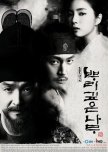
Tree with Deep Roots is a richly layered and compelling historical drama that is both intellectually engaging and emotionally resonant. Centred on King Sejong—the monarch credited with the creation of Hangul—it offers not only a gripping narrative but also a fascinating gateway into the origins of the modern Korean writing system. For viewers unfamiliar with the language, the drama does an excellent job of sparking genuine curiosity about how Hangul transformed literacy in Korea. While the Minbon secret society is fictional, it is woven into the story in a way that feels plausible and thought-provoking.
The story opens with the tragic childhood of Ddol Bok and Dam Yi, whose lives are shattered by a political conspiracy. A tampered royal message leads to accusations of treason, resulting in the execution of their families. Believing that King Sejong is responsible, Ddol Bok grows up consumed by a desire for revenge. The separation of the two children—once deeply connected—sets up one of the drama’s most compelling emotional threads. As they grow into adults on opposing sides, the tension builds beautifully. Viewers are left in constant anticipation: when will they meet again, will they recognise each other, how will they convince each other and what will they do when faced with the truth?
At the heart of the drama lies the ideological battle surrounding the Minbon society. Claiming to uphold the teachings of Jeong Do-jeon, they advocate for a state governed by Neo-Confucian scholars, reducing the king to a symbolic figurehead. This philosophy stands in stark contrast to the royal authority upheld by King Taejong and later challenged by Sejong’s own vision of leadership. The drama uses this conflict to explore deeper questions about power, governance, and who should hold the right to shape a nation’s future.
Parallel to this political struggle is King Sejong’s revolutionary mission: to create a writing system based on Korean phonetics rather than borrowed Chinese characters. The significance of this cannot be overstated. By making literacy accessible to common people, he was effectively redistributing power—something the elite class perceived as deeply threatening. The drama captures this tension brilliantly, illustrating how knowledge itself can become a battleground.
One of the most striking character arcs is that of Jeong Ki-joon. What begins as a principled commitment to preserving his uncle’s ideology gradually descends into obsession and moral corruption. His fear of losing intellectual and social dominance drives him to increasingly extreme actions. In his eyes, Hangul is not a tool of empowerment but a dangerous equaliser. His descent into fanaticism is chilling and, at times, disturbingly relatable.
The Minbon society’s actions—ranging from manipulation to outright violence, including planned assassinations—highlight how ideology can be twisted to justify cruelty. The drama also subtly exposes the fragility of such movements. Beneath their philosophical rhetoric lies ambition, insecurity, and a hunger for control. When tested, their unity fractures, revealing that their convictions are not as steadfast as they claim.
Watching this in a modern context, it is difficult not to draw parallels with contemporary extremism. The way individuals become radicalised, convinced of their moral superiority while committing acts of violence, feels all too familiar. This adds an additional layer of relevance to the story.
The drama builds to a poignant conclusion, marked by the loss of remarkable individuals whose integrity and talent make their sacrifices all the more painful. These moments linger, reminding viewers of the cost of progress and conviction.
The performances are outstanding across the board. Shin Se-kyung delivers a particularly memorable performance, especially in her final scenes, where her physical portrayal of suffering is both convincing and heartbreaking. The three leads anchor the drama with depth and emotional intensity, bringing complexity to their roles.
Overall, Tree with Deep Roots is a well-crafted and deeply satisfying drama that combines historical insight with compelling storytelling. It is certainly worth watching, especially for those who appreciate narratives that challenge both the mind and the heart.
If there is one minor drawback, it is that the repeated scheming of the Minbon society can at times feel frustrating, particularly when set against the nobility of Sejong’s vision. However, even this serves to reinforce the central theme: that meaningful change is rarely achieved without resistance, often from those most invested in preserving the status quo.
If this story captivates you, I would highly recommend Six Flying Dragons, which serves as a prequel to Tree with Deep Roots. It delves deeper into the political foundations and key figures that shaped the world you see in this drama. In my view, it is an exceptional production—one I would confidently rate a perfect 10.
The story opens with the tragic childhood of Ddol Bok and Dam Yi, whose lives are shattered by a political conspiracy. A tampered royal message leads to accusations of treason, resulting in the execution of their families. Believing that King Sejong is responsible, Ddol Bok grows up consumed by a desire for revenge. The separation of the two children—once deeply connected—sets up one of the drama’s most compelling emotional threads. As they grow into adults on opposing sides, the tension builds beautifully. Viewers are left in constant anticipation: when will they meet again, will they recognise each other, how will they convince each other and what will they do when faced with the truth?
At the heart of the drama lies the ideological battle surrounding the Minbon society. Claiming to uphold the teachings of Jeong Do-jeon, they advocate for a state governed by Neo-Confucian scholars, reducing the king to a symbolic figurehead. This philosophy stands in stark contrast to the royal authority upheld by King Taejong and later challenged by Sejong’s own vision of leadership. The drama uses this conflict to explore deeper questions about power, governance, and who should hold the right to shape a nation’s future.
Parallel to this political struggle is King Sejong’s revolutionary mission: to create a writing system based on Korean phonetics rather than borrowed Chinese characters. The significance of this cannot be overstated. By making literacy accessible to common people, he was effectively redistributing power—something the elite class perceived as deeply threatening. The drama captures this tension brilliantly, illustrating how knowledge itself can become a battleground.
One of the most striking character arcs is that of Jeong Ki-joon. What begins as a principled commitment to preserving his uncle’s ideology gradually descends into obsession and moral corruption. His fear of losing intellectual and social dominance drives him to increasingly extreme actions. In his eyes, Hangul is not a tool of empowerment but a dangerous equaliser. His descent into fanaticism is chilling and, at times, disturbingly relatable.
The Minbon society’s actions—ranging from manipulation to outright violence, including planned assassinations—highlight how ideology can be twisted to justify cruelty. The drama also subtly exposes the fragility of such movements. Beneath their philosophical rhetoric lies ambition, insecurity, and a hunger for control. When tested, their unity fractures, revealing that their convictions are not as steadfast as they claim.
Watching this in a modern context, it is difficult not to draw parallels with contemporary extremism. The way individuals become radicalised, convinced of their moral superiority while committing acts of violence, feels all too familiar. This adds an additional layer of relevance to the story.
The drama builds to a poignant conclusion, marked by the loss of remarkable individuals whose integrity and talent make their sacrifices all the more painful. These moments linger, reminding viewers of the cost of progress and conviction.
The performances are outstanding across the board. Shin Se-kyung delivers a particularly memorable performance, especially in her final scenes, where her physical portrayal of suffering is both convincing and heartbreaking. The three leads anchor the drama with depth and emotional intensity, bringing complexity to their roles.
Overall, Tree with Deep Roots is a well-crafted and deeply satisfying drama that combines historical insight with compelling storytelling. It is certainly worth watching, especially for those who appreciate narratives that challenge both the mind and the heart.
If there is one minor drawback, it is that the repeated scheming of the Minbon society can at times feel frustrating, particularly when set against the nobility of Sejong’s vision. However, even this serves to reinforce the central theme: that meaningful change is rarely achieved without resistance, often from those most invested in preserving the status quo.
If this story captivates you, I would highly recommend Six Flying Dragons, which serves as a prequel to Tree with Deep Roots. It delves deeper into the political foundations and key figures that shaped the world you see in this drama. In my view, it is an exceptional production—one I would confidently rate a perfect 10.
Was this review helpful to you?


