
 News
News 

 2
2 1
1 1
1


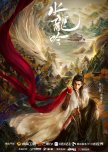
This drama ticks almost every box of a well-produced series, and in my view, it may even be underrated on kisskh. I would expect it to sit closer to 8.5.
It stars Luo Yunxi, who has been one of my favourites since Ashes of Love. Once again, he does not disappoint. His portrayal of Tang Li Ci is remarkable—transforming from a broken, traumatised refugee to a near god-like figure. The emotional range he delivers, from vulnerability to quiet triumph, is impressive. In many of his previous roles, such as Ashes of Love and Till the End of the Moon, he plays similar diverse roles from lowly figures to powerful, divine characters, and this drama continues that trend—yet still feels fresh.
Alen Fang also deserves special mention for his intense performance as Liu Yan. His portrayal of obsession and delusion is convincing and, at times, unsettling.
The cast overall performs strongly and is visually appealing. The storyline is refreshing—moving away from the usual gods-versus-demons formula common in Chinese fantasy dramas. The CGI is impressive, the fight sequences are visually striking, and the costumes are stunning. Luo Yunxi, in particular, seems to glide effortlessly from one elegant costume and hairstyle to another.
That said, the drama does echo elements of The Untamed, especially with musical instruments like the qin and flute used as lethal weapons. I even checked whether they shared the same writer—but they do not.
What truly hooks the audience is the central mystery: what really happened in the past, and who exactly is Tang Li Ci? Is he truly YiQue YinYang?
The story is intriguing. An ancient tribe developed the Rebirth Scroll—a mystical technique granting rapid healing and extraordinary power. These near-immortal beings ascended to form the TianRen Realm, leaving behind ShenZhou, their earthly home. However, history takes a dark turn when a TianRen (Celestial Being)—Ye Mo (also known as Yi Que Yin Yang)—descends to earth, is mistreated by humans, turns rogue, and brings devastation upon the land.
Beyond fantasy, the drama mirrors real-world dynamics in a surprisingly sharp way. Both Tang Li Ci and Liu Yan are deeply tied to Fang Zhou, almost like devoted followers of a political figure. Their conflict stems from this attachment. Liu Yan, convinced that Tang killed Fang, clings stubbornly to this belief—even when evidence suggests otherwise. His judgement is clouded not only by manipulation from the sinister Ghostly Peony, but also by his own jealousy and personal dislike. It is a powerful reminder of how easily bias shapes perception—we often believe the worst about those we resent.
What appears to be an intense rivalry between Liu Yan and Tang Li Ci gradually reveals deeper layers. There are unseen forces at work—manipulators pulling strings behind the scenes.
The internal dynamics of the Sword Alliance are also strikingly realistic: resistance to change, suspicion of rising talent, and vulnerability to corruption. Despite clear threats, they struggle to adapt—something that feels all too familiar in real-world organisations.
One weakness of the drama is its pacing. The prolonged conflict between Liu Yan and Tang Li Ci—especially when it extends beyond episode 22—can feel repetitive and slow. Liu Yan continually sets traps to prove Tang is YiQue YinYang, and while the clues (such as the Rebirth Scroll and the forehead mark) are compelling, the lack of progress can be frustrating. However, the story improves significantly as the mysteries begin to unfold later on. Tang’s ambiguous behaviour—such as his occasional admission to a crime he may not have committed—adds another layer of intrigue.
Emotionally, the drama delivers. A particularly heartbreaking moment comes with the loss of one of Tang’s loyal companions and also a strong supporter. Meanwhile, the larger conflict escalates: the TianRen Realm, facing decline, seeks to reclaim ShenZhou—at the cost of annihilating its current inhabitants. Ironically, in trying to survive, they risk their own destruction.
The story raises a profound question. Tang is determined to save his adopted earthly homeland and those he grows to love—but it ultimately becomes a choice between one race and another. Is survival always a zero-sum game? Must one side perish for the other to live?
This dilemma reflects the real world all too closely. Wars are often fought for dominance, not coexistence. Coexistence is often overlooked, and solutions that benefit all remain elusive. The unwillingness to understand or support the “other side” reveals a deeper human flaw—self-interest at its most destructive.
It stars Luo Yunxi, who has been one of my favourites since Ashes of Love. Once again, he does not disappoint. His portrayal of Tang Li Ci is remarkable—transforming from a broken, traumatised refugee to a near god-like figure. The emotional range he delivers, from vulnerability to quiet triumph, is impressive. In many of his previous roles, such as Ashes of Love and Till the End of the Moon, he plays similar diverse roles from lowly figures to powerful, divine characters, and this drama continues that trend—yet still feels fresh.
Alen Fang also deserves special mention for his intense performance as Liu Yan. His portrayal of obsession and delusion is convincing and, at times, unsettling.
The cast overall performs strongly and is visually appealing. The storyline is refreshing—moving away from the usual gods-versus-demons formula common in Chinese fantasy dramas. The CGI is impressive, the fight sequences are visually striking, and the costumes are stunning. Luo Yunxi, in particular, seems to glide effortlessly from one elegant costume and hairstyle to another.
That said, the drama does echo elements of The Untamed, especially with musical instruments like the qin and flute used as lethal weapons. I even checked whether they shared the same writer—but they do not.
What truly hooks the audience is the central mystery: what really happened in the past, and who exactly is Tang Li Ci? Is he truly YiQue YinYang?
The story is intriguing. An ancient tribe developed the Rebirth Scroll—a mystical technique granting rapid healing and extraordinary power. These near-immortal beings ascended to form the TianRen Realm, leaving behind ShenZhou, their earthly home. However, history takes a dark turn when a TianRen (Celestial Being)—Ye Mo (also known as Yi Que Yin Yang)—descends to earth, is mistreated by humans, turns rogue, and brings devastation upon the land.
Beyond fantasy, the drama mirrors real-world dynamics in a surprisingly sharp way. Both Tang Li Ci and Liu Yan are deeply tied to Fang Zhou, almost like devoted followers of a political figure. Their conflict stems from this attachment. Liu Yan, convinced that Tang killed Fang, clings stubbornly to this belief—even when evidence suggests otherwise. His judgement is clouded not only by manipulation from the sinister Ghostly Peony, but also by his own jealousy and personal dislike. It is a powerful reminder of how easily bias shapes perception—we often believe the worst about those we resent.
What appears to be an intense rivalry between Liu Yan and Tang Li Ci gradually reveals deeper layers. There are unseen forces at work—manipulators pulling strings behind the scenes.
The internal dynamics of the Sword Alliance are also strikingly realistic: resistance to change, suspicion of rising talent, and vulnerability to corruption. Despite clear threats, they struggle to adapt—something that feels all too familiar in real-world organisations.
One weakness of the drama is its pacing. The prolonged conflict between Liu Yan and Tang Li Ci—especially when it extends beyond episode 22—can feel repetitive and slow. Liu Yan continually sets traps to prove Tang is YiQue YinYang, and while the clues (such as the Rebirth Scroll and the forehead mark) are compelling, the lack of progress can be frustrating. However, the story improves significantly as the mysteries begin to unfold later on. Tang’s ambiguous behaviour—such as his occasional admission to a crime he may not have committed—adds another layer of intrigue.
Emotionally, the drama delivers. A particularly heartbreaking moment comes with the loss of one of Tang’s loyal companions and also a strong supporter. Meanwhile, the larger conflict escalates: the TianRen Realm, facing decline, seeks to reclaim ShenZhou—at the cost of annihilating its current inhabitants. Ironically, in trying to survive, they risk their own destruction.
The story raises a profound question. Tang is determined to save his adopted earthly homeland and those he grows to love—but it ultimately becomes a choice between one race and another. Is survival always a zero-sum game? Must one side perish for the other to live?
This dilemma reflects the real world all too closely. Wars are often fought for dominance, not coexistence. Coexistence is often overlooked, and solutions that benefit all remain elusive. The unwillingness to understand or support the “other side” reveals a deeper human flaw—self-interest at its most destructive.
Was this review helpful to you?


