
 Celebrity


 2
 1
 1


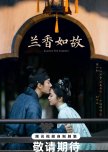
The storytelling is its greatest strength. The pacing is generally excellent, with few dull moments, and the various subplots are woven together skilfully. There is family intrigue, power struggles, politics, scheming, rivalry, romance, and enough twists and surprises to keep one thoroughly engaged. The characters are not merely there to fill the screen; their ambitions, weaknesses, and choices drive the story forward.
The drama also boasts an excellent cast, with Liu Xue Yi standing out as the handsome Lin Jin Qi. Beyond his good looks, he brings considerable presence to the role. The chemistry between the leading couple is another major draw, making their romance all the more compelling. Overall, the cast delivers strong performances, bringing the characters and their complicated relationships to life.
What I particularly enjoyed is that we do not get just one romance, but the dynamics of five couples, each with their own circumstances and challenges. There are sweet, heartwarming moments as well as painful disappointments, making the romantic landscape far more varied and interesting than a single love story could offer.
Shen Jia Lan, living under the assumed identity of Xu Lan Xiang, is a particularly engaging character. Intelligent and resourceful, she navigates the treacherous Lin household and the machinations of the vicious Lady Zhao with considerable wit. Meanwhile, Lin Jin Qi is far from a passive romantic lead. His determination to escape an unhappy marriage and eventually make Lan Xiang his wife, despite the obstacles of social status and a potential rival, makes their romance all the more compelling.
The emotional impact is another major highlight. This drama is a feast for the senses, with plenty of emotional highs and tear-jerking moments. Even the seemingly less sympathetic characters have their own vulnerabilities, while the innocent and naive are not always spared the consequences of misplaced trust. The complicated family dynamics and the relentless competition for power add further layers to the story.
Two moments particularly touched me: the death of Jia Lan’s kind adoptive mother, which nearly brought me to tears, and the untimely death of a capable, upright scholar who had done his best to serve his country. Credit to the director and the actors for making these scenes so affecting.
The production values deserve praise, too. The costumes are excellent, adding visual richness to the period setting, while the CGI enhances the spectacle without taking away from the storytelling. And then there is the soundtrack! It is among the best I have heard this year and absolutely stole my heart. The music complements the emotional scenes beautifully, heightening the heartbreak without feeling out of place.
Beyond the romance and intrigue, the drama also offers a sobering glimpse into a society in which women had little control over their own lives. Their social standing could determine their fate, while traditional prejudices were so deeply ingrained that women themselves could come to believe in their own inferiority. It is painful to watch how readily such injustice was accepted as the natural order of things. Confucius is one of two historical figures whose widely influential teachings I believe have helped entrench prejudice against women, although I acknowledge that his teachings also contain many valuable principles.
The setting appears to draw inspiration from the Ming dynasty, judging by the costumes, the prominent role of eunuchs, and what seems to be a borrowed historical episode involving an emperor who personally led an army and was captured. The drama takes some liberties, but the historical flavour adds to its appeal.
The English title 'Against the Current' is wonderfully apt, capturing the characters’ struggles against fate, social conventions, and the powerful forces working against them. It feels thoughtfully chosen for this drama, rather than an attempt to ride on the popularity of other dramas’ titles or a literal translation of the Chinese title.
One final observation: the drama portrays emperors as far from consistently wise or capable rulers. Looking at today's world, however, I would argue that neither are all democratic leaders particularly wise. Different systems, perhaps, but human folly remains remarkably consistent!
Overall, a wholehearted thumbs-up from me. With its well-paced storytelling, compelling characters, intricate family politics, five romances, heart-rending moments, excellent performances, beautiful costumes, impressive CGI, and superb soundtrack, 'Against the Current' is an absolute must-watch for fans of Chinese period dramas.
Was this review helpful to you?
Following the footstep of 'The Untamed'
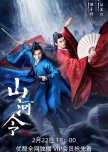
This drama follows very much in the footsteps of 'The Untamed' - a bromance, a cheeky 'fallen' hero, 2 gorgeous male leads, theme songs co-performed by the male leads, and the list goes on. And in a lot of pre-broadcast reviews, it has been marketed as its parallel. So I cannot help but make the comparison.Although I enjoyed this drama, I still think 'The Untamed' is much better produced - who could beat a combination of Wang Yibo and Xiao Zhan? Also, the dark scenes were a lot better crafted - the death valley Wei Ying (Xiao Zhan) fell into was eerie. The entire production was much better edited with the mystery and suspense very well built up. Wei Ying's fall off the cliff was dramatic - the Wei Ying's heartbreak at the death of his 'sister' and Lan Zhan's desperate attempt to save him. I must also say the theme song was very well sang.
In some of the early episodes in Word of Honor, I was about to write it off as just another average wuxia drama. But it got better. There were some humor in the drama, and some of the plots actually got me really mad. And the story was interesting.
Gong Jun's (Simon) acting was really good. One of the greatest skills of an outstanding actor is in his facial expression and Gong Jun is excellent in this. Mischief, anger, evil, caring, flirting - he did all of these remarkably.
Although I am not homophobic, I really do not appreciate romantic scene between same genders in dramas or movies - do not work up any sentiments in me. I respect the rainbow community but I do not share their romances. This drama was a little bolder in this regard but it did nothing for me. Any production of such dramas must make up for this lack of empathy with the general audience (other than the rainbow community) with good story, cast, scenery, cinematography and editing.
Considering all of these, I rated it a 9 overall.
Was this review helpful to you?
A far-cry from series 1
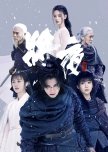
This sequel is a far cry from its prequel, not only because of a change in some of the cast but in the tempo and ending. The first 15 episodes were filled with time fillers as Ning Que and Sang Sang tried to escape persecution as her identity was uncovered. The new lead actor is good looking and acted well but does not make up for the lack of other elements. The last couple of episodes were a drag - with me hanging on just to find out the conclusion.There were intense moments as the battle against the Tang and the academy were underway and possibly the best part of the story. The story very much climaxed at this battle and then went downhill again. The ending was unimpressed.
The only thing that I am happy with this sequel is that the story is a continuation from the prequel, unlike a lot of other sequel where the sequel is an attempt to leverage on the name of its predecessor.
To make it worse, I was watching the Pillow Book along with this as they were released around the same time. I was glued to YouTube for the Pillow Book and watched this only to fill in the time in-between the releases of the Pillow Book. The contrast was immense. Although the Pillow Book had its occasional slow moments but it held my attention to the very end.
The script for all dramas should be carefully reviewed before production. This script did not keep up with the grandeur of the set and investment, and not worth the time of the audience.
Was this review helpful to you?

When Roses Bloom Amidst Betrayal and Heartbreak
This drama has a rather unimpressive start, quite unlike those that try to grab your attention with a bang from the very first episode. However, things begin to pick up around episode 7, when an assassination plot is set in motion. From then on, you may find yourself getting increasingly anxious on behalf of the perpetrator. Can he really pull it off, working entirely alone without anyone to help him?There is plenty to keep you interested, both in the storyline and in the character developments.
The story begins with Yan Shang's encounter with the petulant Princess Danyang, who bullies him and his family. She despises him as a scheming nobody trying to hitch a ride to the capital to sit the imperial examination. Little does she know that Yan Shang has a very different agenda once he reaches the capital: an elaborate plan to assassinate the man responsible for his mother's and younger brother's deaths, as well as the disabling of his father and elder brother. Crossing his path, Princess Danyang comes to his rescue, helping him escape capture.
What follows is a struggle to overthrow an oppressive tyrant who has dominated the imperial court through his powerful supporters and terrorised the people. Yet, as the story unfolds, things are not quite as black and white as they first appear. The villain has a softer side, while some of those portrayed as benevolent victims turn out to be rather different from what they seem.
And just when you think one challenge has been overcome, another emerges. A Northern general reappears in Princess Danyang's life, bringing with him the threat of yet another politically motivated marriage. To protect herself, she must become more powerful than the man who now holds her fate in his hands. The story gradually expands into a complex game of power, with multiple factions competing for control.
Beyond the political intrigue, the drama also explores how trauma can change people beyond recognition. Friends and loved ones become enemies; heroes become despised; and individuals find themselves defeated by their own ruthlessness, distrust and circumstances. It is a sobering reminder of how much people can change when pushed to their limits.
Of course, no drama is without its opportunities for nitpicking. Here are mine:
- What is with all the fuss over checking accounts? Were people in ancient times really so clueless that they did not know how to keep two sets of books – one fabricated and one genuine?
- Why does everyone seem to go into battle without proper armour, only to get shot?
- And that English title! Tigers Sniff the Rose sounds more like the title of a cartoon than a drama of this refinement. Surely someone could have come up with something better?
Now for my positive responses:
- The story: An intriguing plot that eventually hooks you to the screen. The deaths of the two suitors were particularly heart-wrenching. Their unwavering loyalty despite unreciprocated love earned my respect, their fate was not what I had hoped for, but they work. Even the deaths of two villains left me quite sorry for them.
- The music: Beautifully chosen and wonderfully effective in heightening the emotions. The duet Rose and Bamboo is my absolute favourite from this drama.
- The cast: Excellent casting, with wonderful on-screen chemistry between the leads. Both leads, along with many of the key supporting cast, are absolute eye-candies. I have seen comments criticising Meng Zi Yi's acting, but I disagree. Her on-screen character is pitiable, certainly, but not particularly lovable. She can be heartless and downright bullying, so I think some of the perceived shortcomings may have more to do with the character than the actress.
- The eye candy beyond the cast: Lovely costumes and CGI. Always appreciated!
My verdict
This drama has a lot going for it, although it takes a little patience to get there. I would give the first six episodes a rather modest 6, as they are quite mundane. The remaining episodes, however, deserve a 9.5.
That leaves me torn between an 8.5 and a 9. After some deliberation, I shall settle on a 9. It certainly earns it!
Was this review helpful to you?
Comedy, fantasy and romance rolled into one.
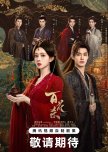
Blossoms of Power is quite a parade of handsome actors and beautiful actresses. Even Fan Shuai Qi, masquerading as a man (Bu Shu Lin), looks remarkably convincing — at first glance, I genuinely thought she was male. Meng Zi Yi, of course, is stunning with her pouty lips and large, expressive eyes. I would easily rank her among the top five most beautiful actresses in China.Shen Xi He is bestowed the title of Commandery Princess. She is the daughter of the powerful General Shen Yue Shan, sworn brother of the Emperor, and arrives in the capital with great pomp, supposedly for a marriage alliance with the royal family.
Beautiful, intelligent and from a highly esteemed family, she immediately captures the attention of the unmarried princes. Soon, she has five handsome princes at her heels. Five handsome Adonises competing for you — would that not be many women's dream?
Among them is the Crown Prince, frail and sickly after being poisoned as a child. The culprit was never found. Secretly helping Xi He from behind the scenes, he makes sure things go remarkably smoothly for her. But would Xi He choose him for his prestigious position, knowing that he may not have long to live?
Then there is the obsessive Prince Xin, who is convinced that Xi He is the reincarnation of his late wife. Jeremy Xu plays the role extremely well — at times, he looks positively sociopathic. Prince Xin is essentially a good man who has, unfortunately, been driven insane by grief and obsession.
Comedy, Fantasy and Romance
I would actually classify Blossoms of Power partly as a comedy. Much of the humour comes from the Crown Prince's attempts to woo the woman of his dreams while constantly pretending to be a poor, helpless, sickly young man.
The feud between Xi He's father and maternal grandfather is also amusing. Then there is Bu Shu Lin, who keeps dragging Cui Jin Bai along to discourage princesses hoping for a marriage arrangement with her. The situation becomes even funnier when the roles reverse: Cui discovers that Bu is actually a woman — and promptly starts courting her.
There is also a definite fantasy element. It appears that the spirit of Prince Xin's late wife merges with Xi He after Xi He falls into a river on her journey from the Northwest to the capital. She subsequently retains memories from both lives.
And, of course, the courtship between Xi He and the man she eventually chooses is undeniably romantic and heart-warming.
Xi He's previous life as Prince Xin's wife must have left her deeply disappointed, particularly because he failed to protect her Gu family. That experience also explains why she scrutinises her new suitor so critically. He has to work hard to win her trust and, eventually, her heart — making this very much a slow-burn romance.
Meanwhile, the identity of the person who poisoned the Crown Prince remains a mystery throughout much of the story. And what is a good drama without a twist? Blossoms of Power delivers one, although by the later episodes I managed to guess the culprit after the drama dropped a telling hint.
My Nitpicking
One thing I cannot quite agree with is Xi He's concern that the Crown Prince is too intelligent and cunning for her. Why should having a clever husband be a problem? Did she want a man she could control?
And how does someone who has died and is already lying in a coffin suddenly resurrect? We are told that a cure was found — but he was already dead! It seems happy endings have become fashionable these days, even when they are not particularly well orchestrated. Quite a contrast to the endless tragedies of Chinese dramas from the previous decade.
Lessons to Take Away
When someone is too strong-headed or stubborn, it can lead either to constant conflict or to the other person resorting to deception simply to avoid that conflict.
And perhaps the more serious lesson: one of the greatest threats to any country is internal conflict — particularly when people who understand their own country's systems and weaknesses cooperate with an external enemy.
Overall, Blossoms of Power gets an excellent rating from me. It has beauty, humour, mystery, fantasy, political intrigue and a satisfying slow-burn romance — enough ingredients to keep me entertained right to the end.
Was this review helpful to you?
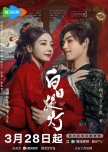
Beautiful, Amusing, Intriguing, Heart-rendering
Love Beyond the Grave starts on a grim note, with the massacre of a town, but the mood quickly changes when General DuanXu arrives. Dilraba as He Si Mu absolutely had me roaring with laughter when she started flirting with him. She is so pretentious that it becomes hilarious. Her expressions — flirtatious, cunning, wicked and hypocritical — are spot-on. Good looks and excellent acting skills are always a killer combination for actors.And this drama certainly has the looks. Dilraba and Miles Wei are absolutely eye-candy — both are stunningly good looking. Miles once again plays the jilted lover, as he did in Flourished Peony and its sequel. Call me shallow, but good-looking actors with excellent acting skills always score extra points with me.
There are also some lessons to be learnt. If you are infatuated with someone who does not return your love, learn to back off. Do not assume they are merely playing hard to get. Otherwise it becomes harassment.
I also could not help drawing parallels with the corporate world when the emperor fails to reward the person most worthy of praise, instead rewarding peripheral staff. It is the classic workplace problem: bosses reward the obedient rather than the capable, and then wonder why the capable ones leave. I could empathise with DuanXu's frustration but admire that he still had not abandoned his ideal of recovering the 17 prefectures despite having such an absolute asshole of an emperor.
As for forgetting the names of exes — well, I completely empathise with Si Mu on that one!
The story also has enough twists and mysteries to keep things interesting. We are left wondering whether DuanXu is really who he claims to be, or a murderer who has assumed the identity of a dead man. There are simply too many things about him that do not fit someone from a scholarly family.
Some of the supporting characters are memorable too. The Shaman was thoroughly infuriating, while Ding Jia Wen, as the Imperial Preceptor, really brightened the drama with his coy, playful, drama-queen antics. The two young actors playing young Chen Ying and Spirit Song Xing Yu were commendable for their age and showed real promise as future stars. Credit also goes to the casting team: the child and teenage versions of Chen Ying actually bear a convincing resemblance to each other.
There are some genuinely heart-rendering moments. An upright, capable and promising young minister commits suicide simply to save someone else. He could have denied the edict, so why did he have to die? And when a villain dies happily knowing that the woman he loves will be alright, it is heartbreaking. I agree that it was probably the right ending for him, but credit where it is due — his love was sincere.
On the other hand, I became increasingly impatient with DuanXu's constant self-punishment and reckless abuse of his own body. He repeatedly exchanges his senses with Si Mu even though he knows perfectly well that doing so will weaken him and eventually kill him. At some point, I just wanted to yell at him: stop doing this to yourself!
As for the soundtrack, it has many lovely melodious pieces - absolutely enchanting. I was debating between 9 and 9.5 - decided to change it to 9.5 because of the beautiful soundtrack.
Now for my nitpicking...
If DuanXu gives all his senses to Si Mu, does that mean she becomes completely incapacitated of her spiritual powers?
And why would the spirit still want revenge on the people who wronged her? After all, they should surely have been dead for decades, given that it takes a century for an obsessed spirit to cultivate a human body.
And those obsessive spirits floating around like jellyfish really did not work for me. Surely there was a better CGI alternative — perhaps a vague human silhouette would have been far more atmospheric.
Overall, I rate Love Beyond the Grave highly for its entertainment value. It has beautiful actors, good performances, humour, romance, mystery, twists and enough emotional drama to keep things moving. My nitpicks aside, it is an enjoyable watch.
Enjoy!
Was this review helpful to you?
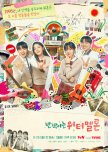
From Tears to Laughter
Twinkling Watermelon has one of the highest ratings on kisskh, and after finally watching it, I can see why. Strangely enough, I had put it off for ages. The synopsis mentioned time travel and I thought, "Oh great... not another Back to the Future copy." With so many time-travel dramas around, I was not particularly excited.The opening episodes did not help. Ha Eun Gyeol is the only hearing member of his poor family. His parents and brother are deaf, and he endures relentless bullying from the neighbourhood gang. It was so gloomy that I nearly gave up after two episodes, unable to withstand the emotional torture.
Thankfully, that is when everything changes.
Eun Gyeol is sent back to a time before his parents met and runs into his teenage father, who has absolutely no idea this strange boy calling him "Dad" is actually his future son. Watching his father's growing annoyance every time Eun Gyeol blurts out "Father!" is hilarious.
From then on, the series is a delightful mix of comedy, romance and heartfelt family moments. It keeps you laughing one minute and reaching for the tissue box the next, while keeping you guessing how every change in the past will affect the future.
Things become even more complicated when Eun Gyeol discovers his father was not born deaf. Determined to prevent the accident that changes his life, he soon realises he has another problem—his father is in love with the wrong girl. Suddenly, saving his father's hearing is no longer enough. He also has to make sure his parents actually fall in love, or he and his brother may never exist. Yes, it sounds a little like Back to the Future, but the drama takes the idea in its own heartwarming direction.
He also discovers that his mother endured a miserable childhood, mistreated by her cruel stepfamily while her father, consumed by his business, was largely oblivious to her suffering. Now he faces yet another impossible mission: how can he rescue her from this living hell?
One aspect I particularly enjoyed was the music. Eun Gyeol and Yi Chan form a band, and their performances are fantastic—good enough to give many contemporary pop bands a run for their money. I was so impressed that I even looked up whether the actors are from musical bands. Nope! They simply did a remarkably convincing job.
I watched the drama on Netflix with the English dub. While the dubbing was well done, I do wish Netflix had also provided English subtitles for the songs, especially when Yi Chan was serenading the girl he loved. Those lyrics would have added even more emotional depth to some already memorable scenes.
My only nitpick is that the younger and older versions of Cheong Ah (Eun Gyeol's mother) do not resemble each other very closely. Both actresses were excellent, but a better physical match would have made the transition more convincing.
To borrow another reviewer's word: wacko. The title is wacko, the story is wacko, the characters are delightfully wacko—and it is all incredibly entertaining.
With excellent acting, charming leads, convincing period settings and an engaging story, Twinkling Watermelon is one of those rare dramas that I almost dropped but ended up thoroughly enjoying. Definitely a thumbs-up from me.
Was this review helpful to you?

Puppy Love - a Slow-burn Romance across 25 episodes
Hidden Love follows the journey of Sang Zhi, whose childhood crush slowly blossoms into a mature romance over the course of several years.As a child, Sang Zhi is a spirited, slightly spoilt girl who is forever bickering with her older brother and getting into trouble at school. When her teacher insists on meeting her parents, she recruits Duan Jia Xu—her brother's university friend—to pretend to be her older brother and rescue her from the situation. It is an amusing beginning to a relationship that neither of them realises will shape the rest of their lives.
From that moment, Sang Zhi quietly develops feelings for Jia Xu. Years later, they meet again while he is at university and she is a young teenager. Her childhood admiration gradually turns into genuine love, but like many teenagers, she is far better at hiding her feelings than expressing them.
When Jia Xu graduates and returns to his hometown, rumours begin circulating that he has a girlfriend. Heartbroken, Sang Zhi travels there hoping to find out the truth, only for a misunderstanding to spiral completely out of control. The consequences linger for years, driving them apart and causing them to lose contact altogether.
Watching this unfold, I could not help thinking, "If the two of you would simply sit down and have one honest conversation, we could save about eight episodes!" But then there would not be much of a drama. Miscommunication is hardly unique to Chinese culture, but in societies where people are generally more reserved about expressing their emotions, small misunderstandings can snowball into major heartbreak, especially during the early part of a courtship when each are uncertain of the feelings of the other.
Fate eventually intervenes when Sang Zhi enrols at a university in Jia Xu's hometown. They meet again as adults, and although they remain polite on the surface, old misunderstandings continue to cast a shadow over their relationship. As Sang Zhi cares for Jia Xu when he falls ill, his feelings for her deepen. Winning back her trust, however, proves far more difficult than falling in love.
The romance is filled with delightful moments of humour. Jia Xu is wonderfully smooth when it comes to flirting, alternating between subtle hints and bold declarations. One memorable scene sees him casually asking Sang Zhi about her "relationship status"—she nearly chokes in surprise while the audience is left grinning. At times, the drama feels like a masterclass in modern courtship: how to flirt, how to tease, how to pursue someone... and occasionally, how not to communicate.
Of course, once the flirting begins, so does the classic game of playing hard to get. Fortunately, neither lead becomes frustrating enough to make you want to throw your remote at the television.
The drama also explores a more serious lesson: making life-changing decisions without consulting the people you love can cause enormous damage to a relationship. One well-intentioned decision almost derails a romance that has taken years to bloom.
Several obstacles stand in their way.
First, Jia Xu carries an enormous financial burden because of his irresponsible father. I found this storyline particularly moving. Jia Xu spends years paying for mistakes he never made, and when he finally confronts his father, he says almost exactly what I had been thinking throughout the series.
The second obstacle is the five-year age gap. Personally, I never found this particularly convincing. Five years hardly raises eyebrows in today's world, so I felt the drama made rather more of it than necessary.
Hidden Love is, above all, a slow-burn romance. Very slow burn. It takes around twenty-five episodes before the relationship truly blossoms. I will confess that my streaming speed mysteriously increased to 1.25× somewhere along the way—not because the drama was boring, but because I was simply too impatient to find out what happened next!
One final nitpick: the English title.
How many Asian dramas have already been called Hidden Love? Surely we can do better. The original Chinese title, 偷偷藏不住, carries the meaning of quietly hiding one's feelings for someone. Titles such as A Love Kept Secret, The Boy I Secretly Loved, Love in Silence, My Secret Crush, or The Secret of My First Love would have captured that meaning far more beautifully while avoiding yet another generic English title. Come on, translators—if inspiration fails, even AI can help these days!
Overall, Hidden Love is an excellent portrayal of modern courtship in China. It captures the awkwardness of first love, the pain caused by poor communication, and the joy of watching two people gradually find their way back to each other. The cast is outstanding, the chemistry between Zhao Lusi and Chen Zheyuan is irresistible, and the story is both heartwarming and surprisingly relatable.
If you enjoy gentle romances, plenty of butterflies, and enough flirting to make you smile from ear to ear, Hidden Love is well worth your time. And who knows—you might even pick up a few dating tips along the way.
Was this review helpful to you?
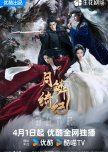
A Beautiful Blend of Fantasy, Mystery, and Romance
A joyous wedding at the Wei Manor is intruded by six highly skilled, uninvited guests: two cunning nine-tailed fox spirits, two Shilin guards from the temple of the Dragon Deity, and two formidable demons. Each serves a different master, each has their own agenda, yet all have come searching for the same person—Xiao Wei, a fugitive from the Formless Moon Fox Shrine and the prime suspect behind a series of brutal murders.The Shilin guards are particularly intriguing. One is the temple's respected commander, while the other appears to be an ordinary, seemingly powerless young man. Yet behind closed doors, even the commander obeys his every command. Who is he, and why does he command such unquestionable authority?
Their investigation soon leads them to a temple devoted to the God of Matchmaking, but this murder case is merely the first piece of a much larger puzzle.
What I enjoyed:
Veil of Shadows is a captivating blend of fantasy, romance and mystery, wrapped in gorgeous costumes, impressive visual effects, a beautiful soundtrack, and a cast that both looks the part and delivers strong performances.
The story is its greatest strength. Rather than ending with the resolution of Xiao Wei's case, that investigation opens the door to an even greater mystery. Powerful factions are secretly competing for the Dragon Deity's divine power. Can the current Dragon Deity—the last survivor of his dragon clan—protect that power with only a handful of human Shilin guards? And what terrifying force is Xiao Wei really running from?
The plot is cleverly layered. There is never just one secret waiting to be uncovered. Nearly every major character hides another identity, another past, or another truth—sometimes even from themselves. As the story unfolds through multiple timelines and repeated attempts to change fate, each journey reveals new consequences. Every solution creates another problem, keeping the suspense alive throughout.
Visually, the drama is a feast. Joseph Zeng and Tian Jia Rui are effortlessly charismatic, while Ju Jing Yi and Chen Du Ling are absolutely stunning in their costumes and styling. There are attractive actresses throughout the cast, but this is one drama where the handsome male cast almost steals the spotlight. More importantly, both lead couples share excellent chemistry, making the romantic moments genuinely enjoyable.
What I did not enjoy:
There are only a few shortcomings.
One mystery near the ending is left unexplained. Ji Ling brings the nine-tailed fox fairy back to the present, yet the present-day Ji Ling is still the innocent young man who has never experienced the tragic events of the earlier timeline. So what became of the older Ji Ling who brought the nine-tailed back? That loose end left me wondering whether it was intentionally left open or simply overlooked.
The plot can also become confusing at times. With its multiple timelines, intertwined storylines, and numerous hidden identities, it occasionally demands your full attention. Fortunately, most of the confusion is eventually resolved as the pieces gradually fall into place.
Final thoughts:
Although I would not place Veil of Shadows among the absolute top-tier fantasy dramas, it is still a thoroughly enjoyable watch. It offers an engaging mystery, memorable characters, beautiful production values, and enough twists to keep you guessing until the very end. If you enjoy fantasy dramas filled with hidden identities, ancient legends, romance, and time-bending mysteries, this one is well worth your time.
Was this review helpful to you?
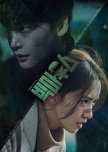
Power, Corruption, and the Hunt for Big Mouse
I expected very little from 'Big Mouth'. From the title and synopsis, I imagined another light-hearted legal comedy in the style of 'Boston Legal', but featuring an incompetent lawyer stumbling from one lost case to another.I could not have been more wrong.
Big Mouth quickly transforms into a gripping conspiracy thriller that keeps you guessing almost until the very last episode.
Park Chang-ho is a third-rate lawyer with an embarrassingly low success rate. Nicknamed "Big Mouth" because he talks a big game but rarely delivers, he survives only because of the unwavering support of his devoted wife. An orphan with no influential connections, he struggles under mountains of debt while trying to keep his tiny law practice afloat.
Then comes the case that changes everything.
The city mayor unexpectedly hires Chang-ho to defend a group of wealthy elites implicated in the mysterious death of Professor Seo. The assignment seems suspicious from the start. Why would powerful men choose the city's worst lawyer unless they wanted him to fail?
Desperate to seize an opportunity, Chang-ho attempts to blackmail the man he believes orchestrated the murder. Instead, he walks straight into a carefully laid trap. Overnight, he is framed as the infamous "Big Mouse"—a legendary criminal mastermind and swindler who has manipulated the city's most powerful figures from the shadows.
From that moment, his life becomes a nightmare.
Thrown into prison, Chang-ho finds himself surrounded by dangerous criminals, corrupt prison officials, and inmates who either fear him or worship him. Outside the prison walls, his courageous wife risks everything to clear his name, unknowingly placing herself directly in the crosshairs of people who would kill to protect their secrets.
The drama becomes an exhilarating game of cat and mouse, where nobody can be trusted and everyone seems to be hiding another identity.
What keeps viewers hooked is the central mystery:
**Who really framed Park Chang-ho?** **Why did they frame him?**
And perhaps even more intriguingly:
**Who is the real Big Mouse?**
The drama constantly plays with your suspicions. Every few episodes, I found myself changing my mind. Could it be Jerry? The Mayor? The prison warden? One of the inmates? One of the city elites he was hired to defend? Someone inside the prosecutor's office? Every clue points in a different direction, while every witness who gets too close to the truth mysteriously disappears or dies.
At one point, I even wondered whether Chang-ho himself might unknowingly be Big Mouse. The way criminals obey him and events unfold around him makes the audience question everything they think they know.
Adding to the mystery are the bizarre incidents occurring inside the prison. Healthy inmates suddenly collapse. Others lose their sanity without explanation. Strange nutritional supplements are distributed throughout the prison, supposedly for health benefits.
But are they really just health supplements?
Or is someone secretly using prisoners as human guinea pigs for illegal experiments?
The deeper the investigation goes, the darker the conspiracy becomes. Politicians, prosecutors, businessmen, doctors, and criminals all appear connected through an invisible web of corruption that reaches the very top of society. Some wear expensive suits. Some occupy positions of authority. Some are respected influential member of society. Yet beneath their respectable appearances lurk monsters every bit as dangerous as the gangsters behind bars.
Despite the constant tension, the drama also provides moments of unexpected humour. Watching the terrified Chang-ho desperately trying to convince others that he is *not* Big Mouse, only to have everyone around him bow respectfully to their supposed leader, is genuinely hilarious.
Of course, there are moments that require a suspension of disbelief. Some characters make astonishingly foolish decisions, such as running towards explosions rather than away from them. The subplot involving terminal leukaemia developing almost immediately after exposure to radioactive waste water also stretches credibility well beyond reality.
Fortunately, these flaws are minor compared with the overall quality of the story.
Just when you think the mystery has been solved, the drama shifts gears again into a tense race between good and evil, where every move could cost someone their life. The suspense rarely lets up, and every revelation only uncovers another layer of deception.
I was completely hooked.
Despite a few far-fetched moments, I thoroughly enjoyed the intricate plotting, the constant twists, and the satisfying blend of legal drama, prison survival, political corruption, and psychological mystery.
Although justice is not entirely served. In one of the drama's most frustrating moments, a villain responsible for horrific crimes dies before his deeds are exposed and is posthumously awarded one of the nation's highest honours by the country's President. Instead of being remembered as a criminal, he is celebrated as a hero—a bitter reminder that truth does not always prevail and that appearances can outlive reality.
For me, this is an easy **10/10** and a highly recommended watch. If you enjoy dramas where nothing is as it seems and every episode leaves you questioning who can truly be trusted, **Big Mouth** delivers brilliantly.
Was this review helpful to you?
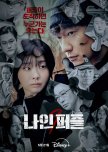
Every Puzzle Piece Leads Back to the Past
Nine Puzzles opens with a chilling mystery that immediately pulls you in. Yoon E-na, an orphan living with her uncle, returns home one night to find him brutally murdered. Traumatised by the horror, she loses fragments of her memory and undergoes psychological therapy. But Detective Kim Han Saem is unconvinced. He suspects that E-na herself is the killer, hiding behind supposed amnesia — yet without evidence, he can do nothing.Years later, E-na reappears in an unexpected role: a criminal profiler working for the police. Outspoken, sharp, and disturbingly perceptive, she quickly proves herself brilliant at reading crime scenes and human behaviour. Fate then forces her to work alongside Han Saem again when the owner of an upscale bar is murdered.
What begins as a single homicide slowly unravels into something far darker.
With every new murder, E-na mysteriously receives another puzzle piece — matching the one she picked up years ago in the blood-soaked house where her uncle died. Is a serial killer orchestrating everything? Is someone sending her messages? Or is the answer buried inside the memories she still cannot fully recover?
That is where the drama becomes addictive. Every episode raises more questions than answers. Why are these murders happening? Are the victims connected? Is the killer someone close to E-na? One of the senior officers? Someone who has been hiding in plain sight all along?
The atmosphere is thick with paranoia. E-na constantly feels watched, as though someone is tracking her every movement. Even the audience begins to feel uneasy for her, especially because she still lives alone in the very house where her uncle was murdered. The tension becomes suffocating — you start wondering not only who the killer is, but whether E-na herself is destined to become one of the victims in this chain of nine murders.
What makes the story especially compelling is that even E-na cannot fully trust herself. There are moments where she genuinely wonders whether she might have killed her uncle after all. The line between victim, witness, and suspect becomes dangerously blurred.
The investigation also slowly peels back layers of a long-buried past, exposing corruption, greed, and dark secrets that refuse to stay buried. Every revelation reshapes your suspicions. Just when you think you know where the story is heading, another twist changes everything.
I watched the drama dubbed in English on Disney+. While dubbing made it easier to follow the complex plot, hearing English dialogue over Korean performances felt slightly unnatural at times. E-na’s deliberately child-like voice was occasionally irritating given that she is already an adult, though I still preferred it over subtitles which often races pass too fast.
When the killer was finally revealed, the drama achieved something unusual — instead of pure hatred, I felt a degree of sympathy. Deep down, many viewers may even feel that some victims deserved their fate because of how corrupt and morally rotten they were. Yet the drama never fully justifies vigilantism, constantly reminding us that personal vengeance and justice are not the same thing.
For entertainment value, this drama scores highly. The plot is tightly woven, suspenseful, and full of psychological tension. Despite its dark subject matter, the cinematography prevents the series from becoming visually dreary or emotionally oppressive. That balance works well for me, because when a drama becomes too relentlessly bleak or suffocating, I usually find myself skipping scenes — or dropping the series altogether. It is the kind of thriller that keeps you guessing, keeps you uneasy, and most dangerously of all — keeps you clicking “next episode.”
Was this review helpful to you?

A selfish act of one throws the kingdom into chaos
Hmm… Pursuit of Jade is, without question, an outstanding production. From the superb acting to the exceptionally strong ensemble cast, complemented by beautifully executed CGI and a sentimental melodious soundtrack, the drama delivers on nearly every front. The lead couple, in particular, is perfectly matched—visually striking, emotionally convincing, and technically impressive in their performances. Their chemistry feels natural and compelling, elevating even the quieter moments of the story. In terms of overall production quality, this drama scores highly across the board.That said, it is not without its flaws. The narrative leans heavily on familiar tropes—palace power struggles, manipulative and distrustful emperors, and the classic “rescue leads to romance” arc. While these elements are executed well, they do feel repetitive at times, echoing a formula that seasoned viewers of historical dramas will immediately recognise.
The story begins with Fan Chang Yu at her lowest point—having just lost both parents, struggling to survive as a butcher while caring for her younger sister, and enduring constant bullying. Her circumstances are bleak, further compounded by her fiancé abandoning her after passing the provincial examination, with his family looking down on her impoverished status. She is, in every sense, downtrodden and alone.
Fate intervenes when she discovers a gravely injured man buried in the snow. Demonstrating remarkable physical strength and resilience, she carries him home, unknowingly saving Xie Zheng—the renowned general and Marquis. Concealing his identity, he introduces himself as Yan Zhen, setting the stage for one of the drama’s most compelling tensions: the slow, inevitable collision between truth and emotion as both begin to fall in love, but at the same time not wanting to become a baggage to the other.
What strengthens the narrative is the intricate web of hidden identities and shared histories. Unbeknownst to them, their families are deeply entangled in a long-standing political conspiracy. The imperial court is divided between the powerful Li and Wei factions, each harbouring dangerous secrets. Beneath the surface lies a far greater mystery—the death of the Crown Prince’s family in a mysterious palace fire 17 years ago, the betrayal that lead to the capture and death of Xie Zheng's father and the Crown Prince at the battlefield, and the quiet survival of a rightful heir seeking to reclaim the throne. Are these the act of one single person or more?
The stakes rise dramatically when Fan Chang Yu discovers her own father’s role in past events—branding her, in effect, as the daughter of a traitor and placing her in direct opposition to the man she loves. This revelation injects emotional weight into the story, forcing both characters into an impossible position where love, loyalty, and justice collide.
The drama thrives on tension—concealed identities, political sabotage, and the ever-present dangers of the battlefield keep the pacing tight and engaging.
What adds further interest is its reflective ending. The glimpse into an alternate outcome—where a single act might have changed the course of a life—adds a poignant layer to the story. The “would-have-been” Crown Prince is portrayed as a far more benevolent figure, raising a thought-provoking question: is cruelty shaped by circumstance, or is it inherent? This subtle exploration of nature versus nurture lingers after the drama concludes.
Overall, Pursuit of Jade is a richly layered and emotionally engaging drama that excels in execution, even if it relies on well-worn narrative devices. It is well worth watching for its performances, production quality, and its intriguing story. This drama fully deserves its strong rating on kisskh.
Was this review helpful to you?
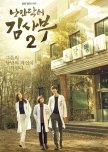
The scalpel is to heal not as an instrument to win, says Kim
Season 2 of Dr Romantic returns to Doldam Hospital with a heavier burden. Kang Dong-Ju and Yoon Seo-Jung have departed to pursue their own paths, while Do In-Beom returns to the parent hospital. What remains is an overstretched Teacher Kim and a rural hospital few ambitious doctors would willingly choose — especially under a demanding, sharp-tempered chief who expects nothing less than excellence.Into this vacuum arrive three very different doctors.
Cha Eun-Jae, a cardiac surgeon of elite pedigree, carries a humiliating secret: she faints in the operating theatre — and if she stays conscious, nausea overwhelms her once surgery begins.
Seo Woo-Jin is a brilliant but ostracised surgeon, shunned after exposing a senior doctor’s unethical conduct. Burdened by debt and harassed by loan sharks, he needs the job more than pride allows him to admit.
Yoon Ah-Reum is the rare idealist, choosing Doldam voluntarily after being inspired by Teacher Kim’s reputation.
Eun-Jae arrives resentful and determined to escape back to the main hospital as quickly as possible. Woo-Jin is blunt: he is here for the money. Only Ah-Reum comes with conviction. Teacher Kim accepts all three — not because they are ready, but because Doldam is where broken doctors are reforged.
Meanwhile, the threat looming over Doldam intensifies. Director Do remains determined to shut the hospital and replace it with a lucrative rehabilitation centre for the wealthy. This time, he deploys a formidable weapon: Professor Park Min-Guk, an elite surgeon sent to take control.
What follows is not merely a power struggle but a clash of philosophies.
Professor Park is accomplished, disciplined, and ambitious — yet he finds himself overshadowed by Teacher Kim’s surgical brilliance, moral authority, and the loyalty he inspires. Kim represents everything Park cannot measure in titles or prestige: medicine practised without regard for wealth, power, or reputation.
The sequel sharpens the melodrama and intrigue. Evidence is quietly sought. Allegations surface. A VIP patient’s death provides the pretext Director Do needs to scrutinise Doldam for malpractice. Pressure mounts from all sides — and when help arrives, it comes from the most unexpected quarter.
At its heart, the season explores conscience. Park is repeatedly pushed to shift blame and sabotage Kim’s work. Whether he will surrender to ambition or heed his moral compass becomes one of the season’s most compelling tensions.
In this sequel, the operating theatre becomes a stage where pride and insecurity can be as dangerous as any scalpel. Senior doctors, blinded by ego, dismiss the warnings of junior staff and protect their authority even when a patient’s life hangs in the balance. Above them, insecure superiors guard their positions fiercely, suppressing capable subordinates rather than nurturing them — a reminder that hierarchy can suffocate truth.
The season also underscores a quieter but vital skill: tact. Woo-Jin’s integrity is unquestionable, yet his blunt honesty repeatedly lands him in trouble. One cannot help but wonder how different his journey might be if truth were delivered with diplomacy — proving that in medicine, as in life, saving lives sometimes requires not only skill and courage, but also the wisdom to navigate fragile egos and dangerous politics.
Romance, too, finds its way into the chaos. Eun-Jae stands between two paths: a former heartthrob representing status and familiarity, and Woo-Jin — her former classmate — who quietly supports her through every moment of weakness and doubt.
The finale delivers emotional satisfaction and moral resolution in equal measure.
With heightened stakes, deeper character growth, and the enduring question of what it truly means to be a doctor, Season 2 proves once again that Doldam Hospital is where medicine becomes humanity.
Another powerful and deeply moving instalment — highly recommended.
Was this review helpful to you?
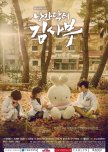
The Silence That Protects the Guilty
Dr Romantic is not just a medical drama — it is a battle between conscience and corruption, idealism and ambition, and the quiet heroism of those who refuse to treat medicine as a business.The story begins with a furious teenager, Kang Dong-Ju, storming a major Seoul hospital after his father dies waiting for treatment while a VIP is prioritised. Subduing him, a calm doctor delivers a life-altering challenge: if he wants revenge, he must become better than those who failed him.
That doctor is Dr Bu Yong-Ju — a brilliant surgeon later forced out by colleagues eager to bury their own misconduct beneath his reputation. Betrayed by greed and jealousy, he vanishes to a remote countryside hospital and re-emerges as Kim Sa-Bu (“Teacher Kim”), a legendary yet eccentric physician who saves lives using unorthodox methods and an unshakeable moral compass.
Ten years later, Dong-Ju returns as the top graduate of his class — brilliant, ambitious, and determined to be a doctor for patients, not power. He falls for senior doctor Yoon Seo-Jung, only to lose her when tragedy drives her into disappearance. His ideals are soon tested when he is pressured by hospital leadership to prioritise a VIP over a scheduled surgery. The result is devastating: both patients die, and the very director who coerced him makes him the scapegoat.
Fate draws these broken but determined doctors together again at Doldam Hospital, a struggling rural facility where Kim Sa-Bu mentors outcasts and second chances. Here, they confront relentless emergencies, personal demons, and the suffocating interference of a parent organisation determined to convert the hospital into a lucrative rehabilitation centre for the wealthy — abandoning emergency care because it does not pay.
Beyond the operating theatre, the drama cuts sharply into workplace politics:
- Jealous colleagues waiting to undermine success or claim credit not theirs
- Senior management enabling bias and self-interest
- A rigid hierarchy where authority overrides ethics
- Systems designed to protect power rather than patients
Having witnessed organisational politics firsthand — and with doctors in my own family practising under vastly different healthcare cultures — these tensions felt strikingly real. Systems that protect doctors at all costs can hide errors; systems that protect patients encourage transparency. The world of Dr Romantic sits in a darker middle ground, where truth bends to authority.
The series is undeniably melodramatic — doctors shout, clash, and occasionally come to blows — behaviour difficult to imagine in real hospitals. Yet the heightened emotion underscores the stakes: lives hang in the balance, and moral compromise can be fatal.
Kim Sa-Bu himself is a paradox. He is brilliant yet harsh, compassionate yet uncompromising. His refusal to reveal the truth behind his own downfall is frustrating, even when justified as protection for others. One cannot help but wonder whether silence protects the innocent — or enables the guilty.
So can the Doldam team overturn a system rigged against them? That is a battle best witnessed firsthand.
The medical procedures feel authentic, the ethical dilemmas compelling, and the characters deeply human.
An intense, emotional, and morally charged drama — highly recommended.
Was this review helpful to you?
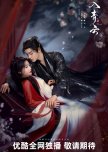
Poisoned just before the battle, she suffers her first defeat at the hands of the mysterious Ji Bo Zai of Jixing Abyss. Certain that foul play is involved, Ming Xian vanishes from the world she once ruled. Disguised as a dancer and adopting the name Ming Yi, she infiltrates enemy territory, determined to steal the antidote and exact revenge.
But nothing is as it seems.
As Ming Yi draws closer to Bo Zai, cracks appear in her certainty. The real culprit may not be the man she set out to destroy. Trapped between suspicion and necessity, the two are forced into uneasy alliances, navigating perilous trials to save Jixing Abyss, and sometimes each other. Mutual distrust slowly gives way to understanding, and something far more dangerous: affection.
The intrigue deepens on all fronts. Shadowy Seekers covet the secret behind Bo Zai’s ability to grow spiritual veins, suspecting the use of the mystical Golden Millet Dream, a legendary concoction of the Bo clan, the recipe of which is believed to be lost. Meanwhile, Yaoguang Mountain reels from the disappearance of its Crown Prince. Power shifts quietly, and Ming Xian’s brother, Ming Xin, appears ready to replace her permanently, ensuring she never returns.
Hovering above all this is an even greater threat. A ruthless, ambitious force moves in the shadows, seeking dominion over the Hexu Six Realm itself.
Frustration mounts as Ming Yi stubbornly clings to her lies. It is a classic spiral: one deception breeds ten more. As a viewer, it is agonising to watch her risk everything when the truth would have changed everything. Especially when Bo Zai’s love for her becomes unmistakable. Instead, she gambles her life, and that of her loyal white cat companion, as the petals of the Heavenly Grief poison fall away one by one, each marking the countdown to death.
By the final arc, revelations come fast and hard. True identities are exposed, some hidden even from the characters themselves, and past assumptions unravel spectacularly.
Yes, the drama embraces familiar tropes: rivals turned lovers, hidden identities, enemies forced into trust. But these tropes are handled with enough mystery and emotional payoff to remain deeply satisfying.
In the end, Love in the Clouds delivers a well-earned sense of closure. Evil faces its reckoning, though the villain’s tragic choices still evoke a flicker of sympathy. Wrong paths, after all, carry consequences.
This is a drama that blends romance, intrigue, and destiny into a compelling whole. It leaves behind a lingering, feel-good warmth once the clouds finally part.
Highly recommended.
Was this review helpful to you?


