
 Celebrity


 2
 1
 1


A Worthy Match for Nirvana in Fire – And a Villain Who Refuses to Fall
This drama is a gem. I rate it a solid 10/10 for its gripping story, compelling characters, and flawless execution. It has everything – an intricate and layered plot, electrifying on-screen chemistry between the leads, a truly formidable villain, an outstanding cast, stunning costumes, breathtaking cinematography, lively set designs, and a beautifully composed soundtrack.Chen Du Ling and Xin Yun Lai shine as the lead couple. Chen brings depth and vulnerability to Zhuang Han Yan, a girl wrongfully branded as the “barefoot devil” after a dubious Taoist priest blamed her for her grandfather’s death. Sent away to live with her father’s friend, she endures mistreatment at the hands of a mentally unstable guardian before finding her way back home. Yet her return is far from peaceful – her biological mother, the legitimate wife, wants her gone, and the priest resurfaces, threatening her life once again.
Enter Fu Yun Xi, deputy minister at the feared Investigation Bureau – an institution notorious for extracting confessions through torture. He pressures Han Yan to reveal the truth about her foster parents’ deaths, threatening to expose her involvement if she refuses. Throughout the series, he straddles the line between foe and ally – investigating her while secretly helping her. The tension between them is electric, their past shrouded in complexity. Is Fu Yun Xi truly her enemy, or is he the only one she can trust?
Once you press play, it is almost impossible to stop. At first, the villains seem clear – scheming concubines and their children – but soon, deeper layers unravel. The true mastermind is revealed as the adopted son of Pei, a once-powerful eunuch rumored to have hidden a vast fortune that vanished with his death. Tracking him down, gathering evidence, and bringing him to justice is no easy feat. He is one of the most challenging villains to defeat, and taking him down risks implicating many innocent lives.
This is what makes the drama so compelling – the moral dilemmas, the complexity of justice, and the sense that every decision comes at a cost.
I absolutely recommend this drama. Its current 8.3 rating on kisskh feels far too low for a production of this calibre – a score closer to 8.7 or even 9 would be much more fitting.
However, I find the English title 'The Glory' rather irrelevant and lacking the poetic resonance of the original. It feels somewhat disconnected from the essence of the story, as if chosen mainly to echo the success of other popular dramas. A title like 'The Return' would be far more fitting and much closer in spirit to the original Chinese title.
Was this review helpful to you?
When Immortality Takes Three Seasons and a Lot of Pills
When I watched this drama, I could not help but suspect that the screenwriters were men. Why? The story revolves around Han Li, a humble mortal from a poor family, who somehow captures the hearts of four women—without even trying. No seduction, no sweet talk, just pure existence. A scenario straight out of many men’s secret ego-driven fantasy, I suppose (lol).In this first season, it is impossible to guess which woman he will ultimately end up with. Romantically, Han Li appears almost indifferent to all of them, though he clearly sympathises with Mo Cai Huan. Personally, I am rooting for the Senior Immortal Nangong Wan—especially after that one unexpected intimate moment between them. Unfortunately, the setting for this scene feels rather cliché and underwhelming; the execution is so vague that it is hard to even tell what truly happened.
If I were to nitpick, the scene where Han Li saves Nangong Wan and she accidentally absorbs all his powers feels a little off. His reasoning that it is simply repayment for their earlier intimate moment struck me as somewhat cheesy—reducing something so personal to a mere transaction - is poor taste.
Han Li’s journey to immortality is anything but easy. Born with weak spiritual roots, he faces enormous hurdles. He is bullied in his sect and even the seniors think that the Foundation Pill to enhance spiritual growth is going to be wasted on him. Yet, through his deep knowledge of herbs and medicine—and a few fortuitous encounters—he manages to break through multiple cultivation stages. The one moral lesson to take away is don't give up on yourself.
Expect a lot of pill-popping in this drama. Han Li seems to have a pill for every spiritual need, and true to the genre, there is never a shortage of characters suffering severe injuries that require urgent treatment, acupuncture, or mystical remedies.
Yang Yang plays the suave hero perfectly—always calm, always ready to rescue a damsel in distress. To overcome his spiritual shortcomings, Han Li arms himself with an impressive arsenal of magical artifacts, which means plenty of dazzling special effects throughout the series.
The drama ticks all the boxes: an engaging storyline, breathtaking CGI, a stellar cast of attractive actors and actresses, and exquisite costumes. All the production measures are top-notch.
The only catch? This is just season one, with two more seasons still on the way. I thoroughly enjoyed the series and cannot wait to see what the sequels bring. Hope that won't take too long.
That said, I did feel a bit cheated—nowhere was it mentioned that this was only the first season, and there I was, expecting a grand finale in episode 30… all in vain. For now, all we can do is sit back, relax, and daydream in a tropical paradise while we wait for the sequels.
Was this review helpful to you?

4 Daughters, 5 marriages and 6 celebrations - One Unforgettable Tale of Love and Chaos
When Madam Li arrives in the capital with her four unmarried daughters in tow. Her mission is clear: find each a worthy husband. But what follows is anything but predictable. From love at first sight to marriages born out of misunderstanding, mistaken identity, and sheer stubbornness, the story unfolds into five — yes, five — surprising unions. How does that math work out with only four daughters? I will let you figure that out yourself… though the answer may be more obvious than you think.The romantic rollercoaster begins with the third daughter, Kang Ning, whose love story is by far the most tangled. Played with charm by Wang Xing Xue, her suitor Chai An falls for her instantly — but their path to love is riddled with sabotage. A bitter feud between their mothers, conniving friends in the name of “loyalty,” and a cascade of misunderstandings nearly wreck everything. Heartbroken, Kang Ning resolves to move on… or so she thinks.
Next is the eldest daughter — a widow — whose new marriage is anything but romantic. On her wedding night, the groom retreats to a separate bed, seemingly cold and uninterested. But as the story unfolds, we learn that he harbours a complicated secret: his true identity, hidden even from himself, and a blind adoptive mother who had her own reasons for hiding his real identity. When he finds out, he set out to seek justice in an unconventional move, nearly causing him his life.
The third match (yes, we are still counting) involves the spirited fourth daughter, who falls for a stern magistrate. But unfortunately, love is very much one-sided. On their wedding night, she finds herself unceremoniously shown the door. What follows is a marriage filled with tension, disappointment, and unexpected turns.
Then comes the fiery fifth daughter, who gets the shock of her life when her clever suitor swaps her into a different household entirely. Now stuck with a family she never intended to marry into — complete with complex dynamics and in-laws from a storyteller’s nightmare — she refuses to go quietly. She gives her new husband a taste of her fury, and perhaps, in the process, teaches the household a thing or two about love and resilience.
And what of the fifth marriage? Ah, now that is the twist. You will have to watch for yourself to discover who ties the knot and how. Trust me, it is worth the wait.
What makes this drama such a delight is its colourful portrayal of love in all its messy, hilarious, frustrating forms. Each suitor brings a different flavour — some sweet, some sour, some downright spicy — and the daughters respond with equal parts - wit, willpower, and womanly charm.
Funny, fast-paced, and full of heart, this series is a celebration of love's unpredictability and the chaos of family matchmaking.
And to top it off, the series features a gorgeous soundtrack, with both the opening and closing theme songs leaving a lasting impression. The closing theme, in particular, is hauntingly beautiful—its nostalgic Chinese folk melody lingers long after the final scene, evoking a deep sense of longing and timeless charm.
Although some of the sub-plots were somewhat cliche - the drama is hilarious, highly entertaining and definitely worth the watch.
Was this review helpful to you?

Arthdal Chronicles: The Sword of Aramun
0 people found this review helpful
Arthdal Chronicles: A Mirror of Power, Politics, and the Fragility of Human Nature
What truly fascinates me about Arthdal Chronicles is not just its imaginative setting or compelling characters, but the thought-provoking way it blends myth, history, and human psychology into a grand narrative. Set in a fictional ancient world, the drama paints a stark contrast between the advanced civilisation of Arthdal and the simpler, earthbound life of the Wahan tribe. More than that, it explores the clash between different races — the dominant Saram and the marginalised Neanthals — reflecting themes of social stratification, cultural conflict, and imperial dominance.It also lays bare the fragility and fickleness of human nature. The moment Tanya ascends as the high priestess, the Wahans’ status is instantly elevated — not because of justice, but because of power cloaked in sacred authority. The Wahan tribe, once brutally oppressed by the Arthdals, forgets their suffering almost overnight, swayed by shifting tides of power and the new luxuries they now enjoy. Their loyalty changes the moment the tables turn — a sobering reminder of how quickly victims can become collaborators. Equally striking is how susceptible the people of Arthdal are to superstition: they swallow the high priestess's tales of Igutus and their royal purple blood without question, swept up in a wave of religious fervour. It is a haunting depiction of how belief, fear, and ambition can rewrite history and reshape identity.
What makes this series resonate deeply is how eerily it mirrors our present-day world. The sophisticated, resource-rich and powerful Arthdal — with their advance weapons, polished lies and manipulative politics — resemble modern superpowers. But can such entities truly suppress the vulnerable forever? Can truth survive in a world where greed and self-preservation so often take precedence over justice?
This season opens with a gripping twist: the Igutu twins, Saya and Eunseom, now leaders on opposite sides of a civil war, fight unknowingly against each other. Saya, as Arthdal’s cunning commander-in-chief, and Eunseom, as the principled Inaishingi of the Ago tribe, cross swords and strategies in battle — masked, unaware that the person they are trying to defeat is their own twin. The tension climaxes during an assassination attempt that leaves both brothers wounded and mistaken for each other, resulting in their dramatic switch of roles - Eunseom is matched off to Arthdal as Saya, and Saya was mistaken as the Inaishingi. What unfolds next is too good to spoil.
There are hints at further sequels to come. The drama ends with tantalising hints of more turmoil: Saya with a dark gleam of cunning in his eyes, Queen Taealha donning armour alongside her grown son, and the newly crowned ruler of Arthdal struggling to hold together a kingdom of clashing races, religious divides, differing opinions and values, and political ambitions.
While I missed some familiar faces from the earlier seasons, the new cast — especially Lee Joon Gi — delivered a brilliant performance. His portrayal of the two brothers was masterful, making each distinct yet compelling: Saya cold and calculating, Eunseom warm yet wise.
The pacing of the series is well balanced — fast enough to keep viewers engaged without feeling rushed, emotionally evocative without slipping into melodrama. One of the most poignant arcs for me was that of Tagon. His desire to be a beloved ruler was constantly thwarted by the manipulative forces around him — especially Asa Ron and Taealha's father — pushing him into tyranny and bloodshed.
All in all, Arthdal Chronicles is a thrilling, intelligent series that goes far beyond fantasy. It holds up a mirror to human nature and modern geopolitics. All the seasons are masterpieces - highly recommended.
Was this review helpful to you?
Arthdal Chronicles Part 3: The Prelude to All Legends
0 people found this review helpful
The Ascension to the Throne
My review to Season 1 and 2 are at:https://kisskh.at/profile/7403249/reviews/402084
https://kisskh.at/profile/7403249/reviews/402278
Could Tanya be the descendent of Asa Sin and therefore the rightful religious leader of Arthdal? If so, then the Wahans could also be the descendents of Aramum Haesulla and Asa Sin. This mystery was unveiled in Season 3.
With the help of Taelha and Tanya, Tagon rose to become the Union Leader. Asa Ron was not going to let Tagon rose to power so easily. Tagon hid two secrets and Asa Ron knew one of them and he was determined to expose it to the tribal leaders to topple Tagon. He set a trap for Tagon. To hid both his secret, he massacred the tribal leaders and set out to be a king. Tagon had wanted to become a benevolent leader loved by his people. But this rebellion changed him and he became a tyrant.
Meantime, Eunseom escaped from the mine. He rescued a Momo tribal leader and her baby. The Momo tribe had a motto of returning favours. The tribe became indebted to him.
Unfortunately Eunseom was captured again, this time by the Ago Tribe who captured humans to be sent to Arthdals to be sold as slaves. But by a twist of fate and help of his fellow prisoner, a sly and treacherous man, he became recognised as the Isainagi re-incarnate. The Ago tribe was a lost and disunited tribe. They had been hoping for a powerful leader and Eunseom fitted the role.
Now, two powerful regions were formed. One led by Eunseom and the other by Tagon. Friction between the powers were inevitable. And this was to be presented in the sequel produced 4 years later in 2023.
Might I also add that Song Joong Ki did an excellent job acting a pair of twins with opposite characters - one was kind and innocent, the other ruthless and cunning. I rated 10 for all seasons.
Now I am going to start on the sequel filmed in 2023, 4 years later but covering Arthdal and Ago 8 years later. But in the 2023 sequel, Song was replaced by Lee Joon Gi who is also and excellent actor.
Was this review helpful to you?
Arthdal Chronicles Part 2: The Sky Turning Inside Out, Rising Land
0 people found this review helpful
The Fight Continued and the First Prophecy was about to be unveiled
You can refer to my review on Season 1 at https://kisskh.at/profile/7403249/reviews/402084. Each Season comprised six episodes. Season 2 started from episode 7.The Wahan tribe in Iark where Eunseom had taken refuge was attacked by the Arthdal Samaras. A peaceful tribe without any advanced weapons, they were quickly subdued. The Wahan villagers were taken to Arthdal as slaves. However Eunseom escaped and vowed to rescued them and his love, Tanya. In one of his rescue missions, Eunseom was captured and sent to a mine as a slave miner. He was also blamed for the death of Sanung, the Union Leader.
Tanya's mother was killed by the Samaras. Tanya was set to be the next tribal mother, a religious leader in the tribe. In Arthdal, Tanya discovered a man hidden in a Tower, who looked very much like Eunseom.
Legend had it that Aramum Haesulla was the hero who united the Arthdal Samaras. It was said that he ran away with Asa Sin, the Arthdal's supreme religious mother. It was not known where they went.
The current Asa clan was led by Asa Ron, a power-hungry religious leader. This clan was known not to be a direct descendant of Asa Sin. Prophecy said that the direct descendant of Asa Sin would return one day and led Arthdal. And this person would be able to find the bell hidden by Asa Sin.
Asa Ron disliked Tagon as he was viewed as a hero in Arthdal for his military conquest and set to sabotage his ascend to power. Tagon and Taelha were eager to find this descendent. If found, she would replaced Asa Ron as the rightful leader of the religion sect.
A lot of viewers said that this season was better than Season 1. But I find them equally good. In Season 2, there were some draggy parts around the miners. My Season 3 review would follow soon. I had given all 3 seasons a full rating of 10, in spite of some small imperfections.
This drama was interesting as it had so many events borrowed from events in history. More about the entire drama can be found in my review of Season 1.
Was this review helpful to you?
Not the usual theme
What I appreciated most about this drama is that it was based on the decline and revival of a family's fortune. This was a departure from the usual themes of fight for the throne, god vs demons, gang/clan revenge type of stories - these had become very stale for me since I watched a lot of Chinese and Korean dramas.The head of the Hua family offended the emperor who was narrow-minded, narcissistic, domineering and wicked. The family was driven out of their home and the men were sent into exile, leaving the women and young children to fend for themselves. Worse to come was they were cheated out of whatever minimal valuables they could bring with them.
The newly appointed Commander of the Security Bureau, was assigned the duty of driving them out and confiscating all that Grandfather Hua had written. Hua Zhi, the grand-daughter rose to the occasion to lead the family to earn a living through selling whatever they were capable of producing. The family, being of scholastic background looked down on such careers and it was a challenge to overcome their mindset and stereotyping.
It was interesting to watch how a young girl struggled against family's prejudices against new means of earning a living, and also the bullying that came from business associates and the public as a girl with no backing. You would witness how the different characters in the family responded to the situation. - some were supportive, some resentful, some had other schemes up their sleeves.
Along the way, the younger generations girls found their marital partners - each leading to different outcomes. The older generation Hua daughters were bullied as soon as the Hua family fell from grace. And you get to see how each situation was dealt with, often with keen intelligence, although some were tragic.
Although unknown to her, YanXi, the martial arts instructor was a nephew of the emperor, and he had grown very fond of Hua Zhi. The emperor wanted all of YanXi's loyalty. He could not tolerate his affection for HuaZhi and became a major obstacle to the development of any affection between the two.
In addition to an interesting story was a great cast who acted well, and chemistry between the leads were great. Costumes were beautiful, music were befitting to the mood of the drama, cinematography was excellent.
What was more interesting was some of these happening could happen to any family, even today. So it was easy to empathise with them.
The only doubt I had about this drama was it seemed all too easy to get rich in such a short time, especially in view of the setbacks. The family was moving back to the capital and setting up their businesses in less than nine months - gauged by the time it took for one of the aunts to give birth.
And also, not another child emperor again. :(
In spite of these small nitpicks, I rated it 9.5. Overall, I highly recommend this drama.
Was this review helpful to you?
If you have not watched much of Chinese xianxia fantasy dramas, you should absolutely watch this.
YanDan and ZhiXi were the human transformation of and the only surviving members of the Four-leaves Lotus which had great medicinal value. YanDan had a tiff with the Heavenly Lord YingYuan, God of War when she discovered that he had been bullying a turtle in the garden, flipping him over every time he saw it. Unfortunately she was sent to serve him in his palace.A war broke out between the immortals and the demons. It was a bloody war and YingYuan returned seriously wounded although victorious. YingYuan knew that he was not going to survive and left his palace to die alone in the forest, so that he would not harm anyone when he went crazy. Fate had it that YanDan would find him already blinded in the forest and nursed him while hiding her real identity. She found out that the heart of the Four-leaves Lotus, of which she was one, would save him and decided to carve out half of her heart to do so. YingYuan knew this healing method earlier and had resisted it.
The immortal realm had a rule that immortals were not fall in love. Breaking this rule brought about severe punishment. Unfortunately for YingYuan and YanDan, the jealous fairy YingDeng who wanted YingYuan for herself was always around to sabotage them. To save YanDan from punishment, YingYuan had to play along very often with the scheming fairy YingDeng to stop her from spilling the truth about them. Part 1 of the drama continued onto Part 2.
I am surprised that Part 1 was rated better than Part 2, although I think Part 2 was more interesting after YanDan was banished to the mortal realm. She forgot who she was and called herself Bai Piao Liang.
Part 1 was very stale and more of the same to me. It was too much like the Ashes of Love where Yang Zi (YanDan) was the female lead, Love and Redemption where ChengYi (YingYuan) was the male lead and some of the earlier Chinese xianxia (fairytale) fantasy dramas. The moods, settings, some scenes and even the title of the drama were too much like these earlier dramas. For example YanDan crossing the WangChuang (River to Forget) reminded me of Ji Mi (Yang Zi) crossing the river to the demon realm to visit Xu Feng (DengLun) in Ashes of Love. There was also a jealous love rival who actively sabotaged - Sui He in Ashes of Love and YingDing in this drama. Part 1 was very emotional but did nothing much for me as it was mainly about one of the lover pretending and pushing away the other while one of them clinged on, so the chemistry between them was almost non-existent. Similarly the character Si Feng in Love and Redemption was always pushing away Xuan Ji - a similar situation of forbidden love. It was draggy, and all about deceit and hiding the truth - a lot of them were very annoying to me.
When the other party pushed one away, one should learn to move on, especially when so little was committed from the other person, regardless whether they reciprocated in their hearts and said nothing.
I will continue with my assessment in Part 2 for the rest of the drama.
However, if you have not watched Ashes of Love and much of Chinese xianxia fantasy dramas, or like to re-live those stories, you will enjoy this drama tremendously. A good drama to get you introduced to the world of Chinese fantasy dramas.
Was this review helpful to you?
Fantastic episodes 1-29 but a questionable 30
I enjoyed episodes 1-29 thoroughly and was wondering during these episodes why it lost out to 'A female student arrives at the Imperial College' in rating on mydramalist.com. Both dramas featured the tall handsome Xu KaiCheng with settings in an academy. Being a fantasy drama, this story was definitely more interesting. My question was answered in the last episode when it ended wishy-washy and open-ended with a lot of unanswered questions. In contrast, the ending for the Imperial College drama was very well crafted - heart-rending and yet with positive vibes.The beginning and ending of a drama are very important. The beginning determines whether we would watch on, the ending leaves the parting impression. This ending looks like it is preparing for a sequel but as we all know, sequels can take years before it can even start filming - just look at Joy of Life. And at times a flop - like the sequel to Journey of Flower.
However, I enjoyed the humour during the initial one-third as the reincarnated and cunning Feng Wu (lead female) tricked Jun LingYuan (lead male) and Yu Ming Ye (second male lead) who were from two opposing camps and played them against each other. Her ultimate aim was to steal the celestial fruit to help her regain her lost power. Subsequently, they ended up in the same academy while a conspiracy was brewing. The intense rivalry was attention riveting too.
The second lead was Wang Hao Xuan who acted the good-looking evil Xue Yang from The Untamed, who left a deep impression. As I realised, he has a lot of fans from that drama. In terms of actresses, the leading actresses were all very good looking, especially the second lead.
Excellent backdrop, interesting scenes (except the last), good looking cast and some would even say nice music. Watch and you may enjoy it but be ready for a disappointing ending.
Was this review helpful to you?
A refreshing difference
Xu FengNian is the astute heir apparent to the fiefdom of Northern Liang (BeiLiang). His father Xu Xiao is a powerful general and outstanding strategist who conquers six countries for the LiYang Imperial dynasty and is conferred the title of King of BeiLiang. Although the LiYang emperor honours Xu Xiao with great titles and a huge fiefdom, the LiYang court is wary of his powerful cavalry and distrust him. The last thing they wish to see is another powerful successor.To secure Xu FengNian's succession to his father, his siblings are sent away by the father to help secure his position, while FengNian has to act as a playboy to avoid an arranged marriage to the bitchy Princess Sui from the imperial family, besides hiding his capabilities. Internally, Xu Xiao's numerous foster sons who hold considerable military power and younger son are also potentially rivals to FengNian's succession and the Prime Minister is trying to wedge division within the family.
The scattering of his siblings all over the empire has saddened Feng Nian. This drama is centred around FengNian's trip to visit his siblings and bring them home, while his father schemes to secure an imperial decree to pronounce him the official successor amid a court that is not friendly to him. Not wanting to destroy and kill, Feng Nian has refused to train in any martial arts from young. Setting out with only a few highly skilled bodyguards and a small troop, he faces numerous assassination attempts and is injured on a number of occasions by enemies of unknown sources. Behind the trip is a huge conspiracy awaiting FengNian, not only from his enemies but his father as well. Very much a strategist and schemer himself, FengNian pit his wits against his enemies and his father. Will he survive his journey, what will he achieve and will Xu Xiao succeed in getting him named as successor?
This drama does not contain triangular love story and rivalry among brothers for the throne, which have become the common themes of a lot of Chinese dramas. After watching many Chinese dramas, these themes have become boring. So this drama is refreshing for a change.
And of course there is the outstanding acting skills of Zhang Ruo Yun. He livens up the drama. I would not place him among the top 10 best looking actors but I would certainly place his acting skills among the top league.
The pace is quite moderate and at parts quite slow moving, but you will be riveted in front of the screen waiting to find out who is behind the various assassination attempts and what is going to happen next.
If you are reading this to figure out whether you should watch this, I give it a thumbs up and recommend it strongly. This is available on YouTube: https://youtu.be/pf392nvj2_E.
Was this review helpful to you?
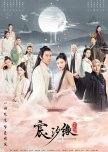
Wow! Comparable in standard to Ten Mile Peach Blossom but livelier
The ideas of a peach garden, God of War, fighting the demon king, six realms are all ideas from the Ten Mile Blossom. But this drama has its own story line entirely different from the former. It has all the ingredients for a great drama - story, acting, costume, music, computer graphics, directing. And in spite of the intense emotional settings, there are some humorous moments which make me laugh real hard.I can understand why more mature actors and actresses are chosen for certain dramas - few young ones could pull off the intense expressions of emotions and chemistry that Ni Ni and Zhang Zhen could. There are not that many Xiao Zhan and Wang Yibo - even these two took a while to warm up to their roles in the Untamed.
I knew Ni Ni from the Rise of Phoenixes but I knew nothing about Zhang Zhen. Before I started watching the drama, I did for a moment wonder whether he could measure up to some of the popular drama actors like Hu Ge or Wallace Huo and he did. He acted the character of JiuChen very well - a powerful, responsible, canny, very stern, yet tender and loving God of War who protected the world and capable of harsh action when required. He is equally capable of showing extreme tenderness as well as giving hard, angry, stern looks.
As I started checking up on Zhang Zhen, I realised he was the handsome bandit lover in Crouching Tiger and Sun Quan in Red Cliff. I remember the 2 characters but unfortunately his name was not given much prominence in these movies. But I am sure his talents was recognised as he had a lot of lead roles, and was nominated for and won several awards in movies.
Ni Ni is an excellent actress who can demonstrate different facets of a character. In this drama, she started off as an innocent mischievous playful girl infatuated with the God of War into a mature sophisticated lady, both capable of winning his heart. The lead characters had this amazing chemistry. It was heart warming to see how they relate to each other, and how NingXi coyly seduced JiuChen, and how JiuChen fell hard for her. Their flirting moments were entertaining. Her expression of emotions was just as good as the lead actor.
If we are to nitpick, we will always be able to find some small flaws even with the best dramas, and I can pick one out here. Much as I love most of the costumes, I must say the designer for JiuChen did not do him justice - he is the God of War not a peasant or scholar. And this black cap he wore was terrible.
Finally, I re-watched this drama and love it even more.
Was this review helpful to you?
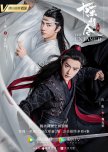
Deserves its current top rating on the list
I am very selective of dramas I watched online and typically I only watched those with high ratings. I must say this drama deserves its current top rating for Chinese dramas. Good looking actors and actresses, bromance, mystery, beautiful cinematography, special effects, comic moments, heart-wrenching scenes, melodious music rolled into one.The initial couple of episodes were rather confusing. But I was intrigued by the mystery of Wei Ying's death and resurrection, and I watched on - great job of introducing that at the beginning. When I reached the episode he was thrown off the cliff, I revisited the two initial episodes and they all started to make sense. Similarly, I was not impressed initially with the cast. But the drama improved further down the track and so did the acting of the actors/actresses.
I had not read the novel, but this drama deserves credit in its own rights. From the reviews of readers of the novel, there were suggestions of homosexuality in the relationships. But the drama was tastefully done and there were no homosexual scenes. Although I am not homo-phobic, I really do not appreciate homosexual scenes so I am glad of there were none - I do not share and appreciate the emotions - in fact, they are a bit of a turn-off.
However, intense feelings and camaraderie were enacted. The looks that Lan Zhan gave to Wei Ying were full of quiet intense emotions, and the feeling of pain at his death and suffering was well expressed. Wang YiBo acted Lan Zhan well. If WeiYing or LanZan is replaced by a female, coupled with a bit of tweak, this could become a romance story. In dramas, I have a type - I am strongly attracted to the charismatic, calm, intelligent, handsome hero of little words.
The mystery of what happened in the 16 years that Wei Ying was dead was not quite satisfactorily explained. Did he stay dead for 16 years until he was resurrected? If not, what happened to him in the 16 years? How did Mo Xuan Yue found and resurrect him?
And I love the music pieces - the theme song at the end and the music piece at the beginning.
I was impressed with the attention to details - they had chosen a boy who had dimples on his cheek to act the young Jin GuangYao - consistent with Zhu Zan Jin who had very obvious dimples and acted the adult.
Finally, to those who had started watching this drama and are the impatient type, stay on for a few episodes before you give up. And if you have not started, go ahead and you would not regret it.
Was this review helpful to you?
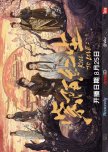
A Bold Gamble
Hmmm… This is one of those dramas that is tricky to review.It feels designed for a very niche audience within the rainbow community who would truly appreciate this genre. For a Chinese production, that is a bold gamble. Given the subject matter, the drama is highly unlikely to be broadcast or streamed openly in China . That is a massive domestic market lost at the starting line. Unless you have a VPN, good luck finding it. Well on this matter, I cannot find it streamed anywhere outside of China, except on YouTube.
I cannot help but wonder if the actors knew from day one that this was a BL drama. If they did, hats off for their courage—because the career risks are real. If they did not, well… surprise. Either way, they could face their future projects being blocked in China. Hopefully, they were paid handsomely for taking the plunge, though I doubt anyone is retiring early off this.
On the bright side, the drama does have some strong points. The male lead is exceptionally handsome and delivers a solid performance—his talent deserves much bigger stages. The ending theme song is melodic and the costumes are visually stunning (as Chinese costume dramas rarely fail in this department). The sets look authentic, and the cinematography is commendable.
But now for the less flattering parts.
Firstly, while I am not homophobic, the extended same-gender kisses and sugary displays of affection just did not work for me. Honestly, I would have preferred if Duan Zi-Ang had been written as a female character. That would have made the romance far more convincing in my eyes, being not in the target niche.
Secondly, the story is painfully simplistic. Who would really risk starting a war for a same-gender lover?
Thirdly, the background music was poorly balanced—rather than softening during dialogue, it often competed with their lines.
Lastly, the stiff, awkward acting from much of the supporting cast makes it all falls a little flat. Then again, I have seen Luo YunXi in a much worse drama before (not BL, simply a very poorly produced show with weak co-leads and support cast). Thankfully, he has since risen to become a well-established name, and I remain a fervent fan of his work.
Compared with The Untamed or Word of Honor, which handled BL themes with subtlety and finesse, this one is like a sledgehammer where a paintbrush would have sufficed. The production quality cannot compete either, which only makes the comparison starker.
As for its origins, this drama was produced in China, even if it was distributed in Singapore to dodge the censors. Some fan insists it is “Singaporean” because of the investment. But that is like saying Teslas made in Shanghai are American cars just because Elon Musk is American - by this logic, Trump should have taxed them twice.
If Singapore is indeed becoming the safe harbour for dramas that cannot pass Chinese censors, then please—by all means—give us 'Immortality' next. Fans have been waiting far too long for its release.
Was this review helpful to you?
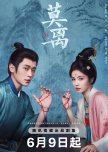
Grim, Mysterious and Full of Questions
The First Jasmine is a rather grim drama with very little humour, but it makes up for that with mystery, unanswered questions and plenty of intrigue. From the beginning, the story keeps you wondering what is really going on.Ye Li marries the disabled Prince Ding after her former fiancé, Prince Li, breaks off their engagement and chooses to marry her sister instead. But Prince Li's reaction at the wedding makes it painfully obvious that he is still in love with Ye Li. So why did he break off the engagement?
And that is only the beginning. The drama throws up one question after another:
Prince Ding's brother and his cavalry are executed for bringing an army into the capital without permission, yet he insists that he has an imperial decree. Was there really one? And if so, where is it?
Ye Li sees her maid when no one else can. Is she hallucinating, or is something more sinister going on?
And, of course, the biggest question: Will Prince Ding and Ye Li actually live happily ever after?
Characters I Admired:
Ye Li is undoubtedly my favourite. I always admire intelligent, upright characters, and she has both strength and intelligence in abundance. She is not the sort of heroine who simply waits for someone to rescue her. Despite all her strength, she has her vulnerability.
The Empress is another interesting character. She is actually very smart, but her methods are far too extreme, driven by over-ambitious ideals. She is the sort of character whose motives you can understand, even when you cannot agree with what she does.
There are also some genuinely heart-rendering moments. One villain gives up everything for his lofty obsessive ambition — his love, the person who loves him, a prestigious position and the possibility of a happy life - only to be killed because of it.
Then there is someone who could have been remembered and respected for their achievements, only to be brought down by hatred from the people because things were done too hastily and through extreme methods. It is a reminder that even good intentions can have disastrous consequences when ambition takes over.
My Biggest Problem with the Story:
There is one glaring flaw that kept bothering me. So much of the story revolves around the sealing of Li Shan Academy. But how exactly does sealing the academy prevent the Empress from seizing the throne? It is not as if the scholars are an army capable of fighting for her. Yes, they are influential in the scholarly world, but really? Their sealing feels more like a needless sacrifice than something that would actually stop a coup. Much ado about nothing, perhaps?
And Now for Some Nitpicking...
The drama flips between different sequences of events far too often. A scene barely has time to develop before we are suddenly transported to another event — and sometimes it keeps jumping between three different happenings. Flashing between timelines can be an effective way to create a sense of significant time passing or gradually reveal a mystery. Here, however, it happens so frequently that it becomes more annoying than clever.
Some scenes were also rather boring. There were moments when I could quite happily have walked away and done something else without feeling that I was missing much.
Despite all that, The First Jasmine remains an entertaining watch. The mysteries keep you going, the characters are interesting, and there are enough twists to make you want to find out what happens next.
I was debating between 8.5 and 9, but I decided to be generous.
⭐ My rating: 9/10
Grim, occasionally frustrating, but ultimately an entertaining mystery with plenty to keep you guessing. Worth your time.
Was this review helpful to you?
Talk, sob, kneel
This drama was produced 13 years ago. I guess based on the standard of Chinese dramas at that time, this was outstanding and was a blockbuster then. However, with the advent of newer and better dramas releases, this drama had become somewhat jaded. In comparison to some of the outstanding production like Till the End of the Moon, Kunning Palace, The Untamed, Ten Mile of Peach Blossom, Scarlett Heart had dropped from the top league in today's drama scene.Additionally, I watched the Korean version of Moon Lovers, Scarlett Heart Ryeo which was a remake of this drama but was based on the Goryeo dynasty, before watching this drama. The storyline was similar but I found the Moon Lovers a lot more action oriented with its fighting scenes, a lot more dramatic and faster paced. It was very clear why their 'Ruo Xi' shifted her affections from the 8th Prince to the 4th Prince. as the latter was hot in pursuit and was very proactive in winning her heart. In contrast, this Scarlett Heart drama featured a lot more talking, sobbing and kneeling. The 4th Prince was a lot more subdued in his approach and courting. Other than some gifts and a couple of scenes when he stood up for her and saved her, there was nothing very dramatic.
I was impressed with the cast of Princes - many of the sires subsequently became big names in the Chinese drama scenes - this drama had brought them to fame.
Overall, the acting was very good, story was interesting and Liu Shi Shi had excellent chemistry with her four suitors. It is worth the time to watch this especially for someone new to the Chinese drama scenes and had not been spoilt by the newer productions.
Was this review helpful to you?


