

 2
2 1
1 1
1


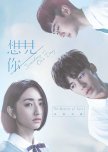
An intriguing and complicated story of time travel
The characters crisscrossed time into the future and back to the past so many times that I lost track. However, it is an interesting drama. I followed it through continuously and completed watching it across three days while recovering from a flu.Two lovers from different time periods were star crossed and their shared memories were eventually erased. The drama cleverly kept its audience guessing the identity of two individuals- the missing boyfriend and the real killer, and wondering whether the killer could be stopped on time to save the lead lady.
The main actress Ko Chia Yen was excellent. She acted two completely different characters very convincingly - a timid depressed young teenager with an inferior complex and a confident university student who grew up very assertive.
The actors and actresses were good looking. The main cast acted their parts well. Some of the insignificant minor characters were not so convincing; however their less than a minute duration parts did not impact the overall drama. The backdrops were appropriate for the scenes.
The pace of the story was quite slow, so you have got to be patient. I nearly wanted to skip to the last episode.
As for the music, it's just that one piece 'Last Dance' and that's about all.
The main negative is the ending did not flow well. Suddenly, the main couple was on a bike appearing from nowhere - how they met again was not explained - if it was from the time when the female lead was a child, it would be very tacky.
If I were the writer, I would let them meet in the future with a role reversal - with Li Zi Wei returning from Canada, walking into a cafe and ordering his coffee. The waitress whose back was toward him, answered in affirmative, prepared his coffee and turned to hand him his coffee. Their eyes met, they found each other very familar, stared and asked each other simultaneously 'Have we met before?'
Overall I would highly recommend this drama.
Was this review helpful to you?
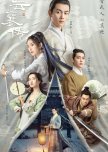
Don't upset those in power
This drama centred around Yun Xiang, an orphan who survived the massacre of his village. He was brought up by the mysterious head of Yantai with a hidden identity. Yun Xiang was trained to became a master of pretence and strategies. Like most dramas of this genre, he insisted on investigating the mastermind behind the massacre, although against the command of his Shifu (teacher).The drama was interesting as the people hiding their identity was not only the head of Yantai. The drama was a battle of wits and cunning between Yun Xiang and Nan Gong Fang who appeared to be from a rival sect. But it got boring after each identity was revealed.
I am not a supporter of child emperors and lineage, and a believer of: may the best person win. I think only when the upright and capable become the leader can then a country prosper. I did not favour either side of the power struggle, as it was between loyalists to lineage and a capable Prince who was not so upright and did not care that much for the people and would do whatever to achieve his end.
This drama scored well on an excellent cast who performed well, good looking actors/actresses, and appropriate backdrop. Costume was mediocre but fits the purpose. Not a drama of grandiose. Overall, still a good piece of entertainment.
Was this review helpful to you?
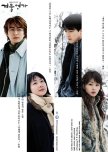
Romantic makjang blockbuster
It has been over 2 decades since the release of this drama. This drama marked the advent of Korean dramas outside of Korea. It took the drama scene by storm at that time and Bae Yong Jun became the heartthrob of Asia.While I had watched the Untold Scandal (movie) and The Legend (drama), and was impressed with Bae Yong Joon's acting skills and certainly his good look, and heard a lot of the Winter Sonata, I had never watched this drama, partly because of it 'low' rating on Mydramalist. With the large number of dramas to choose from, I typically do not pick a drama with rating less than 8. This time, I decided to give it a go - afterall, it was once a blockbuster and a classic.
I highly appreciated Bae's and Choi's (the main leads) acting and their onscreen chemistry in this drama, it had a very good cast and the cinematography was great. However, this story was not my favourite genre - the melodramatic romantic makjang with sobbing being the mainstay, but I had enjoyed most part of it. The entire drama would take you on an emotional roller coaster. And it is slow-moving as it worked to build up the emotions - given my impatience to get to how the story would develop, I clicked the forward button many times.
It had all the classic cliche of a makjang drama - love triangles, a scheming love rival, an upright patiently waiting fiance, unreasonable parental objections, unexpected death, dramatic return of an old flame, amnesia, attempted rape, flirting with incest, deceits, blindness, unwavering love, birth secrets and more. (Makjang = highly melodramatic, outrageous storylines that keep viewers hooked despite how exaggerated the stories become.) While all these can happen in real life, you have it all played up in one makjang drama. It played up my emotions so much that I was irrationally thinking: yah, just eloped together, who cared if you were half-siblings if you loved each other so much and had gone through so much together (although I did suspect that they were not real half-siblings).
Then, there was all these coincidences : the right / wrong person hearing what they should not hear, walking into the person you wish to see etc. I had encountered walking into classmates in countries away from where we had studied, seen incidences of being caught between 2 lovers, unexpected deaths, read in news about incest of siblings not knowing they were closely blood related. But they were few and far apart. Certainly the triangles were resolved quite quickly with little ramifications - there is a life to live, move on.
And definitely the moral of the story is: honesty handled with tactfulness is the best policy. Also, stop deciding for others what is best for them, let them decide for themselves. The obsessive, neurotic Kang mother in the drama and the two male lead characters certainly had lots to learn from this. If the mother was honest, a lot of anguish would have been avoided and certainly the accidents.
However, if makjang is your thing and you enjoy the emotional roller-coaster, then this is a must-watch for you. But if I rewatch, I do wish to find a version of the videos which are played in its original size and not stretched to fit the screen size of newer computer/TV screen, which makes it all blurry and the characters look fat.
Was this review helpful to you?
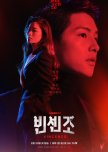
Makes your blood boils
This is a drama jammed packed with action and humour, although at times a bit snapstick. This drama is quite violent by my standard and I would only recommend it to mature adults.Vincenzo, a consigliere of an Italian Mafia family was in Korea to retrieve an illegal hidden trove of gold. But instead he found himself drawn into a fight for justice after the villain and his accomplice murdered a number of innocent people to cover up his illegal activities. Together with the daughter of a murdered friend, they pitted their wits against a duo of psychopaths: a sly ruthless lawyer and a wealthy cunning narcissistic brat with their network of corrupt politicians and bureaucrats. Did he manage to retrieve his gold in the midst of the distraction?
What I like about this drama?
1. Full of action
2. Fight for justice
3. Demonstrate how corruption can infiltrate a democratic society
4. Smoking hot first and second lead actors. Very often a second lead could make a lot of difference and sometimes overshadow the lead. Although Ok did not overshadow Song in this drama, I must say he is really good and smoking hot.
5. Outstanding cast, both lead and supporting - all were outstanding
6. Very entertaining
What I dislike about this drama?
1. Vincenzo's fight for justice is commendable but the final episode when he raved about how he handled his enemies back in Italy is a bit twisted.
2. The story has a number of loopholes and this is the biggest: the idea of buying a commercial building, digging out a basement to hide a large load of gold and then killing all the movers is a bit silly in a modern day setting. The construction of the basement and move of the gold could be very inconvenient - almost impossible for the rest of the tenants not to suspect anything.
3. It seems a bit too easy for Jang and Choi to manipulate the politicians, justice system and investigation bureau - is the system really so fragile?
4. It would be nice if Vincenzo has done something for the tenants especially since they had helped him so much. It seems he just pocketed almost all the gold except for some for his few immediate helpers.
Overall, an excellent production - highly recommended.
Was this review helpful to you?
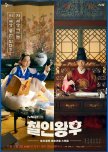
Hilarious - dealing with gender identity crisis
This drama was hilarious. Jang Bong Hwan, a casanova and chef at the South Korean Presidential Palace fell into the water and was transported back in time into the body of a newly wed queen of the Joseon period, Queen Kim So Yong. She committed suicide throwing herself into a lake in the palace.This sparked off a series of humorous events when Jang faced an identity crisis being a man in the body of a woman - like having 'her' period and getting pregnant. He was infatuated with the King's favourite concubine and tried to seduce her. Given the two women were rivals and he was in a woman's body, all his advances was futile, of course, and very funny.
It was hilarious when King Cheol Jong tried to be intimate with his 'queen' and Jang tried his best to get away. Jang went berserk when the King claimed that they had an intimate wedding night when he remembered nothing of that sort as he was drunk. At the same time, there was a power struggle between the King and the Grand Queen Dowager, the regent who was from the same Kim clan as the Queen. As 'enemies' from different camps, the King and Queen were also suspicious of each other.
What I like about this drama?
1. It was hilarious and I laughed at every episode, although some of the jokes were a little snapstick.
2. Excellent chemistry between the lead actor and actress.
3. The lead actress was impressive acting a 'tomboyish queen' who was actually Jang with his rough modern ways.
4. The lead actor was equally good at acting the hypocrite.
5. Although clearly fictitious, it was very convincing.
6. Although time travel had become a common theme, this story was quite creative. The writer had picked a short-lived king and made him into a successful character who had changed history.
7. The period architecture and costumes and backdrop and cinematography were great.
8. The entire cast did an excellent job with no weak spot.
What I dislike about this drama? Not much, but if I am to nitpick, it would be the following:
1. The music befitted the comedy and the funny scenes but there was not much melodies.
2, The fighting scenes were good but not that well choreographed and a bit simplistic. But I like that they did not drag on to lengthen the drama.
So overall I would highly recommend this drama.
Was this review helpful to you?
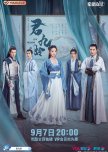
Entertaining but dubious
This drama is entertaining with an excellent cast including Peng Xiao Ran and Jin Han as leads and 4 handsome leading actors. Costume is beautiful; cinematography is good. It scored well on all the technical aspects. The story is well paced and has a well developed ending.The story centred around Princess Chu Jiu Ling who discovered that her emperor father was murdered by her uncle, the current emperor. Her attempt to assassinate her uncle at her wedding failed. She was tortured but was rescued by her physician teacher and his daughter Jun ZhenZhen who swapped identity with her. ZhenZhen started a fire in the prison and killed herself. Subsequently the teacher died in a fall while collecting herbs. Jiu Ling then took on ZhenZhen's identity and went to the rich Fang family and took refuge with her 'maternal grandmother'. She then went on to discover further sinister secrets involving the Fang family. Along the way, she won the hearts of 4 different men, went through 2 weddings and broke off an engagement with one of them.
The drama ended well and we did not end up with some ridiculous child emperor. But there were several questionable unrealistic scenes:
1. It was inconceivable that a rookie in medicine could cure diseases that baffled well-known experienced physicians even if she was well taught - ask any medical interns if they could do that. Conversely, it could be explained that in the old days physicians were generally badly trained as there were no medical certifications required.
2. In those days, I do not think they had the plastic surgery skills to transform Jiu Ling's look into ZhenZhen's no matter how skilful the physician was.
3. In one episode, Jiu Ling threw the enemy's camp into chaos by throwing 3 'soldiers' into a camp of 10,000 soldiers, faking infection with smallpox. It was more likely they would throw the 3 soldiers into fire or quarantine instead of being frightened into chaos - these were people who had fought and killed in battles. I expected the writer to come up with something more convincing and on a larger scale.
4. Chu Jiu Ling insisted on keeping the heritage of her teacher's medical clinic retaining the name Jiu Ling for her medical clinic, which was coincidentally also her name. What a convenient coincidence. Since she wanted to keep her real identity a secret, it was rather stupid for a clever girl like her to want to use this name and of course invited a lot of trouble thereafter.
These were stretching imagination. I accept deviation from reality in fantasy dramas. But for period or historical dramas, I expect something more intelligent. The music was melodious and some of the theme songs were really nice but a couple somehow sound quite familiar in some parts. So I say, overall the drama lacked originality and realism.
However, the drama was entertaining. So if you are not too discerning about these, you could still enjoy this drama a lot.
Was this review helpful to you?
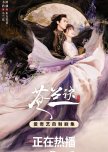
Love saves the 3 realms
Just after Little Orchid transformed from a plant into a fairy, she saved the God of War ChangHeng of ShuiYunTian (the immortal realm) when he was injured, returning from a war and fell in love with him. Although ChangHeng reciprocated her love, he kept away from her as he was betrothed to the Goddess of Xishan, arranged by the Heavenly Emperor who might harm Orchid if he knew of the romance. In the immortal realm, Orchid was bullied as her master was away and she was only a lowly fairy, especially by other fairies who were also in love with ChangHeng.In a twist of fate, Orchid fell into the HaoTian Tower, restored the primordial spirit of Dongfang QinCang , the powerful king of the Moon Tribe of Cangyan Sea and freed him. He was imprisoned in the Tower after the previous Goddess of War ChiDi sacrificed herself to seal him in the Tower. It was said that the resurrection of QinCang would bring great danger to the three realms and only the Goddess of Xishan could prevent this catastrophe. But the Goddess had been missing from the three realms for 30,000 years.
While in the HaoTian Tower, Orchid was accidentally bonded to QinCang by the heart curse. With this curse, QinCang could feel the feelings of Orchid and experienced any harm that happened to her, but not the other way around. Although deprived of feelings because of his training for the Hellfire power and ruthless, he could not kill Orchid without harming himself even when she was extremely annoying.
Meantime heavenly lord RongHao was trying to revive the Goddess of War, ChiDi with the help of a dark power as powerful as QinCang.
Was ChangHeng able to save his beloved Orchid? Where had the Goddess of Xishan gone? Was RongHao courting a dark power that was more dangerous than QinCang?
What I like about this drama?
- Chemistry between the lead actor Dylan Wang (QinCang) and Yu ShuXin (Orchid) was immense.
- Dylan was an excellent actor - playing the stern ruthless QinCang, then a naive playful Orchid as their spirit and body was interchanged, and an evil supreme lord as he merged with the dark power. His expressions were all different for each.
- The cast and acting were great.
- The story was interesting - there was creativity and the story was not quite the run-of-the-mill Chinese fantasy story giving a more refreshed feeling.
- Humourous moments when love rivals faced each other, and when Orchid would tease QinCang, as she wished under the heart curse.
- The rest of the hygiene factors were all there: good looking cast, special effects, computer graphics, beautiful costumes.
What I do not like about this drama?
- Odd and unnatural moments - why the three could not work together as a team to overcome the dark power instead of facing him individually? Obviously, this was to create opportunities for someone to die to stir the dramatic emotions among the audience. Feels very fabricated and did not flow very well.
- The hero died but you could guess what happened next. To pacify the wrath of the audience of a tragic end, the writer had to turn the situation around. But while trying to create a dramatic ending, it had the opposite effect - it became very predictable. The hero was resurrected just by hanging his ring below a flower and simply re-appeared without any explanation of how. Writers really need to work more on the ending of dramas.
- The beginning and ending trailers gave the story away a bit too much on who eventually Orchid would choose - avoid watching them until after the middle of the drama. Again, it takes a lot of skills to create trailers that do not give away too much and yet arouse the interest of the viewers.
- The ending theme song, although melodious, was a little too modern for a drama that had a period setting.
Overall, I say this drama is interesting and certainly worth your time. Also, it is short - only 36 episodes and covered a lot.
Was this review helpful to you?
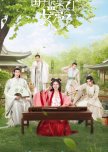
A Female Student Arrives at the Imperial College
0 people found this review helpful
Sad that the sweet nice one is actually the villain
The drama centres around Sang Qi, the only daughter of Marshall Sang as she becomes the first female student at the imperial college to fulfil her late brother's wish. Not knowing the tradition in the capital, she enters into a pact with the spoiled Song JiaYin, daughter of Minister Song to get Yan YunZhi to accept her pouch. Failing this, she would have to perform at the Lunar Festival. According to the tradition of the capital, this is a gesture of demonstrating and accepting love between a man and woman.As it turns out, Yan YunZhi is the Head of the Imperial College. Her childhood best friend Zhou WenYuan is a top student at the college and helps her through various crisis. It is hilarious as she tries various tactics to get YunZhi to accept her pouch. But things turn sinister when she is poisoned and becomes embroiled in the investigation of the smuggling of prohibited items into the capital involving high standing people in the court.
Although the story seems rather straightforward at hindsight, it is not quite so obvious at the beginning. The initial ten episodes is quite humorous and light-hearted but the drama becomes dark and more intense. It is quite clear early in the drama who the villains are, but it is quite unclear what the next turn would be.
Acting is excellent. Xu KaiCheng (YunZhi) is tall and handsome and Zhao LuSi (Sang Qi) is very pretty especially when she lets her hair down and don on feminine clothes, and they have excellent on-screen chemistry. Ren Hao (WenYuan) as the second lead is really good as well - you can see the different changes of expression on his face - from the loving childhood friend to a jealous monster. I am sure he will elevate into main leads in future dramas. And among them, you see a fashion parade of lovely period costumes.
The ending is well-crafted with a mix of happy and sad endings. You would be happy for the couples whose lives have ended well. Some of the villains are shown to have a human side, which makes it difficult to hate them - at least it gives you some confidence in humankind. In fact, you would even feel sorry for them. It is heart-rending as one of the villain kills themself in desperation. You witness how a young person with great promise travels down the wrong path and eventually ruin themself while some are ruined by greedy parents. Somehow you wish things could have turned out differently for them. The ending stirs up the emotions.
Although I won't rate this among the top league, but I say it is a very good production and well worth your time watching.
Was this review helpful to you?
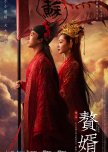
Light hearted entertainment
The backdrop setting of this drama reminds me of Luoyang but the mood is entirely different. It is more light hearted with a slant towards a comedy and yet not quite one as there are not enough humour to make it so.As a whole, the story is interesting as it features a man teleported in time to an ancient time where he pits his wit in a family he is married into as a matrilocal son-in-law. Eventually he is drawn into politics as a group of bandits raids and captures the commercial and strategic centre of the country while he is visiting with his wife and friends. He is pulled in to uncover the real schemer and help save the city and bring peace to the country.
The cast acted well, but overall the production is quite average by today's standards in Chinese dramas. In a number of spot, the video was clumsily and obviously trimmed.
I would be interested to find out what happen to the male lead in modern times as he is shown to have been hit on the head as he confronts his business partner who has sabotaged him.
Although I won't rate it among the top league, it is worth watching if you have time to spare and are looking for something not too heavy.
Was this review helpful to you?
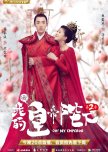
A comedy and time travel fairytale
Most Chinese dramas that make it onto the international platform are generally good in the hygiene factors: good cast with good looks and acting skills, beautiful costumes, beautiful backdrop. But when it comes to the story, more creativity and originality are needed and more thoughts need to be put into the development of the story.This drama is entertaining but the story is very average with all the regurgitated themes: blocking the sword for the lovers, time travel, falling in love with a feather headed girl because she is different, triangle love, ditto, ditto. Story lacks originality. And Zhao Lusi's image seems to be fixated as a feather headed girl in time travel dramas, which is not necessary a good thing.
As a comedy and fairytale, I guess it is still worth watching if you are short on other things to do. Also, if you are a fan of Xiao Zhan and are satisfied with just enjoying his good looks and a bit of laughter, this is still a good drama to follow. Afterall, series 1 and 2 total to 42 episodes of about 20 minutes, which makes it only the equivalent of about 18 episodes with the regular length of most dramas.
Was this review helpful to you?
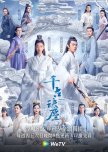
Two lying gods and a clueless goddess
ShangGu, the supreme Goddess, sacrificed herself to save the Gods' realm from a catastrophe and her soul was shattered, much to the heartbreak of Bai Jue, her lover and a very powerful god. After the sacrifice and a war against the demons, Bai Jue was injured and disappeared.Thousand of years later, a daughter, Houchi, was born to ShangGu's only disciple Gu Jun. She had very low spiritual powers and was often looked upon by the deities as undeserving of the high rank that was secured for her by her father. The young girl lived segregated in her father's palace at the command of her father, while trying very hard to improve her powers.
One day, HouChi appeared on the birthday of the high deity Dong Hua to save her friend. Unexpected by all, she demonstrated great powers and had an uncanny resemblance to ShangGu. Appearing on the scene was a young uprising star and a stranger to HouChi, QingMu who helped to resolved the conflict. QingMu strongly resembled Bai Jue who was ShangGu's lover. This left the older deities who had lived from the time of ShangGu very puzzled. Who were these two individuals? Meantime, secret evil forces were building up - so how were this pair of unsuspecting youngsters going to handle what was in store for them?
Overall, this drama was very entertaining. The cast was excellent; special effects was superb; costume was beautiful. There were a few dull moments but did not last long. Zhou Dong Yu did a great job as the mischievous young supreme goddess training to weld the great powers she possessed and as the helpless HouChi. But when it came to acting as the Supreme Goddess who was commanding the deities, she lacked the poise and majesty. And she was acting alongside tall and handsome actors like Xu Kai and Liu Xue Yi - she looked more like a little girl rather than a powerful goddess. I would think that Tiffany Tang would be more suitable for the job but the rest of the cast were too young for her.
As usual in most long dramas, the story was quite silly in parts. TianQi who was also in love with ShangGu had to embark on acquiring the power of chaos to sacrifice in place of ShangGu, nearly destroyed the three realms and was 'killed' by Bai Jue. Later, Bai Jue lied to keep HouChi away and was hated. These gods were certainly not honest, not team players and rather stupid. All these, of course, were ruse to make us felt sorry for them as the wrongfully accused. If I was to give this drama another title, it could have been called 'Two lying gods and a clueless goddess'.
I watched this drama twice. During the first round, I stopped at episode 15 and went on to watch Pearl Eclipse which was very good, as there was nothing exciting except for an obsessive jealous goddess. The first 10 episodes of Ancient Love Poetry felt like a comedy but the drama took on a more serious tone as it proceeded. Also, during the first round, the story felt haphazard and all over the place. But on the second round, the story got clearer.
Was this review helpful to you?
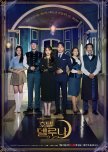
Amazing production
This fantasy drama is very much along the same genre as the Goblin. Resentful of a betrayal that happened 1300 years ago, Jang Man Wol was trapped in a hotel by a deity who kept her there as the CEO to stop her from going berserk and turning into a vengeful ghost. Then came the kind-hearted Goo Chan Song who ended up working for her because of a deal his father made with Jang. He tried to put a stop to her excessive spending and disastrous finances, and interfered with her attempt at revenge which could affect her chance of a good reincarnation. The story was centred around their relationship and work, and his changing attitude towards her.I watched this drama to take a break from Chinese dramas which were getting to be more of the same - repeating the same threads of scenarios which had been successful in earlier dramas. The obvious cultural differences in the dramas were refreshing. The storyline of this drama is simpler than the intense scheming, obsessive lovers and rivalries often featured in Chinese dramas.
I rated this drama highly for many good reasons. The most important is I enjoyed it and actually watched it again. The plot was interesting and developed well. The story behind Jang's unfortunate past unfolded along the drama. Mysteries involving the lives of ghost visitors and staff also enriched the drama.
The acting skills of the cast were excellent. The handsome male lead and pretty female lead had this amazing chemistry. Good looking leads always make a big difference, but they need to act well too which is crucial.
The drama invoked a range of emotions. The verbal 'quarrels' between the leads were quite humorous in many parts and made me laughed. But it also managed to make me cry - few dramas managed to do that and this has become a measure for dramas I watched. Often, I found crying scenes boring and wished they would past quickly. The drama was well paced and I could not recall any dull moments.
Lee Ji Eun (Jang Man Wol) appeared in every scene with a new outfit - almost like a fashion parade. They must have gotten a lot of sponsorships from fashion houses or designers. Otherwise, clothes would have cost a fortune to produce this drama. Yes, I love beautiful costumes.
Then, the backdrop of the hotel was glamorous - the hotel lobby, the view from the balcony, and the wine bar - I guess some might be computer graphics but done very well.
There were of course some shortcomings - mainly inconsistencies. Early in the drama, it was said that ghost could not appear in camera. Yet in a scene later, someone saw the ghost in the library through her mobile phone. Towards the end, the staff at the hotel took photos together.
The ending was bitter-sweet. When the ghosts found resolution to their resentment, it was also time to say goodbye as they moved onto the afterlife. You would feel happy that they moved on but sad at the parting. In the early episodes, Jang said she was alive and not a ghost; yet towards the end of the drama she was referred to as a ghost.
Overall, I enjoyed this drama a lot and would recommend it highly. If you had watched the Goblin and enjoyed it, you may also like this one.
Was this review helpful to you?
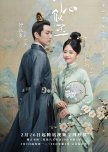
The sorrow beneath the glorious image
This drama told the story of a young girl forced to marry into the family of a marquis and an outstanding general. Her eldest sister who was married to this marquis, died of mysterious circumstance leaving behind a son who was to be the heir to the marquis title. Her attempt to run away from the marriage failed and she was coerced to take the position as the legitimate wife in order to safeguard her nephew and his heritage. She had to handle the favouritism of her mother-in-law, backstabbing from a concubine vying for the position of the legitimate wife, betrayals and the traps lay by her husband's political opponents.The drama was interesting and would certainly keep you glued to the TV set, wondering what was going to happen next and the 'truth' behind the different mysteries uncovered.
The themes were quite typical of Chinese dramas: rivalry of concubines and wife, political struggles that harmed the family, forced arranged marriage, obsessive lover of unreciprocated love, love triangles and the like. Likely this was the cultural settings of the Chinese society during that era and the status of women at that time, who had no career except to become the first wife of a prominent husband.
At various points, the story was quite unrealistic and did not gell - quite typical of long dramas. The wife refused to have intimate relation with the husband and he still thought that they were mutually in love - how did this happen? Things just conveniently happened - the evil guy/gal were always at the right place to overhear the important information, witness a critical situation, and smoothly carry out their evil deeds, and the good guys were always at the receiving end.
Still, it makes good entertainment. It is very much in the same genre as the Legend of Ming Lan - if you like this drama, you would likely like this one. Although I won't rate it as a top league drama, it is still a very good production and acting is great.
Was this review helpful to you?
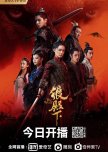
Generally good but with a few dull moments and some unrealistic human emotions
I suspect this drama relies mainly on Xiao Zhan and his popularity to be rated highly. Generally, this series is entertaining and dramatic with some dark scenes. The male lead and female leads are good-looking as well. The initial few episodes, especially the first, were somewhat dull but momentum picked up when the wolf boy appeared again as Prince Bo killing an erroneous general - this episode was dramatic. But the momentum dwindled in the last few episodes and became a bit haphazard - suddenly the Princess was drugged to become super-powerful - that sudden change did not bite - my reaction was - yah, sure - it did not give me that dramatic feeling.Some episodes are quite dramatic but there are also some dull moments. The director must have been trying to evoke some romantic feelings with some lovey-dovey scenes but did not work with me - I just wanted the dramatic to move on. (The scene I could remember that evoke this sad romantic feeling in me was the pavilion re-union in Nirvana in Fire.)
This drama lacks realism. Not because it is centred around a boy brought up by wolves but the flip-flopping of human emotions. The male and female lead characters became sworn enemies. The hero was treating the heroine like a doormat in some episodes. But once the misunderstanding was cleared, they became lovey-dovey again. Life does not happen like this - when the hurt has driven deep, there is no turning back. It would have been much better if the story teller let each got on with their lives, especially since there were others waiting for them. (In the same way as Bai Qian and Li Jing in Ten Mile Peach Blossom - when Bai Qian told Li Jing: in the whole wide world, there is no turning back.)
But Chinese dramas like to stick on the theme of a lead character hurting someone they loved and drove them away in order to help them. And when they found out the truth, they made up and became more loving then before - so cliche. No, dearie, it does not happen this way and women have the memory of an elephant - be real.
Was this review helpful to you?
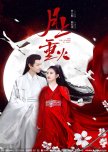
I had watched so many Chinese drama that I believe I am very desensitised and could hardly cry at emotional scenes. But no, I was wrong, I actually did cry when watching one of the characters died in the arms of his love - the emotion was very well built up and the actor acted it well.
There were a lot of flirting scenes between the male and female leads. Luo Yun Xi (Leo) acted the flirting male lead well. I am sure guys could learn a lesson or two on flirting from this. :) I must say Luo Yun Xi did not quite get the chance to display those emotions he did in Ashes of Love. If you are expecting this, you are likely to be disappointed with this drama.
But I cannot say the same of Yukee Chen - she was good but did not manage to stir up much emotions - we had to bear in mind that the female lead character was very young, so all she could do was to act shy but pleased.
The badass in the story was a psychopath. While he was probably right in expecting the pugilistic world to submit to the law and order of the country, but the way he went about it was absolutely psychopathic.
There were also illogical parts. How could the intelligent Shuangguan Tuo think that he could get away as someone else in front of people who knew him well when all that he did was changed the colour of his clothes? At least spot a moustache and bun up his hair for goodness sake. For this, I blame the make-up artists - they need a bit more creativity.
Also, I have seen this happens in Chinese dramas very often. The girl dressed up and then the guy/s started orgling. But when I looked at her, there was not much difference - should have been a bit more lavish with the hairpins, earrings, make-up and clothes to really transform her - again, make-up artists work harder.
About music, the starting theme song was a wrong choice and I dare say contribute to the lower rating of the drama. The theme songs are very important in helping to build the emotions before the start of the episodes but I felt it failed to do that. The starting theme song was a little of neither here nor there - not quite dramatic enough and not sentimental either. If the ending theme song was used at the beginning instead, it could help set the scene, especially with a title like 'The Winner is Love'.
Also the bland of the music was bad. At some points, the background theme music was clashing with the instrumental music that the character was supposedly playing, with two independent pieces running at the same time. It sounded real bad - I wonder whether the music editor had fallen asleep.
The overall drama was good but lacking in a lot of finer touches, some of which I had highlighted above. Nevertheless, it was entertaining.
Was this review helpful to you?


