

 2
2 1
1 1
1


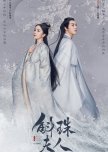
Heart rending
This drama was much awaited among Chinese dramas followers and did not disappoint. And I think it is under rated on mydramalist.com.I rate this drama as 60% romance and 40% action. The pace was quite moderate but there were enough events to keep you interested. The battle scenes were intense and impressive, and the interactions of the lovers were heart rending. The cast is outstanding - everyone played their part so well.
Haishi grew up in a village which fished for luminous pearls formed by the tears of the merfolks. As a child, her father died fishing for these pearls and she blamed the emperor for his heavy taxation which resulted in the death of her father. When her village was raided by soldiers, she hurt an officer, ran away and was saved by Fang Jian Ming, a close friend of the emperor. He took her in as his disciple. She chose to dress up as a boy and eventually enrolled in the emperor's military. She fell in love with Fang and so did he in return.
Throughout the drama, it is heart rending. Fang would consistently pushed away Haishi's advances although he loved and cared for her with all his heart. The clueless Haishi could not understand what was going on. She suspected that her Shifu (tutor) was in love with her too and blamed him for putting politics above their love. On numerous occasions Fang sent her away and she was sure she was being abandoned. When Fang met a rival in love and he was obviously jealous in spite of efforts to hold it back - that was double heart rending. As the drama went on, the reason behind Fang's rejection of Haishi were slowly unraveled.
There were a lot of events which would keep you in suspense: coups, rebellion, people who were not what they appeared to be, wars with tribes at the border, internal feuding for the throne, Haishi's attempted assassination of the emperor, sabotage in the court targeted at Fang instigated by hidden political rivals, conspiracies and counter conspiracies, Haishi's participation in the competition for a position in the military amidst a conspiracy to hurt her, her appointment as consort to the emperor, which she resented, and so on. There were a lot of common themes similar to other period dramas involving imperial families but these were played out differently.
There were 3 couples and a total of 9 persons in love. Only 1 couple eventually led a happy life together. The other 1 couple could continue to see each other but had to keep a distance. 2 persons died, not getting the love they were seeking. And 1 couple died in each other's arms. I shall not reveal which, but this tells you that this drama has a rather dark setting.
I wish the director would stop the drama at the 46th episode. It could have ended as: they lived happily ever after, for all. But it went on for another 2 episodes which twisted it into a tragedy. There is something sadistic with either the writer or the drama production community.
All the three lead couples did very well. I enjoyed watching William Chan and Yang Mi as leads - there were great chemistry between them - their acting were very natural. William is one of those actors who looks good even when he puts on a cold stern face. He could switch from a look ladened with a mix of sadness and heavy responsibility to one of relief and quiet happiness - and you can see an obvious difference.
Was this review helpful to you?
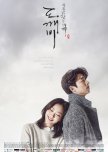
Burden of the Past
There is no doubt that Korea still holds a major position in dramas in Asia in spite of the rise of China in this industry. This story is very interesting and well-developed - with the story spanning across centuries. The twists in the story were unexpected and very craftily woven. The two lead actors are good looking. Good looking actors and actresses often help.In comparison to Chinese dramas, the male characters in Korean dramas tend to be more chauvinistic in behaviour. This may because Chinese dramas have been under scrutiny not to portrait certain values or indeed Chinese society especially in the larger cities have become a lot more receptive to women's status in the society.
The English title of this drama, however, was very poorly translated. A goblin is an ugly dwarf-like creature. But the lead character is handsome and tall - a complete mismatch. Wonder whether the translator knew this. A better title could be Immortal, Demi-god, Burden of the Past or the like of these.
Was this review helpful to you?
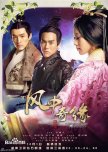
Keeps you guessing her final choice
The story is intriguing and acting was excellent. Throughout, I was left wondering what would be the heroine's eventual choice.Being a sucker for the underdog, I was rooting for the 9th lord. He was rich and powerful but had obvious inferior complex because of his disability. Hu Ge has this doleful look that melts one's heart - he is an incredibly outstanding actor. Not many actors can match up to that standard.
I did not rewatch this drama like I did for the Nirvana in Fire, Ten Mile Blossom and Fu Yao, but I would certainly recommend watching for the first time.
Was this review helpful to you?
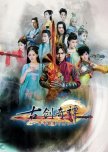
The story stemmed from a boy who acquired a murderous aura because of a sword his tribe was entrusted to guard, and the heavenly Crown Prince who was trying to unite his soul which was split into two. Both had to suffer immense pain.
The drama is good but not among the top league. The story was much ado about nothing. For example, why had the Crown Prince sought such a big detour to re-unite his soul? It had already been a thousand years. He could have approached the guarding tribe and told them who he was, and what he needed and found a more direct way to re-unite his soul without such a huge upheaval.
Also, episode 48 was a big yawn. The group was supposed to be preparing for a battle. Tusu had only three days to sustain his power, yet they were indulging in leisurely mushy conversations and enjoying romantic moments under the starlight. I must have been hardened by watching too much drama - I find them neither touching nor romantic. The romance between Li Yi Feng and Yang Mi were not well played up - failed to stir up any emotion in me.
There were these persistent attempts by people around trying to dissuade the key people from certain course of action - don't do this, don't do that - after a while it became really annoying - perhaps this is the Chinese culture.
The audio on YouTube videos was muted in a number of spots - and one of the theme music sounded very familiar - I suspect there was copyright issues which did not allow it to be broadcast outside of China.
However, if you are locked down in this pandemic and running out of entertainment, this could still be worth watching.
Was this review helpful to you?
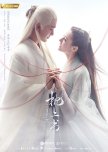
Thoroughly enjoyed this...
This drama is not a continuation to Ten Mile Peach Blossom although many of the key characters in the former series are either mentioned or re-featured. You can watch this series on its own without watching the former. It is more of a romantic comedy and more light-hearted compared to the Ten Mile Peach Blossom. There are more romantic and comical scenes while Ten Mile has more intense battle and gut-wrenching scenes. The witty verbal exchanges are hilarious. And the scenes when DiJun is teasing and flirting with FengJiu are amusing. However, you probably need to have a good command of Mandarin to appreciate it - from the English subtitles, I suspect much is lost.It has its own moment of suspense, making you wonder what is going to happen next and it did keep me glued to YouTube and myasiantv.io especially towards the second half. If you are a romantic, you will enjoy this. Dil and Gao had 'come out of age' to convincingly play the lead roles in this drama with only a short awkward appearance by Yang Mi and none by Mark Chao.
The initial 10 scenes are a little slow but comical, and almost look like a repeat of Ten Mile Peach Blossom with FengJiu's attempt to make it to DiJun's palace to serve him and the rivalry between FengJiu and ZhiHe was boring. It would be better if the duration of an episode or two were trimmed from the initial 10 episodes - they feel like time fillers. However, the story deviates. Once you get past these, you will start to enjoy it.
Like most dramas, it has its weaknesses in the story - a lot of the plot was based on FengJiu's distrust of DiJun - almost to the extend she looked like a self-pitying fool. For a plucky and mischievous girl, she suddenly became a fool when it came to matters of the heart. A lot of the gut-wrenching scenes become unconvincing and comical as they are more of self-pitying based on some imagination she was unloved and that DiJun loved someone else.
Dil is ravishingly beautiful as FengJiu and Gao is dashingly handsome as DiJun with the white hair and purple/white robes. Good looking leads are often key success factors for a drama or movie.
We all like a happy ending - I certainly do - I watch drama to enjoy it not sadden by it and I avoid tragedies. I always check that before I start any drama these days after suffering a few sad days with some other tragedies.
Was this review helpful to you?
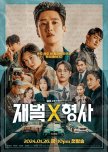
A Rich Brat, A Detective Badge, and a Deadly Mystery
Jin Yi Su is the second son of Jin Myeong Cheol, chairman of a powerful conglomerate. Unlike every other chaebol heir in K-drama history who is busy plotting corporate takeovers, Yi Su has zero interest in the family business. He happily leaves that burden to his elder half-brother and instead indulges his obsession with detective novels, crime dramas, and elaborate role-playing police raids that cost more money than most people earn in a year.Then fate intervenes.
While chasing a criminal, Yi Su ends up tackling and subduing the suspect. Unfortunately, Detective Lee Gang Hyeon arrives just late enough to draw the wrong conclusion and arrests the wrong man. Once the misunderstanding is cleared up, the police somehow decide that the best way to apologise is to recruit the billionaire playboy into the homicide division.
A bit far-fetched, that is how police hiring works in this drama. The result is comedy gold.
Gang Hyeon spends much of the early episodes trying to keep Yi Su away from investigations, but pushing aside a chaebol heir with unlimited money, unlimited free time, and unlimited curiosity proves impossible. Soon, the reluctant team finds itself solving murder of a famous artist, suspicious accidents of an old man, mysterious deaths of a CEO, and crimes involving a terrifying cult organisation.
What makes the drama work is that Yi Su is not merely comic relief. Beneath the flashy clothes, endless confidence, and attention-seeking antics lies a genuinely intelligent investigator. Gradually, the team begins to realise that the spoiled rich brat they initially despised actually has useful instincts and impressive investigative skills.
Ahn Bo Hyun absolutely shines as Jin Yi Su. He perfectly captures a character who is equal parts peacock, man-child, genius, and wounded son. Yi Su loves showing off and being the centre of attention - the absolute flex, but beneath that charming playful facade is a lonely boy who lost his mother at a young age and harbours deep resentment toward his father.
The drama cleverly blends comedy, detective mystery, thriller, corruption, politics, and friendship into one surprisingly addictive package. One moment you are laughing at Yi Su spending absurd amounts of money and resources to solve a problem. The next, you are watching a tense murder investigation.
And of course, every good detective story needs a central mystery.
For Yi Su, it is the death of his mother. He has always believed she died in a tragic accident that unfolded before his eyes. But as the story progresses, cracks begin to appear in that version of events. When his father later suffers a similar fate, it becomes increasingly clear that there is more to these deaths than simple bad luck.
Who was really responsible?
Was his mother's death an accident at all? Was Yi-Su's childhood memory reliable?
And if someone has been eliminating members of his family, is Yi Su next?
While the drama is enormous fun, there are moments where reality quietly packs its bags and leaves the building. For example, can a police superintendent really assign a civilian billionaire to active homicide investigations with so little paperwork? Probably not. Still, this is hardly the kind of drama you watch for procedural accuracy.
One interesting point that caught my attention was the discussion around the statute of limitations. A quick Google search confirmed that in South Korea, murders committed before 1 August 2000 were indeed subject to a 25-year limitation period, adding an extra layer of realism to part of the mystery.
Overall, Flex X Cop is not a drama that takes itself too seriously, and that is precisely its charm. It is funny, fast-paced, packed with memorable characters, and manages to balance comedy and suspense surprisingly well. If you enjoy detective stories but would like your murders solved by a rich show-off who treats police work like the world's most expensive hobby, this drama is well worth your time.
Was this review helpful to you?
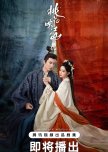
Backed into a corner and desperate to remain in Wei to protect herself and her hostage brother, Cheng Ping boldly schemes and offers herself as Shen’s concubine. Shen, however, wants nothing to do with her. He leaves her to survive the tangled web of jealousy, competition, and simmering hostility inside his household—his wife and existing concubines are no easy company. At the same time, Shen must fend off the Crown Prince’s political traps, all while navigating the enigmatic Third Prince, whose charm masks motives that are not immediately clear. Friend? Foe? Or something far more dangerous?
The plot is engaging and full of intrigue, although it does falter at times. Some plots feel cliche—the classic arc of two suspicious, reluctant individuals who slowly uncover each other’s hidden strengths and fall in love - the convenient loss of memory - and the use of poisons to secure someone's obedience. Yet if you stick with the narrative, it rewards you with emotional tension and a solid payoff. Cheng Ping’s stubborn independence is both admirable and exasperating. Her refusal to rely on anyone, including Shen once he begins to care for her, creates trouble for them both. More than once, you might find yourself wanting to knock some sense into her.
The latter half of the drama dips a little, especially when a few supporting actors begin to sound like they are reading lines rather than inhabiting their roles. Thankfully, there are standout performances to balance this. Gao Han’s Third Prince is a highlight—handsome, unsettling, and utterly convincing as a love-struck sociopath whose loyalties are never straightforward.
Still, the true anchor of the series is Liu Xue Yi. His versatility, emotional depth, and commanding presence carry the drama through its weaker moments. At times, it feels as though he is single-handedly holding the entire story together—and doing it with impressive finesse.
If you can forgive its occasional stumbles, you will find a story that grips you with political intrigue, emotional depth, and characters whose flaws make them all the more fascinating to watch.
Was this review helpful to you?
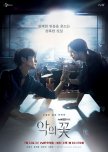
Love, Lies, and a Killer’s Truth
A gripping psychological thriller wrapped in a detective mystery, this drama pulls you in from the start. Baek Hui Seong appears to be the perfect husband—gentle, attentive, a loving father who runs a modest metal craft business beneath his home. His wife, Cha Ji Won, is a sharp, devoted detective who still carries the same love she had for him when she first pursued him years ago.But their picture-perfect life begins to crack when Ji Won is assigned to a chilling case—one that mirrors an old unsolved serial killing. As her investigation deepens, an unexpected visitor—a reporter linked to Hui Seong’s past—walks into their shop, setting off a chain of events that threatens to shatter everything.
Meanwhile, a grieving man searches desperately for the truth behind his wife’s disappearance—presumed to be the victim of a serial killer. With no body ever found, his obsessive quest for justice edges him closer to madness, as he seeks out the accomplice of the killer.
As the layers peel back, secrets buried in Hui Seong’s family emerge. His powerful father, blinded by love and denial, goes to disturbing lengths to protect a son with monstrous tendencies. Rather than confronting the truth, the family chooses to conceal, manipulate, and sacrifice the innocent to preserve their son.
This drama delivers it all: stolen identity, a manipulative psychopath, chilling murders, gang entanglements, blackmail, blurred lines between guilt and innocence, and a constant tension between truth and deception. Every twist raises the stakes—and keeps you glued to the screen.
With a top-tier cast, cinematic finesse, and a plot brimming with suspense and psychological twists, this drama comes tantalisingly close to perfection. The only stumble? It slips into melodrama toward the end—enough that I found myself fast-forwarding through tearful scenes that lingered too long for my liking. The use of fake identities and memory loss, while serviceable to the plot, veers into cliché territory—familiar tropes that seasoned drama viewers will recognise a mile away.
Still, if you enjoy thrillers with emotional depth, complex characters, and dark secrets, this one is not to be missed.
Was this review helpful to you?
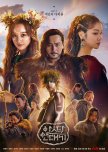
Arthdal Chronicles Part 1: The Children of Prophecy
1 people found this review helpful
Ruthless fight for power in ancient barbaric times
The three seasons spanned a total of 18 episodes. This is to-date the best Korean drama I had watched, in my opinion beating the Goblin or Hotel Luna. The story was intriguing, convoluted and kept the audience wondering. There are some predictable bits, and fighting and wallowing in sorrow dragged it out a bit, but by and large it locked-in my attention. This drama was only the first of four sequels and set the stage of more to come.The ancient world of Arthdal was dominated by two homo species: the bronze-age humans, Sarams, and the Neanderthals. The Neanderthals was the physically stronger of the two species. There were inter-species mating between the two races giving rise to a mix-blood race called Igutu.
The Sarams tried to make peace with the Neanderthals but unfortunately were rejected. Tagon, son of the Saram Union Leader proposed a devious method to eliminate the Neanderthals by infecting them with a deadly disease which both weakened and killed them. They took the opportunity of a Neanderthal festival to present them with gifts carrying the disease.
Asa Hon was deceived by the Sarams to bring the gifts to the Neanderthals. When the Sarams attacked the epidemic ridden Neanderthals, Asa Hon discovered too late that she was used. She rescued her Igatu baby, named Eunseom, and brought him to Iark, a land separated by a high cliff and a desert and unknown to the Sarams. Eunseom was brought up by the Wahans in Iark, and was kind and trusting.
Tagon discovered an Igatu baby. He took him away and raised him in secret - his intention for doing this was unclear. Saya, was brought up by the TaelHa, Tagon's lover, and was cruel and distrustful.
Tagon went on to kill the remaining Neanderthals and Igutus, and further military conquest to become a powerful general. As an Union Leader, his father, Sanung faced a power struggle with Asa Ron, a religious leader who used the superstition and ignorance of the ancient humans to manipulate their obedience.
Numerous prophecies circulated among groups of people. My reviews on the rest of the seasons will follow.
I found this drama such a good amalgamation of borrowed historical events, very nicely pieced together. It showed how a more developed civilisation subjugated the more primitive tribes with their 'advance' bronze weapons. You would have seen this in modern history with western colonisers taking over Africa, Americas, Oceania and parts of Asia.
The killing of the Neanderthals certainly reminded me of how the white settlers killed the American natives by spreading leprosy through gifts of blankets used by lepers in their own countries.
And Asa Ron reminded me of the various religious cult leaders who distort facts to instigate people and manipulate them. Tagon, Eunseom and Tanya, all used this tactics as well later in the drama. Humans were so easily manipulated by words and a good show. In contemporary times with all the high-tech digital communication, it is difficult to tell fake and real apart at times.
All the three seasons were very good.
Was this review helpful to you?
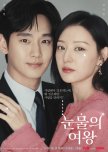
A Melodrama
This is a melodrama filled with arguments, cold wars, crying, secret pining and at times lovey-dovey moments between the lead couple. Hae-In and Hyun-Woo were a married couple from very different background. Hae-In was the daughter of a rich conglomerate family. Hyun-Woo was from a humble village upbringing but made it into Korean's top university. Their friction stemmed from an inability to communicate properly and to give each other the support they needed to sustain a healthy marriage relationship in a highly pressured family environment. Their friction inevitably opened up opportunities for ex-boyfriend, in-laws, and villains to make use of against them.The story started off quite well but getting more draggy towards the end as the drama wallowed in more stagy moments. I had trouble trying to endure to the end. Three episodes to the end, I was tapping the 10 second skip button continually to move the drama forward.
The story was poorly constructed and full of holes. I shall give some examples. Why would Hyun-Woo confide so much in the double-headed snake, Grace? For a smart lawyer, he should know she was likely to convey the information to the rival camp. The Hong family could not confide in each other but could tell Grace things she should not know, even after it became clear she was with the villain.
Hyun-Woo and Hae-In should be hurrying to Germany for her treatment given the time she had wasted. Yet the drama lingered on what seemed like a second honeymoon.
The family kept the information that the medical treatment would result in a loss of memory from Hae-In, justifying that she might refuse to undergo the treatment. She would eventually know anyway. Is it not better to let her know in advance to prepare for it?
The Hong aunt knew the true identity of the villain. Yet she did not use this effectively against her to revoke the villain's lasting power of attorney.
The Hong family was evicted from their home when the villain exercised her power. But the Hongs have difficulty evicting her when they returned, based on residency rights. What's the difference in the residency rights?
Also, Hae-In had a horrible character and personality: stubborn, hot-tempered, self-indulgent, obsessed with achievement to the exclusion of humanity, arrogant, distrustful, acid-tongued. Other than being pretty, she had no other lovable qualities. For her husband to fall back in love with her and her ex-boy to be so obsessed with her was just an unlikely fairytale.
Yoon Eun Seong, one of the villains was a smart man. If he was not so obsessed with Hae-In and dark in his character, he could have continued on his successful career.
It seemed it is like a fashion in Korea for guys to spot a bang (hairstyle). But I think it looks quite stupid - a vain attempt to imitate Prince Harry when he was a teenager?
Also, owning a department store was hardly rich enough to live like a king with so many staff and servants. At least the drama should show a chain of departmental stores.
I am not a fan of melodramatic dramas, much less a makjang and poorly constructed one. I think the 8.8 rating on mydramalist.com is overrated.
However, the cast was good and acted their part well. The chemistry between Hae-In and Hyun-Woo was great. For this, I rated it a 7.5, although the story was barely passable.
Was this review helpful to you?
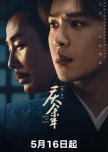
Wacky, suspenseful, humorous
Very often, sequel paled compared to the first season, but not for this drama. It carried on the momentum of Season 1. The drama was somewhat wacky, suspenseful and humorous .The bold and scheming Fan Xian more than matched his antagonists. Returning to the capital, he went on to expose the conspiracy he discovered in ShangJin, capital of the rival state. But the Qing emperor was not impressed and did not seem to pay much attention to the fact that his second son and his sister was amassing huge amount of money from the activities of the State Enterprise (Neiku). A huge conspiracy was awaiting Fan Xian on his arrival.
And yes, Xiao Zhan did not participate in season 2. I think his talent is best placed in drama where his acting skills could be better demonstrated like The Untamed. Yan BingYun was not that type of character for him. Even in Season 1, it was more of a special guest appearance.
Everyone loves a hero who is smart, bold, righteous and uphold justice and this was what this drama presented in Fan Xian. Also, there are great lessons to be learned - if everyone condones a shitty system and not intervenes, bad practices will continue. If you do not like a corrupt system, then do not participate in it. What I particularly like about this drama which set it apart from some other drama was that it was proactive. Instead of some up righteous capable hero who preferred to hide away, he took up his responsibilities and faced it head on and sought to improve the system.
As with the first season, the story was interesting. Suspense and mystery abound. Humour was funny. Cinematography, acting, costumes, backdrop were all great.
The story however were a couple of far-fetched illogical sub-plots. For example, Fan Xian pretended that he faked death because the envoy was ambushed by a Grand Master, in order to avoid punishment. Why would the envoy not already know that the someone had sent a dead squad and a death threat, and that Yan BingYun 'killed' Fan Xian. They were travelling together. Why not simply exposed the second prince? Afterall, Yan BingYun could be a witness and he was one who was stubborn and daring enough to do this for the country. And there was also the letters from the prince as evidence. The writer had a complicated mind and preferred to fabricate lies and cover-up. In this regard, the story in Season 1 was more coherent. Unless the intent was to illustrate how intelligent people could buy into bullshit.
The second was when Ruo Ruo was asked to operate on Fan Xian, when she had never done an operation. Furthermore, what was she supposed to operate on? It was said that poison had affected Fan Xian's organs. What organs? All organs? Sound like a lot to clean up with just one slice made by the emperor.
By this stage, I await future seasons where hopefully a lot of the questions would be answered. Aside from Fan Xian taking over the State Enterprise, I hope they would have a season on how his mother came to this age, where she was actually from and what happened before Fan Xian was born. We also knew from Season 1 that the rival state was actually masquerading an empress dowager - emperor conflict and was staging a fake alliance with Fan Xian - so it would be interesting to see how this unravel in future seasons.
It had been 5 years since Season 1. So, it would be good to rewatch that again if you don't have the best memory in the world as Season 2 made a lot of references to events in the previous season. And hopefully, we do not have to wait for another 5 years to watch Season 3. If this goes on, all the cast and audience would be old by the time the last Season comes along.
Finally, I say, if you had enjoyed Season 1, don't miss out on this Season 2. Enjoy...
Was this review helpful to you?
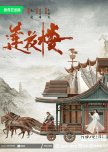
My favourite Cheng Yi's drama yet
I was usually not a fan of Cheng Yi - insofar, the dramas I watched of his are mostly of him portraying depressive characters. This was the first time I see him in a character that was somewhat playful, wickedly humourous and cleverly cunning - a lot more interesting, and I think he did very well. Of course the second lead Joseph Zeng also did very well as his naive side kick.Overall, I rated this drama very highly although I hated the ending. An excellent cast, good looking actors/resses, interesting story, realistic costume and backdrop, good cinematography - it scored well on all the important factors. But like a lot of Chinese drama, it had a bitter sweet ending.
Li Xiang Yi (Cheng Yi) was an outstanding swordsman with a very strong sense of justice and righteousness. Di Fei Sheng, head of the JinYuan sect challenged him to a fight for the top rank in the martial world. Secretly poisoned by Jiao Li Qiao, a psychopath, before the fight, he fell into the river after destroying the ship of the JinYuan sect and was missing.
Ten years later, Di Fei Sheng recovered from his injuries and emerged once again in the martial world. Around this time, someone who earned the title of a miracle doctor known as Li LianHua was travelling around the world in a tower horse carriage. He met Fang DuoBing, a young passionate swordsman who claimed to be the disciple of the missing Li XiangYi. Both had identities that they were either hiding or were ignorant of.
The story was interesting as DuoBing and an unwilling LianHua worked together to uncover a huge conspiracy involving a vanquished kingdom and the bloodline of the current Xi dynasty. It was one of the best detective dramas that I had watched.
Strongly recommend this drama but I must say, you better not be suffering from a depression as the ending was melancholic.
Was this review helpful to you?
Thumbs up all round - intense emotions, humour, lessons in relationships, portrayal of personalities
Three kids lost their mothers through three different circumstances - deaths, abandonment, divorce. The two fathers combined their efforts to be both mothers and fathers to the three. They grew up in the solace of each other and became closer than real brothers and sister. Unfortunately, their biological father and mother came back to claim them when they were teenagers and tore them apart. They re-united nine years laters but became strangers with their own careers and interest. How were they to deal with their new relationship? Watch the drama to find out.This drama takes you through a lot of heart rending moments, especially when the little He Ziqiu (acted by Li Zhen Zhen) looked so adorable and so pitiful when the mother left him. I literally wished I could give him a hug and tell him everything was going to be alright. When one of the fathers started pouring out his grief that outsiders kept reminding him he was not the real father, it was so heart-breaking. I don't cry easily but find myself wiping off tears at a number of moments. And how the siblings and fathers were there for each other at times of trials were heart-warming.
But there were also a lot of short comic relief and hilarious moments like the sister gave each brother a red underwear to wear to their university entrance exams and insisted they showed her they were wearing it for good luck. When the brothers started fighting for the affection of their sister and became jealous when she dated someone else, it was quite hilarious.
This drama was outstanding in portraying different characters and personalities. You also get to see the mums and dads in modern China and their different characters. There was the tiger mum who plans everything for their daughter only to have her daughter secretly defying her plans. There was the scheming mother who wanted to win back her son only to harm him further. There was the self-sacrificing mother who kept her secret from him so that he could have a good upbringing. There was the pair of parents who wanted their daughter to become a celebrity actress only to end up sabotaging her career.
I could see shadows of Chinese mothers I had encountered in these characters.
Then there were the fathers - a motherly loving one, a busy policeman with no time for his family, a selfish money-minded father who turned out to better than expected, a seemingly loving father who actually was a conflict avoidance personality. Of course, there were the minor characters - the nosy and gossipy neighbours.
Aside from the portrayal of different characters and personalities in modern day China, there was also the portrayal of its culture. Money was quite openly discussed - unlike the Anglo-Saxon culture which avoid talking about money. There was also that filial piety culture which made it really difficult for children to shake off the domination of disastrous and troublesome parents - in a western culture, the children likely leave home after 18 and ignore their parents if they are tiresome, or parents might just chase their children out once they become adults.
This drama was also quite philosophical. In the conversations and discussions, there were also lessons of parenting - when to be there for the kids and when to cut some slack, as well as advice for interpersonal relations such as friends, siblings and lovers.
All the actors and actresses portrayed their characters perfectly and the story is very realistic.
For all these, I give this a perfect 10, one of very few dramas that I awarded this.
Was this review helpful to you?
The main male lead acted by Xu Kai was somewhat silly and stupid but ironically he became very outstanding in military strategies and martial arts. The emperor Li Shi Min was the least likeable portrayal of this character of the 3 dramas I watched including The Empress of China, The Long Ballad. He was not as brilliant as history recorded him to be. The lead female character acted by Li YiTong was pretty and intelligent but was always bureaucratic and stony - her character was incredulous - always perfect. The empress was deemed a virtuous empress but she had a vicious side and was obviously protecting her son, the crown prince and his position. She even killed her fourth daughter-in-law because of the setup from the jealous and petty crown princess. The crown prince was like his consort - petty and not quite bright.
There were a lot of comical scenes but yet it was not quite a comedy - there were intense political rivalry, deceit, and deaths. I would say it is a mix genre.
There were an obvious discontinuity in the drama - it seemed some parts were clumsily cut and trimmed.
The costumes were a little lacking compared to the top Chinese dramas and looked like a low budget production. The head wear for the guys were terrible. Overall, I would not rate it as a tiptop drama. But regardless, it is entertaining. So if you are locked down in this pandemic looking for something to do, watching this drama could be it.
Was this review helpful to you?
Overrated?
Frankly, I think this drama is over-rated on Mydramalist. Although the role reversal of men and women in 2 different cities is somewhat creative, the drama is quite cliche. The same old popular tricks in Chinese dramas are played - tripping and falling into the arms of the hero, damsel in distress, rivalry for the throne (in this case between sisters for city leadership). In this drama, the writer dreamed of herself as a character in a script she was writing - this is somewhat similar to being drawn into an earlier era as a different person. And the heroine is absolutely silly.I didn't laugh; I didn't cry; I just endure to find out what would be the ending. Finally after watching episode 12, I skipped to the last 3 episodes and did not feel I missed much.
Also, I am beginning to doubt the rating on Mydramalist on the newly released dramas. Ratings had been quite 'accurate' on the qualities of dramas in the past. But in the recent few months, it has been a wreck. Dramas like Legend of Xiao Chuo was rated at 7.6 when I believe it should be between 8.6 to 9.1 in the same league as Nirvana in Fire 1&2 and Ten Mile Peach Blossom. And this drama is rated at 8.6 when I think it should be in the range of 7.6 to 7.9 - similar to Chang'an Youth, The Destiny of White Snake, Flame's Daughter and Bloody Romance.
The early reviewers have always this unhealthy influence on subsequent reviews at the early stage and bias the rating. I think the reviews following each drama reviews should be listed in reverse chronological order with the latest first, so that the earliest reviewer does not monopolise the first position.
Was this review helpful to you?


