




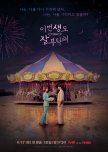
You are more likely to like it better if you did not read the webtoon
8/10 is my rating. This is a 2023 South Korean paranormal romance drama with 12, 70 minute episodes. It is based on a very popular webtoon of the same name.First I provide a synopsis then review.
Synopsis
If you not only reincarnated but were able to remember all your past lives you would excel at many things but feel isolated and lonely. Ban Ji-eum (Shin Hye-sun) considers her "ability" a curse until something haopens in one of her lives that changes her mind. After reincarnating for nearly 1000 years Ji-eum meets someone in her eighteenth life that makes her happy she can remember. When her life is cut short by an accident, she vows to find him, Moon Seo-ha (Ahn Bo-hyun) and make him fall for her again. It is not easy though because Seo-ha experienced a lot of trauma from losing his mother at a young age, the accident and feeling guilty and responsible for Ji-eum's death. So when the ever persistent Ji-eum shows up he is now t sure he wants to entangle himself with this odd woman. But fate and familiarity will have their say and the 19th life may be the one that counts.
Review
When I read some reviews I noticed a trend where those that read the webtoon were, in general, less satisfied with tge direction things took in the last part if the series. This started really well. I loved her confident, spunky, knew how to do about everything personality. Her relentless pursuit of Seo-ha was entertaining. The 2nd couple was also cute. I did not read the webtoon but even for me it felt like they destroyed the story toward the end. Watch it for the interesting story and slow build romance for both couples. It is heavy in the 1st love aspect. It is a deep thinking topic for anyone interested in reincarnation. It also visits several historical points in her flash backs to previous lives. It is a happy ending if you can accept the strange twist it takes.
Spoilers*
My daughter read the webtoon and said that female lead character did not reincarnate due to a revenge arc like was portrayed in the drama but rather she lost her twin sister through murder and was reincarnating to be reunited. So that was very different. In the drama anyone who found out she was reincarnated suffered bad consequences such as strange ailments. It was weird within the drama as there was no sensible reason that would be the case. And apparently that was never a thing in the webtoon., there were no ill consequences of finding out she reincarnated. In the webtoon Ha Do-yoon (Ahn Dong goo) was her reincarnated sister and that was a surprising twist. In the drama. He was not her reincarnated sister he was a man in her 1st life, a side character, and he looked exactly as he did in her 19th life. In her 19th life her sister had reincarnated as Yoon Cho won (Ha Yoon kyung) and she also looked exactly as she did in her 1st life. There is also a character in the drama who murdered Ji-eum in her 1st life, who also was continually reincarnated and remembered his past lives. He got close to Ji Eum and wanted her to remember so they could break the cycle because, in the drama, Ji Eum created the situation where they reincarnated and remembered as she vowed to not forget and get revenge. In the drama Seo ha's mom had reincarnated and was watching over him to remedy an injustice around his attempted murder. So it makes it seem like remembering past lives is common. In the webtoon there was just her and another character. Then, the reincarnated mom, makes a decision to do some ritual somehow the murdery guy knew about where she stops remembering past lives. Main female lead sees her after and it was like, not only did she no longer recall, but her personality was different. Somehow that makes lead girl decide to do the same. Supposedly it fixes all those suffering harm from knowing about reincarnations if you are just willing to do some weird ritual that makes you selectively forget. And lead girl is like yes I struggled to get everyone to like me and accept that I reincarnated but now I just want to forget all about all of that. It was cool she knew so many languages, had so many skills and had historical knowledge, it added a lot of depth to her character but then that is all wiped clean. So then this now different person who somehow remembers how to be an engineer from her 19th life but not where the ring on her finger came from. But all the people she met in her 19th life remember her and all that but now it doesn't make them sick somehow. So then he relentlessly pursues her. But there was this slow build romance to that point with him and the super cool her who could do all these things but niw there is this renewed her that he is determined to make love him. If you can completely suspend your belief that things you experience shape who you are I guess you could buy off on that. Realizing some changes need to be made to adapt it to drama but many just seemed unnecessary.
#ShinHyeSun
#AhnBohyun
#SeeYouInMy19thLife.

Heart warming, happy ending, contract like marriage, cool executive who melts, cinderellaesque
9/10 is my rating. This is a 2023 Chinese Romantic drama with 30, 20 minute episodes.First I provide a synopsis then review.
Synopsis
Qi Si Le (Jade Cheng) feels very fortunate to be a mom even though she is single and has to suffer the brutal corporate world where women in general and single mothers in particular are not held in the highest regard. However, she is willing to do whatever it takes (except compromise her morality) to earn enough to get her beloved daughter, Xuan Xuan (Huang Bo Si), life saving surgery. That is why, when she needs to land an important account, she sets her sights on convincing company President Hao Yu to select her firm for his advertising need. Running into each other outside of the business setting, Hao Yu notices that both children, who are the same age, have a very distinctive broach from their mothers. Not only are they the same age but they also have the same birthday. All the connections make Hao Yu suspect that Si Le and Xuan Xuan have ties to his family. When a secret genetics test reveals that Xuan Xuan’s is indeed genetically related, Hao Yu proposes to Si Le. Although reluctant at first Hao Yu’s generous and gentle actions toward Si Le and Xuan Xuan lead her to think he is being sincere so she ultimately accepts. However not all is as it seems and as real feelings develop it is uncertain if the budding relationship can survive the initial deception.
Review
Overall a heart warming romantic drama. She and he are both single parents which, right there, puts a unique spin on things. There is mystery surrounding the kids and who the other parent is. She is pretty but not beautiful so it has that sort of single girl next door vibe. He is the cold executive who warms up and becomes the perfect, doting husband. Their relationship was founded on deception without true love, but they grow to love each other deeply, so it has similar aspects as a contract marriage. The side characters are interesting and their romances are also compelling. The kids are adorable. She is a jewelry designer so that is a bit of a slice of that profession. I highly recommend it for those that like happy ending romances with a female character who sticks up for herself when it counts. If you like the Cinderella like story of an impoverished single mother climbing out of poverty this is a good one on that front. Cool executive type that melts for main girl this has that. Love triangles of course. Great friendships. It hits a lot of the tried and true tropes that drama fans tend to like.
Spoilers
This had one of the most second hand embarrassment/cringy moments I have experienced in watching over 300 Asian dramas. Hao Yu is rich, handsome and well connected and has many women chasing him for relationships and marriage. Si Le is barely making it and has no power or influence. She is pretty but not beautiful still men are interested but she is not what would be considered a catch because of her status as a single mother and a relatively unstable professional history. When Hao Yui unexpectedly proposed to her she turned him down as she thought it was pity. That made sense and is what any woman with an ounce if pride would have done. Then, when Xuan Xuan takes a turn for the worse, and he is right there caring for and nursing the little girl and comforting Si Le, she suddenly decides he cares about them both a lot. What would have made sense would be to ask if the proposal still stood now that he knows the child had a serious health condition. But no. Si Le decides to do him a favor and agree to be his son’s mother (okay that is a big deal) but announces she will be Hao Yu’s wife as if she is doing something big for him being his wife. And that is not the worst, she makes this announcement with some weird wedding veil she made from something in the hospital and a bouquet that materialized. He had expressed his interest with a trunk full of beautiful roses (which it turns out she was horribly allergic to but there is no way he would know that) and she reciprocates with a table cloth on her head and an I will do YOU the honor. I am still cringing the next day. So that was an unecessary way for her to accept his proposal and detracted a bit for me. I had to get over it and was nervous it would not be good enough to make up for the cringe but it was.
Later, when she finds out he tricked her and did not care for her when he proposed she is naturally hurt and is on the brink of divorcing him. Ok I get it he was a jerk the way he did it back then and deserved her anger but I thought she took it way too far. And she wasn’t believing him but was believing the villainous second guy who she knew had lied and also deceived her. She would believe villian guy over the man she supposedly loved. But the worst of that was when she decided to leave Hao Yui to go to her parent’s house then lies to the children and leaves the little boy behind. He chases the car down the street hysterically and falls in the road. Not only could I not do something that selfish and heartless to a child I loved and was the mother for but I could not be that heartless with any child. It made me mad at her character.
It was crazy and cute how Si Le was able to turn all her romantic rivals into close friends. I have never seen it like that but it was one of the most heart warming and cute aspects of the series.
The show was good enough even with these detractors I highly recommend it.
#PleaseBeMyFamily
#BinbinXie
#JadeCheng
Great Light Hearted Romance, Don't expect complexity, ex fiance annoying
9/10 is my rating. This is a 2015 South Korean romantic drama with 16, 60 minute episodesAt 34 years old, Oh Ha-na (Ha Ji-won) and Choi Won (Lee Jin-wook) have been best friends for 17 years. They have supported each other through a variety of failed relationships and are always there for each other through life's joys and sorrows. Choi Won has harbored a secret love for Ha-na for all this time, but every time he is on the verge of confessing his feelings, something happens. Ha-na was almost married to Cha Seo-hoo (Yoon Kyun-sang) but when he failed to show up to their engagement party, Choi wan was there to pick up the pieces. Years later Seo-hoo shows back up realizing he made a huge mistake and determined to win Ha-na back. Will Choi Won finally have the courage to tell Ha-na his true feelings and will Ha-na ever see him as more than a friend?
I enjoyed nearly everything about this drama. The Choi Won character was adorable. He was always there and generally nice to the lead character. The ending was happy and there were no long separations. Spoiler alert ** The only thing I did not like was when her ex fiance returned and she decided to get back with him after he had left her at the alter. He had no really good reason for leaving her and then not contacting her to tell her what had happened for three years. I did not even find him a compelling character despite having done that as he seemed to have anger issues and was very controlling of her. Her reigniting her romance with her ex fiance lasted through several episodes and that was my least favorite part of the series. I liked how spunky and capable Ha-na was and that was another reason I did not like it when she got back with her ex fiance because it did not fit her otherwise take no prisoners character. It did end with her 17 year friendship with Choi Won developing into the cutest romance and we even got to see not only their marriage but a little bit after. I loved her parents. They were always supportive even whens he was making lame brain decisions like getting back with her ex fiance. Her friends and family were not his fans, despite the fact that he was rich and attractive, and I thought she should have listened to them more. She did become a different type of person when she was with him and tended to shut out her friends. In real life that is a warning if someone does not get along with people you care about and tries to keep you all to themselves. That is one of the stereotypical signs of an abuser. All in all this was a very good, heartwarming story of two friends turned lovers. I could have just done without the whole ex fiance "romance" as he was a very unlikable character. I would have liked second guy to have been the younger guy from the beginning that, it turned out, was only leading her on to secure a permanent job in the company. I found it admirable though that she was able to separate that personal affront from his otherwise being a very capable employee. It showed her true character. I recommend this one to those that like the friend to lover trope and just romances in general. It does not have a lot of plot complexity but that is part of its appeal when I am looking for something more on the light side.

Traditionalist/romantics may not like - those that like "woman power"/don't need a man might
7.5/10 is my rating. What has become apparent in the modern world is how information can be manipulated to suit the agenda of powerful businesses and political figures. Bae Ta Mi (Im Soo Jung) finds herself caught between the ethics of a free public domain and the pressures brought to bear on the companies that provide Internet search services. After dedicating her youth to a company she helped to build to the top search engine, she is chosen as the fall person in a high stakes political inroad. She ouththinks/outsmarts the political players only to lose her job.Distraught over being stabbed in the back by someone she thought of as a friend and mentor she goes to play a video game to burn off some steam. She is very competitive and used to winning at everything so when she loses the game to Park Mo Gun/Park Morgan (Jang Ki Yong), she finds the younger man intersting enough that their encounter develops into a one night stand. Park Morgan sees things differently, he has for once encountered someone he find unforgettable and decides to pursue this elusive woman whose life focus is on her career.
Park Morgan is the CEO of a company that composes music for Video Games, a part of the industry Tae Mi is involved in, so they encounter each other frequently. Meanwhile, the top competitior knows that Bae Ta Mi has the skills they need to beat Bae Ta Mi's former copany in ranking, after all she is the one that has kept the edge over them all these years. Theyg recruit her to help their company surpass and finally come out on top. This is a slice of life in the high stakes world of internet search engines with three women determined to make their mark in the industry. Can modern women really have it all?
Spoilers* I liked this but did not love it. I learned a lof in the slice of life of internet search engine industry - things I had never thought of. I really enjoyed that aspect. What I was watching it for though was the romance and that fell a bit flat. I thought the Park Morgan character was literally the perfect boyfriend/romantic partner but Bae Ta Mi was somewhat flat and cold as a character. He showered her with love and affection and I felt like she spent more time closing herself off emotionally than returning the love he so freely gave her. Others have commented, and I have to agree, that her constant emotional distancing became tiresome and it made me feel sorry for Park Morgan and feel he might be better off without her. I might have felt more sympathy for her character if they had revealed what happened to make her emotionally distant but they never did - she just was. I found the side romances more interesting than the main romance. But even those would get irritating at times. Scarlet (Lee Da Hee) was so insistant she was only a fan of Sul Ji Hwan (Lee Jae Wook) who was a rising actor, but that luckily turned the corner before it became annoying. However, when they finally came together and it turned out he was up for mandatory military service her fatalistic attitude about their relationtship was excessive. Bae Ta Mi's former mentor and major rival, Song Ga Kyung (Jeon Hye Jin), was living a miserable life in an arranged marriage under the thumb of her "evil" mother-in-law. It was apparent though, that her husband, Oh Jin Woo (Ji Seung Hyun), was in love with her and that she was with him. They were actually well suited for each other. He took responsibility for all the heartbreak and bad treatment she suffered and was willing to do nearly anything for her. I really wanted to see the two of them figure it out and reconcile sooner. None of the relationships resolved in anything that was long term. The main leads basically agreed to disagree and just let's see what happens in the future. But they broke up over that before so there was no feeling that anything resolved. Scarlet's boyfriend was still in the military and there were no promises made that she would wait for him. And CEO Song divorced her husband and was traveling and had "disappeared" from public life. There was a Thelma and Louis type ending where all three ride off into the sunset together in a show of strong women/solidarity so I suppose if you were more for the strong business woman element you might find that ending satisfying. I am a more traditional romance/happily ever after ending so I did not find that rah rah go women moment rewarding.

Great slice of life of start up in the high tech world
10/10 is my rating. This is a 2020 South Korean Romantic Drama with 16, 72-85 minute episodes.
As young children, Seo Dal-mi (Bae Suzy) and her sister became separated when their mother and father divorced. Seo-Dal-mi chose to stay with her father in South Korea and her sister went with their mother who remarried. Dal-mi's step-father is a wealthy businessman who was able to provide Dal-mi's mother and sister with wealth and status. Dal-mi's father died on the brink of receiving an investment to realize his dream of the next big thing in the tech industry. Wanting to fulfill her father's dream and show her mom and sister that she made the right choice in staying with her father, Dal-mi strives to make a big splash on the tech scene as the CEO to a start-up. Dreams for a successful start-up business start and sometimes finish with admittance to the start-up groomer, Sandbox, which is South Korea's version of Silicon Valley. Nam Do-san (Nam joo-hyuk) was a "math genius" as a young boy and grew up to be a genius coder. He founded a start-up, Samsan Tech, with two close friends. With his business struggling, Do-san agrees to play the role of stand-in as Dal-mi's first love who she "met" as a pen pal when she needs a date to an important event. The young dreamers apply to Sandbox and all are accepted. The situation becomes complicated when Dal-mi's actual pen pal also comes into her life and discovers he has feelings for her. Will these young dreamers realize their dreams and overcome nearly impossible odds to form a successful start-up. Who will Dal-mi end up with, the man who wrote her letters and supported her in her time of greatest need, or this "new" love that is the perfect partner for her aspirations?
Spoilers* At the start we are introduced to Dal-mi's father and it was a sad moment when he died after just realizing his dream of getting investors to start a business. Young Dal-mi had elected to stay with her father when her mother and father divorced. The relationship between the Dal-mi and her father was very heartwarming. Her father's mother, the grandmother, was also a very compelling character and it was understandable why so many people were drawn to her. I love how the grandmother adopted this orphaned young man in spirit and took care of him despite his bristly exterior. The grandmother also took such careful care of Dal-mi not just physically but emotionally after her father died. It was an interesting slice of life to see what a technology based start up might go through trying to get their idea(s) off the ground. The friendships, romances, and just the character development was all very well done and interesting. I really liked 2nd guy but I did not feel too bad for him to lose the girl as it had taken him too much time to realize he liked her and, even then, he was too slow to show her how he felt. I also liked him to the extent that I was glad she didn't wind up with him because she would never have loved him as much as he loved her. The 2nd guy could have been unkind and kept Do-san and Dal-mi apart by withholding information but he cared enough about both that he told them despite it being against his interest to do so. I liked Nam Joo-hyuk in "Weightlifting Fairy Kim Bok-joo" and "The Bride of Haeback" he is a very diverse and talented actor. Suzy Bae is just incredible. I first saw her in "While You Were Sleeping" and loved the role she played as a very vulnerable person troubled by visions she could not control. There was so much chemistry between the two leads and they looked very good together. It definitely made me root for their relationship. It was interesting to observe how each team member brought talent to the table and how they moved so many concepts into developed ideas into reality. I highly recommend this and would readily watch it again in the future. One of my new favorites.
Could have been good - but failed
6/10 is my rating. This is a 12 episode 2018 Korean drama that rates high on most sites and with time travel, romance, mystery and suspense would seem to be a good combination but it just didn't work for me. The male lead Joon-Woo played by Kim Hyung-Joong moves into the basement of a building where everyone sort of knows everyone and everyone's business. The landlady, Sun-A (An Ji-Hyun) is working herself to death to keep up with the interest to loan sharks from loans her deceased father took out on the building. She is desperately trying to keep the building in memory of her father.Spoiler 🚨 There were several elements of this that did not work in my opinion. They sort of went from being indifferent to each other to being in a romance - I guess - although I really wasn't seeing the connection between the two. There were others in the movie who also had special abilities but they did not spend much time on those stories which was a bit disappointing. There were also grim reapers whose job it was to remove those with special powers before they caused damage by using their powers in the world. It had a lot of interesting elements that could have made for an interesting and exciting story but none of it held together very well for me. I was even bored in some parts and might have quit watching all together if it would have had more than 12 episodes.

A Beautiful Story
10/10 is my rating. This is a 2009 South Korean television drama that ran for 16 episodes (~60 minutes/episode). The female lead, Ko Mi-Nyeo (Park Shin-Hye) is part of an orphaned nearly identical twin pair. Both grew up in an orphanage but then pursued very different paths, she studied to be a nun and the brother pursued a career in music. The brother, Ko Mi-Nam is about to realize his dream to be a Korean pop star after winning a vocal audition that gives him the right to join the Korean band, A.N.Jell. To prepare for his rise to fame he gets plastic surgery which is unfortunately botched to the point he has to have it re-done. Not wanting to miss his opportunity with A.N.Jell he works through his manager to convince his sister to stand in for him. She must pretend to be her brother for the month it will take for him to get new surgery and recover. Slowly "Min-Nam" starts to win over the band members and you get to see through her eyes the different aspect of each Kang Shin-Woo (Jung Yong-hwa) is very kind and gentle, Jeremy (Lee Hong-gi) is very happy and always looking to have fun and celebrate and Hwang Tae-kyung (Jang Keun-suk) is the arrogant lead singer who is the most difficult to win over.Spoiler 🚨 If you have seen the drama "Bromance" there are moments in this that are reminiscent of that. Embarrassing and cringy as you see how uncomfortable the characters are being attracted to someone that they think is a guy when they are heterosexual. There are some laugh out loud funny moments and I think I laughed more in this one than in the others I have watched thus far. I loved all of the characters in this and was sad when it ended because I so thoroughly loved the story and being immersed in the world. I enjoyed the music and looking it up after found that many of the lead characters are actually very talented, award winning, musicians. I enjoyed it the entire way through and it also ended well. This is in my top all time list and I will likely watch it again at some point.
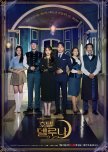
A magical show with lots of exciting twists
9/10 is my rating. This is a 2019 South Korean tv drama with 16, 90 minute episodes. Hotel del Luna is a hotel located “in” Seoul. It is not visible to just anyone and undergoes a complete transformation when night falls. Kang Man-wol (Lee Ji-eun) became the “boss” of the hotel when she was transporting some souls of people she killed to the hotel in an effort to make up for her actions. She is unable to find it until she drinks a mysterious liquor which curses her to be the proprietor of this hotel for ghosts. She had run the hotel for over 1,000 years when a human wanders in which is normally a death sentence. However he strikes a deal with her to give her his son 20 years in the future in exchange for his life. Ku Chan-Seong (Yeo Jin-goo), was raised by his father to avoid Man-wol and her employees and even lives outside of South Korea until he deems it safe to return. Avoiding his fate may not be that simple and he soon finds being the hotel‘s new manager may be a job he cannot refuse.Spoiler 🚨 This was written by the Hong Sisters who have written other good dramas like ”Master’s Sun” and ”You are Beautiful“. They definitely know how to tell a good story. It is somewhat reminiscent of ”Goblin“ In that it has a delightful blend of spiritual and magical. It also has magical and ghostly elements like ”Master’s Sun”. I liked all the main characters and thoroughly enjoyed getting to know each one and their back story. It was like ”Beauty and the Beast” in the way their relationship was transformative. Both leads were really gorgeous and their chemistry was really amazing. I would have given an even higher score but I’m not one that likes sad endings. It will be sad for some but for others it will not be. A lot depends on your beliefs and your own personal philosophy. If you like paranormal with twists of magic then you will really enjoy this one. I think everyone would enjoy it most of the way through. If you do not expect happily ever after it is easier to understand.
Good but if sad is not for you avoid this one. If you don't mind or like sad this is good
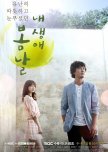
6/10 is my rating. This is a 2014 South Korean television drama series with 16; 60 minute, episodes. It is known by the alternate titles “The Spring Days of My Life”, “The Spring of My Life” and “Springtime of My Life”.Lee Bom-yi (Choi Soo-young) was sickly most of her life until a miracle happens for her and she receives a heart transplant. Well aware that the gift she received was likely from someone else’s tragedy she vows to do whatever she can to honor her donor’s gift of life. Dr. Kand Dong-wook (Lee Joon-Hyuk) falls in love with the kind and brave Bom-yi and they are set to get married. He had a one sided love for his brother’s wife and was heartbroken when they announced their engagement. He never told his brother but it drove a wedge in their relationship. Dong-wook knows Bom-yi has his late sister-in-law’s heart but decides not to tell her for fear she would seek out his brother and become his brother’s wife out of a sense of duty. Fate and cellular memory (a phenomenon where a recipient takes on some mannerisms and feelings of their donor) seem to have other things in store for the trio. Bom-yi winds up meeting the widower Kang Dong-ha (Kam Woo-sung) and his two children when she travels to the island where her donor passed. Her mission was to honor her donor but, while there, she finds herself drawn to the widower and his children and he, for the first time in years, sees in her someone he may be able to love again. Neither know, at that time, their connection through Dong-wook nor do they know the connection through Bom-yi’s heart. Is it a strange twist of fate that Bom-yi and Dong-ha keep running into each other even when, after finding out they are soon to be family, they vow to stay apart. Or is something, on a cellular level, drawing Bom-yi to the man her heart once loved? Is Bom-yi and Dong-work’s love strong enough to withstand love that exists at a cellular level?
Spoiler 🚨 Let me start by saying this is sad. The premise is good and interesting. I really like Dr. Kang and the first part of this sad mess is when he loses her. I never stopped liking him nor feeling sorry for him. I really liked all the characters. I thought there was great character development and it was all very believable and real. The acting was outstanding by the actors of all ages. But it ended very sad. I kept hoping it would not end sad, there were so many other possibilities but it did. And it took every good feeling I had about the movie and crushed it. If you do not mind sad stories or even prefer them then you might disagree with me and rate this one higher. If you do not like dramas that end sad and are laced with sad moments then avoid this. There are too many feel good dramas out there to waste hours of your life in a story that ends tragically. I would not recommend this one.
If you liked “My Shy Boss” This has similar elements
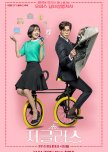
8.5/10 is my rating. This is a 2017/2018 romantic comedy television series that has 16, 60 minute episodes.Jwa Yoon-yi (Baek Jin-hee) prides herself on being the perfect secretary even though her boss is too busy cheating on his wife to notIce. Like every secretary who tries to have their own life around juggling every aspect of their boss’s, she looks happy on the outside but is stressed and miserable on the inside. When scandal breaks out around her boss, Yoon-hi is let go. Nam Chi-won (Choi Daniel) arrives at the company at about the same time as a super star new Director. While he is very skilled in business he is totally lacking in social skills which earns him a lot of enemies. One of those enemies, knowing Yoon-yi is desperate to get back to work pulls strings to bring her back on but as Chi-won’s secretary. He figures he can plant a spy to bring Chi-won down. But he does not know Yoon-yi and her ability to make her boss shine. Hwangbo Yul (Lee Won-keun) is a 3rd generation chaebol who seems to have everything except many people in his life who truly care. He does not take work seriously and cannot keep a secretary because he is immature and unreasonably demanding. He has decided that Chi-won is cool and would make a good Hyung. Yul is also intrigued by Chi-won’s secretary and in lieu of luring her away accepts her recommendation for a secretary who is Wang Jeong-ae (Kang Hye-jung) a single mother who was abandoned by her philandering husband and left penniless and desperate for a job. The problem is Yul has criteria for his secretary that would exclude Jeong-ae so she has to pretend to be her younger sister and not a separated housewife. Will this one of many secretaries be the one that makes Yul grow into the successful business person hiding deep inside?
spoiler alert.
I decided to watch this one because I had finished “My Shy Boss” (MSB) and was looking for other drama that had a male lead that was really shy or had similar personality issues. This one was recommended as having a cold and not very socially adept boss that was similar to the boss in MSB. Because of that I was a little concerned that the two dramas would be too similar. There was of course a love triangle in this, as well as a friend group, another side couple, and a Bromance or two. I like all those elements and really can’t get enough of them played out in many different ways. What reduced my enjoyment about three quarters of the way through was a romance that was juvenile and over-the-top on cringe factor for me. I know that people can be sort of silly when they first discover they love each other but the age of the people in this just made that behavior seem out of place and it broke the fourth wall for me. Still if you like my shy boss I would say that this parallels in enough elements that you would likely enjoy this as well. Of the two I like my shy boss just slightly better but this one was a very close second for that type of movie. I recommend this for a romantic comedy that has workplace issues and a slice of life for the way secretaries supports high-level executive positions.
Great romance with lots of humorous moments
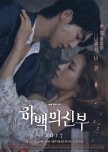
This is a 2017 South Korean fantasy romance drama with 16, 60 minute episodes.So-ahs’ (Shin Se-kyung) life isn't quite going to her plan. She is a struggling psychiatrist with a mountain of debt. Just when it seems things cannot get much worse her path crosses with the narcissistic water god Ha-baek (Nam Joo-hyuk). Ha-baek is visiting the mortal world to claim stones from other Gods that will secure his royal throne. So-ah is the descendant of a person who promised to serve the Gods in perpetuity and since Ha-baek has lost his power he intends to cash in on her ancestor’s promise. So-ah is a psychiatrist and has seen more than one patient with delusional beliefs and thinks Ha-baek is the same that is until events unfold that temporarily restore Ha-baek’s power and she is unable to deny the truth of who he is. Her destiny is to be Ha-baek’s bride and this sets her in the path of other gods who have come to Earth. The wind god Bi-ryeom (Gong Myung), the water goddess Mu-ra (Krystal), and the semi-god Hu-ye (Lim Ju-hwan) have no intention of simply giving the stones to Ha-baek and do not hesitate to put So-ah in the middle of their games.
Spoiler 🚨 I really liked how narcissistic and arrogant the water god was and how So-ah is not all that impressed and, in fact, thinks he might have some mental health issues (delusions of grandeur and all that). Seeing this God turned human struggle through the many issues humans must overcome (such as food and shelter) is very amusing. There is a loneliness to So-ah and, as her relationship develops with Have-Baek you can see how each compliments the other. He simply cares about her and while she has some other people that care about her he goes that extra step and takes care of her not in a monetary sense but in a feeling protected sort of way. I liked the Demi god too and actually felt really angry at the Gods at times for the way they treated him. The side romance between the other Gods was really cute too. This kept my interest the whole way through as I wanted to see all of the characters have good outcomes. There were a few scenes where the special effects were actually a bit horrible. In this one So-ah is thrown off a building and winds up passing a window but rather than flailing and twisting and turning she is sort of going straight down like an arrow. It makes it almost comical. In another scene, So-ah and Ha-baek are swimming underwater in what is supposed to be an emotional scene but it is so obvious the they are pretending to swim against a green screen because their clothing and hair is not swishing and swaying like it would be in water and the water is not throwing streams and bubbles like it is when you see people actually swimming. It turned what could have been a touching scene into a bit of a silly moment. I was a bit disappointed that So-ah got this wish and it seemed she could have wished for anything but her wish was really very minimal. I would have wished for something like being a Goddess so I could enter the God realm and be with him indefinitely. Or wish that you could be with him until he ceased to exist. To only wish to be together as long as you, the human, lived was a bit disappointing. And it made me feel sad for Ha-baek who would have to see her age and die and then live forever without her. But, they do end up together and I would have been really disappointed if they had not. Overall this is a good supernatural type romance with a lot of compelling elements.
A little shy of all wrapped up
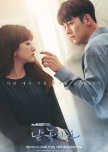
This is a 2O19 South Korean tv drama with 16, 60 minute; episodes.Go Mi-ran (Won Jin-ah) Is a fearless “stunt“ woman working for a variety show. The very talented director of the show, Ma Dong-chan (Ji Chang-wook), is always coming up with fresh ideas that have won him acclaim and kept his projects at the top of the ratings. His next big venture is “the Frozen man” and, since it is risky, he plans to be one of the subjects but they need a 2nd and , specifically a female, to round the show out. While the Director does not. Know her at all, his assistant is aware of Mi-ran’s willingness to do almost anything to earn money to help support her family while attending college. However, this is even a bit too far for Mi-ran and she originally says no. She changes her mind when her long term boyfriend cheats on her and she finds out that if the experiment is successful it may help people with health conditions - people like her beloved younger brother. It is, after all, only for 24 hours and it is a good cause that pays well. Things go wrong during the experiment and those that were only to be frozen for 24 hours wind up frozen for 20 years. The world and everything in it has changed in 20 years and they both experience a side effect where they must keep their body temperature at 31.5 °C (max. 33 °C/88-91 °F) in order to survive. With so many bonding these two together will circumstances drive them apart?
*spoiler 🚨 I liked the beginning a lot as it was fun to watch Mi-ran doing various experiments and what the Director would come up with. About 3/4 of the way through it felt slow and I was having a hard time continuing to watch. The concept of being frozen and response of all around them was intriguing but there were not enough plot elements to keep it interesting throughout. I also was disappointed that they were not married or at least a strong commitment by the end. With talk throughout of bad marriages I do not know if one of the writers was jaded that way or if some are embracing the idea that marriage does not need to happen for Happily ever after and I do not agree. I was glad they found a way to stay together but more formalized would have been good. Enjoyable but not one of my tops.
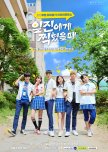
Lighthearted and predictable but in a good way
My rating is a 9/10Let me start by saying I didn't read the webtoon, I did not watch the series and I have no plans to watch or read more than just this one movie. Why? Well, I heard that the subsequent seasons are sort of like the ever after part of Cinderella and I prefer to stop at happy. I don't need to see the soap opera. And I think, based on other reviews I have read, that if you what this all by itself, and enjoy light easy romance then you might like it Dig deep, watch the others and you might like it less.
I really enjoyed Best Mistake 1. This is exactly the kind of light, fluffy teenage romance that I can sit down and enjoy without needing it to be complicated. It is predictable, but honestly, that isn't a criticism when you're a serious fan of romantic tropes. Sometimes you know exactly where a story is going, and you still have a great time getting there.
I especially liked the premise. Yeon Doo (female lead) picks a random boy's picture to use as her fake boyfriend in an attempt to get someone who won't leave her alone to back off. Unfortunately for her, she happens to choose Hyun Ho (male lead), one of the most popular and intimidating boys at school. He is understandably furious when he discovers what she has done, but what starts as an annoyance gradually turns into something neither of them expected.
I loved Hyun Ho. He has that classic tough-on-the-outside, soft-and-warm-on-the-inside personality, and I thought it worked particularly well here. I also liked that it took him some time to realize that his feelings for Yeon Doo were becoming genuine. It made the romance feel more natural than if he had immediately decided he was in love with her simply because she was the female lead.
I also really liked Joo Ho (second male lead). He was cute, sweet, and believable enough as an alternative that I could genuinely see Yeon Doo ending up with him if Hyun Ho weren't around. That's what I want from a second male lead. I don't necessarily need to want him to win, but I want to understand why the female lead could choose him. He accomplished that.
I thought the drama also handled the teenage relationship appropriately. By the end, Yeon Doo and Hyun Ho are together in a way that feels like two teenagers actually being together—holding hands, kissing, going on dates, and enjoying one another's company. It doesn't turn into some overly sexualized version of teenage romance, which I appreciated.
There is also just enough drama to keep things moving without turning this into something heavy. The school setting, friendships, misunderstandings, jealousy, academic pressure, and romantic rivalry all fit nicely into the story without overwhelming the central relationship.
Other viewers have similarly described the first season as cute, light, and enjoyable, with several noting that the youthful romance and familiar school-drama tropes are a big part of its appeal. Some reviewers did find the pacing and love triangle underdeveloped, but those weren't major problems for me.
Overall, this was just a fun watch. It doesn't pretend to be something profound, and it doesn't need to be. If you like school romances, fake-dating situations, bad-boy-with-a-soft-heart characters, second-lead competition, and predictable romantic tropes, this is exactly the kind of drama that can be a lot of fun.
Spoilers
I loved the basic setup of Yeon Doo choosing Hyun Ho's picture as her fake boyfriend. It is such a ridiculous teenage solution to her problem, which is exactly why it works. Of all the pictures she could have chosen, she somehow picks the picture of the school's intimidating troublemaker. And then she has to deal with the fact that the person she pretended was her boyfriend actually knows about it.
Hyun Ho's initial reaction was completely understandable. He didn't ask to be involved in her scheme, and suddenly everyone at school thinks he is dating her. But I really liked watching his attitude toward her change gradually.
He didn't just see her picture and suddenly fall head over heels. At first, he was irritated by her. Then he became curious about her. Then he started caring about her. Eventually, he realized that he actually liked her. That progression made his feelings much more enjoyable to watch.
And I really loved the way Hyun Ho's tough exterior slowly gave way around Yeon Doo. He could be intimidating and rough with everyone else, but there was clearly a much softer person underneath. Especially when it came to her. That is one of my favorite romantic tropes when it is done well—the guy who looks like trouble but is actually incredibly protective and caring toward the person he loves.
I actually preferred Hyun Ho's blonde hair. I know the black hair was part of his character development, and I understand why they changed it. But aesthetically, I thought he looked better blonde. I also understand that, culturally, bleaching or dramatically dyeing your hair when you're an ordinary student can signal rebellion in a way that is somewhat comparable to how tattoos once carried a stronger rebellious association in American culture. So the hair change made sense for the character even if I personally preferred the original look.
Joo Ho was also exactly what I want from a second male lead. He wasn't so wonderful that I was desperately hoping Yeon Doo would dump Hyun Ho, but he was genuinely likable. I could see why she would like him. If Hyun Ho weren't in the picture, Joo Ho would have been a very believable choice for her.
That is what makes a good second male lead for me. He should be a legitimate possibility rather than someone the audience immediately dismisses because obviously the female lead could never choose him. Joo Ho gave the romance that extra little bit of tension without making me unhappy about the eventual outcome.
One of my favorite storylines involved Yeon Doo's wish for Hyun Ho. Instead of asking him to do something romantic for her, she wanted him to do something that would actually benefit himself—improve his grades.
I thought that was really sweet because it showed that she wasn't just trying to change him into the kind of boyfriend she wanted. She genuinely wanted something good for him.
And the situation that followed was also very believable. Hyun Ho goes from being a student who normally gets terrible grades to suddenly getting a 100, so naturally the teacher suspects that he cheated. I actually liked that. It would have been completely unrealistic for the teacher to simply say, "Congratulations!" when his performance changed that dramatically overnight.
But then Yeon Doo gets the opportunity to stand up for him, and I thought that was one of the sweetest moments between them. She wasn't just defending her boyfriend because she wanted to protect him. She believed in him and wanted other people to recognize that he was capable of more than the reputation he had developed.
That also ties into what I liked about their relationship overall. They weren't simply attracted to each other. They gradually started seeing qualities in each other that other people overlooked.
Hyun Ho wasn't just the scary, rebellious guy everyone assumed he was. Yeon Doo wasn't just the quiet, studious girl who needed to be protected. They each got to see more of the person underneath the reputation.
I also really liked where they ended up. The story doesn't suddenly turn them into some overly mature adult couple. They're teenagers. They're dating. They hold hands, they kiss, they go on dates, and they're happy to be together. That's enough.
I actually appreciate that more than some American teen movies that seem determined to make teenage relationships much more sexually explicit than necessary. This felt appropriately youthful and innocent while still allowing the romance to be satisfying.
And yes, it was predictable. I knew where this was going. I knew Yeon Doo and Hyun Ho were going to end up together. I knew Hyun Ho was going to fall for her. I knew Joo Ho wasn't ultimately going to win.
I didn't care.
If you enjoy romantic tropes, predictability isn't automatically a flaw. Sometimes the fun is watching the story hit all the beats you came for. Best Mistake 1 does that very well.
There are certainly places where the story could have had more depth, and I understand why some reviewers found the love triangle underdeveloped or thought the pacing could have been better. But those weren't deal-breakers for me. This was never something I was watching because I wanted a complicated examination of teenage psychology. I wanted a cute romance, and it delivered exactly that.
For me, Best Mistake 1 was light, sweet, predictable, and fun. Sometimes that is exactly what I want.

Too Heavy for a Movie would be a better documentary
My rating: 6/10The World of Love just wasn't my cup of tea.
Going into this, I expected something much lighter. From the synopsis and the way the movie was presented, I thought I was going to get a funny, spunky coming-of-age story centered around a young woman figuring out love and relationships. Instead, this is a much more serious film about sexual abuse, trauma, intimacy, and the different ways people respond to painful experiences.
That isn't necessarily a criticism of the subject matter itself. I just didn't particularly enjoy the way the story unfolded. The coming-of-age romance I was expecting really wasn't there, and the romantic elements weren't strong enough for me to feel like I got the kind of emotional payoff I usually look for.
The movie does have some interesting things to say about how people judge women based on their relationships and sexual behavior. Joo-in's (main female lead) reputation for dating multiple guys could easily lead people to assume that she was simply "easy," but the story gradually reveals that her relationship with intimacy is much more complicated because of what happened to her. I thought that was an important distinction, and I appreciated that the movie didn't simply accept the assumptions other people made about her. Due to that though I all the more wanted to see her in a relationship where someone cared about her enough to work through that with her.
But ultimately, I didn't find the movie particularly satisfying. It is much heavier and more introspective than I was expecting, and I prefer stories that give me a stronger emotional resolution at the end. I don't need every movie to have a perfectly happy ending, but I do want the major emotional threads to feel like they have actually gone somewhere.
This one left me feeling like the story showed me Joo-in's struggles very clearly but didn't give me enough of an emotional payoff for those struggles. I can see why other viewers and critics responded strongly to the film's themes and its portrayal of trauma and resilience. It has clearly connected with people, and Seo Su-bin's performance received considerable praise.
For me, though, this is a case where I can appreciate what a movie is trying to say without particularly enjoying watching it. I wouldn't recommend it to someone looking for the type of coming-of-age romance or lighter character-driven story I initially thought this was going to be.
Spoilers
The biggest disappointment for me was that I kept waiting for the story to become more of a romance.
I thought Joo-in was going to be this funny, unpredictable, spunky character who would eventually find her way into a meaningful relationship. Instead, the story became much more about understanding why she behaves the way she does and how her past sexual abuse has affected her relationship with intimacy.
That part was actually interesting. Her difficulty with intimacy is connected to her trauma, and her relationships don't necessarily represent the carefree attitude that other people assume they do.
I kept wondering if Su-ho (classmate and petition organizer) might eventually become the person who understood that. It felt all set up for that the way they bickered because that often changes to interest then characters often catch feelings.
Joo-in is so angry with Su-ho because of the petition, particularly because of the way the petition describes the consequences of sexual abuse. I thought there was an interesting possibility there. Maybe he would eventually understand why she objected to it. Maybe he would realize that her reaction wasn't because she didn't care about victims, but because she was fighting against the idea that what happened to her had destroyed her.
I even thought they might eventually become romantically involved. I thought Su-ho might be the person who finally looked beyond the rumors and the surface-level version of Joo-in and understood what was actually going on with her.
That never really happened.
And that was disappointing because I felt like the story was setting up the possibility of that kind of emotional connection.
The petition itself becomes especially interesting when you look at Joo-in's character arc. She has such a strong reaction to the idea that sexual abuse destroys a person. I think she desperately wants to believe that it didn't destroy her. She wants to believe that she is still completely in control of who she is and how she lives.
But then the movie spends so much time showing us the ways in which the abuse has affected her.
Her relationships with men are complicated. She wants intimacy but has difficulty with it. She seems to want a boyfriend, but she doesn't seem capable of establishing the kind of emotional connection that would lead to the relationship she actually desires. Her behavior makes more sense once you understand what happened to her, but that understanding doesn't make the situation any less sad.
And that's where the ending really lost me.
I don't like "soft" endings. I prefer endings that are well thought out and actually wrap up the major emotional threads of the story. I don't need every character to get a perfect happily-ever-after, but I do need to feel that the story has brought its central emotional journey somewhere meaningful.
There was a positive consequence to Joo-in finally revealing what happened to her. Other people were encouraged to acknowledge and expose their own experiences with abuse. I appreciated that. It showed that her willingness to speak could help other people find their voices.
But what about Joo-in herself?
She still doesn't have a boyfriend, even though she seems to want one. There isn't really anyone who comes along and truly understands her. We don't get enough of a sense that she has overcome the barriers that have made intimacy so difficult for her. The movie gives us the possibility that she may eventually heal, but it doesn't give us enough of that healing to feel like a resolution.
That's what bothered me most. The entire story showed us Joo-in's struggles, but there wasn't enough emotional payoff for those struggles.
In a strange way, the movie almost proves the point that Joo-in was fighting against. She didn't want to believe that sexual abuse could destroy something in a person's life, yet the story shows us how profoundly it has affected her ability to have the things she seems to want. She wants connection. She wants love. She wants intimacy. But by the end, she hasn't really gotten those things.
I didn't need the movie to suddenly pair her off with Su-ho and declare everything fixed. That would have been too easy. But I did want some indication that Joo-in had moved forward personally, not simply that her disclosure had helped other people.
That distinction matters to me. Helping other people is a wonderful outcome, but it doesn't substitute for resolving the central character's own emotional journey.
So while I understand why the movie's ending was viewed by others as hopeful, I didn't experience it that way. To me, it felt unfinished.
And that ultimately sums up my reaction to The World of Love. I can recognize the thought and sensitivity behind the story, and I understand why it has received so much critical attention. But I didn't particularly enjoy it, and I didn't get the emotional resolution I wanted from it.

A Parody not intended to be a Parody
My rating 7.5/10Review
If you enjoy what I would call the modern, streaming-platform interpretation of a South Korean romance, then this might be for you. If you're a longtime K-drama fan looking for the qualities that made the genre so beloved, I think you'll find this pretty disappointing.
To me, Spring Fever feels like another casualty of the recent trend of international streaming platforms trying to recreate the K-drama formula without fully understanding what makes it work. It's as if someone studied the tropes, character archetypes, and story beats, checked every box, and still managed to get almost all of them just slightly wrong. The result feels less like a classic K-drama and more like an imitation of one.
I generally don't love shorter-format dramas, although they certainly can work. Here, though, the pacing felt off in the opposite direction. The story had essentially resolved the major developments, yet there were still several episodes left, making it feel like the drama had run out of meaningful things to say before it actually ended.
More importantly, it lacks the complexity that makes so many Korean romances engaging. The characters never develop enough depth to become genuinely compelling, the emotional moments rarely feel earned, and nearly every trope feels inserted because the script thinks it should be there rather than because the story naturally arrives there.
There were honestly times when I couldn't decide whether the writers were intentionally making a parody of K-drama tropes or simply executing them poorly. The dramatic catches, the prolonged staring contests, the perfectly timed romantic moments—they happened so often, and with so little subtlety, that I genuinely wondered if the drama was poking fun at the genre. I was several episodes in before I finally concluded that wasn't the intention. They were simply trying to play the tropes straight, and for me they just didn't land. That ultimately sums up how I felt about the entire drama. It felt like it understood the checklist of what goes into a K-drama but not why those elements became beloved in the first place. Instead of feeling heartfelt or charming, many of the familiar moments came across as awkward imitations of much better dramas.
I also continue to dislike the recent trend of writing female leads who are overly bossy, excessively independent to the point of pushing everyone away, and almost impossibly unforgiving. That's simply not an attractive personality to me, regardless of whether it's a male or female character. Likewise, the male lead spends too much of the early story acting so exaggerated and awkward that it takes far too long to become invested in him.
Even the romantic dynamics never really come together. The love triangle doesn't work because the second male lead is never presented as someone worth rooting for, so there is never even a hint of second lead syndrome. The second couple also falls flat because the female half of that pairing is so consistently rude and petty that it's difficult to invest in their relationship. Even the older romance struggles because the man spends so much time treating her poorly that her developing feelings for him never feel particularly convincing.
I wouldn't recommend this to anyone. There are simply too many genuinely great K-dramas available. I don't regret finishing it, but had I known beforehand how this drama approached its characters and storytelling, I would have skipped it entirely.
Other reviewers also frequently pointed to the uneven pacing, inconsistent tonal shifts between comedy and romance, reliance on familiar tropes, and underdeveloped supporting characters. While some viewers enjoyed the lighthearted atmosphere more than I did, I found those problems overshadowed anything the drama did well.
Spoilers
I never connected with Yoon Bom (female lead) early on. Her gloomy, self-imposed isolation and the speech she gave herself about becoming withdrawn just didn't make much sense to me. I completely understood why she arrived at her new school not wanting to trust anyone. After all, none of the teachers or administrators at her previous school had supported her during the incident that upended her life, so it made perfect sense that she'd be guarded and reluctant to open up. The problem is that the writers took that understandable caution and pushed it into something much stranger. Instead of simply being quiet and withdrawn, they wrote her as oddly awkward and eccentric in ways that felt more forced than believable. I know they were aiming for comedy, but for me it just made her character feel weird rather than sympathetic.
Likewise, I struggled with Seon Jae-gyu (male lead) in the opening episodes. I understand the writers were aiming for comedy, but his exaggerated "superhero" moments simply weren't integrated well. One moment the drama would be relatively grounded, and the next he'd be flying through the air like Superman. Slapstick comedy absolutely can work, but it requires careful setup and consistency. Here, it mostly came across as cheesy rather than charming.
I understood why Bom initially assumed Jae-gyu was some kind of gangster because of his tattoos. Given South Korean cultural attitudes toward tattoos, that first impression made sense. What didn't make sense was the entire town continuing to believe that for years despite seeing him devote himself to raising Han-gyeol. Someone who sacrifices that much for a child would naturally earn a very different reputation over time.
More importantly, this contradicted how the townspeople themselves were written. One of the things I actually liked about the community was that, despite all the rumors surrounding Bom when she arrived, they got to know her for themselves instead of judging her based on gossip. They accepted her because of the person they actually met. That was part of what made the townspeople so charming. If they could extend that grace to a complete stranger, it made no sense that the very same people would spend years refusing to recognize the character of a man they had watched lovingly raise his nephew. I think the writers were trying to make Bom the one person who truly understood him, but in doing so they undermined the consistency of the entire town.
Choi Yi-joon (second male lead) never became a sympathetic rival for me. He often bordered on being more of a villain than a believable second lead, so the romantic tension never really worked. Rather than creating a compelling love triangle, he mostly came across as someone I simply wanted out of the story. One of the biggest disappointments was that there was never even the slightest hint of second lead syndrome. The writers completely undermined that aspect of the romance by making him so unlikeable from beginning to end.
Ironically, my favorite character was probably the dog. That's often true for me, but in this case the dog genuinely made several scenes more enjoyable. Whenever I found myself getting frustrated with the writing, the dog's presence usually managed to make those moments more watchable.
The storyline involving Bom's mother suddenly deciding to become protective of her daughter was one of several moments that made me think, "Oh, come on." She had never truly changed as a person and still cared more about avoiding controversy than acknowledging the abuse her daughter suffered. Because of that, her sudden possessiveness and stalking behavior felt completely unearned.
The secondary romance between Seon Han-gyeol (nephew) and Choi Se-jin (second female lead) never worked for me either. She was consistently rude and dismissive toward him, to the point where I genuinely felt sorry for him. Rather than coming across as playful banter or a tsundere personality, it simply felt emotionally abusive.
The sporting event storyline was another low point. I never fully understood why Bom became so determined to pressure Jae-gyu into helping her win. She claimed it was for the elderly woman who wanted a medal, but that motivation never felt convincing, and the drama hinted at deeper reasons without ever clearly explaining them. The end result was Jae-gyu breaking a promise to Han-gyeol in order to prioritize Bom, which didn't sit well with me.
Se-jin's entire conflict also frustrated me. Her resentment toward Han-gyeol boiled down to the fact that he performed slightly better than she did. She constantly pressured him, making him feel guilty for succeeding, and when he intentionally let her win, she became angry because she thought he pitied her. The writing seemed to be aiming for a tsundere dynamic, but instead she just came across as petty and mean-spirited. Other reviewers often described her as immature, but I thought the writing pushed her well beyond that into simply being unlikeable.
Even the older romance failed to land for me. The older man spent so much of the series treating the older woman poorly that I never found myself believing her feelings developed naturally. The drama seemed to expect the audience to overlook his behavior because romance was the destination, but for me the emotional journey simply wasn't there.
I was relieved that the storyline involving Han-gyeol's biological mother didn't go the predictable route. I was worried the drama would have him immediately believe she had always wanted him while painting Jae-gyu as the villain who kept them apart. Thankfully, the truth came out. However, I really wish the drama had followed that revelation with a heartfelt conversation between Han-gyeol and Jae-gyu. After everything his uncle sacrificed—not just raising him, but raising him exceptionally well—he deserved genuine recognition and gratitude.
Then, of course, the drama included the obligatory separation trope. I never felt it was necessary. It seemed to exist solely so Bom could further establish herself as a teacher after clearing her name. While it gave her professional closure, I don't think the romance benefited from the separation at all.
The proposal scene was actually quite sweet until Bom opened the "when you miss me" gift and immediately became upset because it wasn't expensive jewelry. That reaction completely undercut the emotional meaning behind the gift. Most people would have recognized that he was giving her something deeply meaningful—something connected both to his scars and to how they first met. Instead, her reaction came across as surprisingly shallow. Perhaps the scene could have worked if Jae-gyu had intentionally anticipated her response as part of a joke, but the dialogue made it clear he sincerely chose the gift because of what it represented.
I also wish the fire involving Jae-gyu's father had been handled differently. I could absolutely understand him choosing to save Han-gyeol first if saving both people wasn't possible. However, the way the drama portrayed the scene made it seem as though he simply abandoned his father, and that felt completely out of character. Even considering how abusive his father had been, I don't believe that matched the compassionate person the series had established.
Finally, I never bought Yi-joon's obsession with Bom's mother as a longtime celebrity fan. It's certainly possible for younger people to admire older actors, but the way this relationship was written felt awkward and unnatural. Their dynamic never really made sense, and it added yet another subplot that felt disconnected from the rest of the story.
Overall, Spring Fever felt like a drama that understood the surface-level ingredients of a K-drama without understanding why those ingredients work. It checked off the expected tropes but rarely earned them. The characters lacked the warmth and complexity that make great K-dramas memorable, the romances never became emotionally compelling, and several of the storylines felt more frustrating than satisfying. I finished it, but I wouldn't recommend it when there are so many stronger dramas that execute these same ideas far better.


