
 News





This review may contain spoilers
Romance and Acting Good Enough to Gloss Over the many plot holes
8.5/10I really enjoyed Spooky in Love overall. The romance between the two leads was genuinely sweet and carried a lot of emotional weight, the main characters felt well-developed and likable, and the ghost cases were some of the most interesting parts of the show. The actors (especially Park Eun-bin and Yang Se-jong) did excellent work and made the central relationship very watchable. There are some noticeable plot holes and underdeveloped threads that keep it from being a full 10 for me, but they didn’t ruin the experience. I could easily rewatch it if it came up again, and I’d recommend it to fans of either lead or anyone who likes this kind of supernatural rom-com hybrid. It’s a fairly unique offering in the genre in how it blends the ghost-helping cases with the chaebol and romance elements.
Spoilers
A lot of the things that held it back for me had nothing to do with the romance itself and more to do with logic gaps and missed opportunities.
It felt odd that so many guys were into Yeo-ri (Cheon Yeo-ri). There were basically three childhood-friend types circling her, and two of them were brothers (Kang Min-hwan and Kang Ji-hwan). The show explained why one brother liked her (she stood up for him as a kid), but it never really showed how or why the other developed feelings, or why they kept it hidden from each other. The other guy who almost married her was confusing too—it was never clear if she was marrying him because she loved him or because it was arranged, and she didn’t seem particularly heartbroken when he backed out.
The water-ghost situation (tied to Ji-hwan, the one who saved her) didn’t fully land. They made him out to be a good guy, so having him try to drown people in the elevator just because they got close to her felt inconsistent.
The heart-transplant plot with Gang-uk (Ma Gang-uk) had multiple issues. You realistically couldn’t get a viable heart from someone who drowned the way it was portrayed, and the show barely acknowledged the medical reality—almost no anti-rejection medication, no lasting physical limitations, and he bounced back from serious events (including his heart stopping) far too easily for a transplant patient. The mutual near-death rescues were also stretched: when he saved her and nearly died, he was basically up and functional right afterward, which made no sense given his condition. Later when she saved him it was treated more seriously, but the imbalance was noticeable.
Gang-uk’s grandmother separating them over a superstition felt especially poorly thought-out. Knowing her grandson had heart problems and still essentially risking giving him a broken heart over something that thin was hard to buy. Yeo-ri going along with it for as long as she did also felt off.
The cousin (Cheon Ha-ri) and the succession plot never made much sense. She showed no real skills for running the family business—she mostly floated around and had terrible taste in men (every guy she was interested in turned out to have killed someone). If she wanted to take everything her cousin had, it was strange she never showed any interest in Gang-uk. The whole argument that Yeo-ri couldn’t stay in the business because she sees ghosts also fell flat. She was a high performer as CEO; boards usually care about results more than private supernatural issues as long as they’re not being broadcast.
I also didn’t love the emotional dynamic where Yeo-ri was the strong, capable woman who didn’t need anyone and was constantly emotionally rescuing Gang-uk, who came across as more emotionally vulnerable. That imbalance felt a bit one-sided.
The ghost cases were some of my favorite parts and I wish there had been more of them. The early setup suggested she would actively work with him on his cases and that the partnership would help him, but it mostly played out as her already having a ghost situation and him joining in. Occasional overlaps happened, but it never became the balanced case-solving collaboration it could have been.
The corporate angle would have been more believable if the aunt (Ok Gye-hui) had seemed competent. Instead she was mainly doing an art extension of the company and embezzling through it. She never demonstrated the skills or presence that would make a board throw support behind her (or her ambitions for her daughter). That undercut the entire succession conflict.
One of the more frustrating moments was when Yeo-ri looked extremely suspicious at the murder scene of Park Seung-jae and Gang-uk wanted to help her, but she wouldn’t let him. It felt like a missed chance to show real mutual support. Another big missed opportunity was the heart connection itself: I kept expecting their temporary separation to involve her doubting whether he truly loved her or if it was just because he had Ji-hwan’s heart. The show never went there at all, which made the specific choice of whose heart he received feel under-used.
Yeo-ri never fully remembered what happened on the yacht. The story kept hinting that she was going to recover the complete memory (including seeing Min-hwan not save his brother), but she only got pieces of it—never enough for that thread to land with the weight it seemed to be building toward.
The 300-year-old love-letter case also felt over-weighted. The way it was presented made me think it might turn into a reincarnation parallel or something more significant for the main couple, but it ended up being just another ghost story they solved. After spending that much time and atmosphere on it, the lack of larger payoff was noticeable.
By the end, after the breakup and getting back together, it still wasn’t clear what the formal status of their relationship was. They were obviously together, but it was never spelled out whether they were still engaged, needed to get re-engaged, or were heading toward marriage.
Finally, the mother’s forgiveness of her adopted son Min-hwan felt off. In most other Korean dramas, adopted children are often treated with at least a subtle difference in social or emotional standing. Here the mother was still so deep in grief twelve years later that the memorial looked like the death had just happened—far more elaborate and intense than what’s usual by that point in other shows. Their relationship had only recently started to heal (partly through the necklace), and she had earlier seemed distant from him. For her to move to forgiveness so readily, while focusing mainly on the brother and barely addressing the second, more calculated murder of Park Seung-jae, didn’t feel consistent with the earlier setup or with typical portrayals.
Despite all of those issues, the central romance and the actors still made it worthwhile for me.
Was this review helpful to you?
This review may contain spoilers
Great Series Despite some Flaws
My rating is 9/10Review
Can This Love Be Translated? is a very good romance with a unique twist on a mental health aspect. It is well acted, tugs at your emotions, and has a satisfying end. There is a lot of chemistry between the leads, and the pace of the love story is believable. Many other reviewer also highlighted the natural, strong chemistry between Kim Seon-ho and Go Youn-jung as one of the show’s biggest strengths, noting how it elevates the emotional core. I would recommend this one, might watch it again in the future, and do not think there are any major flaws that would lessen enjoyment. The performances, especially Go Youn-jung’s dual work, and the overall emotional payoff keep it highly rewatchable for fans of thoughtful, heartfelt romances.
For a series about translating, it was pretty amazing when there were whole scenes of dialogue between Joo Ho-jin (main guy) and Cha Mu-hee (main girl) where their conversation did not lead to the conclusion they drew. Like they had this discussion at one point and it was like “oh we’re together now,” and I was like how did they get that out of what they just said?And there was a time he broke up with her because of something she said, but myself and my daughter watching with me had no idea what she had said that upset him so much. And it wasn't just he didn't get that damaged side of her it was really just the words they said to each other did not add up to what they both took away from it. Some other viewers have also noted the frequent misunderstandings and “lost in translation” moments as both a thematic strength and occasional source of frustration in the pacing.
This is definitely a “she fell first but he fell hard” story. Mu-hee was lazer focused on Ho-jin from very early on. Even when he was somewhat mean to her to drive her away. But, once Joo Ho-jin understood Cha Mu-hee and decided he liked her, he was completely all in.
The other thing I really did not like was the 2nd romance. It made absolutely no sense. The first time we really see them together it was as if they had interacted before, so their sudden liking of each other was confusing. It didn't help that I never liked that 2nd female character (Shin Ji-seon). The way she played the two brothers’ hearts. The way she rejected the older brother because of what seemed like one conversation she didn’t like where he did not seem that excited about the wedding. I thought her relationship with Cha Mu-hee (main girl)’s manager (Kim Yong-woo) was way too soon. He was essentially a rebound relationship. And what did he see in her? I never understood it. A number of other reviewers have similarly found the secondary couple underdeveloped or sudden, with some feeling it lacked organic buildup compared to the main pairing, while a few appreciated it as a lighter contrast. But me and my daughter who watched with me - just did not have any positive feeling for that 2nd couple. I felt irritated every time they got screen time.
Speaking of Kim Yong-woo, he was surprisingly unmanager-like. He basically left Cha Mu-hee (main girl) to her own devices most of the time. He was a parachute hire—basically got the position because he was part of the family that owned the management company. So he wasn't a seasoned manager but even just by observing other managers around him (like Hiro Kurosawa’s manager), he should have been more hands-on.
It was a huge surprise that this wound up being a little about multiple personality disorder (I know they don’t call it that anymore, but that is what I learned when I had my psychology training). But I seriously did not like it when that character wound up being her mother. Who supposedly looked identical to her. It made more sense it was something she created to deal with the trauma. Since the other personalities are typically versions of the person with the disorder they would naturally envision versions of themself. It did not have to be some osutside character. And why have her parents live? That was a weird writing choice. They lived but her father never wanted to see her and her mother went somewhere and the father knows despite the fact she tried to kill him. And then Cha Mu-hee (main girl) goes and sees her. Why? Who would go see a mother who tried to poison them? And we don’t even get to know what happened in that interaction—she is just back. Many reviewers have mixed feelings on the Do Ra-mi reveal and the trauma backstory. Some praised Go Youn-jung’s powerful dual performance and the mental-health exploration as a clever, accessible device, while others found the late pivot to some weird connection with her mother illogal. I found it jarring, abrupt, and tonally inconsistent with how that character was built earlier on. That said, Cha Mu-hee (main girl) showed huge growth. Integrating her second personality on her own was impressive—something that usually takes intense psychological help from someone experienced with dissociative disorders.
The Aunt and Uncle were just horrible, and I was glad Joo Ho-jin (main guy) called them out for their treatment of her. It was like all the blame for the incident was placed on the innocent child. The parents just went off and did their thing and the child was treated like she had done something wrong.
I liked Hiro Kurosawa. In the beginning he was just straight-up mean—the balloon thing was a cruel trick, and she hadn’t done anything to him to deserve it. Of all the characters, he seemed to have the most emotional growth. I would have been okay if Cha Mu-hee (main girl) wound up with him, although it made sense she wound up with Joo Ho-jin (main guy). Joo Ho-jin (main guy) knew all about her and accepted her anyway. But Hiro was part of what gave Mu-hee more confidence.
I like the way Ho-jin talked to Do Ra-mi like a separate person after he figured out what was going on. He credited Do Ra-mi with helping him understand Mu-hee to the extent he said “since we are going to break up anyway.” But, because of that, it made the seperation trope disappointing and the fact that there wasn’t something more permanent for them in the end.
I liked that Mu-hee was the bridge between Ho-jin and his mother. It reflected how much she loved and understood him that she was able to mend that relationship.
But what was it in this show with older women and younger men? His mother with the younger guy and then the 2nd romance was an older woman and a younger guy. Were they trying to scratch some cougar itch fantasy? I think age-gap romances in that direction rarely work. I think it is hard for most women not to see younger men as son-like. I don’t know. You just don’t see it a lot but it was a lot in this series. It felt really unnecessary and the fact that it was two couples in the show was a bit strange. Like they were trying to make a point.
I loved the Do Ra-mi character. The zombie movie she was in looked like a show that would be an enjoyable watch. Loved that Hiro Kurosawa nicknamed her zombie. It was like he saw that part of her that was Do Ra-mi. His ego was definitely taken down some notches and he became more likable from his interactings with Do Ra-mi blended with Mu-hee. That is what was interesting. Usually around him she was a blend and never fully one or the other.
Loved that it seems Hiro and Mu-hee remained friends. And thought that was really cute. Because he fell in love with her despite the language barrier. Other reviewers have also frequently praised Do Ra-mi as a standout—calling Go Youn-jung’s portrayal electric, chaotic, and scene-stealing—and appreciated Hiro’s growth into a genuine friend rather than just a rival.
One thing that felt underdeveloped was the reality show they were filming. It didn’t act a whole lot like either of them were big stars, even though they both were. I also felt we didn’t get any real emotional payout regarding her career. Did the reality show elevate Cha Mu-hee (main girl)’s career? Did it help break the zombie stereotype and open up other roles for her? We see Hiro Kurosawa extending into an action role, but nothing really about her progression.
Even with these flaws it remains, overall, a strong, emotionally rich watch that sticks with you. It gave me serious "Heal Me, Kill Me" vibes and I loved that show too.
Was this review helpful to you?

This review may contain spoilers
Lighthearted and predictable but in a good way
My rating is a 9/10Let me start by saying I didn't read the webtoon, I did not watch the series and I have no plans to watch or read more than just this one movie. Why? Well, I heard that the subsequent seasons are sort of like the ever after part of Cinderella and I prefer to stop at happy. I don't need to see the soap opera. And I think, based on other reviews I have read, that if you what this all by itself, and enjoy light easy romance then you might like it Dig deep, watch the others and you might like it less.
I really enjoyed Best Mistake 1. This is exactly the kind of light, fluffy teenage romance that I can sit down and enjoy without needing it to be complicated. It is predictable, but honestly, that isn't a criticism when you're a serious fan of romantic tropes. Sometimes you know exactly where a story is going, and you still have a great time getting there.
I especially liked the premise. Yeon Doo (female lead) picks a random boy's picture to use as her fake boyfriend in an attempt to get someone who won't leave her alone to back off. Unfortunately for her, she happens to choose Hyun Ho (male lead), one of the most popular and intimidating boys at school. He is understandably furious when he discovers what she has done, but what starts as an annoyance gradually turns into something neither of them expected.
I loved Hyun Ho. He has that classic tough-on-the-outside, soft-and-warm-on-the-inside personality, and I thought it worked particularly well here. I also liked that it took him some time to realize that his feelings for Yeon Doo were becoming genuine. It made the romance feel more natural than if he had immediately decided he was in love with her simply because she was the female lead.
I also really liked Joo Ho (second male lead). He was cute, sweet, and believable enough as an alternative that I could genuinely see Yeon Doo ending up with him if Hyun Ho weren't around. That's what I want from a second male lead. I don't necessarily need to want him to win, but I want to understand why the female lead could choose him. He accomplished that.
I thought the drama also handled the teenage relationship appropriately. By the end, Yeon Doo and Hyun Ho are together in a way that feels like two teenagers actually being together—holding hands, kissing, going on dates, and enjoying one another's company. It doesn't turn into some overly sexualized version of teenage romance, which I appreciated.
There is also just enough drama to keep things moving without turning this into something heavy. The school setting, friendships, misunderstandings, jealousy, academic pressure, and romantic rivalry all fit nicely into the story without overwhelming the central relationship.
Other viewers have similarly described the first season as cute, light, and enjoyable, with several noting that the youthful romance and familiar school-drama tropes are a big part of its appeal. Some reviewers did find the pacing and love triangle underdeveloped, but those weren't major problems for me.
Overall, this was just a fun watch. It doesn't pretend to be something profound, and it doesn't need to be. If you like school romances, fake-dating situations, bad-boy-with-a-soft-heart characters, second-lead competition, and predictable romantic tropes, this is exactly the kind of drama that can be a lot of fun.
Spoilers
I loved the basic setup of Yeon Doo choosing Hyun Ho's picture as her fake boyfriend. It is such a ridiculous teenage solution to her problem, which is exactly why it works. Of all the pictures she could have chosen, she somehow picks the picture of the school's intimidating troublemaker. And then she has to deal with the fact that the person she pretended was her boyfriend actually knows about it.
Hyun Ho's initial reaction was completely understandable. He didn't ask to be involved in her scheme, and suddenly everyone at school thinks he is dating her. But I really liked watching his attitude toward her change gradually.
He didn't just see her picture and suddenly fall head over heels. At first, he was irritated by her. Then he became curious about her. Then he started caring about her. Eventually, he realized that he actually liked her. That progression made his feelings much more enjoyable to watch.
And I really loved the way Hyun Ho's tough exterior slowly gave way around Yeon Doo. He could be intimidating and rough with everyone else, but there was clearly a much softer person underneath. Especially when it came to her. That is one of my favorite romantic tropes when it is done well—the guy who looks like trouble but is actually incredibly protective and caring toward the person he loves.
I actually preferred Hyun Ho's blonde hair. I know the black hair was part of his character development, and I understand why they changed it. But aesthetically, I thought he looked better blonde. I also understand that, culturally, bleaching or dramatically dyeing your hair when you're an ordinary student can signal rebellion in a way that is somewhat comparable to how tattoos once carried a stronger rebellious association in American culture. So the hair change made sense for the character even if I personally preferred the original look.
Joo Ho was also exactly what I want from a second male lead. He wasn't so wonderful that I was desperately hoping Yeon Doo would dump Hyun Ho, but he was genuinely likable. I could see why she would like him. If Hyun Ho weren't in the picture, Joo Ho would have been a very believable choice for her.
That is what makes a good second male lead for me. He should be a legitimate possibility rather than someone the audience immediately dismisses because obviously the female lead could never choose him. Joo Ho gave the romance that extra little bit of tension without making me unhappy about the eventual outcome.
One of my favorite storylines involved Yeon Doo's wish for Hyun Ho. Instead of asking him to do something romantic for her, she wanted him to do something that would actually benefit himself—improve his grades.
I thought that was really sweet because it showed that she wasn't just trying to change him into the kind of boyfriend she wanted. She genuinely wanted something good for him.
And the situation that followed was also very believable. Hyun Ho goes from being a student who normally gets terrible grades to suddenly getting a 100, so naturally the teacher suspects that he cheated. I actually liked that. It would have been completely unrealistic for the teacher to simply say, "Congratulations!" when his performance changed that dramatically overnight.
But then Yeon Doo gets the opportunity to stand up for him, and I thought that was one of the sweetest moments between them. She wasn't just defending her boyfriend because she wanted to protect him. She believed in him and wanted other people to recognize that he was capable of more than the reputation he had developed.
That also ties into what I liked about their relationship overall. They weren't simply attracted to each other. They gradually started seeing qualities in each other that other people overlooked.
Hyun Ho wasn't just the scary, rebellious guy everyone assumed he was. Yeon Doo wasn't just the quiet, studious girl who needed to be protected. They each got to see more of the person underneath the reputation.
I also really liked where they ended up. The story doesn't suddenly turn them into some overly mature adult couple. They're teenagers. They're dating. They hold hands, they kiss, they go on dates, and they're happy to be together. That's enough.
I actually appreciate that more than some American teen movies that seem determined to make teenage relationships much more sexually explicit than necessary. This felt appropriately youthful and innocent while still allowing the romance to be satisfying.
And yes, it was predictable. I knew where this was going. I knew Yeon Doo and Hyun Ho were going to end up together. I knew Hyun Ho was going to fall for her. I knew Joo Ho wasn't ultimately going to win.
I didn't care.
If you enjoy romantic tropes, predictability isn't automatically a flaw. Sometimes the fun is watching the story hit all the beats you came for. Best Mistake 1 does that very well.
There are certainly places where the story could have had more depth, and I understand why some reviewers found the love triangle underdeveloped or thought the pacing could have been better. But those weren't deal-breakers for me. This was never something I was watching because I wanted a complicated examination of teenage psychology. I wanted a cute romance, and it delivered exactly that.
For me, Best Mistake 1 was light, sweet, predictable, and fun. Sometimes that is exactly what I want.
Was this review helpful to you?

This review may contain spoilers
A Parody not intended to be a Parody
My rating 7.5/10Review
If you enjoy what I would call the modern, streaming-platform interpretation of a South Korean romance, then this might be for you. If you're a longtime K-drama fan looking for the qualities that made the genre so beloved, I think you'll find this pretty disappointing.
To me, Spring Fever feels like another casualty of the recent trend of international streaming platforms trying to recreate the K-drama formula without fully understanding what makes it work. It's as if someone studied the tropes, character archetypes, and story beats, checked every box, and still managed to get almost all of them just slightly wrong. The result feels less like a classic K-drama and more like an imitation of one.
I generally don't love shorter-format dramas, although they certainly can work. Here, though, the pacing felt off in the opposite direction. The story had essentially resolved the major developments, yet there were still several episodes left, making it feel like the drama had run out of meaningful things to say before it actually ended.
More importantly, it lacks the complexity that makes so many Korean romances engaging. The characters never develop enough depth to become genuinely compelling, the emotional moments rarely feel earned, and nearly every trope feels inserted because the script thinks it should be there rather than because the story naturally arrives there.
There were honestly times when I couldn't decide whether the writers were intentionally making a parody of K-drama tropes or simply executing them poorly. The dramatic catches, the prolonged staring contests, the perfectly timed romantic moments—they happened so often, and with so little subtlety, that I genuinely wondered if the drama was poking fun at the genre. I was several episodes in before I finally concluded that wasn't the intention. They were simply trying to play the tropes straight, and for me they just didn't land. That ultimately sums up how I felt about the entire drama. It felt like it understood the checklist of what goes into a K-drama but not why those elements became beloved in the first place. Instead of feeling heartfelt or charming, many of the familiar moments came across as awkward imitations of much better dramas.
I also continue to dislike the recent trend of writing female leads who are overly bossy, excessively independent to the point of pushing everyone away, and almost impossibly unforgiving. That's simply not an attractive personality to me, regardless of whether it's a male or female character. Likewise, the male lead spends too much of the early story acting so exaggerated and awkward that it takes far too long to become invested in him.
Even the romantic dynamics never really come together. The love triangle doesn't work because the second male lead is never presented as someone worth rooting for, so there is never even a hint of second lead syndrome. The second couple also falls flat because the female half of that pairing is so consistently rude and petty that it's difficult to invest in their relationship. Even the older romance struggles because the man spends so much time treating her poorly that her developing feelings for him never feel particularly convincing.
I wouldn't recommend this to anyone. There are simply too many genuinely great K-dramas available. I don't regret finishing it, but had I known beforehand how this drama approached its characters and storytelling, I would have skipped it entirely.
Other reviewers also frequently pointed to the uneven pacing, inconsistent tonal shifts between comedy and romance, reliance on familiar tropes, and underdeveloped supporting characters. While some viewers enjoyed the lighthearted atmosphere more than I did, I found those problems overshadowed anything the drama did well.
Spoilers
I never connected with Yoon Bom (female lead) early on. Her gloomy, self-imposed isolation and the speech she gave herself about becoming withdrawn just didn't make much sense to me. I completely understood why she arrived at her new school not wanting to trust anyone. After all, none of the teachers or administrators at her previous school had supported her during the incident that upended her life, so it made perfect sense that she'd be guarded and reluctant to open up. The problem is that the writers took that understandable caution and pushed it into something much stranger. Instead of simply being quiet and withdrawn, they wrote her as oddly awkward and eccentric in ways that felt more forced than believable. I know they were aiming for comedy, but for me it just made her character feel weird rather than sympathetic.
Likewise, I struggled with Seon Jae-gyu (male lead) in the opening episodes. I understand the writers were aiming for comedy, but his exaggerated "superhero" moments simply weren't integrated well. One moment the drama would be relatively grounded, and the next he'd be flying through the air like Superman. Slapstick comedy absolutely can work, but it requires careful setup and consistency. Here, it mostly came across as cheesy rather than charming.
I understood why Bom initially assumed Jae-gyu was some kind of gangster because of his tattoos. Given South Korean cultural attitudes toward tattoos, that first impression made sense. What didn't make sense was the entire town continuing to believe that for years despite seeing him devote himself to raising Han-gyeol. Someone who sacrifices that much for a child would naturally earn a very different reputation over time.
More importantly, this contradicted how the townspeople themselves were written. One of the things I actually liked about the community was that, despite all the rumors surrounding Bom when she arrived, they got to know her for themselves instead of judging her based on gossip. They accepted her because of the person they actually met. That was part of what made the townspeople so charming. If they could extend that grace to a complete stranger, it made no sense that the very same people would spend years refusing to recognize the character of a man they had watched lovingly raise his nephew. I think the writers were trying to make Bom the one person who truly understood him, but in doing so they undermined the consistency of the entire town.
Choi Yi-joon (second male lead) never became a sympathetic rival for me. He often bordered on being more of a villain than a believable second lead, so the romantic tension never really worked. Rather than creating a compelling love triangle, he mostly came across as someone I simply wanted out of the story. One of the biggest disappointments was that there was never even the slightest hint of second lead syndrome. The writers completely undermined that aspect of the romance by making him so unlikeable from beginning to end.
Ironically, my favorite character was probably the dog. That's often true for me, but in this case the dog genuinely made several scenes more enjoyable. Whenever I found myself getting frustrated with the writing, the dog's presence usually managed to make those moments more watchable.
The storyline involving Bom's mother suddenly deciding to become protective of her daughter was one of several moments that made me think, "Oh, come on." She had never truly changed as a person and still cared more about avoiding controversy than acknowledging the abuse her daughter suffered. Because of that, her sudden possessiveness and stalking behavior felt completely unearned.
The secondary romance between Seon Han-gyeol (nephew) and Choi Se-jin (second female lead) never worked for me either. She was consistently rude and dismissive toward him, to the point where I genuinely felt sorry for him. Rather than coming across as playful banter or a tsundere personality, it simply felt emotionally abusive.
The sporting event storyline was another low point. I never fully understood why Bom became so determined to pressure Jae-gyu into helping her win. She claimed it was for the elderly woman who wanted a medal, but that motivation never felt convincing, and the drama hinted at deeper reasons without ever clearly explaining them. The end result was Jae-gyu breaking a promise to Han-gyeol in order to prioritize Bom, which didn't sit well with me.
Se-jin's entire conflict also frustrated me. Her resentment toward Han-gyeol boiled down to the fact that he performed slightly better than she did. She constantly pressured him, making him feel guilty for succeeding, and when he intentionally let her win, she became angry because she thought he pitied her. The writing seemed to be aiming for a tsundere dynamic, but instead she just came across as petty and mean-spirited. Other reviewers often described her as immature, but I thought the writing pushed her well beyond that into simply being unlikeable.
Even the older romance failed to land for me. The older man spent so much of the series treating the older woman poorly that I never found myself believing her feelings developed naturally. The drama seemed to expect the audience to overlook his behavior because romance was the destination, but for me the emotional journey simply wasn't there.
I was relieved that the storyline involving Han-gyeol's biological mother didn't go the predictable route. I was worried the drama would have him immediately believe she had always wanted him while painting Jae-gyu as the villain who kept them apart. Thankfully, the truth came out. However, I really wish the drama had followed that revelation with a heartfelt conversation between Han-gyeol and Jae-gyu. After everything his uncle sacrificed—not just raising him, but raising him exceptionally well—he deserved genuine recognition and gratitude.
Then, of course, the drama included the obligatory separation trope. I never felt it was necessary. It seemed to exist solely so Bom could further establish herself as a teacher after clearing her name. While it gave her professional closure, I don't think the romance benefited from the separation at all.
The proposal scene was actually quite sweet until Bom opened the "when you miss me" gift and immediately became upset because it wasn't expensive jewelry. That reaction completely undercut the emotional meaning behind the gift. Most people would have recognized that he was giving her something deeply meaningful—something connected both to his scars and to how they first met. Instead, her reaction came across as surprisingly shallow. Perhaps the scene could have worked if Jae-gyu had intentionally anticipated her response as part of a joke, but the dialogue made it clear he sincerely chose the gift because of what it represented.
I also wish the fire involving Jae-gyu's father had been handled differently. I could absolutely understand him choosing to save Han-gyeol first if saving both people wasn't possible. However, the way the drama portrayed the scene made it seem as though he simply abandoned his father, and that felt completely out of character. Even considering how abusive his father had been, I don't believe that matched the compassionate person the series had established.
Finally, I never bought Yi-joon's obsession with Bom's mother as a longtime celebrity fan. It's certainly possible for younger people to admire older actors, but the way this relationship was written felt awkward and unnatural. Their dynamic never really made sense, and it added yet another subplot that felt disconnected from the rest of the story.
Overall, Spring Fever felt like a drama that understood the surface-level ingredients of a K-drama without understanding why those ingredients work. It checked off the expected tropes but rarely earned them. The characters lacked the warmth and complexity that make great K-dramas memorable, the romances never became emotionally compelling, and several of the storylines felt more frustrating than satisfying. I finished it, but I wouldn't recommend it when there are so many stronger dramas that execute these same ideas far better.
Was this review helpful to you?
This review may contain spoilers
Started well, took some weird turns then became very mediocre
My Rating: 7.5/10Review
I went into I Wanna Hear Your Song excited for the unique orchestra setting and the underdog story of a timpanist fighting for her place in a professional ensemble. The early episodes hooked me hard with that premise — the passion, the training bits, the classical music woven throughout, and the intriguing mystery layered on top. Kim Se-jeong brings a lot of heart to the role, and the OST and orchestral performances are definite highlights.
However, the show quickly shifts priorities. What starts as a compelling musical journey with thriller elements becomes a mystery-heavy drama where the orchestra setting fades into more of a backdrop. The romance and investigation take center stage, but they come with some frustrating character choices and pacing issues that many viewers seem to notice. I’ve watched over 450 dramas, so I can roll with tropes — but it doesn’t quite deliver on the emotional payoff I was hoping for from the musical arc. Solid performances and an interesting concept, but execution is uneven.
I would not recommend this one with so many better options. I got bored with it. There were a lot of things that were just annoying and frustrating in terms of things characters did. So, I would not watch it again.
Spoilers
The biggest letdown for me was how the underdog musician story got sidelined. We open with her determination to become a permanent part of the orchestra, some fun and quirky training moments, and real stakes around her belonging there. Then it almost immediately pivots hard into the murder mystery, and we barely see her musical growth or integration afterward. She ends up mostly on the sidelines, which means the later orchestra performances lack the satisfying emotional punch they could have had. I wanted her journey to stay central; instead, it feels like the writers used the orchestra world mainly as atmosphere.
On the mystery side, it’s a decent whodunnit, but it has some logic gaps that became annoying. The stabbing incident felt obviously chaotic/self-defense/accidental from early on, so the prolonged guilt and suspicion around it dragged. The female lead’s excessive guilt complex (even over the death of a clearly nefarious character she only indirectly influenced) gets repetitive and frustrating. She also has important flashbacks revealing key details (including what looked like a kidnapping situation), but she only shares tiny fragments with others and doesn’t seem to piece things together proactively on her own. It makes her feel less smart and capable than the story needs her to be in a thriller.
Both leads also repeatedly throw personal safety out the window. Confronting suspects head-on, handing over weapons while accusing people of murder, and continuing risky behavior after already getting hurt — it’s classic “plot needs tension” decision-making that took me out of the story multiple times. We find out how the stabbing happened and that the conductor handed her the knife after attempting to rescue them. But, seriously, who runs down a slippery road in the rain with a knife pointed in front of you? Didn't we learn as children not to run with knives. I mean, I get it, she has some unknown person after her but pull the knife out when you can actually use it. Better yet give it to the guy who seems to be doing a lot better job of staying calm in chaos.
The male lead’s investigation style especially felt like throwing accusations at the wall hoping something sticks, which made the sleuthing less compelling. He was quite the thug. He just got of jail on suspicion of murder and is already holding conductor guy over a stairwell to get information.
Are they all stupid? They know CCTV is basically everywhere but they have confrontations even beat people up on camera and then try to lie to the police that they don't even know them. Like come on. I don't live in a country with cameras everywhere but I know better than to lie about things like that. They even offer to cover things up and lie for others to get what they want. So you are covering a crime and directly lying. That ought to end well for you.
The romance was another tricky element. It’s hard to fully buy his growing feelings while he still (at least partially) believed she viciously stabbed his brother. Even with the explanations given, the trust flip and emotional connection didn’t land as strongly as it needed to for me. She fell for him a bit too quickly after her ex cheated on her. It felt like she moved on from that lightening speed. And she liked this guy that was mostly stand offish and aloof with her. Did not seem to bother her a whole lot he, after knowing her a bit more, still thought she might just stab someone.
Overall, I get what the show was going for — trauma, guilt, hidden truths, and romance amid chaos — and it has some strong individual scenes thanks to the cast and music. But the imbalance between the promised musical underdog arc and the mystery, combined with character frustrations, kept it from being a standout. Many other viewers have noted the same issues with the sidelined orchestra elements, the reckless confrontations, the guilt trope, and the uneven mystery pacing.
Was this review helpful to you?
This review may contain spoilers
Slow and motives are confusing without context (understanding Korean corruption in the 80s)
My Rating: 8/10Review
This is a good but not great crime drama. It features a serial killer element that will appeal to fans of those types of stories, along with some romantic moments, though it’s not a romance—it’s primarily focused on justice and current crimes. I would recommend it to anyone interested in court dramas, especially those involving a killer on the loose. People familiar with certain Korean history, particularly events that occurred in the 1980s, will likely find it particularly interesting, as they are more likely to understand some of the nuances. Fans of the lead actors will appreciate their strong performances. I wouldn’t watch it again, as it felt a bit slow and confusing at times.
What I Liked
I really enjoyed the two main characters: Noh Chak-Hee (public defender, formerly corporate lawyer) and Jwa Si-Baek (public defender). Jwa Si-Baek was always very serious, which made complete sense given what he had gone through. Lee Kyu-hyung did a great job portraying that almost flat, emotionless but still kind type of character.
I loved Noh Chak-Hee’s character development. She started out extremely immoral, selfish, and corrupt as a high-powered lawyer, but humbling herself as a public defender helped her find her human side. Jwa Si-Baek played a big part in that, and I really liked their interchanges—they felt authentic, like two people who would naturally banter and complement each other. Other viewers have echoed this, appreciating how their dynamic drives the story.
The deeper dive into legal, social, and political themes added layers that made it more engaging for me (in my 50s) than for my daughter (who is in her 30s and rated it closer to a 7/10, finding much of it dry and boring).
What I Didn’t Like
I was disappointed when Noh Chak-Hee suspected Jwa Si-Baek of killing her grandfather. By that point, she should have known him better, especially given the timeline of one particular night that would have made it virtually impossible for him to have been the serial killer. Since he was tortured, and they knew that by then, she should have known it was the serial killer. The police officer saw through it more readily as she doubted Jwa Si-Baek's guilt despite his confession. But Noh Chak-Hee remained deeply suspicious and didn’t initially look for other possibilities. I know she was grieving initially but, in giving the other side evidence, she crossed some thick ethics lines. I thought she had progressed past that. I also wished there had been more development around why he confessed (a discussion explaining to her) and just a deeper conversation between them in general.
After she learned it wasn’t him, they didn’t really talk about it—no real expression of remorse from her for how harshly she treated him, even though she had viewed her grandfather as family and later discovered the horrible things he had done. She was blaming the victim. And I thought she should have acknowledged that. Especially finding out he wasn't the one who killed the grandfather. That missing emotional payoff felt like a letdown. Their relationship did not feel fully heeled from the hurt they caused each other.
The historical and political context (drawing from real Korean history where authorities targeted people for political or social reasons, using torture and false accusations) helped explain some otherwise confusing lack of clear motives. Once I looked that up, the story clicked more, but I shouldn’t have needed external research for it to fully make sense. Other viewers have noted similar confusion around the motives without that background.
There was so much potential for romance between Noh Chak-Hee and Jwa Si-Baek, but her suspicions seemed to kill a lot of that momentum toward the end. They implied some reconciliation, and he probably understood her reactions, but I was disappointed we didn’t get more from it. They were actually a very believable couple. And I enjoyed their interactions. I did miss their being a romance with them.
Noh Chak-Hee didn’t fully break out as a standout lawyer after becoming a public defender. There were a few impressive moments, but overall it didn’t feel like she truly shone in that new arena. She was so fixated on going back. Even after she saw how immoral and unethical some of her past actions had been she was still so tied in with that law firm. It still seemed like her ultimate goal.
The ending was not very satisfying. There was little emotional payoff—no real discussion between the leads about what they thought of each other, where she might have gone wrong, or where he might have. The trial resolution felt implied rather than shown, and while public opinion turning helped, it lacked a bigger rewarding payoff (like some form of justice or closure). It left me wanting more resolution overall.
Was this review helpful to you?

This review may contain spoilers
Too Slow of a Burn for Me - Timing was Off
This is an okay coming-of-age, friends-to-lovers Chinese drama that many viewers, including myself, found pleasant but ultimately forgettable. It moves very slowly, so fans of deliberate slow-burn romances may enjoy it more than I did. While some buildup is welcome in this genre, this one spends nearly half the episodes on the characters' childhood and high school years. Romance timing is everything—reveal it too early and you lose momentum for the later episodes (unless strong subplots carry it), but drag it out too long and the payoff feels absent. This drama struck an odd balance with too much of both in my opinion, likely because there isn't much else happening beyond their relationship.I would not recommend it to most people simply because of the pacing, and it lacks anything uniquely standout to make the wait worthwhile. I don't regret watching it once, but it doesn't rank among the better-paced romances out there.
Spoilers
I really wanted to like Exclusive Fairytale because I loved the female lead character, Xiao Tu (female lead), so much. She wasn't your typical whiny, baby-talking, helpless female lead. She was mischievous in a fun way—a take-no-prisoners, rough-and-tumble tomboy type who was genuinely charismatic. I liked that about her, and it made complete sense why the young men were drawn to her. Many reviewers agree that Xiao Tu stands out positively for her energetic and unapologetic personality.
I liked the core relationship between Ling Chao (male lead) and Xiao Tu, and their gradual falling for each other felt natural and earned. It was refreshing that they were essentially god-siblings (with families so close), so most accepted them being together readily. Xiao Tu's father (female lead's father) was initially a bit of a holdout, but I think his concerns were valid given the family dynamics. Ling Chao is exceptionally intelligent and somewhat reserved, which could have been an issue, but Xiao Tu brings a strong social intelligence and warmth that balances him well. Their chemistry was fine overall, though the romance pacing undermined it.
The second couple was cute up to their weird breakup, which really made little sense and boiled down to miscommunication. It was disappointing that no one pushed harder to get his full side of the story earlier. When they were finally conditionally together they did this weird confession thing in front of all the friends when she was drunk. It was like all the things she wanted to tell him but did not when she was sober. It was a bit cringy just because they did it around the other friends. And they kissed like they were just then re-uniting when, at that point, he had been back and they were working about getting back together for some time. So that felt weirdly paced as well. Many other reviewers have noted that while the second couple starts strong, their arc becomes less engaging or adds limited value later on.
The girl who was so in love with Ling Chao (male lead) was completely annoying—your typical baby-talking, crybaby character whom I found grating (a common complaint in reviews). She admitted and acknowledged finally that they were never going to be together then continued to oddly compete with main girl for his attention. The mean-girl type from his class was also unpleasant, and I was glad Ling Chao saw through her and that Xiao Tu (female lead) eventually told her off.
Xiao Tu becoming a reporter later made perfect sense with her bold personality. I was glad she finally found her way. Her work place issues could have been a dynamic plot point if they hadn't spent so much time on the main couple's high school years they would have had more time on plot points like that. As it was it was interesting but very rushed.
The pacing of not only the romance but just the entire story was really off throughout. They spent far too much time in the high school years when the romance barely progressed. How many scenes do we need to see Xiao Tu treating Ling Chao like a younger brother before we get the point? Not that many. Then, once they got together, the later part dragged excessively. By the time he proposed, it felt like "really? Haven't they been practically married for a while now?" It wasn't surprising or exciting. Even the night they stayed together felt oddly timed—they had been living together practically and unofficially engaged for so long that it came across as "okay, we're just getting here now?" The extended childhood and post-confession stretches made the middle feel padded, a sentiment echoed by several viewers who found the youth portions overly long. Her career was rushed and squished in as was his. Important aspects of their life didn't get much time in the series at all.
It is also a bit of a romance killer to see the married with children aspect of a couple's life. I guess they had a boy? It seemed like he doted on the child? There was a bit of a weird period where we heard things from the child's voice but didn't see the child. Not sure why that was necessary.
Overall, the friends-to-lovers foundation and Xiao Tu's charm carry it to a solid 7.5/10 for me, but the execution holds it back from being something I'd rewatch or strongly recommend.
Was this review helpful to you?
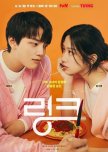
This review may contain spoilers
When Everyone Around has a bit of psychosis (even the "good" guys) so whodunnit is not a slam dunk
ReviewMy rating: 8.5/10
I really enjoyed Link: Eat, Love, Kill - it wasn't perfect but it was a solid watch. It’s a very good serial killer mystery that does a phenomenal job of making so many of the characters slightly psychotic. This made the “who could it be” aspect much more difficult, as I could genuinely see multiple people being capable of violent acts. This was often revealed in darkly humorous situations that fit the storyline perfectly.
There are a couple of romances, including of course the main romance between Eun Gye-hoon (male lead) and Noh Da-hyun (main girl), and they all are paced believably and completely feasible. The show is exciting enough that I didn’t find any episodes unnecessary or boring. If you like murder mystery-type dramas, darker humor, and a darker overall tone—or if you’re a fan of either of the main actors or the supporting cast—you would enjoy this. It was well-acted and well-scripted, a really solid offering in this genre.
Spoilers
One of the things that bothered me the most was Noh Da-hyun’s (main girl) total lack of self-preservation. She knows she has a stalker/killer after her and she just walks down dark alleys completely oblivious. Her mother who is so concerned for her still just waits for her worried when simply sending someone to walk with her would have made anything bad happening less likely. It’s hard for me to buy that she would put herself in so many powerless situations all the time. Having a stalker is terrifying, wise people do not put themselves in situations where they could be alone with their nemesis, but she did it time ana again. Her lack of self preservation was further evident toward the end when she does get attacked by the killer, she’s not going full force, which doesn’t make any sense to me. She’s scared but she’s fighting for her life, so that was a little bit disappointing.
There were also quite a few storylines that were started and I didn’t feel were ever completely resolved, like around the stalker. One thing that was really confusing was how he kept gifting her that box with all these items in it, and then it turned out later one of the items was a scarf. Given his girlfriend (who he had more likely than not murdered), he never really got that direct tie. He just knew he was going out with her, said the weird thing to the sister about her not coming back, and then they find her body—but it never directly linked it to him. That left an open question of whether he did that and kept that souvenir from her like a killer keeps items of their victims. Were the rest of the items in that box souvenirs from other victims of his? Anyways, it just completely drops out as if it’s no big deal, and I felt like that was a huge deal. Wanted to see him at least questioned in that case (maybe they would have found out about other victims) but we never got that loop closed.
Then you have the killer guy. I realize they were little kids so they didn’t want to go into too much detail, but it wasn’t clear at all why he took the little kids in particular. Most serial killers pick a type of victim, but for him it was like little kids and then older people. Why those little kids specifically, or was it just any little kids? Did he just want to end somebody and little kids were easier victims? I mean, I know you can never fully know what a psycho’s true motivation is, but usually there’s at least somewhat of a psychological profile to it, and that was completely lacking. He wasn't accused of being a pedophile, didn't show him creeping around little kids, but they seemed to be implying he was—so was he a pedophile or a killer? It’s just weird that we didn’t know more. I know they were trying to carefully approach the subjects, but we never knew what really happened to the sister or what happened to the dad. Since they were buried near each other we can assume the dad discovered who it was and wound up getting killed himself. We never got to know how they ended, and that sounds morbid but you kind of want to know. It just is part of the overall profile of the killer—of how and why, some of their motivations—so that was frustrating.
It’s also hard coming from a culture where self-defense is an acceptable thing if you ever have to use force. It was hard to understand how the mother (Noh Da-hyun’s mom) was in so much trouble when she was not only defending her daughter (Noh Da-hyun) but she was also defending the police officer who was about to get shanked by a chisel. To me, it was proof that such laws are pretty ineffective because they were always disarming themselves with other things—which you would if you couldn’t use a knife or a gun, then you would find other things if you felt in peril, which is exactly what they were doing. So you don’t end people ending other people; you just change what they choose. I have watched a lot of true crime and I would be very concerned about hammers. So, the self-defense and what constituted a weapon were very much outside of my own culture.
If anything, I did like that surprise with Noh Da-hyun’s (main girl) mom’s husband—Noh Da-hyun’s dad obviously was abusive to her, and the grandmother chose to take her daughter-in-law as her daughter rather than maintain a super close relationship with her son. I thought that was very admirable of her.
Korean guilt is always a hard thing for me to process because they feel guilty about different things than we might. Like, I could understand Noh Da-hyun (main girl) feeling guilty for letting go of the sister's hand, but for anyone else to even minimally blame her for that—was weird. It looked like the sister deliberately shook her hand to break the grip. In any case they were children and who can judge what they do when they are running from a monster. Usually it’s self-blame, but others understand the circumstances. Same thing with the mother getting rid of the second kidnapper, she felt guilty over that. Like she should turn herself in. I mean it was a crime in her culture but I get the police officer's perspective. Since we do not know the motivation of the second kidnapper, maybe he was a pedophile so she Freddie Kruegered him. We just don't know. Eun Gye-hoon (male lead) was mad at her for not turning herself in because he felt like somehow that would’ve helped them find his sister, which really wasn’t true at all at that point. It was two separate things. And you had a mother who came upon a situation where someone had hurt her daughter. Of course she wasn't in her right mind.
With the older man that left main guy's twin sister in the road when she asked for help, I was just flabbergasted. Like, what crazy adult would ever leave a child who said to please help as they had a bad person chasing them? It just showed how many morally gray and downright psychotic people there were in that little town and that little community. I was glad she haunted him—if anything, he needed to be haunted even more. He should have had every child that died of such crimes haunting him. What he did was unimaginably horrible, and he was partially responsible for the murder.
I also found it extremely annoying just how many times they broke it off. One time was really frustrating because Eun Gye-hoon (male lead) had just said how he couldn’t live without her, then he finds out that the mom dispatched the other kidnapper and didn’t tell, which might’ve helped lead to the sister. I don’t know, but it was so weird because you would’ve thought they would understand that everybody in that situation was so dramatically affected. But it was another break up. She broke up with him before because seeing her knowing she let go of his sister's hand might be too painful for him. So, they broke up any time it got hard. It makes you wonder for their future. So, it chilled the romance a bit for me. I felt like that wasn't what defined this one as much or set it apart it was more the mystery and dark comedy. The whole link thing was weird too. A large portion of their reltationship she didn't know, or didn't believe, he could feel her emotions. So, it might it sort of a meaningless plot point. It was better when she could feel his emotions too. It was more important in the beginning.
Eun Gye-hoon’s (male lead) mom was just horrible. I didn’t find it excusable—she lost her child and then was such a cold, unfeeling person to her other child. It made no sense, and she blamed him and treated him horribly because his sister had passed. He was a child, a little kid—it was not his responsibility to look after his younger sister to that level. I mean, he was the sibling; siblings fight all the time and go and do things. My older sister made it a point to ditch me. So I never found her a redeemable character. I was glad she came back around eventually, but I was still like, lady, you’ve got a lot of making up to do. You were completely cold and horrible, and all the emotional damage your son experienced was because of you.
I was also very disappointed because with it in the title, I thought there would be more about the restaurant and the food and preparing the food, but that was such a background part of everything. It was this restaurant that always seemed on the verge of opening. I was like, oh come on, open already. Thankfully we did eventually get to see it open, but it was weird because it seemed like it should’ve been a bigger part of the story and it just wasn’t. Also, with the son-in-law that knew how to cook, I thought it was weird that he didn’t teach his future mother-in-law how to cook better. She could’ve had a Korean restaurant across from his very successful European restaurant. It would’ve actually helped both businesses and it would’ve insured a better livelihood for his mother instead of her seeming like she was gonna rely on her daughter for financial support. I mean, fair, but at the same time, why not have two successful ones?
Overall, still a very enjoyable watch despite these frustrations!
Was this review helpful to you?
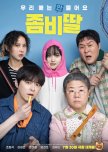
This review may contain spoilers
A funny family centered zombie movie
ReviewMy rating: 9/10
I am not a huge zombie movie fan, so for a zombie film to earn a 9/10 from me, it has to do something different. My Daughter Is a Zombie succeeds because it uses the zombie premise as the backdrop for a much more personal story. Rather than focusing on endless action, gore, or survival horror, the film explores what happens when a family refuses to give up on someone they love.
What makes the movie stand out is its approach to the infection. This isn't a typical "mindless monster" story. There is a sense that the person is still there beneath the virus, which gives the film an emotional weight many zombie movies lack. The heart of the story is the relationship between a father and his daughter, and that family bond remains the focus from beginning to end.
The movie also balances humor and emotion surprisingly well. There are plenty of amusing moments, but they never undermine the genuine warmth of the family relationships. The supporting cast adds personality and charm, while the rural setting gives the story a cozy, almost fairy-tale atmosphere despite the zombie theme.
If you enjoy unique takes on the zombie genre, family-centered stories, and a little humor mixed with your monsters, this is an easy recommendation. It's not a horror masterpiece, but it is a heartfelt, entertaining film with far more emotional depth than its premise might suggest. Even as someone who doesn't actively seek out zombie movies, I would happily watch it again if someone put it on.
Spoilers
While I enjoyed the movie tremendously, there were a few aspects that didn't completely work for me.
The character I liked least was Shin Yeon-hwa. I understood what the movie was trying to do with her character, but I found her enthusiasm for hunting zombies unsettling. Even if she genuinely believed infected people were no longer human, there was an intensity and enjoyment in her actions that made it difficult for me to support the romantic storyline involving her. For me, she never fully crossed back into sympathetic territory.
On the other hand, Kim Bam-sun, the grandmother, was fantastic. She was practical, tough, and completely unflappable. Every scene she appeared in was better because of her presence. She brought both humor and emotional grounding to the story.
I also had mixed feelings about the fate of Jung-hwan's biological father. He was selfish and willing to betray his own family, but I still found the decision to infect him and ultimately dispose of him morally uncomfortable. The film presents it in a way that makes narrative sense, yet it remains one of the story's grayest moments.
One of my favorite unexpected elements was the cat. The cat almost felt magical at times, constantly appearing at the right moments and quietly influencing events. Whether intentional or not, the cat became one of the movie's most memorable supporting characters.
I thought it was interesting that the government gradually became one of the primary antagonistic forces. Disaster stories often include institutions that value control over compassion, and this film continued that tradition. The contrast between bureaucratic solutions and a family's determination to protect one another worked well.
The revelation that Jung-hwan had developed antibodies through his prolonged exposure to Soo-ah was both surprising and satisfying. It fit the emotional themes of the movie while providing a clever story development.
My biggest disappointment was the ending. After everything that happened, I wanted a stronger emotional payoff. Seeing Jung-hwan move his finger suggested hope, but I wanted more. I wanted to see him fully awaken and realize that his sacrifices had succeeded. The movie earned that emotional reunion, and I felt slightly cheated by not getting to experience it alongside the characters.
Was this review helpful to you?
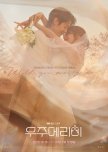
This review may contain spoilers
A Solid offering in the "contract marriage" type trope
ReviewMy Rating: 8.5/10 is my rating
“Would You Marry Me?” (also known as U Ju Me-ri Mi) is a breezy 2025 Korean romantic comedy that delivers exactly what fans of the genre are often craving: a forced fake marriage setup with cohabitation elements, solid leads, and plenty of lighthearted moments.
As someone who adores arrangement/forced marriage and cohabitation tropes, I was excited going in, and the show largely delivers on that front without major disappointments. It blends romance with comedy more than heavy drama, which suits my preferences perfectly. The premise is fun and provides natural opportunities for the leads to interact, bicker, and grow closer under unusual circumstances. It’s a solidly watchable offering—nothing groundbreaking, but definitely entertaining enough that I wouldn’t change the channel if someone else had it on. Many viewers describe it as cute, low-stress, and visually pleasing, with strong performances across the cast making it an easy, relaxing watch.
It’s one of the better recent entries in this subgenre, especially given the shortage of fresh contract/arranged marriage stories. The comedy lands well in places, the romance develops with warmth, and it avoids excessive angst. If you’re a romance fan looking for something feel-good with forced proximity and heartfelt moments, this is worth checking out. It may not be a rewatch staple for everyone, but it satisfies the itch nicely.
Spoilers
Once we get into the actual story, the show has some real strengths but also a few spots where it feels like it could have been even stronger with tighter writing or a bit more development—especially since it’s shorter at 12 episodes compared to the classic 16-episode K-dramas many of us are used to.
The main couple (Yoo Me-ri (Jung So-min) and Kim Woo-joo (Choi Woo-sik)) get together relatively early. With enough episodes remaining you wonder if there is enough left to resolve to keep the story interesting. And it did make it lag a bit for me. Although it wasn't so early that it hit the common pitfall of the romance feeling completely over once they confessed. And the timing was such that it did not play into the opposite problem of them coming together too close to the end and making everything feel rushed with no time to enjoy their relationship. That said, the payoff still felt a little lessened for me because of how the middle episodes handled their dynamic. Other plot elements keep things moving, but the romance didn't feel as earned or electric as it could have been. Many viewers note the leads have good chemistry overall, but I (and some others) felt it was a bit lacking in those deeper flirty, longing looks and moments that make the bond truly sizzle. I think it was intentional because they knew they were crossing somewhat of a line with her still being technically married. But it took away from the romance as there weren't those butterflies type romantic moments. No catch fall, no almost kiss, no umbrella - this wasn't that type of romance.
Me-ri’s reluctance to fully open up about her past frustrated me at times. Her ex was truly horrible, yet she often held back key details—like the cheating or the scam that left her nearly homeless with the apartment. It would have helped other characters understand her better if she had been more forthcoming, especially with family members. It was gratifying to see her mom stand up to the horrible ex in-laws and deliver some well-deserved confrontation, but I wished Me-ri had asserted herself more strongly throughout. Many average viewers appreciate when heroines get satisfying “standing up for herself” moments, and this one leaned a bit too passive in places. Her character was sweet but I think you can both sweet and strong.
The family and side conflicts added interest. The uncle as the antagonist (psychopathic serial killer) was somewhat predictable but was very engaging in the story. But, once his true nature and activities were revealed I would have liked some resolution involving conversations with the grandmother (Go Pil-nyeon), where she acknowledges past family mistreatment . She was not as bad as the grandfather or the random acidic comments from the aunt, but she allowed it. The reconciliation with his aunt and cousin felt nice and earned. The side romance with the doctor girl (Yun Jin-gyeong (Shin Seul-ki)) and the executive guy was well-paced and cute—many viewers wished it had even more screen time. And I agree I would have liked to see him confess to her. They were just together at the wedding so it was somewhat assumed but I thought there was enough to that romance that there should have been a heartfelt moment between them.
On the cultural side, the handling of divorce and the marriage situation felt a little off from what I’ve come to expect in traditional K-dramas. Woo-joo accepts things quite quickly despite Me-ri still being technically married, which some, including me, might see as an American-influenced spin (possibly due to the Hulu/Disney+ platform). It didn’t ruin the story, but it stood out as unusual. It made him having such sudden deep feelings for her less believable. In K-drama land he would have went through a period of internal struggle. Maybe the reason was he spent so much time in the USA but that was never stated. He just seemed to quickly accept it and not be bothered by it.
Other small frustrations: The grandmother sometimes believes the wrong people too readily instead of trusting her grandson more. She quickly accepted that her son's death was her grandson's "fault". She took the word of these two people that came to her house to talk trash over having a simple conversation with Meri. A conversation between Me-ri’s mom and the grandmother could have been wonderful—they seem like they’d click, and it would have been a natural way to reveal more of Me-ri’s story. But then I am not even sure the mom knew the full story, that he had cheated and was the cause of the break up. The company/financial storyline (with embezzlement) builds up tension but resolves a bit softly without big turnaround moments or heroic deals from Woo-joo, which felt like a missed opportunity.
Living arrangements also impacted the romance believability. The decision not to have them fully cohabitate in the prize house created gaps where they seemed to be living separate lives, making the sudden romantic intensity feel less grounded. I. think they did it because she was still married and the writer's weren't convinced the audience would be okay with them not only living together prior to marriage but living together when she was still married. So, I get that but they could have had her actually divorce by filing the paper and he is truly her pretend husband. They weren't encountering each other each day which made their romantic connection feel less intense. And this was coupled by a late-story “cooling off” mention by Meri that was followed by a quick resolution to marriage which felt odd since there was already that distance all along.
Overall, these are mostly “missing a few extra elements” issues rather than outright bad writing. The show balances its tropes well and stays enjoyable. Though it does serve as a good reminder of why 16 episodes often hit the sweet spot for development—shorter formats can feel a tad rushed on the relationship and business arcs. Still, I recommend it for fans of the genre. There aren’t enough current offerings like this, and “Would You Marry Me?” scratches that forced-marriage/cohabitation itch effectively. If you love light romance with comedy and family elements, even with some minor issues with timing and certain plot points, it is worth giving it a shot.
Was this review helpful to you?
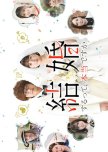
This review may contain spoilers
Two Incredibly Introverted People who form an incredibly awkward Union
ReviewI give Map for the Wedding an 8/10 because I genuinely loved the premise. But I felt like the romance itself fell short. I’m always a huge fan of contract marriage stories, cohabitation romances, and “two strangers slowly learning how to become partners” dynamics. The setup had so much potential, and the series definitely offered something a little different from the usual romantic drama.
What worked best for me was just too extreme introverts navigating a deceptive relationship. There was all kinds of opportunity for comedic scenarios but that did not materialize. It was more of a quieter, introspective atmosphere. I think it was to illustrate how similar they were in nature. The travel imagery and Rika’s habit of imagining herself in places around the world gave the drama a unique charm and helped it stand out visually and emotionally. There’s a calm, almost reflective tone throughout the series that a lot of viewers appreciated.
That said, I struggled with the romance itself. Both leads felt extremely stiff emotionally, which made it difficult to really invest in their relationship. Rika especially stayed emotionally closed off for so long that it became frustrating, even after she supposedly realized her feelings. I understand the drama was trying to portray different personality types and unconventional relationships, but the emotional distance between them often made the relationship feel more practical than romantic.
A lot of viewers seemed divided on this exact issue. Some appreciated the realistic portrayal of introverted adults and unconventional companionship, while others felt the romance lacked warmth, chemistry, and emotional payoff. I definitely fell more into the second group. The series had sweet moments, but I kept waiting for stronger emotional intimacy that never fully arrived.
Another recurring criticism among viewers was the drama’s somewhat cynical portrayal of marriage. Multiple relationships throughout the story seem strained, lonely, or emotionally disconnected, which created an oddly subdued tone for what is technically a romance series. Even when the drama tried to present hopeful moments, it often felt more focused on compromise and survival than genuine romantic fulfillment.
Overall, though, I still enjoyed the series because the premise was so appealing and the atmosphere was unique. It’s more of a quiet adult slice-of-life relationship drama than a passionate romance, and whether that works for someone will probably depend on what they want from the genre.
Spoilers
The biggest issue for me was how emotionally distant the main couple remained almost the entire series. Even as the relationship between the main girl (Rika) and the main guy (Takuya) slowly developed, they still felt more like two polite roommates than romantic partners.
I kept expecting the emotional payoff to finally happen near the end, especially once Rika realized she genuinely cared about Takuya, but even then she remained so emotionally stiff that it became frustrating. The relationship never really evolved into something passionate or deeply affectionate. We never really got the big romantic moments — no truly memorable kisses, cuddling scenes, emotional confessions with strong chemistry, or anything that sold the idea that these two people were deeply in love.
The arrangement they settled into honestly made the romance feel even stranger. The idea that they would continue living independently most of the week and only stay together during time off felt less like marriage and more like a scheduled companionship agreement. I understand the drama was trying to show that different kinds of relationships can work for different people, but for me it pushed the relationship too far into emotionally detached territory.
The subplot involving the divorced man (Kurokawa) and his little boy also reinforced the drama’s overall view of marriage as something difficult, lonely, and exhausting. While his situation improves somewhat, the storyline still contributes to the feeling that the series views marriage more as a burden or compromise than a fulfilling partnership.
One thing I really did enjoy was Rika’s imagination scenes where she mentally placed herself in destinations around the world using maps and travel fantasies. Those moments gave the drama personality and helped break up the otherwise emotionally restrained tone.
But overall, the romance itself just never fully landed for me emotionally. It often felt like watching two socially awkward robots trying to build a technically functional marriage rather than two people deeply falling in love.
Was this review helpful to you?

This review may contain spoilers
Emotional Roller Coaster - nothing "light" about this drama
Lighter and Princess is a polarizing Chinese drama that splits audiences—some love it enough to give it a 10/10, while others really dislike it. In the review string I was looking at I would say it was about 75% rated it really high and 25% rated it low with an insignificant number in the middle. I landed right in the middle though. To me an 8/10 means it is good just not great. It’s very heavy on drama with a darker, serious tone and almost no comedy or light-hearted moments. The romance is an extremely slow burn (the kind where you start wondering if they’ll ever truly get together), which will appeal strongly to fans of that style but can feel frustrating if you prefer better balance. The main girl (Zhu Yun) is interesting—she’s firm and decisive with everyone else but becomes more of a pushover when it comes to him (Li Xun). Their dynamic starts with mutual dislike and bickering, but it’s easy to see the direction things are heading. The show has strong emotional weight and reminded me of the gut-wrenching parental disapproval vibes from shows like "The Heirs" and "Meteor Garden". Production and chemistry are solid, and it builds a loyal fanbase among those who enjoy intense, slower-paced stories. That said, I wouldn’t rewatch it. The slow pacing and the male lead’s type made it a struggle to get through at times, even though I appreciated many aspects. If you like heavy drama, darker romance, and don’t mind a very gradual build, this could be for you. Otherwise, it might drag you down emotionally. My daughter (30s), my drama watching buddy, quit at episode four. She said it was just too boring to her.Spoilers
The structure of the series really tested my patience. I am not a flash back fan and to have a large portion of the story told as a flashback almost made me quit. So, if you like me, want to know when it will finally stop flashing ack (like seriously it goes on for about 20 episodes - that is a long flash back). I also was losing patience with their romance. They finally get together during their college years around episode 18. The events leading to his (Li Xun) prison time happen around episode 22. Then it switches back to the present day about halfway through episode 23. If you consider that it is easy to understand how someone would get rage quit level frustrated with the structure and pace of the series. So you are glad they finally together in their college days and waiting for it to switch back to present time. But when it finally switches back to present time they are broken up and it felt like they just finally got together a couple of episodes ago. And this was another grueling pacing thing of waiting for them to get together again. They don’t properly reunite as a couple again until quite late—around episode 33 or so. I had to spoiler myself by looking at review sites on the general flow because I was seriously considering dropping it midway. So, one of my biggest gripes was the structure and pacing.
Li Xun is arrogant (as many geniuses are), but that arrogance creates real friction. Old Gao (Gao Jianhong) had a massive inferiority complex toward him, which drove a lot of the betrayal and drama. It was refreshing to see the colleagues at the video game company react differently—they felt lucky to have these two brilliant talents join instead of feeling threatened.
The parental disapproval, especially from her mom (Zhu Yun’s mom), is brutal and very Meteor Garden-esque. I really wanted her mom to have a clear realization that her controlling behavior contributed to Zhu Yun’s serious depression episode, but that never fully materialized. There’s a vague sense it might improve slowly in the future, but it’s not shown. I also wished Li Xun had been more open: he never fully explained to her parents (or even clearly to Zhu Yun) the real reasons behind everything—being kicked out of school, the hacking incident (which he did desperately for his mom’s sake, not intending the extreme grade changes), and especially correcting the cruel things he said right before prison. He should have dropped the pride and told her straight that he never found her annoying or hated her attention. That lack of full vulnerability hurt the emotional payoff for me. On the positive side, I loved that Zhu Yun finally stood up to her mom, clearly stating it wasn’t her choice who she was with.
The main levity in the story came from the characters surrounding the main couple. The boss at the new company going to bat for them with her dad was great, and the company itself becoming like a found family was one of the warmer elements. I enjoyed that aspect of the series a lot. The friendships.
The title and imagery (“Lighter and Princess”) are beautiful—especially the lighter motifs and how she carries herself like a haughty princess early on. It was not at all what I expected from the title or the few previews I had scene. It had a revenge plot running through that I entirely did not expect.
As an empath, the show was emotionally exhausting. Li Xun’s frequent sadness and loneliness were hard to watch, and his coldness toward Zhu Yun at times made it tougher. I needed those resolutions (like clearer communication and family acceptance) to feel better about the rollercoaster, but some of them never fully came. A scene showing them with a child and her parents as happy, smiling grandparents would have been perfect closure.
The lighter funny moments were mostly the computer nerds hacking into each other’s screens right next to them—that was cute.
Overall, it’s a lot. Strong in many ways, but the pacing, emotional weight, and incomplete resolutions kept it from being higher than 8/10 for me.
Was this review helpful to you?
This review may contain spoilers
One of the most Frustrating Male Leads
As someone who really enjoys the fake marriage and co-habitation trope, I thought this was a solid entry in the genre — just not one of the best. There are definitely stronger series out there that handle these tropes with more impact or chemistry, but this one is still entertaining and worth watching if you already love this type of story. It has a very promising start and does a good job drawing you in early. While it never fully reached “must-watch” status for me, it stayed consistently enjoyable throughout. If you’re a die-hard fan of fake marriage stories, I would still recommend it. And if you’ve already watched a lot in this genre and are open to something that’s good rather than exceptional, this is still a worthwhile watch.I can understand why some viewers rate it a 10/10, and I can also understand why others did not like it at all. But I think most fans of the trope will not be completely disappointed. Personally, I probably wouldn’t go out of my way to rewatch it, but if it happened to be on, I’d likely keep watching because it was entertaining.
Spoilers
If you have seen "Good Morning Call" or "Playful Kiss" you will get the vibe if this male lead character and the couple's original dynamic. The hardest part of watching Only Just Married was honestly how cruel the male lead character, Shu Momose, could be to the main girl character, Akiha Okado, in the beginning. He constantly called her irritating, acted like choosing her was a mistake, and took his frustrations out on her in ways that felt unnecessary. It became difficult to watch her accept every tiny scrap of kindness he gave her and immediately fall deeper into one-sided love again.
What made it worse was the entire situation with his sister-in-law, Miharu Momose. I could not get past the fact that he seemed emotionally more invested in her than in his own brother, Asahi Momose. Whenever something happened involving that relationship, his concern always felt directed toward her first, not his brother. And honestly, the sister-in-law seemed aware of his feelings. Some of her behavior came across as flirtatious, almost like she enjoyed the emotional attention and unintentionally — or intentionally — led him on.
The fake marriage itself also felt uncomfortable at times because of his motivations. Using marriage as a cover story while emotionally hung up on someone else made him hard to root for early on. Ironically, one of the best characters in the drama ended up being the woman who rejected him outright and refused to participate in that arrangement. She became the snarky voice of reason for the main girl and honestly represented what many viewers were probably thinking.
One thing that frustrated me personally was watching the main girl continue tolerating behavior she didn’t deserve, especially when she had the means to walk away much earlier. It hurt my pride as a woman a little watching her repeatedly settle for crumbs emotionally instead of protecting herself.
My daughter, who was my drama-watching buddy for this one, rage quit halfway through. She quit watching after we looked at lower-rated reviews instead of the glowing 9/10 and 10/10 ones to understand why some people disliked it so much. And honestly, those reviews perfectly captured how we felt at the beginning: he was selfish, emotionally cruel, overly attached to his sister-in-law, and completely oblivious to how badly he was hurting the main girl. What those reviews failed to mention, though, is that the drama does eventually turn things around. She does stand up for herself. And he finally comes to his senses.
The big gest payoff for me was seeing the main girl finally develop a backbone and emotionally detach from him. She reaches a point where she is simply done. Done accepting scraps. Done waiting for him to choose her. Done excusing his behavior. That shift completely changed the dynamic of the show.
Ironically, he nearly loses her because he still cannot communicate clearly. He pushes for the divorce intending it as a way to reset and pursue her properly, but he never explains himself well enough, so she understandably believes the relationship is truly over. At that point, she has finally found her self-respect and is no longer willing to chase him emotionally.
It honestly takes him forever — and way too much pushing from the second male lead — to realize what should have been obvious much earlier: that he genuinely loves her. But once he finally understands that what he felt for his sister-in-law was not actually romantic love, his growth becomes much more satisfying.
The ending worked for me because the emotional balance finally shifts. Instead of her endlessly proving herself to him, he has to fight for her. He has to reflect on what he truly wants, pursue her honestly, and convince her to marry him again. After everything earlier in the series, that reversal felt earned and emotionally satisfying.
Was this review helpful to you?

This review may contain spoilers
Great Romance Sports Drama
My rating: 9/10“My Mr. Mermaid” is a charming Chinese sports romance that centers on competitive swimming and the slow-burn relationship between a dedicated swimmer and a rookie sports reporter. If you’re a fan of romances built around a specific sport, this one delivers—it’s uplifting, focuses on dreams and personal growth, and lets you pick up interesting real-world details about athletes’ careers along the way (like how young many swimmers peak and retire).
The chemistry between the lead couple, Tang Yi Bai and Yun Duo, is one of the highlights. Their connection builds gradually and feels natural, especially given her job giving her access to his world. You genuinely root for them as you watch each one start to fall for the other in sweet, believable ways. I also really enjoyed Tang Yi Bai’s friend group and how Yun Duo interacted with them—it added warmth and humor without feeling forced.
The series wraps up on a satisfying note that left me smiling rather than emotionally drained, which is a big plus for anyone who prefers lighter, more balanced stories. My daughter (in her 30s) rated it an 8.5/10, and I’d give it a 9/10. We both felt that some of the elements that bothered us were likely more tied to cultural differences in storytelling and social expectations than flaws in the script itself.
Overall, this is a solid recommendation for anyone who loves heartfelt romances, especially those with a sports backdrop. It’s entertaining, teaches you a bit about the world of swimming, and keeps the focus on connection and support. If that sounds like your vibe, it’s worth checking out!
Spoilers
While the romance between Tang Yi Bai and Yun Duo was the heart of the show for me and nearly perfect on its own, a few supporting elements frustrated me more than they probably should have, largely due to cultural lenses. In American culture, we tend to emphasize individual boundaries and consequences, so some of the forgiveness arcs felt off to me. For instance, Yun Duo’s best friend deleting her work in a sabotage attempt was something I found completely unforgivable—yet Tang Yi Bai encouraged her to forgive, and they reconciled as friends. That dynamic just didn’t sit right with me; a friend like that would make me question the friendship entirely.
Similarly, Lin Zi manipulated Yun Duo repeatedly and lied about so many things, yet the story handled her response to him inconsistently in my eyes. She never fully forgave him despite the career support he offered at times, which felt odd next to how quickly she reconciled with her friend. I personally thought neither deserved easy forgiveness, but that’s where the cultural difference in prioritizing group harmony over individual accountability really showed.
The character I struggled with most was the obsessive girl who had the unhealthy fixation on Tang Yi Bai. Her actions (including tampering with his drink and then downplaying responsibility because she “changed her mind,” plus the dramatic traffic incidents and resulting injury) came across as selfish and in need of real mental health support rather than coddling. The amount of screen time devoted to her drama and the way everyone catered to her felt like a tired trope that dragged for me. I much preferred seeing more of Tang Yi Bai’s funny and adorable mother—we got great glimpses of her energy, but I wished for more payoff with her fully seeing the couple together instead of them still hiding things at the end.
On the brighter side, I absolutely loved the second couple (Qi Rui Feng and Xiang Yang Yang). Their story was cute, compelling, and perfectly balanced—they were a joy every time they appeared, and their dynamic felt refreshing and well-matched. I found myself looking forward to their scenes far more than the heavier drama surrounding the obsessive character.
Some plot points also stretched believability for me, like the coma recovery, the brain tumor detail, and the amnesia pretense—it all felt overly convenient and highlighted how mentally unhealthy certain behaviors were without the characters addressing it directly. The “soft rejection” expectation in obsessive storylines is another clear cultural difference; in Western contexts, clarity is usually encouraged to avoid leading someone on, whereas these dramas often lean into gentler handling.
Despite those irritations, the core romance and sports elements carried the show for me. The slow build between Tang Yi Bai and Yun Duo was genuinely adorable, the friend group added fun, and the ending felt wholesome. Cultural differences explain a lot of my gripes, and I still walked away happy I watched it. It reinforced why I enjoy this genre—I got to learn about swimming careers while enjoying a sweet love story.
Was this review helpful to you?

This review may contain spoilers
Good Filler While Waiting for a Drama Series to End
My rating: 7.5/10Review
This was a solid “in-between” watch — the kind of movie you put on when you’re not ready to commit to a long, fully developed drama but still want something romantic and engaging.
It starts off pretty silly and a bit over-the-top, which made it hard to take seriously at first. However, as the story progresses, it settles into something more reflective and surprisingly thoughtful. The second half carries more emotional weight and gives the story a bit more substance than you initially expect.
That said, it still remains a very light watch overall. It doesn’t demand much from the viewer and doesn’t leave a lasting impact, but it does its job as easy, enjoyable entertainment.
For serious romance fans who are just looking for something quick while deciding what to watch next, this works well. It’s pleasant, easy to get through, and has enough charm to keep your attention.
👉 Overall:
Good as a filler
Light, easy, and mildly entertaining
Not something I would actively seek out or rewatch
⚠️ Spoilers
The museum incident was honestly a bit ridiculous. A child knocking over something that valuable would realistically have had much bigger consequences, especially for the parents. The fact that it escalated into something involving tensions between countries felt exaggerated, and tying it to something as trivial as food made it even harder to take seriously.
That said, I did appreciate the way the time loop concept was handled.
Instead of constantly trying to “fix” things like most time loop stories, the characters actually take time to enjoy the situation. They spend days just living freely, doing what they want, and making the most of the reset. That felt refreshing and helped the romance feel more natural rather than rushed.
Because they had all that extra time together, their relationship developed in a way that felt earned, even within the constraints of the story.
I also liked the twist — that the solution wasn’t about changing major events, but about paying attention to the people around her. That added a more grounded, emotional layer to the story.
Another standout was how she gradually became completely over her ex. Experiencing the same interactions repeatedly made his apologies feel more and more hollow, which was actually very realistic. That “forgive me” loses all meaning when you hear it enough times.
The one thing I really didn’t like was the separation trope at the end.
Two years apart felt completely unnecessary. It didn’t add anything meaningful and actually weakened the emotional payoff. Realistically, most relationships wouldn’t survive that kind of gap, and it just felt like forced drama for the sake of it.
Was this review helpful to you?


