


 21
21 37
37 8
8


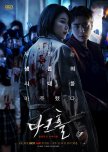
A different kind of pandemic
Much like how we’re all wearing our face masks to curb covid-infections these days, the folks in Dark Hole are doing the same but for a different outbreak - the kind that turns human beings into mindless zombies/ monsters/ mutants, though with varying effects for each person. So what makes this drama different from other similar stories and should you really be watching it? Let’s find out...What is it about?
On the surface, it’s another zombie/ monster apocalypse story that draws parallels with the likes of Kingdom, Sweet Home, Rampant, Train to Busan, and even Joseon Exorcist. I haven’t seen #Alive and Peninsula but based on the synopsis and trailers, they appear to share a very similar premise).
But where Dark Hole differs from the rest lie in 3 aspects:
- The original source of the infection is extra-terrestrial
- The method of transmission is via a rather ominous black smoke (as well as bites/ scratches, apparently)
- The intended purpose of all this, which I won’t spoil here (to be honest, I’m not completely sure myself)
It’s an inventive spin on a well-loved and long-established genre. South Koreans sure love their zombies.
The Plot
Far-fetched with seemingly endless sub-plots and countless characters. As far as apocalypse stories are concerned, this one infuses far more elements than I’ve noticed in other dramas. It’s set in modern-day South Korea in the small town of Muji. The scope of the story covers the entire town and in addition to the overarching mystery, we have mini character arcs, of which there are plenty. The notable action takes place at 5 main locations - the forest where the titular chasm lies, the local high school, the hypermarket, the municipal hospital, and one more which I won’t reveal to keep the suspense alive.
Speaking of story arcs, we have plotlines relating to a female police detective with a tragic past who is in pursuit of a serial killer who caused said tragedy; a “disgraced” former police constable with a sad family tragedy of his own which inadvertently resulted in his expulsion from the police force; a scorned female shaman who rediscovers her spiritual powers including the gift of precognition; a high school senior who is a victim of conspiratorial cover up pertaining to her father’s fatal accident, in addition to being bullied by her schoolmates led by a high school dropout who constantly harasses her. It doesn’t end there. Many more secondary characters with their respective mini arcs are featured throughout. The one thing most of them have in common, is their respective tragic backstories.
This drama is certainly not uneventful - the many characters and side stories make sure of that. The screenwriter is trying to interweave all these stories into the main plot but I think somewhere along the way, the overarching story very nearly got completely overshadowed. After a rather promising start with much potential, I found myself getting a little restless around the halfway mark. Having introduced the new characters into the story, their side stories eventually fizzle out without the slightest connotation of how they are connected to the situation at present.
For the most part, the script and characters are adequately written, with the main issue being that too many elements are included. Even for a 12-episode drama, it does feel a little dragged out with too many unnecessary sub-plots and characters. 8 to 10 episodes would have sufficed and probably 3 or 4 characters and their story arcs should have been left out. In the end they amounted to nothing anyway and I found myself hard-pressed to develop much, if any, emotional attachments to.
The Production
Dark Hole is an OCN production and billed as the fifth entry to its Dramatic Cinema Project, which is an initiative by the broadcast network to showcase the essence of well-made genres via productions that combine the format of movies and dramas. I think what this basically means is dramas that are the crème de la crème of OCN productions. I’m not exactly sure if this drama is deserving of that billing but for context, the first four entries to this project are Trap, Hell is Other People, Team Bulldog and Search.
The first ever drama directed by Kim Bong Joo, the screenplay is written by Jung Yi Do. Those familiar with his works would be aware that highly rated dramas Save Me and Strangers from Hell were written by him.
In general this is a decent production with regards to the technical aspects. The down-to-earth action sequences appear realistic while the use of visual effects in particular for “that thing” is appropriately utilized. The production design and use of multiple filming locations are seemingly well rendered. However, there isn’t much of a soundtrack or musical score of note to write home about. The stock music and sound effects used are serviceable for their intended purposes.
The Acting
One of the main reasons I watched Dark Hole, aside from the fact that I love this genre and to ease my bitter disappointment from seeing Joseon Exorcist being cancelled, is Kim Ok Bin. It’s my first time seeing her drama in its entirety. Having caught glimpses of her in The Villainess and other productions, I’m aware of her reputation and credentials as well as recognition of her previous efforts for which she has received a great many acting honours. For this drama, being the FL Detective Lee Hwa Sun of the Seoul Regional Investigation Unit, I have absolutely no complaints with her performance. Understated, nuanced, and charismatic, she is good value for her portrayal and I’m a new fan.
Lee Joon Hyuk is an interesting choice for the role of ML Yoo Tae Han, although at times his character feels more like a supporting role than the lead. I’m more used to seeing him in suits after Stranger 1 and 2, but he was convincing as a decorated soldier in Designated Survivor as well. He gives a satisfactory portrayal of his role here, where he does carry the persona of a likeable character who would be great in a leadership role during times of crisis.
The rest of the cast, including the child actors, give a decent account of themselves. Special mention goes to Oh Yu Jin who plays the schoolgirl Han Dong Rim. My first time seeing this 21 year-old actress, I thought she did a remarkable job in projecting the chilling aura of mystery and eeriness surrounding her troubled and complicated character, which is one of the few in the show that I truly relished.
Overall
In my humble opinion, Dark Hole is not the best in the genre. But if you’re a fan of zombie apocalypse stories or any of the cast or even an OCN follower, this drama might appeal to you despite its flaws. It doesn’t end in a cliffhanger and I doubt there would be a sequel or continuation to the story, therefore providing viewers with a closure where everything is neatly wrapped up.
Was this review helpful to you?
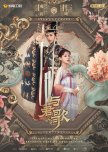
Checkmate, I Win
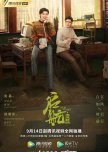
Stand By Me began airing exactly 12 months after Love and Redemption was released last year, much to the happiness and joy of Cheng Yi fans all around the world (myself included). L&R was the drama that propelled him to stardom, and this production reaffirmed his status as one of the most anticipated drama actors in the C-historical genre. Starring numerous colleagues from his agency, H&R Century Pictures, we get a L&R reunion of sorts. This includes his “sister-in-law” Zhang Yu Xi who plays his significant other this time around.Production details that may interest you
Originally titled Dream Awakening Chang’an, the title was changed to Stand by Me along with the setting of the story as a result of the censorship requirements imposed by China’s NRTA. Initially planned as a romanticised retelling of the Tang Dynasty Emperor Li Yan aka Wuzong’s reign, the script was changed to a fictional tale of an alternate version of Tang, the Xing Dynasty’s Emperor Qi Yan. That said, the historical account of actual happenings and real life figures such as the Grand Eunuch Qiu Shiliang and Sweet Dew or Morning Dew (Ganlu) incident in the 9th century remain present in the story. The social as well as court conventions are very much Tang in appearance, most obviously the attire being worn by the various characters.
Stand by Me is both a TV drama and a web series, being simultaneously released on Hunan Satellite TV’s Golden Eagle Private Theatre and Mango TV. Filmed entirely at Hengdian, the drama is directed by Liu Guo Nan who helmed the Glory of Tang anthology, and assisted by Zhao Li Jun, who helmed Deep Lurk, another Cheng Yi drama slated for release some time later. The award-winning Shao Chang Yong serves as art director, which adds a touch of class and credibility to the production design.
The screenplay is written by Shi Si Que (十四阙), who is the current editor-in-chief of China’s Dongxi Animation Club. He has written numerous novels and short stories, while this drama represents his first foray into screenwriting.
The Production Values
The overall quality of the production is reasonably high, as can be seen from the art direction and set designs. For the most part, the technical execution is decent in terms of the direction and cinematography. During the first few episodes, there are a few noticeable editing and dubbing issues which I attribute to the change in settings from Tang to Xing Dynasty. The subtitles are generally correct but for those who understand Mandarin, the name “Great Tang” is mentioned in lieu of Great Xing on a few occasions. The buildup of the backstory in the first episode does feel somewhat rushed with the frenetic scene transitions but things begin to settle down not long afterwards.
The action sequences, particularly the synchronised swordplay formations and sword fights in general appear to be reasonably well choreographed. I like that there is no excessive use of fast cuts, slow-motion and close-ups, which makes the flow of the action less contrived. The villainous character of Qiu Shiliang employing the use of the traditional Taoist “horse-tail whisk” (拂尘), typically used in Wudang martial arts, adds a nice touch to the depiction.
The Narrative
Stand By Me is adapted from the novel Sword Weapon (Jian Qi Hang 剑器行) by the writer Feihua (飞花), a talented novelist who had won the Top Ten Novel Award of the Second Online Literature Competition in 1999.
The drama follows the journey of two sisters, descendants of a noble family that have fallen from grace as a result of political machinations and treachery. Due to the tragic events that followed, both sisters went their separate ways only to reunite at the very place that caused the downfall of their family - the royal palace. At either end of the continuing political tug-of-war is the noble Emperor and the wily chief eunuch who seeks to undermine the authority of the throne. Amidst this tumultuous backdrop, somehow the sisters end up on opposing sides in this court intrigue.
Palace politics with all its clever schemes and nefarious plots are heavily featured, in addition to themes of romance and love, as well as betrayal and revenge. This is one of the most riveting, thrilling, and suspenseful palace dramas of the year. Unpredictable twists and turns, shocking revelations, and countless exchanges between “multiple sides” merge beautifully into an exciting historical extravaganza. The storytelling is fast paced and action-packed, involving various perspectives and hidden agendas by multiple POV characters. The momentum never lets up and is sustained until the very end. All of this culminates in a profound conclusion that promises to leave a lasting impression on viewers.
It’s worth mentioning that there is more than a subtle hint of Chinese Chess (Xiangqi 象棋) being referenced throughout. Usually Go (Weiqi 围棋) is showcased in historicals as the boardgame of choice for aristocrats but it’s a nice change to see another ancient game being featured. Aside from the Purple Robed Bureau (subtitled as Violet Bureau), a fictional organisation that bears close relation to Xiangqi is the Chess of Generals Bureau, whose members represent the chess pieces such as Left and Right Advisors, Chariots, Ministers and the Chess Overseer. Fascinating stuff indeed.
The Cast Performance
Cheng Yi headlines this drama by portraying the role of Emperor Qi Yan. There isn’t much left to be said about this magnificent actor who brings his A-game every time he puts on a show for us viewers. As in L&R and also The Promise of Chang’an, it’s hard to see other actors surpassing Cheng Yi’s supreme mastery of poignant and emotional scenes of great torment and suffering, including his now trademark “poetically beautiful blood-spitting” moments. Truly the best of the best. In Stand by Me, Cheng Yi provides us with further glimpses of his versatility and range with a vastly different and never-seen-before side to his very multifaceted portrayal - the cold, ruthless and sensual Emperor. Seeing is believing and I truly do believe there is much more to this man than meets the eye that, hopefully, will be showcased in his future projects.
Zhang Yu Xi, who had previously played Chu Ling Long in L&R, appears as the female lead and primary love interest this time, Cheng Ruo Yu. A promising actress who possesses much depth in her moving portrayal of emotional pain and suffering. As it was in L&R when her character had suffered PTSD, the conviction of her expressions certainly reflects her growing maturity in tackling complex characterizations, which is the case in this drama. She manages to infuse her character here with a fusion of kindness and righteousness that are borne of purity, as well as a developing sense of awareness and pragmatism. These are qualities that reflect the tremendous growth her character experiences through the course of the story.
Deserving of equal billing as part of the three leads, the ever charming and elegant Xuan Lu graces this drama with her appearance as one of the estranged sisters. She had previously caught the eye with her memorable depiction of the delicate and kind Jiang Yan Li in The Untamed. This time, she brings an air of sophistication to the cool and calculated character that is perpetually shrouded in mystery, Qiu Yan Zhi. I honestly feel that there are moments where she manages to steal the limelight from Cheng Yi and Zhang Yu Xi, for she has such a presence that lights up the screen whenever she appears.
Notable mentions for other major characters go to Han Dong who plays Prince Guang, and He Cheng Ming as the chief eunuch Qiu Shiliang. Han Dong is an exceptional actor who has appeared in many historicals so there are no surprises to the dimensions he imbues the characters he portrays. His nuanced microexpressions are always expertly delivered and a joy to behold. He Cheng Ming, who previously played Si Feng’s father and Master of Li Ze Palace in L&R, is another experienced hand with a wide repertoire of works in many varied roles. This time around, he is perhaps more subdued and less OTT, but still retains that aura of an expert performer who immerses into the character with such consummate ease. In short, he always looks like he’s having fun and he carries the role with glee. I have to admit, the mannerisms in his depiction remind me at times of Sun Wukong the Monkey King.
Among the familiar faces in supporting roles, look out for Xi Xue (Under the Power, Lin Ling), who has a significant arc as Cheng Xi, Yang Xi Zi (L&R, Xiao Yin Hua) as Princess Misha, He Zhong Hua (L&R, Xuan Ji’s father) as Li Deyun, Li Jun Yi (L&R, Zhong Min Yan) as Yan Xiu, Ethan Yao (L&R, Ting Nu) as Han Yue, Fu Fang Jun (L&R, Wu Zhi Qi) as Han Ding, and of course, the unforgettable Bai Shu (L&R, Tengshe) as Prince An.
The Music
No C-historical would be complete without epic songs from the likes of Zhou Shen and Liu Yuning. Cheng Yi also contributes to the soundtrack with his beautiful rendition of Shou Shou, which is my favourite track of this drama. Along with the BGM, there are a total of 7 tracks:
Yu Yan Shuo 鱼雁说 by Audio Monster/Silver Lin (音频怪物 / 银临)
Chang'an 长安 by Liu Yuning 刘宇宁
In Through Dream若梦 by Zhou Shen 周深
Small Dust 小尘 by Shuang Sheng 双生
High Above in the Sky 当空 by Nana 许艺娜
Shou Shou 相守 by Cheng Yi 成毅
Worrying about the Sky 杞人忧天 by Allen Su Xing 苏醒
Overall
Stand by Me is a drama I had been anticipating from Cheng Yi since last year, and I’m pleased to say I haven’t been disappointed with the plot and overall technical execution of the production as well as the performance of the cast. It is not flawless by any means but I appreciate the nature of the storytelling that eventually culminates in a rather conceptual ending, which somehow seems to be the standard for C-historicals these days. In any case, the entertainment value is high and I have thoroughly enjoyed the intrigue as well as unexpected plot points throughout the 49 episodes of its run.
Was this review helpful to you?
This review may contain spoilers
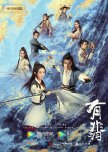
Every Cloud Has a Silver Lining
The Legend of Fei is an intriguing drama.This is a show that has been highly anticipated since early 2020, and for good reasons too. It is headlined by two of the biggest stars in the Chinese entertainment industry today, Zhao Li Ying and Wang Yi Bo. This is also ZLY’s comeback project since her leave of absence due to her maternity. The drama is an adaptation of the novel Bandits by renowned and award winning fiction novelist, Priest who will be having several more of her novels adapted to dramas in the coming year.
In addition to that, the involvement of a highly experienced production team led by director Ng Gam Yuen who had previously directed Princess Agents (also with ZLY) and, somewhat surprisingly although not uncommon, a team of nine screenwriters were engaged to write the screenplay based on the critically acclaimed source material which had won the Network Literature Biennial Award in 2017. All of this points to a potentially successful blockbuster drama in the making, right? Apparently, as it turns out, not many would agree.
Within the first few weeks of airing, this drama ended up becoming extremely maligned and divided opinions of viewers not only in China but also among international audience, so much so that even on the drama’s MDL page, debates and differing opinions were intensely magnified in the comments board. Personally, I feel that although the drama certainly is imperfect, there are redeeming aspects that warrant folks to cut it some slack and maybe shower some love instead.
In a nutshell, this is a wuxia drama that tells the story of Zhou Fei (ZLY), who hails from a renowned family of pugilists and the 3rd-generation heir of the Snow-Breaking Blade technique created by her grandfather, as she leaves her home in the mountains known as Fortress of the 48 to explore the Jianghu world. She meets Xie Yun (WYB) who joins her on her adventures as they encounter colourful characters, both good and evil and from various sects and affiliations.
This is essentially a coming of age tale typical of the wuxia genre where Zhou Fei, as the FL, meets many martial arts masters who help improve her skills to become stronger and finally battle the villains. Along the way, she finds love but also experiences the tragedy of losing loved ones. Themes of chivalry, heroism, brotherhood and loyalty are interwoven with the underlying romance, overarching mystery and, of course, the climax of the story - the epic final showdown. I’m not an avid reader of the recent wuxia novels but I notice the trend of late where the ML of the genre appears to be physically weaker and less of a fighter compared to the FL, as is the case in this show and another similar one, The Moon Brightens for You. But, I’m not complaining and I think female empowerment is a positive trend for a change.
Production
The production values displayed somehow does not seem to reflect the rumoured big budget of the show, with certain set designs that appeared inferior in quality and even obviously fake. For instance the settings of the forest where majority of the action takes place, the setting of the Spinning Wire Formation of the Ximo River (specifically the “rock boulders” which do not seem all that “solid”), and various other scenes, where the lack of authenticity is visibly apparent.
Probably the biggest gripe of all is on the direction, screenplay and editing for this drama. Contrary to most criticisms that are directed at the acting especially of the leads, I think the directing of the interactions between the characters as well as the pacing of the storytelling should take the most blame. Actors can only work with what they are given and how they are directed to act their scenes. Furthermore, how it is that so much fillers and dragging out of the plot were shoehorned into the story seems rather surprising considering the quality of the production crew. Additionally, the transitions between scenes and framing of certain sequences did come across as somewhat disjointed, which is attributed to the editing department. A mitigating factor was mentioned where principal filming had to be halted midway through due to the outbreak of the pandemic in early 2020. However, this is where the final editing and post production process should come in to make the necessary adjustments.
Choreography
The martial arts choreography is not the finest of the genre, it has to be said. A number of the action sequences do not flow smoothly in terms of the swordsmanship, acrobatics, and overall movements. When it works, it can be spellbinding but when it doesn’t, it becomes painfully obvious to see. Granted, there were reports referencing ZLY’s lack of fitness while performing her own stunts and other physical exertions, having just recovered following her maternity confinement. Perhaps, this being the first time a blade/ sabre (dao) is wielded by ZLY’s character instead of the usual sword (jian) resulted in the execution of a different and more challenging fighting technique, the Snow-Breaking Blade.
The same observation applies to all other cast members involved where at times the fighting appeared contrived rather than naturally free-flowing. The awkwardness is exemplified in other techniques such as the Taoist Tao Teh Ching Mayfly formation, Guanxi Yellow and Green Palm, Floating Palm, and Water-Cutting technique. On the other hand, the Lotus Palm, Cloud Impelling Palm and Mountain Sword technique do at least appear more believable and convincing.
Characters
The action stunts aside, I have no complaints with either ZLY or WYB as far as their acting is concerned, and both characters I thought were well written. The issues as I mentioned earlier relate more to the direction rather than the cast themselves. The quality of ZLY’s acting and character portrayals are never in question while WYB possesses much potential to soar even higher through his upcoming projects. I like FLs that are written to be consistently strong not just in terms of physical strength and martial arts prowess but also in mental resilience and fortitude in the face of adversity and tragedy. Zhou Fei is a character that I enjoy watching and she does not succumb to the usual tropes of losing her sense and sensibility or transforming into a damsel in distress that needs rescuing. Likewise the character of Xie Yun as the happy-go-lucky charming and supportive sidekick who hides a traumatic past behind the facade.
There were grievances regarding the perceived poor dubbing particularly that of ZLY and I have to agree. The voice is provided by Liu Rui whose previous works focused mainly on modern dramas like Flash Girl/ Our Shining Days, which sadly lacked the authority and depth needed to elevate the character of Zhou Fei to more imposing levels. WYB’s voice dubbing is provided by Hu Liangwei, whose works include Heaven Official’s Blessing donghua, which is marginally better and probably matches the playful tone of the character Xie Yun.
Regarding the chemistry between the two leads, so many viewers complained about 2 things - that they are incompatible due to the 10-year age gap (ZLY is 33 while WYB is 23) and hence lacks the natural chemistry, and that the FL looked so much older than the actual age of her character who is supposedly a 16-year old teenager. Personally for me, there is no such thing as age gaps when it comes to romance, and therefore I’ll take this as a variation of noona romance which works fine for me. 10 years isn’t a lot even if the female is older and from what I can see, particularly towards the tail-end of the show, the chemistry is apparent to be seen and throughout the entire story progression, the development of their relationship has been slow burn but no less resolute.
As for the second argument, I have to agree somewhat. No matter how much make up applied or soft filters used, it is what it is and there is no escaping that. But look, this is not something that is shockingly unexpected or unprecedented. Tang Yan (37) played a teenage Xiao Yan Yan in Legend of Xiao Chuo, Zhang Lu Yi (40) depicted a 13 year old boy in Qin Dynasty Epic, Tang Wei (38) acted the role of a teenage Sun Ruo Wei in Ming Dynasty, Tan Song Yun (30) played a teenage Li Jian Man in Go Ahead, while Zhang Zi Yi (41) is currently portraying a teenage Wang Xuan in the airing Rebel Princess. For me, good acting with seasoned actors should be the benchmark and that is acceptable to me.
The supporting cast of Zhang Hui Wen, Chen Ruo Xuan, Zhou Jie Qiong, and Zhang Xin Yu gives a decent account of their respective portrayals of Zhou Fei and Xie Yun’s band of friends. In particular, the character development of Wu Chu Chu and her romance with Li Sheng is quite remarkably depicted. Li Yan, however, represented everything I dislike about the annoying females in historicals but fortunately her role isn’t significant. She and the character Yang Jin are truly made for each other, as part of the 3 romantic couples in the show.
It has to be said that a number of villains do not appear all that imposing and intimidating. I’m fine with the colour coordinated costumes and scary masks used to distinguish the bad guys but the respective leaders of the evil clans are simply not all that villainous, in form or substance. Case in point, the Demon Manor’s section chiefs comprising Blessed Dog, Giant Leopard, and Sparrow. The Four Guardians of the Mountain’s Dragon and Tortoise masters are more hilarious and comical than menacing. On the other hand, I do appreciate the Timber Wolf Shen Tian Shu as the leader of the Demons, played by Geng Le who does possess the gravitas for this role. Guo Xin’s Mu Xiao Qiao, the Phoenix master, is one of my favourite (semi)villains in the show and brilliantly gives off Dong Fang Bu Bai vibes. Other villains such as the Snow Wolf and the evil Eunuch are very interesting characters but unfortunately only had limited screen time.
As far as good guys go, I actually enjoyed watching Che Xiao’s compelling portrayal of Li Jin Rong, Zhou Fei’s mother, as a strong woman and competent leader of the Fortress of 48. Dong Xuan’s Duan Jiu Niang is a very likeable character and I suspect she had as much fun playing the slightly deranged role as viewers did watching her albeit for a short portion of the show. Hu Bing, who usually plays the villain, delivers a very charismatic depiction of the legendary grandfather, Li Zheng. I’m a big fan of Zong Feng Yan, who plays Zhou Fei’s father Zhou Yi Tang. This seasoned veteran never disappoints and he seems to excel particularly in historical dramas.
Music
The OSTs for this drama is probably the only aspect done to perfection. Each track seamlessly captures the essence of the story and the scenes throughout. The opening theme truly sets the tone of the show while WYB’s rendition (with accompaniment by the Dizi, which brought memories of The Untamed…) evokes feelings of a dreamy ethereal romance.
1. 《逐浪 Chasing the waves》by 尚雯婕 Shang Wenjie (Opening theme)
2. 《无华 Unadorned》by 张靓颖 & 刘宇宁 Jane Zhang & Liu Yuning (Ending theme)
3. 《熹微 Weak rays of sunlight》by 王一博 Wang Yibo
4. 《如翡 Like Fei》by 王晰 & 赖美云 Wang Xi & Lai Meiyun
5. 《结 Knot》by 胡夏 Hu Xia
6. 《红尘莫欺我年少 Don't deceive me when I was young》by 希林娜依 高 Curly Gao
7. 《采莲曲 Picking Lotus song》by 陈珏 Chen Jue
Overall
Despite the numerous drawbacks, The Legend of Fei does manage to get certain aspects done well enough that even things out and, in my humble opinion, ultimately redeems the entire production. How the drama starts off may leave much to be desired but the improvement towards the second half and the strong finish at the end, with the HEA ending where all that’s well ends well, gave me the satisfaction of completing this drama. It wasn’t always smooth sailing, but I did enjoy myself by looking past the flaws only to discover a rainbow after the rain.
Was this review helpful to you?
This review may contain spoilers
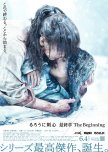
Love and Redemption
Rurouni Kenshin: The Beginning is the fifth and final instalment of the live action adaptation of the Rurouni Kenshin manga series by Nobuhiro Watsuki. This film series finally ended after nearly a decade, having begun in 2012 when the first film was released.This finale features the origin story of Himura Kenshin aka Battosai set during the Bakumatsu - from just before the Hamaguri Gate Rebellion to the end of the Boshin War. Notwithstanding the rather spoilery film poster, fans of both the live action and manga series would have already been made aware of the momentous event that had taken place in Kenshin’s past which went on to shape his future, culminating in his present state as depicted in the preceding four films. However, the true account of what actually transpired has finally been chronicled and presented in this film.
At its very heart, this is a tale of love and redemption between the two main characters, Himura Kenshin and his first love, Yukishiro Tomoe. Personally, I do believe that one major benefit of knowing the outcome prior to watching the story unfold is that rather than anticipating the conclusion and/ or fearing the potential for an impending tragedy, viewers are able to focus on the subtleties of the storytelling while appreciating the development of the characters and nuances of the portrayals.
Among all the films in the series, this instalment is perhaps the most serious and compelling. It plays out more like an actual historical than a manga adaptation and explores much emotional depth and character evolution of its two leads. There is hardly any moment of levity and lightheartedness, in contrast to the earlier films. Even the action sequences for which the film series is famed, is very much subdued where significant portions of the swordplay is presented in the style of a vignette, complete with evocative instrumentals. Although there are two boss fights, they are not as thrilling as those in the other instalments.
Production wise, the quality levels remain consistent as one would expect of the same production team led by screenwriter-director Otomo Keishi. The cinematography is exquisite, showcasing the beauty of the seasons where autumn transitions to winter in the countryside, as well as the framing of poignant scenes shared between the leads in their humble abode. Camerawork and editing for the numerous sword fights and stunts remain exceptional, as has been the case throughout the series.
In terms of the acting, both Sato Takeru and Arimura Kasumi are perfect in their portrayals of Himura Kenshin and Yukishiro Tomoe. No one else can play Kenshin at this point and I can’t imagine someone else in the role of Tomoe. As much as I enjoy seeing Kenshin and Kamiya Kaoru (Takei Emi) together, the connection between Kenshin and Tomoe feels more absorbing. Theirs is a delicate love borne of turmoil and conflict that eventually nurtures and heals the soul. I was honestly blown away by their scenes together, especially towards the heartbreaking ending.
Rounding off the supporting cast, Eguchi Yosuke is back as Saito Hajime but with long flowing hair and without the cigarette dangling from his mouth (for the most part). Araki Towa has a bit part, playing the younger version of Yukishiro Enishi while Takahashi Issei provides an intriguing depiction of Katsura Kogoro.
I would rate this film as my second favourite of the series, with Rurouni Kenshin: The Legend Ends as my top favourite. It may not be as action packed, fun-filled or give off steampunk vibes as the others, but I’ve thoroughly enjoyed the character-driven emphasis and nuanced approach to the performances and storytelling, where viewers finally get to see how Battosai evolves from the killer to the pacifist. There is a tinge of melancholy now that the live-action series has come to an end, but what an eventful ride it has been.
Was this review helpful to you?
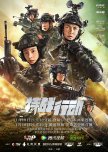
Operation: Blue Lightning
Operation: Special Warfare is a co-production between CCTV, Penguin Films, Bona Films, Xiaoyao Films and Ram Films. This big budget production that involves extensive use of modern Chinese military hardware and facilities was filmed in Northwest China, including a segment at Taklamakan desert in Xinjiang.Directed by Liu Ting and based on the original screenplay written by Duan Lian Min, himself a former member of the Chinese military, having served as a platoon commander. He has written many military-themed novels and screenplays as well as directed dramas and films of similar genre for which he has won numerous accolades. He is currently attached to the Political Department of the Chinese Navy serving as a director and screenwriter for military productions.
The drama follows the journey of young recruits of the newly-formed anti-terrorism special forces of the People’s Liberation Army, called the Blue Lightning. Central to the narrative is the growth of both the individuals and the collective as the new recruits come of age during their experiences of military training and real life combat situations.
As with any military-themed C-dramas, expect a fair amount of jingoistic propaganda and patriotic flag-waving which is par for the course when the production requires extensive support from the military and CCP during the filming process and to get the greenlight for distribution release. In addition to action and adventure, the drama features youth themes, slice-of-life elements and subtle hints of romance. There is some violence and gore but nothing too terrifying for viewers.
What I Enjoyed
Usually modern C-dramas tend to be lengthy with too much fillers. The military-themed ones are a hit or miss, case in point My Dear Guardian which turned out to be a little bit too fluffy for my liking. This one, however, manages to avoid all those pitfalls. It’s only 35 episodes in length instead of the usual 40+ episodes, doesn’t contain nearly as much fillers as most others though they are still present, and on the whole is more intensely dramatic rather than fluffy or comedic in its storytelling approach. Throughout the course of the drama, I did not really feel bored at any point in time because the drama surprisingly incorporates quite a number of interesting sub-plots and side stories to the main narrative at a very engaging pace, with a nice balance of action, drama, introspective and emotive moments.
This production showcases a number of modern military hardware in greater detail than I have ever encountered. How accurate or up to date they are, I have no idea, but I feel pretty convinced. For the most part, based on my little research, the depiction is consistent with the standard equipment used, such as the QBZ-95 (or Type 95) automatic assault rifles favoured by the PLA as well as their commando sub-units. Additionally viewers will get to observe countless UAVs and armoured ground vehicles on display in the drama, which I find quite fascinating.
In terms of the technical aspects, the action planning and choreography, as well as the special effects are worthy of mention. This drama showcases many action sequences involving firefights, explosions, as well as both armed and unarmed combat. These scenes are not confined to a single location but take place across multiple venues. One memorable segment features a suspenseful game of cat and mouse across the Taklamakan desert in the dead of night between the Blue Lightning unit and armed terrorists. I’ve also enjoyed the somewhat refreshing depiction of the military training comprising the so-called Devil’s Week competition, sniper competition and squad leader selection tests. That said, certain aspects of the training concerning “physical torture” do appear incredulous. I’m unaware of the authenticity but in a land that invented Shaolin martial arts, I guess anything is possible.
One of the major reasons for watching this drama is of course the cast, which is headlined by Vengo Gao who plays the Captain of the Blue Lightning, Qin Guan. If the drama is about the military, whether in a contemporary or historical context, you can count on this man to deliver an utterly convincing portrayal of the characterization. He not only looks and sounds the part, but his entire being exudes military commander vibes as well. There is absolutely no question whatsoever that without him, this drama would be lacking in so many ways. From the cold, stoic persona to the physical prowess in executing his stunts, Vengo totally slays his role.
Hu Bing Qing plays the FL Ning Meng, one of the young recruits of the new anti-terrorism team. My first time seeing her in entirety instead of previous guest appearances, I think she’s very talented and showcases strong performances particularly during her emotional scenes. I also quite like her nuanced take that helps inject a sense of vulnerability to humanise the role of a female soldier.
The drama’s soundtrack features 5 songs, with the patriotic opening theme being the most upbeat and energetic of them all. My personal favourite is the ending theme performed by Hu Bing Qing herself, the love ballad You and Me. Full listing as follows:
Flaming Lady 烈焰巾帼 - 金志文 Jin Zhiwen
Xiang Yang 向阳 - 黄霄雲 Huang Xiaoyun
You and Me 你和我 - 胡冰卿 Hu Bingqing
My Comrade 我的战友 - 钟强 Zhong Qiang
Fearless 无畏 - 王晰 Wang Xi
What Fell Short
I think the most glaring aspect would be the villains. We are never going to get a C-drama that depicts profoundly layered or morally grey terrorists, because the Chinese military and censors would never sanction it. As far as the powers that be are concerned, stories of this nature are straightforward - good guys versus bad guys are simply portrayed as black or white. Hence in this drama, in relation to the overarching plot concerning the terrorist organisation, S Group, the antagonists are merely written to be the stereotypical one-dimensional cardboard caricatures - bad-tempered, cold-blooded, power hungry and striving for world domination. The terrorist leader is even shown at one point chomping on cigars by the poolside surrounded by bikini-clad femme fatales where the only thing missing is a huge furry cat.
Final Thoughts
I would categorise Operation: Special Warfare as one of the more fascinating and well-produced mature military-themed dramas that I have seen recently. It’s the kind of show where viewers can enjoy with a relaxed mind and without the need to exercise too much brain cells. A final note though - do be forewarned, the subtitles available on WeTV are auto-translated (at the time of writing) and may not be of the usual high quality.
Was this review helpful to you?
The Changing Times
Fascinating, riveting, inspiring, and poignant. In my humble opinion, Our Times truly is a remarkably compelling and vividly presented drama that is very much deserving of attention and praise. It isn’t without flaws but it is still a worthwhile viewing experience as far as C-dramas are concerned. With a douban score of 8.3 at the time of writing, the rating certainly reflects the growing acclaim for this drama.Production Details
Brought to us by the production team of the popular drama Hikaru no Go, notably Liu Chang and Zhuo Yue Pao Mo who serve as main director and screenwriter respectively. Both of them specialise in slice-of-life, coming-of-age and friendship dramas including their collaboration on Somewhere Only We Know. In addition, Liu Chang helmed Dear Missy while Zhuo Yue Pao Mo had written the script for the highly rated My Huckleberry Friends, among others. This drama is co-director Ma Yiming’s directorial debut while five other screenwriters are involved namely Xu Yitian, Nan Difu, Hu Liping, Wang Shumin and Chen Xiao.
The screenplay is adapted from the novel Our Times (我们的时代) which was recently published in 2019. Written by Wang Qiang (王强), reportedly a leading figure for business novels in China, Our Times is a trilogy that focuses on chasing dreams, and the ups and downs of the new generation of entrepreneurs who ride the IT Internet wave from 1990 to 2018.
The Narrative
Our Times is set in China of the early 1990s against the backdrop of burgeoning economic growth and rapid IT development. The story spans the better part of the decade across multiple locations including Beijing, Shanghai, Guangzhou, Foshan and Hong Kong (along with Illinois in the US). It focuses on the points of view of four main characters - university classmates and tech researchers Xiao Chuang and Pei Qin Hua, as well as their respective love interests Xie Hang and Tan Yuan. Combining slice-of-life with romance, bromance and light melodrama mainly within the workplace setting, the drama explores relationship dynamics between families, friends, lovers and co-workers as well as themes of office politics, industrial relations, the virtues of self-sacrifice, redemption and the courage to evolve in the pursuit of aspirations and happiness amidst the vicissitudes of life.
The storytelling is progressively paced and satisfyingly engaging with hardly a dull moment or substantial fillers. I particularly enjoy the seamless fusion of certain lighthearted instances along with subtle hints of levity as well as introspective and bittersweet scenes interspersed throughout with predominantly heartwarming undertones.
For a premise of this nature, there is no lack of angst and dramatics which is to be expected where the majority of these arcs are rather promptly and neatly resolved. My main issues with this drama stem from the script or adaptation of the source novel for certain sequences of events and the consistency of the characterization for specific characters. Without giving too much away, I’m not a fan of the noble idiocy trope and the associated extreme self-sacrificial acts of altruism in lieu of open and sincere communication to resolve issues… BUT, it’s quite a relief that the resulting grievances turn out to be somewhat short lived and do not detract from what has largely been an engrossing viewing experience.
It’s worth mentioning that elements of patriotism and nationalistic vibes in the plot are quite noticeable as far as locally-produced PCs versus international imports are concerned, but I think the historical representation is quite balanced to accurately reflect the growing trends of computing technology as well as the political sentiments in the era.
A couple of interesting facets to the plot - it’s not purely about computer designs and programming because a substantial proportion of the entrepreneurial efforts is focused on the marketing and sales aspects. Furthermore, the technology referred therein isn’t just about mainframes and personal computers but also emerging entertainment gadgets such as the LD and VCD technology. The transition of “old tech” to the technology that we are acquainted with, especially for viewers familiar with the era, is depicted with the perfect dose of realism.
The Production Quality and Technical Aspects
This is a well-made production in terms of the overall values, quality, and technical execution. The direction is generally commendable, despite discernible “contrived moments of acting” at certain points. The editing, scene transitions and sequencing of the narrative progression appear cohesive and relatively seamless. In terms of the cinematography, I appreciate the decent camerawork as well as the warm palettes and degree of colour grading applied which provides a cinematic feel to the production. Also on the subject of visual language, I quite like the inclusion of 90s stock footage in certain filler frames or B-reels throughout, which provides viewers with a sense of the atmospherics.
The art direction is superb through the use of authentic set designs and props that enhance the realism of the depiction. From the very first moment of this drama, I was hit by the wave of nostalgia arising from the overwhelming 90s pop culture references. From Sally Yeh and George Lam Cantonese songs to posters of a very young Chow Yun Fat, Andy Lau and countless others plastered all over the walls. The influence of Hong Kong in those days is made abundantly clear in this production. Other references to the time period include the huge mobile phones (aka “tai ko tai”), VHS player and video entertainment outlets, the cassette tape player and, of course, the computers themselves - the classic 486 PCs complete with the large monitors or Visual Display Units. The costuming aspect is quite realistic in general. For the character of Xiao Chuang, however, his dressing comes across as somewhat peculiar for a person with his background but it does reflect his flamboyant demeanour and swagger.
Cast and Characters
As the story unfolds and we learn more about each of the main characters, I find myself utterly immersed and invested in their characterization and growth through the multitudes of varying circumstances and events that they experience. In particular the two male leads, Xiao Chuang and Pei Qing Hua. Despite being infuriating at times to a certain extent, towards the conclusion of the story the maturity and wisdom that they eventually attain provide a palpable sense of redemption and achievement. Tan Yuan is interestingly written yet extremely believable and is my favourite female character in the drama. Xie Hang, on the other hand, feels a little inconsistent in places through her actions and behaviour. Nonetheless, each of the four characters possesses its own distinctive qualities and characteristics that combine well to fit the overall development of the story.
My second time seeing Wu Lei this year after The Long Ballad, he has certainly come a long way since Nirvana in Fire. I wouldn’t exactly call this his breakout role but it does feel that way. Such an exceptional portrayal of Xiao Chuang where his versatility in range truly ran me through the gamut of emotions. I honestly think his performance is the strongest among the cast largely because of his significant and dramatic character arc. As for Neo Hou, he showcases a hugely different side to his portrayal in Psych-Hunter and Lost Tomb 2 where he plays a complete boy scout here - pure, idealistic and noble to a fault - and he absolutely slays this role. Earnestly believable and endearing as Pei Qing Hua, he embodies the role effortlessly indeed. Wu Lei and Neo Hou together make this one of the best bromance partnerships in C-dramas.
My first time seeing both Julia Xiang and Mao Xiao Hui, where their performances are indeed worthy of praise. Julia’s portrayal of Tan Yuan is realistic and relatable where I can’t help but to root for her throughout. Her bubbly personality is the complete opposite of Neo Hou’s down-to-earth Pei Qing Hua but somehow this opposites attract type of relationship culminates in a convincing and organic chemistry that builds up naturally over the course of the story. Xiao Hui’s Xie Hang is the most understated yet nuanced of the female leads. There are so many layers to her character that she delicately brings to life in a slow-burn manner. As one of the two OTPs, Wu Lei and Xiao Hui share some of the most moving moments in the drama amidst the trials and tribulations that they both face.
As for the supporting cast, the veterans comprising Wang Xin Jun, Gai Hai Peng and Wen Zheng Rong deserve mention for playing Tan Qi Zhang, Lin Yi Min and Luo Li Hua respectively. Leewei, as Lydia (Xie Hang’s mentor at Interflow), delivers a powerful interpretation of an intriguing character despite her limited screen time. Wang Meng Li’s investigative journalist Shu Zhi Hong is another interesting characterization that probably deserves a side story or spin-off of her own.
Music
Fei Peng serves as music producer while Japanese composer Akiyama Sayuri composed two ending themes for the production, which are my favourites out of the total of five OSTs including the remake of Sally Yeh’s original, Walk Back to the Wind. Full listing as follows:
呼啸的风 Howling Wind by 侯明昊 Hou Ming Hao (Ending theme)
毫不保留 Without Reservations by 余佳运 Yu Jiayun (Ending theme)
潇洒走一回 Walk Back to the Wind by 孟佳 Meng Jia
一盏灯 A Light by 王栎鑫 Wang Lixin
燃烧的时代 The Burning Era by 袁野 Yuan Ye
谁能明白我 Who Can Understand Me by 林子祥 George Lam
Final Thoughts
Our Times presents an unforgettable journey of discovery by its captivating characters that is filled with beautiful romance and compelling camaraderie, while granting viewers a profound insight into the giddying heights of technological transformation and socio-economic transition in modern China back in the 1990s.
In case you’re wondering about the ending, there will definitely be a second season. The final episode ends on a cliffhanger so stay tuned for the sequel to wrap things up and, hopefully, give our four main characters a fitting closure. All things considered, it has been an incredibly absorbing and insightful viewing experience indeed and I absolutely recommend giving this drama a watch.
Was this review helpful to you?
Miss Sassy
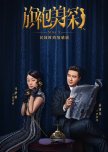
Miss S is headlined by the effervescent Ma Yi Li in what has been her passion project from the get go. She certainly said as much during her interview in Singapore late last year when promoting this drama, which draws many parallels to her real life persona. Being a Shanghai native, the setting of this production albeit in a much different era, she is able to draw upon her many years of experience portraying strong willed, independent and feminist roles in playing the highly vivacious titular character.Billed as the remake of the Australian series, Miss Fisher’s Murder Mysteries which in turn is based on author Kerry Greenwood's historical mystery novels. Miss S probably feels more like an inspired loose adaptation of the screenplay to cater for Chinese audiences rather than an outright faithful retelling of the original version, although the intricacies of the plotlines and cases do feel awfully similar. The flavour, atmospherics and light-hearted humour are very much “Shanghai-nese” in comparison to the gritty outback setting of the original series.
For the uninitiated, Miss Fisher’s Murder Mysteries is about the female lead character setting up shop as a private investigator with a penchant for, you’ve guessed it, solving murder mysteries. While she solves a number of seemingly unrelated cases, there is an underlying conspiracy surrounding the death of her younger sister. In Miss S, the main character is the flamboyant, stylish and wealthy socialite, Su Wen Li (hence Miss “S”). For the most part, the murder cases are quite straighforward and nothing too “heavy” or thought provoking. This is more Murder She Wrote than How to Get Away With Murder.
No effort was spared as far as the quality of the production is concerned. Filmed entirely at the magnificently constructed Dream Bund Film Park which is part of Hengdian World Studios, the art direction and costumes are the two major defining technical aspects very much worthy of high praise. The mansions, automobiles (including that outrageous red convertible), in addition to the countless props, are reflective of the opulence and grandeur of 1930s Shanghai. The translation of the Mandarin title 旗袍美探, Cheongsam Beauty Detective, is most appropriate as it features exquisite cheongsams (qipao) worn by Su Wen Li and the female characters that reflect the beauty of the iconic dress. Likewise the tailored suits and uniforms make the men appear extremely dapper indeed. Shanghai’s French Concession is always depicted as the epicentre for glamour and style back in the day, and it is no different in this drama.
The award-winning Ma Yi Li, playing the lead role of Su Wen Li, injects a lot of fun and sassiness in her somewhat OTT characterisation. She has invited a whole host of well-known and very capable supporting and guest cast to this project. Vengo Gao plays her “love interest” and investigation partner, Inspector Luo. Perhaps it’s the experience and maturity of these two actors plus the fact that they are friends off the set, because the chemistry between them really does sizzle. His character is one that exudes wit and charm in equal measure.
Michelle Dong is involved as Su Wen Li’s bff, Dr Liu. Being the complete opposite, her character is down-to-earth and much more subdued but no less intriguing. Her portrayal here is reminiscent of her role in another Republican drama, The Case Solver. Yao An Lian has a prominent role but with much less screen time as the antagonist, Ding Ru Shan. Having seen him in The Long Ballad and The Rebel recently, this actor showcases much versatility and range in his varied roles.
Every featured case involves countless notable guest stars. Look out for appearances by Zhang Jing Tong, Zhang Yu Qi, Ren Luo Min, Xu Rong Zhen, Zhang Rui Jia, Zhang Xiao Qian, Xie Xin Tong, Chen Li Na, Huang Yi Lin, Huang Xiao Ge, Liu Yu Qi, and Cai Wen Jing, among many others.
The original score composed by renowned music director, Xie Nan for this production certainly captures the vibes of the era. Meanwhile, the emotional connection between Su Wen Li and Inspector Luo is fittingly expressed through the sentimental ballad by Saji, Peep. Track listing as follows:
Peep 窥望 by Saji 萨吉
Confusion 迷惑 by Ye Xuanqing 叶炫清
You Know 高嘉朗 by Gao Jia Lang 高嘉朗
Miss S is a light and easy watch that is infused with enough wit and humour to make it a worthwhile experience. It isn’t a groundbreaking, compelling procedural or overly complicated to make sense of, nor does it take itself too seriously. I had as much fun and enjoyment watching all 15 murder cases spread over 34 episodes as the entire cast did performing for this production.
Was this review helpful to you?
Her Name is Fury
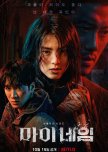
Fight Club meets Infernal Affairs with a dash of La Femme Nikita, Anna, Atomic Blonde, Kill Bill and Villainess, among others. That’s how I would describe this drama in a sentence.My Name is an utterly visceral tale of one woman’s odyssey of vengeance through the deepest pits of Seoul’s dark underbelly and vicious criminal underworld that is seeped in brutality and cruelty. This drama is not for the faint-hearted for its many scenes of pure, unadulterated violence and bloodshed will most certainly induce much consternation indeed.
Based on an original screenplay, this production is helmed by Kim Jin Min, whose previous works include Extracurricular and Lawless Lawyer, and headlined by Han So Hee, of The World of the Married and Nevertheless fame. The Grand Bell Award-winning composer, Hwang Sang Jun, serves as music director.
The narrative is not groundbreaking, for those acquainted with the genre. However, when the re-telling of a similar concept is executed well, it can be an absolute joy to behold and may open doors to new fans of this dark thriller and suspense genre. My Name certainly accomplishes this, in my humble opinion, through a fascinating take on the classic revenge and betrayal plot with a focus on gritty storytelling infused with incredible cast performances and which does not shy away from highly graphic and explicit visual language. For the most part I’m quite pleased with the direction and tempo of the story development which manages to sustain the momentum of the intensity, tension and suspense. I have no major complaints over the design of certain plot devices and twists as well as the final outcome. The fact that there is absolutely zero comedic absurdity and contrived humour is a major boon for me as well.
Over the course of only 8 episodes at 50 minutes each, I did not lose interest or feel a smidgen of boredom. The action is breathlessly high-octane featuring countless fight scenes ranging from mass brawls to hand-to-hand combats involving the use of a variety of weapons. Despite composing a major proportion of the entire drama, some of the quieter and more poignant moments are interspersed throughout, including an extremely brief romantic interlude in the very last episode.
Likewise, as far as the production quality is concerned, there are no discernible major issues. The high production value is reflected in the art direction while technical execution is outstanding. I love the fact that the cinematography perfectly captures the action sequences because oftentimes these scenes are ruined by shoddy camerawork or poor post-production editing and visual effects, which is not the case here. Credit goes to the relentless efforts of the action choreographer and the cast themselves in performing the rather complicated and dangerous stunts. In particular the varied fight scenes involving mixed martial arts movements and knife fights in open spaces as well as cramped indoor settings.
The biggest praise is reserved for the cast themselves, and none more so than the lead actress, Han So Hee. My Name is a character-driven story where the failure or success is fully dependent on the depiction of the main character in question. Thankfully it is the latter because Han So Hee has unreservedly dispelled the doubts surrounding her ability to tackle this lead role which she does so magnificently with aplomb. Sometimes a role does not suit the performer, which seems to be the massive feedback from her previous performance in Nevertheless, but the characterization of Yoon Ji Woo, the FL here, is such a perfect fit for she truly embodies the persona in totality. The believability in her portrayal of sheer agony and torment, single-minded determination and strong will as well as the physical exertions inflicted from the challenges and ordeals that she faces in her pursuit of retribution. It is certainly not an exaggeration to declare unequivocally that Han So Hee thoroughly slayed this role.
Park Hee Soon deserves praise for his portrayal of Choi Moo Jin. This man oozes class, charisma and screen presence as the mafia leader of Dongcheon gang. Together with the hugely experienced and recognisable Kim Sang Ho as police detective Cha Gi Ho, both these men provide excellent support to Han So Hee’s main character that elevates this production to greater heights.
An aspect worth mentioning is the music. I love the retro beats of synthwave which complements the more contemporary rock element in a captivating combo that makes up the score by Hwang Sang Jun, who additionally composed two tracks out of the 3 OSTs in the drama.
My Name featuring Swervy and JEMINN
Mediocre Life featuring Pre-Holiday
A Thought is Haunting Me by Raphael Lake & Royal Baggs
All things considered, it’s been quite a while since I was last invested in a compellingly raw and savage journey of vengeance by a ferocious female character in an Asian drama. I’ve been dying for a bona fide strong FL in every sense of the word. Not a poser or a pretender but an actual badass who literally kicks ass. This has been an incredibly worthwhile viewing experience. Bravo!
Was this review helpful to you?
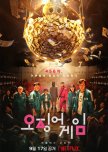
Winner Takes All
Squid game is a South Korean children’s playground game that was popular back in the 1980s. It is similar to hopscotch but with a more expansive playing area and team-based approach. It forms the basis of the game setting that is featured in Squid Game.Production Details
The drama is written and directed by the award-winning Hwang Dong Hyuk, known for critically acclaimed films The Fortress and Silenced. Jung Jae Il, who is known for composing the score for Okja and Parasite, serves as the music director. Produced by Siren Pictures exclusively for Netflix, this is a pre-produced drama with all 9 episodes released worldwide on 17 September 2021. It is given an R-18 rating and contains sexual references, nudity, and violence. Strobing effects present in certain episodes (especially episode 4) may cause discomfort for photosensitive viewers. Other trigger warnings include scenes of violent deaths, as well as gratuitous blood and gore.
Premise and Plot
456 participants competing in a “Hunger Games meets Battle Royale” series of challenges modelled after traditional South Korean children’s playground games for a chance of winning the jackpot of 40 million won, rising up to 45.6 million won with the elimination of all other participants right to the last person standing.As for who the organisers are and the reason for the competition, all shall be revealed as the story unfolds..
The story revolves around the points of view of a number of characters who share one thing in common - they are in serious need of cold hard cash to resolve their respective predicaments. Central to the core narrative is the main character and protagonist, Seong Gi Hoon, a gambling addict down on his luck who is facing debt problems and child-custody issues, as well as dealing with his mother’s deteriorating health.
What I Liked
As expected of a Netflix original series, I enjoyed the production quality and values, unique set designs and costumes, exceptional cinematography especially during some of the stunning choreographed action sequences and the game or challenge settings.
The cast is outstanding, comprising veterans in Lee Jung Jae, Park Hae Soo, Heo Sung Tae, Kim Joo Ryung and Oh Young Soo, among others. The newcomer Jung Ho Yeon gives a decent debut performance complete with the North Korean accent. I was pleasantly surprised to see brief appearances by Gong Yoo and Lee Byung Hun. Even with limited screen time, their charisma absolutely shines through to light up the production.
The edge-of-the seat thrills and suspense plays out in a riveting pace. This drama is well worth the binge because it is as captivating as it is addictive to consume in a single seating. Moments of extreme tension are aplenty along with the heart-wrenching emotions which are deftly interspersed amidst the high-octane action sequences throughout. I particularly enjoyed the epic final showdown between the finalists in the concluding arc of the drama.
The music score composed by Jung Jae Il is sublime, along with classic compositions used courtesy of the Budapest Scoring Orchestra and Big Band. They include The Blue Danube by Johann Strauss II, Trumpet Concerto in E Flat Major by Franz Joseph Haydn and Tchaikovsky’s Serenade for Strings. A cover of Bart Howard’s Fly Me to the Moon also plays a major part as the BGM for one of the more stunning game sequences in episode 1.
What Could’ve Been Better
As much as I enjoyed the drama, I thought 9 episodes were somewhat overlong. 6 or 7 episodes would have made the storytelling more compact and compelling. A significant portion of the drama was taken up by the story-building of the main character as well as four other major supporting characters. I appreciated the respective backstories of tragic circumstances and such but those components impacted on the pacing of the more engaging aspects a little bit. In addition, the final episode did feel dragged out unnecessarily.
The characterization of the ML Seong Gi Hoon (no 456) wasn’t convincing to me, although I accepted it as part of the drama’s depiction of “character growth”. How an irresponsibly hopeless father, unfilial son, and washed-out gambling addict suddenly developed a moral compass, sense of righteousness, and leadership traits came across as somewhat unrealistic.
Overall
Notwithstanding the qualms I had and as long as expectations are tempered, Squid Game represents great entertainment value complete with a sufficient dose of suspense, thrills and excitement in a nicely packaged production that makes it the perfect binge-worthy viewing experience for an evening at home.
Was this review helpful to you?
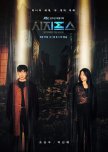
All you need is love
Sisyphus: The Myth is an intriguing drama. The thrilling teaser that was released late last year stoked the flames of excitement for many avid K-drama viewers. Coupled with a cast that’s headlined by bankable stars the likes of Cho Seung Woo and Park Shin Hye, it became one of the most talked about and highly anticipated shows for 2021. When it finally aired, however, it polarised opinions here in MDL and left a number of viewers’ expectations somewhat unfulfilled, to the extent that the ratings steadily declined to the current score hovering at around 8.There are those who continued to enjoy the show, for various reasons, and I happen to be one of them. Allow me to share my (spoiler-free) thoughts and then you can make your own decision on whether or not to embark on what has largely been a fun-filled escapist roller coaster ride.
What is it about?
In a nutshell, a woman from the dystopian future of South Korea travels back in time in the hopes of altering the course of history by preventing the seemingly inevitable fate that befell the country, the looming catastrophe of nuclear war. Central to this mission is the man who invented the time travelling machine. These two characters are played by Park Shin Hye and Cho Seung Woo respectively.
The drama contains a mix of science fiction, action, drama, and romance genres imbued with themes of revenge, redemption, remorse, love, friendship and familial bond. The director is Jin Hyeok, who notably helmed The Legend of the Blue Sea,The Master’s Sun and City Hunter, among others. The screenplay is written by the husband and wife team of Jeon Chan Ho and Lee Je In, for only their third production.
This show is jointly produced by Drama House and JTBC, and has been publicized as the network’s 10th anniversary special drama. Its title is derived from the ancient character from Greek mythology, King Sisyphus of Corinth, and is completely pre-produced with principal photography having taken place toward the end of 2020.
What’s great about it?
The Production Values
As expected of a JTBC production, this drama is very well made. I love the cinematography (in particular the indoor lighting), the many gorgeous scenic views of both Seoul in the present time and the vast landscape of the dystopian future. The set designs for various settings are quite exemplary while the special effects (CGIs, firefights, and pyrotechnics) are considerably top tier for a show of this nature.
The Acting and Cast
In my humble opinion, the leads are fantastic and I have absolutely no complaints. While Cho Seung Woo fully embodies the character of Han Tae Sul, the same goes for Park Shin Hye’s Kang Seo Hae. They deliver very strong performances in their portrayal of deeply flawed and emotionally scarred individuals. These are the types of roles that perhaps mature actors with adequate professional and life experiences are better-equipped to articulate and convey convincingly, which is very much the case here.
It’s interesting to note that unlike Cho Seung Woo’s other more serious roles, especially that of Hwang Shi Mok in Stranger, here his Han Tae Sul is much more comedic and mischievous with a copious dose of flamboyance and swagger. Despite possessing similar social awkwardness, this character is remarkably more fun while his ingenuity in getting out of tricky situations bears an uncanny resemblance to the MacGyver persona.
Such nuanced characterization is depicted by the other veteran supporting cast as well, notably Sung Dong Il, Kim Byung Chul, and Kim Jong Tae. Kim Byung Chul in particular surprised me with his depiction of Seo Won Ju. Despite being slightly OTT, I suspect he had the time of his life being “unleashed” from his usual more understated roles. Here he plays “dual characters” where his versatility is quite commendable.
Special mention goes to the young actor Lee Joo Won, who plays the young version of Seo Won Ju. This kid truly gave me goose bumps with his chilling portrayal.
The Action
For the most part, the choreography has been outstanding. From the numerous unarmed combat sequences to the firefights involving some pretty impressive military hardware. It’s not often that we see plenty of intense (and at times, logic-defying) gun battles in a non-military drama so this aspect of the production is indeed praiseworthy. Other forms of action include a lot of hard running in chasing (and being chased by) a multitude of characters.
The Romance
This particular theme is so beautifully and convincingly conveyed. It helps immensely that Cho Seung Woo and Park Shin Hye abundantly possess such wonderful chemistry which is poignantly manifested amidst the ensuing intrigue and mayhem. The pairing of Han Tae Sul and Kang Seo Hae, in many ways, makes a lot of sense. They are each plagued by a traumatic past and rendered seriously flawed, emotionally damaged, and are now fighting against the odds to change their fate.
What could’ve been better?
The Science
I love the concept here about time travelling to the past in order to change the future which gives me vibes of The Twelve Monkeys where the premise is quite similar. However, I do feel that the science as depicted in the show is super messy. Many technical aspects are open to interpretation and left to the viewers to fill in the blanks, as the story progresses. It’s a process of trial and error where we discover new things during every episode. The finale is quite possibly the most mind-blowing of all.
The Screenplay
A parallel narrative and converging plot format is used to tell the story, which includes numerous flashbacks and flashforwards by various major characters in multiple timelines - the past, present and future. Sometimes title cards are used to indicate the date, but not when the scene is obvious. It can get a little disorienting unless viewers pay close attention to the details.
How and why certain events transpire are quite convoluted and require too much deductive reasoning to derive a sense of what the answers could be. The credibility of certain characters is questionable while quite a number of the sequences appear utterly ridiculous and fantastical, despite the sci-fi tag. The seemingly lack of logic in certain respects of the overarching plot has led me to strongly suspect the screenwriters were high on recreational psychoactive substances as they were writing this.
Overall
The sooner viewers suspend disbelief and forgo questioning how the technology works by accepting the science as it is, the less confusing the show would appear to be. Regardless of the perceived weaknesses resulting from the flawed execution of the concept, I found myself enjoying the wild and, at times, exhilarating ride once I shut down my cerebral process and went instinctive. I would advise you to do the same for this is the only way to truly appreciate Sisyphus: The Myth. And if you do decide to watch this, be rest assured - the ending is very much a happy one, for everyone (kind of).
Was this review helpful to you?
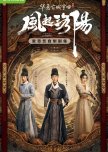
The wind rises in Luoyang
2021 has not been a particularly prolific year for detective investigation and wuxia themed C-historicals. The only one that I had completed this year would be The Imperial Coroner, which was quite good for a low budget web series. There were probably a couple others that I recall encountering but nothing large-scale in terms of the budget and prominence… until Luoyang came along. This is a highly anticipated production for several reasons.> It is headlined by Wang Yi Bo, Huang Xuan and Song Qian. WYB obviously has his immense popularity and fanbase, but I also think he is a talented actor who has much to showcase if given the right script. The critically acclaimed and award-winning HX needs no further introduction while SQ is no stranger either with a fanbase for her music productions and acting honours in recent years as well.
> One look at the source material for the adaptation tells you pretty much what to expect. The story is based on Ma Bo Yong’s eponymous novel. For those in the know, Ma Bo Yong is the author of The Twelfth Hour in Chang’an, from which The Longest Day in Chang’an is adapted, as well as The Wind Blows from Longxi which is currently being adapted to a drama.
> Ever since the teaser appeared earlier this year, expectations have been soaring, judging from social media responses and even here on MDL. I was super impressed from what little had been shown because it looked very much the top quality content that it promises to be.
Luoyang is directed by Xie Ze, who helmed Jun Jiu Ling this year as well as the high profile Yang Mi fantasy, Legend of Fu Yao. Qing Mei serves as scriptwriter, after her interesting work on The Eight last year. Principal photography took place entirely at Hengdian World Studios between November 2020 and March 2021. This iQiyi co-production is big budget which reportedly involved in excess of 5,000 sets of clothing and modeling accessories, as well as more than 15,000 sets of props. These efforts were meant to accentuate the prosperous scenes of Luoyang during the heyday of the Tang Dynasty.
The story is set during the interregnum period of the short-lived Wu Zhao Dynasty, itself a part of the great Tang Dynasty. At this time the imperial capital was relocated from Chang’an to Luoyang. The fates of three unrelated individuals are intertwined as they cross paths during investigations into a mysterious murder case which puts them on a collision course with an enigmatic secret organisation that has nefarious designs on the reign of China’s only Empress regnant, Wu Zetian.
What I Liked
The production quality. Specifically the art direction, set designs, action choreography and most obviously the money well spent on the sheer numbers of extras. From the first minute of the first episode, you could tell immediately this is top-tier content. Luoyang actually resembles a real city, rather than merely a production set. The huge crowd of inhabitants walking the streets exude a metropolis feel to the bustling city centre. Although this was filmed at Hengdian, you simply couldn’t tell because the production team managed to mask the obvious very well indeed. The action sequences of the choreographed martial arts moves, the coordination of mass fighting and the frenetic street chases are absolutely superb entertainment. Meanwhile, the inner palaces and the throne room settings are gloriously opulent and majestic, thanks in large part to the visual framing of the scenes. The general appearance of this drama is reminiscent of The Longest Day in Chang’an, with the exception of a more polished colour grading and less grain in the overall visuals.
The premise and the plot. The Tang Dynasty and Empress Wu Zetian historical settings are favourites of mine. The infusion of an intriguingly extensive overarching mystery with a profoundly conspiratorial connotation and no lack of convoluted twists makes Luoyang all the more enthralling. It is complex, fast paced, eventful and unpredictable - it’s truly been a while since we had such a smartly-written mystery. The reveals are timed to perfection without letting the cat out of the bag too early or being underwhelming to adversely detract from the gripping nature of the storytelling. The story continuously builds and engages right to the climactic ending.
The main characters and portrayals. Huang Xuan plays the gritty investigator Gao Bing Zhu, the perfect ancient iteration of the hardboiled detectives in crime noirs. This is a deliciously layered and multifaceted role that suits the range and depth that he possesses. In fact, most of the powerfully emotional moments in this drama feature his scenes. Wang Yi Bo is the stoic but brilliant engineer and scion of a prominent house of imperial engineers, Baili Hong Yi (aka Er Lang). In many respects, this character is an exact replica of his Lan Wangji in The Untamed. I actually prefer his brooding interpretation here compared to the playful character in Legend of Fei where he just can’t stop smiling. Making up the dynamic trio is Victoria Song Qian’s female inner guard, Wu Si Yue. This is an interesting character who is the only one of the three leads that initially embodies the values of justice and professionalism in her conduct, whereas the other two have their own vested interests and personal motivations. It’s safe to say that Song Qian’s performance here indeed warrants the tag of strong and relentless FL.
Of the supporting characters and cast, I have to mention a number of performances that have left quite an impression on me. The veteran Yong Mei plays Wu Zetian in what has been a uniquely refreshing take on the iconic historical figure. Most depictions hitherto have been utterly colourful, fashionably stylish and, of course, hugely intimidating. Her version is understated, subtle and nuanced. Whilst the image appears less menacing and even motherly, given the twilight years of her reign, I still feel the ominous undercurrent that threatens to burst into life beneath that deadly calm exterior. Despite the limited screen presence, Zhang Li deserves credit for her portrayal of Yao Niang, particularly during one of the scenes of acting masterclass between her and Huang Xuan.
The drama features a total of six original songs in its soundtrack. My personal favourite is the contemplative ending theme by Huang Shifu, Longing of Heart. Full listing as follows:
长风送 Chang Feng Sang - 宋茜 Song Qian
心念 Longing of Heart - 黄诗扶 Huang Shifu
无关 Wu Guan - 汪苏泷 Wang Sulong
笑黄梁 Xiao Huang Liang - 李振宁 Li Zhenning
天机 Tianji - 李常超 Li Changchao
风起洛阳 Wind from Luoyang - Winky诗 Winky Poem
What I Didn’t Like
The somewhat trippy camerawork, particularly for the action sequences. The cinematography has been somewhat inconsistent in this respect, although it does progressively improve. I do understand that it is a stylistic choice in the way the fight scenes are presented, to immerse viewers into the atmospherics of the scenes. The quieter and emotional moments, on the other hand, are generally better framed.
I did not appreciate the melodramatic aspects of the plot pertaining to FL’s brother persistently attempting to marry her off or frequently constraining her investigative efforts. Likewise the story arc relating to a certain side character and his unhealthy obsession with a long-lost childhood love interest.
I need to rant about one character in particular, Liu Ran. Somehow a majority of C-historicals seem to favour this particular characterisation. The whiny, clueless, and besotted airhead who constantly annoys by ceaselessly crying out for the object of her affections. In this case, I think I’ve heard the name “Er Lang” being called out hundreds of times throughout the whole drama. Usually such characters would eventually experience tremendous growth but not so here. Her trajectory remains constant right to the end, unfortunately. However, I do not blame Song Yi for the portrayal. She could only make do with what she’s given and I know she has a lot more substance than that.
The last thing that irked me - the ending. Without spoiling it, let’s just say that while the story does achieve closure, the final outcome isn’t ideal. There is a huge room for improvement in this aspect but I fear this is as good as it will ever get for us viewers.
Final Thoughts
All things considered, Luoyang is most definitely one of the better C-drama productions and investigation themed historicals of the year that shouldn’t be missed by fans of the genre and for those interested in trying their hand at C-historicals. At only 39 episodes in length, the storytelling is brisk, intense and coherent which is very well-suited for the binge.
Was this review helpful to you?
Experimental Science
Intriguing plot… innovative concept… poor execution… but great music. This sums up for me the entire experience of watching this drama and why I rated it a 7. For more details, please read on…LUCA: The Beginning is based on the premise of scientists creating a new species of mankind by integrating the DNA of several different animals that makes this breed of humans stronger, faster, more resilient to the ravages of time and nature, along with superpowers to boot. These experiments are backed by a shadowy entity, called “The Establishment”, with seemingly unlimited resources and broad influence that stretches far and wide into the upper echelons of government and subsidiaries in various industries. One such subsidiary fronts itself as a “Church” where its mysterious cult following is headed by a villainous woman who styles herself as the prophet for the second coming of “Messiah” – the new human hybrid. Enter Zi-O, the first of such hybrids.
The drama chronicles Zi-O’s journey from being a lab experiment to escaping the clutches of this cult while adapting and finally learning what it truly means to be human. Along the way, he encounters the intrepid policewoman Gu Reum, with whom he shares a connection to their past. Armed with the knowledge of the synopsis and having seen the captivating trailer, I started this show fully expecting a similar approach to Scarlett Johansson’s Lucy. It turned out rather differently, with mixed results.
The drama is decently-produced, reasonably well acted for the most part, but the plot and characters are quite inconsistently and illogically written. The special effects are nothing to write home about but generally well-rendered, in a minimalist manner, and mainly used to depict Zi-O’s electricity-charged superpower, and pyrotechnics for certain scenes. The production team is led by the hugely experienced director Kim Hong Seon, no stranger to dark thrillers, who helmed notable shows such as The Guest, Pied Piper, and Voice. The screenplay is written by Chun Sung Il, who mainly specialises in comedy with Chuno being the sole non-comedy tagged production in his repertoire of works. The cast contains a number of familiar faces the likes of Kim Rae Won, Kim Sung Oh, Kim Sang Ho, Park Hyuk Kwon, Ahn Nae Sang, and Jin Kyung. Look out for memorable guest appearances in the form of Lee Won Jong at the very beginning and Jung Eun Chae who had a more prominent role towards the end.
The drama starts out brightly at an engaging pace that’s filled with sporadic moments of thrills and intensity. Both leads’ backstories and shared connection are revealed little by little in every episode via numerous flashbacks. The tags for this show are spot on, where here we have mystery, melodrama, and romance in addition to the science-fiction and action. Watching this turned out to be quite an attritional viewing experience from around episode 3 onward and a pretty wild ride overall in what has been an emotional roller coaster, beyond what I had initially anticipated. It’s the kind of show where the good guys persistently get outwitted, take the (numerous) hits, fall down, get back up and repeat. Over and over again, like the wash cycle of a washing machine.
The scenario of our leads being incessantly chased by the same team of bad guys and the FL consistently getting beaten up and having her head bashed against the wall does get tedious up to the halfway point. As it turns out, for a normal female human without the additional exotic DNA, her skeletal structure is in no way less durable compared to the human hybrids because she emerges unscathed every time with nothing more than superficial wounds. As for the ML, given his inexperience in combat and lack of control over his superpowers, he ends up being constantly overpowered by the battle-hardened and ruthless professionally trained villains.
The pace slows down for three quarters of an episode just past the midway point where the FL temporarily ceases to suffer needlessly and, together with the ML, attain some much-deserved rest, among other questionable events that transpired. The momentum picks up again soon after and reached its zenith in the business end of the show where action, tragedy and more plot twists blended to produce the impetus for a thrillingly breath-taking and bitter conclusion to Zi-O and Gu Reum’s story arc as well as the overarching plot. Many viewers felt that the ending is an open one with a possibility of a second season but personally for me, it represented adequate closure where we allow ourselves to write our own epilogue to this whole affair.
I feel that the storytelling would have been more compelling with less episodes. The backstories and the plot set up dragged out more than was necessary, and included too much of the ceaseless running around and fighting (getting beaten up, more like) and meaningless sub-plots with unfulfilled romance undertones. Even with 12 episodes, certain character arcs remained unexplained and plot holes were littered throughout.
As far as the acting is concerned, Kim Rae Won and Lee Da Hee each gave a commendable portrayal of the main characters which were quite poorly conceived, in my opinion. The individual character development, (excessive) pain, and agony along with superfluous misunderstandings between them were frustrating. In particular the FL Ha Neul Ae Gu Reum (why they came up with such a long fictional name in the first place is beyond me) was written to be infuriatingly lacking in any common sense, or even the street-smarts as befits a police detective of her experience. This character continuously places her life and the lives of others in danger, and favours brawn over brains. The depiction of her taking on swarms of villains alone in unarmed combat throughout the entire show is utter nonsense and unrealistic.
The villains are an eclectic mix of characters. For me, Park Hyuk Kwon nailed it with his version of the unscrupulous and conniving NIS official Kim Cheol Soo. Whether as a protagonist or antagonist, he’s always enjoyable to watch due to his versatility and range. The award-winning Kim Sang Ho, as usual, is one of the best supporting actors in the industry. His characters are always layered and brilliantly portrayed, as is the case recently in Sweet Home and now here in this drama as the conflicted cop, Choi Jin Hwan. Jin Kyung’s cold blooded false prophet, Hwang Jung Ah, is rather theatrical and OTT at times but quite convincing especially when spouting sermons from the pulpit. Ahn Nae Sang’s role this time is a little more understated, as the lead scientist Ryu Joong Kwon. Kim Sung Oh’s Lee Son is largely one-dimensional with the stoic and cold exterior, except for that singular moment of tragic loss, a clichéd plot device, that he experiences towards the tail end of the show. Other than that, his main role is simply to inflict physical pain on others. Jung Eun Chae’s Attorney Jung is a scene-stealer, despite her limited guest role, and is actually rather fun to watch.
One of the very few pleasing aspects of this show which is done right, is the soundtrack. I thoroughly enjoyed every song in the album, in particular both the original and acoustic versions of the hauntingly evocative song, Your Eyes. Track listing as follows:
1. Sun Woo Jung A - Your Eyes
2. Jemma - LUCA
3. Lee Da Hee - Your Eyes (Acoustic)
4. KLANG - Gone
This show had so much potential to begin with, being based on a concept that is both innovative and refreshing. The entertaining and riveting start was unfortunately proven to be a false dawn. The production is hampered by the lack of quality screenplay and the resulting downward spiral of the storytelling finally culminated in a hugely incredulous and dissatisfying end.
Was this review helpful to you?
Bargaining for Love
My Bargain Queen is an office-romance drama that is set in the beautiful port city of Tianjin, China. The premise is based on two industries that are disparate in nature but not mutually exclusive - the bargaining or negotiation consultative services and the hotel business. There is a significant shift to an online bargaining business model towards the latter episodes.The plot revolves primarily around the romances of the characters involved in those lines of work as well as the people around them. In addition to the romance with all its associated tropes and the light comedy,, we also have the business aspects, slice-of-life elements as well as some measure of angst and tragic circumstances (in the backstory) as well.
This production which completed principal photography in October 2020 is aired simultaneously on Dragon TV as well as Youku streaming platform, among other regional broadcasters and streamers. The screenplay is adapted from the novel of the same name (我的砍价女王) by The Sleeping Meow (睡懒觉的喵), a nom de plume. The Ritz-Carlton in Tianjin is featured as the site of the fictional Evergreen Hotel while a number of scenes were filmed at The Happy Valley Theme Park. Kenny Lin reunites with Nicky Wu since Scarlet Heart (2011) while Wu Jin Yan and Wang He Run last collaborated on Yanxi Palace: Princess Adventures in 2019.
The production quality is well above average for this contemporary setting due to the posh set designs of The Ritz-Carlton. As expected of a rom-com, warmer colours and soft filters are applied generously in the visuals, with which I have no problems. The cinematography is generally adequate but there are some editing issues as well as certain scenes being cut which affect scene transitions but thankfully without impacting on the flow of the story.
The story works well when focusing on the business aspects, with some interestingly written subplots on the business rivalries and workplace machinations. The romance is decently developed, in particular for the main and secondary CPs. The family dynamics, in particular the FL’s mother, appears somewhat overemphasised while the inclusion of the dreaded angst from the third CP detracts from the initial positivity and feel-good vibes. The 40-episode length does give the overall impression of being drawn out for a romantic drama of this nature. Contemporary C-dramas really should consider shortening the production to perhaps 30 episodes or even less.
I went into this drama for Wu Jin Yan whom I’ve been a fan of since Story of Yanxi Palace and Legend of Hao Lan. She performs commendably here as the FL Xia Qian where her mature disposition and her own voice dubbing suits the role perfectly. The consistency of the characterization isn’t without its flaws especially towards the closing stages, which I attribute to the screenplay. Kenny Lin plays the ML Sheng Zhe Ning, who starts off as a cold and stoic hotel CEO that eventually evolves into a warm and somewhat adorable personality. Both Wu Jin Yan and Kenny Lin complement each other very well together with the right maturity levels and convincing chemistry that makes them a compelling OTP.
Nicky Wu and Wang He Run portray the SML Qin He Bo and SFL Fu Shuang Shuang respectively as the second CP of the show. Theirs is the age-gap romance which, to me, comes across as natural and organic in depiction and development. The only issue I have is Nicky Wu’s voice or rather his enunciation which lacks clarity at times. Wang He Run’s character has a significant story arc which contributes to a degree of growth that provides an additional dimension to her portrayal.
The supporting characters of He Zhi Juan and Ning Meng, respectively played by Ma Si Chao and Song Yi Xing are the main issues in the drama for me. On top of the characterization being poorly conceived, being used to create over-dramatic angst in the plot particularly at a very late stage does scream of lazy scriptwriting. The controversy giving rise to the drama isn’t particularly convincing and, to make matters worse, I feel the acting from these two actors is extremely weak. Ma Si Chao does not resemble a medical practitioner that he portrays and every time he speaks, he sounds out of breath like he is hyperventilating. Some portion of the blame has to be placed on the direction for this. Song Yi Xing’s acting isn’t the most riveting either but for all intents and purposes, she does succeed in making Ning Meng the most infuriating character in the drama. In some ways, I suppose these two do match each other as third CP and annoying couple from hell.
The soundtrack for this drama features warm mellow ballads while the BGM is well-suited although somewhat lacking in variation. I do however enjoy the creatively-rendered title sequence and the accompanying opening instrumental theme. Full OST listing as follows:
Warming Slowly 慢慢热 by Wu Jinyan 吴谨言
To the One Who Loved 致爱的人 by Lin Zike 林子珂
Child 小孩 by Chen Xijun 陈希郡
All things considered, My Bargain Queen is not a bad option to choose, especially if you’re a fan of the leads and in the mood for a light workplace romance. However 40 episodes is a commitment and the slight inclusion of melodramatic elements may dampen the mood at certain points. Proceed with caution but, for the most part, I did enjoy the overall storytelling of the drama.
Was this review helpful to you?
This review may contain spoilers
The Bad Kids
Juvenile Justice is a character-driven legal thriller revolving around Shim Eun Seok and her appointment as a judge of the Juvenile Criminal Settlement Division of the Yeonhwa District Court. Her profound hatred of juvenile delinquents provides the backdrop of her approach to dispensing justice upon the minors charged in the court of law as she presides over a variety of deeply complicated and convoluted cases.The drama is rated R-18 in South Korea due to references to drugs, suicide, physical and sexual violence. Elements of social commentary are present that explore the judiciary statutes, investigative authority, politics and education system. The complexities of the human drama is provided by the respective backstories of the juvenile offenders in terms of their difficult family backgrounds and dynamics, as well as the suffering endured by the victims and their own families.
The screenplay is written by Kim Min Seok for what is his first drama project. Although credited as an original screenplay, it purportedly draws parallels to several high profile cases that have occurred recently in South Korea; the 2017 kidnapping-murder case of an elementary school student in Incheon, the 2018 Sookmyung Girls' High School test paper leak in Gangnam, the 2020 Daejeon middle school student rental car theft accident, and the 2018-2019 Incheon Metropolitan City sexual assaults.
Directed by Hong Jong Chan with Kim Tae Sung (Happiness, Snowdrop, Inspector Koo) serving as composer. Principal photography took place in May 2021 primarily at Jeonju District Court located in Jeollabuk-do, which serves as the Yeonhwa District Court. Other filming locations include Dongseong-ro Spark in Daegu, Dongseong-ro Spark and Misa High School in Gyeonggi-do, and Seoul Women’s University.
What I Liked
There are three main aspects that have impressed me immensely.
Firstly, high praise goes to the overall production values, specifically the mood-inducing cinematography that establishes the noir vibe to the entire visual tone of the production. This fits perfectly to a narrative that delves extensively into the dark subject matter of violent crimes, together with the slow burn and gritty storytelling approach. In fact, a huge portion of the drama takes place at night where one of the more memorable moments included snowfall in its scenes. I’ve also enjoyed the framing of Shim Eun Seok’s contemplative moments in her office through low-key lighting that accentuates the evocative atmospherics throughout the story. There’s no question that a lot of money went into this production and it is apparent for all to see.
Secondly, the exceptional acting in this drama. Particularly Kim Hye Soo’s portrayal of the lead character, Shim Eun Seok. This is quite possibly her strongest performance in recent memory which I believe surpasses her role of Jung Geum Ja in Hyena and perhaps aided tremendously by the characterization that feels very much designed with her in mind. This is the epitome of intensely hard-boiled and ultra bad-assery without so much as breaking a sweat. The emotive expressiveness of her unflinching piercing gaze that punches right through any suit of armour is as intimidating as it is effective.
Other members of the cast that impressed me would include Lee Sung Min as Kang Won Joong, the Chief Judge of the Juvenile Criminal Settlement Division of the Yeonhwa District Court. Initially giving the appearance of the typical annoyingly loud and abrasive boss, he gradually settles into this extremely layered and grey character who is torn between his personal ambitions and protecting his family.
I also have to mention Lee Yeon. My first time seeing this 27-year old lady in what is truly an incredibly remarkable yet unsettling depiction of an extremely unhinged teenage boy! It’s the kind of performance that leaves an indelible imprint in your psyche for years to come. The drama also features a number of familiar faces in the supporting roles including Lee Jung Eun as Chief Judge Na Geun Hee, and Kim Mu Yeol (currently in Grid) as Division Judge Cha Tae Joo. Yeom Hye Ran (The Uncanny Counter), Yoo Jae Myung (Hometown) and Kim Joo Heon provide noteworthy guest appearances.
Thirdly, I was captivated by the intrigue of certain cases. Going into this drama I was anticipating a more “common” or “garden-variety” type of crime committed. After all, how much trouble could kids really get into, I thought to myself. Well, I was proven very wrong because some of the crimes manifested belong to the psychologically disturbing and immensely macabre category. The one that caught my attention from the get-go has to be the first case while the second case provided a fascinating insight into juvenile rehabilitation facilities.
What I Didn’t Like
My biggest issue is with the screenplay. I think Kim Min Seok was trying to weave too many themes and sub-plots into a 10-episode production, most of which finally play out in the final 2 episodes. I can’t say for sure if this drama is merely providing social commentary or perhaps the screenwriter is attempting to convey a statement or message that raises public awareness. Or it could simply be heavily dramatized fiction that’s intended to wow (or shock) viewers.
Whatever the case may be, the end product becomes something of a contradiction for me. It’s not ok for other people to abuse their authority but when it comes to the protagonist, it’s perfectly fine. It’s not a big deal for other cases to reach a dissatisfying conclusion but when it involves the lead’s tragic backstory, then justice must be fully administered at all costs. Judiciary bosses with years of experience are a bunch of noobs in comparison with the junior judge for they do not comprehend the spirit of justice, which justifies acts of insubordination. Finally, that sense of self-righteousness and moral high horse that comes complete with the speech gets repeated several times, only to be refuted by hypocrisy when convenient.
My interest in the second half kind of waned because the focus was lost amidst the tonal shift of the narrative, firstly to the politics of education and by-election campaigning, then finally to Shim Eun Seok’s complex backstory. This aspect wasn’t properly fleshed out but instead given the brief flashback sequence, alongside elements that eventually become inconsequential in the form of the ex-husband and mother-in-law who contributed nothing of significance apart from melodramatic angst.
Final Thoughts
The biggest positive for me is Kim Hye Soo’s performance which I hope would garner her at least a nomination for this year’s Baeksang. Juvenile Justice ended up being a mixed bag for me but all things considered, I would recommend this drama predominantly for the well executed technical aspects rather than the plot trajectory and didactic social critique.
Was this review helpful to you?
This review may contain spoilers
MDLers’ Choice Awards 2020 for Best Xianxia Romance, Actor & Action
With over 7K comments in the discussion board (setting a new MDL record at the time of writing), Love and Redemption is quite possibly the winner of MDLers’ Xianxia Romance of the year award for 2020, if ever there was such an honour bestowed by the panel of admins and as voted by MDLers themselves. And of course, our beloved Cheng Yi wins the Best Actor, Most Popular Actor and Best Kisser awards, among others I might have left out.Why is there so much passion for this show? Because L&R is a binge-worthy narcotic that induces an addiction so severe that one becomes fully dependant and invested from the very first dose. Throughout the 59 episodes, I simply could not refrain myself from “chasing after the story”, just to bear witness to the trials and tribulations experienced by our main leads (Yu Si Feng and Chu Xuan Ji aka SF and XJ) amidst much traumatic physical and mental suffering (and no little amount of blood loss, voluntary or otherwise) in the process, inflicted upon themselves and even on each other. This powerful romance truly deserves multiple awards because it is all inclusive and literally no one is left out.
As with other fans of the show, we persevere through each and every episode with the faintest glimmer of hope, and against the odds of the deeply dreaded historical C-drama curse, just to see a happily ever after ending. When a show gives you butterflies in the stomach and myriad emotions, damn it you know it’s good.
Truth be told, technically it’s not the most perfect production (then again nothing of this mortal world is perfect, except maybe Cheng Yi's acting) – there are minor flaws in directing, editing, and cinematography. But without a shadow of doubt, full marks go to the depiction of the story and portrayal of the characters. The visual effects, CGI technology employed and martial arts choreography are among the finest, if not the best, seen in a Xianxia drama for a very long time.
Story:
I did not read the original novel, “Liu Li Mei Ren Sha” by Shi Si Lang, and simply went in with a clean slate and without any expectation, demand or bias. What I ended up with was a masterpiece of storytelling. To put it simply, at the heart of this drama is a beautiful story about a love so pure and strong that it defies all odds and conquers everything that fate throws at it, just for a chance to shape its own destiny.
As is customary of this genre, we have the usual setting of the 3 realms – the Heavenly court and its entourage of Godly Emperors, Demi-Gods and Immortals; the Mortal Realm with its various sects of cultivators and loyal followers and groupies; and the Underworld realm filled with Demons, Devils and generally every other plausible kind available. Within this universe lies our unassuming SF and XJ, whose love story unfolds across the 3 realms and transcends several lifetimes, in a long and arduous journey filled with seemingly endless challenges and obstacles.
Nearly every conceivable plot element, trope and the emotional highs and lows that one could ever wish for in a fantasy is present in abundance. Full-blown action from fierce battles fought out in epic proportions in the heavens and on earth, between every imaginable species of celestial beings and affiliations, with all manner of divine weapons and cultivated powers. Many action C-dramas pale in comparison to this spectacle.
The romance is simply off the charts and has the steamiest kissing scenes in any C-dramas that I’ve seen this year. Being nearly all-inclusive, you will observe multiple relationship angles involving fabricated/ forced/ infatuation/ manipulated/ unrequited/ tragic love, whether it be romantic, familial, bromance, sismance and even BL among various characters. Normal rules of engagement no longer apply as even gender associations extend to androgyny levels in both corporeal and ethereal formats. Not many romance dramas, regardless of genres, could hold a candle to L&R.
There is no lack of focus on supporting characters as everyone is given ample room to develop and showcase their own storyline. There is enough suffering, tears, torment and blood vomit to last beyond a single lifetime (or in this case 10 cycles). No shortage either in frustrating misunderstandings, heart-breaking betrayals, sheer mental anguish, broken oaths and promises.
Thankfully it’s not all doom and gloom. I didn’t have to look too hard to find some semblance of luminescence within the darkness throughout the proverbial tunnel where memorable but fleeting moments of pure unabashed and unadulterated innocent love between our hero and heroine can be observed. This is fine dining at a Michelin–star establishment rather than buffet at a fast-food joint, but trust me, the long-awaited dessert certainly provides for a much welcomed catharsis at the very end – the last 30 minutes of the finale episode makes everything worth it.
Acting and Cast:
As the ML, this show has potentially propelled Cheng Yi to celestial popularity levels. His portrayal of the much adored character of Yu Si Feng through his seemingly innate ability to emote convincingly and project poignant scenes of excruciating torment while shedding TONNES OF BLOOD AND TEARS has deservedly earned him legions of new fans, including yours truly. Yuan Bing Yan, who plays FL Chu Xuan Ji, displays the necessary depth in portraying the character’s growth, from a sensory-impaired and downright clueless young woman to a multi-faceted divine being of supernatural awesomeness. Perhaps at times Cheng Yi’s superior range and mastery of acting became too overpowering, but there is no denying the explosive chemistry between these two leads. The intense emotional connection that they share does indeed feel tangible and real rather than artificial and contrived.
There are several villains who dish out multiple levels of annoyance and angst. None more so than the top two of Hao Chen and Wu Tong. Without Liu Xue Yi, L&R would not be as satisfying (and torturous) as it had been. He brings to the table his version of Hao Chen, a complex and egocentric multi-dimensional piece of work who’s armed with a deep-seated sense of self-serving twisted logic that is borne of extreme bitterness and utter resentment. I doubt HC himself even realises that he is an actual villain because in his mind, he believes himself to be the righteous and spiritual holier-than-thou sacred existence while everyone else who does not share his convictions is almost certainly in league with the Devil himself. This is where the actor succeeds in his ability to consistently maintain the angst levels and turning it up a notch or two when the situation calls for it, throughout the entire show.
Huang You Ming plays the other villain, Wu Tong. It would be unfair to vilify WT as an outright villain because in a way he is a victim of circumstances that turned him into a sociopath. Constantly filled with contempt and uncontrollable rage, coupled with insatiable bloodlust for revenge, this is a deeply troubled individual who has no control over his own fetishes either. The actor’s looks, sadly for him but fortunately for us, projects the character’s vile vibes completely.
I want to add that the voice dubbers for Yu Si Feng and Hao Chen in particular, did an absolutely amazing job in adding the emotional nuance that brings to life the actors’ portrayals ever so vividly to the viewers.
The rest of the cast generally did pretty well too. Zhang Yu Si playing Chu Ling Long displayed a remarkable transformation from the spoilt princess persona to the role of an abuse victim struggling with PTSD. Together with Li Jun Yi, who plays Zhong Ming Yan, they both formed the second main couple in the show (among many other couples) and gave the OTP a run for their money in the pain and suffering stakes.
Did I mention this drama is filled with many charismatic and good looking male actors? In addition to Cheng Yi and Liu Xue Yi, we have Zhu Zi Xiao (Yuan Lang), Fu Fang Jun (Wu Zhi Qi), Li Xin Ze (Luo Hou Ji Du), Bai Shu (Ting She) and Zhou Jun Wei (Ruo Yu).
Overall:
Love and Redemption is definitely not light and fluffy (except for very few episodes). Make no mistake, this is as heavy and serious as it gets, and the drama is extremely adept at reducing viewers into emotional train wrecks. Mercifully, it did not take too long for viewers to get an overhaul. At least we got what we deserved – a truly happily ever after ending. I had thoroughly enjoyed this dramatic journey and I think you would too.
Thanks for reading :)
Was this review helpful to you?


