


 21
21 37
37 8
8


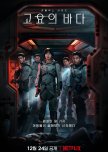
Dark Side of the Moon
Mysterious. Suspenseful. Terrifying. Emotional. For me, these are the key attributes and main selling points of The Silent Sea as it takes viewers literally to the dark side of the moon through the perspectives of an eclectic team of space explorers in the not-too-distant future.Based on the 2014 short film, The Sea of Tranquility, conceived by Choi Hang Yong who also directs, the screenplay adaptation is written by Park Eun Kyo. Composer and new age musician Lee Ji Soo serves as music director with his original score performed by The City of Prague Philharmonic Orchestra. This Netflix original sci-fi K-drama is executive produced by Jung Woo Sung. Production began in April 2020 with principal photography taking place in August 2020.
The story is set during a time when the Earth is being depleted of its most important natural resource - water. The moon represents a viable extraterrestrial option for advanced research into harnessing water conservation methods as part of wider efforts for ensuring the survival of mankind. However, a mass casualty event on the lunar space station-cum-research facility becomes the catalyst for an expedition to retrieve crucial research samples and data. A crew of scientists are assembled for this time-sensitive assignment. What awaits the team on the ground constitutes the core narrative and underlying mystery of the drama. There are parallels to be drawn with other sci-fi films such as Event Horizon, Life, and even Alien that share similar themes - journeying into the unknown, unravelling the secrets that lie beyond, and making the ultimate sacrifice for the human race.
In addition to the high tension, deep sense of foreboding and the sinister aura surrounding the mystery on the moon, the drama intimately examines the dynamics of the crew, amidst their hidden agendas and personal motivations. The global water shortage which resulted in a devastating event designated "The Great Drought" has precipitated enforcement of draconian laws that promote inequality of water accessibility. This provides the necessary backdrop for socio-political, ecological and environmental subtexts that are subtly hinted at.
For the most part, the storytelling manages to fuse all these elements cohesively and coherently. It establishes beforehand the necessary world-building that enables viewers to connect to the reality of the fictional settings, where the basis of the science isn’t overly complicated and the technology does not appear particularly advanced. Nonetheless, some suspension of disbelief is required where accuracy in the application of the laws of physics as well as the realism of spaceflights and moon landings are concerned.
In terms of the production quality and sci-fi settings, The Silent Sea well and truly delivers in this respect. The set designs of the space shuttles and base facilities, as well as the conceptual imaginings of the moon itself along with the desolation of a dystopian South Korea are remarkably detailed and life-like. This is largely attributed to the well rendered visual effects and CGI, courtesy of the South Korean VFX specialist Westworld, which is actively involved in Netflix's Korean productions the likes of Sweet Home and Squid Game. The resulting visuals are complemented by the exceptional sound production. Evocative mood music forms a prominent part of the original score that sets the overall ambience of the production.
The costume design of the spacesuits is rather interesting, given that they appear much sleeker in comparison with the NASA Intravehicular suits (IVA) seen in recent space films like Sandra Bullock's Gravity. The drama features action sequences to a certain extent, onboard the spacecraft but mostly within the confines of the lunar base.
Both cast and characterization deserve praise for their presentation in this production. Embodying the diverse multifaceted characters are an ensemble cast headlined by Gong Yoo and Bae Doona. I don’t think I need to wax lyrical about how critically acclaimed they are or their long list of accolades. I’ve been a huge fan of both but particularly of Bae Doona over the years. In this drama, they each brought their A game in their respective portrayals of the rather inscrutable but profoundly layered leads, team leader Captain Han Yoon Jae and astrobiologist / ethologist Dr. Song Ji An. Displaying extraordinary depth and gamut of emotions, I wouldn’t expect any less from either of them.
Lee Joon returns in his first drama since his discharge from military service in 2019 (although his second comeback drama, Bulgasal: Immortal Souls was released slightly earlier). He portrays the understated and somewhat straight-laced Lt. Ryu Tae Seok. Kim Sun Yeong plays the team medic, Dr. Hong Ga Young, who is perhaps the most upbeat and fun character in the group.
My third time seeing Heo Sung Tae in a supporting role this year, after Beyond Evil and Squid Game. This time he plays government bigwig Kim Jae Sun, which is a departure and a somewhat welcome change from his usually more unsavoury characters. His co-star from Beyond Evil, Kil Hae Yon also makes an appearance as the official of the Space Aeronautics Administration, Director Choi Guk Jang, who comes across as manipulative and highly suspicious.
Kang Mal Geum has had a prolific year, appearing in no less than five dramas and I happened to have watched them all. This experienced actress has a minor but no less important role in this drama. Child actress Kim Shi Ah is also deserving of a shout-out for her second appearance of the year, since her brief cameo in Kingdom: Ashin of the North. This young talent certainly has a knack for choosing high profile Netflix productions as well as dramatic roles.
I’m quite pleased with how the mystery was crafted and depicted. Although what happens afterwards - as far as the future of Earth and its inhabitants are concerned - is never shown or explained, the focus of the story was always going to be on Song Ji An. The source material is indicative of this approach as well. This has been a captivating and immersive viewing experience for me where I got to appreciate some very fine acting from a stellar cast amidst the spectacular visuals and effects of a sci-fi setting.
Was this review helpful to you?
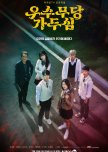
The Teenage Shaman
The Great Shaman Ga Doo Shim is a KakaoTV original production and is the first ever fantasy mystery series produced by the South Korean streaming television. It is also the ninth original program overall created by the online streaming platform since it was officially launched in 2015. KakaoTV’s primary focus is on developing short format productions including original dramas, films and entertainment programs that range from 15 to 40 minutes in length per episode and some of which are delivered in vertical form for mobile users.In-line with that focus, The Great Shaman is produced as a short web-series of 12 episodes at 20 minutes each, that airs one episode weekly.
In a nutshell, the drama tells the story of 18-year old Ga Doo Shim, who hails from a family with shamanistic abilities, as she navigates the vagaries of life complete with teen angst, real life complications and, of course, evil spirits. All this occurs when she transfers to Songyeong High School, one of the most prestigious schools in South Korea. The premise isn’t far off from Buffy the Vampire Slayer, for those familiar with the US show.
On the whole, I find this drama rather fun and enjoyable. It is generally lighthearted and easy to watch with elements of mysticism-based thrills and suspense that are not too horrifying or complex to grasp. In addition, it provides brief glimpses into slice-of-life aspects concerning school life, family dynamics, friendships and a budding romance. With a total running time of only 240 minutes, none of the themes are explored in great depth but the narrative is well paced and executed to convey the key plot points in an engaging and entertaining manner. As a low-budget web series, the production values and technical details are not significant factors to write home about. However, for the most part, the quality of the visual effects rendered and the minimalist action sequences appear to be presented well enough which come as a pleasant surprise.
The main emphasis of the storytelling is on the relationship between the two leads, Ga Doo Shim and her classmate, Na Woo Soo. This partnership largely works because of the charisma of the two leads and the rather charming chemistry that they share. Popular and much-loved former child actors, Kim Sae Ron and Nam Da Reum portray the titular role and Na Woo Soo respectively in what has been a delightful and captivating performance headlining this production. The rest of the supporting cast generally give a decent account of themselves. Special mentions go to the veterans Yoon Seok Hwa, Bae Hae Seon and Moon Sung Geung as the halmeoni, mother and principal respectively.
The soundtrack features 3 OSTs, the upbeat Run To You by Kwon Jin Ah, the evocative Dear My Nights by Seung Hee and the “couple theme” Forever Smile by Yoo Seonho. BGM comprises ominous stock music and on a side note, the voice of the evil spirit is provided by the villain from LUCA: The Brginning, Kim Sung Oh.
If you’re planning to start this, lucky you because you get to binge all episodes in one sitting compared to the rest of us who watched it while it was airing - the pain of waiting for new episodes is indeed real! Although unconfirmed at the time of writing, there is a possibility for a sequel which means we may get to see more of Ga Doo Shim and Na Woo Soo in the near future.
Was this review helpful to you?
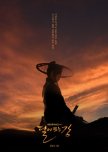
This review may contain spoilers
The moon shines as the river flows
River Where the Moon Rises is an adaptation of the novel “Princess Pyeonggang” (평강공주) by Choi Sa Gyu (최사규), which is a romanticized interpretation of the love story between Princess Pyeonggang and On Dal, characters in a classic Goguryeo folktale entitled Pyeonggang and Ondal.The timeline is set during the late 6th century, in an era when the 3 ancient kingdoms of Goguryeo, Silla and Baekje were at war with one another, while facing the looming threat of invasion by the neighbouring Northern Zhou of ancient China’s Northern Dynasties. Certain historical events as recorded in the Samguk Sagi (History of the Three Kingdoms) are incorporated into the overall setting. It is directed by Yoon Sang Ho who has extensive experience in sageuk notably with King Maker: The Change of Destiny, Saimdang Light’s Diary and his first Goguryeo drama, The Legend.
Initially beset by controversy due to a scandal involving its lead actor, Kim Ji Soo, the production team reacted swiftly by replacing him with Na In Woo from episode 7 onwards, although about 80% of the production had reportedly been completed. Fortunately the drama continued with only a brief delay in its airing schedule and the producers even decided to re-shoot the earlier episodes with Na In Woo in order to preserve the continuity of the story flow as well as for marketing and distribution purposes.
RWTMR is a dramatic sageuk that features decent production values, an engrossing plot, impressive cinematography and art direction. Through usage of cinematic colour grading, the scenery shots are absolutely breathtaking. The equally outstanding set designs provide an authentic depiction of the Goguryeo era, which appear markedly different from the usual Joseon settings. The characters are compellingly portrayed for the most part and, although by no means a sweeping epic, the finale itself certainly is, in every sense of the word. This engaging sageuk is presented in 20 episodes and headlined by a talented young cast.
The drama takes its time to meticulously chronicle how Pyeonggang and On Dal fall in love with each other and grow together to become the power couple of Goguryeo. It thoroughly explores the themes of family, friendship, loyalty, betrayal, revenge and love. There is no shortage of action, adventure, court intrigue and melodrama. The politics and schemes are not overly complicated or convoluted, while the action involves a combination of large-scale battles between opposing armies as well as concentrated sword fights and individual duels. The swordplay choreography is somewhat lacking (this isn’t up to the standard of Six Flying Dragons) but the battle scenes do not disappoint.
The pacing of the storytelling is somewhat uneven, particularly at the midway point where certain plotlines play out longer than necessary. Most notably the love triangle involving Pyeonggang, On Dal and Go Geon. The story arc concerning On Dal’s foster mother as well as the Sonno tribe village scenes prolonged a fair bit. The infusion of light-hearted comedic moments feel forced and out of place at times, especially involving the interactions between the characters of Sa Poong Gae, Tara Jin, Tara San, and the child Wol Yi. The drama does conclude in an extremely thrilling fashion where the final 4 episodes in particular are inundated with numerous action sequences and the closure of several story arcs.
The development of certain characters appear inconsistent where they are shown to behave irrationally and even out-of-character towards the end. I’m unsure whether this is due to the source material or the script. This applies to Pyeonggang, Go Geon and Hae Mo Yong. The angst of the “mini-separation” between the leads culminating in a 4-year time jump feels quite redundant. The said time jump also resulted in an explicable shift in the Crown Prince’s characterization. Pyeongang’s growth trajectory from amnesiac assassin to seasoned politician within such a short period (within a year or less) isn’t realistic. The military coup and replacement of the Crown Prince or even the King himself supposedly initiated by the Gyeru Tribe takes unbelievably long to transpire until it’s all too late. But the biggest issue I have is of the “events” that take place in the last episode - it’s difficult not to be disappointed with certain aspects of the writing.
As far as the acting is concerned, personally it took a while to warm up to both Kim So Hyun and Na In Woo in their respective roles of Pyeonggang and On Dal. In particular In Woo who was immediately parachuted in as replacement in episode 7. However, they both steadily grew into their roles and have been rewarded with a Baeksang nomination each, for Best Actress and Best New Actor.
I do feel that perhaps Kim So Hyun lacks a little bit of the nuance and gravitas in her portrayal, especially during the second half when the final phase of the storytelling transitioned to the palace. She tries hard but she’s only 21 and lacks the experience and conviction of the other Baeksang Best Actress nominees that she’s competing against. On the contrary, I think Na In Woo’s characterization seems rather more seamless as he embodies the innocence and simplicity of On Dal’s character perfectly. I’m extremely surprised and impressed with his portrayal. His presence in this production is a blessing in disguise indeed, for he elevates the entire show with his superb performance. What is also beyond doubt is the chemistry between these two characters, which makes the romance aspect convincing.
Lee Ji Hoon and Choi Yoo Hwa both deliver a very commendable portrayal of Go Geon and Hae Mo Yong respectively. Lee Ji Hoon’s performance, in particular, is worthy of much praise. As the secondary couple of the drama, the steady progression of their emotional connection to each other is compellingly depicted. These two characters very much mirror each other, through their shared hopelessness of being duty-bound to the expectations that are thrust upon them. Oftentimes I just wished that they could ride off into the sunset together and leave all their troubles behind.
The main villain is expertly portrayed by veteran actor Lee Hae Young as the nefarious and conniving Go Won Pyo. I honestly believe he would have made a more competent King than the incumbent, the blundering King Pyeong Won (as written and depicted in the drama). Special mention goes to the charismatic Kang Ha Neul, who guest stars as On Hyub. Despite his limited screen presence, he absolutely lights up the screen whenever he does appear. There’s a reason this man won Best Actor at the 56th Baeksang - the quality of his portrayal is flawless. Kim Seung Soo deserves acknowledgement for his guest role of Silla’s King Jin Heung.
The musical aspect is perfectly executed, with a well arranged original score and a number of beautifully written evocative songs.
I become love to you by ZIA
Tears Of The Moon by Kang Tae Kwan
Against The Wind by Ahn Ye Eun
This is my way by Na Yoon Kwon
You are my destiny by Lily Lily
On the whole, RWTMR is a visually sumptuous period piece that presents a poignant depiction of heartwarming yet bittersweet romance, amidst the politics and tragic outcomes of the chaotic era. Despite the inconsistencies in the script and character design, as well as my disappointment with aspects of the ending, this drama remains engaging for the most part with sufficient thrilling twists and turns to keep things interesting. There is enjoyment to be found as long as expectations are properly managed.
Was this review helpful to you?
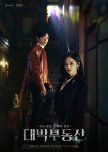
The Ghost Whisperer
Evocative, provocative, poetic, unforgettable. Daebak! Sell Your Haunted House is a tale of modern day urban fantasy featuring themes of the occult and spiritual healing that had captivated me from start to finish. Watching this drama has been an unexpectedly enthralling and almost surreal experience. From the ingenuity of the plot and characters, innovative approach to the storytelling, quality of the technical execution, compelling portrayals, expertly-engineered CGI, and finally to the beautiful music compositions, all the necessary ingredients for a well crafted production are present in abundance.I see much resemblance to Hotel Del Luna and the US series The Ghost Whisperer, where the similarities lie in the following aspects:
- A premise that’s based on assisting wandering spirits or lost souls (referred therein as ghosts), comprising mainly the malevolent as well as some clueless types, to “crossover to the other side” via supernatural means. A shamanistic approach is adopted for this show, although the practice is completely different from what I’ve seen in The Cursed, Dark Hole and others.
- The crossover process is led by a captivating FL character who is dauntless and resolute in the face of emotional adversity as she struggles to break free from the shadows of a much troubled past.
- The FL is ably assisted by a likeable and endearing ML who, in the grander scheme of things, provide balance not only to the partnership but also the spiritual zen for the both of them. It also helps immensely that their interactions give rise to such charming chemistry.
This drama showcases a unique process for clearing out ghosts from haunted buildings. Creative, innovative, distinctive and incredibly dramatic. The tools of the trade include a prodigious amount of salt, an antique brass incense holder (the incense being the key item along with the name of the dead), a “force field” gun (which looks conspicuously like a nail gun), a hairpin dagger, a protective amulet and a (un)willing psychic. The final step in the process is the exorcism itself.
The drama starts off being a case-by-case procedural that runs between a single to two episodes. There is an underlying plot concerning both the FL and the ML’s enigmatically intertwined past that manifests into the convoluted turn of events in the present day. As the story develops, the cases become unrelentingly darker while the main mystery slowly unravels via a series of wicked twists that culminates in the shocking truth of how the leads are connected to each other.
Joining our dynamic duo in their day jobs (actually they operate at night) as well as the search for the truth are the endearingly supportive secretary of the FL, and the ML’s sidekick. Both characters contribute some of the more lighthearted and comedic as well as the heartwarming moments in the show.
As far as the portrayals are concerned, this drama was made for Jang Na Ra in the lead role of the shaman, Hong Ji Ah. While initially projecting a mostly stoic and tough exterior coupled with a heart of stone, her character eventually becomes more compassionate and sympathetic. We get to witness her icy cold disposition gradually thaw to reveal a deeply vulnerable, fragile and emotionally scarred human being. There are more than a few notable scenes where Jang Na Ra shows us her impressive range, especially that powerful and heart-wrenching scene in episode 14. She truly deserves recognition for her efforts in those scenes.
In his first drama since being discharged from military service, CNBLUE’s frontman Jung Yong Hwa plays the ML Oh In Beom. His charisma makes him the perfect choice for the role of a conman who scams the unsuspecting and gullible with cleverly made-up paranormal sightings under the guise of “academic research”, which he injects with absolute fun and glee. He makes it effortless for viewers to be captivated by the quality of his portrayal that comes with a refreshing blend of levity and maturity.
Among the supporting cast, I truly appreciated the performances by Kang Mal Geum and Baek Eun Hye who play Joo Hwa Jung and Hong Mi Jin respectively. The former has a few notable emotionally-charged scenes as well as quieter poignant moments together with Jang Na Ra particularly towards the final third of the drama. The latter, on the other hand, demonstrates remarkable versatility despite her limited screen time. She delivers two markedly different portrayals of the same character, one of whom does not even have any dialogue. I think generally the women outperform the men in this drama.
The entire soundtrack is absolutely amazing. There are a total of 10 songs, with each having its own instrumental versions. My personal favourite is of course the main theme performed by Jung Yong Hwa, I Got Ya, which gives me somewhat of an 80s vibe. Jang Na Ra’s sweet vocals can be heard in the pop number DAYDREAM while NIA gives us an emotive rendition of her beautiful love ballad, Only One. Here’s the complete list:
1. Jung Yong Hwa – I Got Ya
2. Shin Minjung – Don’t Ask
3. Jang Joonghyuk – Don’t Cry
4. Jang Nara – DAYDREAM
5. NIA – Only One
6. Jung Yi Han (The Nuts) – Someday
7. Damu – In Dream
8. Want – Home
9. Amin – If i could
10. Ju Ihyun – Again
Truth be told, Sell Your Haunted House utterly caught me by surprise. Among all the K-dramas that I had been anticipating during the first half of this year, this drama wasn’t on my priority list. In fact, I did not even have such high expectations for this one. But I’m glad that it proved me wrong and delivered a truly memorable viewing experience instead. Just in case you’re wondering, it’s not that scary (for me anyway) and it has an extremely satisfying closure. This was time well spent indeed.
Was this review helpful to you?
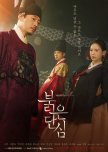
Red Heart
Bloody Heart aka 붉은 단심 which means Red Heart in hangul, is a “Faction” sageuk that presents a fictional story and set of characters within a pseudo-Joseon setting. The narrative revolves around a young King’s struggles at court against a powerful minister amidst a burgeoning romance with his childhood love.Themes of love and betrayal as well as vengeance are played out via the premise of palace politics. Some action is present, in the form of sword fights as expected of a sageuk, albeit rather briefly and sporadically sprinkled throughout but the main thrills and spills come from the political machinations and (largely verbal) confrontations amongst the major characters.
Based on the original screenplay by Park Pil Joo, this is the first sageuk drama that she has written, having previously been involved in mostly modern daily dramas. Yoo Young Eun (Queen of Mystery series) helms the production while Choi In Hee, who was recently in charge of another epic sageuk Taejong Lee Bang Won, serves as music director.
Principal photography took place at the indoor sets of Yeoncheon-gun, Gyeonggi-do, Paju-si, and Gyeonggi-do while outdoor shooting made use of Yongin Daejanggeum Park, Mungyeong Saejae Open Set, Mungyeong Gaeun Open Set, Buan Video Theme Park, and Namyangju Studio. Despite the fictional nature of the story, certain characters were purportedly modelled on real life historical figures, namely King Seonjong as King Jungjong, Queen Inyeong as Queen Dangyeong, and Park Gye Won as Park Won Jong.
The soundtrack features a mixture of western classical, including piano concertos, and traditional gugak music as the original score while 6 song compositions make up the full OST album. My personal favourite is the contemporary-traditional fusion outro theme, It’s Red, performed by alt-crossover singer ID:Earth and featuring geomungo (traditional Korean stringed instrument) specialist, Park Da Wool. Full listing as follows:
Rio (RIO) - Asrai
Kim Yeon- woo - Hope Becomes a Star
ID:Earth - It's Red (Feat. Park Da Wool)
Chungha - One Star that Blooms at Dawn
Im Sang-hyun - Let It Flow
Han Dong- geun - Because I Miss You
What I Absolutely Loved
Without a shadow of doubt, the technical execution of this drama. Specifically the direction, acting, cinematography, editing, production design, costuming, filming location, and music. This drama is absolutely gorgeous to watch and to listen to. Hands down one of the best visual representations for a sageuk (or any genre, for that matter) that I’ve ever had the pleasure of viewing. The combination of contemporary and traditional, east meets west gugak-classical fusion of the score blends harmoniously and poetically into the storytelling as well, the end result of which is a theatrical feast for the senses. Seeing and hearing is believing so don’t just take my word for it, experience it yourself!
In terms of the cast performances, two actors impressed me while a few others caught my eye as well. Jang Hyuk is simply being Jang Hyuk - the consummate professional and my favourite of the main cast. He is utterly amazing as the First Vice Premier, Park Gye Won. There really isn’t much left to say about Jang Hyuk that hasn’t been said before about this incredible actor who possesses the gravitas and breathtaking screen presence for this lead role. Bravo!
The characterization of Park Gye Won in itself deserves much praise indeed. It would be a severe understatement to merely express this character as extremely layered for he truly manifests the multifold shades of grey that carefully unravels as the drama progresses. The sheer complexity of the character design is deftly articulated by Jang Hyuk’s undeniable mastery of his craft.
It is my third time seeing Kang Han Na, whom I had most recently seen in Designated Survivor: 60 Days. Gosh, the transformation is stunning! She completely slays her role as Yoo Jung, the FL. Her inspiringly nuanced interpretation of the Royal Consort that exudes such powerful aura and indomitable spirit is nothing short of astounding. Thanks to her performance here, she makes it to my top list of enduringly memorable FLs in a sageuk, ever.
What I Generally Liked
The storytelling approach and the overall trajectory of the plot. Viewers are afforded the opportunity to gradually gain an appreciation for the introductions and backstory of the major characters as well as their motivations. Meanwhile the worldbuilding of this fictional era steadily takes its time to establish itself that eventually immerses viewers into the narrative and the atmospherics.
For the most part, the interweaving subplots and implementation of multiple plot devices are seamlessly incorporated into the overall dramatic tone that remains consistent throughout the entirety of the drama. Additionally, the scene transitions, sequencing and overall pacing largely preserves the intensity of the storytelling. What I also truly appreciate is the fact that there is unreservedly no jarring inclusion of misplaced humour or moments of levity that juxtaposes with the seriousness of this drama.
A number of performances attracted my attention in a variety of roles. This includes Lee Joon, who plays the ML, Lee Tae. I don’t particularly like his character (more on that below) but I do value his contribution to the production. His talents are beyond doubt, as seen in The Silent Sea and Bulgasal, and his portrayal of the tormented Joseon King here is worthy of acknowledgment indeed. That said, I don’t think this is his best performance and to a certain extent, this could be attributed to the characterization.
Heo Sung Tae as Minister of War, Jo Won Pyo is compelling to watch. Since Beyond Evil and the recent Squid Game, this man continues to showcase his versatility in playing diverse roles in a variety of genres. There are even times when I find myself rooting not so much for his character but for the actor behind it, which is a testament to his fine acting. The plaudits would most definitely not be complete without mention of Park Ji Yeon, who depicts Queen Dowager Choi Ga Yeon. The subtle evolution of this character amidst the intricacies of the emotional complexities involved is a credit to the actress’ exceptional quality and conviction in her portrayal.
What Could’ve Been Better
In comparison with most sageuk dramas, what this drama perhaps lacks is the warrior aspect. Granted, the primary focus of the story is on the subtlety of politics and romance rather than all out battles and violent confrontations, but IMHO every sageuk needs a captivating element concerning the way of the warrior which could have been included in a supporting capacity. I think the character of eunuch Jung is probably supposed to fulfil this role but he ends up being more of a, well, eunuch and a messenger/ errand boy. As a result, the action is very much limited and minimal in its depiction, although what little swordfighting is showcased impresses me through the finesse of the choreography. It’s somewhat of a pity, really.
The character design of Lee Tae leaves much to be desired, personally for me. In addition to the constant broodiness and look of utter dejection throughout, this character exudes toxicity, misery and sadness rather than the confidence and charisma that befits a sovereign. Sure, there are mitigating circumstances and he does have his moments, particularly when plotting schemes of entrapment and seduction, while this apparent “character growth” becomes more pronounced in the later stages of the drama.The FL Yoo Jung, on the other hand, stays true to her beliefs and principles as she takes all challenges and obstacles in her stride. Perhaps this glaring contrast in disposition has adversely affected whatever connection that they may have had certainly during their early encounters and subsequent interactions as a romantic couple. I honestly feel Park Gye Won shares a more convincing adversarial dynamic and partnership chemistry with the FL, when they aren’t even a couple, and also in his relationships with both the Queen Dowager Choi and his own wife.
For the final arc, I would have preferred more focus on shrewd political maneuverings and court intrigue rather than a prolonged melodramatic trajectory emphasised by a display of emotional fallibility through inexplicably out-of-character behaviours. This culminates in the presence of significant twists and turns that truly changed the complexion of the initial story that began. Perhaps this was the intention of the writer all along. The truth lies in the title of the drama after all. In any case and despite the emphatic closure provided, the final outcome isn't entirely my preferred ending…
Final Thoughts
All things considered and despite reservations concerning certain aspects of the plot, Bloody Heart remains quite bloody marvellous and would arguably make the list of unforgettable K-dramas in recent memory. The aesthetics alone is worth the price of admission alongside the overall exceptional quality of the cast performances and the technical aspects of the production. Fans of well-crafted sageuk dramas and/ or any of the main cast should seriously consider adding this show to the watchlist.
Was this review helpful to you?
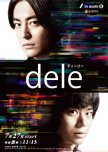
“dele”? [Yes/No]
dele.Life is a company established by Sakagami Keishi where he and Mashiba Yutaro provide the service of fulfilling the contractual requests of their clients for complete removal of their personal information upon their demise. In other words, the deletion of digital data or “relics” that is present in their electronic devices. Hence the term dele, which means to delete. This process is complicated and fraught with uncertainty, intrigue and suspense as it involves verification of the clients’ supposed deaths, the potential for consequential impact of the content in question and ultimately uncovering the truth of the deceased's final wishes.dele is a mixed media project, meaning a production involving the medium of literary works and television dramas, entitled Project Page Turner. Initiated by crime novelist Takayoshi Honda and screenwriter-novelist Kazuki Kaneshiro, with the backing of entertainment company Kadokawa Co. Ltd, the TV drama was produced first before the completion of the novel, also of the same name.
A TV Asahi production that is directed by Taketa Tsunehiro (BG: Personal Bodyguard series) and Tomoyuki Takimoto, who also co-wrote the screenplay alongside Takayoshi Honda, Kazuki Kaneshiro (BORDER series), Takeshi Aoshima (Avalanche), Tomihiko Tokunaga (Aibou, Iryuu Sousa), and Yusuke Watanabe (Gantz, Attack on Titan). The experienced Keisuke Imamura (Avalanche) serves as cinematographer while prolific composer Taisei Iwasaki and music producer DJ Mitsu The Beats contributed to the original score and soundtrack.
This drama garnered an impressive list of accolades which includes the 56th Galaxy Award for September 2018, 13th Confidence Award Drama Awards’ leading actor and grand prize for both male leads, 98th Television Drama Academy Awards’ director awards, 27th Hashida Award for leading actor and Tokyo Drama Award 2019 for drama excellence.
What I Loved
The premise of the drama, the narrative for each episode, and the underlying themes featured. I was hooked from the get-go. This is perhaps the most fascinating application of the episodic format that I have come across in recent memory. Each episode is unique, imbued with its own distinctively compelling and poignant exposition that is conveyed with a specific storytelling approach, filming style, atmospherics, side characters and even music. All 8 episodes contribute to the character growth of the two male leads and their partnership dynamics, yet stylistically they give the impression of an anthology drama with 8 vastly different mini-stories. Divergent yet cohesive, disparate without lacking coherence. Kudos to the screenwriters for the smart writing and creative approach in reinventing familiar themes to be presented over the course of the drama.
The technical execution, which is reminiscent of a film production but in a drama format. I’ve seen a few TV Asahi productions recently and they never cease to amaze me with their quality, which is the case here as well. The drama appears very cinematic indeed, especially in terms of the direction, cinematography and editing. The experienced cinematographer, Keisuke Imamura, showcases a variety of filming techniques throughout. In certain episodes, he favours long takes of back-to-the-camera shots while in others, he employs close-ups and tilted angles to capture the sense of disorientation as experienced by characters in scenes. In terms of the editing, dele is one of the rare dramas that adopts an extensive range of editing techniques including prolonged fades in scene transitions as well as match cuts, to name a few. These variations in photography and editing methods are not just used for the sake of diversity but are put to good effect in complementing and enhancing the storylines across all episodes.
The soundtrack for dele is one of the most eclectic that I have heard in a drama production. The mix of music genres is extensive and establishes the atmospherics of the narrative. Comprising big band music, jazz numbers, classical pieces, and contemporary fusion, I’ve enjoyed the music as much as I have appreciated the storytelling and for the most part, both aspects go very well together.
The aforementioned technical excellence certainly contributes towards enabling viewers to develop the necessary emotional connection to the individual stories as well as building an attachment to the various characters. The excellent execution would be meaningless without the accompanying emotive impact and this is where dele has succeeded for me. The drama excels in articulating the complexities of the human drama and emotions in a manner that is riveting, evocative, provocative, introspective, reflective and contemplative for viewers, IMHO.
The already well written characterizations are elevated further through the fine performances of the main cast. In particular, Suda Masaki who had me in complete shock and awe at his portrayal of the affable, warm and upbeat Mashiba Yutaro. I have never encountered such a character before and in a central role, no less. It’s my first time seeing this actor in action and let me tell you, his acting is absolutely phenomenal for he truly infuses this eccentric goofball with a lot of heart and soul. His physicality or rather flexibility is astounding as well with the numerous parkour-like stunts that he executes to near-perfection. Aside from the unkempt long hair, I have absolutely no criticism of the fine work that he has done here.
Yamada Takayuki plays the co-lead, Sakagami Keishi. He is an exceptionally versatile leading actor, as evidenced by his interpretation of the role here. Despite being more understated than his co-star, he skillfully projects the nuances and air of mystery that make his wheelchair-bound character a fascinating feature of the plot that arouses much curiosity in viewers. It’s worth mentioning that the slick choreography of his fight scenes performed from the wheelchair is one of the highlights for me.
The supporting and guest cast who appear in this production are certainly deserving of mention as well. The elegant Aso Kumiko, who plays the managing partner of the law firm that sponsors dele.Life and sister to Sakagami Keishi, Sakagami Mai, is convincing as the level-headed and assertive lawyer. The veterans Yo Kimiko and Takahashi Genichiro impressed me with their painfully heart-wrenching portrayals of Esumi Sachiko and Urata Fumio respectively in one of my favourite segments of the drama that is episode 3. Hashimoto Ai makes a breathtakingly scene-stealing appearance as the stunning Kusunose Yuriko while Shibasaki Ko provides subtlety and finesse with her take on Sawatari Akina in episode 5. Episode 7, which exudes whodunit vibes, features Nimura Sawa’s enigmatic Miyagawa Akane and a strong performance by Tsukomoto Shinya as the death row convict Sasamoto Seiichi. Maro Akaji, the kindly grandfather from Lupin no Musume, makes a memorable guest appearance in the highly-charged finale.
Final Thoughts
This goes into my list of all-time favourites as one of the more unique J-dorama productions that I’ve had the pleasure to watch. My favourite stories are from episodes 1, 3, 4, 5 and 8 in particular. Exceptionally produced, brilliantly written and wonderfully acted, dele is certainly deserving of recommendation and perhaps even international distribution on major OTT platforms.
Was this review helpful to you?
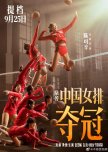
For love of the game
Leap is a sports-themed movie chronicling the development of China’s ladies’ volleyball team, from its humble beginnings in the 1980s to its current status as one of the powerhouses in the international women’s game today. It is based on actual events and also serves as a biography for the legendary Lang Ping, a former member of the original 1980’s team of rising stars who is now the head coach of the Chinese women’s team. The story spans nearly 40 years and unfolds from the perspective of Lang Ping.With a lengthy running time of 2 hours 15 minutes, watching the movie did not feel long at all. On the contrary, it felt shorter than it actually is and progresses at quite an engaging pace. When the storytelling is deeply compelling and evokes much excitement, as do most sports-themed shows that re-enact thrilling moments of competitive events, time passes you by without you even knowing. 4 pivotal events were incorporated into the story, notably the friendly/ practice match between the women’s team and the Jiangsu men’s team in 1980, the World Cup finals in 1981 between China and Japan, the Beijing Olympic group game in 2008 between China and USA, and finally the Rio Olympics quarterfinals in 2016 between China and the hosts Brazil. Watching these events felt like watching the real thing, with edge-of-the-seat thrills and whirlwind of emotions as the games were played out. It certainly helps with the suspense when I wasn’t aware of the actual results.
In between the games, we get to see Lang Ping’s personal journey, portrayed by Bai Lang (Lang Ping’s real-life daughter) in her youth and the ever magnificent Gong Li in her later years, through the struggles she experienced in making the women’s team, her stint as the head coach for the USA women’s team, and finally taking over the coaching for the Chinese team during a transitional period of reforming the entire volleyball set up. Both actresses did a marvelous job of depicting the real life icon to viewers who may not have been aware of the emotional challenges she had faced during all the years that she was involved in the sport.
In addition, the supporting cast did a remarkable job as well - Huang Bo and Wu Gang, who played the affable Cheng Zhong He (Pang Ling’s friend and colleague) and the strict-as-hell Yuan Wei Min (Pang Ling’s first coach in the 1980s) respectively. The friendship between Lang Ping and Zhong He, in particular, was beautifully brought to life in the most naturally-portrayed manner. It’s worth mentioning that real life volleyball stars were cast as themselves for the final event, the 2016 game, as were the Brazilian players. All this adds to the sense of realism in the re-enactment of the sporting moments in the film.
The meaningfully written ending theme, River of Life 生命之河, performed by Faye Wong 王菲 and Na Ying 那英, accompanies a montage of actual competition footage in the closing credits.
This well crafted, beautifully presented and well acted production is the recipient of 8 nominations for various categories of the 2020 Golden Rooster Awards, of which it won 3 awards, namely for best picture, writing and cinematographer. And it isn’t hard to see why - the nominations and awards are truly well deserved for what has been an incredible depiction of the dramatic and eventful evolution of China’s ladies’ volleyball team over the last 4 decades.
Was this review helpful to you?
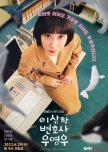
The Good Lawyer
Extraordinary Attorney Woo follows the journey of Woo Young Woo, a brilliant young lawyer who is diagnosed with autism (specifically the previously-known condition of Asperger’s as well as Savant syndrome), as she navigates the challenges of embarking on a legal career, experiencing romance and dealing with complicated familial entanglements, amongst many other real world issues that she faces on an episodic basis.Aside from presenting insights on the Autism Spectrum Disorder (ASD), the accuracy of which has been and continues to be debated, this drama also showcases plenty of office politics, legal cases, power and relationship dynamics, all nicely packaged in an endearingly feel-good light hearted wholesomeness. Think of The Good Doctor (which also has an autistic lead) but with a massive infusion of Disney/ Hallmark vibes.
An ENA production that’s streamed internationally on Netflix, EAW is directed by Yoo In Sik (Dr. Romantic series, Vagabond) based on the screenplay by the award-winning Moon Ji Won. Noh Young Shim serves as music director. Special education specialist, Professor Kim Byeong Gun from the Faculty of Health and Medical Sciences of Nazarene University, was enlisted to provide consultation on the depiction of ASD for the drama. The characterization of Woo Young Woo was reported to be inspired by the eponymous character of the film Temple Grandin, portrayed by Claire Danes, also diagnosed with ASD. Despite the original screenplay, certain legal cases depicted are based on actual events published as case studies for South Korean law journals.
The success of EAW (in terms of popularity and ratings internationally as well as in South Korea) has not only spawned a webtoon of the same name, with the first volume published in July 2022, but also the announcement of a second season of the drama a week before the finale had aired.
The soundtrack of the drama features 7 songs, including one which is performed by the lead actress Park Eun Bin herself, an a cappella rendition by MayTree as well as Bae Suzy’s contribution in support of the director who had helmed Vagabond which she had starred in. Full listing as follows:
Courage by Jongwan Kim (of NELL)
Imagination (Beyond My Dreams) by Sunwoo Jung-ah
Better Than Birthday by O3ohn
Tilt by Wonstein
It's Not Easy Not To by Suzy
Blue Night in Jeju Island by Park Eun-bin
Flash (interlude) by MayTree
What I Enjoyed
The performance by Park Eun Bin, which is helped for the most part by the characterization and trajectory of the arc. Of course I’m not entirely certain about the accuracy of the depicted ASD, having no prior real life experience and observation particularly of the Savant syndrome. Everything I know is from films and dramas but as far as comparisons go in similar roles, Woo Young Woo had me convinced. I’ve been impressed by Park Eun Bin in each of her previous appearances in The Ghost Detective, Hot Stove League and The King’s Affection. She seems to possess this propensity for tackling challenging or at least out-of-the-box roles and thrive every single time so kudos to her for not only having the courage to do so but also demonstrating her amazing range to the wider audience. She’s one of those actresses that I always look forward to because of the variety that one can expect of her characters and versatility in performance.
I enjoyed the first half of the drama more than the latter half, probably up to episode 10 or so. It had a very strong start that captured my attention immediately, coupled with the intensity of the feels that kept tugging at the heartstrings during each episode. At certain points, especially in episode 8 for me, the “dust kept getting in the eyes”, if you catch my meaning. There was a fine balance between the heavy emotions and moments of levity which was executed to perfection.
The legal cases are generally quite interesting and revolve around the “garden variety” mundane aspects of civil litigation. Nothing mind-blowing, profound or over-the-top but instead witty and conceivable, while at times even charming with regards to the resolution of certain cases. That said, not every case is amicably or neatly concluded which at least affords a sense of realism where not everything in life goes according to plan and you can’t always win, even if you’re one of the good guys.
There are a number of supporting characters that grew on me and provided an awareness of the cast who portrayed them. None more so than Joo Hyun Young as the loveable and fiercely loyal Dong Geurami. Her adorable “bff greeting” with Woo Young Woo is unforgettable and has probably reached iconic status by now. Kang Ki Young as the nice boss Jung Myung Seok is another fan favourite, and mine as well, for his enduringly calm demeanour and all round pleasant disposition. The veterans in the show are worth a mention as well, including Jeon Bae Soo who plays FL’s dad and Jin Kyung as the head of the rival law firm, Tae Soo Mi. Each showcasing their experience and lending a palpable sense of presence to the proceedings.
What Could’ve Been Better
The second half of the show or from around episode 11 onwards. I think it was a combination of the story running out of steam and the lack of meaningful plot development as well as depth to a number of the characterizations for the various supporting characters. Admittedly I lost a bit of the initial spark which somewhat led to a lack of interest in what transpires towards the end. I was also rather dissatisfied with the eventual outcome of certain character arcs, most notably the so-called redemption arc of a certain “villainous/ antagonistic” character whom I shall not name to avoid spoiling. Suffice to say, it is not the closure I had been craving for.
The romance aspect involving the FL, while sweet and captivating at first, in the end became somewhat distracting and overly emphasised. It’s cute but finally became a little too cutesy, which kind of glossed over the complications that such a relationship would have realistically exacted on all parties involved. To be honest, I wanted to observe more growth in other facets of their relationship and not merely their interactions.
While some of the legal cases are based on real life, I was often more amused than thrilled. This is perhaps due to the focus being mostly on corporate-based and civil litigation instead of dealing with criminal cases that involve the more sinister and darker side of the law, but even then do not expect smartly-written legal proceedings and quick-fire courtroom action either. This is still officially a legal drama but in reality the legal aspects are more of a side show than the main content itself.
Final Thoughts
At the end of the day, this is a feel-good drama that is meant to be uplifting and hopeful, rather than being taken too seriously. EAW created an awareness of ASD in general and not just the typical Savant syndrome of genius eccentrics, while the overall performance of Park Eun Bin were the major highlights for me. I really wanted to love the drama as much as I did when it first premiered but in the end I feel that it did not end as strongly as it had started. Certain events and characters were so infuriating and, in my opinion, were not given the outcome that they deserved. Granted, the producers may want to explore further the various characters in the second season but hopefully the writing improves to inject a more believable turn of events and character development. Only time will tell…
Was this review helpful to you?
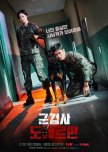
Who Let The Dogs Out
There will always be an endless supply of legal courtroom dramas, especially in K-dramaland. Likewise stories revolving around the South Korean military. But how often do we get shows that combine both genres? Well, look no further because this is exactly what this drama is about.Appropriately titled Military Prosecutor Doberman because:
a) It’s about military prosecutors who administer military justice that governs the conduct of active-duty personnel of the armed forces
b) The ML’s name is Do Bae Man, which is a homophone of doberman
c) A doberman actually guest stars in this drama
The narrative follows a pair of military prosecutors who share a complicated and intertwined past that eventually collides with the present where they battle widespread corruption that is systemic within the military organisation they both serve. In addition to courtroom battles that are adjudicated over numerous intriguing cases ranging from the garden variety to the downright awful, expect a fair amount of action as both leads are adept at hand-to-hand combat.
The drama explores themes of bullying and abuse while trigger warnings include sexual assault and violence. Moments of levity are present throughout, sometimes unexpectedly, but for the most part it isn’t a comedy. It doesn’t take itself too seriously, however, and oftentimes feels satirical. As far as realism goes, I would advise viewers to suspend a modicum of disbelief while watching this because I doubt accuracy of depiction is a mainstay of the narrative. For those wondering/ hoping, yes, there is some romance present in the story as well although it isn’t the main focus.
This TVN production is based on the original screenplay by prolific legal-themed writer, Yoon Hyun Ho, who is notable for Lawless Lawyer, Remember: War of the Son and The Attorney. Kim Jang Woo (The Veil, Do You Like Brahms?, Bad Guys) serves as music director. Principal photography took place mainly in Gangwon-do, Paju and Gimpo.
Some trivia concerning the drama - the 4th Infantry Division of the Army that appears in the play is a fictional division. The military court is answerable directly to the Ministry of National Defense and therefore is structurally impossible for the troop commander to give orders or influence proceedings in any manner.
What I Liked
Ahn Bo Hyun as ML and Jo Bo Ah as FL. I’ve seen them around but not fully in lead roles and here they’ve done a pretty decent job of carrying the entire drama. ABY has the kind of face that makes you want to laugh at times but credit to him, he manages to infuse a certain level of old school machismo and charm into the role of an extremely grey and streetsmart prosecutor. JBA possesses screen presence which I think is helped immensely by her hair. Not only when she rocks the red wig as the kickass alter ego but her bob haircut absolutely suits her soldier persona as well. She looks fierce yet stunning at the same time while exuding an aura of no-nonsense bad-assery and her action choreography is executed to perfection too.
The rest of the cast are a mixed bag for me but among those who impressed me would be the likes of Oh Yeon Soo as Noh Hwa Yeong, Kim Young Min as Yong Moon Goo and Kim Woo Seok as Noh Tae Nam. OYS is the epitome of a strong woman in this drama and I’d love to see more of such mature actresses pulling off similar characters. KYM surprised me because this is a complete departure of what I recall of him in CLOY. This guy has range and versatility, hopefully he continues to get more substantial roles in the near future. KWS perhaps plays the character with the most evolution and growth in the story which I find rather compelling.
The comedic aspect of the drama isn’t too in your face or obtrusive, but appropriately applied at the right timing with the intended effect. That is, except for one distinct moment that caught me completely off guard - a rap battle in the middle of a serious conversation. Aside from that, the seriousness isn’t overwhelming either, despite the subject matter of certain story arcs. In terms of the production quality, there isn’t much to write home about. That said, I do enjoy the stylish title sequence and the catchy opening theme, Doberman by Ha Hyun Woo. The action choreography and camerawork are not badly done while the costuming aspects of the military outfits comprising the combat and ceremonial uniforms are nicely presented.
As far as the ending goes, I quite like the positive outcome. It gives the story a satisfactory closure as well as to most major characters without any loose ends. That said, I would have liked to have seen the conclusion expanded to a number of the major players in the story but I suppose the implications are discernible after all.
What Could’ve Been Better
The overall trajectory of the story feels more prolonged than is perhaps necessary. 16 episodes is probably a little overlong for a story of this nature and the last 3 or 4 episodes do begin to feel repetitive. I personally prefer a more compact style of storytelling with the ability to sustain the excitement in the pacing and sequencing of the narrative, without the presence of unnecessary fillers or inconsequential side character arcs.
Despite being one of the central themes, the topic of bullying and abuse sometimes feel overdone for me because it is ubiquitous in K-dramaland. I would like to see something refreshingly different in the screenplay for once that provides the same impact but without the same old.
Final Thoughts
Military Prosecutor Doberman is a somewhat entertaining and feel-good one time watch that provides just enough interesting moments to make it worth my while but ultimately it isn’t anything groundbreaking or unique, despite the rarity of military-legal dramas. Nonetheless, Jo Bo Ah’s memorable performance here has definitely left a lasting impression on me.
Was this review helpful to you?
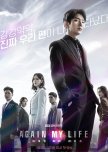
Déjà vu
Again My Life, at its core, is a political and legal thriller based on the premise of realpolitik power plays, the role of the prosecution, and systemic corruption that stems from the upper echelons of the South Korean political administration.The drama showcases elements of “time travel/ re-living the past” that lean toward speculative fiction rather than pure sci-fi or even fantasy. Additionally, it features a certain amount of action, cloak-and-dagger intrigue and aspects concerning family relationships and youth/ school themes (briefly in the beginning), as well as friendship/ team dynamics with an extremely slight hint of romance.
The plot centres on Kim Hee Woo’s crusade for justice and perhaps vengeance amidst seemingly insurmountable odds against arguably the most powerful man in South Korea - political supremo and kingmaker extraordinaire, Cho Tae Seob. He does this armed with the knowledge of the past which he re-experiences through an inexplicable turn of event while gathering a close-knit circle of comrades-in-arms who join his efforts.
This drama is adapted from Lee Hae Nal’s (이해날) debut web novel Again My Life (어게인 마이 라이프), that was serialised between 2015 to 2016 and which has also spawned a webtoon series in 2019. Directed by Han Cheol Soo and Kim Yong Min based on the screenplay adaptation by Yoo Jung Soo (Jay), Kim Yul and Lee Byung Hun. Jeon Yeo Kyung provides the art direction while Kim Jong Cheon serves as music director. Martial arts (MMA) and fight sequences are choreographed by Seoul Action School’s Kim Min Su and Lee Soo Min.
The narrative is primarily set in Seoul but principal photography for this SBS production took place in a variety of locations. These include Seoul itself as well as Incheon, Cheonan, Asan, Sejong, Samcheok, Donghae, and Busan. The fictional Korea University depicted is in fact Hoseo University 's Asan Campus. The gym run by Kang Sung Jae is Jochiwon Smoke Boxing Gymnasium. The Gimsan Branch prosecutorial office is the East Sea Research Center of the Korea Institute of Ocean Science and Technology. The exterior of Cheonha Group's headquarters is the SBS broadcasting centre located in Mok-dong. Finally, the Haeundae Doosan towers in Busan Haeundae Marine City is the setting of the epic fight between Kim Hee Woo and Doctor K in the first episode.
A total of 8 songs are listed in the soundtrack, of which my personal favourite is the catchy and upbeat outro theme, Till the End by U Sung Eun which somehow induces me to do a little dance-along whenever each episode ends. The drama also features prominently as its main orchestral theme and instrumental BGM, Gustav Holst’s hymn tune, Thaxted. This is the tune for the widely-known hymn of I Vow to Thee, My Country.
Yoon Do Hyun - What the Ggang?
Sonnet - Bring It On
Park Do Joon - Burn
U Sung Eun - Till The End
GB9 - Alone
HANHAE ft. KISSXS - Shadow
Sondia - Tragedy
Ha Dong Qn - Killing Me
What I Liked
Again My Life is an easy to watch, relaxing drama that exudes “Netflix-and-chill” vibes. It isn’t groundbreaking or original in any sense, for viewers who have watched a sufficient number of similarly themed K-productions. Despite the political-legal thriller tag, the plot lacks the required depth and complexity to make this a truly memorable viewing experience. The inclusion of “time travel” plot device doesn’t really add much more dimension to the storyline either, imho.
HOWEVER… I had fun!
The storytelling is pretty linear and simplistic in that this inherently focuses on good versus evil, embodied by an equally superpowered individual on each side of the divide. There is much scheming and plotting by both camps in the pursuit of their respective agendas but in the end, it all boils down to the final confrontation between the two main characters, which is never in doubt from the get-go. If you’re looking for complicated power dynamics and intricately-woven machinations, then perhaps your expectations would not be satiated by this drama. On the other hand, if you just want the kind of no-frills entertainment that provides eventful thrills at a sufficiently engaging pace and without exhausting brain cells or inducing angsty emotions, you’ve come to the right place.
One of the more positive takeaways from this show is the very well choreographed action sequences, particularly the MMA-inspired hand-to-hand combat scenes. These usually involve the ML fighting against numerous assailants but in a manner that appears more realistic and technical rather than merely fantastical or illogical, which is frequently the case these days. The inclusion of a number of impressive “Boss fights” certainly spices up the entertainment value even further. The nicely presented fighting scenes come courtesy of the expertly rendered camerawork, as part of the overall cinematography which has been quite decent for the most part, in this drama.
This drama features an ensemble cast that is headlined by well known leads, with a number of familiar female actresses as well. Lee Joon Gi plays the righteous and, to a certain extent, omniscient ML, Kim Hee Woo. I’ve been a huge fan for a number of years and despite the limitations of the role here, he still delivers an impactful performance where he even gets to play a teenage version of himself in a brief “back-to-school” arc. It helps immensely that he possesses an abundantly youthful countenance, and a versatile hairstyle to boot, to pull this off. Physically he is also in good form where viewers get to see him executing slick MMA moves and various stunts in his action scenes.
The controversial Lee Kyung Young plays the all-powerful main villain, Cho Tae Seob. Whenever any production requires an utterly believable and compelling antagonist for casting consideration, this man would most likely belong to that top category of candidates to call upon. Not many in the industry could boast such gravitas, screen presence and pervading aura of villainy.
The actresses involved in this project comprise Kim Ji Eun (The Veil), Hong Bi Ra, Kim Jae Kyung (The Devil Judge) and Cha Joo Young (Chimera) who portray Kim Hee Ah, Kim Gyu Ri, Kim Han Mi and Han Ji Hyun respectively. Top billing is given to Kim Ji Eun as the purported FL although her role isn’t considered significantly more profound than the rest of her counterparts who share more or less equal screen time in the grand scheme of things. Despite the initial potential and eventual possibility of a harem, it really isn’t.
Among the rest of the supporting cast, my favourite performance comes from Jung Sang Hoon as the enigmatic Lee Min Soo. The veterans of Choi Kwang Il, Jeon Gook Hwan and Yoo Dong Geun provide no small amount of experience to the production.
What Could’ve Been Better
This drama being what it is, I can’t really demand or expect much more out of the production than what was delivered in the end. That being said, I do think that there are probably three areas that could have possibly provided more personal satisfaction:
1. The romance. I wouldn’t mind seeing the ML fall in love in the process of pursuing justice. In addition, I actually shipped him with Kim Han Mi in lieu of the actual FL.
2. The characterization. Perhaps due in part to the extensive cast, the focus is shared between too many characters. I would have liked to have seen certain characters and their dynamics fleshed out more. As it is, the spotlight shines primarily on both the main protagonist and antagonist.
3. The last 2 episodes progresses much faster than the rest of the drama. Too fast, in fact. A number of details or interactions that would've provided a deeper impact to the storytelling are skipped over in favour of the final showdown between the two leading men where the other characters kind of fall by the wayside.
Final Thoughts
For all intents and purposes, this drama does reasonably well what it sets out to do, which is to provide entertainment based on a tried and trusted formula of a team of good people - led by a charismatic and ultra likeable guy - going against all odds to right the wrongs of the world by bringing the perpetrators to justice, one bad guy at a time. As I mentioned earlier, don’t expect much more; just sit back, put your feet up and chill with the show.
Was this review helpful to you?

The Travellers
Three episodes, three stories, three destinations. The common denominator that binds the diverse narrative, Haruma Miura, who appears in all three episodes of this omnibus production.This anthology miniseries is a fusion of dramatic storytelling and immersive travelogue presented in a format of three short films, each helmed by its own individual director which features a distinctive premise, storytelling approach, cinematographic style, music score and atmospherics.
Tourist is the first drama ever produced by Paravi, a Japanese premium OTT platform which began operations in the same year. Santa Yamagishi, Smith and Hatsuki Yokoo directed episodes 1, 2 and 3 respectively. The screenplays for episodes 1 and 2 were written by Yasuko Kuramitsu (Imawa no Kuni no Alice) and Yuichi Toyone while episode 3 was written by Mitsuki Yoshida. The award-winning 4-member Korean indie band, Hyukoh provided two of their hit songs for the production, namely Comes and Goes (opening theme) and LOVE YA! (ending theme). Principal photography took place across all three locations of Bangkok, Taipei and Ho Chi Minh.
What I Loved
This is a quality production with sleek cinematography that makes the most of the gorgeous filming locales through intimately framed moments and vividly depicted scenes. Each of the three episodes appears remarkably cinematic with a slightly raw edge and the kind of tastefully-rendered colour grading as well as warm palettes that I appreciate. Superb direction and design in a mostly outdoor setting has further augmented this very well produced drama.
The conceptual and somewhat surrealistic storylines that focus primarily on human drama are uniquely crafted with convincing relatability and depth to the characterizations, imbued with no lack of emotional complexity, intrigue and tension. All three episodes were a joy to behold.
I absolutely adored Haruma Miura’s performance in this entire production. His portrayal of the charming stranger in each story, Makoto Ameku, is utterly mesmerising which speaks volumes of the massive talent and charisma he possessed. To be honest, I did feel an immense sadness while watching his scenes in this drama - the world has undeniably lost such a fine actor in Haruma Miura, and we as viewers are very much the poorer for it.
Episode 1 - Bangkok
The troubled TV producer, Satsuki Nogami, played by Asami Mizukawa, faces an existential crisis where she questions the purpose of her existence before pondering the potential for cathartic release offered through death. A fateful encounter with Makoto Ameku following an incident of snatch theft leads to a session of “compensated dating” that eventually reinvigorates her outlook on life. I thought Asami Mizukawa delivered a heartfelt performance in this segment.
Episode 2 - Taipei
The due-to-be-married Honoka Tsunomori, portrayed by the effervescent Ikeda Eliza, goes on a bachelorette trip to Taipei with her friends before returning home to tie the knot. An unexpected turn of events leads to her chance meeting with Makoto Ameku, with whom she experiences an evening of thrills and spills. Ikeda Eliza manifests a youthful exuberance in her interpretation of a conflicted young woman who endures the pre-wedding jitters. This episode ended up being the most unusual and rather fun, with an infusion of Taiwanese cultural elements.
Episode 3 - Ho Chi Minh
Machiko Ono’s Kaoru Tachibana, who is going through marriage problems, chases after her two-timing husband and his mistress to Ho Chi Minh. She comes across a stranger, Makoto Ameku, who she enlists to assist her in tracking down the adulterous couple. Machiko Ono’s performance is perhaps the most nuanced in a convoluted story amongst the female leads in the drama.
Final Thoughts
Each of the stories depicted is simple yet believable, relatable, poignant and heartfelt. They subtly explore the underlying theme of self discovery where every character at long last attains a certain degree of self-actualization and closure to a chapter of their lives.
This production featuring a memorable performance by Haruma Miura truly deserves to be seen and appreciated. Despite being relatively short, Tourist has been an unforgettable viewing experience for me.
Was this review helpful to you?
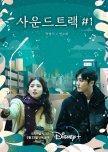
This review may contain spoilers
Music and Lyrics
Soundtrack #1 is my number one feel-good and comfort drama of the year, or any year for that matter. Yes, there have been many great productions in the past but perhaps none as short or as sweet, and certainly as satisfying as this one, as far as friendship and romance-themed stories are concerned.Truth be told, this isn’t my go-to genre and I only watch dramas of this nature probably once or twice a year, if not less. I’ve dropped or put on hold many of such dramas in the past. For 2022, the only one that I’ve completed to-date is 25-21 which is a remarkable production in its own right, but what Soundtrack #1 does so well is how it provides closure in the most satisfying, realistic and inspiringly hopeful and positive manner that most ordinary folks could relate to, in particular those who are going through a similar experience as well. And of course, this drama stars Park Hyung Sik and Han So Hee as the leads. That fact alone provided more than enough motivation to give this one a shot and I’m glad I did.
One of the rising number of K-dramas to be produced and streamed exclusively on Disney+, Soundtrack #1 is based on the original screenplay written by Ahn Sae Bom in what is his first screenwriting credit. Kim Hee Won, the prolific director of dramas including the likes of Vincenzo and The Crowned Clown, serves as director.
What I Liked
First and foremost, obviously the leads. Park Hyung Sik impressed me in Happiness but I was already a fan after the South Korean remake of Suits. Despite having not seen most of his wide repertoire of works, something that I’ll have to remedy in the near future, one could tell how well cast he is in pleasant good guy roles, especially the wholesome boy-next-door kind of vibes. Nothing flashy, OTT or extreme but rather just down-to-earth and ultra low-key type of personas suit his overall demeanour and style of acting. That said, I’m sure he possesses a lot more range that’s just waiting to be unleashed.
Han So Hee took my breath away in My Name. I just had to see more of her and in a completely different setting.The feedback on her performance, especially at the initial stage, wasn’t too promising where many viewers were either not convinced by her chemistry with Park Hyung Sik or felt that her acting was lacking. Personally for me and given the context of the narrative, I wasn’t expecting powerful award-winning type of performances from anyone. The bare minimum for me for a story of this nature is to be convinced of the interactions and connection between the leads. In that regard, I am not disappointed. I really enjoyed seeing how well both leads articulated their roles to imbue much realism into the depiction of a healthy and organic relationship development stemming from the unique backstory that they share.
In terms of the narrative, stories about unrequited or repressed romance with friends-to-lovers and co-habitation themes are a hit or miss for me but in this case, I’ve thoroughly enjoyed the viewing experience. Perhaps it’s because of how much I adore the leads that I bought into the storytelling. Another possible reason is how short it is. Any longer than 4 episodes or the usual 12 or 16-episode format and I might have bailed. But given how compact the structure of the story is and the rather entertaining pace as well as the sequencing of key plot points, I was honestly not bored out of my mind at all.
Another crucial selling point is the production values. From the first minute of the first episode, one could tell this drama has quality written all over it. The magical snowfall effect, the tasteful set designs including the charming little roadside diner, the adorable home that the leads share, the chic photography studio, among others. All of these aspects are presented beautifully with the kind of warm colour palette that makes this a cosy and inviting little drama to savour.
For a drama entitled Soundtrack #1, its soundtrack truly is deserving of the title. Featuring no less than 12 songs, perhaps the ones that speak to me would be the evocative love ballads which are amongst the best that have been released this year thus far.
The full list are as follows:
Kyuhyun (규현) - Love beyond words (사랑은 말로 표현하는게 아니래요)
Park Boram (박보람) - Want to be happy (행복해지고 싶어)
Davichi (다비치) - Your tender heart hurts me (소녀 같은 맘을 가진 그댈 생각하면 아파요)
Kim Jong Kook (김종국) - My Love
Kim Jae Hwan (김재환) - Talk to me (나에게 말해요)
Standing Egg (스탠딩 에그) - Prettiest One (너만 예뻐)
DOYOUNG (도영) - A little more (아주 조금만 더)
Monday Kiz (먼데이 키즈) - Wanna be your lover (이젠 친구에서 연인이 되고 싶어)
LeeHi (이하이) - We'll shine brighter than any other stars (우린 어떠한 별보다 빛날 거야)
SEOBIN (서빈) - Love Love Love
LEE YEJOON (이예준) - Miss You More, I'm Sorry (더 보고 싶고 미안하고 그래)
DOKO (도코) - Love Beyond Words
Final Thoughts
Most aspects are so well executed in this short production that I can’t find many, if any, faults about it. The conclusion to the story is extremely well written which leaves me with such an uplifting feeling. All things considered, this is job well done by everyone involved in Soundtrack #1 and definitely worth checking out or even a re-watch.
Was this review helpful to you?
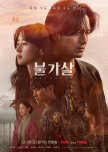
Immortality
Bulgasal: Immortal Souls was an interesting viewing experience for me. After the initial strong start, the fantasy drama evolved into a slow-burn and sappy tale of supernatural beings engaged in push-pull romantic angst filled with melodrama within a surreal dream-like ambience. Yes, I found myself inexorably drawn to its immersively hypnotic storytelling against the backdrop of two settings - briefly in ancient Goryeo / Joseon but mostly in modern day Seoul - and the rhythmic drum beats of its enthralling sageuk-inspired score.The closest resemblance that I can think of to compare this drama with would be The Twilight Saga. The Bulgasal, a fearsome immortal well-documented in Korean folklore and not unlike the ancient vampires and werewolves of the West, takes centre stage in a narrative that spans 600 years… no, make that over 1,000 years. This is a complex story of tragic loss, eternal love, betrayal, revenge, and redemption. All of these elements intertwine inseparably with one man’s curse of immortality, the titular Bulgasal, amidst the endless cycle of reincarnated lives around him.
Based on the original screenplay by the husband and wife team of Kwon So-ra and Seo Jae-won, who also co-wrote one of my all-time favourite supernatural dramas, The Guest. This was, in fact, another reason for my anticipation of this drama’s release. This TVN production is directed by Jang Young Woo, with the legendary Nam Hye Sung serving as music director. An interesting bit of trivia - despite the numerous outdoor visuals provided in this drama, in actual fact it was completely filmed at CJ ENM Studio Center. Commencing operations recently on 25 January 2021, this facility comes complete with a traditional village setting, modern drama set, virtual reality and augmented reality as well as VFX and SFX studios. It had previously hosted the production process for shows like Voice 4, Yumi's Cells, and Happiness.
What I Liked
As mentioned earlier, this drama had a very strong start with the sageuk setting of late Goryeo / early Joseon that features ancient warriors in suits of armour battling countless mythical monsters. Absolutely gritty, visceral and violent with no lack of blood and gore. The emotive aspects are provided by the portrayal of childhood abandonment and abuse, as well as traumatic loss and tragedy suffered by an entire family.
Once the plot time skipped 600 years into the future, the overall tone of the drama altered significantly. In place of ancient mythical charms, we are now presented with the unfamiliar (and appearing somewhat dystopian, though it actually isn’t) sights of present day South Korea. The deeply convoluted dynamics among the various interrelated characters begin at this point. This is not the type of melodramatic storytelling that I typically relish but there is something oddly comforting and timeless about seeing the fates of immortal beings and mere mortals intersecting emphatically before my very eyes. That said, appreciating the storytelling of this nature requires a particular mindset and I guess I happened to be in the mood for it.
As far as the production quality is concerned, I have to mention 2 aspects - the visuals and original score. Despite being nearly a complete VFX rendering, the “outdoor scenic visuals” are to die for. The many gorgeous panoramic vistas are seamlessly integrated onto the “green screen” in one of the better quality effects editing I’ve seen in recent memory. Granted it’s not flawless by any means, but does come quite close and presents an absolute feast for the eyes. Also worthy of mention would be the makeup effects created for the monsters - for once they do not appear laughably fake or cringeworthy. The original score, personally for me, is truly outstanding. I love gugak music where we have here a fusion of traditional instruments and contemporary elements producing a rhythm so captivating that I find myself completely absorbed into the storytelling.
I enjoyed the performance of the cast more so than the actual characterization, if truth be told. I think the charisma of the main lead carried the drama and, to some extent, enhanced the narrative. Lee Jin Wook as the titular Bulgasal fit the bill in all aspects. Grim, brooding yet not quite cold-hearted or cruel, as told in the folktales. Some might say his expressions are stoic and one-dimensional, but I think there is a profound grief that this man embodies through the nuanced display of his mannerisms and especially the tone of his voice. I think his character makes up for what it lacks in dynamism with emotional tenderness. Interestingly, it had been reported that Won Bin was initially offered the lead role here as his comeback drama after more than 10 years out of the industry. However he eventually declined the offer, which then went to Lee Jin Wook instead.
The second performance that I enjoyed would be Lee Joon’s portrayal of the somewhat unbalanced but rather entertaining Ok Eul Tae. The most colourful character in the show and, unsurprisingly, the fan favourite of many viewers. It certainly helps when he possesses the most outrageous taste in fashion compared to every other character. My second time seeing him in immediate succession after his equally strong performance in The Silent Sea, this man is immensely talented and utterly versatile. I have a feeling he’s one who can effortlessly take on many diverse roles and impress us each time.
The other main cast comprises Kwon Na Ra and Gong Seung Yeon. I think in terms of appearance, Kwon Na Ra is perfect as the enigmatic female figure within the historical setting. Likewise Gong Seung Yeon’s depiction of Dan Sol in the first couple of episodes comes across as dramatically evocative. Once they reappear as their modern selves, however, the aura of mystery dissipates, revealing only the characterization of the typical girl-next-door. That said, I appreciated the efforts by both in conveying their interpretation of the respective dual roles. If anything, they are both equally adept at shedding much tears.
What I Liked Less
To be honest, I would have preferred this drama to be set entirely in Goryeo or Joseon. That would have enabled the story to retain a certain level of charm and enigma, as well as to induce a more compelling approach to the storytelling. I thought the modern-day setting was rather bland and, ironically, soulless.
While I enjoyed the action sequences in the historical setting, the fight scenes in the present felt somewhat lacking. There is too much posturing for my liking and even when the monsters, in their reincarnated forms as well as the immortal ones, finally get on with the action, the choreography isn’t anything to write home about..
The characterization leaves much to be desired, particularly pertaining to the female leads as well as certain side characters. They lacked the sufficient depth that would have elevated the production but instead merely served to move the plot along towards its inevitable conclusion. I think this lack of dimension and growth perhaps hampered the development of any meaningful organic chemistry in the romance department.
Final Thoughts
Well, for all the positive aspects I would recommend the production but as mentioned earlier, the key to watching, let alone enjoying, this drama is a particular mindset for fantasy-themed melodrama. It has its moments but there is much room for improvement. In acknowledgment of the intrigue and relative entertainment value served, I’ll be generous with my rating.
Was this review helpful to you?

The Final Siege
Based on the 2007 novel, Nobou no Shiro, by Ryo Wada who also wrote the screenplay for the film. Co-directed by Isshin Inudo and Shinji Higuchi (Shin Godzilla). The theme song, Zureteruhougai, is performed by Elephant Kashimashi. Initially slated for a 2011 release, a one-year delay ensued due to the devastation caused by the Tohoku earthquake and tsunami disaster. This film eventually garnered multiple awards at the 36th Japan Academy Prize.This film feels very much like a taiga that has been condensed into a 2-hour grand production. Epic in every sense and meticulous in every detail. In spite of the slightly comedic undertone particularly pertaining to the characterization of the main lead, the narrative is quite dramatic and somewhat grim, for the most part.
What I Liked
- Production values: This is an expensively assembled film and it truly shows. The sets, filming locales, costumes, cast and sheer numbers of the extras are top notch.
- Technical execution: Cinematic visuals with attention to detail in the production design, costuming, art direction, cinematography, fight choreography in massive battle scenes and the list goes on.
- VFX component: This film utilises no small amount of visual effects, not only with CGI but also the use of "matte painting" that combines live-action with composite images of painted landscapes as the background. The end result is stunning.
- The amazing story which is a heavily romanticized account of the Sengoku period in the era of Toyotomi Hideyoshi's unification of feudal Japan.
- The performances of the cast, particularly the main lead, Nomura Mansai who won the outstanding actor award for his portrayal of Narita Nagachika. He is absolutely phenomenal where he draws upon his comedic roots from Kyogen stage acting to breathe life into this excellently written characterization.
Final Thoughts
A visual spectacle, riveting story and compelling acting. The Floating Castle is truly deserving of the numerous film honours awarded. Whether as a retelling of history or pure entertainment, the 140 minutes running time flew by easily and has been well worth the watch indeed.
Was this review helpful to you?
The Regnant Queen
Queen Seon Duk is a critically acclaimed epic sageuk production that continues to be held in high regard even to this day, since its release more than a decade ago in 2009. It has taken me just as long to finally watch this remarkable drama as part of my classic watch project, and what a fulfilling journey it has been. All the plaudits rained upon this production have been well deserved indeed, where it has won numerous awards, including honours at the 46th Baeksang Arts Awards.The Story
The drama is partly a biopic, which cleverly fuses fact and fiction. Set during the turbulent period of the Three Kingdoms, the premise is based on the official records of the Samguk Sagi and Samguk Yusa. However, the storyline is primarily driven by the events chronicled in the controversial Hwarang Segi. The screenplay is infused with much creative liberty, thanks to the writing flair of dynamic duo Kim Young Hyun and Park Sang Yeon, who have written countless epic sageuk including Jewel in the Palace, Tree With Deep Roots, Six Flying Dragons and Arthdal Chronicles.
Queen Seonduk, the first female sovereign of Silla, and her achievements have been celebrated through the ages across all historical texts. On the other hand, historians have argued whether Lady Mishil, her arch enemy, had existed in the first place. Nonetheless, regardless of the historical accuracy, the characters and events are magnificently depicted in this incredible story of love, revenge, betrayal and sacrifice.
The Production
For an MBC drama that was released back in 2009, the general quality of production is worthy of praise indeed. Filmed on location at MBC’s famous outdoor film set, Yongin Daejanggeum Park as well as Shilla Millennium Park, thus reflecting the high levels of authenticity in its set designs. The costumes in the drama, particularly those of the Hwarang, are deserving of acknowledgment.
On the other hand, the cinematography feels quite dated in terms of the camerawork and the typical overuse of close-ups, which is prevalent in older sageuk dramas. You really do get to see actors’ microexpressions up close and personal. The action choreography is not the best, in terms of the swordplay and fight sequences. Interestingly, although this is a sageuk, there are elements of wuxia blended into the choreography. Perhaps this is influenced by Hwarang Segi’s almost fantastical account of the legendary powers of the Hwarangs of Silla.
The Characterisation
This is one of those rare occasions where I actually root for the bad guys instead of the good guys. Although this drama is focused on the character development and accomplishments of Queen Seon Duk, I was won over by Go Hyun Jung’s characterisation of Lady Mishil. She successfully encapsulated this larger-than-life figure who is arguably the epitome of female empowerment, charisma and wit, despite being the ultimate villain. This woman has screen presence and gravitas aplenty, and I honestly feel that she carried the entire show. Other character portrayals that I have enjoyed include Kim Nam Gil’s extraordinary interpretation of the complex and layered anti-hero, Bidam as well as Jung Woong In as the somewhat amusing and rather fun Misaeng.
On the contrary, I feel that Uhm Tae Woong’s depiction of Kim Yoo Shin is a bit flat, where he wears the same lifeless stoic expression throughout the whole show. Meanwhile, Yoo Seung Ho’s Kim Chun Chu is rather one-dimensional. I do think that Park Ye Jin’s Princess Chun Myung is more convincing than Lee Yo Won as Princess Deok Man and later Queen Seon Duk. I know Lee Yo Won has her admirers but I think she was outshone by Go Hyun Jung who went on to win the Daesang at the Baeksang.
Music
The original score, composed by Eom Ki Yeop, is exceptional for a production of this magnitude. Most sageuk soundtracks tend to be inspiring and surreal, which is the case here as well. The main title, comprising upbeat orchestral music, is an absolute favourite. I also love Mi Shil's Theme (미실 테마), an evocative operatic aria. Viewers may not be aware that IU contributed a song to the soundtrack, the lighthearted and catchy To the sea (아라로), which is a fusion of traditional instruments and pop music.
Overall
Queen Seon Duk is actually composed of three major arcs - the first 25 or so episodes before Princess Deok Man enters the Silla palace, the beginning of the palace politics that transpire in the second arc, and the final phase after the key events that take place in episode 50. I personally enjoyed the first arc, which had a measure of action, adventure and excitement. The second arc feels somewhat more regal and solemn in terms of the court machinations. The last 12 episodes probably could have been set aside, since I’m rather torn with the ending especially for one of the characters in question but, suffice to say, all loose ends are neatly tied up.
For fans of epic sageuk, this drama is certainly worth your while to check out. It might be a little old, but this is definitely gold.
Was this review helpful to you?


