


 21
21 37
37 8
8


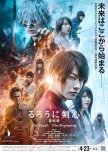
The End
Rurouni Kenshin: The Final is the fourth and penultimate entry to the live-action adaptation series based on the Rurouni Kenshin manga series by Nobuhiro Watsuki. The final adaptation, Rurouni Kenshin: The Beginning has already been released in Japan while the international release will follow soon after, so hopefully we won’t have to wait long for that.Most of the production team remain the same, comprising the screenwriter-director, cinematographer, composer and costume designer who were involved in the previous 3 instalments. Therefore, we get pretty much the same high-level quality of production and technical execution. Takeru Satoh and Emi Takei reprise their roles of Himura Kenshin and Kamiya Kaoru respectively while Mackenyu Maeda joins the main cast as the primary antagonist, Yukishiro Enishi.
The plot this time revolves around revenge arising from events that transpire in Kenshin’s backstory, the brief revelation of which shall form the basis of the main story for the fifth and final instalment. Themes of love, vengeance and atonement are explored to the fullest as part of the melodramatic undertone throughout. Regular supporting characters take a backseat while the major developments and interactions are focused on the 3 main characters.
Though the plotline is minimalist and simplistic, there are certain unanswered questions that arise during the storytelling which, in the end, do not really matter or impact on the overall conclusion. The closure is clearly defined and, regardless of what happens in the sequel, this is pretty much the end of the Rurouni Kenshin saga. Perhaps certain elements could have been fleshed out more but, all things considered, I’m satisfied with how things turned out amidst the poetic nuances.
As far as the acting is concerned, Mackenyu Maeda’s Yukishiro Enishi gives a compelling portrayal of the tormented soul, despite the seemingly anachronistic vibes (his entire team appears steampunk). There isn’t much more to say about Takeru Satoh and Emi Takei - they already embody the characters that were essentially written for them.
The action, as usual, does not disappoint at all. The choreography of the sword fights and stunts is truly insane and literally takes your breath away. The final duel is one of the best I've seen in recent memory while the multiple "boss-fights" are equally astonishing. Even the closest recent comparison, Swordsman (starring Jang Hyuk) pales in comparison to this amazing spectacle of physics-defying human feats.
At the end of the day, if you’ve been following the Rurouni Kenshin series, then you have to watch the conclusion to the series through this production. For those who are new to the story, if you enjoy action and sword fights, this movie will not let you down.
Was this review helpful to you?
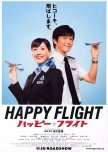
Flight 1980 to Honolulu
Everything that you’ve ever wanted to know about the technical and operational aspects of the aviation industry can be found in this movie. But don’t worry about getting confused or overwhelmed because the whole concept is conveyed in layman terms and in a very entertaining manner. The running time of about 100 minutes will quickly fly by without you noticing it.Based on the original screenplay by Yaguchi Shinobu, who also directed the film. Tokusho Kikumura (Ju-on film series) serves as cinematographer while Japanese musician Mickie Yoshino composed and arranged the music, which features Frank Sinatra’s Come Fly With Me as the theme song. Tokusatsu productions’ special effects director Hiroshi Butsuda and VFX specialist Koichi Noguchi (Tokusatsu Research Institute) are involved in the production.
All Nippon Airways (ANA) collaborated substantially on the project through the use of their commercial airliner (Boeing 747-400), equipment, personnel uniforms and hangar at Haneda airport (aka Tokyo International Airport). ANA even contributed their technical expertise to the screenplay and assembled a team to oversee the filming. The director himself researched extensively by travelling to the home of Boeing in Seattle in a bid to ensure the key elements of the story stay true to factual accuracy as much as possible.
This film was heavily promoted where 25 cities and airports all over Japan hosted the marketing campaign in 2008. Additionally the US premiere screening was held at Boeing headquarters in Seattle, Washington and attended by Joseph F. Sutter, the developer of the Boeing 747. The success of this film helped spawn 5 side stories as well as a number of TV programs and books.
What I Loved
I absolutely adore the story and the storytelling approach. I would consider this production as semi-comedic, cheerful with lighthearted undertones, highly educational and definitely moving with a lot of heart and soul. Initially coming across somewhat as a parody of aviation-themed shows, the film gradually settles into a fast-paced and action packed docudrama that consistently holds my attention. I find myself quickly immersed into the multiple perspectives of the myriad colourful characters throughout what has been a truly riveting rollercoaster ride indeed.
The attention to detail in terms of the authenticity of the technicalities involved is quite astounding. In addition to the numerous events that take place at the airport as well as in the airliner en route to Honolulu from Tokyo, viewers are also taken behind the scenes to witness the frenetic activities that go on at the control tower, radar centre and hangar. Real life people are convincingly depicted through smartly-written characterizations that include the pilots, cabin and ground crews, mechanics, air traffic controllers, radar room controllers, operations personnel and even the variety of passengers themselves. Thanks to this movie, I’ve been exposed to new jargon such as purser, pitot tube, birdstrike, and birdman, among others. I’ve even discovered that crows and pigeons are smarter than seagulls which are more likely to crash onto a plane.
Production-wise, the film has aged very well for one that was made in 2008. Neither the visual quality nor the cinematography technique appear dated. The visual effects are generally well rendered, particularly in scenes of mid-air flight. As far as the set designs are concerned, obviously the principal photography took place in an actual plane and the airport, so I have absolutely no complaints on that front.
The film features a large ensemble cast with many familiar faces and each of the portrayals are afforded almost equal screen time. For the most part, the extended focus is on Ayase Haruka and Tanabe Seiichi, who are credited as the leads in their respective roles of the inexperienced flight attendant Saito Etsuko and the young pilot, Suzuki Kazuhiro. I’m a fan of Ayase Haruko who projects a refreshing take with an upbeat and sunny disposition while Tanabe Seiichi delivers a charming and humorous depiction of the Captain-in-training.
Of the supporting cast that caught my attention, the experienced Terajima Shinobu commands the screen with her portrayal of Chief Purser, Yamazaki Reiko. Tabata Tomoko’s Kimura Natsumi is a blur of motion with her lively enthusiasm, and Eguchi Noriko catches the eye with her intriguing air traffic controller, Mizuno Yuriko, despite her limited appearance. Additionally, Ito Aiko mesmerises as Miyamoto Rie, the radar room controller.
Final Thoughts
Do not be fooled by the “fluffy and romcom-esque” poster. Happy Flight is so much more than meets the eye. I was intrigued from the get-go and enthralled all the way to the rousing conclusion of the story. In my humble opinion, this is one of the best-produced, most expansive and detailed contemporary Japanese films I’ve ever had the opportunity to savour. Kudos to the entire production team for a job well done!
Was this review helpful to you?
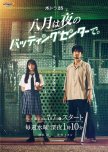
Hachigatsu wa Yoru no Batting Center de
10 people found this review helpful
Life is Baseball
As the proverbial phrase goes, when life gives you lemons you make lemonade out of them. Or in baseball terminology, when life throws a curveball at you, hit it right out of the park.Hachigatsu wa Yoru no Batting Center de revolves around a mysterious ex-pro baseball player, Ito Tomohiro, who hangs out at a local batting centre helping a variety of female customers deal with their life problems using what he calls Baseball Theory. He is able to discern their predicaments by observing the way they bat and has an uncanny ability of psychologically projecting their psyche into an utterly immersive fantasy world - a baseball stadium where he draws upon his experience in baseball competitions and strategies to deal with their respective problems.
Central to this premise is 17-year old Natsuha Mai, a part-timer at the batting centre and who happens to have her own troubled past. Joining Tomohiro’s efforts in helping these customers enables her to eventually exorcise her own demons.
Running at 30 minutes each, this 9-episode medium-budget production features slice-of-life themes presented in an episodic format that involve the workplace, family and relationship dynamics. Although the themes are not explored with profound depth, as expected of a short series, the storytelling of each story arc is rather engaging and still manages to tug at the heartstrings, particularly in the final episode.
The leads are decently portrayed by Sekimizu Nagisa and Nakamura Toru, as Mai and Tomohiro respectively. A Japanese baseball legend makes a cameo appearance during each episode, along with the multitude of guest stars. The catchy and upbeat J-rock intro and outro themes are performed by CreepHyp, namely Shoumona and Konnani Kanashiinoni Hara ga Naru.
All in all, Hachigatsu wa Yoru no Batting Center de is a well-produced quality short format series which I would categorise as a lighthearted healing drama. The baseball terminology isn’t too challenging to comprehend, provided you have good quality subs, while the life lessons conveyed are contemplative rather than outright didactic. A wholesome viewing experience indeed.
Was this review helpful to you?
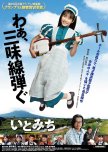
Coming of Age
Itomichi is a fascinating and heartfelt coming-of-age story that revolves around highschool student Soma Ito. Awkward and shy due to the embarrassment of her unique Tsugaru dialect, she keeps to herself most of the time and doesn’t have any friends. She does happen to be an extremely talented Tsugaru-Shamisen musician, a skill inherited from her mother, but due to her introverted personality, she conceals her talent from outsiders. The film will showcase Soma Ito’s journey of growth to realising her potential both as a person and a budding traditional folk musician. The title Itomichi refers to the thread that is used on the finger when playing the shamisen.Yokohama Satoko directed and wrote the screenplay for this film, which is an adaptation of the eponymous novel written by Osamu Koshigaya who specialises in youth themes. Itomichi is her second book to be adapted into a film. Takuma Watanabe (Aristocrats) serves as the composer. The theme song Eden no Shoujo comes from Mishiranu Sekai, the 10th album of Ningen Isu, a Japanese 3-piece rock band. Katsumi Yanagishima (Zatoichi, Battle Royale) is the cinematographer for this project.
Principal photography took place from September to October 2020 entirely in the Tsugaru region of Aomori Prefecture and features scenes of Hirosaki City, Itayanagi Town, Kitatsugaru District, and Hirakawa City. Itomichi won the Best Picture Award and Audience Award at the 16th Osaka Asian Film Festival as well as numerous other awards at the 13th TAMA film Award, 34th Nikkan Sports Film Awards (New Face Award for Ren Komai) and 95th Kinema Junpo Best Ten Japanese Movies (9th placing).
What I Liked
First of all, the narrative and the storytelling approach. This is one of the most intriguing coming-of-age films I’ve seen. I have a preference for slow burn, emotive and inspiring stories when it comes to depictions of slice-of-life with realism and relatability. For me, Itomichi undoubtedly falls within this category, with a dose of Japanese sensibility. In fact, Japanese filmmakers are masters of this distinctive approach to the genre where all elements of the story blend beautifully with the cultural aspects and atmospherics of the setting. Case in point, the juxtaposition of traditional music and modern cosplay which represents the context of this film.
In addition to the direction, other production aspects are equally well executed, which further enhances the quality of the screenplay. The filming locale has a charming appeal that is exquisitely framed by the excellent cinematography. The stunning visuals not only showcase the beauty of the setting but also evoke a somewhat nostalgic mood to the storytelling. I certainly appreciated some of the quiet and delicate moments that conveyed the complexity and depth of emotions despite having minimal dialogue between the characters.
The music in this film constitutes the backdrop of the story and abundantly features the traditional folk themes of the Tsugaru-Shamisen that is native to the Tsugaru region. I’m a huge fan of traditional music and as far as Japanese folk music is concerned, the shamisen is an enchanting instrument that is a favourite of mine. It’s ever present in Japanese jidaigeki productions but rarely, if ever, in contemporary films so I’m utterly thrilled that the beautiful sounds of the shamisen is afforded the spotlight in this story.
Komai Ren impresses as the central character, Soma Ito. Her absorbing portrayal exudes an aura of mystique that gradually draws viewers in, as it did for me. I honestly do think she was the right choice for the female lead, having also been born in Aomori which is the setting of the narrative, and she speaks the Tsugaru dialect fluently. Fun fact: In preparation for her role, she had trained playing the Tsugaru-Shamisen for nine months.
Toyokawa Etsushi, the multiple Japan Academy Award winner and recipient of numerous acting honours, plays Soma Koichi. His experience truly shines even in a supporting role, through his subdued and nuanced interpretation of Soma Ito’s father. Kurokawa Mei portrays the charismatic Kasai Sachiko while Nakajima Ayumu cuts an enigmatic figure of Kudo Yuichiro, the manager of the maid coffee shop. Yokota Mayuu’s headstrong and manga-loving Fukushi Tomomi completes the team of maids.
The final aspect that I have enjoyed immensely is the perfectly executed and extremely befitting ending. There’s nothing more gratifying than a production that sticks the landing flawlessly, complete with a powerful stage performance of the Tsugaru Aiyabushi.
Final Thoughts
Do not be fooled by the poster (at the time of writing, in case it gets changed by MDL). The fluffy vibes are somewhat misleading and completely misrepresent the actual tone of the film. If you’re in the mood for a heartwarming and poignant film with realistic portrayals and enthralling music, then Itomichi would most certainly be worth checking out.
Was this review helpful to you?
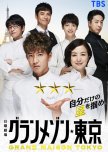
Exceptional cuisine that is worth a special journey
C’est magnifique! Le Grande Maison Tokyo IMHO is indeed grand and fully deserving of 3 Michelin stars for the wonderful French cuisine featured and also a 10/10 rating for the entire production served.Obana Natsuki is a French cuisine master chef who had always been obsessed with attaining the holy grail of his craft - the 3 stars awarded by the prestigious Michelin Guide. Unfortunately his quest for the ultimate crowning glory is bitterly cut short due to a disastrous diplomatic incident that not only upends his promising career as a celebrated chef de cuisine but also reduces him to a vilified persona non grata of both France and Japan. Fast forward 3 years later, he crosses paths with the vibrant Hayami Rinko, a talented French cuisine chef herself, who rekindles his passion for cooking and reignites his hopes of achieving the ultimate Michelin guide rating once more.
Grand Maison Tokyo is a TBS production that is directed by established directors Ayuko Tsukahara (Saiai, MIU 404), Daisuke Yamamuro (Tenno no Ryoriban, Ouroboros, Jin 1 & 2), and Takahiro Aoyama (Tengoku to Jigoku: Psychona Futari). Based on the original screenplay by one of my favourite Japanese screenwriters, Tsutomu Kuroiwa (Tokyo MER: Hashiru Kinkyuukyuumeishitsu, Unsung Cinderella: Byoin Yakuzaishi no Shohosen) with music score composed by Hideakira Kimura and the theme song RECIPE performed by Tatsuro Yamashita.
A collaboration with the international fashion magazine, Marie Claire, in which the fictional “Marie Claire dining” segment is mentioned throughout. Principal photography took place primarily in Tokyo and Paris. The 3-star restaurant L'ambroisie in Paris and the Japanese French cuisine restaurant, Quintessence (depicted as Gaku in the drama) are featured extensively. Incidentally the Japanese restaurant was awarded the prestigious 3-star rating upon completion of the drama’s airing in 2020. The dishes served by Grand Maison Tokyo were prepared by the 2-star INUA restaurant based in Tokyo, while the supervision for dessert preparation is provided by Hotel Intercontinental Tokyo Bay, which was also used as a filming location for the buffet restaurant in the drama.
The drama won 5 awards at the 103rd Television Drama Academy Awards, namely for Best Picture, Best Actor (Takuya Kimura), Best Supporting Actor (Yuta Tamamori), Best Drama Song (Tatsuro Yamashita, RECIPE), and Best Director.
What I Loved
Everything, really. I was hooked from beginning till the end. This drama has the perfect blend of all the right ingredients to produce an outstanding production with more than sufficient action, thrills, suspense and poignant moments which I have thoroughly enjoyed every minute of.
The premise of the drama is straightforward but the storytelling navigates an intriguing trajectory teeming with layers of sub-plots as well as twists and turns that seemingly never runs out of steam or ideas on how to move the story forward. And moving forward it does at nearly the speed of light with so much agency and urgency during the 11 episodes of its run. The viewing experience itself feels very much like a full course fine dining adventure. A compelling narrative that continuously grabs hold of the viewers’ attention while introducing a concept mostly unfamiliar to the uninitiated - the Michelin guide to the world of French cuisine - amidst the multitude of vividly intriguing character designs that permeate this production. One of the things I love about the characterization in this drama is that none of the so-called antagonists is an outright villain - they are simply morally grey characters with their own motivations and beliefs system operating in the highly competitive and unforgiving hospitality industry.
The technical proficiency of this drama shines through, as evidenced by the high production values and top quality execution. This is particularly true for aspects concerning production and set designs, food videography element of the cinematography, the realism of the content depiction pertaining to kitchen administration, food preparation, cooking techniques and restaurant management. Even linguistics hold prominence here with French being convincingly spoken in the drama by various characters. Likewise the music of this production induces the required atmospherics of the storytelling with an infusion of tasteful classical elements that matches perfectly the cuisine that is presented.
The main selling point of Grand Maison Tokyo, undoubtedly for me, is Kimura Takuya. The character-driven narrative suits this man’s profound ability beautifully and so it proves with his award-winning performance here. Kimutaku isn’t just portraying Obana Natsuki - He IS Obana Natsuki! The depth of the characterization complements the extensive range of the actor producing a masterclass in acting, of which I’ve had the privilege to witness…no, to experience, in this drama.
In Suzuki Kyoka, viewers have the pleasure of seeing a veteran actress that matches the excellence of Kimutaku to enhance the flavours of this drama even further. Having seen her in Okaeri Mone, she exudes similar vibes but there is a wider scope to her portrayal of the co-lead Hayami Rinko here. Her characters have a way of building an emotional connection with viewers and I find myself developing this connection from the very first minute of her appearance. What an inspiring and moving performance from this lady indeed.
Tamamori Yuta’s take on Hirako Shohei catches the eye due to the complexity of the characterization where he is allocated quite a significant portion of screen time. It’s worth mentioning that he is the central character in the spin-off drama, Gura Gura Maison Tokyo. I’m also intrigued by the performance of Onoe Kikunosuke V who plays Tango Manabu, the chef of the rival Gaku restaurant. Tominaga Ai as the editor-in-chief of Marie Claire dining, Linda Machiko Richard, dazzles the screen every time she appears.
Final Thoughts
The highest rating awarded by the Michelin guide is 3 stars, which means exceptional cuisine that is worth a special journey. All things considered, watching Grand Maison Tokyo has been an extremely worthwhile experience personally and represents a special journey in and of itself. For that reason, I’m giving it the highest MDL rating that I believe it deserves. This drama is absolutely “Subarashii”!
Was this review helpful to you?
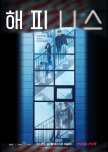
Find Your Happy Place
Contrary to the title, this isn’t a fluffy dramedy/rom-com that’s filled with rainbows, sunshine and lots of happy folks with warm smiles and joyous laughter. Well, not exactly. Happiness is about the onset of a zombie outbreak. At first glance, the story appears to be the antithesis of happiness but there’s more than meets the eye. Different viewers would have their own takeaways from this drama but personally for me, my interpretation of “happiness” in this context lies in cherishing what you have amidst the chaos that threatens to take away that which you hold dear, and those whom you so love. For this very reason, this surprising gem became a sort of happy place for me as I began to develop a fondness for the drama and the characters in it, despite the macabre premise.The director of Stranger, one of my all time favourite dramas, Ahn Gil Ho helms this production. The plot is based on the original screenplay by Han Sang Woon. Of his previous works, I’ve only seen The Good Wife which is a decent adaptation of the original US series. The drama is set in the near future that makes references to the post-Covid pandemic. Principal photography took place primarily at the extensive e Pyunhansang apartment complex in Gyeonggi province’s Okjeong city, which is used as the fictional Seyang Forest Le Ciel apartments in the drama.
Happiness focuses on a couple who find themselves under lockdown in their brand new apartment complex during the zombie outbreak, termed “Madness Epidemic” by the authorities. The ML is a Violent Crimes detective of the Seyang Police Station while the FL is a Special Operation Unit (SOU) police squad and counter-terrorism operative. Central to the plot is how these two individuals work with a shadowy governmental agency, Disaster and Crisis Response Center, led by a very mysterious SML, who coordinates the military in the zombie crisis containment and medical researchers’ efforts in finding a cure for the epidemic.
In addition to the character study into the best and (mostly) worst of human nature in the face of impending doom, the narrative contains elements of social commentary and presents a somewhat satirical depiction of a deeply hierarchical society, particularly through the class distinctions between the affluent owners living in the upper levels and the general public in rental housing of the lower levels of the apartments. Themes of apocalyptic dystopia and high-level corruption while tropes concerning childhood connection, contract marriage, and friends to lovers are all present in this drama, among others which I won’t mention further to avoid spoiling. Additionally, jump scares feature quite a fair bit in a number of scenes.
For what appears to be a moderately budgeted drama, I have no major complaints in terms of the production values, design and quality. The fight choreography is quite impressive and so too the presence of the military elements and use of firearms in the action sequences. The makeup for the zombies, including blood and gore, appear well rendered. As most of the story takes place at the apartment complex, there isn’t a sense of the scale of the outbreak, which purportedly occurs nationwide and also across the world. This means there are no massive numbers of extras posing as zombies and running riot all over the place, like scenes in Train to Busan or the sageuk-zombie fusion, Kingdom.
Generally I’m quite pleased with how the story is presented, in terms of the plot development and pacing, sequencing of events in a linear fashion and with minimal disruptions to the timeline i.e. lack of excessive flashbacks of backstories and jumping between different time periods. While there are some similarities with another apocalyptic drama, Sweet Home, the notable differences being the apartment building here is much bigger and the action also takes place outside the building but within the expansive complex that houses several apartment towers. The sheer number of people involved as far as the inhabitants are concerned as well as the external forces outside the complex are much higher. I would say the atmosphere in the drama isn’t as bleak or toxic but instead rather pleasant, were it not for the pesky zombies.
A majority of the characters are quirky and out-of-the-box, which is part of the drama’s charms. I have come to love all three leads and certain supporting characters, in particular a certain little girl. Other characters are those that I either despise or feel perturbed by, but that is testament to the characterization. Most of the supporting characters get their fair share of screen time and story arc. Some characters, however, such as the female soldier who assists the SML in his endeavours and the FL’s colleague in the SOU, unfortunately do not get fleshed out for our benefit. The bureaucrats and chaebols connected to the zombie outbreak also do not make their presence significantly felt until the tail end of the drama, which appears more as an afterthought rather than any crucial aspect of the storytelling.
As far as the acting is concerned, this is where Happiness shines through. The ML Jung Yi Hyun is played by Park Hyung Sik who returns in his first drama appearance since being discharged from military service. Since I last saw him in Suits, he retains that exact same boyish charm and projects the level-headed calm and sensible persona that we have come to expect of his characters. Along with a strapping physique, he certainly looks the part of a violent crimes detective. Han Hyo Joo, who plays the FL Yoon Sae Bom, also makes a return to the small screen this year after last appearing in W in 2016. Among all the lead characters, the FL is quite possibly the most offbeat of them all. Fearless, daring, streetwise and without a care about authoritative structures or social constructs, this is an independent woman who knows what she wants and how to achieve it. She might appear nonchalant and apathetic at times but deep down she has a clear distinction between right and wrong, and has a strong sense of protectiveness over those whom she deeply cares for. All these qualities are magnificently portrayed by Han Hyo Joo.
These two characters are the best part of this drama for me. They’re not perfect, far from it in fact. Their occasional catastrophic decision making counts among other seemingly ridiculous flaws which manifest over time but still I couldn’t help but root for them to overcome all the challenges and dangers that come their way. Their dynamics are top quality where every interaction, even inaction at times, between them truly is a joy to behold.
The SML is played by Jo Woo Jin, no stranger to the industry who has appeared in many renowned drama and film productions over the years. It is a blessing indeed for us viewers that he graces this drama with his presence. The role of the extremely grey and layered Han Tae Seok suits this man to a T, where his understatedly nuanced performance breathes life into the character to further elevate the drama.
Among the supporting cast, special mention has to go to Baek Hyun Jin. This is the third time I’ve seen him this year, after Taxi Driver and The Devil Judge. Known affectionately as the “U-data guy” for his OTT portrayal of a psychotic CEO in Taxi Driver, this actor simply excels in portraying antagonistic roles. In this drama, his character of Oh Joo Hyung is much more subdued in comparison with his previous roles but still does not detract from the lowkey villainous vibes that he consistently imbues into his acting. Bae Hae Seon is another one who has had a prolific year after appearances in Inspector Koo, Hometown CCC, and Great Shaman GDS, of those I’ve seen. She plays the hubristic and self-important “Queen Bee” of the apartment complex, Oh Yeon Ok. Her portrayal here is angsty yet amusing at the same time. Prolific child actress, 9-year old Song Ji Woo who plays Park Seo Yoon, the sickly little girl living on the 5th floor certainly deserves mention for her efforts in the drama.
Happiness introduced me to a number of new musicians who enhanced the production with their evocative music. Joe Layne with the very fitting opening theme and an emotional English-language track, while SAAY, Isaac Hong and Jemma contributed a song each. The original score is composed by multiple award-winning Kim Tae Seong who has form with this genre, having worked on numerous suspense-thriller productions over the past decade.
Eureka (Opening theme) and What Lies Ahead - Joe Layne (조레인)
Pain - Isaac Hong (홍이삭)
Nobody Knows - SAAY (쎄이)
ENIGMA - Jemma (젬마)
IMHO, Happiness is definitely one of the biggest surprises of the year, as far as K-dramas are concerned. It’s not as big budgeted and extensively promoted as some of the more well-known productions and the horror theme involving zombies may have turned off some viewers from trying this one out. But I’m glad I gave this a go and what a fulfilling, entertaining and worthwhile viewing experience it has been. If you can overcome your fear of zombies, do give this drama a chance and, who knows, you might end up being pleasantly surprised as well.
Was this review helpful to you?
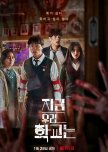
Dying is easy, surviving is hard
All of Us Are Dead is adapted from the serialized Naver digital webtoon entitled Now at Our School, which was written by Joo Dong Geun and published from 2009 to 2011. I haven’t read the webtoon but it reportedly consists of only nine chapters. Therefore it would probably stand to reason that the live-action adaptation has expanded on its lore, especially when Netflix is involved where the potential exists for a series to be renewed for a second season, depending on the success of the first season.The drama is co-directed by Lee Jae Gyoo, who won a Baeksang for Damo and directing honours for Beethoven Virus, and Kim Nam Soo. It is based on the screenplay adaptation written by Cheon Seong Il, the screenwriter for Chuno and The Pirates. Principal photography took place from June 2020 to February 2021, which was prolonged due to the Covid-19 outbreak during filming.
In a nutshell, the story revolves around a group of highschool students who are trapped at their school, the ground zero for the onset of a zombie virus outbreak. The drama depicts them fighting to survive both the zombies and virus infection while waiting to be rescued. The rating classification for this production is R-18 and aside from the expected zombie action and gore, certain trigger warnings are present in the form of bullying violence that even borders on sexual assault.
In a recent interview with director Lee Jae Gyoo via the online presentation of the production in South Korea on 26th January, he had intimated that this drama would be uniquely distinct within the K-drama zombie genre that has become commonplace in recent years. According to him, All of Us Are Dead features thought-provoking themes that add a different meaning to a zombie apocalypse, where the focus is on the choices young students make at the boundary between life and death. In addition, the story also provides a satirical take on South Korea's educational system and school space.
What I Liked
I love the K-drama zombie genre and anything closely or even remotely associated in the form of mutants, monsters and the like, complete with the horror, action, adventure tags whether in contemporary, sageuk or fantasy settings. As much as I’ve enjoyed the recently aired Happiness, my preference for zombies leans towards the more feral variety with hordes of them rampaging through the populace annihilating anything and everything in their path, in the mould of Train to Busan (which gets a shoutout in this drama), Kingdom and Rampant. Call me sadistic but I’m all for epic levels of productions with economies of scale in delivering the exhilaration of the action, thrills and suspense, along with all the emotive aspects of human drama as well. Based on what I’ve seen of the depiction of zombies in this drama, it manages to convey all of the above, and has successfully fulfilled most, if not all, of my expectations.
A co-production between JTBC Studios’ Film Monster and Kim Jong Hak Production for Netflix, the quality of the technical execution is beyond doubt. No effort or budget was spared as even a huge four-storey set was constructed as the setting of the fictional Hyosan High School. The money was very well spent indeed as the production design looks top notch with all the nitty gritty details providing an intriguing backdrop to the zombie outbreak. The zombies themselves are deftly manifested in terms of the makeup, special and sound effects, as well as the blood, gore and contortions which complement the extensive range of expertly choreographed sequences.
The cinematography is deserving of praise with the crucial aspect for productions of this nature being the calibre of the camerawork, which for the most part does not let me down (or induce nausea). The well rendered scene transitions are testament to the standard of editing as well, where it’s worth mentioning that the chaotic scenes at the cafeteria and library involving 200 or so extras are reportedly the result of a single-take shooting.
As far as the narrative is concerned, the premise of a school-based zombie outbreak is refreshingly new to me. Some viewers may associate elements of Dark Hole to be of similar vein but personally it really isn’t despite the comparable vibes. While I wouldn’t consider the overall plot trajectory as particularly inventive or groundbreaking, what distinguishes this drama from most others that I’ve seen is the storytelling approach.
In addition to the multiple POV perspectives of the main characters, the screenplay takes its time to explore the origins of the zombie outbreak and motivations behind the actions resulting in the said virus being unleashed on humanity. The depiction of characters dealing with the tragic circumstances in the aftermath certainly elicits an emotional response as well.
True to the director's word, this drama tackles both existing and hypothetical societal concerns which provide added dimensions to the storytelling. Among the thought provoking themes incorporated into the storytelling - unchecked and unmitigated school violence, the ingrained hierarchical social order within a society segmented by wealth and power, the deeply polarised mindsets of the local government and communities in the event of an apocalypse or the aftermath of a mass casualty event. The role that technology plays in binding all these themes together is tackled as well in the form of the ever increasing reliance on and abuse of social media as an outlet that fuels the dissemination of actual and fake news.
The infusion of a number of side stories, character arcs and a narrative that steadily evolves as the drama progresses helped to allay my initial concerns of the story sustaining its momentum over 12 episodes. The dynamic between characters giving rise to various forms of conflicts, teen angst, and even hints of romance contribute towards preserving an atmosphere filled with tension and suspense. That said, I do think the drama could have been slightly shortened without adversely impacting the storytelling.
The main cast is made up of young actors, some of whom were prolific child actors and even critically acclaimed talent as well. Park Ji Hoo, Yoon Chan Young, Jo Yi Hyun, Park Solomon and Yoo In Soo portray the highschool students who are caught up in the ensuing chaos. Featuring roles of varying capacities, these youngsters provide a decent account of themselves through characterizations that are adequately written, for the most part. Lee Yoo Mi is particularly impressive here following her brief appearance in Squid Game, given her experience of being the oldest actress portraying a student and for her captivating portrayal of the antagonistic Lee Na Yeon that actually steals the scenes from the protagonists at times. Meanwhile, I would consider Park Solomon’s affable Lee Soo Hyuk, Jo Yi Hyun’s stoic Choi Nam Ra and Ha Seung Ri’s heroic archer Jang Ha Ri as my favourite characters amongst the students.
The supporting cast come across as being more familiar, where we get to observe Kim Byung Chul (Sisyphus, Doctor Prisoner), Lee Kyu Hyung (Happiness, Voice 4), Lee Yo Mi (Squid Game), Uhm Hyo Sub (King of Tears, War of the Son) , Bae Hae Seon (Happiness, Inspector Koo, HomeCha), Jeon Bae Soo (Stranger, Lawless Lawyer), Kim Jong Tae (The Veil, Sisyphus), and Yoon Byung Hee (Hot Stove League). The more nuanced acting in the drama is provided by these mostly experienced veterans, especially Kim Byung Chul as science teacher Lee Byeong Chan. Utterly intense, sinister, and convincing, unsurprisingly the best performance in the entire drama comes from this award-winning actor. Jeon Bae Soo gets to play the hero this time in a memorable performance as firefighter Nam So Ju.
What I Didn’t Appreciate
When it comes to K-dramas and school students, bullying and violence are par for the course - they’re never far away and will probably remain as a staple trope. It’s infuriating and disturbing to watch at times and seems to be escalating in brutality these days. The scale of the savagery seems to be higher than the actual zombie action itself but it’s something that all viewers of K-content will need to accept and get used to, unfortunately.
The main villain of the story is featured through the gangster wannabe and low-life bully Yoon Gwi Nam, played almost too well by Yoo In Soo. This despicable human thrash has the typical clichéd story arc that stretches far too long, in my opinion, before eventually fizzling out as a mere afterthought.
As mentioned earlier, I think the storytelling would have been better presented if it were slightly shorter, perhaps with 8 or so episodes.Despite the multiple POVs, too much time is allocated to the teen drama at school than is perhaps necessary. I would have liked to have seen Kim Byung Chul’s character more fleshed out in real time rather than merely as a series of flashbacks. The same goes for Jeon Bae Soo’s firefighter who is desperately trying to get to his daughter.
There are numerous annoying characters in this drama, some of whom supposedly supplying the usual ill-fitting comic relief that appears very much jarring to the senses.The tough girl wannabe and her whingeing companion, the cowardly police sergeant, and the bickering couples, to name a few. I think generally the boys are better written than the girls who come across as petty and physically abusive towards their male counterparts, as far as the youngsters are concerned.
Final Thoughts
All things considered and despite its flaws as well as the overly dramatic ending that has the potential for expansion either as a sequel or a side story, I had a great time mainly because of my love for horror and zombies. We honestly do need more zombie stories because there is too much romance, rom-coms and melodrama in dramaland already and simply not enough of the macabre flesh-eating, blood-sucking undead. All of Us Are Dead is not the best in the genre, where Kingdom still reigns supreme, but as a one-time weekend watch it definitely fulfils my insatiable hunger for such content, albeit temporarily.
Was this review helpful to you?
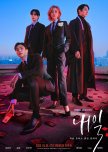
Living for Tomorrow
Tomorrow tells the story of a select band of Grim Reapers who perform the exact opposite of the Angels of Death’s conventional job description as we know it. They don’t accompany the souls of the dead to the afterlife but instead seek to ensure that the souls remain very much intact in their current lives. In other words, their sole purpose is to prevent folks (who are intent on dying) from dying.Presented in an episodic format with a series of standalone cases - each story that comes complete with its own unique themes and ambience - against the backdrop of an overarching mystery that spans several centuries in the making. This tale of urban fantasy masterfully blends light comedic undertones with extremely sensitive and serious subject matters, such as the prevailing issue of suicide as well as potential triggers like sexual assaults and violence.
It is not all doom and gloom however as it provides the proverbial “light at the end of the tunnel” by instilling a hopeful and inspiring closure to each featured case that this supernatural team attempts to resolve, at times with adorably hilarious consequences but for the most part, are stirringly emotive.
Based on the 2017 Naver webtoon of the same name by Llama (her nom de plume), this MBC production is helmed by Kim Tae Yoon (his first drama) and Seong Chi Wook (Kairos). The screenplay adaptation is written by Park Ran (What’s Mama) as well as Park Ja Kyung and Kim Yu Jin in what is their first ever drama script. Jo Seong Woo and Won Ho Kyung serve as music directors. Principal photography took place at several iconic locations, amongst others that include Seoul’s Dongjak Bridge, MBC Global Media Center, Yongin Daejanggeum Park, and Jung-gu Freedom Hall.
A total of 5 songs are released as part of the drama’s OST, as follows:
Seunghyup Lee ( N.Flying ) - Red Light
Ahn Da-eun - Don't Leave My Side
Suran (SURAN) - When My Loneliness Calls You
Yoo Hoe-seung ( N.Flying ) - Still love you
Ben - My Only One
What I Liked
Without delving too much into the psychological and mental illness aspects, and having not read the source material, I’m just going to comment on the drama based on its own merits and also the entertainment value that it brings as a webtoon adaptation.
To be honest, this drama is deceptively more profound than I initially expected. It starts off comical and lighthearted before steadily tugging at the heartstrings with the emotions and finally evolving into a full fledged sob story (or stories, for that matter). I usually avoid sad and depressing content, which this drama has plenty of, but I appreciate the way that these elements are conveyed and the overall narrative is one that is ultimately positive even if the viewer has to experience the whole gamut of negativity along the way, if that makes sense. The presentation is powerfully captivating and inducive of no small amount of tears.
Among all the individual cases presented, my personal favourites would have to be the earlier ones involving the singer-songwriter and the old army veteran. That is not to say the others are not as good but rather they are compelling in a somewhat more sobering and gut-wrenching manner. I don’t want to scare people off watching this show but you have to be emotionally and mentally prepared for what is to come.
In terms of the production values, Tomorrow is a high quality offering that utilises many special effects, for obvious reasons and which are decently rendered. I love the aesthetic intro which is accompanied by the stylish opening theme. The costuming aspect is nicely done with a range of contemporary, futuristic and traditional (Joseon) outfits. I particularly like the FL’s styling as well as the overall set-up of the Grim Reapers’ appearances. The classy touch to the design and set-up of their headquarters alongside the more unsophisticated workplace of the Risk Management team provides an interestingly vivid juxtaposition to the roles of the various factions of Grim Reapers in the story.
The extensive cast for this show provides some memorable performances indeed. Kim Hee Sun’s Goo Ryun is a character that possesses more layers than meets the eye at the beginning. There is a remarkable duality in her evolution from being the cold and inexpressive leader of the team to one who is emotionally vulnerable yet enduringly resilient. Rowoon is the biggest surprise for me by showing that since his recent appearance in The King’s Affection, he has grown by leaps and bounds in this show as the ML, Choi Joon Woong. I still think comedy would suit him best but there is certainly potential for versatility and further improvements.
Perhaps the most intriguing portrayal of all is provided by Lee Soo Hyuk as the antagonistic Park Joong Gil. This man would make an excellent villain in any production but he is convincing as an extremely grey character with anti-hero vibes as well. Yun Ji On rounds off the main cast with his depiction of the stoic and deadpan Im Ryung Goo.
Certain supporting and guest cast members are worth mentioning for their unforgettable appearances, including veteran Jeon Moo Sung as the ex-soldier Lee Young Chun, the adorable child actress Noh Ha Yeon, Min Ji Ah who plays Ryung Gu’s mother, and Kim Young Ok as Lee Jeong Mun, just to name a few.
Final Thoughts
I was left breathless at the end of it all. Tomorrow doesn’t really warrant major criticism, in my humble opinion. Perhaps the slight comedic tone might come across as subtly jarring, at least at the start, but that general sense of levity eventually evaporates into something intensely complex and deeply heartfelt, if not agonisingly heart-wrenching. A drama worthy of recommendation but not without due preparation and ample supply of tissues.
Was this review helpful to you?
Why Indeed
Why Her is a character-driven suspenseful legal drama with romance undertones that explores top attorney Oh Soo Jae’s ambitious rise to prominence as well as her subsequent journey of redemption and finally search for the truth within the cut-throat world of South Korean politics and corporate culture that are mired in corruption all the way to the upper echelons of power. The storytelling includes themes of noona romance, love triangle, revenge-justice, courtroom drama, office politics, corporate mergers and acquisitions, criminal investigations as well as friendship and youth within a university setting. In short, this drama is reminiscent of shows like How to Get Away With Murder, The Good Wife (US and South Korean) and Law School, to name but a few.Park Soo Jin (Dr. Romantic, The Hymn of Death) and Kim Ji Yeon co-direct this SBS production while the screenplay is written by Kim Ji Eun who specialises in melodrama/ makjang, aspects of which are manifested to an extent in this drama as well. Park Se Jun (Melancholia, Mouse, Vincenzo) serves as music director.
The soundtrack features 6 love ballads, which is indicative of the general atmospherics to be expected. My personal favourite is Sohyang’s cover of Vincent. Full listing as follows:
Vincent by Sohyang (cover of the original by Don McLean)
Beautiful by DOKO
What About Us by Hajin
I Will Love You by K. Will
I'm Here by So Jung
Where in the Fog by Ga Ho
What I Enjoyed
The lead actress, Seo Hyun Jin. Amazingly this drama represents the first work I’ve seen of her in what has been an eventful career that she’s had so far. I’ve become a huge fan because she is beyond phenomenal. She exudes class, charisma and gravitas to pull off such a stunning portrayal of the immaculately stylish and powerfully intimidating FL, Oh Soo Jae. Her wonderful performance here embodies perfectly the indomitable spirit, depth of character, emotional complexity and delicate vulnerability of the characterization the way it was perhaps designed to be. The character may not be without its faults, being shrouded in grey mist through actions and motivations but Seo Hyun Jin’s masterclass is certainly as near flawless as it could possibly be. I daresay without her presence, this drama perhaps would have been found lacking in its execution on so many levels.
This drama goes into the no. 1 spot - at the time of writing and unless something else comes along that dislodges it - of the most complicated drama of 2022 for me. To give viewers a taste of what to anticipate, a brief summary of the content (this list is by no means exhaustive)…
Push-pull noona romance and subtle hints of a love triangle
Murder and crime mysteries, including one that spans a decade
Politics revolving around the Presidential race and ministerial appointments
Corporate mergers and acquisitions
Various judicial wranglings
Longstanding hidden identities and secrets
Vengeance, retribution and justice sought by multiple parties
Expect intense power dialogues, heated confrontations, beast-mode slaps, shocking twists and reveals, among the many plot devices infused into the story, and a dash of makjang for good measure as well.
Production quality is commendable which is reflected through the ambience of the drama smoothly transitioning between mellow romantic sequences, powerful scenes of face-offs, and profoundly evocative atmospherics all throughout. The settings of the various arcs are generally well rendered, including the Seojung University Law School campus, TK Law Firm, and Hansoo Group corporate office. I also liked the framing of certain scenes that come across as symbolic of the state of affairs for which they allude to, which is testament to the excellent cinematography in this drama.
In addition to Seo Hyun Jin, the performances by the ensemble cast are on point, for the most part. Heo Joon Ho delivers a memorable portrayal of TK Law Firm’s chairman, Choi Tae Guk. Of the supporting cast, Kim Chang Wan’s understated Director Baek Jin Ki is also worth a mention, as is Lee Kyung Young in his third drama appearance this year as another antagonistic character, Chairman Han Sung Beom.
What Could’ve Been Better
I feel that the ML Gong Chan, played by Hwang In Youp, could have been better written. In fact, at times I think the entire romance aspect had more potential than was ultimately executed. The connection between the FL and ML is one of the major plot points of the story but is made unnecessarily tumultuous, for instance with the presence of a third party competing for the FL’s attention. The actor himself perhaps demonstrated a rather limited scope due perhaps to the character design which did not allow him to articulate the role even further.
Somewhere at the midway stage, the plot languished somewhat which threatened to derail the entire narrative. Too much time was spent meandering around certain side stories. Fortunately the drama eventually picked up the pace towards the closing stages of the second half to a rousing end. The presence of numerous interconnected arcs and subplots also contributed to the confusion and unevenness of the storytelling and character development, which require significantly more attention to details and effort to piece together the various threads.
I feel the need to rant about a certain plot device that transpires in episode 14. Without spoiling it, let's just say that for the sake of giving this drama a grand finale with another spectacular "twist", the screenwriter resorted to creating an unbelievable scenario that came out of nowhere. Totally unnecessary and which could've been written differently in a number of ways, in my opinion.
Final Thoughts
Despite some issues in the execution and character design of the ML, I actually enjoyed Why Her more than I thought I would. Much of this is attributed to Seo Hyun Jin who carried this drama and without whom, the story would perhaps have fallen flat. If you’re in the mood for highly complex storytelling with complicated plotlines and convoluted dynamics, like I was, then this is the kind of drama that fits the profile.
Was this review helpful to you?
When heaven and hell collide
Tengoku to Jigoku: Psychona Futari is a body-swap drama that focuses on the central characters of a female police detective and a suspected serial killer, and what happens after they “switch bodies''. With their roles now reversed, from the pursuer to the pursued and vice versa, how will both characters deal with the aftermath? Will justice somehow prevail or will the serial killings continue? And will these two characters revert to their original selves before the story ends? These are the questions that will be answered as the story unfolds in what has been an intriguing roller coaster of emotions.This TBS “Sunday Theater” production is co-directed by Yuichiro Hirakawa (Tenno no Ryoriban, Tonbi, JIN), Takahiro Aoyama (Grand Maison Tokyo), and Aya Matsuki (Hanzawa Naoki, Tokyo MER). The story is based on the original screenplay by Yoshiko Morishita, who has written for many well-known dramas such as JIN 1 & 2, Tonbi and Tenno no Ryoriban, among many others. The prolific composer Yu Takami (BG: Personal Bodyguard, Library War, Ichiro) serves as music director. The 1st movement Allegro con brio of Beethoven’s Symphony No. 5 (Fate) is used as the opening theme where the famous motive recurs throughout the drama.
The concept of the body swap is based on the Japanese myth of the Moon and the Sun that originates from Kagoshima and Amami Oshima, where legend has it that “the moon was supposed to be the sun and the sun was supposed to be the moon" in a dark twist of fate that changed the positions of the two entities forever. Interestingly in the drama, the body swap actually takes place during a full moon.
This drama attracted much attention on MDL last year and I can finally comprehend why. The hype is truly justified, so much so that it had garnered a number of accolades including the 24th Nikkan Sports Drama Grand Prix with Leading Actress Award for Haruka Ayase and the 107th Television Drama Academy Awards with Leading Actress Award for Haruka Ayase and Supporting Actor Award for Issei Takahashi.
What I Liked
The acting is truly phenomenal, as reflected by the awards won. The thing with body swap stories is that the role reversals have got to be very well executed, otherwise the entire concept would fall flat. Fortunately that is not the case here and the portrayals by both leads are absolutely on another level, particularly that of Takahashi Issei. How he switched personalities from a gender perspective and utterly assumed the personification of both distinctively disparate characterizations is remarkable beyond doubt. Seeing is believing and having witnessed the performance firsthand, I’m completely mind-blown! From the overall body language down to the intimate mannerisms and subtle quirks, Takahashi Issei killed it as both female detective Mochizuki Ayako and psychotic Hidaka Haruto.
Ayase Haruka is no less impressive herself and demonstrates a masterful display of juxtaposition between the freneticism of Mochizuki Ayako and the ultra coolness of Hidaka Haruto. Generally the more subtle of the two leads, Ayase Haruka brilliantly projects the nuanced microexpressions that convince viewers to immediately buy into the personality switch. The interactions between Takahashi Issei and Ayase Haruka are a particular joy to watch and certainly elevates the storytelling even further because they share such wonderful chemistry that adds profound depth to their characters’ dynamics.
As far as the story is concerned, there are two components to the plot - the criminal investigation and the body swap mystery. I was actually more captivated by the body swap segment, for obvious reasons. Nonetheless, the investigation aspect is quite smartly written although it isn’t a particularly inventive or refreshing take on the crime genre.That said, I do appreciate a certain unexpected twist thrown in towards the end. In fairness, this isn’t a drama that is overly complex on the uptake and it does not take itself too seriously either. Despite the gruesome nature of the crime and depictions of gore, as well as certain dramatic moments of emotionally heavy dialogues, the drama is mostly lighthearted with instances of comedic relief interspersed throughout.
From a technical perspective, the art direction and set designs are quite decently rendered. There are gorgeous vistas of the Amami Oshima filming locale on full display while I also enjoyed the costuming aspects where both leads sported rather fashionable wardrobe selections. The poignant theme song Tadaima (I’m Home), beautifully performed by Aoi Teshima, is one of the highlights of the drama as well.
Final Thoughts
Tengoku to Jigoku: Psychona Futari is a relatively engaging viewing experience that isn't without imperfections. Where it leaves a deep impression is through the acting of its leads. It is the one single aspect that literally blew my mind away and because of that, I won’t be forgetting the performances any time soon. If you weren’t a fan of either lead before this, you might have to change your mind after watching this drama.
Was this review helpful to you?
The wind blows from the west
Our Mojin Xiaowei gang of tomb raiders are back in the third instalment of the web series, which began in 2016 with Candle in the Tomb. Pan Yue Ming, Zhang Yu Qi and Jiang Chao reprise their respective roles of Hu Ba Yi, Shirley Yang and Wang Pang Zi since they were first cast in the first sequel, 2020’s The Lost Caverns.Based on the 3rd volume in the Ghost Blows Out the Light (鬼吹灯) novel series written by Zhang Mu Ye, our three intrepid adventurers’ quest for the elusive Dust Bead (translated as Fowl Dust Orb) continues. Aided by the clues gleaned from the Book of the Dragon Bones which was found in Shaanxi’s Lost Caverns (aka Longling Maze), this time the search takes them to the hidden worm valley of the ancient Western Dian Kingdom, where the mausoleum of its founder, King Xian, is located.
The production crew from The Lost Caverns, led by director Fei Zhen Xiang and screenwriter Yang Zhe, remained in place for this project. Principal photography wrapped up in May 2020 and took place primarily in the exotic Yunnan region of Southwest China.
I’m extremely pleased to say that the overall quality of the production, adaptation and technical execution remains excellent, as it was during the team’s first outing together in The Lost Caverns. The storytelling continues to be compelling and riveting, while the fine balance between character development, witty humour, edge-of-the-seat thrills and dynamic pacing has been expertly maintained to keep viewers sufficiently engaged and entertained.
As is the tradition of the Candle in the Tomb web series thus far, expect great visual aesthetics, well-rendered special effects, widely varied BGM score, awe-inspiring set designs for the catacombs and, of course, no Mojin adventure would be complete without horrifyingly surreal adversaries. The scale of the action, CGI rendering and the overall technical difficulty of tomb raiding have increased exponentially in the drama. The immersion of local culture as well as aspects of Feng Shui and Taoism into the plot setting remains outstanding. This truly is a great example of a well-crafted “single location raid” concept.
This being their second outing together, there really isn’t much left to critique on the performances by Pan Yue Ming, Zhang Yu Qi and Jiang Chao. I honestly believe that retaining the main cast largely helps in preserving the chemistry of the lead characters, thus resulting in a deeper conviction and believability of the portrayed camaraderie. Additionally, it enables viewers to build a stronger connection to the characters in their journey of exploration as well as self-discovery along the way. It certainly did with me.
This has been another hugely entertaining and satisfying viewing experience. Once again the story has not come to the end. The answers found in the worm valley of Yunnan have led to even more questions, thus deepening the underlying mystery. As such, we have two more sequels lined up where hopefully the puzzle could be unravelled, namely The Kunlun Shrine and Raiders of the Wu Gorge. Stay tuned for more thrilling tomb raiding adventures in fascinating faraway locales!
Was this review helpful to you?
Republican Myth Busters
2020 has been a prolific year for the detective investigation genre, with countless dramas produced. This is particularly so with C-dramas and especially set in the Republican era. We had Tientsin Mystic 2, Psych-Hunter, Miss S, Detective, My Roommate is a Detective, and Dream Detective. Including dramas set in other eras, we also had Ancient Detective, Insect Detective, Maiden Holmes, and My Supernatural Power, among others and with generally varying levels of complexity, seriousness and romance / bromance fluffiness. Not that I’m complaining and fans of this genre shouldn’t either – it’s time to rejoice for this (over)abundant supply of mystery dramas to be savoured.The Case Solver, also known as Cracking Case (拆案), is adapted from the novel Twelve Strange Cases (十二奇案) by suspense novelist Feng Yu (封与). This detective investigation drama is set in the Republican era about Detective Fang Gu Yuan and forensic doctor Che Su Wei, both of the Shanghai French Concession Central Patrol, as they team up to solve criminal cases shrouded in mystery and the paranormal. Alongside them are loyal and supportive sidekicks in the form of Deputy Detective Kang Yi Chen and investigative reporter Cao Qing Luo.
Although this show shares similarities with other supernaturally-themed detective dramas by infusing cases with superstitions, mythology and Feng Shui geomancy, the approach taken here is to debunk those myths by seeking logical and scientific explanations instead of relying on supernatural means to solve those mysteries. The one thing that does somewhat surprise me is the violent nature of the crimes being committed. Some of the cases almost remind me of SVU (Special Victims Unit). There are in total seven cases spread over 24 episodes that our dynamic duo encounter, for which I shall give the following crude (but spoiler-free) description:
Case 1 – Feng Shui ghost killer
Case 2 – Water monkey and the pocket watch murders
Case 3 – Imperial Qing princess
Case 4 – Corpse-stealing ghost
Case 5 – Assassination attempts
Case 6 – Horror magic show
Case 7 - Movie set murder
Principal photography fully took place at Hengdian World Studios, where the show displays reasonable production quality. As expected of a Republican drama, we have the elegant settings of the era, beautiful cheongsam for the ladies, smartly tailored suits for the men. An interesting point of note is the French-themed uniform of the Shanghai French Concession Central Patrol – very unique and different from the usual warlord outfits and soldier uniforms. The CGI looks decent whenever it is used and overall cinematography, including framing of panoramic as well as indoor shots, is generally done well. The story progresses at a manageable and engaging pace with minimal fillers, and the action sequences are very well executed.
There is minimal to none as far as underlying romantic theme is concerned as the focus of the story is on the investigations and friendship between the 2 leads and with their two friends. There is also more than a hint of bromance between Fang Gu Yuan and Kang Yi Chen. The characters are generally well written, with a clever but somewhat troubled ML, an intelligent and low-profile FL, along with supporting characters that come across as endearing rather than exasperating for a pleasant change.
Gu Jia Cheng’s Fang Gu Yuan is convincing and relatable. The actor conveys the right balance of coolness and warmth, but his character is one with a very pensive and stoic disposition. Gu Jia Cheng seems to have this expression nailed on, and it reminds me of his Prince Jing Ling in The Song of Glory. This role suits him perfectly.
Dong Xuan is a versatile actress who possesses exceptional range in delivering a variety of roles. Her portrayal of the down to earth Che Su Wei is understated, nuanced and very controlled or even restrained. She didn’t let loose here as she did in Legend of Fei or Together.
I truly enjoyed the music in this drama, particularly the BGM score and the OST featuring the ending theme, The Dream Stealer (偷梦人) performed beautifully and almost sorrowfully by Fu Hao (付豪).
Overall, The Case Solver is a short and engaging detective investigation drama that isn’t overly complex, doesn’t take itself too seriously and certainly doesn’t attempt to be too many things that other dramas are usually guilty of. There are many opinions by viewers about the ending, but it’s probably nothing unexpected at this point in C-dramas of this nature. This is by no means the best that this genre has to offer, but it is definitely not bad at all. It does the basics well with a nicely-written plot, pleasant set of characters, and sufficient amount of mystery, thrills as well as action. A solid production that’s worth a watch.
Was this review helpful to you?
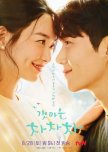
A Sanctuary
The beautiful seaside village of Gongjin, with its picturesque landscape, sandy beaches, rustic homes and a quaint red lighthouse that overlooks the vast openness of the ocean. It is the perfect sanctuary for weary travellers and those who seek refuge in its peaceful, idyllic setting. All visitors from near and far are warmly received by its friendly inhabitants with wide smiles, open arms and fresh seafood. Welcome to Hometown Cha-Cha-Cha (where the only thing that’s perhaps missing is a dental clinic).This fictional village truly exists but goes by a different name in real life - it is actually the coastal town of Pohang in South Korea’s east coast. HomeCha is a remake of the 2004 film, Mr Hong, which in turn is based on the original screenplay written by Kang Seok Beom and Shin Jung Goo. The 2021 iteration is helmed by Yoo Je Won (The King: Eternal Monarch and Hi Bye, Mama!) and adapted into the 16-episode drama format by Shin Ha Eun (The Crowned Clown and Argon). Im Ha Young (Oh My Ghost and Search: WWW) serves as music director.
As it was in the movie, Homecha is a rom-com about a girl from the big city who moves to the quiet little village where she meets and falls in love with a local boy. Sounds like the typical fish out of water character in an opposites attract love story except there’s more than meets the eye. In addition to the romance and comedy, this is a healing drama that explores slice of life aspects, from the mundane to the extraordinary, amidst a backdrop of myriad colourful characters and mysterious backstories.
I haven’t watched nearly enough K-drama romcoms to qualify as an expert in this subject but I’m well aware of the associated tropes that are usually present in the genre. This drama is no exception and features a number of such cliches and plot devices in the storytelling, which I don’t really mind because for the most part, they are generally well executed and not OTT. Despite the plot being rather straightforward, it has to be said, it does start off brightly and remains steadily engaging along with a multitude of story arcs and sub-plots involving certain side characters, mainly the residents of the seaside village. It’s not all rainbows and sunshine, however, due to the inclusion of angst and tragic circumstances in the overarching story.
The production is of high quality and the scenic location of the principal photography affords the drama some utterly breathtaking panoramic vistas, largely attributed to the excellent all-round cinematography. The well-rendered night shots particularly at the waterfront and pier deserve praise as well as the art direction and overall interior set designs of the traditional village homes. The action sequences are minimal but the special effects for a significant event in episode 15 are very well executed.
As far as the cast is concerned, Kim Seon Ho shines the brightest as the affable and down-to-earth Hong Du Shik aka Chief Hong. He certainly fits the role to the tee and rounds off his performance with a powerfully emotional delivery towards the closing stages of the drama that is heart-wrenching to witness. Shin Min Ah portrays the FL Yoon Hye Jin who eventually falls in love with Chief Hong. I find the character somewhat lacking in depth and infuriating at times, while her interpretation of the role is merely adequate. She is certainly capable of more dramatic range but seems to be constrained by the limitations of the script. Nonetheless, both Kim Seon Ho and Shin Min Ah do complement each other visually and the chemistry that they share appears convincingly developed. It’s worth mentioning that the production takes full advantage of their similar facial features for viewers to assign the moniker of “dimple couple” to the leads.
Among the supporting cast, Lee Bong Ryun and Kim Young Ok impressed me the most, as Yeo Hwa Jeong and Kim Gam Ri respectively. These two veterans certainly showcased their nuanced portrayals throughout. Despite her limited screen time, Kim Ji Hyun is memorable in her guest role of Seon A, a testament to her stage experience indeed. The child actors are also deserving of praise, especially Ki Eun Yoo as Jang Yi Jun.
The drama features 8 OSTs, the most prominent being its upbeat main theme, Beautiful Sunday which reflects the overall tone of the production. The rest of the soundtrack consists of slow-tempo love ballads.
로맨틱 선데이 Romantic Sunday by Car the Garden 카더가든
어느 햇살 좋은 날 One Sunny Day by Kassy 케이시
My Romance by CHEEZE 치즈
바람 Wish by Choi Yu Ree 최유리
빛이 되어줘 Be the Light by Kim Jae Hwan 김재환
내 기억 속에 남아 있는 그대 모습은 The Image of You (Remains in My Memory) by Sandeul 산들 of B1A4
Here Always by Seungmin 승민 of Stray Kids
행복했으면 좋겠어 I Hope You're Happy by Lee Sang Yi 이상이
HomeCha is generally an easy and relaxing watch that provides sufficient heartwarming and entertaining moments to fill the weekend and in between more serious or darker dramas in the watch list, which was exactly what I did. The story did take a brief detour through a slightly melodramatic and angsty arc, but eventually everything worked out to deliver a much needed HEA ending for everyone involved.
Was this review helpful to you?
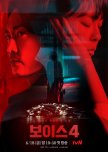
Voices in the Dark
I recall reading an article in 2019 which had speculated that the Voice series had ended for good. Specifically Lee Ha Na, the most recognisable face (and voice) of the franchise had intimated that she wished to pursue other projects for a change. She ended up taking on a totally different role in the romance drama A Piece of Your Mind. As it turns out, never say never because Voice is back and led by Lee Ha Na herself again with the fourth instalment, Voice 4: Judgment Hour.It really shouldn’t come as a surprise, since it is after all one of the more successful series in South Korea having spawned adaptations in Japan (Voice 110: Emergency Control Room) and Thailand (Voice สัมผัสเสียงมรณะ). Initially launched by OCN, the first season was quite the ratings success and had garnered considerable attention mostly because of its unique concept and also partly due to the inclusion of the stellar Jang Hyuk as well as Kim Jae Wook as its main cast. Despite not quite reaching the same heights, the subsequent seasons performed decently and have seen Lee Jin Wook taking on the lead role. Now we have Song Seung Heon as the ML.
For those unfamiliar with the series, Voice is about the Golden Time Team, a specialised 112 emergency response team that is not dissimilar to the US 911 call centre but with a wider investigative scope, targeted response and its very own dispatch team. It is headed by Lee Ha Na’s Kang Kwon Joo, who is gifted with exceptional hearing abilities. She takes charge of the call centre while the dispatch team directly conducts search and rescue missions as well as apprehending perpetrators. Every season follows a similar pattern, where we have the overarching mystery of the main crime(s) committed by the major villain(s). In between, we have the episodic procedural that focuses on minor cases or in this context, emergency call-ins, which may or may not be linked to the main investigation.
For me, S1 is still the best of the lot. S2 had an ambitious cross-border premise which tied in with S3. This new S4 is completely self-contained, much like the first season. If you’re wondering whether you need to complete the earlier seasons prior to watching this one, I would say no. However, do be warned that within the first 10 minutes of S4’s episode 1, a full recap of S2 and S3 is shown. So, if you intend to watch the entire series, best to skip S4 to avoid the spoilers (because there are references throughout to the earlier seasons).
There are a couple of firsts this time around for the series. The setting of Voice 4 is moved from Seoul to the fictional Vimo Island (pronounced as Bimo in the drama but subs translated as Vimo). Although certain major events transpired in the capital during the first episode, the entire story takes place on an island that is modelled after Jeju Island. In addition to that, the drama is aired on TVN instead of OCN which had aired all the preceding seasons, perhaps reflecting a shift in marketing strategy as both channels are owned by the same parent company.
The high quality of the production remains, as regular viewers or followers of the series have come to expect. Screenwriter Ma Jin Won remains involved since the very beginning but interestingly, each season so far has been helmed by different directors. Shin Yong Hwi, who previously co-directed notable crime thrillers Tunnel and Bad Guys, takes over for this instalment. As significant portions of the principal photography took place in Jeju Island, I felt that the cinematography and production designs did not really take full advantage of the island setting. With the exception of episodes 4 and 5, where the Haenyeo (women divers) are featured along with scenes at the pier, there are no other distinguishing views of the island landscapes, which is a shame.
The premise for this season revolves around Kang Kwon Joo’s recurring PTSD as a result of her overexertions in S2 and S3. She has a new partner in Derek Jo, a Korean-American LAPD anti-vice squad leader who goes to Seoul under a joint task force with the Seoul Police Agency. The plotline is focused on serial killings purportedly by “mysterious and shadowy perpetrators” who approach their victims online before committing the heinous crimes. Things quickly escalate before the action then shifts to Vimo Island, where the team joins up with the local police force as part of the Vimo Provincial Police Agency Golden Time Team 112 Call Centre. Key elements featured include mental health issues and a religious cult/ sect, among other themes in the mix.
I actually enjoyed this season much more than S2. It is not as complicated to follow and less political, while the relationship dynamics are in no way as complex in their depictions. That said, as much as I had fun, I did find the final reveal of the antagonists along with their motivations and modus operandi to be rather absurd and far-fetched. But I think with some suspension of disbelief, there is much entertainment value to be had just by going with the flow of the fast paced storytelling. There is no shortage of action-packed sequences and thrilling edge-of-the-seat stuff, which is available in abundance here.
As far as the acting is concerned, there isn’t much left to be said about Lee Ha Na. She truly personifies the character of Kang Kwon Joo, so much so that I can’t imagine anyone else who could possibly do a better job than her. Even the Korean National Police Agency seems to think so, having made her its honorary police officer and ambassador. Co-starring with Lee Ha Na is the experienced Song Seung Heon, as Detective Derek Jo. In terms of portrayal and emotional depth, he certainly looks the part of a tough and stoic police detective with a tragic past. Probably the only issue is his English-speaking parts. The lack of fluency or an American accent for one, and the inconsistency in dialogue where sometimes he speaks Hangul to his LAPD teammate (also a Korean-American but one who speaks better English).
Son Eun Seo, Kim Joong Ki and Song Boo Geon (S2) make their return while Baek Sung Hyun re-joins the team after a 2-season hiatus. Among the new faces, Lee Kyu Hung deserves acknowledgment for his range in the portrayal of a rather “varied” role. Kang Seung Yoon plays cyber division police officer Han Woo Joo as the GTT’s resident computer whiz (a replacement of Kim Woo Suk’s Jin Seo Yool in a similar capacity for the team). Look out for memorable supporting and guest appearances by Kil Hae Yeon, Lee Jin Wook, Kim Bup Rae, Im Chul Soo and Kwon Yool.
There are 5 tracks in total for the soundtrack. My personal favourite is the hauntingly theatrical Coming to You by the young singer GRASS which sounds like a chilling version of a lullaby. Full listing as follows:
1. GRASS – Coming to You
2. Kang Seung Yoon – Your Voice
3. KLANG – No Way to Go
4. Elaine - Here for You
5. Kim Jaehwan - Promise You
All things considered, I would place Voice 4: Judgment Hour as my second favourite of the series. I still feel the first season is by far the best, and although this one doesn’t come close to reaching its levels of brilliance, it’s enjoyably engrossing with mild suspense, sufficient thrills and without the overly mind-boggling complexities to keep viewers entertained. Just in case you can't get enough of the Golden Time Team, there's more than a hint for a potential season 5 in the horizon. Looks like the franchise won't be concluding any time soon...
Was this review helpful to you?
This review may contain spoilers
Meet the Lupins
Lupin no Musume means daughter of Lupin. The daughter refers to Mikumo Hana, the protagonist and FL of the show. Who’s Lupin? Presumably the dad, Mikumo Takeru, with reference to Arsène Lupin who is a fictional gentleman thief and master of disguise created in 1905 by French writer Maurice Leblanc. This is a very appropriate analogy, because Takeru does embody the persona of the iconic French character.To describe this show, think Ocean’s 11 (12, 13, the whole lot), The Italian Job, The Thieves (HK/SK version), and Mission Impossible series. Add in some forbidden romance theme, musical elements, and voila! Of course the action, violence and seriousness are toned down by 90% while the comedic effect gets turned up by equal measure. Although the tagged genres include Romance-Comedy with Action, I’d also classify a significant portion of this drama as Urban Fantasy.
The Mikumos, also known as the L Clan, is a family of master thieves who specialize in high value heists with the primary aim of relieving the corrupt and evil of their ill-gotten gains in the name of street justice, as befits their motto, “Assist the weak, eliminate the bullies”. They comprise the charming and flamboyant dad, Takeru, the seductive semi-retired cat burglar mum, Etsuko, the anti-social but mostly brilliant (when his inventions do not fail in mid-op!) tech-guy brother, Wataru, the slightly peculiar but hugely adorable grandmother, Matsu, and the founder of the L Clan who makes a grand entrance towards the latter part of the show, the legendary grandfather, Iwao Mikumo. And finally Hana herself, the reluctant 3rd generation cat burglar whose particular skill set is second only to her grandad.
At the other end of the spectrum, we have the Sakurabas, a family comprising generations of law enforcement members. They include the baseball-loving SWAT team leader father, Norikazu, the uptight disciplinarian forensics expert mum, Misako, the equally uptight sister Kaori, and finally we have the ML and Hana’s love interest, the young detective Kazuma. This highly disciplined and structured family unit is made complete with the presence of the samurai-warrior grandad with the Elvis hair do, Kazukazu Sakuraba.
Forbidden love doesn’t get much more forbidden than this, with romance blossoming between the daughter of thieves and the son of police officers. Half the fun of watching this show relates to the family interactions among themselves and between the 2 separate families. The other half is watching the action of the heist being committed. Lupin no Musume unfolds in multiple formats – the serialized romance between the two leads and the episodic story arc of the different heists and villains being tackled by both the Mikumos and Kazuma together with his team.
Fukada Kyoko’s Hana is a mix of polar opposites – from the shy, timid and soft spoken book store attendant to a ferocious badass thief when in action – and she delivers this role to perfection. The charismatic Seto Koji’s version of Kazuma is endearingly adorable and heart-warming. You simply cannot help but root for this lovely couple as their story evolves. Such great chemistry, and many sweet as well as emotional yet tender moments between them.
Aside from the two families, we have really interesting side characters in the form of Enjoji Akira, Maki Eiichi and Emily Hashimoto. Akira is Hana’s childhood buddy who is not only a fantastic dancer and singer (who indulges in absurd but highly entertaining short musical acts with Hana throughout the show) but also a skilled cat burglar himself. He is wonderfully played by Onuki Yusuke who displayed such amazing body control and flexibility during that laser-beam scene in episode 5. Truly epic! Eiichi is Kazuma’s bungling superior at the Tokyo Metropolitan Police Department and played by Kato Ryo. Emily, acted by Kichii Yukino, is Kazuma’s rather eccentric matchmaking partner who doesn’t communicate well with others and resorts to the use of Haiku to express her emotions. Interestingly, she is attracted to Kazuma and scenes of their interactions are really quite amusing.
The OST is a fusion of classical and contemporary music, with theatrical musical score composed for Hana and Akira’s song and dance scenes. Created by the dynamic Japanese duo Face 2 fAKE, certain dramatic moments of the show has been brought alive by this intriguing blend of music. In particular, the transformation routine that the Mikumos (or sometimes Hana herself) go through right before embarking on an op. The couple’s theme song is a shortened composition of Tchaikovsky’s Romeo and Juliet theme which repeats throughout whenever Hana and Kazuma have their more dramatic scenes together.
All in all, Lupin no Musume has been a fun and easy watch. I personally did not take this drama seriously at all, and purely savoured the entertainment values from the reasonably well choreographed action, slightly OTT mixture of comedy and drama, plus the fantastic all round chemistry between all the main and supporting cast. The villains were more clichéd caricatures but then the angst, if any, was indeed extremely low key. Suspend disbelief, throw logic out the window, and you’ll probably enjoy the entertainment that this show provides (especially seeing how the bad guys earn their “repentance” for all the wrongdoing they’ve committed!).
Was this review helpful to you?


