

 1
1


Deep Rooted Tree is similar to Damo in that both are Joseon-era historical dramas with intense political intrigue, deep emotional stakes, and morally complex characters shaped by tragedy and revenge, featuring protagonists whose personal losses and quests intersect with larger societal conflicts and oppressive power structures, blending action, mystery, and dramatic personal relationships against a richly depicted historical backdrop rather than just light romance or adventure.
The Princess’s Man is similar to Damo in that both are Joseon-era historical dramas featuring intense tragedy, forbidden or complicated romance, and deep emotional stakes against a backdrop of political conflict and betrayal — The Princess’s Man centers on a forbidden, tragic love between a noblewoman and a man caught in deadly factional strife and revenge, where politics and family enmity tear lovers apart, much like Damo’s blend of romance, loyalty, and personal hardship in a dangerous, morally complex historical world.
How Warrior Baek Dong-soo is similar to Damo
Warrior Baek Dong-soo and Damo are both Korean historical dramas set in the Joseon era that combine intense action, swordplay, and martial-arts sequences with deep emotional storytelling, following characters shaped by personal hardship and loyalty as they navigate a world of political intrigue, injustice, and duty while dealing with complicated relationships and the burdens of fate, making them appealing to viewers who enjoy action-driven historical sagas with strong character drama.
Warrior Baek Dong-soo and Damo are both Korean historical dramas set in the Joseon era that combine intense action, swordplay, and martial-arts sequences with deep emotional storytelling, following characters shaped by personal hardship and loyalty as they navigate a world of political intrigue, injustice, and duty while dealing with complicated relationships and the burdens of fate, making them appealing to viewers who enjoy action-driven historical sagas with strong character drama.
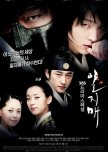
Both Iljimae and Damo are Korean historical dramas set in the Joseon era that mix action, romance, and social conflict, featuring protagonists shaped by personal tragedy and injustice who operate outside or on the edges of the law to fight against corrupt authority and help the downtrodden, with emotional storytelling anchored in moral dilemmas, forbidden or complicated love, and the struggle between duty and personal desire.
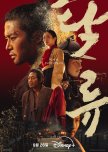
Both Damo and Takryu are Joseon-era historical dramas that blend action, personal struggle, and societal conflict, featuring protagonists shaped by hardship and injustice as they fight against corrupt systems and rigid social hierarchies, with emotional depth, gritty confrontations, and themes of loyalty and survival driving their intertwined fates in harsh, morally complex worlds.
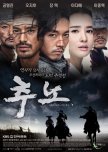
Beyond both being written by Chun Sung-il, The Slave Hunters and Takryu are similar in how they use a Joseon-era setting to critique a corrupt social order, centering on morally complex, wounded protagonists who live on the margins of society and are driven by loss, resentment, and a desire for dignity, while blending gritty action with tragic romance and fatalistic storytelling that emphasizes loyalty, resistance, and the crushing weight of class and power rather than idealized heroism.
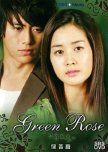
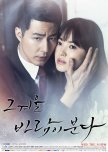
Green Rose and That Winter, the Wind Blows are similar because both center on emotionally isolated male leads living behind false identities and women trapped in loneliness and grief. In Green Rose, Lee Jung-hyun is erased from society and forced to live as someone else after betrayal, while in That Winter, the Wind Blows, Oh Soo survives through deception after emotional loss. Both men love from a distance and carry guilt rather than comfort.
The female leads — Oh Soo-ah and Oh Young — are similarly confined, one by grief and the other by blindness and family neglect. Romance in both dramas is restrained and melancholic, built on sacrifice, silence, and longing rather than warmth. Though one leans toward revenge and the other toward psychological intimacy, both tell stories of love shaped by loss, deception, and emotional isolation.
The female leads — Oh Soo-ah and Oh Young — are similarly confined, one by grief and the other by blindness and family neglect. Romance in both dramas is restrained and melancholic, built on sacrifice, silence, and longing rather than warmth. Though one leans toward revenge and the other toward psychological intimacy, both tell stories of love shaped by loss, deception, and emotional isolation.
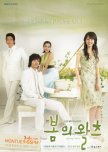
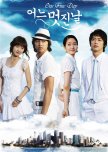
One Fine Day shares much of its emotional DNA with Spring Waltz, particularly in how both dramas approach romance through loss, separation, and quiet longing. While Spring Waltz unfolds from an island childhood into later-life reunions, One Fine Day centers on siblings separated in childhood and the emotional scars that follow them into adulthood, creating a similarly melancholic and introspective tone.
In Spring Waltz, Yoon Jae-ha is a withdrawn, guilt-ridden man shaped by abandonment, expressing himself through music rather than words. His emotional reserve closely mirrors One Fine Day’s Seo Ha-neul (Gong Yoo), who also grows up carrying deep loneliness and unresolved pain after being separated from his sister. Both men are emotionally guarded, kind at their core, and defined by a quiet yearning for connection.
The female leads play comparable emotional roles. Spring Waltz’s Seo Eun-young is gentle, warm, and emotionally sensitive, serving as a source of comfort and emotional safety for Jae-ha. In One Fine Day, Park Ji-yeon (Sung Yuri) similarly embodies emotional resilience and tenderness, gradually becoming the emotional anchor in Ha-neul’s life. Both women approach love with patience and empathy rather than confrontation.
In Spring Waltz, Yoon Jae-ha is a withdrawn, guilt-ridden man shaped by abandonment, expressing himself through music rather than words. His emotional reserve closely mirrors One Fine Day’s Seo Ha-neul (Gong Yoo), who also grows up carrying deep loneliness and unresolved pain after being separated from his sister. Both men are emotionally guarded, kind at their core, and defined by a quiet yearning for connection.
The female leads play comparable emotional roles. Spring Waltz’s Seo Eun-young is gentle, warm, and emotionally sensitive, serving as a source of comfort and emotional safety for Jae-ha. In One Fine Day, Park Ji-yeon (Sung Yuri) similarly embodies emotional resilience and tenderness, gradually becoming the emotional anchor in Ha-neul’s life. Both women approach love with patience and empathy rather than confrontation.
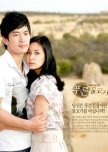
Blue Fish is often compared to Spring Waltz because both dramas center on emotionally withdrawn characters shaped by childhood trauma and separation, set against coastal landscapes that mirror their loneliness. Like Spring Waltz, Blue Fish uses the sea and quiet surroundings to create a melancholic, isolated atmosphere where emotions are felt more than spoken.
The main characters in both series are restrained and introspective. The male leads carry guilt and unresolved pain, choosing silence and endurance over confrontation, while the female leads are gentle, patient figures who provide emotional grounding rather than dramatic conflict. Their romances unfold slowly, driven by shared pasts and unspoken longing rather than overt passion.
Overall, Blue Fish feels like a darker, more grounded variation of Spring Waltz — less lyrical, but similar in its focus on quiet suffering, fate-driven connection, and the lingering ache of first love by the sea.
The main characters in both series are restrained and introspective. The male leads carry guilt and unresolved pain, choosing silence and endurance over confrontation, while the female leads are gentle, patient figures who provide emotional grounding rather than dramatic conflict. Their romances unfold slowly, driven by shared pasts and unspoken longing rather than overt passion.
Overall, Blue Fish feels like a darker, more grounded variation of Spring Waltz — less lyrical, but similar in its focus on quiet suffering, fate-driven connection, and the lingering ache of first love by the sea.
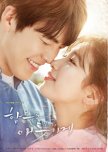
Spring Waltz and Uncontrollably Fond are both tragic romances rooted in childhood trauma and fate, but they approach heartbreak in very different ways. Spring Waltz is quiet and atmospheric, using an island childhood, open landscapes, and soft music to create a sense of isolation and gentle longing. Its characters are emotionally withdrawn, expressing pain through silence and distance, and the romance unfolds slowly, almost hesitantly, as if love itself might break if spoken too loudly.
Uncontrollably Fond, by contrast, is emotionally intense and claustrophobic. Set largely in urban, media-driven spaces, it surrounds its characters with pressure and urgency. The male lead’s pain is loud and self-destructive, while the female lead is hardened by resentment and survival. Their relationship is charged with anger, regret, and desperation, driven by the knowledge that time is running out.
Where Spring Waltz treats love as a fragile refuge that offers brief healing, Uncontrollably Fond presents love as something fierce and painful, arriving too late and demanding everything at once. Both are deeply melancholic, but Spring Waltz lingers like a fading memory, while Uncontrollably Fond cuts like an open wound.
Uncontrollably Fond, by contrast, is emotionally intense and claustrophobic. Set largely in urban, media-driven spaces, it surrounds its characters with pressure and urgency. The male lead’s pain is loud and self-destructive, while the female lead is hardened by resentment and survival. Their relationship is charged with anger, regret, and desperation, driven by the knowledge that time is running out.
Where Spring Waltz treats love as a fragile refuge that offers brief healing, Uncontrollably Fond presents love as something fierce and painful, arriving too late and demanding everything at once. Both are deeply melancholic, but Spring Waltz lingers like a fading memory, while Uncontrollably Fond cuts like an open wound.
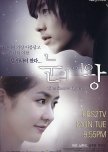
The Snow Queen and Spring Waltz are often compared not because they share the same scenery, but because they tell emotionally parallel stories. Where Spring Waltz uses a quiet island and the sea to express loneliness and longing, The Snow Queen replaces that isolation with winter landscapes, ice rinks, and closed urban spaces. In both dramas, the setting functions as an emotional mirror rather than a backdrop — nature and environment reflect the characters’ inner wounds.
The male leads in both series are shaped by childhood trauma and guilt, growing into emotionally withdrawn adults who struggle to accept love. They express pain indirectly — through music in Spring Waltz and physical endurance in The Snow Queen. The female leads are gentle yet fragile, carrying both emotional and physical vulnerability, and serve as sources of warmth and connection in otherwise cold emotional worlds.
Both dramas favor slow pacing, restrained dialogue, and heavy reliance on mood, silence, and music. Romance unfolds quietly and feels fate-driven, marked more by longing than by overt passion. While Spring Waltz leans into nostalgia and natural beauty, The Snow Queen embraces a colder, more enclosed atmosphere, but the emotional core remains similar: two wounded people finding brief healing through love, even when happiness feels fragile and uncertain.
The male leads in both series are shaped by childhood trauma and guilt, growing into emotionally withdrawn adults who struggle to accept love. They express pain indirectly — through music in Spring Waltz and physical endurance in The Snow Queen. The female leads are gentle yet fragile, carrying both emotional and physical vulnerability, and serve as sources of warmth and connection in otherwise cold emotional worlds.
Both dramas favor slow pacing, restrained dialogue, and heavy reliance on mood, silence, and music. Romance unfolds quietly and feels fate-driven, marked more by longing than by overt passion. While Spring Waltz leans into nostalgia and natural beauty, The Snow Queen embraces a colder, more enclosed atmosphere, but the emotional core remains similar: two wounded people finding brief healing through love, even when happiness feels fragile and uncertain.
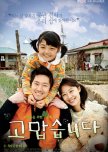
• Takes place on a remote island
• Healing-focused, slow, emotionally tender
• Lonely characters carrying emotional scars
• Nature and isolation play a big role
• Soft romance grows quietly over time
• Healing-focused, slow, emotionally tender
• Lonely characters carrying emotional scars
• Nature and isolation play a big role
• Soft romance grows quietly over time


