
 News
News 


This review may contain spoilers
A beautifully complicated bond
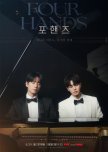
It is one of those series where, it is difficult not to notice the emotional intensity between its two main characters. While the adaptation introduces a female lead and does not openly frame itself as a BL, the heart of the story remains centered on the deep connection between Pi-O and Jeong Yo.The series follows two young pianists who are almost complete opposites. Pi-O is technically brilliant, disciplined, and capable of achieving perfection, but somewhere along the way he loses the emotional connection that makes music truly meaningful. Jeong Yo, meanwhile, has the passion and sensitivity of a true artist, but struggles with confidence and the technical skills needed to fully express himself.
What makes their relationship so compelling is that they become the missing piece in each other’s lives. They do not simply help each other improve as musicians, they bring out qualities that the other person has lost or never had. Pi-O gives Jeong Yo structure and confidence, while Jeong Yo reminds Pi-O that music is also about emotion. Together, they represent the balance needed to create something beautiful, much like a sonata performed by four hands.
The strongest part of the series is the bond between the two leads. Their relationship develops through shared struggles, admiration, competition, and moments where they constantly challenge and support each other. There is a constant push and pull between them, and the chemistry between the actors makes their connection feel especially powerful. Whether interpreted as friendship, artistic partnership, or something deeper, their attachment to one another is clearly the emotional center of the story.
The series also does an interesting job exploring the idea that some people become essential parts of our lives. Pi-O and Jeong Yo are stronger together than they are apart, and the story repeatedly shows how deeply they affect each other’s identities, dreams, and healing.
Although this adaptation seems hesitant to fully embrace its BL origins and adds elements that make it harder to define, the emotional intimacy between the two protagonists remains impossible to ignore. Their bond carries a sense of longing and somewhat devotion that goes beyond a typical friendship dynamic, while still leaving room for viewers to interpret it in their own way.
With strong performances, beautiful themes, and a story that balances warmth with heartbreak, this is an emotional watch. It can be enjoyed as a story about music and friendship, but also as a story about two people who, in many ways, complete each other.
Was this review helpful to you?

This review may contain spoilers
Promising Premise, No Substance: A Letdown in Every Way
This is probably the second series I’ve ever rated so low. The first thing that caught my eye was the poster—it’s absolutely gorgeous and very engaging for new viewers. Based on the premise, I expected a great balance between romance and court diplomacy, but the high rating (above 8) feels misleading. I’ve seen far better Chinese dramas rated much lower, so I’m not sure if the romance alone is why people scored it so highly.The production quality is disappointing. The costumes are barely decent, the sets look cheap, and even the makeup is poorly done. However, the biggest issue is the acting—whether it’s the capricious princess, her enamored master, or the prince, none of the performances feel convincing. One moment that really sealed my decision to drop the drama was when the prince suddenly learned how his mother died—it was so random and poorly executed that I knew things would only go downhill from there. The dialogues are weak, and the characters feel superficial and caricatured.
For a 2019 drama, it looks like something shot in the early 2000s, and not in a good way. The only thing I genuinely liked was the natural landscapes, particularly the desert scenes. I wish I had more positive things to say, but I couldn’t even get past episode five—it was that bad for me. That said, those who are deeply invested in romance and can overlook everything else might still enjoy it.
Was this review helpful to you?

This review may contain spoilers
Shallow, Predictable, and Ultimately Disappointing
The premise of this series is nothing new – a student is murdered, and their sibling or friend returns to school to investigate who’s responsible. It’s a plot we’ve seen many times before. What really matters are the details—characters, twists, suspense. However, this series struggles after the success of similar K-dramas like The Glory and Weak Class Hero, which tackle bullying. The issue here is the protagonists' actions—violence they initiate against others—isn’t adequately addressed. It’s a missed opportunity that leaves the viewer unsatisfied.The themes of societal injustice and the powerlessness of the lower class are certainly relevant, but they're tackled in a way that feels inconsistent and lacks the depth we’ve seen in other series. It’s like Elite, but watered down with no real consequences or meaningful exploration of its characters.
The production is solid, but the characters and plot fall short. Kang Ha starts strong but falters at the end, and his arc feels incomplete. His blind obsession with Jae Yi leads him to let things slide, only for Jae Yi to be the voice of reason. And then there's Ri An, who orchestrates bullying and violence yet is romanticized—his toxic, possessive relationship with Jae Yi isn’t cute, it’s unhealthy. He deserves more than a slap on the wrist. Meanwhile, He Ra is the most relatable character, with her flaws making her more grounded. Woo Jin, on the other hand, is underdeveloped despite being a potentially dangerous character, and is completely overlooked.
The series is full of attention-grabbing scenes, but they lack substance. The characters’ motivations—jealousy, power, and petty rivalry—don’t leave much room for emotional depth. The series fails to deliver the satisfaction of watching characters get what they deserve, leaving behind frustration instead.
With the second season looming, I can’t help but wonder: what’s the point? The characters have seemingly faced the consequences for their actions. A murder? Really? It feels like a cliché. It’s their last year, and I’m not expecting much.
On a positive note, I hope this series opens more doors for Lee Chae Min in the future.
Was this review helpful to you?


