
 K-Drama


This review may contain spoilers
Against the Current: A Fascinating Protagonist Who Ultimately Becomes Difficult to Understand
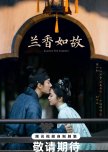
Against the Current starts from a very appealing premise. Lanxiang is an intelligent, educated, and extraordinarily rational woman who, after her family’s downfall and humiliation, finds herself trapped in a marriage she initially does not want. Her conflict with Jinqi is particularly interesting because he is not simply the man who forces her into marriage: he is also the man who, when her family is in a vulnerable position, refused to marry her, only to later use the power of the imperial edict to impose that very marriage. It is therefore understandable that Lanxiang carries resentment and maintains an enormous emotional distance.
In fact, if the series had wanted to tell a story of revenge, it would have had an excellent foundation. But the story seems to want to go much further: to turn that forced relationship into a genuine love story while, at the same time, presenting Lanxiang as an example of female empowerment.
And this is where the problems begin.
Lanxiang is a complex character. She is capable of going to extraordinary lengths for the women around her, but when it comes to Jinqi, she seems to put up an almost impenetrable wall. He makes his feelings very clear, pursues her, waits for her, gives in and tries to get closer to her, while she rarely allows us to see what she truly feels. This is not about demanding a passionate relationship or turning her into someone she is not. The problem is that the series never really shows us the moment when resentment gives way to affection, and affection eventually becomes love.
That is why their first time together feels so strange. After so many years of marriage, it should feel like the culmination of an emotional journey. Instead, the scene gives the impression that they are simply going to “do their duty” because that is what is expected of them, and I find that rather sad. At first, you might think it is simply because she is an emotionally restrained character. But then you see how she behaves when she has to help women in trouble, and the lack of consistency becomes much more noticeable.
Perhaps that is why she creates such a contradictory impression: we want to admire her for her strength, but sometimes we wish she were a little less perfect, less rational, and more human.
Lanxiang teaches the other women to choose their own paths and not simply accept what others have decided for them. And yet she ultimately becomes a wife, mother, and matriarch within a family structure that, in principle, represents precisely what she was trying to escape.
That would not necessarily be a problem. An independent woman can absolutely choose to be a wife, a mother, and a matriarch. But the series has to show us that she chose it. And that is where something is missing once again.
Because if what we are watching is a revenge story, then having children and building a family life with Jinqi becomes difficult to understand. And if it is not revenge, but rather the story of a woman who eventually comes to love the man who initially forced her into marriage, then we need to see that process.
The series manages to show us perfectly how Lanxiang changes the lives of the women around her, but never manages to show us with the same clarity how she changes on the inside.
Was this review helpful to you?


