

 1
1 1
1 1
1

This review may contain spoilers
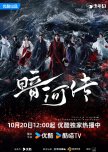
Final Review: BR — A First-Time Viewer’s Critique of a Standalone Wuxia That Mostly Delivers
NOTE: I watched episodes 1-14 wrote the first review for these episodes; 15 days later, finished it & then wrote a review for episodes 15-38. I watched each episode as it came out on Youku. I expressed the last 4 episodes.!! THERE ARE SPOILERS - STOP READING NOW !!
Disclaimer:
I came into Blood River completely blind. I haven’t seen the previous installments, nor am I familiar with the overarching universe or the new/returning characters. My only preconception was that it’s a wuxia drama centered around an assassin organization. I did, however, watch the anime adaptation — which, while visually engaging, suffered from breakneck pacing and failed to sustain my interest beyond 3 episodes.
Going into the live-action version, I had neutral expectations. I didn’t particularly like or dislike SMY in the anime, though I found SCH to be a more intriguing character.
Plot and Pacing
(Minor context: I am reviewing this purely from the perspective of a first-time viewer — without prior knowledge of the Blood River universe.)
The opening arc, spanning Episodes 1–10 (“Protect the Patriarch”), mirrors the anime’s fast pacing but manages to pull it off far more effectively. Despite the influx of new characters introduced within the first several episodes, I rarely felt disoriented. Each new figure was distinct enough to register, and their relationships within the Dark River organization were established with surprising clarity.
The storyline is refreshingly straightforward for a wuxia of this scale — easy to follow, yet compelling enough to keep me watching episode after episode. The balance between action and plot is particularly strong during this stretch. The choreography is sharp, the stakes are clearly defined, and most importantly, the series manages to feel different from much of what’s been circulating in C-dramaland lately.
Confession: I even found myself staying up past 11 PM on weeknights just to catch new episodes on Youku.
From Episodes 10–14, however, the narrative shifts. The “Protect the Patriarch” arc concludes, making way for what appears to be a new storyline. By Episode 12, with SMY departing for Tiaqui City, the series introduces a fresh roster of characters and a heavier dose of exposition. Here, for the first time, I found myself needing to rewind and reread dialogue to catch the nuances. Remember I have not seen the other installments.
This portion lays the groundwork for the next major arc — delving into Dark River’s origins, its founders, and the internal conflicts threatening its survival in the future. The pacing slows noticeably, transitioning from action-heavy spectacle to political maneuvering and ideological conflict.
So far, this structural shift makes sense: Episodes 1–10 thrive on intensity and violence, fitting for a story about the dismantling and rebirth of an assassin order - The Patriarch. Episodes 11–14, on the other hand, begin the slower work of exploring why this world exists as it does. Whether the series can maintain momentum through this tonal pivot remains to be seen — but fourteen episodes in, I’m still invested enough to keep watching.
Acting: GJ as SMY
Up to Episode 14, GJ’s portrayal of SMY fits the character almost too well. The role demands restraint — SMY is defined by emotional stillness, intelligence, caution, and self-discipline. He’s a man who is calm to the point of monotony, and GJ captures that essence convincingly.
Critics may call him wooden or expressionless, but that criticism misunderstands the assignment. SMY is expressionless. His quietness isn’t an acting flaw; it’s a character trait. GJ’s performance succeeds precisely because it doesn’t overreach.
That said, subtlety doesn’t mean flatness. There are moments where GJ’s microexpressions and composure speak volumes:
Episode 2 (39:40) — The duel with Mu Yinzhen of the Mu family: understated control amidst intensity.
Episode 8 (28:00) — His promise to personally kill the Mu Family Head after Dragon’s death: contained fury.
Episode 10 (12:25–15:00) BUT ESPECIALLY (!) 14:00 - 15:00 — His confrontation with SCH’s recklessness: quiet authority - absolutely love this scene.
Episode 12 (41:24) — The negotiation scene: tension conveyed through silence and gaze rather than dialogue. His smirks...
Whether GJ can sustain or evolve this portrayal through later arcs remains to be seen. For now, though, his performance is measured, faithful, and tonally consistent with who SMY is written to be.
Verdict (So Far)
14 episodes in, Blood River has proven itself more cohesive and engaging than expected — particularly for viewers unfamiliar with its earlier installments. The first arc’s relentless pacing transitions into a slower, politically charged second act, setting the stage for deeper conflicts.
GJ delivers a performance true to character, if not particularly emotive, while the production’s fight choreography and world-building stand out among recent wuxia offerings.
I’ll reserve full judgment until I finish the next 10 to 12 episodes, but for now: Blood River has earned my continued attention.
FINAL REVIEW: BLOOD RIVER — A First-Time Viewer’s Critique of a Standalone Wuxia That Mostly Delivers
Completed Episodes: Final episode 38 on 11/07/2025
Before diving in, a disclaimer: I approached Blood River with no prior knowledge of its wider universe. I haven’t seen The Blood of Youth, Dashing Youth, nor any earlier installments. My exposure was limited to the anime adaptation—visually striking but narratively rushed, losing my interest by episode three.
Entering the live-action series, my expectations were neutral. I held no strong opinions about SMY from the anime, though SCH stood out as the more compelling character.
Just FYI -
My experience of Blood River is colored by one thing: despite trying to avoid spoilers during episodes 1–14, I ended up reading viewer discussions and summaries for later arcs. That inevitably shaped how I interpreted episodes 15–38, though I’ll try to speak honestly about how the show functions for a newcomer.
Here we go - 2nd review starts now:
Episodes 14–16 usher in what I’d call the Wanjuan Tower Arc—the first major tonal shift in the drama. The pacing deliberately slows as we explore SMY’s childhood and the ideological roots of his vendetta against the Shadow Sect. As a new viewer, the emotional clarity of this arc was invaluable. Only later did I learn the broader implications: SMY isn’t just tearing down a corrupt institution; he’s pursuing the truth behind the annihilation of No-Sword City and avenging his father. This arc culminates in one of the show’s best sequences—visually stunning, narratively efficient, and anchored by a spectacular duel.
Cinematography: The Show’s Unquestionable Triumph
If Blood River excels in anything consistently, it is choreography and cinematography. Episode 16’s SMY vs. Xie Zaiye (“Arrow Guy”) battle is a standout—precise, balletic, and almost hypnotic. It’s the kind of fight that invites rewinding or dropping playback speed just to absorb the intricacy. While some viewers cite distracting music, I found the score well-integrated and complementary across the series.
Additionally, frequently overlooked, the fight between SMY & The Heavenly Officials in episode 14 was an absolute stunner. It is also when the humorous line, "But your father took me there!" was spoken.
Performances: A Mixed but Largely Successful Ensemble
I initially focused on Gong Jun (GJ) as SMY in earlier episodes, but after finishing the drama, four performances stood out:
1 - SCH
A strong casting choice. The actor brings ambition and calculated mindset to SCH—never tipping into full villainy, yet clearly setting the stage for ideological divergence with SMY. As a viewer unfamiliar with previous timelines, I found their dynamic well-executed, layered with mutual respect and inevitable conflict.
2 - BHH
Ya Yutong is delightful—cute without infantilization, grounded without overcomplication. Her chemistry with both SMY and SCH works because she supports their roles without feeling decorative. A deceptively simple character handled with care.
The following I added 11/09/2025 about BHH character (48 hours after finishing) -
I’d argue that BHH is actually a significant character—one who quietly strengthens our appreciation of SMY and SCH’s relationship. She was never meant to be the focus, nor was she written as a member of the trio. She wasn’t a character the audience was expected to invest in deeply from the start. And yet, by episode 38, we feel her absence because SMY loses her.
Through SMY, we end up caring about her too. We want her to live, to stay healthy, to make it out safely—not just for her own sake, but because we can’t bear to see SMY carry yet another burden. That’s exactly why she was written the way she was. She isn’t quite a side character; she’s someone we root for because SMY roots for her. This “wooden fish” of a protagonist genuinely likes her, and through her, he finds a rare sense of comfort and happiness.
And at the end of the day, that’s what we want most: for SMY to have something—anything—that makes him happy.
Added part ends.
3 - MYM
The actress does what she can with limited material. Her screen time is noticeably reduced (likely due to cuts), and while her presence is meaningful to the plot, her characterization lacks the texture it likely holds in other adaptations. Still, she plays a vital role without overstaying her welcome.
Real quick - was I the only one who thought that they were going to kill her off for two minutes straight in episode 36?!?
4 - SMY - Gong Jun’s Make-or-Break Role
Gong Jun’s performance will split audiences, especially in episodes 1–6 where his stiffness is unmistakable. But here’s the important nuance: the stiffness suits SMY’s emotional state in the story’s early arc. And critically, GJ grows into the role. His expressiveness increases as the arcs shift, and by episodes 33–38, his emotional density and physical acting peak.
His line delivery—a long-standing critique since Word of Honor—has unquestionably improved. Faster diction and jaw tension remain, but the progress is clear, especially in emphasis, pacing, and emotional tonality. Is he a “very good actor”? Not yet. But is this his strongest performance since WOH? Absolutely.
5 - Zhuo Qing (The great eunuch)
The quiet menace makes him a worthy foil in the final episode 37 battle, elevating the tension and giving SMY & SCH a truly epic showdown. The divider scene when SMY came to negotiate with the Shadow Sect leader immediately establishes him as someone not to underestimate — calm, calculating, with that sly smile that hints at hidden schemes. He manipulates situations, making the battles feel smarter and stakes higher.
Mid-Series Arc (Ep 17–24): The Weakest Stretch aka No-Sword City Revenge or Zhou Ye An Identity
This portion of the drama, aesthetically gorgeous as it is, feels narratively thin. The arc functions more as a visual interlude than a compelling plot engine. Despite strong costuming and set pieces, the emotional engagement dips, and neither SMY nor the ensemble stands out. It’s not bad—just the least involving segment of the series.
The Final Arcs: From episodes 25–38, Blood River gains substantial momentum.
Ep 25–28: “Blood River in Tianqi City” Arc
This arc forces SMY, SCH, and BHH into political intrigue as they navigate Prince Linya’s orbit. The ideological divergence between SMY and SCH subtly sharpens here. The show stops teasing their differences and starts articulating them.
Ep 29–31: “LYT Master & Puppets” Arc
This is where tension truly spikes. SCH’s quiet retreat and secret dealings raise legitimate questions—especially for new viewers who lack context from earlier works. The duel between Blade of Nanjue and SMY is a highlight: elegant swordplay with emotional stakes.
Perhaps most impressive: SMY’s injury is narratively honest. He isn’t poisoned for convenience nor weakened by contrived plot devices. He’s hurt because he pushes himself relentlessly to protect those under his care. That authenticity deepens both his characterization and the SMY–BHH relationship.
Ep 33–38: A Near-Perfect Landing -
Going into episode 30 I wanted 3 things for the ending:
1 - I wanted a "weak" SMY. I didn't want SMY or SCH to have an easy win in the slightest. I wanted bloodshed, sacrifices, deaths. At this point, if BHH would have died which in turn would have resulted in an elevated plot someway-somehow, I would have been okay with it. In episode 37, I got it. SMY finally meets an opponent who pushes him to the brink, fulfilling the narrative necessity of testing a protagonist who otherwise risks invincibility. But he needed help. He needed SCH. And SCH came through. Without SCH intervening SMY would have died. I GOT THIS.
2 - I wanted BR to be a true standalone. I feared a rushed ending. Instead, Blood River delivers a satisfying, self-contained finale. Episode 37’s battle is the kind of sequence that cements a wuxia adaptation’s legacy—visually exhilarating and emotionally explosive. After 38 episodes you can watch TBOY or DY if you really want to but you do not have to. Thus making BR a phenomenal standalone. I GOT THIS.
3 - I initially wanted a full SMY–SCH fallout—a dramatic rupture, a “you lied to me” reckoning. But the drama chooses loyalty over melodrama. And after rewatching 33–38, I admit the show made the right call. Preserving brotherhood is essential for this timeline. I DIDN'T GET THIS.
Deaths:
Yes, people die — and the ones who needed to die for the story’s impact actually did. SMY’s strongest acting comes in these final episodes.
Final Thoughts
1. If you’re coming for romance: don’t. You’ll leave disappointed. This is not a romance-first drama, nor does it pretend to be one.
2. If you’re coming for visuals and choreography: you’ll be rewarded. Episodes 1–6 are a taste of what the show continues to elevate.
3. If you’re coming for brotherhood, loyalty, and the ideological push-pull between SMY and SCH: the drama delivers, even without requiring prior knowledge of the universe. It is a standalone and is a great one.
4. The major fight in episode 37 is phenomenal.
Gong Jun’s SMY — A Career Step Forward
To summarize:
1. Line delivery: improved significantly.
2. Portrayal of SMY: layered, especially after episode 10.
3. Room for growth: absolutely.
4. Did he surpass his WOH peak? In my opinion, not yet, but SMY shows that he can.
By the final episodes, I found myself not only invested in SMY but actively looking forward to GJ’s next project. Blade of Vengeance in 2026, anyone?
Final Verdict -
For newcomers like myself. Just watch it. Blood River is not flawless, but it’s visually stunning, narratively earnest, and anchored by a protagonist who grows right before our eyes.
You just have to put your trust in him similarly how everyone in the show put their trust in him.
Was this review helpful to you?
This review may contain spoilers
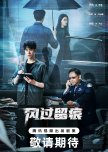
Review: The Truth — Episodes 1–9
**SPOILERS AHEAD — STOP READING IF YOU HAVEN’T WATCHED**Disclaimer:
I went into this drama knowing very little: that it’s a crime-solving series starring Gong Jun. I didn’t know the supporting cast, including the female lead, and I only learned shortly before airing that it was filmed back in 2023. I watched Episodes 1–9 as they aired on Tencent, paid for VIP to keep up with the latest episodes, and fully intended to continue watching week by week.
Plot & Overall Arc (Episodes 1–9)
The Truth follows a team of criminal investigators as they solve a series of murder and violent crime cases using forensic evidence, methodical police work, and on-the-ground investigation rather than sensational twists. Each case unfolds over 2-3 episodes, emphasizing realism over shock value.
At the center of the narrative is the male lead (Gong Jun), a reserved, emotionally closed-off investigator shaped by a deeply traumatized past. Parallel to the procedural cases is a slowly unfolding personal storyline involving the female lead (Sun Yi), his first love, whose past trauma, including a devastating rape, is intimately connected to him in ways that remain emotionally ambiguous. As the cases progress, the show increasingly suggests that the crimes themselves are not the true core of the story; rather, they serve as a backdrop for exploring guilt, memory, trauma, and unresolved emotional bonds.
Gong Jun’s character stands firmly on the side of law enforcement, while the female lead, Sun Yi's character, exists on the opposing side of the moral and legal spectrum. She is romantically and intimately involved with the drama’s dominant drug lord, positioning her directly against the male lead, not just emotionally, but structurally within the story.
Their shared past is deeply traumatic and unresolved. By Episode 9, it becomes clear that the drama is more invested in what happens when two people shaped by trauma end up on opposite sides of the law.
Acting
Overall Cast:
9 episodes in, I have very few complaints about the acting. Everyone fits their roles well and feels grounded within the show’s realistic tone.
Gong Jun:
I’ll focus mainly on him, as I’ve followed (and, frankly, studied and scrutinized) his work since Word of Honor. A common criticism of his acting is inconsistent line delivery, specifically, that he tends to rush dialogue, speak without pauses, and rely too heavily on his jaw, resulting in monotone or robotic delivery. I’ve agreed with this critique in past projects like Rising Against the Wind and Legend of Anle.
However, that criticism simply doesn’t apply here.
His line delivery in this is surprisingly natural and professional. It fits the character instead of fighting against it. There’s breathing room between lines, emotional restraint where appropriate, and no sense that he’s rushing to get through dialogue. What genuinely puzzles me is that this drama was filmed BEFORE some of his later works, yet his delivery here is noticeably stronger than in projects filmed afterward.
Blood River (2025) was his best work since Word of Honor, but I’d argue that his delivery in The Truth is even more effortless and organic. 9 episodes in, I’d give his line delivery an 8/10, and I stand by that assessment.
Characterization
Male lead/Gong Jun:
His acting here is not stiff (a popular criticism); it’s intentionally restrained. His character is introverted, guarded, and emotionally sealed off by trauma. The "restrained-ness" works because it reflects a man who has spent years bottling everything up, making him difficult to read and even harder to break through.
Female lead/Sun Yi:
I like the female lead a lot. Some viewers complain that she doesn’t appear often enough in the early episodes, but I don’t agree. She is not underutilized; she is strategically placed. She is firmly positioned on the opposing side of the male lead and is intimately involved as the girlfriend of the dominant drug lord. This alone reframes her presence in the story. Her limited screen time early on is intentional. It heightens tension, mystery, and moral discomfort. Every appearance carries weight because she represents both emotional intimacy and ideological conflict.
What makes this dynamic compelling is that she is not simply a love interest or a passive victim. She has agency, makes morally gray choices, and is willing to use people, including the male lead to survive within her circumstances.
This is fundamentally a story about two traumatized people whose pasts are deeply entangled. The cases are narrative tools used to heighten tension between them. She is his first love, someone who may — or may not — be connected to the worst trauma of her life, and the show slowly steers them toward an inevitable emotional collision. Her acting is solid, understated, and convincing.
The pacing of their screen time feels appropriate so far, especially knowing that their reunion in episode 8 will naturally shift the focus more heavily toward them.
Pacing & Case Structure
Case Pacing
Initially, I found the cases slower and less gripping than expected. They aren’t particularly sensational or memorable at first glance. But after thinking it through, I realized:
This is intentional.
Real criminal investigations aren’t nonstop breakthroughs and shocking reveals. Compared to something like The Truth Within with Luo Yunxi (which I dropped 12 episodes in), The Truth avoids exaggerated shock value. Instead, it adopts a grounded, “feet on the floor” approach to police work. Forensics are central, but so are interviews, waiting, dead ends, and tedious procedural steps.
Each case spans 2-3 episodes and doesn’t overstay its welcome, which I appreciate. The plot moves forward at a steady, realistic pace.
Slice-of-Life Scenes
From Episodes 1–9, there are slower segments that focus on the characters’ lives outside of work such family members, illness, domestic moments. A prime example is the ML's mentor who's father has Alzheimer’s. I’ll be honest: these are the scenes where I sometimes fast-forward.
That said, I understand why they’re there. The drama deliberately shows what these officers sacrifice: time with family, personal happiness, even financial comfort to do their jobs. We see how much they earn (not much), what they give up, and how their personal lives suffer. The Truth isn’t just about solving crimes; it’s about the people behind the badges.
If you go into the drama with this mindset, many scenes that might initially feel “unnecessary” start to make thematic sense.
My Main Pacing Issue
My real issue isn’t with WHAT they show; it’s HOW LONG THEY SHOW IT.
Some scenes are dragged out far longer than needed. A couple of examples:
A scene where a character rides an escalator is filmed from start to finish, it's nearly two minutes. Another scene spends an excessive amount of time showing a perpetrator climbing a tree to spy on his lover.
These moments could have been tightened to seconds instead of minutes. This is where I lose patience and start skipping ahead. Tighter editing would significantly improve the viewing experience.
Cinematography
I’m neutral here. Nothing stands out as exceptional, but nothing actively bothers me either. There are some beautiful drone shots, and I like the color grading, dark without being oppressive or muddy.
Final Thoughts (After Episode 9):
9 episodes in, I’d give The Truth a solid 7.5/10 or 8/10.
If you’re planning to watch, go in knowing:
1. There is romance, and it’s slow-burning and trauma-driven. I really like it so far.
2. This is not a high-velocity, sensational crime drama.
3. The show prioritizes realism, emotional restraint, and the personal cost of police work.
The Truth offers a grounded look at the lives of the men and women behind the badge and the sacrifices they make to keep others safe. I’m genuinely curious about how Gong Jun and Sun Yi’s characters will ultimately end up. They seem destined to stand on opposing sides, but I can’t help wondering whether there’s still an unseen layer to the story, something we haven’t been shown yet 9 episodes in, that might prevent their paths from ending in direct opposition?
I’ll continue watching. Whether I finish it remains to be seen, but for now, I’m in.
Was this review helpful to you?


