

 1
1 1
1


This review may contain spoilers
Calling It Just a Romance Is Far Too Narrow & A Psychological Look at the Complexity of Characters
This is the first time I have written such a long review for a drama, because Overdo contains so many deep ideas that they cannot be fully explained in only one or two sentences.
1. The Story Is the Drama’s Greatest Strength
The drama explores several important themes.
1) Human Trafficking, Fake Charity, and Women Helping Women
The drama shows human trafficking, fake charity in an orphanage, child abuse, and the selling of young girls.
In this part of the story, it exposes the ugly faces of so-called charity workers and wealthy people. It also shows the resistance of the children and girls who were abused, as well as the power of women helping and protecting one another.
2) The Lasting Scars Left by Family Trauma
The male and female leads both had tragic childhoods. Their past strongly affected their personalities, reasons for doing things, beliefs, values, and romantic relationships.
The effects of their emotional trauma are so complicated that I previously had to write a separate article analysing them from a psychological point of view. Anyone interested can read it on my Substack.
Some people say they cannot understand the male and female leads.
Yes, without enough life experience or a similar family background, it can be difficult to fully understand why they behave this way. This is also one of the reasons why so many people misunderstand this drama.
The drama handles the subject of family trauma very well. Unlike many dramas, it does not forgive people who do not deserve to be called parents simply for the sake of a happy ending.
Crucially, the ML refuses to pass this trauma down to the next generation. He does the hard work of healing himself.
He finally breaks free from both his adoptive father’s and his birth mother’s psychological grip, and gets to start over.
3) The Power of Goodness and Beautiful Human Feelings
The drama shows many beautiful kinds of love and care.
These include women helping one another, love and sacrifice between romantic partners, trust and support between brothers, the soldiers who are willing to risk their lives for their country, and help between strangers.
And these relationships aren’t just background — the sisterhood in the orphanage, the brothers quietly covering for each other, the strangers who step in when it matters. They land hard because the show actually earns them.
4) Love for the Country During a Time of War
This is a drama set in Republican-era China, probably around the early years of Japan’s invasion of China.
The final part of the drama is about biological warfare. Biological warfare in real history was extremely cruel. The drama has already reduced the amount of graphic content to make it easier for audiences to watch. Even so, we can still imagine the desperate situation China faced at that time.
In the drama, the second brother, Li Boze, becomes an undercover agent to destroy the “Red Pill.” He is even willing to be seen as a traitor.
One soldier after another gives up his life for the country, putting life and death aside.
The eldest brother’s lover, the female pilot Ye Zhi Hong, firmly chooses to fly her plane into the factory to destroy the red pills.
The male lead also fights the villain to the death to stop his plan.
During that time of war, countless people gave their lives in exchange for the peace we have today.
So, calling this drama nothing more than a soap opera is far too narrow and does not recognise the depth of its story.
2. All the Actors Deserve Praise
1) Zhang Linghe
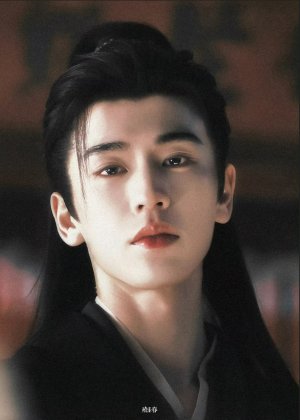
This is definitely the most complicated role Zhang Linghe has played since his debut. It is also the drama in which he has had the most screen time. This drama gave him the chance to fully show his excellent acting skills.
In this drama, he has to show many different emotional states.
He shows sadness, weakness, self-mockery, and rebellion when facing his mother’s hatred.
When facing the abuse of his adoptive father, he shows obedience, fear, and a complicated emotional attachment.
He depends on and deeply respects his eldest brother.
He loves the female lead even while telling himself what he feels is hatred, and he keeps loving her anyway, fully knowing it might destroy him.
He is also gentle with his son, and saving his son becomes a way of saving the wounded child inside himself.
This character has a sharp tongue but a soft heart. He is sensitive, intelligent, and quick and firm when taking action. He is proud, bold, and unwilling to follow social rules or powerful people.
And for all that edge, he genuinely feels for the people beneath him and steps in to help them.
He sees exactly how ugly the world is and still refuses to wallow in self-pity. He just quietly puts himself back together and moves on.
2) Wang Churan
Many people dislike the FL. They believe she is selfish and that she does not truly love the male lead. But the opposite is true. She is not selfish, and she loves him deeply.
Because of her tragic past, she is afraid to express her love. In order to protect the ML, she would rather put herself in danger. That is why she hides many things from him.
From a psychological point of view, she shows a typical ‘Avoidant Attachment Style’.
It’s not that these people don’t feel things — they feel plenty. However, when a relationship becomes too close or requires too much emotional involvement, they may feel stressed. They then create distance in order to feel safe again.
The closer the other person gets and the more they want to confirm the relationship, the more they want to step back. But when the other person truly becomes distant, they may move closer again.
They may avoid commitment, keep the relationship unclear, or delay talking about the future.
Instead of directly saying, “I miss you” or “I need you,” they are more likely to show care by doing things or solving problems.
Once we understand this psychology, we can understand the female lead’s behaviour.
She also seems to have a very negative view of fate.
She believes that happiness will not last and that she is meant to be unhappy. That is why she pushes the ML away again and again.
The ML, however, is very sensitive and good at reading other people. He probably notices her unusual emotional state and her conflicting behaviour. That is why he keeps holding on to her at the edge of fate, refusing to let her fall into a deep darkness.
3) The ML’s Mother
This role is played by veteran actress Myolie Wu, and her acting is truly excellent.
At first, the character is extremely hateful. Later, she slowly becomes mentally unstable.
She is a hateful but also tragic character. Her twisted way of thinking originally came from the male lead’s biological father.
He did not love her and instead fell in love with another woman. Because of this, she became extremely obsessed. Even after his death, she continued to wear a piece of his bone, forcing him to remain with her in this disturbing way.
When the ML was only twelve years old, he risked his life to warn them about the danger.
However, his mother refused to believe him. As a result, his father did not change his travel plans the next day and was killed in an explosion.
Her huge regret, guilt, and other complicated emotions made it impossible for her to accept what had happened. She also could not admit that she had made such a serious mistake.
So for years she’s kept lying to herself and pinning the blame on the ML. As long as it was his fault, she gets to stay the poor victim.
The ML’s existence constantly reminds her of two things.
First, he reminds her of the mistake she made in the past.
Second, he reminds her that she has never fulfilled her responsibility as a mother.
Over time the ML turns into a subject she simply can’t face. The moment he shows up in front of her, she loses it.
She also shows strong narcissistic personality traits. This can be seen in the way she treats both her eldest son and her adopted son. She expects them to completely obey her and live according to her wishes.
So when the ML insists on living life his own way, she reads it as a direct threat to her authority. She can’t stand his defiance, so she belittles him constantly and even beats him.
The Supporting Cast
The other supporting actors, including the adoptive father, the two brothers, and the female supporting characters, also give excellent performances.
Every actor disappears into their role so completely that half the time it stops feeling like acting at all.
Honestly, the whole cast just clicks — nobody feels miscast, and that’s rarer than it sounds.
3. The Most Debated Parts: The Director and Editing
Finally, I want to discuss the most debated parts of the drama: the directing and editing.
I have watched Chinese dramas for twenty years. Objectively speaking, the directing and editing of Overdo are not the best I have ever seen, but they are still better than those of many other dramas.
Overall, I would say the quality is somewhere between average and very good.
Many people feel disappointed because they had already imagined a perfect final result after seeing leaked photos and videos from the filming period.
Another reason may be the success of Pursuit of Jade. Some viewers hoped that Overdo would reach the same level.
Some viewers may also have rarely watched dramas set in Republican-era China, so they are not used to a style that is different from both modern dramas and historical costume dramas.
Dramas set in Republican-era China are often filled with strong love and hatred. The story can feel like a roller coaster, with many unexpected twists, misunderstandings, and cruel turns of fate.
This drama also uses the storytelling style of a mystery drama. Of course, this style of storytelling may also make some viewers feel that the editing is too jumpy.
Many truths, clues, and memories are shown through flashbacks. Almost every episode ends with a new question or mystery, which makes the drama very addictive and makes viewers want to continue watching.
For the visual parts, the lighting in the drama is beautiful, and the costumes are also very detailed. Together, they successfully create the style and atmosphere of Republican-era China. The lighting also shows the actors’ strong facial features very well.
At first, the drama used an AI-generated opening sequence. Because it caused a lot of debate, the production company quickly replaced it with real scenes from the drama.
Ironically, Chinese dramas had already started using AI-generated opening sequences several years ago. Many recent dramas have also used them, but they did not receive the same level of public attack.
There are also two scenes in the drama that use CGI backgrounds. Although these backgrounds do not look completely real, they are still only small problems compared with the overall quality and enjoyment of the drama.
Unfortunately, negative online comments have greatly exaggerated these small problems. This has made many ordinary viewers who have not actually watched the drama believe that it is a cheap and badly made production.
Conclusion
In recent years, the stories of many Chinese dramas have become more and more similar.
Against this background, Overdo is a fresh and original drama that is difficult to stop watching once you begin.
It is also a drama that makes people think and leaves a deep impression after it ends.
Of course, everyone has different tastes. If you mainly enjoy light and relaxing romance dramas, I would not recommend a dark and heavy story like this one.
That is why judging Overdo by the standards of an ordinary romance drama is meaningless. The depth and scale of this drama go far beyond just romance.
1. The Story Is the Drama’s Greatest Strength
The drama explores several important themes.
1) Human Trafficking, Fake Charity, and Women Helping Women
The drama shows human trafficking, fake charity in an orphanage, child abuse, and the selling of young girls.
In this part of the story, it exposes the ugly faces of so-called charity workers and wealthy people. It also shows the resistance of the children and girls who were abused, as well as the power of women helping and protecting one another.
2) The Lasting Scars Left by Family Trauma
The male and female leads both had tragic childhoods. Their past strongly affected their personalities, reasons for doing things, beliefs, values, and romantic relationships.
The effects of their emotional trauma are so complicated that I previously had to write a separate article analysing them from a psychological point of view. Anyone interested can read it on my Substack.
Some people say they cannot understand the male and female leads.
Yes, without enough life experience or a similar family background, it can be difficult to fully understand why they behave this way. This is also one of the reasons why so many people misunderstand this drama.
The drama handles the subject of family trauma very well. Unlike many dramas, it does not forgive people who do not deserve to be called parents simply for the sake of a happy ending.
Crucially, the ML refuses to pass this trauma down to the next generation. He does the hard work of healing himself.
He finally breaks free from both his adoptive father’s and his birth mother’s psychological grip, and gets to start over.
3) The Power of Goodness and Beautiful Human Feelings
The drama shows many beautiful kinds of love and care.
These include women helping one another, love and sacrifice between romantic partners, trust and support between brothers, the soldiers who are willing to risk their lives for their country, and help between strangers.
And these relationships aren’t just background — the sisterhood in the orphanage, the brothers quietly covering for each other, the strangers who step in when it matters. They land hard because the show actually earns them.
4) Love for the Country During a Time of War
This is a drama set in Republican-era China, probably around the early years of Japan’s invasion of China.
The final part of the drama is about biological warfare. Biological warfare in real history was extremely cruel. The drama has already reduced the amount of graphic content to make it easier for audiences to watch. Even so, we can still imagine the desperate situation China faced at that time.
In the drama, the second brother, Li Boze, becomes an undercover agent to destroy the “Red Pill.” He is even willing to be seen as a traitor.
One soldier after another gives up his life for the country, putting life and death aside.
The eldest brother’s lover, the female pilot Ye Zhi Hong, firmly chooses to fly her plane into the factory to destroy the red pills.
The male lead also fights the villain to the death to stop his plan.
During that time of war, countless people gave their lives in exchange for the peace we have today.
So, calling this drama nothing more than a soap opera is far too narrow and does not recognise the depth of its story.
2. All the Actors Deserve Praise
1) Zhang Linghe
This is definitely the most complicated role Zhang Linghe has played since his debut. It is also the drama in which he has had the most screen time. This drama gave him the chance to fully show his excellent acting skills.
In this drama, he has to show many different emotional states.
He shows sadness, weakness, self-mockery, and rebellion when facing his mother’s hatred.
When facing the abuse of his adoptive father, he shows obedience, fear, and a complicated emotional attachment.
He depends on and deeply respects his eldest brother.
He loves the female lead even while telling himself what he feels is hatred, and he keeps loving her anyway, fully knowing it might destroy him.
He is also gentle with his son, and saving his son becomes a way of saving the wounded child inside himself.
This character has a sharp tongue but a soft heart. He is sensitive, intelligent, and quick and firm when taking action. He is proud, bold, and unwilling to follow social rules or powerful people.
And for all that edge, he genuinely feels for the people beneath him and steps in to help them.
He sees exactly how ugly the world is and still refuses to wallow in self-pity. He just quietly puts himself back together and moves on.
2) Wang Churan
Many people dislike the FL. They believe she is selfish and that she does not truly love the male lead. But the opposite is true. She is not selfish, and she loves him deeply.
Because of her tragic past, she is afraid to express her love. In order to protect the ML, she would rather put herself in danger. That is why she hides many things from him.
From a psychological point of view, she shows a typical ‘Avoidant Attachment Style’.
It’s not that these people don’t feel things — they feel plenty. However, when a relationship becomes too close or requires too much emotional involvement, they may feel stressed. They then create distance in order to feel safe again.
The closer the other person gets and the more they want to confirm the relationship, the more they want to step back. But when the other person truly becomes distant, they may move closer again.
They may avoid commitment, keep the relationship unclear, or delay talking about the future.
Instead of directly saying, “I miss you” or “I need you,” they are more likely to show care by doing things or solving problems.
Once we understand this psychology, we can understand the female lead’s behaviour.
She also seems to have a very negative view of fate.
She believes that happiness will not last and that she is meant to be unhappy. That is why she pushes the ML away again and again.
The ML, however, is very sensitive and good at reading other people. He probably notices her unusual emotional state and her conflicting behaviour. That is why he keeps holding on to her at the edge of fate, refusing to let her fall into a deep darkness.
3) The ML’s Mother
This role is played by veteran actress Myolie Wu, and her acting is truly excellent.
At first, the character is extremely hateful. Later, she slowly becomes mentally unstable.
She is a hateful but also tragic character. Her twisted way of thinking originally came from the male lead’s biological father.
He did not love her and instead fell in love with another woman. Because of this, she became extremely obsessed. Even after his death, she continued to wear a piece of his bone, forcing him to remain with her in this disturbing way.
When the ML was only twelve years old, he risked his life to warn them about the danger.
However, his mother refused to believe him. As a result, his father did not change his travel plans the next day and was killed in an explosion.
Her huge regret, guilt, and other complicated emotions made it impossible for her to accept what had happened. She also could not admit that she had made such a serious mistake.
So for years she’s kept lying to herself and pinning the blame on the ML. As long as it was his fault, she gets to stay the poor victim.
The ML’s existence constantly reminds her of two things.
First, he reminds her of the mistake she made in the past.
Second, he reminds her that she has never fulfilled her responsibility as a mother.
Over time the ML turns into a subject she simply can’t face. The moment he shows up in front of her, she loses it.
She also shows strong narcissistic personality traits. This can be seen in the way she treats both her eldest son and her adopted son. She expects them to completely obey her and live according to her wishes.
So when the ML insists on living life his own way, she reads it as a direct threat to her authority. She can’t stand his defiance, so she belittles him constantly and even beats him.
The Supporting Cast
The other supporting actors, including the adoptive father, the two brothers, and the female supporting characters, also give excellent performances.
Every actor disappears into their role so completely that half the time it stops feeling like acting at all.
Honestly, the whole cast just clicks — nobody feels miscast, and that’s rarer than it sounds.
3. The Most Debated Parts: The Director and Editing
Finally, I want to discuss the most debated parts of the drama: the directing and editing.
I have watched Chinese dramas for twenty years. Objectively speaking, the directing and editing of Overdo are not the best I have ever seen, but they are still better than those of many other dramas.
Overall, I would say the quality is somewhere between average and very good.
Many people feel disappointed because they had already imagined a perfect final result after seeing leaked photos and videos from the filming period.
Another reason may be the success of Pursuit of Jade. Some viewers hoped that Overdo would reach the same level.
Some viewers may also have rarely watched dramas set in Republican-era China, so they are not used to a style that is different from both modern dramas and historical costume dramas.
Dramas set in Republican-era China are often filled with strong love and hatred. The story can feel like a roller coaster, with many unexpected twists, misunderstandings, and cruel turns of fate.
This drama also uses the storytelling style of a mystery drama. Of course, this style of storytelling may also make some viewers feel that the editing is too jumpy.
Many truths, clues, and memories are shown through flashbacks. Almost every episode ends with a new question or mystery, which makes the drama very addictive and makes viewers want to continue watching.
For the visual parts, the lighting in the drama is beautiful, and the costumes are also very detailed. Together, they successfully create the style and atmosphere of Republican-era China. The lighting also shows the actors’ strong facial features very well.
At first, the drama used an AI-generated opening sequence. Because it caused a lot of debate, the production company quickly replaced it with real scenes from the drama.
Ironically, Chinese dramas had already started using AI-generated opening sequences several years ago. Many recent dramas have also used them, but they did not receive the same level of public attack.
There are also two scenes in the drama that use CGI backgrounds. Although these backgrounds do not look completely real, they are still only small problems compared with the overall quality and enjoyment of the drama.
Unfortunately, negative online comments have greatly exaggerated these small problems. This has made many ordinary viewers who have not actually watched the drama believe that it is a cheap and badly made production.
Conclusion
In recent years, the stories of many Chinese dramas have become more and more similar.
Against this background, Overdo is a fresh and original drama that is difficult to stop watching once you begin.
It is also a drama that makes people think and leaves a deep impression after it ends.
Of course, everyone has different tastes. If you mainly enjoy light and relaxing romance dramas, I would not recommend a dark and heavy story like this one.
That is why judging Overdo by the standards of an ordinary romance drama is meaningless. The depth and scale of this drama go far beyond just romance.
Was this review helpful to you?


