




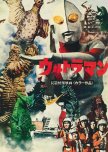
Gets gud
Not the first in the Ultra series but one that shot it into the Japanese consciousness for years to come. The original Ultraman may show its age very early on with its rather backwards portrayal of society that contrasts heavily with what we know today, forced messaging and very limited budget, but from Episode 11 onwards you find the exact reason why this has remained a staple of Japanese Culture for nigh on 50 years.Ultraman is a myth that went on to inspire generations and we love it.
Was this review helpful to you?
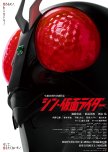
Pulpy Comic Book fiction done right
While he left our beloved Shinji Higuchi to handle directing duties on Shin Ultraman, Anno focused his efforts on Shin Kamen Rider and it's very much cut from the same cloth as its predecessors. Fast, stylish, cartoony and oh-so-charming, it opens with action and never slows down, not even afraid to fully embrace the camp and horrific qualities of its source material.I'll admit this is the tokusatsu property I am least familiar with (at the time of writing I've seen ZO, J, Shin Prologue and, more substantially, Den-O and Fuuto PI), but even to a more casual fan of the series, you can easily follow what is ultimately re-imaged episodes of the original show stitched together into a movie. I'm yet to watch the original but the number of side-by-sides I was seeing on Twitter after clips of it were leaked, shows that Anno really does take pride in his childhood influences.
Hyped stylised like the previous Shin movies, there's some very overbearing and pretty redundant CGI in places where practical effects would have been preferable and even cheaper, but it fits the same tone and energy of its predecessors. Anno's direction is great and features the same variety of angles and strange composition choices that make these so visually engaging. The hyper-choreographed fight scenes also help immensely, unafraid to go all the way to 11 with squishy violence.
With regular Anno collaborator Shirō Sagisu committed to Shin Ultraman, in steps Anime composer Taku Iwasaki and boy, does he do a stand-up job. I'm definitely gonna have to get the soundtrack to this the moment it's released, so many styles of music all coming together in a seamless blend of beauty.
While I ultimately feel that Shin Ultraman is the best of these Shin movies so far, Shin Kamen Rider is a very close second. Anno goes hell for leather here, amounting to a beautiful love letter to one of the grandfathers of Tokusatsu, having fun but not poking fun and fully embracing his inhuman worldview he's only ever touched upon in previous movies.
Was this review helpful to you?

The original Kamen Rider Shin
What could have been a great deconstruction of the Kamen Rider franchise sadly falters due to its bare-bones plot, wonky writing and unlikable stock character archetypes. It's one of the only Kamen Rider productions to feature direct creative input from the original creator, Shotaro Ishinomori, the film takes a large amount of influence from the original manga run as well as Kamen Rider BLACK's manga.The film was intended as a treat for more adult fans of Ishinomori's original works by Ishinomori himself but due to his death in 1998, the series planned to continue the story of this prologue never developed leaving Shin in a weird limbo of existence. The problems presented in this film could have easily been ironed out had it been given the chance but the final product is extremely stiff and somewhat bland compared to the likes of ZO which would release the next year.
I'll be honest, I like a lot of this film's production aspects, the music is frankly brilliant and it is that nice transitional period between the synth-heavy 80s and hard rock 90s; the gore and practical effects are simply top-notch with a seriously gnarly transformation sequence almost like it was ripped from a Cronenberg film with a design of the titular character being equally Cronenberg-esque.
Overall, the film is a curious example of when early 90's visceral science fiction met a classic Tokusatsu franchise. Still worth watching but with tempered expectations.
Was this review helpful to you?
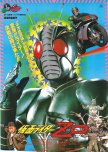
Love a bit of Amemiya
Given that Shin Kamen Rider is coming out next year, I really needed to dive into another of the big three Tokusatsu shows and this was usually the one pointed to as one of the best entry points of the franchise, Kamen Rider ZO is another fantastic film by Keita Amemiya that I can check off my watchlist. ZO feels like the by-product of what would happen if you threw Sam Raimi and Shinya Tsukamoto into a blender together, it's kinetic filmmaking and highly disturbing design that would give even someone like Guillermo del Toro nightmares. Brilliantly shot, written, scored, staged and acted, this is one of the best 48-minute-long films I've ever seen and has me eager to explore more.Was this review helpful to you?
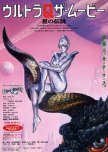
Ultra Q The Movie: Legend of the Stars
0 people found this review helpful
The missing link
Legend of the Stars feels like that missing link between Heisei Godzilla and Heisei Gamera, striking an otherworldly and transcendental balance in re-imagining Ultra Q for a whole new generation and who better to helm it than the franchise's most unique voice, Akio Jissoji. Legend of the Stars could realistically be considered the 2001 of the tokusatsu genre, mainly because this movie is pretty much a metaphysical examination of existence in a similar vein to Kubrick's film, just way more dialogue-heavy. It doesn't always hold together but Jissoji's visualisation is greater than the sum of its shakey parts, his direction and camera work are constantly engaging and ever-shifting with no two shots being the same. Combining aspects of Japanese mythology and a sci-fi mystery, Legend of the Stars is very much worthy of your attention even if you haven't seen the original show, it just drags its feet towards the end as if struggling to fill time and you'll have to put up with some substandard DVD mastering if you want to see it, it's crying out for an HD release. Come on Tsuburaya! Do it!Was this review helpful to you?
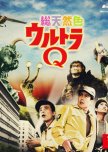
Where it all began
Ultra Q is very much the Japanese equivalent of shows such as The Twilight Zone and The Outer Limits. It's full of imaginative concepts and stories that when combined with the excellent production qualities of Eiji Tsuburaya you are left with one of the most unique shows of a lifetime. It's a tremendous blend of classic Tokusatsu science-fiction and horror that despite only being 28 episodes long, still leaves an impact. Of course, Season 2 of the show was long abandoned but naturally developed into the Ultraman series we all know and love today.Was this review helpful to you?
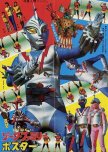
Zone Fight Power!
While I do ultimately feel that Zone Fighter is nothing more than an attempt by Toho to cash in on Tsuburaya Production's territory, Zone Fighter eventually manages to do enough to stand out amongst the seemingly endless surplus of Ultra shows with its family of superhero's dynamic plus some memorable guest stars in the form of Godzilla and company.The evil Garogas plan to take over Earth with their army of giant Terror-Beasts. They are opposed by the Zone Family, hailing from a planet called Peaceland that the Garogas destroyed. The family uses a variety of exotic vehicles and weapons. Still, their best defence against Garogas is their oldest child Hikaru, who is able to transform into the giant Zone Fighter.
The problem with Zone Fighter comes a lot from the tone, less so the production. It's a show that gets confused often as to what it wants to be. Some episodes are great, others border on unwatchable. It's a series Toho isn't especially proud of and director Jun Fukuda when asked about the show in interviews refused to even comment on its existence. Not really a good sign for the show in general.
The visual effects work stands up quite well for the most part with a multitude of different talents lending themselves to the series. Teruyoshi Nakano for 10 of the 26 episodes. Koichi Kawakita for 8. Yoshio Tabuchi for 6. Shinichi Kamisawa, who also wrote for the series, 2 episodes a piece. The direction is hit or miss, the ones directed by either Ishirō Honda or Jun Fukuda tend to be the more interesting ones and there are even two later episodes directed by Kōhei Oguri of House fame. So the show is hardly lacking in the visual department.
Further problems stem more from its writing and characters than anything else. At times juvenile and childish other times dark and sinister, the more childlike episodes stick out a lot more, it doesn't help one of the main characters is a child and his friends make frequent appearances with some godawful child acting to boot. Kazuya Aoyama, later appearing in Godzilla vs. Mechagodzilla, as the titular Zone Fighter does pretty much carry the show for the most part alongside Shiro Amakusa even if his role is massively reduced to that of a mentor. The rest of the characters, especially the villains are very give or take.
The music by Go Misawa is fine overall, the main theme "Zone Fighter" and the insert song "Meteor Victory" however, are massive earworms that won't leave you alone no matter how hard you try to erase them. There's a large usage of horns and brass present throughout and it can get overwhelming at points.
What really got me interested was Zone Fighter's presence in the Shōwa era Godzilla timeline, taking place after vs. Megalon but before vs. Mechagodzilla. It features the likes of Godzilla himself, King Ghidorah making an appearance in two episodes duking it out with Zone Fighter and not Godzilla and ultimately remains the only monster to not be killed by either in the show and finally the final appearance of Shōwa era Gigan. What happens to Gigan in this is almost unacceptable in terms of how he's defeated by the villain's incompetence more than the abilities of Godzilla or Zone Fighter. My poor boy.
Zone Fighter is a very real oddity of Shōwa Godzilla. It doesn't utilise its unique selling point to its full potential, as the show always ensures that Hikaru remains front and centre as its main hero. As much as it would like to reassure you that Zone Angel and Zone Junior are a key part of the show, ultimately it's always Hikaru that saves the day whilst Angel and Junior are acting as support. It's a shame because the glimpses you see of these supporting characters taking centre stage show you exactly just how remarkable Zone Fighter could have been but it seems to have been destined to end on an unresolved cliffhanger which I imagine Toho have no intention of ending.
Was this review helpful to you?
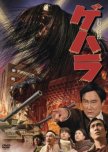
So much hair
One of the better kaiju throwbacks I've seen in recent years, Geharha: The Dark and Long-Haired Monster owes a lot to the bigger name franchises containing a wealth of references and homages interspaced amidst its quirky camp. A short made-for-TV production by one of the more prolific modern Ultraman directors, Kiyotaka Taguchi, barely clocking in at 20 minutes in length, it's a fabulous little gem. The effects are a charming mix of old-school tokusatsu techniques and hilariously low-brow CGI which often add to the short's comedic value. While the stock library of music from the late Akira Ifukube fits quite nicely, Geharha is over just as it really starts to get going, leaving you wanting more and ripe for expansion in a feature-length presentation.Was this review helpful to you?
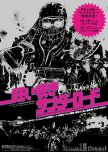
Crazy Biker Road
Often hailed as Japan's Mad Max, Crazy Thunder Road becomes all the more impressive the more you learn about its production. Being a graduation project by director Gakuryû Ishii, it may be a narrative mess but the highly experimental style and limitless rockabilly energy produced a movie that radiates of pure aggression. There's a rough and ready charm to the effects and Kinji Fukasaku-influenced action, often drawing comparisons to Fukasaku's own anti-establishment protagonists with added grunge, grim and neon lights. The soundtrack is honestly my favourite part of the film, using songs by Japanese bands of the time in a near musical sense, it's combined with frantic editing and heightened emotions that immerse you completely within its context. Fast-paced, quick-witted and brilliantly stylised Crazy Thunder Road points toward a new style of genre filmmaking even if that direction is somewhat confused in execution.Was this review helpful to you?
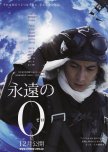
The blueprint for Minus One
Complicated and nuanced as equally as it is populist and compelling, Takashi Yamazaki's The Eternal Zero is way too cluttered to assign any form of accurate assessment and yet, this highly thought-provoking tale on redemption and legacy is highly worthy of your time. Yamazaki effortlessly weaves together an engaging, expressive, sometimes exciting yet often horrifying depiction of a disgraced kamikaze pilot's life, never glorifying the nightmarish situation and always remaining sombre. The great performances sell the otherwise muddled script while its aerial combat is staggeringly realised with Yamazaki's creative use of visual effects and kinetic camerawork. More solemn and graceful, emotional and tragic, than downright high-octane and death-crazed as depicted in some Western war films, The Eternal Zero is an enormously evocative film even though it stumbles upon its final approach with an exceptionally jarring and sappy epilogue that feels very out of place with this otherwise excellent film.Was this review helpful to you?

Not the ending I'd hoped for
As the ending of a trilogy, Always Sunset on Third Street '64 isn't that great, it feels more like the build-up to the finale but ends before we get there. It also gets very confused about what sort of messaging it wants to send towards how to treat your children, but it ties up all the hanging threads it starts without losing the shtick that made the first two so special in the first place. Great performances, exceptionally wholesome and very well directed, Yamazaki could very well deliver one more film if he so wished, but I respect him for leaving it as a very personal trilogy to both him and his viewers.Was this review helpful to you?
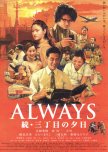
More of what made the first one so damn special
Always Sunset on Third Street 2 offers more of what made the first one so damn wholesome, at times much more bittersweet, it retains the goodwill and warmth of its predecessor. Still just as unabashedly nostalgic and touching, Always 2 is exceptionally self-indulgent, very saccharine and perhaps a bit overlong, but it's also an excellent example of an emotionally satisfying drama with likeable characters and a wonderful sense of place and time. One that doesn't fail to get the tears welling, making for a feel-good film with loads of laughs. Extremely refreshing and just the tonic in these austere and pessimistic times. It shines bright. Although you just know every Godzilla fan has seen the opening 2-minutes of this and then nothing further, a huge injustice if there ever was one. However, you can certainly see why Yamazaki was chosen to helm the latest outing for the Big G with this sequence... I can't wait.Was this review helpful to you?
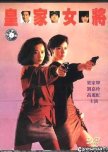
She shoots, but does she score?
She shoots, but does she score? Well, between the copious amounts of histrionic, clichéd melodrama with scenes that go on for way too long, She Shoots Straight provides some genuinely uproarious and well-done action that wouldn't be out of place this side of Michelle Yeoh. Corey Yuen certainly brings variety to the film's kinetic style, particular standouts being a shootout shot in infrared and the storming of a ship with every manner of melee weapon imaginable, Yuen understands when to add a dramatic weight to make a true impact. Complimented by a decent if cheesy score by Lowell Lo, while the performances of Joyce Godenzi and Carina Lau balance out the deranged villainous antics of Yuen Wah. She Shoots Straight isn't bad by any means but the story doesn't make me really care about any of its sapy soap opera characters beyond a surface level while the action is too few and far between but finally delivers that explosive Hong Kong finale that you wait the whole film for, it just really needed some spicing up during the sluggish first half.Also, Joyce Godenzi should have totally lost that final fight against Agnes Aurelio.
Was this review helpful to you?
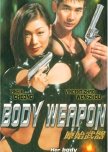
Overly sexed cheese
Even with its mean-spirited streak, Body Weapon is a rather daring psychological thriller that combines the twisted sexuality and flamboyant savagery of Naked Killer with the physical masterstrokes of Jackie Chan in high gear. It's a relatively infamous Category III movie, but despite its status as one, it rarely goes above what one would expect from a sleazy exploitation film based solely on its gimmicky title. Between the tonally confused yet hilariously cheesy jokes, plodding sentimentality and overly sexed-up gimp-suited villain, Body Weapon offers up a tantalising amphetamine rush of brutal martial arts and steamy eroticism that impacts the senses with delirious intensity.Was this review helpful to you?
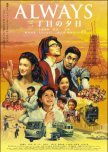
Lavishly heartwarming
Takashi Yamazaki's lavish screen adaptation of Ryōhei Saigan's immensely popular manga, Always Sunset on Third Street is unashamedly sentimental, a glossy, big-budgeted soap opera remaining captivating in its swoon of admiration for the period it is portraying. It's not intended as a serious examination of the tribulations faced by post-war Japan, though hints are thrown in now and again, instead, it focuses on the daily lives of its larger-than-life characters. Although it sometimes feels episodic, the cornerstone of this movie's success lies in its charming essence, lovable performances and overall warmth, sweeping the viewer along with its energy, tugging at the heartstrings every step of the way.Was this review helpful to you?


