




A Dream Within a Dream: Not Confusing—Just Smarter Than Average
Some viewers struggle with A Dream Within a Dream because it doesn’t follow the usual formula. But that’s not a flaw, it’s intentional. This drama asks you to engage with nuance, not just react to surface-level tropes. A Dream Within a Dream isn’t trying to fit into a neat box. If you go in expecting a straightforward love story, you’ll be confused. But if you’re open to something layered, emotionally complex, and structurally bold, you’ll find a drama that rewards attention and rewatching.💫 Let’s Talk About the Heroine
Too many viewers get stuck feeling sorry for Nan Heng and overlook the true emotional core of the story, Song Yi Meng. She’s one of the most realistically strong females leads in Chinese drama, not because she’s cunning or hyper-competent, but because she’s deeply human. She’s smart, but not infallible. kind, but not self-sacrificing. Her strength lies in how she adapts, how she processes each new revelation, and how she makes decisions that balance survival with integrity.
From the start, Song Yi Meng is shown only the side of Nan Heng that reinforces her fear and distrust. She doesn’t get the luxury of seeing his inner turmoil the way the audience does. What she sees is threat, manipulation, and the looming shadow of a fate she’s trying to escape. And yet, she never sells out her family, friends, or even Nan Heng to protect herself. She navigates a world designed to test her, and still chooses compassion over cruelty, discernment over desperation, and love over fear.
🎭Exceptional Acting That Elevates Every Scene
Liu Yu Ning
Liu Yu Ning’s performance is powerful; he begins as a divine threat and gradually unravels into someone heartbreakingly human. His micro expressions are razor-sharp, a flicker of pain, a restrained smile, a glance that carries centuries of grief. He doesn’t overplay emotion, he lets it simmer beneath the surface, and that restraint makes every breakdown hit harder.
In action scenes, he’s magnetic. His physicality is fluid and commanding, never stiff or ornamental. Whether he’s wielding a sword or simply standing still, he looks like someone who belongs in a myth. And when he speaks? Every line is delivered with intention. He doesn’t just recite, he inhabits. His voice carries weight, his pauses are deliberate, and his emotional control makes even the quietest scenes feel charged.
Li Yi Tong
Li Yi Tong portrayal of Song Yi Meng is exceptional. The character is unpredictable, emotionally layered, and sharply funny. She had the difficult task of playing two versions of herself, one who naively falls for Nan Heng without knowing the full consequences, and another who is self-aware, burdened by knowledge of the original script, such as what happens to her, her family, and the cost of loving him. As her real feelings for Nan Heng deepen, she’s caught between foreknowledge and vulnerability, and Li Yi Tong navigates that tension with remarkable finesse.
What makes her performance even more compelling is her comedic timing. She brings a brand of humor that feels distinctly 80's 90's Hong Kong, quick, clever, and emotionally agile. Humor is notoriously hard to play, especially in a drama this emotionally charged, but she nails it. Her tonal shifts, her misdirection, her ability to pivot from satire to sincerity in a single breath, they’re masterful.
💞 A Love Story That Feels Earned
One of the most refreshing aspects of A Dream Within a Dream is how it builds its central romance, not through forced tropes or exaggerated tension, but through quiet, intentional intimacy. The love story between Nan Heng and the Song Yi Meng unfolds organically, shaped by trust, vulnerability, and emotional growth. It’s not rushed. It’s not manufactured. It’s earned.
Their chemistry is undeniable, but it’s not the kind that screams physical attraction every time they share a scene. Instead, it’s the kind of closeness that feels like two best friends slowly realizing they’ve become each other’s home. There’s a tenderness to their connection, a shared language of glances, silences, and emotional weight that makes every moment between them feel grounded and real.
And when the Song Yi Meng finally chooses to love Nan Heng, it’s a quiet resolution. Her trust in him is unwavering. No back-and-forth mistrust, no last-minute misunderstandings just to stretch the plot. Their connection doesn't lean on dramatic declarations or surface level chemistry, it grows from shared pain, mutual respect, and the quiet realization that, despite everything, they choose each other. Theirs is a relationship that feels lived-in, like two people who’ve been through the worst and still find comfort in each other. It’s subtle, satisfying, and deeply human, the kind of storytelling that respects both the characters and the audience.
🧠 Writing That Asks You to Think
Some viewers say the writing lacks emotional logic, but that’s only true if you’re expecting conventional payoffs. A Dream Within a Dream isn’t built for easy consumption. It’s a drama that questions its own structure, and in doing so, asks the audience to think more deeply about character, consequence, and emotional truth.
The dialogue is masterfully constructed. Every scene unfolds with intention, layering emotional tension, character insight, and thematic callbacks in ways that feel organic. You don’t just follow the plot, you start caring about every character, even the ones with limited screen time.
And the humor? It’s woven seamlessly into dramatic situations, never feeling out of place or forced. It’s clever, culturally resonant, and often used to highlight emotional absurdity rather than undercut it. Near the end, the writing revisit earlier themes, especially the concept of scene reset, with such precision that it brings the entire narrative full circle. It’s not just a callback; it’s a culmination. The story doesn’t just end, it resolves, emotionally and structurally, in a way that rewards viewers who’ve been paying attention.
🎬 A Finale That Actually Delivers
Unlike many dramas that leave secondary characters dangling in ambiguity, A Dream Within a Dream gives every major character a proper send-off. We see where they end up, what choices they make, and whether they find peace. It’s rare to get that kind of narrative closure, and ADWAD does it with elegance and intention.
🎶 Sound That Speaks
One of the most underrated strengths of A Dream Within a Dream is its music. The soundtrack isn’t just beautiful, it’s narratively precise. Every lyric is paired with its scene like it was written for that exact emotional beat. Whether it’s heartbreak, revelation, or quiet defiance, the music amplifies the moment without overwhelming it. It’s rare to see a drama where the OST feels like part of the script, but here, it absolutely does.
🔁 Rewatch Value That Keeps Giving
This is a show that rewards multiple viewings. On your first watch, you’re caught in the emotional whirlwind. On your second, you start noticing the patterns. By the third, you begin to understand each character’s position in the loop, what they know, what they fear, what they’re trying to change. Every rewatch offers a new perspective, a deeper understanding, and a fresh emotional angle. It’s storytelling that evolves with you.
📚 Let’s Talk Comparisons
So many reviewers on this site throw shade at and rate down A Dream Within a Dream, while praising The Prisoner of Beauty with a kind of disingenuous enthusiasm.
Let's be clear, there is obviously a bias at play, one that colors their entire viewing experience. They watch ADWAD through a lens of skepticism, picking apart characters and storylines that are simply too complex for them to understand or appreciate.
TPOB is fine. It’s an average romance story with familiar emotional beats. But it doesn’t take risks. It doesn’t challenge genre. It doesn’t ask you to think about storytelling itself. A Dream Within a Dream does all of that and more. If you rate TPOB higher, that’s a matter of taste. But let’s not pretend it’s because the writing is stronger. ADWAD is simply operating on a different level.
Was this review helpful to you?

The Prisoner of Beauty is Pretty, But Not Profound
Let’s be honest, The Prisoner of Beauty is not a bad drama. It’s cute, watchable, and occasionally moving. But it’s also frustratingly underwhelming. The drama leans hard on familiar tropes, surface-level chemistry, and emotional shortcuts that feel more manufactured than earned. If you’re looking for a drama that deepens character through structure, this isn’t it. It follows the romance template to a fault, soothing in its predictability, but rarely impresses.💫 The Heroine
Man Man begins as a promising lead, smart, kind, and emotionally grounded. She’s introduced with the quiet confidence of someone who sees the world clearly and engages it with grace. But once she marries Wei Shao, that clarity dims. She’s rewritten into a familiar archetype, the self-sacrificing woman who suffers in silence, mistaking endurance for love.
Also, her strength doesn’t evolve, it dissolves. What once read as emotional maturity becomes passive devotion. She stops challenging the world around her and instead absorbs its disappointments, shrinking herself in the hope that Wei Shao will one day rise to meet her emotional needs. But he’s not written to be that kind of partner. Her longing is disguised as patience, and her silence is framed as virtue. The result is a character who appears strong on the surface but is ultimately defined by her willingness to wait, ache, and compromise for a man who falls short of the emotional reciprocity she craves.
🎭 Acting That Undermines Emotional Clarity
Song Zu Er
Song Zu Er’s portrayal of Man Man is undermined by a stylistic choice that feels more mannered than authentic. Her persistent whispering, carried through nearly every scene quickly becomes distracting. Scenes that should pulse with urgency or vulnerability instead feel muted by a delivery that’s overly breathy and jarringly unnatural. It becomes so stifling, it pushes past distraction into frustration. I found myself begging for her to just speak normally by episode 2.
Her crying, often childlike in tone, may elicit sympathy in isolated moments, those wide, pleading eyes and trembling lips is like a child seeking comfort. But across the arc of a romantic drama, this becomes her only mode of sadness, and it wears thin. She doesn’t evolve emotionally; she repeats. When the story calls for anguish, grief, or quiet devastation, her tears feel staged, not lived. You can see the performance mechanics at work, the cue hits, the tears fall, and she cries beautifully. But it’s beauty without depth, affect without authenticity.
The emotional register she leans on is fragile, high-pitched, and juvenile. This creates a tonal mismatch that undermines the romantic narrative. In scenes meant to convey intimacy or mutual vulnerability, the imbalance is glaring. It doesn’t feel like two adults navigating the complexities of love; it feels like a grown man paired with a child. The result is a romance that feels unsettling, rendering the physical closeness between Man Man and Wei Shao performative and emotionally incoherent.
Liu Yu Ning
Liu Yu Ning’s performance is solid but subdued. He plays Wei Shao with a kind of emotional detachment that fits the character’s romantic limitations, but it doesn’t always translate into compelling drama. There’s a lack of internal tension, he’s stoic, but not layered. Vulnerability flickers in brief moments, but never fully lands. It’s a competent portrayal, but not a standout, and even Liu Yu Ning has acknowledged in livestreams that this wasn’t his strongest work.
💞 A Love Story That Feels... Uneven
The romance in The Prisoner of Beauty is built on physical closeness and contrived misunderstandings. There’s chemistry, sure, but it’s the kind that flickers in stolen glances and dramatic rescues, not the kind that grows through emotional resonance. The back-and-forth mistrust between the leads becomes exhausting, not because it’s intense, but because it’s repetitive. It’s hard to root for a couple when their connection feels more like a plot device than a lived-in relationship.
Wei Shao’s inability to express love is a central conflict. Man Man keeps hoping for grand gestures, and Wei Shao keeps failing to deliver. The result? A romance that feels like a loop of disappointment. There are cute moments, yes, but they’re the kind you’ve seen in dozens of other dramas. Nothing here feels earned.
🧠 Writing That Plays It Safe
The writing in TPOB is serviceable, but it rarely reaches for anything deeper. Emotional beats are too predictable. Misunderstandings are manufactured. And the pacing suffers under the weight of too many recycled plot points. The story isn’t disjointed, but it is draggy. When your central conflict is mistrust, and that mistrust hardly evolves until the last bit of the show, you’re left with a narrative that spins its wheels.
Additionally, none of the side characters stand out. They exist to move the plot forward, not to enrich it. This left the ending feeling rushed. It ties things up, but without the emotional payoff that makes a finale satisfying.
🎶 Sound That Fades
Liu Yu Ning’s OST is the only track that lingers after the credits roll. The rest of the audio landscape is forgettable. Music cues feel generic, and sound design lacks the precision needed to elevate emotional scenes. In a series that leans heavily on mood, the flatness of its sound design undermines its emotional texture. This was definitely a missed opportunity.
🔁 Rewatch Value That’s Limited
This isn’t a drama that rewards multiple viewings. Once you’ve seen the misunderstandings play out, there’s little incentive to revisit. The emotional arc doesn’t deepen. The characters don’t reveal new layers. It’s a one-and-done experience, pleasant enough in the moment, but not built to last.
📚 Final Note
TPOB is mediocre at best. If you prefer comfort over complexity, TPOB might satisfy. But if you’re looking for storytelling that respects your intelligence and emotional investment, this is not the show.
Was this review helpful to you?

This review may contain spoilers
Don't hesitate, just watch.
I nearly skipped this series because I wasn’t convinced by Chen Zhe Yuan’s casting as the male lead. Having never seen him in anything before, I wrongly assumed he was just another pretty face with little substance. This was one of those rare and gratifying moments where I was proven completely wrong. And I will give credit where credit is due, he absolutely delivers.Summary:
The story follows Nan Xing, a young woman navigating adulthood while grappling with crippling anxiety rooted in the tragic loss of her father and first love. To cope, she immerses herself in mystery novels and fanfiction, crafting stories as a form of self-soothing. Despite her grief, Nan Xing is resilient, striving to build a life that feels normal and meaningful. Like many young women coming into their own, she longs to love and be loved.
One day, standing before a wishing fountain, she voices her desire for an “unforgettable love.” As fate would have it, a fairy who’s been quietly watching over her decides to grant that wish. Swept into a dream, Nan Xing wakes to find a strange man beside her, who turns out to be none other than Xiao Wu Di, the ruthless villain she created in her fanfiction. What follows is a whirlwind of chaos, hilarity, and unexpected tenderness as Nan Xing tries to manage the very villain she imagined… and can’t seem to shake.
Plot:
This series radiates feel-good energy, and I genuinely appreciate its simplicity and emotional accessibility. It’s a refreshing take on the “Isekai” genre, and I’m absolutely here for it. Expect plenty of laughs, romantic tension, and moments of unexpected depth between the leads. While I do wish Nan Xing’s character had received the same level of individual development as Xiao Wu Di, I admire the effort put into crafting believable, organic relationships, not just between the main couple, but also between the second leads. Contrary to some critiques I’ve read, I found the second couple’s storyline sweet, satisfying, and well-paced.
Acting:
Shen Yue
As a longtime Shen Yue fan, it pains me to say this, while she brings warmth and sincerity to Nan Xing, she’s once again boxed into a role that limits her range. Nan Xing (Mr. Bad), Dong Shancai (Meteor Garden), Shi Shuang Jiao (Use for My Talent), and Chen Xiao Xi (A Love So Beautiful) all feel like variations of the same character. Yue Yue does her best with what she’s given, and she’s undeniably charming, but the repetition weakens her impact. I truly hope her team helps her break free from these typecast roles so she can explore the emotional and dramatic depth I know she’s capable of.
Chen Zhe Yuan
Underestimating Chen Zhe Yuan was a colossal mistake. His portrayal of Xiao Wu Di is magnetic, and quietly powerful. Just watch the way he looks at Nan Xing as his feelings begin to shift, he conveys so much without saying a word. It’s in the subtle glances, the pauses, the emotional restraint. These nuances make his performance a joy to watch and mark him as an actor with real promise.
Final Thoughts
Give this series a chance. It’s charming, heartfelt, and surprisingly addictive. Before you know it, you’ll be looping back to episode one, eager to relive the ride all over again.
Was this review helpful to you?
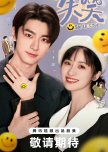
A Mesmerizing Slow-Burn Romance That Will Steal Your Heart
If you’re looking for a romance that lingers long after the credits roll, Smile Code might just be the hidden gem you didn’t know you needed. This slow-burn series isn’t built on flashy drama or whirlwind passion, it’s a deeply human story about love, growth, and connection, told with breathtaking visuals and quietly stunning performances.Visuals & Atmosphere:
Set against a moody, visually arresting backdrop, Smile Code crafts a world that’s as immersive as it is evocative. The cinematography is a masterclass in tone, neon-lit corridors, soft shadows, and painterly framing that elevate every emotional beat.
Acting:
At the heart of it all are Lin Yi and Shen Yue, whose performances breathe life into characters that feel imperfectly, beautifully real. Lin Yi, as Dai Wen, delivers a quiet powerhouse of a performance, his internal conflict are portrayed with remarkable nuance. Shen Yue, as Gu Yi, wears vulnerability like armor. Her raw, open-hearted portrayal makes every moment resonate, grounding the story in emotional truth. Together, they create a dynamic that’s tender, aching, and believable.
Story:
At its core, Smile Code is a meditation on the messiness of love, especially between two people still learning how to be whole. It’s a story that embraces imperfection, showing how connection is built not through grand gestures, but through small acts of kindness, courage, and emotional honesty. The pacing is deliberate, allowing relationships to simmer. The main couple’s longing is palpable, spoken in glances and the quiet ache of what’s left unsaid. Just when you think you’ve settled into their rhythm, the second couple brings a fresh spark, offering a parallel journey that’s equally compelling and emotionally rich.
Music:
The soundtrack is the emotional undercurrent of the series, never overpowering, always precise. Whether underscoring a moment of heartbreak or quiet joy, the music deepens the emotional resonance, making each scene feel lived-in and memorable.
Conclusion:
Yes, Smile Code is a slow burn. It takes its time, especially in the first eight episodes to build its world and earn its emotional payoffs. But if you stay with it, you’ll be rewarded with a romance that’s tender, grounded, and profoundly moving. Watching these flawed, resilient characters fight for connection is satisfying and healing. If you’re drawn to love stories that celebrate vulnerability and emotional growth, Smile Code is a must-watch. Give it a chance, and you might just find yourself looping back to episode one, ready to fall in love all over again.
Was this review helpful to you?


