

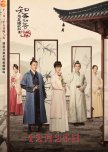
A School of War Disguised as a Family Drama
Most people will tell you The Story of Ming Lan is a slow family drama. What I found instead was a school of war.
What stayed with me most from this drama is loyalty and faithfulness and the fact that even its lessons are earned, not preached. Ming Lan doesn't learn strategy from a battlefield; she learns it from growing up inside the inner household of her father's residence, surrounded by his wife, his concubines, and their quiet schemes. Under the guidance of the grandmother who raised her, she even studies classical strategy texts like Strategies of the Warring States and at one point she says something I'll never forget: that the struggles of the inner quarters are no smaller than the battlefield. This drama proves her right, episode by episode.
Her method is what makes her different from other heroines in this genre. Ming Lan's survival rule is the first rule of any dangerous environment: if you can see the threat all around you, mislead everyone never let them decide what position you occupy. She plays dumb, hides her sharpness, and lets her enemies underestimate her.
Viewers of Empresses in the Palace will recognize this opening move immediately, but Ming Lan's stage is a family household rather than an imperial palace, which makes it both smaller and, in some ways, more intimate to watch.
To be fair about the flaws: the OST didn't work for me, and the prolonged romantic scenes tested my patience though I fully admit this is personal preference. If you're here mainly for romance, you may feel the opposite.
Who is this drama for? Honestly, I'd say it should be your first stop. If you know nothing about the old Chinese household system, the ranking of wives and concubines, the Confucian order, the meaning hidden underneath polite words, watch Ming Lan before you attempt any palace harem drama, because imperial harems are far more complicated, and this drama is the clearest, most digestible introduction to how that whole world works. You'll still want to do a little light research along the way: the drama is full of historical and literary allusions (in the later episodes Ming Lan invokes the story of Cao Cao, and there's a scene where the grandmother gifts a book connected to Mencius, once you look up the famous story of Mencius's mother, who moved house three times because she understood that a child's environment shapes who they become, the scene turns from a polite gesture into something quietly hilarious. In this drama, even a book gift can be a message).
That small effort is part of the pleasure, every time I researched a reference, the scene underneath it got richer.
What stayed with me most from this drama is loyalty and faithfulness and the fact that even its lessons are earned, not preached. Ming Lan doesn't learn strategy from a battlefield; she learns it from growing up inside the inner household of her father's residence, surrounded by his wife, his concubines, and their quiet schemes. Under the guidance of the grandmother who raised her, she even studies classical strategy texts like Strategies of the Warring States and at one point she says something I'll never forget: that the struggles of the inner quarters are no smaller than the battlefield. This drama proves her right, episode by episode.
Her method is what makes her different from other heroines in this genre. Ming Lan's survival rule is the first rule of any dangerous environment: if you can see the threat all around you, mislead everyone never let them decide what position you occupy. She plays dumb, hides her sharpness, and lets her enemies underestimate her.
Viewers of Empresses in the Palace will recognize this opening move immediately, but Ming Lan's stage is a family household rather than an imperial palace, which makes it both smaller and, in some ways, more intimate to watch.
To be fair about the flaws: the OST didn't work for me, and the prolonged romantic scenes tested my patience though I fully admit this is personal preference. If you're here mainly for romance, you may feel the opposite.
Who is this drama for? Honestly, I'd say it should be your first stop. If you know nothing about the old Chinese household system, the ranking of wives and concubines, the Confucian order, the meaning hidden underneath polite words, watch Ming Lan before you attempt any palace harem drama, because imperial harems are far more complicated, and this drama is the clearest, most digestible introduction to how that whole world works. You'll still want to do a little light research along the way: the drama is full of historical and literary allusions (in the later episodes Ming Lan invokes the story of Cao Cao, and there's a scene where the grandmother gifts a book connected to Mencius, once you look up the famous story of Mencius's mother, who moved house three times because she understood that a child's environment shapes who they become, the scene turns from a polite gesture into something quietly hilarious. In this drama, even a book gift can be a message).
That small effort is part of the pleasure, every time I researched a reference, the scene underneath it got richer.
Was this review helpful to you?


