

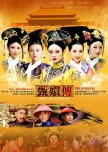
Survival in the Harem. and the Cold Pleasure of Watching Ugly Patriarchy Pay
If a friend who had never heard of this drama asked me what it is, my honest one-line answer would be: survival in the harem, and the deep, cold pleasure of revenge against an ugly patriarchy.But don't let that line fool you into expecting a girl-power fantasy. What this drama actually shows is the price. The palace ruined Zhen Huan, and it ruined the Emperor too. She enters in her teens, and by her mid-twenties the palace has already aged her in ways the camera quietly makes sure you notice. I won't tell you what she becomes; I'll only say that watching the transformation, I couldn't decide whether I was celebrating her or mourning her. That unresolved feeling is the drama.
What Empresses taught me, and I mean genuinely taught me, as in lessons I carry outside the screen, is that danger comes from your blind spots. That is what breaks a woman in this palace, until she becomes a walking corpse.
And the drama is merciless about the choice it leaves its women: either accept being that corpse, thrown away like unrecyclable garbage into the Cold Palace, or put on the wooden face; the one that frightens everyone just enough that no one dares step on you the way they stepped on the innocent women before you. The ones who managed neither went mad, or ended themselves, or were discarded and forgotten. There were episodes where I genuinely ached and found myself asking: do these men truly see women as flowers, things without a will of their own, existing to be picked? Even the women "kept on the shelf," who never won favor and never fell, the drama gives their quiet misery real weight too.
Is it too long at 76 episodes? No- and I say this as someone who usually resents filler. Every single episode teaches you one or two new things. Nothing here is decoration: there is not one poem, one story, one metaphor recited in this drama that isn't secretly about something - a coded message between characters, a threat wrapped in elegance, a confession disguised as literature. I often replayed scenes more than once, and the second viewing always paid.
My only honest reservation is with how the final two episodes chose to play things out, I won't say more, but I didn't love it.
Who is this for? Viewers who love deep Chinese harem politics and have the patience to read between the lines, the layered relationships, the politics, the meanings passing between characters underneath the polite words. If you need fast plot and open confrontation, this will feel heavy. And one practical note: if you are planning to watch Ruyi's Royal Love in the Palace, you must watch this first. Must.
Was this review helpful to you?
This review may contain spoilers
10/10, Emotionally Devastating
I honestly don’t even know how to rate this drama after that ending. I finished the last episode and just sat there feeling genuinely heartbroken.What I really loved about War and Beauty is that it doesn’t simply divide its characters into “good” and “evil.” The deeper the story goes, the more you realize that many of the women who seem cruel or manipulative were once innocent themselves, and the palace gradually turned them into what they became.
Consort Yu is probably the character who surprised me the most. At first, I thought she was simply another scheming villain, but learning about how innocent and hopeful she was when she first entered the palace, and how the loss of her son and years of palace intrigues changed her, made her character much more tragic. By the end, I couldn’t even look at her in the same way anymore.
And then there’s the ending… genuinely brutal.
On Tsin finally escaped with the person she loved, only for us to discover that she had already been wounded by an arrow and died on the way. The fact that he didn’t even know she was injured while carrying her made the scene so much more painful. And Art Sin never even found out that her real sister had died. That detail absolutely destroyed me.
Dr. Sun’s death also hurt. At some point, I was basically watching the finale thinking,
“Can ANYONE in this palace just survive and be happy?” Apparently not. 😭
What makes the ending even more frustrating is that the people responsible for so much suffering don’t necessarily receive the punishment we expect. The Queen, especially, made me furious. She committed terrible things and yet the story doesn’t give the audience the satisfying “villain finally gets what she deserves” ending. And honestly, I think that was intentional.
The palace's world is cruel because power doesn’t automatically come with justice. The people at the bottom suffer the consequences while the people protected by the system can survive.
I also couldn’t stop wondering about the Emperor during the rebellion. The fact that he left very early that morning, before sunrise, with relatively little protection made me suspicious that he may have known that something was going to happen. The drama leaves enough ambiguity for you to question how much the people at the top actually knew about what was happening inside the palace.
And that’s probably what stayed with me the most: not everyone dies knowing the truth, and not everyone who deserves punishment receives it.
War and Beauty is tragic, political, ruthless, and surprisingly emotional. It’s also one of those dramas where the “villains” become more understandable the longer you watch, because you start seeing how the palace itself destroys people.
I came for the palace intrigue and ended up emotionally attached to a group of doomed women. Terrible decision. Would absolutely do it again.
Was this review helpful to you?
A School of War Disguised as a Family Drama
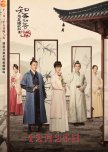
Most people will tell you The Story of Ming Lan is a slow family drama. What I found instead was a school of war.What stayed with me most from this drama is loyalty and faithfulness and the fact that even its lessons are earned, not preached. Ming Lan doesn't learn strategy from a battlefield; she learns it from growing up inside the inner household of her father's residence, surrounded by his wife, his concubines, and their quiet schemes. Under the guidance of the grandmother who raised her, she even studies classical strategy texts like Strategies of the Warring States and at one point she says something I'll never forget: that the struggles of the inner quarters are no smaller than the battlefield. This drama proves her right, episode by episode.
Her method is what makes her different from other heroines in this genre. Ming Lan's survival rule is the first rule of any dangerous environment: if you can see the threat all around you, mislead everyone never let them decide what position you occupy. She plays dumb, hides her sharpness, and lets her enemies underestimate her.
Viewers of Empresses in the Palace will recognize this opening move immediately, but Ming Lan's stage is a family household rather than an imperial palace, which makes it both smaller and, in some ways, more intimate to watch.
To be fair about the flaws: the OST didn't work for me, and the prolonged romantic scenes tested my patience though I fully admit this is personal preference. If you're here mainly for romance, you may feel the opposite.
Who is this drama for? Honestly, I'd say it should be your first stop. If you know nothing about the old Chinese household system, the ranking of wives and concubines, the Confucian order, the meaning hidden underneath polite words, watch Ming Lan before you attempt any palace harem drama, because imperial harems are far more complicated, and this drama is the clearest, most digestible introduction to how that whole world works. You'll still want to do a little light research along the way: the drama is full of historical and literary allusions (in the later episodes Ming Lan invokes the story of Cao Cao, and there's a scene where the grandmother gifts a book connected to Mencius, once you look up the famous story of Mencius's mother, who moved house three times because she understood that a child's environment shapes who they become, the scene turns from a polite gesture into something quietly hilarious. In this drama, even a book gift can be a message).
That small effort is part of the pleasure, every time I researched a reference, the scene underneath it got richer.
Was this review helpful to you?


