

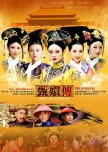
Survival in the Harem. and the Cold Pleasure of Watching Ugly Patriarchy Pay
If a friend who had never heard of this drama asked me what it is, my honest one-line answer would be: survival in the harem, and the deep, cold pleasure of revenge against an ugly patriarchy.
But don't let that line fool you into expecting a girl-power fantasy. What this drama actually shows is the price. The palace ruined Zhen Huan, and it ruined the Emperor too. She enters in her teens, and by her mid-twenties the palace has already aged her in ways the camera quietly makes sure you notice. I won't tell you what she becomes; I'll only say that watching the transformation, I couldn't decide whether I was celebrating her or mourning her. That unresolved feeling is the drama.
What Empresses taught me, and I mean genuinely taught me, as in lessons I carry outside the screen, is that danger comes from your blind spots. That is what breaks a woman in this palace, until she becomes a walking corpse.
And the drama is merciless about the choice it leaves its women: either accept being that corpse, thrown away like unrecyclable garbage into the Cold Palace, or put on the wooden face; the one that frightens everyone just enough that no one dares step on you the way they stepped on the innocent women before you. The ones who managed neither went mad, or ended themselves, or were discarded and forgotten. There were episodes where I genuinely ached and found myself asking: do these men truly see women as flowers, things without a will of their own, existing to be picked? Even the women "kept on the shelf," who never won favor and never fell, the drama gives their quiet misery real weight too.
Is it too long at 76 episodes? No- and I say this as someone who usually resents filler. Every single episode teaches you one or two new things. Nothing here is decoration: there is not one poem, one story, one metaphor recited in this drama that isn't secretly about something - a coded message between characters, a threat wrapped in elegance, a confession disguised as literature. I often replayed scenes more than once, and the second viewing always paid.
My only honest reservation is with how the final two episodes chose to play things out, I won't say more, but I didn't love it.
Who is this for? Viewers who love deep Chinese harem politics and have the patience to read between the lines, the layered relationships, the politics, the meanings passing between characters underneath the polite words. If you need fast plot and open confrontation, this will feel heavy. And one practical note: if you are planning to watch Ruyi's Royal Love in the Palace, you must watch this first. Must.
But don't let that line fool you into expecting a girl-power fantasy. What this drama actually shows is the price. The palace ruined Zhen Huan, and it ruined the Emperor too. She enters in her teens, and by her mid-twenties the palace has already aged her in ways the camera quietly makes sure you notice. I won't tell you what she becomes; I'll only say that watching the transformation, I couldn't decide whether I was celebrating her or mourning her. That unresolved feeling is the drama.
What Empresses taught me, and I mean genuinely taught me, as in lessons I carry outside the screen, is that danger comes from your blind spots. That is what breaks a woman in this palace, until she becomes a walking corpse.
And the drama is merciless about the choice it leaves its women: either accept being that corpse, thrown away like unrecyclable garbage into the Cold Palace, or put on the wooden face; the one that frightens everyone just enough that no one dares step on you the way they stepped on the innocent women before you. The ones who managed neither went mad, or ended themselves, or were discarded and forgotten. There were episodes where I genuinely ached and found myself asking: do these men truly see women as flowers, things without a will of their own, existing to be picked? Even the women "kept on the shelf," who never won favor and never fell, the drama gives their quiet misery real weight too.
Is it too long at 76 episodes? No- and I say this as someone who usually resents filler. Every single episode teaches you one or two new things. Nothing here is decoration: there is not one poem, one story, one metaphor recited in this drama that isn't secretly about something - a coded message between characters, a threat wrapped in elegance, a confession disguised as literature. I often replayed scenes more than once, and the second viewing always paid.
My only honest reservation is with how the final two episodes chose to play things out, I won't say more, but I didn't love it.
Who is this for? Viewers who love deep Chinese harem politics and have the patience to read between the lines, the layered relationships, the politics, the meanings passing between characters underneath the polite words. If you need fast plot and open confrontation, this will feel heavy. And one practical note: if you are planning to watch Ruyi's Royal Love in the Palace, you must watch this first. Must.
Was this review helpful to you?


