

 1
1


This review may contain spoilers
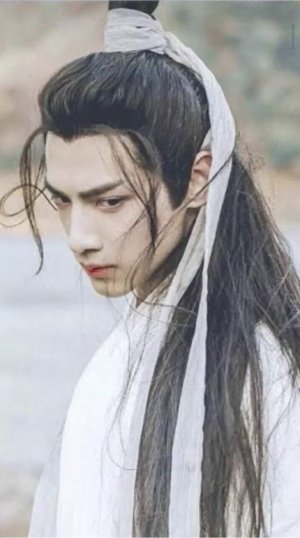
A rare modern C-drama that never wastes your time
I went into Love Between Lines with low expectations simply because it’s a modern C-drama—something I’ve struggled with repeatedly. More often than not, I lose interest by episode 8 due to slow pacing, repetitive misunderstandings, or entire episodes where nothing meaningful happens.This drama completely surprised me.
From beginning to end, Love Between Lines maintains something incredibly rare in this genre: consistent narrative momentum. Every episode introduces movement—whether through the evolving relationship between the leads, the layered dynamics of the VR game, the workplace storyline, or the family conflicts. At no point did I feel the urge to fast-forward, which for me is almost unheard of in a modern romance.
The romance itself is where the drama truly stands out. Instead of relying on forced misunderstandings or prolonged miscommunication, the relationship develops through interaction, trust, and shared experiences. The couple communicates like actual adults. Conflicts arise, but they are addressed rather than stretched artificially. This creates a relationship that feels balanced and believable, neither overly idealized nor emotionally distant.
Chen Xingxu delivers a grounded and mature performance, showing clear growth from his earlier roles. His portrayal here is controlled and nuanced, allowing emotional tension to build naturally. Opposite him, Lu Yuxiao brings a warmth and responsiveness that makes every interaction feel alive. While their chemistry isn’t explosive in a dramatic sense, it is tender, comfortable, and deeply convincing, the kind that makes you believe in the relationship rather than just observe it.
The supporting characters and secondary storylines are also well integrated. They aren’t simply filler; they reinforce the central themes and keep the narrative moving. The result is a drama that feels full without ever feeling bloated.
What makes Love Between Lines particularly impressive is that it succeeds without relying on high-stakes tragedy or spectacle. It proves that a modern romance can be compelling through strong writing, steady pacing, and authentic character dynamics.
For viewers who, like me, tend to struggle with modern C-dramas, this may be the exception that changes your mind.
Was this review helpful to you?

The Story is Great. But…the music! ?
Update at episode 5: it gets better as it goes. Even the music is better. The story is awesome, the acting is great, and the chemistry between leads is outstanding.I watched the available episodes and I like the premise; it is genuinely good. I haven’t had a cop show to watch in a long time. I love the tension. The chemistry is outstanding. The actors are handsome and are perfect for their respective roles. It is interesting and the plot pulls you in fast, not to mention the delicious tension between the leads right out of the gate.
BUT…
The music is the worst. And I don’t mean in a “well I don’t like that song” way but in a “this music choice is so mismatched with what is happening on screen it is actively pulling me out of the story” way. I stopped halfway through episode 2 because it is jarring. I picked it up again, but for now I’m left wondering who chose this music and if they watched a playback of the screen-ready scenes before they released it. The music playing during romantic or NC scenes is especially mismatched.
If you aren’t sound sensitive, the music might not bother you. But the tonal mismatch I’m finding hard to ignore. It isn’t enough for me to drop it - yet.
Was this review helpful to you?
This review may contain spoilers
Loving the uniqueness!
Update: I’m just finished episode 6, and I am finding it more difficult to get through each episode. I’ve adjusted my overall rating accordingly. But it is still very early in the show, and things could pick up again!I wasn’t planning to start Overdo until more episodes had dropped, but I saw so many negative reviews that I became too curious to wait. I’ve only watched the first three episodes, but so far, I absolutely love it.
I love that it doesn’t look, feel, or unfold like many other C-dramas. This is my first Republican-era drama, and I’m fascinated by the costumes, the visual style, and the presence of the characters.
It also doesn’t drag or feel slow to me. Things are moving, and we’re constantly receiving new information. The story begins in the present day, then moves back to three years earlier for a few minutes before returning to the present. Nuggets of backstory are woven throughout each episode, gradually revealing more about the characters and what happened between them. I keep wanting to uncover the next piece.
I’m still very early in the drama, and even if I had finished all five currently available episodes, I would consider it too soon to make any final judgment. But at episode three, I’m completely sold.
People naturally react to dramas very differently, and that’s part of what makes discussing them so enjoyable. I’m used to seeing disagreement over whether a drama was wonderful, disappointing, or somewhere in between. What surprises me here is just how extreme the divide seems to be. Right now, people appear to either love Overdo or hate it, with very little middle ground.
As for me, three episodes in: I love it.
Was this review helpful to you?
This review may contain spoilers
Five Episodes In, and This Is the First J-Drama I Don’t Want to Drop
I went into Duty First, Kiss Later almost by accident. I started it while waiting for an appointment because I didn’t want to interrupt another drama I was already watching. Five episodes later, I am completely caught up and genuinely annoyed that there aren’t more episodes available yet.That is especially notable for me because Japanese dramas usually do not work for me. Every J-drama I have tried before this one has been dropped by around episode 3. This is also my first Japanese BL, and apparently I have once again managed to choose an unusually strong first entry into a new country/genre combination.
The setup is simple: Takoi is a 38-year-old police officer who is beloved by basically everyone in his small community. He is warm, helpful, approachable, and kind to everybody. Shiono is a younger officer in another division who is talented, highly praised, on a fast career track…and inexplicably irritated by Takoi almost every time they interact.
Takoi cannot figure out what he ever did to make Shiono dislike him.
Then he finally corners Shiono and demands the truth.
Shiono kisses him.
That is where the romance begins, but what surprised me is that this drama has much more going on than a simple “straight older man unexpectedly falls for younger male coworker” plot.
The central issue so far is actually Takoi himself.
Takoi considers his kindness one of his best qualities, and in many ways it is. But he treats everyone with such intense, undifferentiated warmth that he does not always recognize when he is creating false expectations, crossing emotional boundaries, or saying something comforting in the moment without considering the consequences. Shiono sees this flaw much more clearly than Takoi does, and the drama uses it both for humor and for some surprisingly thoughtful character development.
At the same time, Takoi is trying to understand what it means that he has fallen for a man when he has always thought of himself as straight. I really like how this is handled. He is confused, flustered, and occasionally ridiculous, but his struggle is never treated as meaningless. Shiono also does not pressure him. Once he realizes how destabilizing this is for Takoi, he gives him space and lets Takoi make the important moves himself.
That makes their growing relationship extremely sweet.
What I am enjoying most is the balance. This drama is genuinely funny without becoming silly, romantic without becoming weightless, and surprisingly thoughtful about kindness, boundaries, intention versus impact, and what it means to make one person feel different from everyone else.
Episode 5 also raises the emotional stakes considerably, and the final scenes hurt in exactly the way they were supposed to.
Five episodes in, I am very impressed.
If you like adult BLs, workplace settings, an age-gap romance where the age difference actually affects the characters, grounded humor, and a relationship with something more substantial to explore than simple attraction, this one is absolutely worth trying.
Now I just need episode 6.
Was this review helpful to you?
This review may contain spoilers
Generation to Generation – A Rare Example of Narrative Integrity Done Right
I went into Generation to Generation with no expectations—and ended up ranking it as one of the best dramas I’ve seen.What sets this drama apart is not just how engaging it is, but how consistently it delivers on what it promises from beginning to end.
Narrative & Structure
This is a dense, layered story; not heavy in the sense of being exhausting, but rich in moving parts. There are multiple sects, histories, relationships, and power dynamics to track, and the show expects you to pay attention. But in return, it rewards you with a story where:
Every episode moves the narrative forward
Every reveal connects cleanly to what came before
Nothing feels like filler
Most importantly: it never loses control of its own story. There are no sudden character shifts, no late-stage shortcuts, and no “we ran out of time so here’s a rushed ending” problem.
Themes & Moral Core
At its heart, this drama challenges the idea of inherited morality.
“Righteous” sects commit cruelty in the name of justice
The so-called “demon” sect contains both corruption and compassion
Characters are defined not by where they come from, but by what they choose
The show consistently reinforces that:
Hatred can become all-consuming and destructive
It’s easy to gather people by appealing to their desires (power, revenge, fear), but that doesn’t create true alignment
Standing up for what’s right is difficult, and often punished, but necessary
And crucially: it never contradicts these ideas for the sake of convenience.
Characters
The two leads anchor the story, but they don’t exist in isolation.
The female lead is strong, capable, and principled without being reduced to a trope
The male lead carries both emotional depth and moral clarity, and his arc is one of responsibility, not just romance
The supporting cast is equally important. Their arcs don’t disappear; they resolve in ways that reflect the larger themes of the story.
Romance
The romance is not the point—but it is the catalyst.
It drives the conflict without overtaking the narrative, and it feels:
believable
earned
integrated into the larger story
This is not a “watch it for the romance alone” drama, but the relationship matters because of what it represents.
Ending
The ending is where this drama proves itself.
After maintaining a high level of consistency throughout, it sticks the landing:
No character regression
No thematic betrayal
No rushed resolution
Every major arc—personal, political, and relational—reaches a natural conclusion.
Whether you prefer tragic or happy endings, this is an ending that feels earned.
Final Thoughts
Generation to Generation is the kind of drama that reminds you what good storytelling looks like:
It respects its own rules
It respects its characters
And it respects the viewer’s attention
It may have an “idol drama” cast, but it operates far beyond the limitations people associate with that label.
This is not just a good drama.
It is a structurally sound, thematically coherent, and emotionally satisfying one, and those are far rarer than they should be.
Was this review helpful to you?
Love, Memory, and Missing Pieces
The Missing Piece premiered with two episodes, and I am already completely invested.What grabbed me immediately is the way the story gives us pieces instead of answers. Relationships, memories, and past events are revealed in fragments, so there is a constant sense that what we are seeing is only part of the truth. So far, that structure is working extremely well for me.
The acting is the strongest part of the drama at this point. Rao Zi Hao is outstanding as Shen Mo. There is a quiet maturity and restraint to his performance that makes the character’s confusion, sadness, and emotional vulnerability feel very natural rather than melodramatic. Hou Mingxuan is equally compelling as Ji Mingxuan. He has a very controlled, mature presence, but there is a tremendous amount happening underneath that control, particularly in the way he conveys hurt, jealousy, fear, and affection without needing to say much.
Their chemistry also works because it isn’t dependent entirely on physical intimacy. There is already a strong emotional tension between them, and much of it comes from what one character believes about their relationship versus what the audience can sense may actually be true. That disconnect is painful in the best possible way.
And then there is the wonderfully complicated romantic geometry. Zhou Yang is engaged to An’An, Ji Mingxuan’s younger sister. An’An has loved Zhou Yang for years. Zhou Yang and Shen Mo have a romantic history. Ji Mingxuan is clearly in love with Shen Mo. Somehow, despite all of that, it does not feel like the drama is setting up a simple love triangle or turning anyone into an obvious romantic obstacle. Everyone seems to be operating from a different understanding of the same relationships and history, which makes the situation much more emotionally complicated.
I also appreciate that the drama is not presenting its relationships in overly simple terms. Even this early, the characters seem to be acting from very different understandings of the same past, which makes their choices much more interesting than a basic romantic rivalry.
The theme song is also beautiful.
Two episodes in, this is an extremely strong start. The acting, chemistry, emotional tension, complicated relationships, and fragmented storytelling have me completely hooked.
Was this review helpful to you?
This review may contain spoilers
He Waited
I went into The Forbidden Flower expecting a romance famous for its kissing scenes.That is not the drama I got.
What I got instead was one of the most emotionally affecting romances I have watched in years.
The story follows He Ran, a young woman carrying a devastating secret, and Xiao Han, a quiet horticulturist who seems disconnected from the world around him. On paper, the premise sounds simple. In execution, it becomes a story about loneliness, grief, choice, agency, devotion, and the courage to love someone when there are no guarantees about the future.
One of the things I value most in a drama is momentum. I can forgive a lot if a story keeps moving. The Forbidden Flower never stalled. Every episode revealed something new, deepened a relationship, or changed the stakes. The plot continually moved forward, and several times it genuinely surprised me. That is rare. I am usually very good at spotting narrative patterns and predicting where a story is headed, but this drama fooled me more than once.
The biggest strength of the show is Xiao Han.
I absolutely fell in love with this character.
Not because he is flashy. Not because he is powerful. Not because he delivers grand speeches.
Because he listens.
Because he notices.
Because he waits.
Again and again, he learns things about He Ran and gives her the space to tell him when she is ready. He doesn’t manipulate her. He doesn’t pressure her. He doesn’t force confessions. He simply remains present. There are many romantic heroes who are exciting. There are far fewer who feel trustworthy.
What struck me most is that Xiao Han consistently respects He Ran’s ability to make her own choices. Given how often dramas use secrets, misunderstandings, and “I know what’s best for you” behavior as shortcuts to conflict, this stood out enormously.
That does not mean I agreed with all of He Ran’s choices.
In fact, I spent much of the drama frustrated with her decision to hide the truth about her illness. While I understood her motivations, I never believed she had the right to make that choice for Xiao Han. One of the central tensions of the drama becomes the difference between protecting someone and respecting their right to choose. The show ultimately explores that conflict in a way I found thoughtful and emotionally satisfying.
The chemistry between the leads is excellent, but perhaps not in the way the drama’s reputation suggests.
I had heard repeatedly that this was a drama known for its “hot kisses.” After watching all 24 episodes, I think that description is misleading.
Are there a lot of kisses? Yes.
Are they good? Absolutely.
Are they the primary source of the drama’s emotional impact? Not even close.
Most of the kisses are gentle, tender, and consistent with who these characters are. The emotional intimacy is far more powerful than the physical intimacy. The moments that stayed with me were not the kisses themselves, but the conversations, the waiting, the flowers, the promises, and the quiet acts of devotion.
The secondary romance between Chou Jia Rong and Zhang Yuanqi deserves special mention.
I expected it to be a side story.
Instead, it became one of my favorite parts of the drama.
Chou Jia Rong is a woman who has spent years defining herself entirely through responsibility and sacrifice. Her heartbreaking belief that she does not deserve happiness becomes one of the most moving themes in the series. Zhang Yuanqi brings a completely different energy than Xiao Han. Where Xiao Han waits, Zhang Yuanqi acts. Their scenes together are filled with tension, humor, vulnerability, and some of the strongest chemistry in the drama.
The cinematography is beautiful throughout. Flowers become a recurring visual language. The triangular structure by the sea, the greenhouse, the paintings, and the changing seasons all reinforce the emotional themes without feeling heavy-handed. The soundtrack was generally strong as well.
The ending was exactly what it needed to be.
By the time the final episode arrived, the question was no longer whether these two loved each other. The question was whether love would be enough to survive uncertainty, illness, distance, and time.
The answer was contained in a simple promise that became the emotional heart of the entire drama:
He waited.
Was this review helpful to you?
Great Chemistry, Strong Acting, and Every Shippers Nightmare
Mr. Fanboy hooked me very quickly because it has much more going on than a simple celebrity/fan romance. Wan enters the entertainment industry almost by accident, already carrying a complicated relationship with fame and fandom, and immediately finds himself surrounded by people who are judging whether he belongs there. Third starts out openly antagonistic toward him, but that hostility gradually shifts into reluctant support, then friendship, and by episode 3 there are already some very sweet glimpses that this relationship is heading somewhere beyond friendship.Auau and Save have fantastic chemistry. Their antagonistic scenes work, their banter works, and once Third starts quietly helping and supporting Wan, the chemistry becomes even better. The small moments between them are especially effective because the relationship develops gradually rather than suddenly flipping from dislike to romance. Save is clearly the stronger actor of the two leads at this point, but Auau holds his own very well, and together they are extremely watchable.
The supporting cast is strong too. Ryujin apparently could have chemistry with a wall, because once again he immediately brings energy to every interaction he has. I’m especially excited to see more of him with Patji as the series develops. And James is doing an excellent job as Nine. Nine initially presents himself as warm and supportive, but Wan’s growing popularity—and particularly the attention Wan receives from both Third and the fans—brings out a much more jealous and threatening side of him. He is becoming a very effective antagonist.
One of the most entertaining parts of the story is that it is basically every shipper’s nightmare. Third and Nine are the established CP the fans expect to be affectionate, close, and happily feeding the ship, but behind the scenes they are anything but the lovey-dovey pair people imagine. That makes the fanservice side of the drama especially fun because it quietly raises an uncomfortable question: how many of our own favorite ships are nowhere near as smooth behind the scenes as fans assume?
Wan’s success also creates conflict far beyond the romance. Multiple people have reasons for wanting him brought down or removed from the production, while Wan himself remains largely unaware of how much resentment his growing popularity is creating. That gives the story real momentum and makes the entertainment-industry setting feel integral to the plot rather than simply background scenery.
Overall, the story is great, the acting is strong, and the chemistry is excellent—not only between Auau and Save, but throughout the cast. The sweeter Third/Wan moments beginning to emerge in episode 3 are particularly lovely, and the show has already given me enough character and industry drama to keep me thoroughly invested.
My only complaint?
One episode a week is cruel.
Was this review helpful to you?
This review may contain spoilers
This Is Not a Romance (And That’s Why It Works)
I have spent the last several weeks completely immersed in this drama, and after finishing all 42 episodes, I think the biggest mistake viewers can make is watching it as a romance.There is romance in it. There is longing, heartbreak, separation, devotion, and eventually love. But romance is not the story.
The story is Li Zhen.
More specifically, it is the story of a woman rebuilding a family, preserving a craft, and carrying an entire legacy on her shoulders.
One of the things I appreciated most is that the drama never turns Li Zhen into an instant genius. She fails repeatedly. Ink batches are ruined. Experiments go wrong. Business plans collapse. Trusted people betray her. Every success is earned through persistence, intelligence, and an almost stubborn refusal to quit.
That commitment to process is what makes the drama feel so authentic.
The same applies to the relationships.
Unlike many idol dramas, this series does not rely on endless misunderstandings, accidental falls, forced jealousy, or artificial romantic obstacles. The relationship between Li Zhen and Luo Wen Qian develops slowly through partnership, trust, and shared hardship. Some viewers may find the romance too restrained, but for me it fit the story perfectly. These are two people carrying enormous responsibilities. Their feelings grow naturally through working side-by-side rather than through dramatic declarations every few episodes.
Yang Zi is outstanding as Li Zhen. She never seems concerned with looking beautiful at every moment. Whether covered in soot, exhausted from failed experiments, grieving, frustrated, or triumphant, she feels completely believable. Li Zhen is intelligent without being perfect, determined without being invincible, and compassionate without becoming naive.
This was my first drama with Elvis Han, and he made a tremendous impression. He has one of the most distinctive voices I’ve heard in a C-drama, and his performance carries a quiet emotional weight that works especially well alongside Yang Zi. Much of his character’s journey depends on restraint rather than grand gestures, and he handles it beautifully.
I also want to specifically praise Wang Zi Hao as Tian Ben Chang.
For much of the drama, Ben Chang could have become a one-dimensional villain. Instead, Wang Zi Hao creates someone far more interesting: a young man whose ambition gradually corrodes every decent part of him. Watching his descent from an attentive and seemingly sincere young man into someone willing to sacrifice family, morality, and eventually even his own brother was one of the strongest character arcs in the series. I was constantly impressed by how much screen presence he brought whenever he appeared.
Another major strength is the supporting cast.
Seventh Grandmother became one of my favorite characters. Li Jin Shu (Eighth Grandfather) became one of my favorite characters. Rong Hua’s journey surprised me repeatedly. Even secondary branches of the family receive enough development that their victories and losses matter.
The drama also does something increasingly rare: it allows older characters to be important. Wisdom, experience, craftsmanship, and mentorship are treated as valuable rather than obstacles to younger characters taking center stage.
As for the ending, I suspect viewers will debate it.
Personally, I found it fitting.
The final episodes reinforce what the drama has been telling us from the beginning: this is ultimately the story of Li Zhen’s legacy. The romance matters, but it is not the sole measure of her life. The preservation of knowledge, the restoration of the Li family, and the continuation of the craft matter just as much.
By the end, what stayed with me most wasn’t a kiss scene or a confession.
It was the image of knowledge being preserved and passed forward.
For a drama centered on ink-making, that feels exactly right.
Rating: 10/10
A rare drama that trusts its audience, respects its characters, and understands that craftsmanship, family, and legacy can be just as compelling as romance.
Was this review helpful to you?
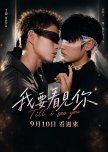
He is Looking for the Other Half; Right Now More Questions Than Answers
Three episodes in, Till I See You has an interesting enough premise to keep me watching, but so far I’m sitting at a solid “meh+.”The story opens with Song Yi explaining that while he was growing up, his stepfather would sometimes call him by the wrong name. Song Yi began to think of himself as only half a person, and imagined that if he could find the person who actually belonged to that other name, the two of them together might somehow make a whole.
That is what brings him from Singapore to the Mainland.
He arrives at a restaurant run by his senior sister, who previously worked for Song Yi’s family at their Japanese restaurant. He asks her to give him room and board in exchange for working there. She essentially tells him that he is a good young master who needs to go home to Singapore, but Song Yi insists that he cannot leave until he finds the person he came looking for.
This is already a little questionable because Song Yi is nearly finished with university and still needs to sit for his finals. Whatever drove him to leave Singapore was apparently important enough for him to skip classes at the very end of his degree and potentially jeopardize years of work, but after three episodes we still don’t really know why the timing was so urgent. At the moment, the answer feels mostly like: because the script needed him there.
His senior sister tells him to find the person and get himself back to Singapore before his family decides to blame her for keeping him there.
And then, naturally, Xu Feiyu walks into the restaurant.
Blindfolded.
Using a cane to navigate because he is temporarily unable to see after eye surgery.
He walks directly into Song Yi.
Senior sister settles Feiyu into a booth, then tells Song Yi to walk him home after he eats. Once Song Yi gets him there, he realizes that Feiyu lives in the house shown in the photograph he has of the person he came to find.
So after traveling all the way from Singapore on this mysterious search: presto chango, there he is.
Feiyu, unfortunately, is not exactly pleasant company. He has already driven away all of his previous caregivers. His mother is apparently abroad somewhere doing something, which is an interesting choice immediately after her son has undergone major eye surgery, but again: script.
Senior sister says she will find him another caregiver, and this time Song Yi basically says, “Challenge accepted.”
Song Yi also has a practical reason to stay. His father has cut off his credit cards in an attempt to force him back to Singapore, so taking care of Feiyu gives him somewhere to live. Why he still cannot go home even after finding the person he came to find is another question the drama has not answered yet.
Feiyu is stubborn, childish, combative, and very loud when he throws tantrums. The performance does not always sell those scenes particularly well, although in fairness, Feiyu is clearly supposed to be a traumatized young man rather than simply an obnoxious one.
When he becomes extremely upset, he hears rats inside his head. He also has haphephobia and normally cannot tolerate being touched, yet he quickly notices that Song Yi’s touch does not trigger the same reaction.
He also seems to fall an impressive number of times whenever Song Yi is nearby, which does make me wonder how he was surviving before Song Yi arrived, especially since he keeps chasing away everyone assigned to look after him.
And I still have questions about the blindfold itself. If Feiyu drives every caregiver away, who exactly keeps tying that elaborate thing onto his head?
Song Yi tries to be a responsible caregiver, partly because he needs somewhere to stay and partly because Feiyu is the person he came all this way to find. Their relationship so far consists largely of bickering, Feiyu resisting everything Song Yi tries to do for him, and Song Yi attempting to placate him.
There are some more interesting moments underneath that.
One night, while Feiyu is asleep, Song Yi mentally asks his stepfather how he could have left Feiyu, because “he is still a child.” That suggests there is considerably more behind Song Yi’s search — and behind the connection between Feiyu and his stepfather — than we currently know.
Song Yi also becomes intrigued enough by Feiyu’s psychological issues that he starts wondering whether he could help him overcome them. When he brings that idea to his senior sister, she gives him what is probably the most sensible advice anyone has offered so far: finish school and mind your business. Good intentions do not always lead to good outcomes.
Acting-wise, neither male lead is particularly strong for me yet.
The actor playing Song Yi is so handsome, and I think he is the better of the two performers so far, but even he frequently feels like someone acting rather than someone fully inhabiting the character.
Feiyu is harder to judge because he has the more demanding role. He has to portray trauma, anger, fear, childishness, blindness, haphephobia, and whatever is happening psychologically when he hears the rats. That is a lot. Unfortunately, some of his bigger emotional scenes feel performed rather than lived in, especially the shouting and tantrums.
Also, I can barely tell what Feiyu actually looks like because of that ridiculous blindfold, although he definitely has excellent cheekbones.
Right now, both actors are okay-ish rather than genuinely compelling. Neither is skilled enough yet to completely pull me into the story and make me forget that I’m watching performances.
Still, I do like the premise. There are enough unanswered questions surrounding Song Yi’s stepfather, Feiyu’s identity, Song Yi’s determination to find him, Feiyu’s trauma, and the unusual fact that Song Yi can touch him without triggering his haphephobia that I’m interested enough to continue.
So for now: interesting premise, very handsome lead, some potentially good psychological material, questionable plotting conveniences, uneven acting, and a lot still unexplained.
Meh+.
But I’m still watching.
Was this review helpful to you?


