

 1
1


This review may contain spoilers
Main Couple’s toxic relationship
I finally finished Eternal Love, and I understand why it’s so beloved—but I also struggled with how its central romance is framed.There’s no question the production itself is strong. The world-building, music, and emotional scope create a sweeping, immersive story. It’s easy to see why so many viewers connect with it, especially given its themes of fate, sacrifice, and love that endures across lifetimes.
Where it didn’t work for me was in how the relationship between Bai Qian and Ye Hua is portrayed.
A significant portion of their story relies on Ye Hua making unilateral decisions “for her own good.” These decisions cause real physical and emotional harm. The issue isn’t simply that he makes mistakes—flawed characters can be compelling—but that the narrative consistently reframes those actions as noble sacrifice rather than fully confronting their impact.
By the end, instead of a clear reckoning or mutual processing of what happened, the story resolves in a way that places emotional responsibility back onto Bai Qian. The dynamic shifts toward forgiveness without sufficient accountability, which, for me, undermined the emotional payoff the story had been building toward.
What makes this especially challenging is that the show presents this relationship as an ideal—an enduring, epic love. But when key moments involve one person overriding the other’s agency and the consequences are not meaningfully addressed, it raises questions about what kind of love the story is ultimately endorsing.
I can appreciate the scale, the performances, and the emotional ambition of Eternal Love. But as a romance, it didn’t feel “healing” or aspirational to me. It felt like a story where harm was absorbed and reframed rather than fully acknowledged and repaired.
Was this review helpful to you?
This review may contain spoilers
Outstanding from beginning to end
Bittersweet Love surprised me with just how good it was. This is one of those dramas where I kept expecting the pacing to slow down somewhere, but it never did. There is an extraordinary amount of story packed into only 12 episodes, yet it never felt rushed. Almost every episode moved the characters, relationships, or larger plot forward, and there was very little that felt like filler.The acting was excellent across the board. Guan Yue was especially impressive as Xiao Fan. His transformation from a timid, naive young man into someone much more confident, capable, and self-directed was handled beautifully. The change was gradual enough that I barely noticed it happening until I looked back at the beginning and realized how different he had become. Zhou Ning Jia was equally strong as Lu Qing. He gave the character a maturity and presence that made it difficult for me to believe the actor is only 26. Even the supporting cast was consistently strong, which is not always the case in smaller productions.
The styling deserves praise as well. Xiao Fan’s development was reflected in subtle changes to his hair, clothing, glasses, posture, and overall presentation. Nothing screamed “look, he has changed now.” Instead, the visual transformation happened alongside the character development. By the end, he no longer looked or carried himself like the uncertain boy we met at the beginning.
The relationship between Xiao Fan and Lu Qing is complicated, sometimes deeply frustrating, and often painful. Lu Qing’s tendency to keep Xiao Fan in the dark drove me crazy at times, but importantly, it did not feel like one of those dramas where misunderstandings are artificially stretched out simply to fill episodes. His secrecy is fundamental to his character and to the larger plot, and eventually we understand why so much information was withheld. That did not make me any less frustrated with him, but it made the frustration feel intentional rather than lazy.
I also loved how much of the story was revealed gradually. Later episodes recontextualize things we saw much earlier without making those earlier scenes feel dishonest. Details that initially seemed small become meaningful, relationships turn out to have much deeper histories than we realized, and characters who were underestimated—both by other characters and sometimes by the audience—become far more complex.
The music was beautiful, the atmosphere remained wonderfully bittersweet throughout, and the final stretch brought together so many of the drama’s recurring themes: home, family, class, sacrifice, care, independence, and what it means to truly choose someone.
And the ending genuinely moved me. After everything these characters went through, it felt earned rather than simply handed to them.
This drama made me frustrated, anxious, amused, angry, and eventually very happy. Most importantly, it kept me completely engaged from the first episode to the last.
I would absolutely recommend Bittersweet Love, especially to viewers who like character-driven BLs where the romance is only one part of a much larger story.
And I think “Later episodes recontextualize things we saw much earlier without making those earlier scenes feel dishonest” is one of the strongest compliments you can give this particular drama. That really was one of the things it did exceptionally well.
Was this review helpful to you?
Loneliness, Rain, and the Person Who Finally Sees You
When It Rains, It Pours completely caught me off guard.I started it because the premise sounded interesting. Seven episodes later, I had stayed up far later than I intended, woke up after only a few hours of sleep, and instead of going back to bed immediately returned to this story because I needed to know what happened to these two people.
This is a quiet, melancholy drama about loneliness—not the loneliness of having no one, but the particular kind that comes from sharing your life with someone and still feeling profoundly alone.
Hagiwara Kazuaki lives with his longtime girlfriend in a relationship that appears perfectly normal from the outside, while physical and emotional intimacy have gradually disappeared. Nakarai Sei lives with the man he loves, someone who cares for him deeply in many ways but refuses the physical affection Sei desperately wants. Their situations are different, but the emotional emptiness is painfully similar.
The drama establishes that parallel beautifully. Even the physical spaces around them tell the story: separate beds, distance within shared rooms, people living side by side while being unable to reach one another.
An accidental email connects Kazuaki and Sei before either realizes who the other person is. That anonymity gives them something neither has elsewhere: a place to be completely honest. Their conversations gradually become more personal, and when their anonymous connection and their real-world relationship finally intersect, the story becomes even more compelling.
What I loved most is that their relationship is built first on recognition. They understand one another’s loneliness before either fully understands what is developing between them. The attraction matters, but the emotional core is much deeper: each becomes the person who notices, listens, remembers, and moves toward the other instead of away.
The drama also handles physical intimacy with unusual care. One relationship in particular establishes consent through repeated, explicit checking; asking before touching, paying attention to discomfort, and making sure the other person is okay. Later events make that attentiveness even more meaningful. The series clearly understands that desire and entitlement are not the same thing.
The rain imagery runs through the entire story and is much more than an aesthetic choice. Umbrellas, storm warnings, rain sounds, a storm glass, and repeated meetings in the rain all become part of the emotional language of the drama. “When it rains, it pours” begins as a description of everything going wrong at once, but by the ending the rain has accumulated another meaning entirely.
The acting is restrained and excellent. This is not a drama filled with huge speeches or constant dramatic confrontations. Much of the emotion lives in pauses, expressions, avoidance, small gestures, and the things people cannot quite bring themselves to say. The pacing is slow in the best sense: the external plot moves quietly, but emotionally the story is always progressing.
And despite the short runtime—only seven episodes of roughly 25 minutes—the characters feel remarkably complete. Even characters who cause tremendous pain are given psychological complexity without the writing confusing explanation with justification.
The final episode brought everything together beautifully. The ending feels earned rather than simply romantic, because both characters have had to make difficult choices about who they are, what they need, and what kind of life they want before they can truly choose each other.
This was one of those rare dramas where I did not merely want to know how the story ended. I wanted to stay inside its world.
Beautifully written, quietly devastating, intimate, and ultimately hopeful.
Was this review helpful to you?

A Tender Love Story in a Rich, Complicated World
Love in the Moonlight is a romance at its core, but it is also a fully developed drama with real plot, layered characters, and a rich world around the central couple. Family conflict, political upheaval, class differences, money, loyalty, betrayal, grief, repression, and duty all shape the relationship rather than sitting beside it as unrelated background.That complexity is probably what I appreciated most. Very few characters are simply good or bad. Even some of the people I strongly disliked were written with enough dimension that I could understand where their behavior came from. The conflicts did not feel manufactured just to keep the leads apart. They grew naturally out of the world these characters lived in and the pressures surrounding them.
Saenkaew and Sasin are a wonderful central couple. Pearl and Peak are both very strong actors, and their chemistry is not built around being overtly sexual or “hot” in the way some BL pairings are. Their style is much more emotional, gentle, and intimate. The physical scenes are tender rather than explicit, and for this story that works beautifully. Their relationship feels rooted in trust, vulnerability, longing, and emotional safety.
Peak is especially convincing as a young prince who has been raised to be composed, dutiful, and constantly aware of his position, while still allowing us to see the hurt, fear, softness, and longing underneath that public persona. Pearl gives Sasin warmth, loyalty, protectiveness, and a quiet emotional strength that makes their relationship feel deeply grounded.
I also appreciated that the supporting characters matter. Pin, in particular, is not written as a simple romantic obstacle. Her choices become painful and at times very difficult to watch, but her emotional journey is given real weight. Rachawadi, Granny, Homthip, Sasin’s friends, and even the more difficult family members all contribute meaningfully to the story rather than existing as background decoration.
The final stretch is intense, but the ending feels earned. After everything Saenkaew and Sasin go through, the quieter life they eventually build together is exactly the right kind of happiness for them.
This is not a fluffy BL and it is definitely not a drama built around getting from one NC scene to the next. It is a deeply romantic story with strong performances, a rich setting, meaningful conflict, and characters I became genuinely invested in.
For me, this was an easy 10/10.
Was this review helpful to you?

Excellent Worldbuilding, Strong Performances, Real Emotional Stakes
ABO Desire surprised me with how completely it pulled me into its world.I went into it unfamiliar with the ABO structure, so during the first few episodes I was actively trying to understand the rules: Alphas, Betas, Omegas, pheromones, heats, ruts, compatibility, social hierarchy, reproduction, and where Enigmas fit into all of it. By the end, I had completely accepted the world on its own terms. I wasn’t mentally comparing its biology to our own anymore. The ABO structure simply felt normal within the universe the drama had created, which says a lot about how effectively the worldbuilding was handled.
What impressed me most was that the ABO concept wasn’t just an excuse for sexual situations. It was integrated into the actual story: medicine, social status, discrimination, relationships, family expectations, corporate interests, reproductive biology, and the characters’ own fears and vulnerabilities. There was a real plot here, and the romance existed inside it rather than replacing it.
The two central relationships were very different from each other, and both held my interest. Hua Yong and Sheng Shao You’s relationship is intense, complicated, manipulative, occasionally alarming, and ultimately much more emotionally affecting than I expected. There were points when Hua Yong’s behavior genuinely upset me—not because I thought the writing had gone wrong, but because I had become invested enough in Shao You to hate seeing him deceived and manipulated by someone who claimed to love him. I actually stopped watching for a while because of that emotional reaction. When I eventually returned, I watched the entire second half almost straight through.
Huang Xing’s performance as Hua Yong was one of the highlights for me. He had to portray dramatically different sides of the same character, and the changes weren’t limited to dialogue. His voice, posture, gaze, facial expressions, and even the way he occupied physical space changed depending on which version of Hua Yong we were seeing. He was completely believable both as the gentle, passive Omega he presented to the world and as the much more commanding person underneath.
Gao Tu and Shen Wen Lang’s storyline was quieter but emotionally painful in a completely different way. Gao Tu was probably the character I felt most protective of throughout the series. Their relationship relied less on deliberate manipulation and more on repression, fear, jealousy, and two people repeatedly misunderstanding what the other person was actually feeling. I only wish the drama had given them more time, particularly near the end. Their resolution felt much lighter and faster than the main couple’s, and I would have liked a little more closure.
Another thing I appreciated enormously: this drama did not need explicit NC scenes to convince me that these couples wanted and loved each other. The intimate scenes were restrained and largely implied, and I never once felt that anything was missing. The emotional development, chemistry, story, and character relationships did the work. It was a good reminder that sexual explicitness and romantic intensity are not the same thing.
The pacing was also excellent. Even when the material became emotionally heavy, I never felt that the story itself was dragging or losing direction. There was always another piece of the world, another character revelation, or another relationship development pulling me forward.
And I loved the ending. It gave me the emotional payoff I wanted for both couples while remaining completely consistent with the world the drama had spent sixteen episodes establishing.
ABO Desire is strange, messy, occasionally toxic, unexpectedly tender, and far more thoughtful than I expected it to be. What could easily have been a gimmicky premise instead became a genuinely absorbing story with strong performances, excellent worldbuilding, and characters I became deeply invested in.
Definitely one of my favorite BLs.
Was this review helpful to you?
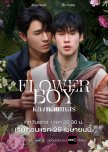
A Beautiful Romance With Chemistry That Feels Effortless
Flower Boy surprised me with how much I enjoyed it. The fantasy premise involving the secluded Mudan people and their unique scents gives the story an actual plot beyond the romance, and the mystery surrounding Gaysorn’s family and Scent’s perfume company kept me interested throughout all eight episodes.The strongest part of the drama, though, is PearlPeak. Their chemistry is extraordinary. They don’t simply look convincing as a couple; their interactions feel so natural that I stopped thinking about the actors at all and simply believed the relationship. Even their intimate scene is beautifully handled—gentle, tender, and emotionally connected rather than included just for heat. This was my first experience with this couple.
I also loved Gaysorn and Scent individually. Gaysorn’s innocence never makes him feel foolish, while Scent’s growth gives the romance more substance than I expected. The fantasy elements, family history, romance, and central conflict all fit together surprisingly well for such a short series, and I thought the ending was both satisfying and emotionally appropriate.
My biggest complaint is the product placement. It is extremely obvious and occasionally stops scenes dead so the characters can essentially perform a miniature commercial. It pulled me out of the story every single time.
Otherwise, this was a genuinely lovely series with a strong story, memorable leads, and one of the most believable romantic pairings I’ve seen recently.
Was this review helpful to you?
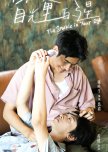
A Beautiful Story About Love, Visibility, and Being Truly Seen
Trigger warning: This series includes sexual assault and coercion.The Sparkle in Your Eye was a beautiful surprise for me. The story is straightforward, emotionally grounded, and very easy to follow. I never felt that the plot dragged, and the character development stayed clear and purposeful throughout.
At the center of the story is Su Yi, a nineteen-year-old longtime fan of actor Pei Jia who unexpectedly gets the chance to act opposite him in a BL film. What begins as an awkward fan/idol dynamic gradually becomes much more emotionally complicated, especially as Su Yi’s health deteriorates and Pei Jia begins to understand how important he has been in Su Yi’s life.
One of the strongest themes in the series is the desire to be seen. Su Yi does not want fame because he needs people to admire him; he simply wants to leave something of himself in the world that people can look at. Pei Jia, meanwhile, begins as someone who is constantly watched, judged, photographed, and discussed but rarely truly understood. Their relationship develops around that contrast beautifully.
I also appreciated Pei Jia’s character arc. He is arrogant, guarded, deeply conscious of scandal, and accustomed to protecting his career. Falling for Su Yi does not magically erase any of that. His actions start revealing his feelings long before he is emotionally prepared to admit them, which made their relationship much more convincing to me.
The darker entertainment-industry storyline involving Fang Run Zhi is difficult to watch, but it is not disconnected from the larger story. It reinforces the difference between being seen as a person and being treated as an image, commodity, or opportunity. The eventual payoff is satisfying without feeling like an unrelated revenge plot.
The secondary relationship between screenwriter Su Bai and director Yi Wei was also surprisingly effective. They have been together for nine years, but the series gradually reveals how emotionally neglected Su Bai has felt. Their disagreement over whether lovers in the film need genuine passion and tenderness becomes a reflection of what has been missing from their own relationship. One tiny moment near the end involving breakfast says more about those nine years than a huge dramatic speech ever could.
My only real criticism is the kissing. These were some of the most obviously closed-mouth, staged kisses I have seen in a BL. I do not need explicit intimacy, but if a drama includes kissing, I want it to look believable. Honestly, no kisses would have worked better for me than kisses that looked this artificial—especially in a story that explicitly talks about passion and tenderness between lovers.
That aside, I loved this. It is emotionally effective without becoming confusing or bloated, the themes remain consistent, and I became invested very quickly and stayed invested through the final episode.
Was this review helpful to you?
This review may contain spoilers
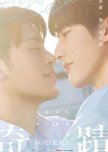
An Excellent BL With One Major Problem I Couldn’t Ignore
Kiseki: Dear to Me surprised me. I expected a fairly standard gangster/BL setup, but this is much more ambitious than that. There are two central romances, organized-crime and family politics, betrayal, sacrifice, memory loss, found family, and consequences that genuinely alter the characters’ lives. Most importantly for me, the story would still have substance even if you temporarily removed the romance.The main couple begins when 17-year-old Bai Zong Yi encounters an injured gangster, Fan Ze Rui, who essentially blackmails his way into Zong Yi’s tiny apartment. What starts as extremely unwilling cohabitation slowly becomes domestic and affectionate. Zong Yi is poor, working while still in high school, and determined to become a doctor. Rui cooks for him, helps with his studies, and gradually turns a lonely apartment into a home.
Their chemistry is excellent, and I especially loved that Zong Yi is not written as passive simply because he is younger. He is emotionally direct, stubborn, physically confident, and consistently the more proactive person in the relationship. Taro Lin gives Zong Yi much more emotional weight than I expected from such a young actor. He was one of the strongest performers in the series.
However, I cannot ignore the biggest problem: Zong Yi is 17 when his relationship with adult Ze Rui becomes sexual. The show itself acknowledges the age issue — Rui initially rejects him specifically because he is underage — and then crosses that boundary anyway. I understood later why the writers may have needed Zong Yi to remain a minor for an important plot development, but that explains the writing choice; it does not make the sexual relationship comfortable for me. I liked this couple enormously, but this kept me from experiencing parts of their romance as uncomplicatedly romantic.
The secondary couple, Chen Yi and Ai Di, may actually be the emotional standout of the drama. Their relationship is messy, painful, funny, frustrating, and built on years of shared history. Ai Di in particular is a fantastic character, and Louis Chiang is exceptional in the role. Everyone in the cast is good, but he consistently stood out to me. Ai Di could easily have become loud comic relief or a stereotypical jealous second lead; instead, Chiang gives him remarkable emotional complexity and vulnerability.
The drama also does something I appreciated with its time jump and memory-loss storyline: the consequences matter. People lose years. Dreams change. Relationships are damaged. The story doesn’t simply press a reset button and return everyone to where they started. Zong Yi’s later life in particular carries visible consequences from what happened to him, and I loved that the ending incorporates those limitations into his future rather than magically curing them.
Both couples have terrific chemistry, the supporting relationships are unusually important, and I loved that the Fan-family storyline avoided the predictable “threatened half-brother becomes evil” route. There is also a genuine found-family thread running through the entire drama that becomes increasingly meaningful as the story develops.
The pacing occasionally moves very quickly, especially considering how much plot is packed into thirteen short episodes, but I was never bored. I went from laughing at strawberry cake, cats, hot pot, and romantic incompetence to crying through huge portions of the later episodes.
And yes, watch the post-credit scene in the finale. It gives Zong Yi and Rui exactly the kind of quiet emotional ending their story needed.
Overall, this was an excellent drama with strong storytelling, memorable characters, two compelling couples, and several genuinely outstanding performances. I just wish the writers had found a way to accomplish what they needed narratively without making Zong Yi sexually involved with an adult while he was still 17.
Was this review helpful to you?
This review may contain spoilers
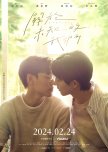
A Found Family That Grows Into Something More
“Unknown” has a premise that is easy to misread if it is reduced to labels like “adopted brothers” or “age-gap romance.” That is not really what this story is.Wei Qian is still a child when he is forced into an adult role. He is already responsible for his younger sister when Wei Zhiyuan, an abandoned boy only a few years younger than him, follows him home and becomes part of the family. Qian feeds them, protects them, gets Zhiyuan registered for school, works to support the three of them, and spends most of his youth doing the things a parent would normally do.
That history is exactly why the romance is complicated.
The story does not pretend that “they are not biologically related” solves everything. Qian helped raise Zhiyuan. He was his protector, provider, and primary caregiver. So when Zhiyuan grows up and realizes that his feelings for Qian are romantic, Qian’s resistance makes complete sense. He is not simply trying to get over the idea that they are brothers. He is trying to understand whether he can ever see someone he once raised as an adult romantic partner.
There is no grooming. Qian never encourages Zhiyuan to develop romantic or sexual feelings for him. For most of their lives, he does not even realize those feelings exist. When he finally does, he is horrified because he has been the parental figure, pulls away, and spends years struggling with what the relationship means. Zhiyuan’s feelings develop on his own, and when he eventually returns after four years abroad, he is no longer the child Qian once cared for. He is an independent adult with his own career, money, experiences, and choices.
That gradual shift is one of the strongest parts of the drama.
Zhiyuan’s devotion to Qian is established through countless small moments rather than one big declaration. He remembers everything about him, watches over his health, notices when he is tired or sick, cooks for him, cares for him, and wants above all else to remain beside him. But the story also allows him to grow into someone who can care for Qian in return.
That reversal matters because Qian has spent his entire life being the one who carries everyone else.
Lili and San Pang add another layer to the same theme. Some viewers may also be uncomfortable with their relationship because San Pang was a contemporary of Qian and knew Lili when she was very young. But the drama again presents a relationship that develops later, after they have grown up, within a tightly bonded family that has known one another for years.
And honestly, I found something beautiful about that.
These people grew up surviving together. They became one another’s family long before any romance entered the picture. They know one another’s history, trauma, habits, weaknesses, and loyalties in a way outsiders never could. As they become adults, some of those bonds remain sibling-like, while others change into something romantic. The family does not break apart because of that. It expands and changes shape.
Qian’s trauma and health storyline is just as important as the romance. He has spent his entire life believing that loving someone means protecting them, providing for them, and carrying every burden himself. He is very good at taking care of everyone except himself. One of the most moving parts of Unknown is watching him slowly understand that allowing someone else to care for him does not make him weak or burdensome.
By the end, what stayed with me most was not simply whether Qian and Zhiyuan would end up together. It was the fact that Qian began as a child trying desperately to keep a family alive, and ended with someone who was just as determined to take care of him.
Unknown is thoughtful, patient, emotionally complicated, and much more interested in how love changes over time than in giving easy answers.
Very good drama, and one that became more moving the longer I watched it.
Was this review helpful to you?
This review may contain spoilers
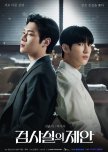
A Mystery First. A Romance Second.
The biggest surprise for me wasn’t the romance—it was how invested I became in the mystery.At just ten episodes of roughly twenty-five minutes each, The Prosecutor’s Proposal tells a surprisingly layered story involving an old murder case, present-day killings, corruption, family secrets, and two men whose lives have been connected for years before they ever meet.
Prosecutor Ju Taeseon promotes investigator Lee Chaeha for all the wrong reasons. Believing Chaeha’s father murdered his own father years earlier, Taeseon intends to make Chaeha’s life miserable as a form of revenge. Instead, he discovers that Chaeha has already spent years carrying the weight of his father’s conviction and the stigma that followed. What begins as revenge slowly becomes something Taeseon never expected.
What makes the romance work is the emotional imbalance between them. Taeseon knows exactly who Chaeha is from the very beginning. Chaeha has no idea who Taeseon really is. As the investigation uncovers more truths, that secret becomes harder and harder to keep, making the relationship feel emotionally earned rather than driven by artificial misunderstandings.
The mystery was every bit as engaging as the romance. I found myself making theories throughout the series, trying to connect clues, hidden relationships, and decades-old secrets. The writers play fair by planting clues early enough that attentive viewers can solve some of the major twists before they’re revealed, which made the investigation especially satisfying.
The pacing is another standout. With such short episodes, there isn’t room for filler, and the story keeps moving without feeling rushed. Every episode either advances the investigation, deepens the characters, or both. I would have been happy if there were more episodes!
And then there’s the chemistry. It’s excellent. The romance grows naturally from the story instead of interrupting it, making both aspects stronger. One particular doorway scene is a perfect example of how effective quiet tension and character choices can be when they’re given room to breathe.
Overall, this is one of the strongest short-format dramas I’ve watched. It’s an engaging mystery, a compelling character drama, and a satisfying romance all at once.
Was this review helpful to you?

This review may contain spoilers
The Untamed (2019) ★★★★★
I put off watching The Untamed for a long time.Partly because it was 50 episodes, partly because the fandom surrounding it is so intense, and partly because when something is hyped this much, it often struggles to live up to expectations.
In this case, the hype was deserved.
The Untamed is not a perfect drama. The special effects are often dated. Some of the musical choices are unintentionally funny. There are moments where the production shows its age and budget limitations.
None of that mattered.
The story is simply too good.
What begins as a mystery surrounding the return of the infamous Yiling Patriarch gradually unfolds into a story about loyalty, grief, sacrifice, reputation, family, belonging, and the devastating power of narrative. Few dramas have explored the concept of othering as effectively as this one. Again and again, characters are judged not by what they have done, but by the stories people tell about them.
Wei Wuxian is one of the most compelling protagonists I have encountered in a C-drama. Warm, mischievous, intelligent, compassionate, stubborn, and occasionally reckless, he remains fundamentally committed to protecting others even when the world decides he is a villain. Xiao Zhan’s performance is extraordinary.
Equally impressive is Wang Yibo as Lan Wangji. Playing a reserved character is difficult. Playing one who communicates almost entirely through subtle changes in expression is even harder. Wang Yibo somehow manages to convey loyalty, affection, grief, regret, devotion, and love while speaking very little. By the end of the drama, some of the most emotional moments come from a glance rather than a speech.
The supporting cast is equally strong. Jiang Cheng is frustrating, tragic, and deeply human. Wen Ning became one of my favorite characters. Lan Xichen’s kindness and optimism make him easy to love. Jin Guangyao is one of the most effective villains I have seen in a drama because he rarely appears villainous. His greatest weapon is not power but perception.
The greatest strength of The Untamed, however, is its world.
Cloud Recesses, Lotus Pier, Burial Mounds, Koi Tower—each feels like a real place inhabited by real people with histories, traditions, loyalties, and wounds. Long after finishing the drama, I suspect these places and characters will remain vivid in my memory.
This is not the strongest romance I have watched.
It is not the most emotionally devastating drama I have watched.
It is not the most visually impressive drama I have watched.
But it may be the most immersive world I have visited.
By the end, I did not want to leave.
That is one of the highest compliments I can give any story.
Highly recommended.
Was this review helpful to you?
This review may contain spoilers
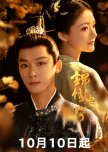
In my top 3 favorites for historical dramas
The Rise of Ning is one of those dramas that doesn’t rely on spectacle or constant twists to hold attention, it earns investment through consistency, character depth, and narrative discipline.At its core, this is not a romance-driven story, even though there is a central relationship between Yi Ning and Shen Yuan. Instead, the drama builds itself around layered family dynamics, political maneuvering, and long-buried truths that unfold with deliberate care. What stands out most is that nothing feels wasted; every storyline, every character, and every reveal contributes meaningfully to the overall narrative.
The pacing is slower than more plot-heavy or high-intensity dramas, but importantly, it never drags. The story is always moving forward. Developments feel earned rather than rushed, and the writing trusts the audience to stay engaged without forcing artificial tension or repetitive misunderstandings. That alone sets it apart from many dramas that claim to be “slow burn” but rely on stagnation instead of progression.
Yi Ning is a strong, intelligent female lead whose decisions consistently drive the story. She is not reactive or passive, instead she observes, calculates, and acts with intention. Shen Yuan complements her perfectly, with a restrained, controlled emotional presence that allows his actions to speak louder than his words. Their relationship develops organically, grounded in trust, loyalty, and shared experience rather than overt romantic gestures. The fact that the drama includes only a few small kisses underscores this; romance is present, but it is not the point.
The supporting cast is equally well-developed. Even secondary storylines—such as the dynamics involving Yi Xiu, Lin Mao, and Han Zheng—feel purposeful and fully integrated into the world rather than existing as filler. The early family conflicts within the Luo household are intense but narratively justified, and the later shift into political intrigue expands the scope without losing coherence.
The final arc, particularly the Marquis storyline, is where the drama elevates itself further. The tension is not rooted in shock value or cruelty, but in precision; carefully constructed plans, emotional stakes, and the looming consequences of each decision. It’s the kind of tension that creates a physical reaction because the writing and acting fully sell the stakes.
Visually and musically, the drama reinforces its tone beautifully. The OSTs are especially notable: subtle, emotional, and perfectly aligned with key moments, enhancing rather than overpowering the scenes.
Overall, The Rise of Ning succeeds because it knows exactly what it is. It doesn’t try to force romance, inflate drama, or rely on extremes. Instead, it delivers a cohesive, character-driven story with strong performances, thoughtful writing, and a steady, satisfying narrative arc.
It’s not a fast-paced spectacle, but it is consistently engaging, emotionally grounded, and exceptionally well-executed.
Was this review helpful to you?

Fire-Level Chemistry With a Story That Actually Holds Up
Some dramas rely on chemistry to compensate for weak storytelling.Love in the Clouds doesn’t need to.
Ji Bozai and Ming Xian (Ming Yi) carry one of the rare fire-level pairings—the kind where every interaction feels immediate, responsive, and fully mutual. This isn’t one-sided longing or manufactured tension. It’s two characters who meet each other exactly where they are, moment by moment.
That alignment is what makes their relationship feel real.
But what elevates this drama is that the story actually holds up alongside them.
The pacing is tight from beginning to end. There’s no mid-drama slowdown, no filler arcs inserted just to stretch the runtime. The narrative moves with purpose, and more importantly, it moves consistently.
Ji Bozai behaves like Ji Bozai.
Ming Yi behaves like Yi.
That sounds simple, but it’s where many dramas fail—forcing characters to act out of pattern to serve the plot. This drama avoids that. The character logic remains intact all the way through, which makes both the emotional beats and the plot developments land harder.
The mystery element adds real structure, not just background intrigue. It pulls the story forward and gives weight to what’s unfolding beyond the central relationship.
And the world doesn’t collapse outside the leads. The side characters have presence and depth, contributing to a story that feels complete rather than narrowly focused.
One of the standout dynamics is between Ji Bozai’s spirit beast and Ming Xian’s spirit beast. Their relationship adds warmth and texture without being reduced to comedy or misread as romance, they are companions, and the drama respects that distinction.
There’s a level of consistency here, emotional, structural, and character-driven—that’s hard to maintain over a full series.
This is a drama that doesn’t ask you to choose between strong storytelling and powerful connection.
It delivers both—through Ji Bozai and Ming Xian, and through a narrative that knows exactly what it’s doing.
Was this review helpful to you?
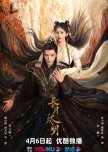
When Love Teaches a Devil to Hesitate
This is not a perfect drama—but it is an unforgettable one.Till the End of the Moon lives and dies on one central achievement: the transformation of Tantai Jin. What makes his arc powerful is not that he becomes “good,” but that he begins to hesitate. Those tiny moments—when cruelty pauses, when instinct conflicts with something unfamiliar, carry more emotional weight than any grand declaration.
Luo Yunxi delivers one of the most layered performances I’ve seen in a C-drama. The shifts are often subtle: restraint in the eyes, a flicker of confusion, a controlled unraveling. It’s not loud acting—it’s precise, and it lands.
Bai Lu matches him in emotional complexity. Li Susu’s conflict—loving the very person she was sent to destroy—is where the story finds its core tension. The drama doesn’t take the easy route of simplifying that conflict, and that’s where it succeeds.
That said, the structure is uneven. The pacing fluctuates, particularly in later arcs, and some transitions feel rushed where they should have been earned. The mythology is ambitious but not always cleanly executed.
But here’s the thing: this drama is not remembered for its structure, it’s remembered for its emotional impact.
It’s tragic, heavy, and often uncomfortable, but it earns those feelings.
Not flawless. But unforgettable.
Was this review helpful to you?

Not a Comedy—A Brilliantly Structured Political Tragedy with an Earned Ending
Going into How Dare You!, I expected something light, maybe even comedic based on how it’s marketed. What I got instead was a tightly written political drama layered with psychological depth, moral complexity, and one of the most structurally satisfying narratives I’ve seen in a long time.This is not a comedy. It’s a story about power, control, narrative manipulation, and what it means to reclaim agency in a world designed to strip it away.
From the very beginning, the drama commits to its internal logic—and more importantly, it never breaks it. There is no mid-series drag, no filler arcs, and no moments where characters behave in ways that contradict who they’ve become just to move the plot forward. Every episode builds on the last, and every reveal deepens what came before rather than undoing it.
One of the most impressive aspects of this drama is its structural discipline. Political schemes are layered but always understandable. Character motivations remain consistent even as circumstances evolve. And perhaps most importantly, consequences matter. Actions are not erased or softened—they carry through the story in meaningful ways.
The relationship between the leads is another standout. It’s not built on grand gestures or constant physical intimacy, but on trust, shared understanding, and emotional restraint. There are only two kisses in the entire drama, and both are perfectly placed. The first comes in a moment of potential loss, where words are no longer enough. The second comes at the end, when everything has finally been earned. Neither feels gratuitous. Both feel inevitable.
What surprised me most was how emotionally immersive the story became. I didn’t want to pause it. I didn’t want to switch to something lighter. I wanted to stay with these characters and see their journey through to the end. That level of sustained engagement is rare, especially in a drama of this length.
The ending deserves special mention. It is a happy ending, but more importantly, it is an earned one. Nothing about it feels forced or added just to satisfy the audience. The final scene, which mirrors an earlier conversation between the leads about how they might meet outside the world of the story, brings everything full circle in a way that feels both emotionally and narratively complete.
In contrast to dramas that lose momentum in their final stretch, How Dare You! remains consistent all the way through. It respects its characters, its themes, and its audience.
This isn’t just a good drama. It’s a well-constructed one. And that difference matters.
Was this review helpful to you?


