

 3
3 7
7 2
2 1
1 1
1 1
1 1
1 1
1 1
1 1
1


Powerful lakorn about trauma and abuse
My changes to the tags were accepted early June '25. Please realise that reviews and comments made before then were primarily from viewers who expected it to be a lesbian romance/GL because that is how it was tagged.-----
Rakkaew is a powerful psychological - almost Shakespearean - lakorn about trauma and abuse, sexism, controlling parents, control and abuse in other family/non-family relationships, and how the wealthy are able to use money, power and position to skirt the law.
It is dense and complicated, messy in content but well-structured in form, with callbacks, symbolism and use of parallels between characters. There's a lot going on but it's always clear, at least if you pay attention, especially to things like who is making incorrect assumptions and why Sai says some of the things she does.
And those stunning monologues delivered by Cris which wouldn't be out of place on a theatre stage. They explain a lot, like why Rangrong couldn't have been written as a male character. Amongst other things, societal and parental sexism are very much part of why she is as she is.
There is something of a romance tucked within but it isn't a focus. There are a lot of supportive friends, and a found family accumulating around Sai. The tags I'm asking to be added are mostly heavy but, like the majority of Thai works, it adds plenty of warmth, light and compassion to the shadows.
Three older characters say homophobic things. Three younger characters are very clear in explicitly saying the opposite. This is in keeping with the call for social change in things like approaches to parenting.
I don't know how the 1971 novel treated Rangrong, her mental illness, hatred of (abusive) men/assumption that men will be abusive, or her orientation. The title, Rakkaew (Taproot), has repeated thematic significance regarding parental love (or lack) and the consequences of how children are raised, which suggests those aspects were vital to the novel as well. In the hands of this director, writer and actors, the story is very much an exploration of deep trauma. They are careful to repeatedly and explicitly root Rangrong's actions, feelings and psychological state in the sexist abuse she endured.
And because sexism features so intensely in Rangrong's story, her character could not have been written as a man, even if it that would have made Sai's story more palatable to many here.
If you're looking for GL, this isn't it. If you're looking to watch as a form of fictional gossip, there's plenty to react to. If you're willing to give this your attention, it is compelling and absorbing - like a Shakespearean play with 18 hours to explore and reveal itself.
And it is very much worth that time and attention. Rakkaew is amongst the best I've seen.
Was this review helpful to you?
Silly fun and serious messages
The Death of Khun Phra is difficult to talk about without spoilers, but there aren't many reviews so here goes.This constantly moving gem of a light lakorn has a big generous heart, (mostly) low stakes suspense, and at least a dozen twists and turns. To look at it through western eyes, it mixes genres and tones as readily as it combines historical and contemporary references. There's silly fun and serious messages, slapstick and drama, pop culture inserts and calls for equality which are still relevant today. It refuses to take itself seriously, and then it does. Very much so.
If you've seen enough Thai movies and lakorns, you're likely familiar with this flexibility from a culture which isn't exactly fussed about fitting into the limitations or expectations of tidy western genre boxes. Khun Phra takes that up a gear, and mostly hits its marks. There's one shift in the last episode I really wish they'd handled differently, but overall I found it easy to just settle in and follow along.
During the early episodes, I thought I'd love it for several reasons. By the time it ended, I loved it even more and for ones I wasn't expecting. I wish I could talk about those here but I don't want to take a chance of giving anything away.
Go with the flow as it takes us through its many twists, turns and surprises. It's well worth the attention.
(Rewatch value is high for me as I'm curious to see how things read differently now that I know its secrets. I'll give it some time though and hope I happen into the right lakorns to identify more of the references. Story and acting because I found it interesting and engaging throughout, with its small cliff hanger episode endings and the way the different parts layered together. And ... (not going to put it into words because spoilers.) Overall because I loved spending time in this world and they achieved what they set out to do.)
Was this review helpful to you?
Serious social commentary wrapped in comedy wrapped in lakorn
Did all the reviewers panning this for depictions of bad behaviour fail to realise how many of them were called out, whether in the dialogue, reactions, context or consequences? Sometimes the call outs were gentle, like Chon's maa telling him something he did was wrong, sometimes they were bold, like Chon's maa in the last episode. Sometimes through consequences.If you didn't see them, go back and look for them. Keep your eyes open to the variety of ways they're called out, explicitly or implicitly.
The series is a clear critique of toxic masculinity in several forms, including misogyny, objectification, peer pressure, outdated attitudes and of course homophobia. It's full of good messages and positive examples too.
This deserves to be watched with more attention than most here seem to have given it, including those who see it only as light-hearted fluff. It's laugh out loud funny, with the warm, open-hearted generosity of Thailand's best comedy, while also delivering important messages.
There's something else going on underneath, but it's left to viewers to put two and two together. Think about what we find out late regarding a key event in Tonhon's childhood. And then take that back in to something about him which is played for laughs and explained away as his being gullible.... It wasn't an over-used trope and sloppy characterisation, those two pieces fit together perfectly. And when they click into place, wow.
I've seen enough from the director to stand by these readings. He's very concerned with issues around sexism and parenting (another of his themes and the connection in a comment so it can go under a spoiler tag).
And he clearly respects viewers' intelligence too. Bring yours to the screen for this one.
Was this review helpful to you?
Wow
This is both a gorgeous pair of love stories and a crime mystery that's so intense it's difficult to watch at times. It goes deep on all the emotions, but it's worth trusting in it and giving it time, attention and patience.The writers, film editors and cast made a complicated plot line harmonize beautifully. I keep trying to talk myself out of writing that it's the best thing I've ever seen, but honestly, I can't think of another. Can't recommend it highly enough.
The site wants 500 words and I have many to go :) So things I really liked about it: great use of the theme music to underscore key emotional moments; that I could feel both Wu Yu's love for Tan Jiao and how she felt being in that love; the secondary characters who had their own growth and change; that as uncomfortable as the lowest lows were I've forgotten about them for the happiness and love; the gentle emotional sensitivity of many scenes.
I've not rewatched it yet but I gave it a high rating because there's plenty of complexity and things to watch out for through all the twists and because I really liked spending time with the four main characters and the music <3
Was this review helpful to you?
This review may contain spoilers
Quiet coming of age, pairing normal slice of life school friendships with a month in a very unusual young life. Back stories are mentioned and quietly present, giving it layers for those who will give it attention. The theatre life woven throughout adds more, as well as providing additional interest on its own merits. All in all, this is very well done.And below this is spoilers as it pertains to the very end. If you haven't seen it, please stop now. Seriously - it's a great film. Find it somewhere to watch, preferably legally if you can, to support quality filmmaking. Don't spoil yourself. Go back. Please. Ok, Is that ample warning? =D
The end shifts it from friendship CoA to BL. My first thought on realising this was "Yep, there are even female characters to be rejected for the boy, including an ex who still had feelings." That seems to be important to some BL, that the masculine boy realising feelings of same sex attraction had hetero options. We even learn of this through a young woman's words - before we see the boy's actions.
Many of these sorts of stories are well done, and I count Confetti amongst the best and appreciate the CoA complexity of emotions. Individually, telling diverse stories is so important towards nurturing empathy and understanding. But there is also an ecosystem in which these sorts of stories are the norm, these stories which always make girls and young women secondary, characters to be rejected for the boys' happiness.
So I'm happy for stories of boys growing and understanding themselves, of gay representation in coming of age and I still feel for girls who have this added into the mix of what society tells them it means to be female.
Was this review helpful to you?
From a comment on the 1998 original: "New version is nice, but the characters here [1998] are more complex." That fits with my impressions of the remake - that key characters were simplified in the retelling, like the scriptwriter was following a pattern. It's good, but it could have been richer. Instead it's a fairly straightforward young love that cannot be romance set amongst a twisty crime lakorn.
Late twists were great though, with changing alliances (how much of that was copied from the original?), surprises and in the last episode some scenes with more of the emotional depth the premise held. The very end though didn't work for me.
I'm of two minds about posting this because it's probably better if you don't think about it that much. I enjoyed it, I just wanted something which lived up to the premise's promise.
Was this review helpful to you?
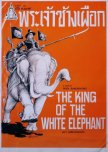
Jaunty, jovial western music as the soundtrack seems an odd choice for going off to war from today's point of view. The pieces do bring energy to their scenes, a different way of accomplishing with a few cameras what takes many (and a lot of editing) today. I kept thinking the extras must have had fun filming this, with all the running around and shouting.
Moments of surprising humour some of which were clearly intentional, like that song quote.
How much history is in this? There were several rulers given the epithet "King of the White Elephant". It's located to a specific year (1540 CE), king (Chatra) and cities (Ayodhya and Kanburi), but the flattening of the two kings into vice and virtue complicates that. Is it fair to read an undercurrent of chauvinistic nationalism into that binary? Residual (maybe even nurtured) trauma from Burmese invasions still lingering, more recent anxieties and difficulties finding their way out through this, or simply fodder for this and other movies? The King of Ayutthaya in 1540 was not all virtue en.wikipedia.org/wiki/Chairachathirat
Or was 1540 easy, because it was a tidy 400 years earlier? Long enough ago to become part of malleable mythic memory.
I have so many questions =D
Available on Thai PBS and Film Archive Thailand's YT
Was this review helpful to you?
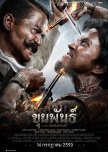
I'm honestly not sure what to make of this.
Legend writ enormously large around a real person who may not have contributed much, if anything, aside from his name, his job and the location.
A Thai take on westerns - like it belongs in the lineage of Tears of the Black Tiger, though not as far afield. Violent, very violent and very stylised, muted browns and dirt, the use of water. Parts felt almost surreal, which is one way of making supernatural powers real within a film, like this was just normal in their world, rare but known.
It was difficult and I took a few breaks, looking this or that thing up. It's like the opposite of the two hour Thai movies I love, where they wander around exploring their wee world before revealing their poignancy and it's gentle and comforting. Only here it's the hour 38 minutes of a Thai action movie, traveling through the violence of its world. And then it shifts, surreal but grounded within the language of the film, and ends in something else. It gave some sense of meaning and closure, satisfying in the moment, but perhaps not all that deep. Exhausting to get there too. Maybe it felt worth it, in the end.
But there were clearly layers I do not have the knowledge to feel, even if I can think my way through some of them. Sometimes my sense of being an outsider is particularly sharp. This is one.
Was this review helpful to you?

The plot may gleefully leap into and over plot holes, but the characters are consistent and well-delivered, This, and its abundant energy, is what makes it work - whether it's zinging through one nonsense or another, slipping into lakorn parody, or bringing the family closer together.
There were moments when Carissa and Pingpong were having so much fun bouncing off each other I wouldn't be at all surprised if the entire premise (4 half-siblings with mothers from different countries) was devised simply to let them play phi nong. Kao and Punpun are calmer in their roles, giving it some balance.
It's a VIU Original and available on all of the sites for the different countries they serve. If you're lucky enough to live in one, or have a VPN to pretend you do, look there.
Was this review helpful to you?
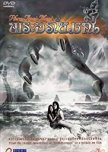
Some faithful, some reworked. War movie with OTT violence, and then one love story and another, success, betrayal, loyalty, magic, mythical sea creatures and special effects of dubious merit.
This isn't one to watch critically, better to just go along for the ride.
Was this review helpful to you?
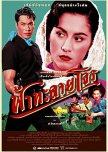
The art direction shows the intentionality of the filmmaking, with its shifts between organic and artificial. The colours are over the top and glorious, the violence is over the top and fake, sometimes comedically so. The music though, that keeps grounding it back in reality.
And there are so many details to notice along the way. For all that the result feels exuberant, chaotic and free, clearly a lot of care went into it. This is fascinating work.
Was this review helpful to you?
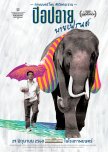
The other is an elephant - a large, expressive presence with his own mind and inclinations. Bong isn't in the MDL database and I'm not sure how Adrien would feel about adding him in, but the film itself appropriately recognises him as 2nd lead in the credits.
The movie is set entirely in Thailand, with Thai cast, crew and dialogue, but Singaporean screenwriter/director Kirsten Tan brings a different tone to it. She's also lived, worked and studied in several countries so perhaps this film doesn't truly belong to any one country. The film-making itself is quite capable (it's her debut feature-length). Aside from the elephant, the story is solid but unremarkable - it's a road film. The people they meet along the way are a mix of generic and more realised individuals, though the individuals are also types.
The more realised individuals are treated with respect. As characters, they're both unconventional and obvious, in that indie road movie fashion. I'm of two minds on this - Tan could have done more, but the familiarity of the types also brings a sort of calm normalcy to it, like the mundaneness of a job-induced moment of mid-life crisis and the way life is full of individuals if we bother to take the time to notice them.
At times there's a gentle, dry, slightly absurdist (because elephant) humour. The overall indie vibe tone is familiar - in many ways, I wanted something less generic and a distinctly Thai feel, especially the freedom and spark we see from many Isaan directors. But this is solid indie fare.
With an elephant.
Was this review helpful to you?
And the emotions in this are exquisite, sometimes painful, sometimes beautiful, always grounded and real. Score and pacing are superb, acting excellent - everything working together to give it richness and depth, everything coming exactly when it needs to. I really do love the Thai way with a story, especially their two hour movies.
If I could see one piece of media over again for the first time, it would be this.
Was this review helpful to you?
Letterboxd reviewers can be quite cynical on gay indie films, while MDL tends to be more generous. But for lesbian indie, it's quite the opposite on both sites.
It's a good indie film, telling 4 short stories, each showing different aspects of relationships between women. The first three are somewhat similar in tone but with distinctive stylisation. From mainstream US-centric reviews, it seems many watched it very superficially, even the fourth which looks at women who seek out dysfunctional, toxic relationships. The tone shift in that was jarring at first with its violence, cartoonish but still disturbing. It doesn't excuse that behaviour, but it does offer compassion for the women caught up in it, those who will never let themselves be happy because they're convinced they don't deserve it.
Together, the four stories ask the question What do you need to be happy, and what's standing in the way of that? A mismatch, society, yourself?
Was this review helpful to you?
This review may contain spoilers
This is just gathering some thoughts as to why this comedy-lakorn/series didn't quite work for me despite a VERY promising start and offered here for others who may share them or are trying to work out their reactions. If you haven't finished it yet or adore it, feel free to pass this by. There aren't actual spoilers but I've marked it as such to reduce the chances of prejudicing anyone before they've seen it. There is a lot to like and it will work for many.The physical comedy in the first episode was a delight, especially when it was a giant wink at tropes and conventions and fully committed to the spoof. It settled down of course, that sort of writing is hard to sustain. A strong female lead character, but also a nearly entirely male cast and a heavy lean towards young men's humour and let's call it a western amount of cleavage, swimsuits and ogling camera shots which they kept returning to. Clever play with product placements. And some of the moments which leant into the absurdity of the situations were good fun.
The lakorn set-ups and short-cuts mostly played for laughs mostly worked well initially. But two things stopped it working for me. The easy one to explain is the shift from fun, comedic violence to tense and 'serious' violence with the winks relegated to the denouements. Many will love the action of course but I found the quantity and pacing of it tiring. There was just too much for me, and more and more densely packed as we approached the end. Plus it took up a lot of a very short run time. All of the characters needed to have their moments with it I guess.
(Please note that I recognise action is a popular genre with many fans. If you've decided to take offence because I don't get on with it so well and I am talking about that in public, please don't.)
The second thing is harder to put into clear words, and ultimately more important. Because there was a full lakorn's worth of characters crammed into 8 hours, and a crazy twisty plot, and a fair bit of that was some combination of tropes as short cuts and played for laughs, I never really became invested in the characters. There were moments, but then it would race on to something else. I love lakorns for the characters and emotions, not the plots. The actors played their roles suitably to each moment, there was just too much crammed into 8 hours for me.
Maybe I'm at the wrong level of viewing, I've seen enough there were no real surprises here, including everything to do with the ghost, and the crime/police sides, and the backgrounds/motivations...but not enough to, I don't know. I sincerely hope that the majority love this. If you want to respond, I'm interested to read what you have to say as well. Please spoiler comments if there are specifics.
Was this review helpful to you?


