

 2
2 5
5 1
1 2
2 1
1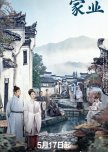
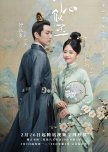
Brocade is another cultural treasure in China, and the Sword and the Brocade revolves about a young woman who makes Jin and especially Nanjin Yunjin brocade in Ming Dynasty.
Both dramas are set in Ming dynasty and feature artisans and women who chase their dreams despite the patriarchal and harem based society.
Both dramas are set in Ming dynasty and feature artisans and women who chase their dreams despite the patriarchal and harem based society.
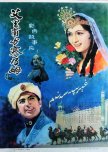
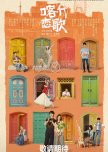
This is the story that Miniwaer, the dancer in "Bloom Life" was keen to portray the character of, ("Sänäm") in the choregraphy her troupe was preparing in the mini drama.
Both the movie and the mini series are deeply rooted in Uyghur culture.
Both the movie and the mini series are deeply rooted in Uyghur culture.
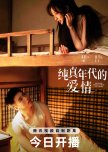
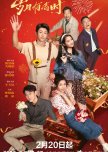
The period in Our Dazzling Days starts roughly about same time as Love Story in the 1970s, in the heydays of the state-owned factories, but the children quickly grow and the drama concentrates on post 1980s young people struggling to achieve their dreams, even if the school director misuses his power to prevent the lead character to apply for his dream career.
Love Story In the 1970s has a young woman being prevented to apply for her dream studies in university, and becoming a writer, by women cadres who are in power for a long period. She is supported in her struggle by her family and husband, whereas in Our Dazzling Days, the protagonist gets support from friends after his last family member passes away.
Love Story In the 1970s has a young woman being prevented to apply for her dream studies in university, and becoming a writer, by women cadres who are in power for a long period. She is supported in her struggle by her family and husband, whereas in Our Dazzling Days, the protagonist gets support from friends after his last family member passes away.
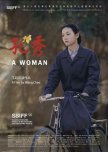
"A Woman" is the story of a woman storyteller who did not get the chance to go study, but was confined to factory work, until her talent gained her a second chance for life, leaving behind the shackles of dreary work and unwanted marriage and motherhood. As many "scars generation" stories it is somber, but tells of an indomitable spirit.
It does resonate with the heartaches of Fei Ni in the drama, when she is repeatedly rebuked and discouraged from wishing to become a student and read her fill of books.
Unfortunately, this Wang Chao movie may be difficult to find outside Chinese movies festivals featuring famous writer-directors work. It is based on a semi-autobiographical novel Dream (Meng, ?) by Zhang Xinzhen which still has not been translated into English or other languages.
A short trailer can be found on YouTube.
It does resonate with the heartaches of Fei Ni in the drama, when she is repeatedly rebuked and discouraged from wishing to become a student and read her fill of books.
Unfortunately, this Wang Chao movie may be difficult to find outside Chinese movies festivals featuring famous writer-directors work. It is based on a semi-autobiographical novel Dream (Meng, ?) by Zhang Xinzhen which still has not been translated into English or other languages.
A short trailer can be found on YouTube.
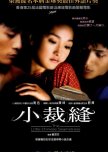
The 2002 movie was also a heartfelt account with humor and heartaches about city youth sent away to be "reeducated through labor with the peasants" but who did not give up their yearning for education, college, and art. It is largely autobiographical, so gives valuable insights on some parts of the drama (such as what movies were watched by the Chinese at the time, apart from "revolutionary opera movies" : Korean movies, war movies from "socialist countries"...). The drama, and the novel Love Story in the 1970s, are a "softer take" on the struggles and joys of the "scars generation".
Balzac and the Little Chinese Seamstress, the award winning 2000 novel, written in French, was a best seller and has been translated into more than 25 languages. It draws on the memories of author Dai Sijiie (born in 1954) from the years he spent in a re-education camp in rural Sichuan from 1971 to 1974 during the Cultural Revolution.
The movie, featuring Zhou Xun as FL, Chen Kun and Liu Ye as MLs, adapted and directed by the author "received several nominations, including a Golden Globe nomination for Best Foreign Language Film (2003), a Golden Horse Award nomination for Best Adapted Screenplay (2003), and a Hong Kong Film Award nomination for Best Asian Film (2004). It also won the NBR Award for Top Foreign Films (2005)." It can be watched with English subtitles on https://www.youtube.com/watch?v=KUySDK5cpy4
Balzac and the Little Chinese Seamstress, the award winning 2000 novel, written in French, was a best seller and has been translated into more than 25 languages. It draws on the memories of author Dai Sijiie (born in 1954) from the years he spent in a re-education camp in rural Sichuan from 1971 to 1974 during the Cultural Revolution.
The movie, featuring Zhou Xun as FL, Chen Kun and Liu Ye as MLs, adapted and directed by the author "received several nominations, including a Golden Globe nomination for Best Foreign Language Film (2003), a Golden Horse Award nomination for Best Adapted Screenplay (2003), and a Hong Kong Film Award nomination for Best Asian Film (2004). It also won the NBR Award for Top Foreign Films (2005)." It can be watched with English subtitles on https://www.youtube.com/watch?v=KUySDK5cpy4
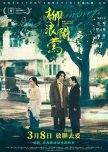
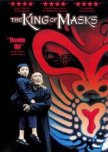
Both movies are Chinese opera and the role of women in this art. The King of Masks is depicting a child opera player, while the Chanting Willows are about two adult females, but both are tinged by the worry about a dying art and cultural form.
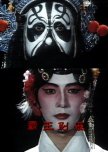
Both movies are about Chines opera singers and women/men playing the opposite gender, blurring the lines between femininity a masculinity, becoming almost a "third gender" troubled by emotions.
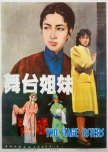
Both movies are about a pair of yuè opera singers and about social issues. Stage Sisters is about the contrast between art and stark reality in a troubled age of the 1930s-1940s when opera singers were still considered low class and easy to prey on ; The Chanting Willows is set in the 1990s with the artists more respected but their art on the wane.
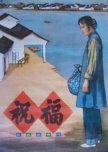
The story of Xianglin Sao, downtrodden by her in-law family and the towns people she worked for, reminds of the first part of Kong Xiu's life as the wife of a farmer whose family expects her to toil at home and in the fields, and give birth to male heirs. But the fate of Kong Xiu is kinder; there are no wolves to take away her son, she only has to give him up to the farmer's family, and be content with caring for a daughter. It's a hard life in both movies, but the fate of women does seem to have improved a bit since the 1956 adaptation of Lu Xun's tragic short story.
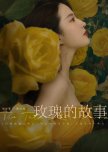
Like Rose in the Tale of Rose, Kong Xiu has several suitors, and finds her future in realizing her dreams alone. But the hardships are different: Meigui was moved by sentiments, whereas Kong Xiu never got a chance to love and had to toil instead.
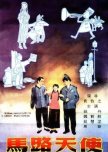
The ML Wei Heling is ML in New Year Sacrifice as well as playing a newspaper vendor friend of the ML in Street Angel, both movies are Chinese cinema classics ; New Year Sacrifice from 1956 is in color, whereas Street Angel from 1937 is still in black and white, but with a FL who became famous for her songs. Both portray ordinary people: New Year Sacrifice is centered around those living in the countryside; Street Angels around those living in Shanghai city.
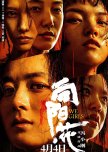
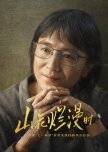
No real lawbreakers in the series about the mountain high school for girls, but Lan Xiya shines as an actress in both stories.


