



This review may contain spoilers
What you can't see can't hurt you...
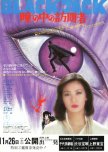
Komori Chiaki (Katahira Nagisa), a young freshman at Asuka Girls' High School and a promising tennis player, is accidentally hit in the eye by her coach, Hiroshi Imaoka (Yamamoto Shingo ), during practice. The diagnosis is grim: Chiaki risks blindness in her injured eye, which would mean the end of her sporting career.
However, Hiroshi learns through indirect channels that there is a surgeon capable of performing miraculous operations who works without a license, in exchange for generous payment.
His name is Black Jack! (a funny and amused Shishido Jo).
The surgery is successful and Chiaki seems to be able to return to her life before the accident; However, the girl begins to experience what appear to be visual hallucinations: On certain occasions, she claims to see an elegant-looking man (Minegishi Toru, excellent) standing in front of her, but the problem is that no one else seems to be able to see him.
Immediately following his delirious and acclaimed “House,” the great and prolific director Nobuhiko Obayashi embarks on this curious “The Visitor In The Eye,” a comic book-inspired work financed by the HoriPro agency. This company saw in the genius of the director from Onomichi (a prefecture near Hiroshima, central to the themes of his filmography), in his anarchic, completely unconventional talent, the possibility of riding the long wave and attempting to expand his audience of enthusiasts beyond the limits of arthouse cinema.
The movie is a very freely adapted version of a story from the epic manga series “Black Jack,” created by the God of Comics, Osamu Tezuka. Black Jack is a formidable surgeon who operates without a license. He appears cynical and disinterested, obsessed with money (hence his exorbitant fees), but in reality he has a heart that is much more sensitive to the weak and oppressed.
It is impossible to summarize it briefly, partly because in Tezuka's universe, much like that of his American counterpart Walt Disney (there are many comparisons between the two masters), his characters—both in comics and movies-often interact in the most diverse ways, even if only in brief appearances out of context.
A bizarre hybrid of genres, “The Visitor In The Eye” travels on several parallel tracks, with elements of crime, mystery, and even fantasy, with surreal and supernatural touches that evolve into a truly intense and passionate melodrama, almost like old-fashioned Hollywood. The dreamlike dimension, given the film's theme, reigns supreme, in a flood of uninterrupted references.
Free from any limiting formalism, Obayashi, like an abstract painter, throws all his cinematic passions into the mix, creating the ideal atmosphere for the development of the story: The picture is undoubtedly a feast for the eyes, with particular attention to detail, colorful sets, lighting, and a truly immersive use of music, especially thanks to the repeated main theme. There is no shortage of symbolism, such as the recurring reference to water, above all.
While Tezuka's original manga was necessarily condensed (it is, in fact, a rather short episode), ending up depicting what is, quite prosaically, an unhappy (and tragic) representation of the experience of first love, this cinematic variant develops with a broader scope, happily exploiting the theme of visual perception, and therefore also its relative ambiguity, filtered through the eye (the gaze) of Chiaki “inherited” from her “donor.”
It is a sort of “contamination of the gaze” that leads the audience to greater involvement, guided (or manipulated!?), but also to an attempt to confuse them in that blurred boundary between reality and appearance, or dream, perhaps even hallucinatory (in certain passages it seems like being on a psychedelic trip), as, for example, in the almost contemporary (it is from the year before) “Obsession” by Brian De Palma, a faithful disciple of the master of suspense Alfred Hitchcock (speaking of “dreamlike suggestions”...)
And Obayashi, with his lighting tricks, painted scenery, and theatrical effects so dear to him and typical of cartoons (the house on the hill is truly exceptional), first immerses everything in a burning red (the color of passion!) and then gradually slips into a foggy grayness that leads us to the climax of the story.
The past and present end up intertwining, between flashbacks and fantasies, accentuating the evocative power of the images and the imaginative strength of the movie... It may all be artificial, fictitious, or exaggerated, as some critics have often pointed out, but this aesthetic fascination achieves its purpose of engaging and entertaining viewers who are willing to accept Obayashi's rules of engagement.
However, the film suffers from a less than perfect casting choice. Despite the very pleasant presence of Shishido Jo, it must be said that Black Jack's characterization is not as predominant as one would expect. His role in the story is not that of the main character, but he still acts as the driving force behind the plot, first through the miraculous operation that rekindles Chiaki's hopes, and then with the clever investigative insights that unravel the complex tangle, incidentally using a trick that was also employed—curiously—by Italian master of horror Dario Argento in one of his early films.
Much more intriguing, however, is the character of Shiro Kazama (Minegishi Toru, with a look that says it all.…), who dominates the second half of the picture. He comes across almost as a dandy, a charming decadent artist who seems to have stepped out of certain Gothic melodramas of the 1940s, and his crescendo drives the action very well, while Chiaki's characterization appears quite conventional and, frankly, ends up being overly passive in her development, which is nonetheless central and would require greater psychological (as well as expressive) depth.
As befits the subject matter, Osamu Tezuka's microcosm is also well represented, with some amusing appearances (which are a bit like cameos) by some of his famous personages; attentive viewers are left with the pleasure of spotting the references (and the actors involved).
“The Visitor In The Eye” should certainly not be considered one of Obayashi's most representative films, but the overly negative reviews are frankly unfair. Upon its release, it appears to have been a box office flop, and perhaps with a shorter running length and greater attention to the supporting characters, who are a little too stereotypical, the movie would have benefite, but the picture remains a truly remarkable experiment, capable of recreating and conveying that comic book aesthetic typical of its time, still vintage and linked more to artisan talent than to the chillness of contemporary special effects (let us remember that Tezuka passed away prematurely in 1989), which are decidedly colder and more detached.
7 ½
However, Hiroshi learns through indirect channels that there is a surgeon capable of performing miraculous operations who works without a license, in exchange for generous payment.
His name is Black Jack! (a funny and amused Shishido Jo).
The surgery is successful and Chiaki seems to be able to return to her life before the accident; However, the girl begins to experience what appear to be visual hallucinations: On certain occasions, she claims to see an elegant-looking man (Minegishi Toru, excellent) standing in front of her, but the problem is that no one else seems to be able to see him.
Immediately following his delirious and acclaimed “House,” the great and prolific director Nobuhiko Obayashi embarks on this curious “The Visitor In The Eye,” a comic book-inspired work financed by the HoriPro agency. This company saw in the genius of the director from Onomichi (a prefecture near Hiroshima, central to the themes of his filmography), in his anarchic, completely unconventional talent, the possibility of riding the long wave and attempting to expand his audience of enthusiasts beyond the limits of arthouse cinema.
The movie is a very freely adapted version of a story from the epic manga series “Black Jack,” created by the God of Comics, Osamu Tezuka. Black Jack is a formidable surgeon who operates without a license. He appears cynical and disinterested, obsessed with money (hence his exorbitant fees), but in reality he has a heart that is much more sensitive to the weak and oppressed.
It is impossible to summarize it briefly, partly because in Tezuka's universe, much like that of his American counterpart Walt Disney (there are many comparisons between the two masters), his characters—both in comics and movies-often interact in the most diverse ways, even if only in brief appearances out of context.
A bizarre hybrid of genres, “The Visitor In The Eye” travels on several parallel tracks, with elements of crime, mystery, and even fantasy, with surreal and supernatural touches that evolve into a truly intense and passionate melodrama, almost like old-fashioned Hollywood. The dreamlike dimension, given the film's theme, reigns supreme, in a flood of uninterrupted references.
Free from any limiting formalism, Obayashi, like an abstract painter, throws all his cinematic passions into the mix, creating the ideal atmosphere for the development of the story: The picture is undoubtedly a feast for the eyes, with particular attention to detail, colorful sets, lighting, and a truly immersive use of music, especially thanks to the repeated main theme. There is no shortage of symbolism, such as the recurring reference to water, above all.
While Tezuka's original manga was necessarily condensed (it is, in fact, a rather short episode), ending up depicting what is, quite prosaically, an unhappy (and tragic) representation of the experience of first love, this cinematic variant develops with a broader scope, happily exploiting the theme of visual perception, and therefore also its relative ambiguity, filtered through the eye (the gaze) of Chiaki “inherited” from her “donor.”
It is a sort of “contamination of the gaze” that leads the audience to greater involvement, guided (or manipulated!?), but also to an attempt to confuse them in that blurred boundary between reality and appearance, or dream, perhaps even hallucinatory (in certain passages it seems like being on a psychedelic trip), as, for example, in the almost contemporary (it is from the year before) “Obsession” by Brian De Palma, a faithful disciple of the master of suspense Alfred Hitchcock (speaking of “dreamlike suggestions”...)
And Obayashi, with his lighting tricks, painted scenery, and theatrical effects so dear to him and typical of cartoons (the house on the hill is truly exceptional), first immerses everything in a burning red (the color of passion!) and then gradually slips into a foggy grayness that leads us to the climax of the story.
The past and present end up intertwining, between flashbacks and fantasies, accentuating the evocative power of the images and the imaginative strength of the movie... It may all be artificial, fictitious, or exaggerated, as some critics have often pointed out, but this aesthetic fascination achieves its purpose of engaging and entertaining viewers who are willing to accept Obayashi's rules of engagement.
However, the film suffers from a less than perfect casting choice. Despite the very pleasant presence of Shishido Jo, it must be said that Black Jack's characterization is not as predominant as one would expect. His role in the story is not that of the main character, but he still acts as the driving force behind the plot, first through the miraculous operation that rekindles Chiaki's hopes, and then with the clever investigative insights that unravel the complex tangle, incidentally using a trick that was also employed—curiously—by Italian master of horror Dario Argento in one of his early films.
Much more intriguing, however, is the character of Shiro Kazama (Minegishi Toru, with a look that says it all.…), who dominates the second half of the picture. He comes across almost as a dandy, a charming decadent artist who seems to have stepped out of certain Gothic melodramas of the 1940s, and his crescendo drives the action very well, while Chiaki's characterization appears quite conventional and, frankly, ends up being overly passive in her development, which is nonetheless central and would require greater psychological (as well as expressive) depth.
As befits the subject matter, Osamu Tezuka's microcosm is also well represented, with some amusing appearances (which are a bit like cameos) by some of his famous personages; attentive viewers are left with the pleasure of spotting the references (and the actors involved).
“The Visitor In The Eye” should certainly not be considered one of Obayashi's most representative films, but the overly negative reviews are frankly unfair. Upon its release, it appears to have been a box office flop, and perhaps with a shorter running length and greater attention to the supporting characters, who are a little too stereotypical, the movie would have benefite, but the picture remains a truly remarkable experiment, capable of recreating and conveying that comic book aesthetic typical of its time, still vintage and linked more to artisan talent than to the chillness of contemporary special effects (let us remember that Tezuka passed away prematurely in 1989), which are decidedly colder and more detached.
7 ½
Was this review helpful to you?


