
 News
News 


This review may contain spoilers
You Don’t Own Me (Anymore)
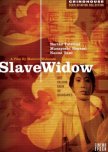
Devastated by the sudden death of her husband, the wealthy Mitsuko (Noriko Tatsumu, sensual icon of the Pinku Eiga genre) discovers that her late partner has left her with a mountain of debts. Among her creditors is the powerful businessman Kito, who literally loses his head over the widow and, after raping her, reduces Mitsuko to his sexual object as a form of “compensation” ... Kito has a son, Kazuhiko, who, despite his impending marriage to the daughter of a wealthy industrialist, also falls madly in love with Mitsuko.
Among the more than 200 movies shot by director Mamoru Watanabe, a specialist in the erotic Pinku eiga genre, “Slave Widow” is one of the most popular, thanks to wider distribution that took the film beyond Japan's borders and opened it up to Western audiences.
It must be said that, although the film has not aged particularly well, it still manages to be appreciated after all these years, thanks in part to its relatively short running time of 74 minutes. In some ways, it can be considered a representative summary of this particular film genre.
The devastating social descent into the hell of the worst human aberrations spares nothing for the derelict main character, who sees her world (of middle class extraction) shatter when her status, conveyed by the work of her husband, collides with harsh reality.
Rape, sexual coercion, physical and psychological violence, with money used as a tool of psychological domination; As if she were an exaggerated version of a Puccini heroine, the unfortunate Mitsuko finds herself reduced to the role of sex slave, dominated by the will of old Kito, who, from his position as creditor to the woman's husband, has no qualms about subjugating her for his own personal pleasure in what is a compendium of perversions that would delight any fan of the most explicit sadomasochism...
The woman's suffering passivity is accentuated by the painful condition of her maid, which implicitly also induces a sapphic subtext, though one that is never really revealed. Hers is the most humanised figure among the film's characters, thanks to her naivety and purity in the face of explicit (as well as suffered) depravity. The young girl is a silent (and suffering) witness to the growing sexual desire of Mitsuko, a sex slave and object of desire (even for Kito's son), who is unconsciously unable to escape her own carnal pulsions.
In various reviews of “Slave Widow”, the film's style is rightly described as hieratic, in that, especially in the more explicit scenes, the use of static shots, slow camera movements and overly emphatic acting seem to create an almost solemn atmosphere, foreshadowing the impending tragedy, which is repeatedly “announced” by explicit omens.
However, there is too much mechanicality in the erotic moments, which are not particularly captivating, partly due to the limitations imposed by Japanese censorship at the time, with few nude scenes, which are well limited by framing and appropriate veils. On the other hand, the use of music and ambient sounds (birds chirping, etc.) is interesting, and the great sensuality of the beautiful heroine, who is perfect in her portrayal of a tragic figure, a submissive victim of her own desire, still leaves its mark.
7
Among the more than 200 movies shot by director Mamoru Watanabe, a specialist in the erotic Pinku eiga genre, “Slave Widow” is one of the most popular, thanks to wider distribution that took the film beyond Japan's borders and opened it up to Western audiences.
It must be said that, although the film has not aged particularly well, it still manages to be appreciated after all these years, thanks in part to its relatively short running time of 74 minutes. In some ways, it can be considered a representative summary of this particular film genre.
The devastating social descent into the hell of the worst human aberrations spares nothing for the derelict main character, who sees her world (of middle class extraction) shatter when her status, conveyed by the work of her husband, collides with harsh reality.
Rape, sexual coercion, physical and psychological violence, with money used as a tool of psychological domination; As if she were an exaggerated version of a Puccini heroine, the unfortunate Mitsuko finds herself reduced to the role of sex slave, dominated by the will of old Kito, who, from his position as creditor to the woman's husband, has no qualms about subjugating her for his own personal pleasure in what is a compendium of perversions that would delight any fan of the most explicit sadomasochism...
The woman's suffering passivity is accentuated by the painful condition of her maid, which implicitly also induces a sapphic subtext, though one that is never really revealed. Hers is the most humanised figure among the film's characters, thanks to her naivety and purity in the face of explicit (as well as suffered) depravity. The young girl is a silent (and suffering) witness to the growing sexual desire of Mitsuko, a sex slave and object of desire (even for Kito's son), who is unconsciously unable to escape her own carnal pulsions.
In various reviews of “Slave Widow”, the film's style is rightly described as hieratic, in that, especially in the more explicit scenes, the use of static shots, slow camera movements and overly emphatic acting seem to create an almost solemn atmosphere, foreshadowing the impending tragedy, which is repeatedly “announced” by explicit omens.
However, there is too much mechanicality in the erotic moments, which are not particularly captivating, partly due to the limitations imposed by Japanese censorship at the time, with few nude scenes, which are well limited by framing and appropriate veils. On the other hand, the use of music and ambient sounds (birds chirping, etc.) is interesting, and the great sensuality of the beautiful heroine, who is perfect in her portrayal of a tragic figure, a submissive victim of her own desire, still leaves its mark.
7
Was this review helpful to you?


