



This review may contain spoilers
“The body may be gone. The weight never leaves.”
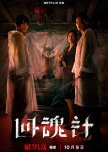
Two mothers, Wang Hui Chun and Chao Ching, bring their daughters’ killer back to life for seven days. It might sound like the start of a fantasy story. But it isn’t.
What emerges is not the supernatural, but a system built on abuse, money and bodies held captive. A bold premise, almost a narrative gamble, capable of drawing the viewer right into the thick of the action before throwing them off balance.
At first, to mislead him with elements that seem to belong to the realm of fantasy, only to gradually reveal a more down-to-earth, contemporary dimension, where exploitation and money reshape every balance.
That's where the story draws its strength: in the constant deception—not just as a theme, but as a structural device—which leads the viewer to doubt, time and again, not only the nature of the story, but also that of its characters.
This suspended space is inhabited by two figures who share the same trauma, yet are separated by a circumstance that radically reshapes their perspective.
On the one hand, a definitive, irreversible loss—a daughter who cannot be brought back, not even symbolically. On the other, a suspended presence, a body that still breathes, and which keeps alive a possibility, however fragile.
It is in this asymmetry that the story finds one of its deepest tensions: for whilst the pain is shared, its direction is not. One moves within absence, the other within a state of waiting.
And this difference – subtle yet decisive – ends up gradually undermining not only their alliance, but also the very meaning of what they are trying to achieve.
In this context, revenge does not hold the same meaning for both of them. For someone who has lost everything, it may well become the only possible form of redress—or of survival. For the person who still clings to a glimmer of hope, however faint, it risks becoming a choice that calls into question what remains to be protected.
And when the target of this revenge is a man who is already dead, the matter becomes even more complicated: for what remains is no longer justice, but an extension of it—prolonged, organised, and increasingly difficult to distinguish from the very thing it was meant to fight.
This delicate balance is further destabilised by the portrayal of the daughters, Jin Jin and Hsin-yi, which operates by way of reflection and, progressively, through reversal.
Whilst the two mothers follow divergent paths—one rooted in absence, the other held back by a possibility—their respective daughters initially seem to confirm this dichotomy, presenting the viewer with an apparently orderly, almost reassuring interpretation.
It is a perception that the narrative carefully cultivates, leaving it to the viewer to construct a system of correspondences: innocence and guilt, protection and betrayal, victim and complicity. But it is here that the deepest deception takes root.
As the narrative unfolds, what seemed set in stone begins to crumble, and identities start to defy any fixed categorisation.
The daughters do not merely mirror their mothers: they challenge their mothers’ assumptions and complicate their choices, to the point where the distinction between victim and active participant in the system becomes increasingly difficult to draw.
The figure of the torturer, brought back to life, also forms part of this ongoing shift: no longer merely the source of evil, but an element that reveals, by contrast, the extent to which that evil is already widespread, internalised, and ready to resurface elsewhere.
The ending does not introduce a sudden revelation, but brings to a conclusion a process already underway: that of a gaze that is guided, directed, and ultimately disillusioned. Not so much because the truth is hidden, but because it is gradually rendered unrecognisable.
If the narrative tension unfolds naturally, culminating in an inevitable emotional breakdown, it is also thanks to the perfect and complementary performances of the two leading ladies.
Shu Qi’s presence is, at least in my view, the main draw of the story: a measured performance, often achieved through understatement, restrained yet deeply empathetic.
In contrast, Lee Sinje defines the measure, the stylistic signature, through a modulation of pain that unfolds in the absence of any prospect of hope, allowing choices to emerge that, almost inevitably, become increasingly irrational.
Around these characters, a context unfolds that does more than simply serve as a backdrop; it actively contributes to the construction of meaning.
A world in which money circulates without any apparent source, fuelling a culture of get-rich-quick schemes, identities that are constantly being constructed and renegotiated, and life paths defined more by opportunity than by choice.
In this network, deception is not an exception, but an organisational principle. It takes various forms, adapts and transforms: from the violent and direct structure orchestrated by Zhang Shih-kai, to the more subtle and seemingly legitimate version reflected in his mother’s activities, where the promise of redemption is intertwined with strategies of control and profit.
Two distinct yet perfectly interconnected models, which paint a picture of a system capable of replicating itself without interruption.
Even where the possibility of detachment seems to emerge, it ultimately gets swallowed up by the same pattern: relationships built on self-interest, performed identities, and dynamics that reverse roles to the point of turning the observer into an integral part of the mechanism.
Alongside this dimension lies a contrasting and complementary realm: that of opulence, of impersonal spaces, of hotel rooms and boutiques, of an aesthetic that suggests possibilities whilst concealing structural fragility.
And, in contrast, marginal realities, peripheral environments, places that bear the tangible traces of a system that consumes and redistributes without ever truly making up for what it takes away.
It is in this constant shifting—between visibility and invisibility, between construction and loss—that the drama establishes its identity, creating a dialogue between a seemingly ‘fantastical’ framework and a reality that, by contrast, seems all too familiar.
At this point, one cannot help but question the very nature of the framework underpinning the narrative: the resurrection, the seven days granted, the final return.
These elements, when viewed through a strictly realistic lens, would seem to call for a precise, almost demonstrative explanation.
But the story never seeks such coherence. From the very beginning, it establishes its own balance, in which death ceases to be a definitive limit and becomes a state of limbo, serving the purpose of what is yet to emerge.
And it is exactly in this suspended space that the reversal takes on meaning: not as an exception, but as the logical outcome of a perspective that is already biased, already susceptible to deception.
What concerns daughters—their nature, their role—does not require explanation, but rather recognition of what it becomes the moment certainties begin to crumble.
It is not, then, a question of whether or not to believe in the process, but of accepting the ground on which it operates: a system in which identity, responsibility and truth are constantly being redefined, to the point where every distinction becomes unstable.
The final return does not open up a new perspective, but brings to completion a dynamic already in motion: that of a world in which nothing truly comes to an end, but everything is absorbed, reorganised, and put back into circulation.
It is also in this choice—risky, exposed, at times imperfect—that the drama finds its own identity: an unstable equilibrium which, precisely in its imperfections, defines its strength.
Nothing truly ends. It simply changes hands.
7 ½
What emerges is not the supernatural, but a system built on abuse, money and bodies held captive. A bold premise, almost a narrative gamble, capable of drawing the viewer right into the thick of the action before throwing them off balance.
At first, to mislead him with elements that seem to belong to the realm of fantasy, only to gradually reveal a more down-to-earth, contemporary dimension, where exploitation and money reshape every balance.
That's where the story draws its strength: in the constant deception—not just as a theme, but as a structural device—which leads the viewer to doubt, time and again, not only the nature of the story, but also that of its characters.
This suspended space is inhabited by two figures who share the same trauma, yet are separated by a circumstance that radically reshapes their perspective.
On the one hand, a definitive, irreversible loss—a daughter who cannot be brought back, not even symbolically. On the other, a suspended presence, a body that still breathes, and which keeps alive a possibility, however fragile.
It is in this asymmetry that the story finds one of its deepest tensions: for whilst the pain is shared, its direction is not. One moves within absence, the other within a state of waiting.
And this difference – subtle yet decisive – ends up gradually undermining not only their alliance, but also the very meaning of what they are trying to achieve.
In this context, revenge does not hold the same meaning for both of them. For someone who has lost everything, it may well become the only possible form of redress—or of survival. For the person who still clings to a glimmer of hope, however faint, it risks becoming a choice that calls into question what remains to be protected.
And when the target of this revenge is a man who is already dead, the matter becomes even more complicated: for what remains is no longer justice, but an extension of it—prolonged, organised, and increasingly difficult to distinguish from the very thing it was meant to fight.
This delicate balance is further destabilised by the portrayal of the daughters, Jin Jin and Hsin-yi, which operates by way of reflection and, progressively, through reversal.
Whilst the two mothers follow divergent paths—one rooted in absence, the other held back by a possibility—their respective daughters initially seem to confirm this dichotomy, presenting the viewer with an apparently orderly, almost reassuring interpretation.
It is a perception that the narrative carefully cultivates, leaving it to the viewer to construct a system of correspondences: innocence and guilt, protection and betrayal, victim and complicity. But it is here that the deepest deception takes root.
As the narrative unfolds, what seemed set in stone begins to crumble, and identities start to defy any fixed categorisation.
The daughters do not merely mirror their mothers: they challenge their mothers’ assumptions and complicate their choices, to the point where the distinction between victim and active participant in the system becomes increasingly difficult to draw.
The figure of the torturer, brought back to life, also forms part of this ongoing shift: no longer merely the source of evil, but an element that reveals, by contrast, the extent to which that evil is already widespread, internalised, and ready to resurface elsewhere.
The ending does not introduce a sudden revelation, but brings to a conclusion a process already underway: that of a gaze that is guided, directed, and ultimately disillusioned. Not so much because the truth is hidden, but because it is gradually rendered unrecognisable.
If the narrative tension unfolds naturally, culminating in an inevitable emotional breakdown, it is also thanks to the perfect and complementary performances of the two leading ladies.
Shu Qi’s presence is, at least in my view, the main draw of the story: a measured performance, often achieved through understatement, restrained yet deeply empathetic.
In contrast, Lee Sinje defines the measure, the stylistic signature, through a modulation of pain that unfolds in the absence of any prospect of hope, allowing choices to emerge that, almost inevitably, become increasingly irrational.
Around these characters, a context unfolds that does more than simply serve as a backdrop; it actively contributes to the construction of meaning.
A world in which money circulates without any apparent source, fuelling a culture of get-rich-quick schemes, identities that are constantly being constructed and renegotiated, and life paths defined more by opportunity than by choice.
In this network, deception is not an exception, but an organisational principle. It takes various forms, adapts and transforms: from the violent and direct structure orchestrated by Zhang Shih-kai, to the more subtle and seemingly legitimate version reflected in his mother’s activities, where the promise of redemption is intertwined with strategies of control and profit.
Two distinct yet perfectly interconnected models, which paint a picture of a system capable of replicating itself without interruption.
Even where the possibility of detachment seems to emerge, it ultimately gets swallowed up by the same pattern: relationships built on self-interest, performed identities, and dynamics that reverse roles to the point of turning the observer into an integral part of the mechanism.
Alongside this dimension lies a contrasting and complementary realm: that of opulence, of impersonal spaces, of hotel rooms and boutiques, of an aesthetic that suggests possibilities whilst concealing structural fragility.
And, in contrast, marginal realities, peripheral environments, places that bear the tangible traces of a system that consumes and redistributes without ever truly making up for what it takes away.
It is in this constant shifting—between visibility and invisibility, between construction and loss—that the drama establishes its identity, creating a dialogue between a seemingly ‘fantastical’ framework and a reality that, by contrast, seems all too familiar.
At this point, one cannot help but question the very nature of the framework underpinning the narrative: the resurrection, the seven days granted, the final return.
These elements, when viewed through a strictly realistic lens, would seem to call for a precise, almost demonstrative explanation.
But the story never seeks such coherence. From the very beginning, it establishes its own balance, in which death ceases to be a definitive limit and becomes a state of limbo, serving the purpose of what is yet to emerge.
And it is exactly in this suspended space that the reversal takes on meaning: not as an exception, but as the logical outcome of a perspective that is already biased, already susceptible to deception.
What concerns daughters—their nature, their role—does not require explanation, but rather recognition of what it becomes the moment certainties begin to crumble.
It is not, then, a question of whether or not to believe in the process, but of accepting the ground on which it operates: a system in which identity, responsibility and truth are constantly being redefined, to the point where every distinction becomes unstable.
The final return does not open up a new perspective, but brings to completion a dynamic already in motion: that of a world in which nothing truly comes to an end, but everything is absorbed, reorganised, and put back into circulation.
It is also in this choice—risky, exposed, at times imperfect—that the drama finds its own identity: an unstable equilibrium which, precisely in its imperfections, defines its strength.
Nothing truly ends. It simply changes hands.
7 ½
Was this review helpful to you?


