
 News


This review may contain spoilers
In love with a view (pictured in a wall)
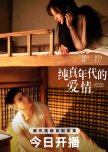
The successful concept behind “Love Story in the 1970s”, an excellent Chinese drama, stems from its ability to move the viewer through a genuinely affectionate portrayal of human relationships.
Set in China in the mid-1970s, the series follows – primarily – the story of Fang Muyang and Fei Ni (Feyu Chen and Qian Sun, who are absolutely splendid in their performances and share a chemistry that is as spontaneous as it is natural), alongside a group of characters whose personal stories intertwine with the social, economic and political transformations of those years. The narrative moves at a brisk pace, unfolding through short episodes, without unnecessary padding, and with a delightful focus on everyday life.
The setting is fascinating, with China during the Cultural Revolution – far from merely serving as a historical backdrop – weaving its way through the protagonists’ lives, from their work and the organisation of the factories, to hierarchies, opportunities for university study, individual aspirations, and even the small (or large) family disputes. The collective dimension is undoubtedly one of the central themes of the series.
The discussion on the status of women is also interesting. The principle that ‘women hold up half the sky’ re-emerges as a cultural and social reference point, finding concrete expression in the story of Fei Ni. The desire to study, work, gain independence and build a future does not depend solely on marriage or a husband’s status. Women’s aspirations have their own dignity and their own raison d’être, without, however, reducing the issue of women’s emancipation to a simplistic dichotomy between men and women; instead, the narrative focuses on individuals with different sensibilities and expectations.
Naturally, once I’d finished watching it, I also found myself reflecting on the relationship between the story and the historical context in which it is set. The story spans a particularly sensitive period: it begins in 1975 and runs through to 1977, covering Mao Zedong’s death in September 1976 and the subsequent arrest of the Gang of Four.
It is a pivotal moment in contemporary Chinese history. The end of the Maoist era did not bring about an immediate transformation of society, but ushered in a complex transitional phase, in which institutions, mindsets and political structures inherited from the past coexisted with the first signs of a change destined to become ever more profound. The ideological and institutional legacy of the Maoist government continued to overshadow events, yet the significance of the political shift that was taking place was never truly addressed.
I do not necessarily regard this choice as a narrative flaw: “Love Story in the 1970s” is not intended to be a documentary, and its main focus remains on portraying the lives of ordinary people. However, the omission of certain historical events ultimately results in a rather selective – and at times sugar-coated – portrayal of that period.
I would not expect a romantic story to necessarily turn into a systematic portrayal of the tragedies of the era. That would perhaps be an unfair expectation given the very nature of the production. However, I sense a certain disconnect between the complexity of historical reality and its depiction on screen. The society portrayed appears to be plagued by hardship and deprivation, but the political and institutional responsibilities that were largely to blame for this are rarely explored in depth.
This is an important distinction: appreciating the sincerity of the feelings portrayed does not mean having to share, or accept unreservedly, the historical narrative in which they are embedded.
Indeed, Fei Ni’s story in particular allows us to observe this transition from a particularly interesting perspective. Her desire to study comes at a time when the Chinese university system is on the verge of undergoing profound change. In 1977, in fact, the national university entrance examinations were reinstated after a ten-year hiatus.
It is hard not to see in this passage a sort of symbolic parallel with the protagonist’s journey. Fei Ni still belongs to a society in which individual opportunities are heavily influenced by political and bureaucratic decisions, but her aspirations already seem to point towards a different vision of the future: one that is more personal, more autonomous, and based more on ability and the freedom to choose (her choice of university subject – foreign languages – is no coincidence).
In this sense, I would describe him as a transitional figure, almost a bridge between Maoist China and the China that would emerge in the years that followed. Not because he necessarily represents a conscious break with the world in which he lives, but because he embodies aspirations that would gradually find a different place within Chinese society.
From a psychological perspective, some characters are quite well-defined, at times almost exemplary. Fang Muyang and Fei Ni embody positive values with a consistency that, at times, leaves little room for contradictions. Even some issues, initially presented as difficult to overcome, are resolved fairly quickly through dialogue, mutual understanding and solidarity.
It is a narrative choice that can lead to a certain degree of repetitiveness. There is sometimes a lack of that complexity of character – characterised by ambiguity, fragility and unresolved conflicts – which I particularly appreciate in many Korean productions, for example. Not surprisingly, I also find the story of the couple formed by Fang Mujing and Qu Hua (Cristy Guo and Wang Tian Chen, who are excellent and perfectly in tune) interesting; their relationship presents greater uncertainties and contradictions, making it, in some respects, closer to the complexity of real-life relationships.
This does not mean, however, that the series’ optimism should necessarily be seen as a limitation. On the contrary, when viewed within the overall framework, it takes on a clearer meaning. The narrative seems to aim to portray a generation which, whilst living in difficult material and social conditions, finds its main points of reference in family, work and the community. A generation that wishes to improve its circumstances, pursue education, start a family and look to the future without losing its sense of belonging.
I found – curiously enough – many similarities with a certain style of Italian cinema from the 1950s: families gathered together, lavishly laid tables, shared concerns, small sacrifices, moments of genuine domestic intimacy. A portrayal of ordinary people told with warmth, without the need to turn every situation into a grand drama.
Maybe that's what makes the series so special. “Love Story in the 1970s” doesn't always explore the contradictions of its characters and the historical period in as much depth as it could, but it manages to create a world in which feelings have real value. Happiness does not necessarily go hand in hand with individual success or the possession of material goods: it can be a home, the chance to study, a shared meal, someone waiting for you, or the knowledge that you can rely on others. It has its own narrative identity and an emotional sincerity that deserve to be recognised.
It is a moving series that radiates warmth and which, despite some inevitable idealisation, manages to remind us of the value of solidarity and community life.
One question has also stayed with me since watching it: where would Fei Ni have been during the historic events of 1989? What sort of woman would she have become, and how would she have viewed that China which, having offered her new opportunities, would have continued to grapple with political and social contradictions that were far from resolved?
Of course, it’s just a figment of the imagination, but perhaps that is part of the appeal of characters who manage to transcend the boundaries of their own story: we can’t help but wonder what would have become of them.
And maybe that’s no small thing, in a television landscape where conflict often seems to have become the only possible way of portraying human relationships.
8/10
Was this review helpful to you?


