



Familiar Chemistry, Faster Pacing, and a Remake That Mostly Works
📝 Review(WARNING: Potential Spoilers — I’m Not Saving You from Any Emotional Damage)
This remake works because it knows exactly what it’s trying to do—and what it doesn’t have time for.
The Japanese version of Suspicious Partner stays surprisingly faithful to the spirit of the original while embracing a much shorter runtime. It’s condensed, streamlined, and clearly designed to fit the typical 8–10 episode format.
Yes, that means a lot is missing. Character depth, slower emotional buildup, and some story threads from the Korean version are inevitably trimmed. At times, you can feel where more episodes would have helped the narrative breathe. That said, the upside is that the pacing stays tight, and some of the more drawn-out elements from the original are cut entirely—parts that arguably didn’t need to linger as long as they did.
The result is a remake that feels familiar without being tedious. If you’ve seen the Korean version, you’ll recognize the beats immediately, but the faster pace keeps things moving and prevents the story from dragging. If anything, it plays like a greatest-hits version rather than a full emotional deep dive.
Overall, it’s an enjoyable watch—lighter, quicker, and less emotionally demanding than its predecessor. It doesn’t replace the original, but it doesn’t embarrass itself either, which is more than can be said for some remakes.
💭 Final Mood
“Comfortably familiar, slightly rushed, but still fun.”
I Became Royal Out of Spite and Accidentally Found Love
📝 Review(WARNING: Potential Spoilers — I’m Not Saving You from Any Emotional Damage)
My Princess was comical, and I mean that affectionately.
Lee Seol initially wants to become a princess purely out of spite. That alone sold me. But the longer she stays in the role, the more she realizes it’s not about winning—it’s about responsibility, history, and identity. Watching her fight tooth and nail against secrets, lies, and betrayals to claim a place she never asked for was surprisingly satisfying.
The male lead was entertaining in his own right. He doesn’t want to lose his inheritance, but he also cannot stop protecting her—even when it directly contradicts his goals. That internal conflict worked. A lot.
The second female lead? Just downright evil. No ambiguity. No redeeming arc. She chose violence every single time.
As for the second male lead… I never once felt like he was a real love rival. His interest in the princess stemmed from an artifact from her childhood, not an actual emotional connection. It felt symbolic rather than romantic, which made his presence more decorative than threatening.
The sister’s storyline, honestly, felt tossed in. Her scenes didn’t have much rhyme or reason, and while she caused momentary disruptions, none of it had lasting impact on the plot. She existed mostly to throw short-lived wrenches into things.
The palace staff—especially the few who were more than background filler—were genuinely enjoyable. They added warmth and levity without overstaying their welcome.
Overall, this drama had the right mix of comedy, exaggerated soap-opera dramatics, jealousy, and heartfelt growth. It knows exactly what kind of 2010–2011 drama it is and doesn’t pretend to be anything else.
I’m on the fence about rewatching—but not in a bad way. It’s more of a “one day, when the mood is right” kind of show.
And yes—the OST absolutely made this drama better.
Babysitting a Chaebol Was Not in the Job Description
📝 Review(WARNING: Potential Spoilers — I’m Not Saving You from Any Emotional Damage)
This was a fun watch, plain and simple.
The chemistry between the leads carried this drama through every SFL/SML moment, and honestly? Worth it. The office politics were exactly what you expect from a chaebol drama—because if there’s power involved, you know some family member is trying to snatch it. This time around, it’s the aunt and cousin. Shocking. Groundbreaking.
Ji Sung absolutely nailed the immaturity. He didn’t just play an emotionally stunted heir—he committed to it. Meanwhile, Kim Jae Joong’s character came in as the cool, calm, collected, effortlessly suave cousin. The contrast worked beautifully and caused just the right amount of jealousy and internal screaming.
Choi Kang Hee did her role justice as well. Her Eun Seol wasn’t a doormat—she was down on her luck, yes, but determined to survive. That “I’ll make it through” energy made her easy to root for.
The father was peak 2000s–2010s K-drama dad: loud, obnoxious, infuriating, and yet somehow entertaining. Standard issue.
And the grandma? A treasure. Kim Young Ok is phenomenal in everything she touches. She’s getting up there in age, and honestly, the day she’s no longer gracing screens is going to hurt. She brings warmth, humor, and gravitas without even trying.
Overall, this drama hits the sweet spot: the right amount of comedy, exaggerated soap-opera flair, jealousy, and dramatics. Nothing too heavy, nothing too bland. It knows what it is and leans into it.
This one is absolutely earning a place on the growing rewatch list.
💭 Final Mood
“Chaotic, funny, and weirdly comforting.”
Same Boat, Same Baby, Less Emotional Damage
📝 Review(WARNING: Potential Spoilers — I’m Not Saving You from Any Emotional Damage)
This remake mostly works, but it lands softer than every version that came before it.
Instead of deepening the emotional fallout of Fated to Love You, this Thai adaptation smooths the edges—and in the process, dulls the impact.
Same tropes. Same misunderstandings. Same baby. Just less emotional devastation.
The result is a watchable remake that never quite justifies its own existence.
This is a remake of Fated to Love You, and I’ve watched every version before this one. I started with the Korean version, which I genuinely loved—minus the absolutely unhinged decision to nickname the unborn child Dog Poopie. Like. Sir. Jail. But still, emotionally effective.
The Taiwanese original? Excellent.
The Chinese version? Also solid.
And in every single version, I am annoyed by the same thing: the male lead being completely dumb in love with the ballerina.
Let’s be honest. She did not care. Not one of them. Not in any version. They loved the attention, the convenience, and the fact that these men had been at their beck and call for years. That’s it. The moment things required effort? Gone.
“You ditched me twelve times.”
Me: Hmm. Okay. NEXT.
But if they moved on like rational adults, we wouldn’t have a drama, so here we are.
Now—credit where it’s due—this Thai version handles the second female lead better than the others. She doesn’t pull backhanded nonsense that directly leads to losing the baby. Here, it’s genuinely an accident. I appreciated that. A rare moment of restraint.
This version, along with the Korean one, also leans into the “I’m sick” trope, which the other versions don’t. Not better, not worse—just a different flavor of trauma.
The divorce arc, however? Still irritates me in every adaptation.
Post-divorce, the female lead always turns unnecessarily cruel. That’s not confidence. That’s insecurity weaponized. Yes, the separation was painful. Yes, the loss lingers. But years later? The hostility feels misdirected and emotionally immature. You could’ve handled that way better, bestie.
Overall, this Thai remake feels like a diluted version of a story that already exists in stronger forms. I loved Thai adaptations like Full House and Itazura na Kiss (adapted in Thailand as Kiss Me), but this one just didn’t hit the same emotional beats. The spark was… muted.
I won’t rewatch this version.
I will continue rewatching the others.
💭 Final Mood
“Seen it before, felt it less, moving on.”

Revenge, Lies, One Killer OST, and a “Mommy” That Nearly Broke Me
📝 Review(WARNING: Potential Spoilers — I’m Not Saving You from Any Emotional Damage)
This drama survives on atmosphere, music, and Marcus Chang’s face.
Behind Your Smile wants to be a sleek revenge romance, and while it mostly gets the mood right, it stumbles hard in character execution.
There’s intrigue, deception, and enemies-to-lovers potential—but the emotional spark never quite ignites.
The result is a watchable drama that’s equal parts compelling and deeply irritating.
Let’s be honest: I started Behind Your Smile because of Marcus Chang. That man could stare at drywall and I’d tune in. What kept me watching was him—and most of the cast—except for one major obstacle: the character of Lei Xin Yu.
Important distinction before anyone sharpens a pitchfork: Eugenie Liu did her job well. This is not an acting issue. This is a character-writing crime.
Lei Xin Yu is written as overly sheltered, painfully naïve, and aggressively childish. And listen—innocence is fine. Sweetness is fine. But the constant “Mommy” this and “Mommy” that? Jail. Immediate jail. Not many adults talk like that, and the way it was written grated on my nerves like a mosquito that somehow knows your social security number.
If you can get past that (and some people absolutely will), the show itself is decent. Lies. Deception. Revenge. An enemies-to-lovers setup that tragically forgot to include banter. Which is devastating. Criminal, even. If they’d given the female lead even a crumb of attitude, we could’ve had sparks instead of polite emotional drizzle.
I once saw a comment suggesting the casting should’ve been shuffled:
The actress playing the FL should’ve been the vet
The best friend should’ve been the FL
The vet should’ve been the best friend
And honestly? I agree. Wholeheartedly. No notes.
Now—THE MUSIC.
Oh my god. The theme song? Killer. Absolute banger. Emotionally devastating in the best way. The entire soundtrack showed up, fixed the mood, and carried this drama like a responsible eldest sibling who understood the assignment.
In the end, Behind Your Smile runs on vibes, music, and Marcus Chang’s face.
And sometimes… that’s enough.
💭 Final Mood
“Annoyed but humming the OST against my will.”
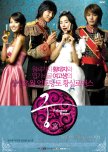
Princess Hours (Goong): A Royal Pain in My Sanity
📝 Review (WARNING: Potential Spoilers — I’m Not Saving You from Emotional Damage)Let me start by saying this: I love older K-dramas. I love the toxic tropes, the melodrama that makes telenovelas look subtle, the fashion disasters, the emotional blackmail, the villains with eyeliner — all of it. I sign up for the chaos. I thrive in the chaos.
But Princess Hours?
This show tested me.
This show put my patience in a chokehold and whispered, “You thought you were strong, didn’t you?”
THE FL: Bold of Them to Call This ‘Character Development’
People online will swear up and down that Yoon Eun-hye “carried the show.”
Carried what, exactly?
Certainly not a brain cell. Not an ounce of growth. Not a glimmer of critical thinking.
Chae-gyeong spends 24 episodes being a professional crier, a runway model for crimes-against-fashion outerwear, and the world’s densest human. There’s naïve, and then there’s: “girl, at this point even Dora the Explorer would ask you to look again.”
Also, I was over her constant apologizing after the 10th time. I swear even wallpaper has shown more emotional evolution. The only thing Chae-gyeong truly grew in this series was her wardrobe. Congratulations, lady, you leveled up your coats.
THE ML: A Certified Jerk, but at Least a Jerk Who Learned Something
Ju Ji-hoon starts this drama with the interpersonal warmth of a refrigerator and the communication skills of one too.
But — credit where it’s due — the man actually grows.
He thaws. He self-reflects. He attempts to communicate like a sentient being instead of a royal gargoyle.
He was insufferable… but he was growingly insufferable, which is more than 90% of this cast can claim.
LEE YOON-JI AS PRINCESS HYE-MYEONG: THE ONLY SANITY I HAD LEFT
The moment I realized this punk-rock menace was Noh Soo-an from My Demon, I almost choked.
Watching her go from anxious mom-of-twins to “internationally chaotic princess who escapes the palace like she’s breaking out of prison” was the emotional treat I needed.
She deserved more screen time. Frankly, she deserved her own drama.
YUL: SECOND LEAD SYNDROME? ABSOLUTELY NOT. I’D RATHER CATCH A VIRUS
This headline stays. Forever.
I almost never get second lead syndrome, but here? Not only did I not catch it, I vaccinated myself against it.
This man comes home after fourteen years like:
“Hi. You were promised to me when we were children. I am now entitled to your entire existence.”
Sir. That is not romantic. That is not sweet. That is not fate.
That is a restraining order waiting to happen.
He is a bowl of lukewarm oatmeal with emotional issues.
The fact that Chae-gyeong never once paused to question his behavior? Ma’am. MA’AM. Borrow one brain cell. ONE.
And yes — I disliked him more than Hyo-rin. At least Hyo-rin’s disaster energy had a little sparkle.
Then he states he’s going to leave with Chae-gyeong… but I don’t ever recall her agreeing, or reciprocating his feelings!?!?!?!?
THE KING: WORST FATHER. WORST MONARCH. WORST EVERYTHING
The man looks at his actual son like he’s allergic to him, but practically polishes Yul’s shoes with his tears.
Useless as a ruler, pathetic as a parent, and every scene he appeared in made me want to yeet him off the palace balcony.
He ruled the palace with the emotional maturity of a toddler losing at Mario Kart.
If pouting were an Olympic sport, he’d have brought home gold for Korea.
He looks at Shin like he’s the dust under his throne and then turns to Yul as if he personally invented the boy.
This wasn’t fatherly affection — this was a man stuck in his own personal fanfiction.
THE QUEEN MOTHER: OLDEST MEAN GIRL IN THE PALACE
Her entire personality is: “I disapprove of everything.”
She contributed nothing except rigid posture and negativity.
Honestly, replace her with a large decorative vase and I might not notice.
THE QUEEN REGENT: MY UNPROBLEMATIC QUEEN
Clueless? Yes.
Soft? Yes.
Occasionally the only source of serotonin in this palace of misery? Also yes.
Love her. Protect her. Give her cookies and a therapy session.
CHAE-GYEONG’S FAMILY: ADORABLE UNTIL THEY WEREN’T
Their comedy relief moments hit early on, but they fizzled fast.
At some point I just nodded and let them exist in the background like neutral NPCs.
YUL’S MOTHER: ENTITLEMENT LEVEL – SUPERVILLAIN
The woman was exiled for cheating, but acts like everyone else is the problem.
She spends the entire show asking, “How can I ruin a teenager’s life so my son can cosplay as a king?”
I wanted to slap my screen every time she opened her mouth.
She even escalates to… attempted murder. Thailand? Regicide schemes? Yes, yes, and yes.
Peak villain energy. Absolute audacity. But karma is served hot — she eventually gets her comeuppance, and watching the palace finally flip her script is the only thing that gave me some satisfaction.
THE REAL PROBLEM: TOO MUCH SML/SFL, NOT ENOUGH ACTUAL ROMANCE
This show could’ve been fire — iconic, legendary, rewatch-classic fire.
Instead, it drowned itself in:
* Miscommunications
* More miscommunications
* Excessive SML/SFL screentime
* Yul lurking
* Hyo-rin gliding
* Political plotting no one asked for
** Meanwhile, Shin and Chae-gyeong’s relationship was treated like a side quest.
The Cheating Arc(s): Thailand? Seriously?!
The cheating plotlines were so wild I needed ibuprofen, an inhaler, and possibly a clergy member.
Thailand felt like the writers said, “Hey, let’s fling the ML into a tropical guilt spiral for NO REASON.”
Then pair that with the FL and Yul scenes — the emotional adultery Olympic trials — and I genuinely considered rage-pausing the episode.
Every moment with those two felt like:
* Misunderstandings
* Unnecessary hand-holding
* The world’s slowest manipulation attempt
* That soft music cue that whispers, “Someone here is lying, but shh, let’s make it pretty.”
* My temples still hurt.
THE MUSIC: Surprisingly a Little Magic
The instrumentals are a fascinating Celtic-Korean fusion — like someone thought, “Let’s make palace melodrama feel epic and timeless, even when everyone’s being completely ridiculous.”
And then there are the occasional catchy tunes that sneak in like little auditory candy. You don’t even realize you’re humming along while glaring at the screen because Yul just did something terrible.
It doesn’t fix the chaos, but it makes every emotional meltdown feel stylishly tragic.
Four Special Sections (a.k.a. Where the Real Fun Begins)
1. Scenes That Aged Like Milk
“Promised to me since childhood” entitlement arc
Yul lurking
Adults blaming teenagers for their marital problems
The monarchy’s obsession with meddling
Every “let’s separate them so they can learn to love each other” plot device
Sour. Spoiled. Throw it out.
2. Scenes That Aged Like Vintage Wine
Shin’s painfully slow emotional thaw
Princess Hye-myeong being a punk princess powerhouse — basically the Korean Diana, without the Charles-level drama
Any moment where the leads accidentally understood each other
The rare domestic scenes where they mutually behaved like humans
The final few emotional breakthroughs (worth their weight in gold)
The friends on each side — quietly loyal, snarky when needed, and the only people in this palace of chaos who actually act like functioning humans
Still magical. Still rewatchable. Still the reason the show almost works.
3. What Would’ve Fixed the Plot Without Breaking the 2006 Formula
Give Shin/Chae-gyeong at least 30% more screen time together
Cut Yul’s creepy stalker arc in half (or just cut him; I’m flexible)
Reduce the cheating plot from “WHY ARE WE DOING THIS?” to “okay that hurt but it narratively tracks”
Give the King a spine or remove him from the chessboard entirely
Let the women have one — just ONE — honest conversation that isn’t dripping in manipulation
That alone would’ve elevated this show from “I need therapy” to “rewatch classic.”
4. This Should’ve Been 16 Episodes, Not 24 Super-Stretched Noodles
The plot was basically:
Ep 1–12: “We don’t like each other but also maybe we do?”
Ep 13–20: “Misunderstandings but make them EXHAUSTING”
Ep 21–24: “Speed-run the actual romance before the credits roll”
That’s why it feels like a hostage situation at times.
They had a beautiful 16-episode romance, but stretched it like dough until it tore.
And we sat there like loyal clowns watching it happen.
Final Verdict
Episode 23? Solid. I actually liked it — the friends on both sides added some much-needed relief.
Episode 24? I felt a smidge of sympathy for Yul… but only a smidge. He’s still a snake, still manipulative, still entirely unworthy of our forgiveness.
Did I scream? Yes.
Did I hate-watch? Absolutely.
Did I roll my eyes so hard I saw my past lives? More than once.
Will I watch it again? …Probably. Because I’m trash for mid-2000s melodrama, and this show is basically junk food you know is terrible but eat anyway at 2AM.

Accidentally in Love: Heiresses, Heartthrobs, and Hilarious Hijinks
📝 Review (WARNING: Potential Spoilers — I’m Not Saving You from Emotional Damage)Okay, so this drama isn’t reinventing the wheel, but it does make that wheel spin with pure, goofy entertainment. Zhao Yi Qin as the bully? Yeah, he was annoyingly perfect for it—his scowls alone deserve their own acting credit. The chemistry between Qing Qing and Si Tu Feng? Comical, chaotic, and sweet enough to make you smile like you just remembered a childhood crush who was actually nice to you.
It leans into that classic early-2010s rom-com flavor—think Full House, but with extra sugar and a pinch of chaos powder. Sure, the antics can get a little over the top, but honestly, that’s part of the charm. And if it weren’t such a pain to track down legally, this definitely could sneak onto my rewatch list for cozy, feel-good background vibes.
💭 Final Mood
“Cute, silly, and cringy in all the right ways—nostalgia-core sweetness with a side of chaos.”
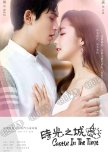
Castle in the Time (时光之城) — When a Paleontology Student Meets a Drama King
📝 Review (WARNING: Potential Spoilers — I’m Not Saving You from Emotional Damage)Oh man, the first dozen episodes? Cute, polished, and honestly kind of addictive. Xu Zhen’s relentless energy against Gu Chi Jun’s antics had me grinning, and their banter almost made me forget the looming corporate chaos. I found myself thinking, “Okay, fine, I’ll just keep watching a little…” and then suddenly, there I was, ten episodes in.
Then… mid-season. Ugh. Slow. Painfully slow. The energy just drains out. Those drawn-out stares, hesitations, and the kisses where Gu Chi Jun somehow always recoils? I kept yelling at the screen, “Do you even like each other?!” And don’t get me started on the corporate subplot and side characters who do… nothing. Seriously, let’s move this along, people.
And the dubbing. Oh my god, the dubbing. I spent half the time trying to match the lips with the voices. “Wait, Park is Korean, right? And that’s… Park Min-young? Oh no…” Once you notice it, you cannot un-see it. Suddenly the main plot is just watching her lips flail awkwardly in time with the dialogue.
By the finale, it’s still cute and polished enough to finish. A solid one-time watch. The slow pacing and dubbing are real obstacles, but the charm of the cast—and those quirky little sabotage moments—keep it just barely entertaining.
💭 Final Mood
“From ‘aww’ to ‘oh no’ in record time. Casual watch energy, but draggy and occasionally cringeworthy. Park Min-young deserves a medal for keeping it all together. 7/10 for effort, heart, and those rare little laughs.”

Full House… but make it Chinese
First things first: I love Full House and even Full House Take Two, so naturally I had to watch this.The house. Oh my god, the house. Gorgeous, creative, photogenic — I want to redecorate my own apartment just to pretend I live here. And the dog. The dog! Don’t care if he’s a prop or real — he has personality. I want him as my roommate.
The leads? Adorable. Jin Ze Yi’s bratty exterior hiding a needy little soul is chef’s kiss. The slow-burn tension works perfectly. No, the lack of skinship didn’t bother me — sometimes longing is hotter than touching.
Jiang Zi Xin (Jin Xiao Qin) is the absolute worst. She sold Luo Tian Ran’s house behind her back and constantly tries to manipulate both her and Jin Ze Yi into ridiculous money-making schemes.
Every. Single. Appearance. — I groaned. I wanted a stick, a bat, literally anything to get through her screen time. She’s worse than the Korean version’s best friend, and that version was already obnoxious.
Tiffany, Zeyi’s agent, is supposed to be harmless. Ha. No. She’s almost as annoying as the best friend. Tiffany is basically the Chinese version of Hye Won — the stylist from the Korean version who was also Yeong Jae’s first love (except Tiffany is definitely not the first love here).
She brings this highly irritating “green tea” energy, constantly switching tunes, and somehow ends up with Lin Che — Tiffany did not deserve him, because he was way too adorable. Despite all that, she does support Tian Ran and Zi Ye sometimes, which is… something, I guess.
Meng Meng… seriously, what’s your purpose? She pops up enough to distract me but adds absolutely nothing. Chinese rom-coms really love giving side characters far too much air time, and it drags the pacing.
Ugh, Yun Shu. Leo Li’s SML is boring.
His subplot about Congenital Insensitivity to Pain (CIP) — yes, a real genetic disorder where a person cannot feel physical pain, often leading to unnoticed injuries — made zero sense in the context of this show.
It didn’t add tension, depth, or drama. He’s bland, forgettable, and ultimately does nothing to make the story more compelling. Compared to the Korean versions’ SMLs, who actually added interesting layers or fun rivalry, Yun Shu is a total letdown.
The pacing is a rollercoaster. Some episodes drag — especially when the best friend, Tiffany, or Meng Meng dominate screen time.
But then… the concert scene. Pure gold. Cinematic, emotional, swoon-worthy. Probably the highlight of the series and makes enduring the filler worth it. If you watch nothing else, watch that scene.
I’ve seen the Korean Full House and Full House Take Two. The Chinese version tweaks enough to feel like its own thing.
The best friend is worse. Side characters hog too much air time. Yun Shu adds almost nothing. But the leads’ chemistry? Still adorable — slow-burn, subtle, and charming.
I haven’t watched the Thai version yet, but now I kind of want to, just for comparison.
Ugh. The ending. Completely unnecessary. Adds zero value.
The series could have skipped it entirely, and the story would’ve been fine. But of course, drama demands drama. Sigh.
💭 Final Mood:
“Loved the leads, hated the SML, hated the side plots, adored the concert, cried over wasted screen time, swooned over the house and the dog — 7/10 chaos, 10/10 feelings. Still glad I watched, even if Jiang Zi Xin and Tiffany haunted my dreams.”
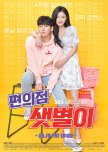
A Hurricane in Sneakers, a Handsome Disaster, and Pure Absurdity—Backstreet Rookie Wins.
Okay, listen. This show is chaotic in the best possible way. From minute one, I’m yelling at my brain: “This is absurd. This is hilarious. Keep up.” Saet Byul walks in like a hurricane in sneakers, and Dae Hyun just… exists—calm, handsome, suffering quietly. The contrast? Chef’s kiss.The romance? It’s there. Tiny little sparks. But it’s not a swoon-fest, thank god. It’s an absurd rom-com. If you try to take it seriously, it collapses like a Jenga tower in a wind tunnel. The point is the chaos, the banter, the moments that make you go: “What even is happening right now—and why am I laughing so hard?”
Some people complain the leads lack chemistry. Uh… no. They have chemistry, it’s just the weird, awkward, quirky kind that fits the show’s tone. It’s like someone sprinkled love and sarcasm in the blender and hit high-speed. You get awkward flirting, hilarious misunderstandings, and moments of genuine warmth all wrapped in ridiculousness.
Sideplots? Love triangles? Minimal, thank god. This is about comedy first. Romance second, if you even notice it. The absurdity is the star. And oh my god, Crazy by April as the opening theme? I hum it, scream it, possibly annoy my neighbors daily. Perfect chaotic anthem.
💭 Final Mood:
“Laughing until my ribs hurt, grimacing at the cringe moments, teared up once because I secretly care about them, fully embracing the absurdity, and now considering how much my own life lacks Saet Byul-level energy. 10/10. Would watch at 2 a.m., preferably with snacks, sarcasm, and zero self-control.”

Rich-Girl Drama, Questionable Logistics, and a Filming Location That’s Clearly Not Mainland China.
📝 Review (WARNING: Potential Spoilers — I’m Not Saving You from Emotional Damage)The story is set in Mainland China… except it was very obviously filmed in Taipei, Taiwan. And listen, I wouldn’t have cared if the show didn’t keep insisting “Beijing! Beijing!” while the cast is strolling through Miramar Mall like it’s completely normal. Even Viki and MDL tag it as China—but Mainland vs. Taiwan is a whole thing—and my brain spent half the drama whispering, “Besties… you’re already in Taipei. Why are you booking flights to Taipei?”
So yes, we started off with geographical whiplash.
The plot itself felt like someone stretched a vertical mini-drama to full length. We’ve got the whole “princess and prince arranged marriage” setup, except the princess is in “love” with the prince, he’s busy swooning over a sweet poor girl™, and then the princess falls for a poor boy who’s supposed to help her get the prince. It’s a whole triangle… square… rhombus… I don’t know, geometry was happening.
The FL? Whew. Whiny, bratty, and genuinely challenging to watch for a good chunk of the show.
The ML? Surprisingly solid from start to finish.
The SML? Hated him at first, but he actually had the most character development—did a full redemption arc like he was trying to graduate from Character Growth University.
The SFL? Couldn’t stand her, not for a single episode. She kept riding that “but I’m poor and you’re rich!” victim horse long past the point anyone cared. Girl, the jig is up—step off the carousel.
Now, things I actually liked:
The Bear Knight arc was a fun, quirky way to chip at someone’s emotional walls.
The FL’s “mom” had fabulous hair—priorities.
The unusual take on the mom/stepmom trope was refreshing.
And the house from Just You popping up here? Loved that little “ah-ha, they really ARE in Taiwan” moment.
Overall, the characters could’ve used a bit more depth, the plot could’ve used a tune-up, and maybe—just maybe—don’t film in one country while insisting you’re in another unless you’re ready to fully commit to the bit. With a little sharpening, this could’ve hit harder.
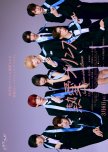
Was a let down.
📝 Review (WARNING: Potential Spoilers — I’m Not Saving You from Emotional Damage)When I first added this, I thought it would be cute. Instead, it was a serious letdown. Matsuri is a single, latchkey kid who has always wanted siblings. Then, out of nowhere, her mom remarries and suddenly she has three brothers, all members of the idol group Terzetto. Except you never actually see the parents. Not once. The band’s manager pops up, but the people responsible for her life are gone. The show jumps straight from “Hey, we’re your brothers” to Azusa confessing his love. Normally, I can handle step-sibling romances, but Azusa quickly becomes this obsessive, context-free love interest, and it is really off-putting.
The other two brothers are sweet and enduring, treating her genuinely like a sister, which is a relief amid all the chaos.
Then there is Subaru, Matsuri’s childhood sweetheart, who shows up already in love with her. But instead of sweet nostalgia, he gives off a “future rapist” vibe, although he does have moments of charm when he is with his bandmates or acting as a friend.
Yamato is the only one whose feelings feel reasonably paced and earned. If the story had let Matsuri have some agency instead of giving her that submissive attitude around Azusa, it might have worked better. Her constant “Huh?” and “What!?” only add to the frustration.
I wanted Matsuri to end up with Yamato, but that is not the story this show tells. The plot could have used more context, a stronger heroine, or at least longer episodes, because the thirty-minute format feels shallow. The only redeeming quality is that it is short.
A Pretty Disappointment in Divine Packaging
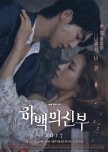
I went into Bride of Habaek expecting fantasy, romance, and a divine love story worthy of the title. What I got was… a confusing mess of hot people acting like moody preteens with commitment issues. And let’s talk about that title for a second—where exactly is the “Bride” in Bride of Habaek? There’s no wedding, no divine union, not even a real payoff. Just a lot of push and pull that leads nowhere satisfying.Yoon So Ah, the female lead, was honestly exhausting. She starts off incredibly narcissistic and constantly plays the victim, and not in a "she'll grow on me" kind of way. Even by the end, I still didn’t care for her. She had a few redeeming moments, but they were like finding water in the desert—too little, too late.
Habaek? Sure, he’s hot. The man knows how to wear a suit. But beyond that? Not much going on. His character arc is flatter than a god’s heartbeat in the human world. I wanted a powerful, conflicted deity torn between duty and love. Instead, I got a divine himbo who disappears every few episodes for dramatic effect.
Moo-ra is another one of those jealous-female tropes that K-dramas love to throw in, but with zero depth. Bi-ryum at least brought a little personality and sass to the table—probably the only god in the show who felt like he had actual emotions beyond stoic boredom or vague angst.
Now CEO Shin (Hoo-ye)? There was potential. SO much potential. His character had emotional depth, tragic history, and a serious identity crisis… but the show does absolutely nothing with him. They dangle a compelling backstory in front of us and then walk away like we won’t notice. I’m still not even sure what his actual connection to Habaek’s past is supposed to be. Son? Reincarnation? Plot tease? We'll never know.
The shaman friend? Another letdown. She had visions that should’ve been critical, mysterious, exciting—but they amounted to nothing. Just cryptic warnings and dramatic fainting spells.
World-building? Basically nonexistent. We’re told these gods have responsibilities, kingdoms, histories, even wars—but you’d never know it from the show. They mostly just bicker, flirt, and lounge around on Earth like they’re waiting for a group chat update from heaven. It feels like they bought the fantasy furniture but never moved into the house.
There were a few standout moments. A scene here or there would hit emotionally—especially the bit with So Ah’s dad—that actually made me pause what I was doing. But they were few and far between. Most of the show felt like filler wrapped in pretty cinematography and slow-motion angst.
In the end, Bride of Habaek had a decent premise, but the execution fell flat. With more world-building, clearer plot arcs, and actual character depth, it could’ve been something magical. Instead, it’s a forgettable ride with a frustrating finish. I’m honestly shocked I didn’t drop it.
Would I watch it again? No.
Do I still have questions? Absolutely.
Would I recommend it? Only if you’re watching for the pretty faces and have a high tolerance for unfulfilled potential.
A Love So Beautiful (Chinese) – Cute Idea, Painfully Flat Execution
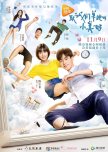
📝 Review (WARNING: Potential Spoilers — I’m Not Saving You from Emotional Damage)The Chinese adaptation follows the same familiar path: wide-eyed crushes, teenage awkwardness, and that nostalgic, floaty first-love sweetness. Xiao Xi is supposed to be the bright, expressive heart of the story—but Shen Yue simply doesn’t sell it for me. This isn’t a critique of her character choices; it’s a straight take on the acting. Flat, unconvincing, and often so wooden that I found myself leaning into the supporting cast for actual emotion.
Thank goodness the supporting cast shows up like heroes. Wu Bo Song is the emotional backbone here—sincere, steady, and heartbreakingly committed. Every scene he’s in feels genuine, so much so that I’d occasionally forget to be annoyed at the leads. Jing Xiao and Lu Yang bring warmth, chaos, and laughter; their chemistry is effortless and the reason this version remains watchable.
Jiang Chen (Hu Yi Tian) is consistent but stony. He wears the stoic ML trope like a uniform, and while he fits it, it rarely translates to emotional engagement. Watching him try to emote can feel like watching someone practicing blinking with intent. Still, he doesn’t wreck the show; he just doesn’t lift it.
Pacing is another patience test. The story moves slowly—slow-burn to a fault—so if you prefer fireworks, this isn’t your adaptation. But if you’re here for the soft, small victories and the friend-group chaos, you’ll find moments that land. Mostly, though, this version’s heart belongs to the supporting cast; they keep the show breathing and the feels coming.
Overall: watchable for fans of the franchise or for those curious about adaptations, but temper your expectations for lead performances. If you love Second Male Lead Syndrome, brace yourself: Wu Bo Song will wreck you in the best possible way.
💭 Final Mood
😐💘
Sweet enough to finish, flawed enough to sigh at, and powered almost entirely by the supporting cast and Wu Bo Song–induced emotional damage.
The Ending We Needed
📝 Review(WARNING: Potential Spoilers — I’m Not Saving You from Any Emotional Damage)
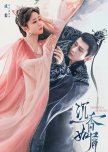
After all the angst, sacrifice, and emotional warfare across two seasons, the special delivers what viewers genuinely needed: peace.
Rebirth. Marriage. Closure.
It doesn’t try to reinvent the story. It simply allows the characters to exist without divine rules, tragic misunderstandings, or realm-ending consequences hanging over them.
And honestly? After everything they endured, that felt deserved.
💭 Final Mood
“Soft. Earned. Finally.”


