
 Celebrity





This review may contain spoilers
A deeply moving symphony of two Souls intertwined
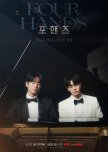
I have just finished watching "Four Hands, Two Sonatas", and my heart is completely full.
While people look for a romantic relationship between the two main protagonists, I want to emphasize that what truly touched me, and left me completely breathless, was the beautiful, raw connection between their souls.
It is a profound, unexplained love—a spontaneous and natural bond that I think everyone secretly hopes to experience at least once in their lives. The drama has its tiny flaws, but what made it stick with me is how it shows the fragile domino effect of life: how the actions and pain of one person can completely reshape someone else's destiny.
This painful cycle is so clear in Bi-o’s family. It all starts with his grandfather, a harsh Maestro who treats everyone with a heavy heart. He is incredibly hard on Bi-o, mostly because his feelings toward his grandson have always, always, always been an inevitable reflection of his own soul. He sees his own hidden dark sides, his unaccepted imperfections, and his unresolved pain mirrored perfectly in Bi-o. It is that tragic human truth: we often project our deepest friction onto the people who remind us of what we cannot accept within ourselves.
This heavy shadow falls directly onto Bi-o’s mother.
She suffocates her son with her own desperate ambition, seeking a way to heal her own past.
I want to be clear: I don't agree with what she does, and I don't justify her cruelty at all. But the writing is so beautiful that I could truly understand her. I could see where her pain came from, even if her choices were heartbreaking.
Then, this rigid, high-pressure world collides with Jeong-yo, a boy from a completely different background who carries an incredible, natural musical gift. Their bond is held together by elective affinities and a deep artistic and spiritual attraction rooted in their shared love for music. Jong-ho is the more mature one, an exceptional artist who plays completely from the gut. On the other hand, Bi-o is technically flawless, but he is only able to truly set his art free when, thanks to Jong-ho, he finally releases himself from the desperate desire to be recognized by the one person who refused to truly see him: his grandfather.
They don't just play music together; they completely fill the empty spaces in each other’s hearts. And they're really happy!
A huge part of why this relationship works so beautifully is the incredible acting. Song Kang did an absolutely magnificent job with such a complex role, portraying Bi-o’s deep pain, overwhelming guilt, and fierce loyalty in a way that felt completely real and heartbreaking. His performance contrasts perfectly with Lee Jun-young, who brings Jong-ho's own inner sorrow to life with a beautifully spontaneous and natural presence. Together, their acting creates a flawless balance.
Lastly, while some viewers might brush off Jai-in as just an insignificant side character, she meant the world to me. Her unrequited love for Bi-o is so incredibly selfless. Maybe she knows he can't love her back, maybe she hopes he would someday, yet she stays by his side with a quiet, generous devotion. She might seem superficial at first glance, but she has a beautiful depth. She becomes Bi-o's quiet anchor, literally pulling him out of his darkest places when he hits rock bottom.
"Four Hands, Two Sonatas" has left a lasting mark on my soul.
It is a beautiful, deeply emotional story about legacy, pain, and the quiet power of human connection.
If you want a story that truly makes you feel, you absolutely have to watch it.
Was this review helpful to you?


