
 Celebrity





This review may contain spoilers
A Masterpiece of Psychological Tension and Aesthetic Brilliance Beyond Genre Clichés
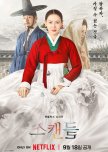
Despite the heated controversies dividing audiences, The Scandal stands out as a high-caliber artistic achievement. Director Jung Ji-woo has delivered a bold, mature, and visually hypnotic series that deliberately breaks away from the conventional tropes and comforting clichés of traditional K-Dramas.The performances from the cast are nothing short of masterclass level. Ji Chang-wook delivers one of the most daring and layered performances of his career. Stepping completely out of his usual "good hero" comfort zone, he masterfully explores the darkest, most ambiguous depths of his character. Alongside him, the extraordinary Son Ye-jin proves once again why she is a master of her craft, commanding the screen with a chilly, subtle, and captivating psychological tension.
The widely criticized slower pacing is, in reality, a deliberate and sophisticated directorial choice. It provides the necessary breathing room to unravel the complex backstories of the leads and to fully immerse the viewer in the rigid, unforgiving social hierarchy of the Joseon era.
While it is somewhat understandable that such a sharp departure from traditional Korean drama boundaries caught some viewers off guard, the widespread disappointment regarding the mature content is difficult to fully defend. Given that this series is an explicit adaptation of the classic epistolary novel Dangerous Liaisons, how could anyone realistically expect a story stripped of its sensuality and nudity? Intimacy and physical seduction are the very engine of the original plot's dramatic conflict.
In this adaptation, the passionate scenes never devolve into cheap, gratuitous voyeurism. Instead, every intimate sequence serves as a vital battleground for the ruthless psychological warfare and power dynamics between the protagonists.
The Scandal is certainly not a show tailored for everyone. However, for those who appreciate a narrative proud of its own distinct identity and artistic freedom, it is a highly rewarding, unforgettable experience.
Pros:
Masterclass Acting: Ji Chang-wook and Son Ye-jin deliver career-defining, deeply complex performances.
Artistic Departure: A refreshing break from standard K-Drama tropes, offering a mature and gritty psychological narrative.
Stunning Aesthetics: Exceptional cinematography, meticulous Joseon-era set designs, and a brilliant musical score that amplifies the tension.
Faithful Adaptation: Boldly respects the core themes of the original source material, Dangerous Liaisons, without watering down its essence.
Cons:
Deliberate Pacing: The slow, atmospheric rhythm requires patience and might not appeal to viewers looking for a fast-paced plot.
High Maturity Level: The heavy focus on explicit sensuality and power dynamics makes it less suitable for audiences expecting a traditional, light-hearted romance.
Was this review helpful to you?
This review may contain spoilers
A deeply moving symphony of two Souls intertwined
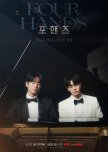
I have just finished watching "Four Hands, Two Sonatas", and my heart is completely full.While people look for a romantic relationship between the two main protagonists, I want to emphasize that what truly touched me, and left me completely breathless, was the beautiful, raw connection between their souls.
It is a profound, unexplained love—a spontaneous and natural bond that I think everyone secretly hopes to experience at least once in their lives. The drama has its tiny flaws, but what made it stick with me is how it shows the fragile domino effect of life: how the actions and pain of one person can completely reshape someone else's destiny.
This painful cycle is so clear in Bi-o’s family. It all starts with his grandfather, a harsh Maestro who treats everyone with a heavy heart. He is incredibly hard on Bi-o, mostly because his feelings toward his grandson have always, always, always been an inevitable reflection of his own soul. He sees his own hidden dark sides, his unaccepted imperfections, and his unresolved pain mirrored perfectly in Bi-o. It is that tragic human truth: we often project our deepest friction onto the people who remind us of what we cannot accept within ourselves.
This heavy shadow falls directly onto Bi-o’s mother.
She suffocates her son with her own desperate ambition, seeking a way to heal her own past.
I want to be clear: I don't agree with what she does, and I don't justify her cruelty at all. But the writing is so beautiful that I could truly understand her. I could see where her pain came from, even if her choices were heartbreaking.
Then, this rigid, high-pressure world collides with Jeong-yo, a boy from a completely different background who carries an incredible, natural musical gift. Their bond is held together by elective affinities and a deep artistic and spiritual attraction rooted in their shared love for music. Jong-ho is the more mature one, an exceptional artist who plays completely from the gut. On the other hand, Bi-o is technically flawless, but he is only able to truly set his art free when, thanks to Jong-ho, he finally releases himself from the desperate desire to be recognized by the one person who refused to truly see him: his grandfather.
They don't just play music together; they completely fill the empty spaces in each other’s hearts. And they're really happy!
A huge part of why this relationship works so beautifully is the incredible acting. Song Kang did an absolutely magnificent job with such a complex role, portraying Bi-o’s deep pain, overwhelming guilt, and fierce loyalty in a way that felt completely real and heartbreaking. His performance contrasts perfectly with Lee Jun-young, who brings Jong-ho's own inner sorrow to life with a beautifully spontaneous and natural presence. Together, their acting creates a flawless balance.
Lastly, while some viewers might brush off Jai-in as just an insignificant side character, she meant the world to me. Her unrequited love for Bi-o is so incredibly selfless. Maybe she knows he can't love her back, maybe she hopes he would someday, yet she stays by his side with a quiet, generous devotion. She might seem superficial at first glance, but she has a beautiful depth. She becomes Bi-o's quiet anchor, literally pulling him out of his darkest places when he hits rock bottom.
"Four Hands, Two Sonatas" has left a lasting mark on my soul.
It is a beautiful, deeply emotional story about legacy, pain, and the quiet power of human connection.
If you want a story that truly makes you feel, you absolutely have to watch it.
Was this review helpful to you?
This review may contain spoilers
Enjoyable
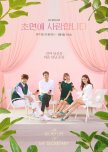
The Secret Life of My Secretary might look like just another light romantic comedy on the outside, but it ended up touching me in a way I didn't expect, and I just couldn't stop clicking "next episode."I haven't really watched many office K-dramas before, but the chemistry between the main leads completely pulled me in—they were just so beautiful together.
At the same time, the supporting characters and the second couple also get plenty of screen time, and their scenes were so fun and entertaining to watch. All those funny, sweet, and ironic moments kept the whole show breezy and comforting.
I'm not here to write a professional review or dissect technical stuff.
At the end of the day, what truly matters to me is how a show makes me feel, and this drama gave me something genuinely beautiful.
It was a sweet, cozy escape that brought so much joy and warmth to my days, leaving me with the most wonderful feelings. In a world full of heavy stories, finding a show that can just make your heart happy is everything, and that is exactly what this did for me.
#KimYoungKwang #JinKiJoo #OfficeRomance #RomCom #KdramaReview #ComfortDrama
Was this review helpful to you?
This review may contain spoilers
Real life doesn't follow a script: In defense of a brutally honest work
I don't care if the directing or cinematography doesn't follow the flawless, polished standards we are used to in K-dramas. In fact, it is the raw visual style of this show that hits so hard. The direct camera angles, the dialogues delivered while staring into space, or the moments characters confess their deepest thoughts while hugging without making eye contact—these choices aren't flaws.They are a perfect mirror of how we actually communicate when our pain is too heavy to face.
While many critics bash Lee Mi-do, calling her selfish, inconsistent, or toxic, I believe her imperfection is the show's greatest strength. The truth is, this drama doesn't exist to please the audience with idealized characters. Realistically speaking, how many people trapped in a draining ten-year relationship know exactly what to do? Who always has the right tools or emotional maturity? Mi-do suffers, makes many mistakes, and hurts people. This constant "push and pull" with Ho, this exhausting emotional limbo, is exactly what happens in real life, where people face messy problems with whatever limited tools they have.
On the other side, we have Namgung Ho, initially seen as the submissive "good guy" who sacrifices everything for others. In reality, Ho hides an abyss of trauma. As the son of a greedy mother who used him for scams before abandoning him, his resilience is heartbreaking. What truly destroys him from within is a crushing sense of guilt—bearing the blame for the death of Mi-do’s father, a heavy burden he carries despite being completely innocent. Seo Kang-joon’s performance is nothing short of flawless. His face remains guarded and cold, but his eyes speak volumes, constantly broadcasting his repressed agony.
This slice-of-life realism extends beautifully to the supporting characters, especially the lawyer, Han Tae-seung. Abandoned as a child, he was "saved" at sixteen only to be turned into a lapdog for a ruthless, high-profile lawyer. His evolution is deeply human. He doesn't decide to turn his life around because of some sudden moral epiphany; he tries to change solely out of his love for Mi-do. He attempts to become a better person just for her, offering yet another disarming and authentic portrait of human nature.
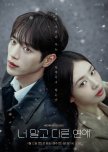
A Love Other Than Yours does not tell a romantic fairy tale. It chronicles the painful, chaotic collision of broken souls trying to survive their own ghosts with the little strength they have left. Ultimately, this unique style is a double-edged sword—you might love it or you might hate it—but it is undeniably honest, raw, and sincere. It is a brave, honest, and profoundly human story.
Was this review helpful to you?


