




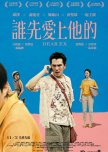
‘ Dear Ex’; A Surprisingly Heartwarming Film…
Directed and cowritten by Mag Hsu and Chih-Yen Hsu as well as screenwriter Lu Shih Yuan, ‘ Dear Ex’ is a movie which will likely not appeal to everyone with its soap-opera style cliches and setups.
However despite some notable flaws and inconsistencies which could be found in ‘ Dear Ex’, the prominent messaging placed upon real-life issues such as homophobia , love, intolerance, teen-angst and familial relationships, arguably presented a somewhat niche plot line with an air of gritty complexity and heartfelt moments along the way.
After his father Zhengyuan (Spark Chen) dies of cancer, it is revealed that the beneficiary of the will is not Cheng-xi ( Joseph Huang) but Jay (Roy Chu), his father’s gay lover. Embarrassed and angered, Cheng-xi’s mother Liu Sanlian (Ying-Xuan Hseih), desperately tries to reclaim her late husband’s money, in order to afford her son’s tuition and the family’s cost of living — a process that alternately entails coercion and attempted blackmail.
Yet Cheng-xi, fed up of his mother’s manipulation , opts to live with free-spirited Jay instead. As Cheng-Xi and Jay become surprisingly close during their cohabitation, Cheng- Xi soon begins to question his loyalties towards his mother and his previous beliefs .
Directors Chih-Yen Hsu and Mag Hsu present ‘ Dear Ex’ with a melodrama edge. Nevertheless during quintessential moments, the directors aren’t afraid to place emphasis upon the narrative’s complex edges; the deeply fraught family history, Sanlian’s feelings of fury and rage by her husband’s decisions and affair, as well as the tragic decline of Zhengyuan’s health and spirit. In particular Sanlian’s change from the niche archetype of the overbearing mother and wife during her initial introduction, allowed opportunities for the directors in order to flesh-out her character as the storyline progressed.
Despite thematic themes hinting that ‘ Dear Ex’ should be a coming of age movie for Cheng-Xi, Chih-Yen Hsu and Mag Hsu placed greater emphasis upon tragic and ill-fated romances and immense pathos for its array of onscreen characters with equal sympathy. However despite Taiwan’s liberal stance upon same-sex marriage and LGBT rights, the movie still highlighted the presiding underbelly of prejudice within Taiwanese culture and society- homophobia and gay slurs often arising during key moments in order to expose this. In addition to this, ‘ Dear Ex’ also allowed some golden-opportunities for character development. One of the most intriguing and climatic in the movie’s narrative surrounding the rocky relationship between Jay and Sanlian; merging from contempt, to animosity before developing into mutual sympathy.
However whilst the non-linear narrative gave a smoothly edited storyline, ‘ Dear Ex’ could often lean into greater problems of incoherent plot holes. Despite some desperate attempts in order to wrap up certain key plot points, viewers were often left in the dark towards reasons and drive within the narrative. ( In particular the decision for Jay to become the main beneficiary, excluding Cheng-Xi entirely.)
The acting performances of the series are solid. Admittedly there were certain line deliverances which could feel somewhat enforced or lacking tact, the main cast were decent enough onscreen. Child actor Joseph Huang and actor Roy Chiu were particularly dynamic onscreen ; offering surprisingly emotional yet dynamic performances throughout the movie.
The pacing of the movie is slow in parts. Naturally it is arguable that certain scenes had to be slowed down in order to focus and build upon characters. On the other hand whilst the storyline did offer some expedited storyline moments, the inconsistent balance could sometimes limit opportunities in order to patch up weaker moments of dialogue, plot holes and character writing also.
Aside from integrating an array of flashbacks into the narrative, it is undeniable that under the directing reigns of Chih-Yen Hsu and Mag Hsu, ‘ Dear Ex’ is visually aesthetic . The emphasis upon vivid palette schemes are brought to life through emerald, scarlet and ruby red tones- helping to bring to life the emotional scope of the movie’s characters. In particular the usage of childish doodles surrounding Cheng Xi, amateurishly superimposed in parts, undeniably helped to captivate the medium for Cheng Xi’s transition into adulthood alongside his ideologies throughout the course of the film. The OST was notably subtle throughout its usage in the background of scenes; a little insipid in parts, but synchronic nonetheless.
Overall ‘ Dear Ex’ is admittedly a niche setup with seemingly archetypical characters and relationships. On the other hand whilst the movie could often fall into the pitfall of barely fleshed-out narrative points, Chih-Yen Hsu and Mag Hsu’s ‘ Dear Ex’ was a surprisingly exposure into the mindsets of its intriguing array of characters, as well as a societal critique into the clashing traditions of new and old in Taiwan. ‘ Dear Ex’ is undeniably flawed in parts, but is surprisingly heartfelt at times also.
Was this review helpful to you?
An Unimaginative Gangster Movie…
South-Korean director and screenwriter John H. Lee’s ‘ A Cut Runs Deep’ (1999) is a movie which is often unspoken about and hidden under the radar amongst South-Korean movie enthusiasts. Yet whilst Lee’s visually streamlined movie presented some intriguing themes within its notable Asian-American cast and certain ultra-violent scenes, ‘ A Cut Runs Deep’ could often fall victim to its cliche-ridden script.
The storyline is set in New York and focuses on half-Korean Ben (Alex Manning); the main character and narrator of the film. Ben works as a delivery boy at a dingy Chinese restaurant which he also resides in and during a particular delivery he ends up encountering a suave and introverted young man called JD (David Lee McInnis). There’s an oddly dangerous air surrounding JD which Ben can’t quite put his finger on but after taking a shining to the young male lead, JD ends up imitating Ben into his gang and leads his down a violent and destructive path.
Admittedly whilst the dialogue could sometimes feel slightly lacking during quintessential moments arguably one of the greatest standouts of the film came through main leads’ Alex Manning and David Lee McInnis’ onscreen performances- adding a touch of brutal humanity even during more generic moments of the series.
However where an ultimate downfall lay with ‘ A Cut Runs Deep’ was that Lee didn’t seem to be trying to add his own personal touch to otherwise overused genre of film . Naturally its evident that there were socio-commentaries in the storyline which were brushed over from economic and social injustice in Asian communities, prejudice and racism which can occur also for biracial individuals. However in a film where our main lead is stuck on the edge between his biracial identity and a seeming ticket of freedom out of his deadbeat job, Ben’s own opinions and character drive rarely seemed to reflect more profound reasoning for the existence of these themes in the movie with Lee executing these commentaries into more effect .
Naturally this resulted in the seeming chronicle transition between Ben being an “ innocent child” and a “ gangster” rarely feeling more impactful for viewers due to lacking scenes of being able to see the main leads’ development in more depth. Consequently Lee’s heavy reliance upon an an abundance of snipped and inauthentic “ gangsta”-style dialogue and poorly-developed stock characters ( “ the prostitute girlfriend” and the “ intimidating loose-cannon boss”) often create awkward and forgettable scenes for viewers. A low-budget admittedly did not necessarily give the drama a great start with filming advancement, but the dichotomy between imaginative and generic filming techniques by Lee became evident throughout the film, with an ending which didn’t seem to truly deliver its intended greater impact also.
Overall whilst not an unwatchable film with decent performances by our main leads, social commentaries towards issues which are still prevalent today and certainly should be given some praise amongst attempting to subvert certain generic stereotypes and cliches of Asian-gangster flicks of its time, Lee’s ‘ A Cut Runs Deep’ is a fairly generic gangster flick which lacks elements of ingenuity and memorability also.
Was this review helpful to you?
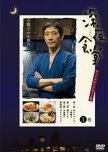
Entering Twilight Zone in Shinjuku ; The Peculiar Humanity Behind “Midnight Diner”...
Alternatively known in Japanese as “ Shinya Sokudou”, the drama first graced the small screen with screenwriter Mukai Kousuke behind the works of one of the most successful Japanese dramas of all time with numerous seasons and adaptations in other countries ( including South-Korea, China and Taiwan).
Notably everything about “ Midnight Diner” ‘s storyline should not appear inherently gripping for audiences. Whilst the “ omnibus” formula can be intriguing, there’s the evident problem which would seem to happen with “ Midnight Diner” at first by falling into a cataclysmic rabbit hole of a formulaic structure around the mysterious owner “ Master” ( Kobayashi Kaoru) accounting his interaction with a customer for the audience with little sense of breaking routine or new ground .
Yet against all odds, Mukai Kousuke presents something greatly attractive about the reoccurring and new characters within the series through a mixture of the mundane and magic realism, without crossing into the overtly supernatural or horror genre.
Whilst some individuals such as the three office women who Master dubs as the “ Ochazuke Sisters” are played for humorous gags in a similar manner to the surreal characters of the series such as the stripper
Matsushima Marilyn ( Ando Tamae) and the pornstar ( Kazama Toru), there was still something fundamentally human behind these characters rather than their labels alone. The trio of office women seem to represent the contemporary struggles of dating for older Japanese women, the pornstar hides a sad past with his mother, whilst other reoccurring characters such as the yakuza gangster Ryu Kenzaki (Yutaka Matsushige) and his odd friendship with gay cross dresser and bar owner Kosuzu ( Toshiki Ayata) as well as transgender bar owner Jun ( Genkaku Yuko) helped to present the versatile range of customers and individuals present within Japanese society.
Perhaps the one notable weakness of “ Midnight Diner” did occur at times within acting quality and line deliverance, often feeling a little discordant from the more realistic and hard-hitting themes of loneliness or individualistic stories in each episode. In addition to this as mentioned before, the formulaic styling does become a little predictable for audiences even when a new episode has shifted onto a new customer or characters. Nevertheless, “ Midnight Diner” can be seen as a surreal and transgressive journey into the bewitching life stories of Shinjuku’s night owls, with an oddly heartwarming edge even for the most unlikely of characters and friendships.
Was this review helpful to you?
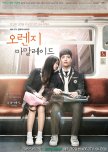
Orange Marmalade; Stuck In A Very “ Sticky” Problem...
In all honesty this review will probably be ignored or swept aside for more recent reviews by drama fans. Nonetheless, I will say that I actually watched this drama several years back after having read several chapters of the eponymous webtoon .Not remembering much about the drama ( apart from some lacklustre chemistry and plot) I decided to have another attempt at watching Orange Marmalade . It was only when watching it for a second time . did I realise that Orange Marmalade truly was its own worst enemy when it came to story progression and episode pacing throughout the show.
Of course that’s not to say that the show was entirely dire ; the premise itself of an alternative reality where vampires are outcasts amongst human society ( similar to the webtoon ) was intriguing, the casting choices of fairly top-notch actors such as Seolhyun and Yeo Jin Goo as our leads added to the appeal and even having Lee Hyung Min ( Strong Woman Do Bong Soon and I’m Sorry, I Love You) and Choi Sung bum ( Jungle Fish and My ID is Gangnam Beauty) as the directors nearly sealed the drama’s fate to be a masterpiece.
So just what went wrong with such a potentially brilliant show? Well, the biggest factor was most certainly to do with the episode pacing.
Although we are introduced to our main female protagonist Baek Ma Ri ( Seolhyun) as well as the majority of our main characters in the first few episodes, there’s simply no scenes dedicated for viewers to actually get to know
our protagonists as individuals, such as ; (despite her circumstances as a “ vampire”,) Ma Ri is not shown to be as subjected or act in strong emotion ( apart from supposed “ fear”) against her peers finding out, ( unlike the webtoon) there’s little explanation or motivation shown behind Jung Jae Min’s ( Yeo Jin Goo) enmity towards vampires , and there is also very little reasoning behind Han Shi Hoo’s caution around humans. In addition to these problems, there’s also the added flaw of the show having what’s called a “ loose plot “ motive ( “ the vampire girl hides her identity”) without a greater sense of purpose ( i.e. a greater threat, antagonist or challenge) for our characters or the general progression of the storyline.
When we did actually get to see some character bond development between Jae Min and Ma Ri, a sudden time-skip for several episodes without reason or purpose to the Joseon period, destroyed this relationship’s genuine development in a matter of seconds.
It isn’t necessarily that these flashbacks shouldn’t have been included in the plot, however, it would have made more sense to have either shown us this in the beginning of the series ( as perhaps two episodes maximum) in order to build-up to the characters’ introductions in the present day, having interwoven flashbacks over the course of the drama ( either through parallel actions of our characters to the past or even through dreams) or just simply using the earlier episodes to characterise our protagonists more as individuals before introducing this new storyline into the mix .
Overall Orange Marmalade’s sweetened visage as a romance drama with an intriguing premise, is a facade for the acrid citric bitterness of terrible story writing ,plot pacing and characterisation. Certainly not worth committing time towards.
Was this review helpful to you?
The “ Healing” Approach To A Drama...
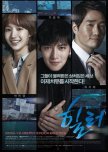
Healer revolves around Jeong- Hu ( Ji Chang- Wook), a courier who goes under the mysterious alias “ Healer”. Carrying out numerous errands for his clients with the help of “ Hacker Ahjumma” ( Kim Mi Kyung), Jeong- Hu is determined to be able to put together enough money to leave Korea and spend the rest of his days in luxury on his own island, away from the problems of civilisation. His dreams to leave the country seem to be put on hold, however, when he attracts famous news anchor Kim Moon Ho ( Yoo Ji Tae) to use his services in order to protect aspiring journalist Chae Young Shin ( Park Min Young). Going undercover as an unnoticeable intern, Jeong- Hu finds himself torn between his mission and his personal feelings when he realises a connection between Young Shin and what happened to his biological parents nearly twenty years ago.It can’t be denied that the Healer takes on so many action tropes it’s untrue . From Bourne Identity violence to the Clark Kent setup seen later in the drama as well as some downright strange plot moments, Healer may seem a waste of time, however, what the show certainly doesn’t lose out upon is a well- written plot , a developed male lead and female characters who felt flawed and most importantly human. This is undeniably all thanks to Chang Wook’s portrayal of Jeong- Hu’s contrasting personas throughout the show ; a fairly mind blowing moment of acting in regards to watching Chang Wook going from a stuttering intern to a confident and brazen fighter several minutes into a scene, away from the preying eyes of Young Shin. As a character, I’ll be honest in saying that there was a lot more which could have been fleshed- out with Jeong Hu, not least dropping a gradual build - up to his past from almost episode one rather than rushing this crucial storyline in a matter of a few episodes instead. On the other hand, one of the most impressive features of Jeong- Hu was undeniably crossing the “ moral grey hero” threshold for drama leads; typically sugarcoated by writers to be the heroic moral citizen, rather than beating up corrupt figures( even after they have begged for mercy) , going against the police ( let’s not forget even breaking into a police headquarters as well) numerous times and the shocking scene in the
last episode as well. This really helped to solidify Jeong- Hu as not merely a plot device, but flawed and more importantly, an individual who makes mistakes and possesses a conscience.
Of course, Park Min Young easily matches Chang Wook within her portrayal of Young Shin. Min Young plays the role with a level of comical brilliance as well as heartache, something not entirely to any Korean drama, but certainly refreshing within her character’s mould. In regards to Young Shin as a character, it’s easy to say that Young Shin is the perfect archetype of the “ fleshed- out” female lead, quick to speak her mind and having grown up in an environment of ex- convicts, more than “street- smart ‘’ especially as she grows to becoming accustomed to Jeong- Hu. Whilst the show undeniably relies upon the classical tropes of Korean dramas within the traumas and romantic setups between Shin and Jeong Hu, the one thing which I must give the show credit for with Young Shin, is that she isn’t overly blinded by love to deny her individuality and sense of duty as a journalist, something which I’d certainly hope Korean dramas will do more within portrayals of female characters in more recent portrayals of women in similar shows with strong female leads, such as Hotel Del Luna and Its Okay, Not To Ne Okay.
Last but not least, it cannot be forgotten the comical brilliance of Mi Kyung as “ Ajumma” within her talks to Jeong Hu and her surprisingly touching moments when we begin to learn more about her past as well. On that side note, the one character who you actually grow to adore a lot more than you originally intended to do so, was undeniably Moon Ho. Ji Tae was brilliant in his portrayal as a seemingly minor and somewhat creepy news anchor; one of Young Shin’s crushes ( besides Healer) and who shares an intriguing link to the pasts of Jeong Hu and Young Shin.
It came to my fears at first when Moon Ho was introduced properly in the series when he began working with Young Shin, that the scriptwriters would write him off as either a second Male lead or destroy his characterisation in seconds flat , but, his surprising redemption within his fraternal relationship with Jeong Hu, added to some brilliantly light- hearted and touching moments in the show, something which I valued a lot within bringing out the other characters’ humanity as we saw vulnerable moments between the leftover members of the original gang as well as Jeong- Hu. Overall, the show is trapped in cliches which aren’t entirely new to Korean dramas , but, it easily surpasses these faults through strong characterisation and moments as well to add The extent of the individual humanity to these characters.
Was this review helpful to you?
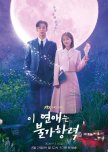
Destined With You; An Interesting Premise, Just Lacking In Charming Writing…
Let’s be honest. Very few Korean dramas are original. Yes, they can explore different concepts and themes, but many are inspired or borrowed from other shows or movies across years, cultures and genres. Of course, there’s nothing wrong with that. Writers and directors are influenced by other works, and Destined With You is no exception.The series was written by Noh Ji Sul and directed by Nam Ki Hoon. It follows Lee Hong Jo ( Jo Bo Ah), a bright underdog civil servant, who works hard despite being overshadowed by others. When Hong Jo comes into possession of a mysterious object, she becomes intertwined with cold and stoic lawyer Jang Shin Yu ( Rowoon). Shin Yu has been cursed to live with an incurable disease, yet, Hong Jo may just hold the cure in more ways than one..
Off the bat, I will give it to Destined With You: it is an interesting premise. The cursed setup had been seen and done before, but the sense of the horror element being so spooky early on was quite well done. Some Korean dramas are fairly mild when it comes to horror or jumpscares( especially over censorship concerns), but Destined With You was surprisingly chilling in its opening episode . ( Moments such as the infamous “ bloodied-hand scene” , felt as though they were taken from shows like OCN’s The Guest and CW’s Angel .)
Yet as much as the horror element thrived, the show struggled with attempting to balance the horror and romance element to work well together. It is not necessarily that horror and romance cannot work well. In fact shows like The Master’s Sun and Arang and the Magistrate were able to use this formula fairly well in execution.
The problem is that while both predecessors were aware of creating and broadening characters and balance , Destined With You really struggles to do the same. As the series progressed the horror element was pretty non-existent and turned more into a cutesy rom-com. As a result, it was really hard to work out what this show was going for in thematic setup and messaging, even early on. The early episodes would suddenly go from menial moments of Hong Jo being stuck in a rom-com moment in front of a cute guy, to law procedurals and bickering, to full out body horror with Sin Yu. The constant flip between cutesy romance moments, courtroom drama and disturbing violence and horror , rubbed against one another in the wrong way because the show was never really settled to balance it out . Simply put, it felt like watching three very different shows at times, without a lot of opportunity to fuse them together.
Another major problem lay with character writing. The acting was decent enough. Rowoon is okay here too. He is certainly a good actor, and the idol has proven it in shows like Extraordinary You and Tomorrow. The problem is that Rowoon is not given an opportunity to really shine. His character is the trope-inducing “ cold male lead”.
Admittedly this is not entirely the fault of Rowoon as it is the writing. The cold male lead trope is a preference in romance dramas. It is not bad per say and can be used well in romances to explore characters’ backgrounds and fears. The problem with Shin Yu is that he is a bit of a paper-thin character. Yes, the audience gets he lacks social etiquette, a few “ sob” moments in his backstory and is stoic, but what else is there to say about him?
He is seemingly self-assured and confident in public , and suffering from his curse in private, but his composure rarely breaks beyond this even early on. We see some loose plot threads into Shin Yu’s mysterious family and their weird connection to shamans, but aside from being a necessary plot device, we are never shown the full effect on Shin Yu and how this has influenced any form of backstory or careful character development. In some later episodes we do see a “ softer” side to the male lead by playing into the romantic element and some angsty plot backstory , but aside from this, it’s hard to really see any pivotal or particularly poignant development, apart from going from being churlish then jealous to lovey-dovey with the female lead. This is the a little disappointing considering the fact that he could have been a really interesting character, especially from his written role and introduction with the female lead.
Hong-Jo is unsurprisingly Shin-Yu’s polar opposite. Jo Bo Ah is a good actress and does have some good moments of the show. However similar to Rowoon, her talents are never really given an opportunity to be explored further as a consequence of the writing.
It seemed like a really good writing point to have Hong Jo as the “ underdog heroine”. In theory, she has so many parallelisms that could have been explored to parallel metaphorically with the male lead’s literal “ cursed” predicament. She is outcasted at work, has an abject love life and often feels lonely. She is by all accounts, a “relatable” underdog heroine.
Before I go into the problems, I will say a few good aspects of Hong Jo as a character. She is fairly headstrong, both getting the job done such as the demolition case, confessing to her crush ( even if she was a little childish ) and remaining resilient against the toxic culture of her workplace. They were good attributes in the female lead, and did show off some of her strengths.
However, the problem is Hong Jo is never really fleshed out to the extent for the audience to truly connect with her. Sure, there were moments of pity for this character when it was needed in the plot, but on a deeper level, it was hard to really feel as strongly as the show wanted us to do so for her. For example, one major driving point early on is that she is very bullied and isolated from her work colleagues. She is not invited out after work for drinks, and spends most of her time alone. Yes, this shows she is alone, but why is it so significant for Hong Jo? We do learn a bit of history of being bullied, but, why is she so determined to be friends with people who have hated her? These may seem nuanced, but the show seemed to have multiple opportunities to really go into character’s backstories or growth early on, yet rarely did so even in later episodes.
Then there’s Yoon Na Yeon ( Yura), an interior designer with a bad history with Lee Hong Jo. There’s definitely a lot of mixed things about Na Yeon as a character.
On one hand, she is fairly complicated in the fact that she she puts on a lot of different sides as well as being a bully , and is more than the meets the eye, especially when Hong Jo renters the picture. On the other hand, while it feels like Yura has been typecast once again, the character feeds into a bit of a tiresome cliche of the cruel second female lead.
This isn’t to say that there can’t be animosity between a bully or victim, or alternatively see the character’s pettiness come to light, but rather than using this as an opportunity for Na Yeon to either be explored further in a more subtle manner,this storyline still seems to perpetuate a lot of archaic stereotypes . ( Particularly the oldest cliche in the book of two women at odds with one another being pitted against one another further for a man .)
Adding to this, there’s also the actual fact Shin Yu, probably one of the most misanthropic and seemingly “ isolated” characters in the drama, is in a dating relationship with Na Yeon. Understandably, relationships are not always straightforward and people can meet in a lot of different circumstances. Shin Yu never seems truly happy with Na Yeon, often trying to break up things with her or sitting in sullenness, while Na Yeon fawns over him and becomes more obsessive when she sees Hong Jo as a threat and love rival. Shin Yu does attempt to put their relationship on hold, but Na Yeon is obsessed and does not back down. The relationship displayed a good aspect of difficulties between dating partners, but, aside from just adding fuel to the fire on plot devices and drama, it did seem a little questionable as to why Shin Yu would even agree to date someone like Na Yeon, ( knowing about her past or not) .
The potential romantic pairing between Hong Jo and Shin Yu is fairly good, even if the screenwriting does not always justify it. One of the major parts that came to play here was the romantic sparks flying between Rowoon and Jo Bo Ah’s onscreen characters. They have surprisingly good chemistry as actors. For the characters, it’s a bit of a mixed bag. There is certainly romantic development ( in typical romance fashion) early on, but it was admittedly a little hard to root for the characters when Shin-Yu was often just plain rude to Hong Jo from gossip he overheard as well as his attitude. To make matters worse, even later on, he never really apologised for his actions. Later episodes improve this a little, but then there’s also the elements of Shin Yu’s obsession and later actions ( though there is a suggested cause), as well as feeding into some overused cliches.
On the pacing side, Destined With You is very slow to begin with. It’s understandable even in the first episode alone, there’s a lot to get through, but the first few episodes were fairly slow with pacing . Later episodes did pick up the pace more briskly, but there were later moments, which struggled to really get off the ground, even by the ending. Speaking of which, the ending was a little anticlimactic. Sure we saw a few loose threads tied, but it felt as though some characters and plot was left greatly unresolved.
The cinematography is definitely one of the show’s major highlights. It’s fairly stylish and sleek, with a glossy element of different palette schemes to reflect the mood and tone of the scenes. There are later episodes which feel a little insipid on the staging side, but scenes with the cursed hand, definitely helped capture the more horror and fearful element, with careful attention to detail.
Destined With You is a very odd show. It has a good cast, an intriguing premise and beautiful cinematography, but in execution, it has some very noticeable inconsistencies. The themes were so imbalanced that it was hard to work out what the show was going for in its general setup. While there’s nothing wrong with using classic tropes with a new spin or using them to address a message, Destined With You took them with a fairly copy and paste manner and nothing more . At times, it often made the show feel like it would have been less out of place in 2013 than 2023.
Writing and pacing is another major issue. There were some potentially brilliant characters in the show ( particularly the main leads) , but rather than fleshing them out to their full potential, they were rarely allowed to change and grow ( a key stage in any character’s development). Overall, Destined With You is an average show which is probably best to watch during a forgettable binge-watching session to pass the time .
Was this review helpful to you?
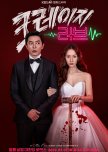
All Aboard the ‘ Crazy’ Train Of ‘ Love’…
There’s a lot to discuss when it comes to KBS2 and Disney +’s trope-induced series ‘ Crazy Love’. It is intrepidly bold, brash and off-the-wall with its setup and premise and will likely appeal and displease viewers of equal measure. ( Especially dependent on expectations.)
The plot initially introduces viewers to Noh Go-jin (Kim Jae-wook); an elitist mathematics tutor, spearheading one of the most prestigious and private education hubs in the country. However despite his prodigal skills, Go-Jin has a foul temper and personality.
He absolutely terrifies his staff with his short fuse , yet he is still able to somehow earn their respect and admiration through his sheer talent in solving and teaching equations and mathematics problems.
Nobody knows this love-hate relationship with Go-Jin better than his unassuming personal assistant, Lee Shin-a (Krystal Jung). Often being the target of his ire, Shina-a’s reasons for not throwing in the towel are sourced from her own desires to become a personal tutor and help teach and educate others.
However, Shin-a finds her life going on a downwards spiral. Her constant migraines seemingly from stress and fatigue are diagnosed as acute symptoms of glioblastoma, a malignant brain tumour brought on by bouts of long-term stress from Go-Jin.
Enraged, Shin-a’s plans for revenge against Go-Jin are soon backfired as she finds herself in a sticky situation with her boss.
‘ Crazy Love’ was the brainchild of screenwriter Kim Bo-gyeom ( ‘Drama Stage Season 2: All About My Rival in Love’). Although the comic relief is variable at times, the series is surprisingly satirical in parts and self-aware of its own over-the-top setup. In particular, this was shown through the screenplay reimbursing old cliches and tropes ( including amnesia, misunderstandings and fake identities).
In addition to this approach, it was noticeable ‘ Crazy Love’ often approach its satire with a darker edge, often shown through sardonic irony or circumstances. ( This was particularly shown in the series through the gradual snowballing case of crimes that were shown throughout the narrative such as impersonation and attempted murder, often landing female lead Lee Shin-a- directly or indirectly- into hot water or complicated situations .)
However despite its satirical take upon old cliches and tropes, ‘ Crazy Love’ was often subject to the faults of its own shortcomings also. ( Sadly this was evident through the cataclysmic approach taken by the writing and direction of plot within early episodes. )
Before exposing the issue of these problems in the narrative, it is important to acknowledge that the main cast of ‘ Crazy Love’ delivered fairly solid performances as the main leads. Actor Kim Jae-Wook( ‘ Coffee Prince’, ‘ The Guest’ and ‘ Her Private Life’) has often been associated with taking on unconventional or unusual roles throughout his career, and his performance as Noh Go-Jin n certainly was no different. Admittedly, Jae-Wook’s performance could sometimes come across as somewhat overblown at times but this was not necessarily the fault of the actor per say.
As a character, Noh Go-Jin was purposefully presented as “unlikeable and grating” during his introduction. It was evident from his initial portrayal by Bo-gyeom that his ultimate drive as a character would be for viewers to see the undertaking of his “ redemption arc”; a process which can be overly convoluted dependent on the approaches taken by screenwriters.
Go-Jin’s character development was admittedly a mixed-bag to say the least. It was refreshing to see that the male lead was not given an excuse to become overly redeemed by his faults and flaws per say . ( In fact even into later episodes and during particular events of the series , it was shown that some of Go-Jin’s initial personality traits are still displayed.)
On the other hand, it still remains a divisive issue towards the approach taken for Go-Jin’s character arc and development. (This is mainly due to the fact that while there are elements of the main lead developing and becoming aware of his past mistakes, his main source of development and growth comes through his potential feelings and romance with main female lead Lee Shin-a. )
This is certainly not an unusual approach per say in dramas and the “ enemy to lovers” trope has remained a classic staple in storylines over the years. On the other hand, it can often remain a controversial and complex issue to approach a potentially romantic relationship, especially if the individuals in question have displayed abusive or threatening personality traits towards their significant other.
Of course, ‘ Crazy Love’ does attempt to subvert the issues of this setup through Go-Jin’s “softer side” coming to light as well as intensifying the potential romantic chemistry between the leads. However it is fair to say that while Jae-Wook and Krystal’s onscreen chemistry was fairly decent, it certainly raised a lot more issues and questions with regards to Jae-Wook rarely being held accountable for his actions or coming to terms at times with his own mistakes. ( In addition to this, the final part of ‘ Crazy Love’ showed Jae-Wook’s decisions and choices feeling fairly out of character at times without a lot of explanation aside from “ becoming a better person because of Lee Shin-a”.)
This isn’t to say that heroine and main female lead Lee- Shin-a didn’t suffer from writing issues either. Although the actress has respectfully received mixed-reception for her onscreen roles, Krystal’s (‘ My Lovely Girl’, ‘ The Heirs’ and ‘ Prison Playbook’) performance as the main female lead is certainly decent enough.
Lee Shin-a is purposefully presented to viewers as the “ likeable heroine”. Indeed despite some later writing issues, for the most part, Gyeom’s intentions were successful. ( Especially with consideration to her trials and tests over the course of the series with snowballing situations and Go-Jin.) On the other hand, this is naturally where we hit a rut with Shin-a as a written character; her personality and character-arc were often flatlined in order to make way for her romance with Jae-Wook.
Perhaps it is arguable that screenwriter Bo-gyeom wanted to explore Shin-a’s natural passion and empathy through her potential chemistry with the main male lead . However even in the series filled to the brim with sheer absurdity and comic relief , it still seemed an ineffably odd writing decision to allow Shin-a, a fairly level-headed individual despite her conflicted situation, to break into her boss’ home with dark eyeshadow and hand in her resignation aside from attempting to generate a few laughs.
In addition to this, it seemed even stranger that screenwriter dd that Bo-gyeom did not attempt to at least highlight a moment of vulnerability for Shin-a during her initial news in the first episode, or at least help to portray her own internal conflict between attempting to act on reason and emotion beforehand. ( As mentioned previously, specifically with consideration to her character.) Instead although the series sometimes discussed her family relations, the issues surrounding her cancer and personal conflict with her illness and work life, were nearly entirely brushed aside in order to make way for her romance with the main lead.
Again, this isn’t always necessarily a bad writing decision per say in dramas and it did arguably allow some opportunities for Shin-a to come to terms with her own situation as well as personal stigmas. On the other hand despite the drama’s attempts to “cushion ” the relationship between the main leads( especially with regards to their initially problematic setup ) , is still offered a less than resolute reason at times for Shin-a to become attracted to Go-Jin. ( Especially with regards to early episodes having placed heavy emphasis on the characters being complete opposites that completely despise one another with a burning passion. )
Of course, while it isn’t an unusual approach to see “ opposites attract” in dramas, ‘ Crazy Love’ rarely allowed this development to feel completely symbiotic or enthralling, instead often glossing over some more problematic issues of the series ( such as abuse, lies and crimes) without allowing either character truly being held equally accountable for their actions .
Then of course there’s the discussion surrounding the side characters. Actor Ha Jun ( ‘ Black Dog: Being A Teacher’) took on the role as supporting character Oh Se Gi, Go Jin's copartner & friend, as well as one of the few staff members shown in the series to be initially kind to female lead Shin-a. Se Gi had a lot of potential to be an intriguing character with regards to his character- growth but due to the result of attempting to enforce several predictable “ plot twists”, it often left his character arc feeling poorly developed by the latter-half .
In addition to Se Gi, there is also Go-Jin’s first love Baek Soo-young ( Yoo In- Young- ‘ A Man Called God’, ‘ Oh My Venus’ and ‘ Good Casting’) as well as other supporting characters such as Shin-a’s best friend Chu Ok-hee ( Park Han Sol- ‘ A Poem a Day’, ‘ Sell Your Haunted House’ and ‘ Hospital Playlist 2’), the main female lead’s brother Lee Su-ho ( Astro’s Yoon San-ha-‘ To Be Continued’) and the nosy cleaning lady ( Lee Mi-young- ‘ Time Between Dog and Wolf’, ‘ Mr.Back’ and ‘ Our Gap Soon’); all of whom played their necessary roles in the storyline and helping to pad out the narrative, but rarely being given further development as a consequence.
Naturally this brings up the issue of pacing and execution in the series. The first-half of ‘ Crazy Love’ was grating at times due to its overabundance of running gags and tropes and incoherent plot logic . ( As exemplified with the police during the initial few episodes.) Arguably the final-part of ‘ Crazy Love’ did give opportunities to finally get the ball rolling with the main plot but due to poor pacing issues, it often left to certain counterplots and character-arcs feeling somewhat neglected by the finale.
Director Kim Jung Hyun ( ‘ Sassy Go Go’, ‘ After the Rain’ and ‘ My Fellow Citizens!’) certainly took a fairly avant-garde approach during initial scenes of the series. ( Often leading to dream-like and surrealist sequences and moments such as when viewers were transported into the imagination of Shin-a, with the tutors of her workplace being imagined as towering and deity-like figures) . Although later episodes of the series were not as ambitious and could sometimes feel stark in parts, the cinematography was still fairly glossy and professional .
The OST of ‘ Crazy Love’ was mainly composed of upbeat and fast-paced pop tracks . While admittedly some of these songs blended into one another and were certainly dependent on personal tastes , there were still a couple of compositions such as “ Bite!” ( “ 물어 !”) by Baekho, “ Wide Open” by JUNIEL and “Maybe” by DAVII which did surprisingly stand out.
‘ Crazy Love’ is a series which can offer viewers with an off-the-wall setup and a star-studded cast. However despite the potential for ‘ Crazy Love’ to carry forwards a well-executed storyline and narrative, the series was often shaken in parts by inconsistent pacing issues, character-writing and execution. Overall ‘ Crazy Love’ will likely vary for viewers dependent on expectations. For those looking for a quick and disengaging binge-watch then ‘ Crazy Love’ is certainly worth watching. On the other hand for those looking to invest time within a well-executed series throughout, then ‘ Crazy Love’ may not appeal to all.
Was this review helpful to you?
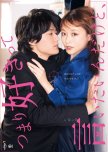
A Decadent Rom-Com…
Reminiscent of the bygone era of early 2000s Shoujo ( aimed traditionally at young girls) and Josei ( typically targeted at an audience demographic of older teens and young women) manga setups as well as being based upon the eponymous manga , ‘Tsumari Suki tte iitai n Dakedo’ ( alternatively known as ‘ つまり好きって言いたいんだけど’, or ‘ I Mean, I Want To Say I Like It’ ) tells the seemingly “ unusual” love story between Saejima Chitose ( Ohara Sakurako) and Fujishiro Sena ( Sakurai Kaito). A former teacher-turned manager at a small entertainment company, Chitose’s new position turns into a hellish experience when she’s assigned to be manager to Fujishiro Sena; a haughty playboy actor who also happens to be her childhood bully.However with a streak of reimbursed and outdated cliches and tropes being inserted into a seemingly decent love story, this does leave Japanese-drama enthusiasts with one burning question ; “ Is ‘Tsumari Suki tte iitai n Dakedo’ ‘s drama-adaptation poorly executed for a modern audience or is it actually worth watching?”
Perhaps one of the greatest things to clear up about ‘ Tsumari Suki tte iitai n Dakedo’ is that it isn’t an inherently over-stimulating drama for your brain . Of course this isn’t to drag down the series entirely based upon this setup alone. “ Fluff” dramas can act as an ideal form of escapism for viewers always from the bogged-down details of reality and fill viewers’ with an uplifting aftertaste. However it should be noted that whilst ‘ Tsumari Suki tte iitai n Dakedo’ often crossed over into more melodramatic plot moments, the drama often reached a cataclysmic standstill upon actually trying to execute these storyline scenes onscreen- generic cliches and setups propping up plot where character-driven moments should’ve been became more prominent even after the first episode , and characters who were initially introduced with strong plot motivation and drive soon felt shoehorned into scenarios which made little coherent sense in regards to their character archetypes overall.
The epitome of this poorly-executed screenwriting was particularly present within main female lead Saejima Chitose. By default Chitose had arguably all the potentially good traits of a well-written character; headstrong with her values (due to the incident in her past with the main lead ), possessing a heart of gold and presenting idiosyncratic mannerisms and qualities which immediately attract people towards her. Yet rather than seeing opportunities for Chitose to become a definitive presence in the series and power through her own personal struggles , the female lead’s greatest downfall was that she rarely had definitive character drive.( Not least of all her initial causes for her jobs, her experiences in relationships- romantic and platonic- in later life and whether her experiences from her early childhood had a traumatic or knock-on effect with these relationships were never explored.) ‘ Tsumari Suki tte iitai n Dakedo’ often seemed to portray Chitose somewhere between the scapegoat for getting into misunderstandings upon “ her behalf” as well as a carte blanche female lead; happily “ forgiving ” her childhood tormentor Fujishiro Sena ( without a coherent reason aside from enforcing their questionable romantic relationship ). However in between staidly keeping her mouth shut or blowing up in order to keep the plot “ tense”, Chitose’s experiences were often downgraded towards merely being a “ Mc Guffin”; a wasted opportunity to explore her ambivalent feelings and sentience in-depth as her character’s persona was reduced to the equivalent of a doormat for other characters to walk upon and maltreat.
Many overt golden opportunities for character growth and relationships were often tossed aside in ‘ Tsumari Suki tte iitai n Dakedo’ and none so was this more for the onscreen role and presence of main male lead Fujishiro Sena.
As the childhood “tormentor” of Chitose and now an aspiring actor with an aloof and haughty attitude, Sena was evidently never supposed to be viewed by audiences initially as a “ likeable” main lead. Yet where dramatic irony became prominent was that when it attempted to “ redeem” its “ unlikeable” characters for viewers, ‘ Tsumari Suki tte iitai n Dakedo’ generated more indecisive feelings amongst its audience demographic. Fujishiro Sena was always supposed to play the role of Chitose’s foil throughout the series; whilst Chitose is sweet and slightly naive , Fujishiro is slightly jaded and arrogant. Yet when the open opportunity arose to present Fujishiro in more “ heroic” light the series attempted to go down the route of Fujishiro Sena seemingly been “ pitied” and “misunderstood” by others. ( Without truly delving into any true raison d’êtres for Fujishiro wanting to become an actor or hints into how others perceived him through his past relationships - aside from some of his lovers.) Naturally whilst this did present some differing ideologies between our main characters ( which were never explored also), the drama seemed unaware of its initial presentation of Fujishiro Sena often as a manipulative and downgrading bully even in Chitose’s adult-life - instead attempting to write off these moments as merely “ comical” rather than allowing these to remain an open topic of discussion and truly allow Fujishiro Sena to redeem himself not through the lens of ineffective “ pity”, but maturity and reconciliation .
Consequently the onscreen “ romantic” relationship between Chitose and Fujishiro Sena remained openly crushed under the weight of shoehorning both main leads into an enforced setup where neither lead could truly free themselves from the heavy burden of their shared past, as well as maturely and openly talk about their problems. ( Aside from then permitting an ensue of “ romantic cliches”, misunderstandings and “ plot tension” through heated arguments- leading to an leading to an awkwardly uncomfortable romantic onscreen relationship which presented neither comfort and joy for viewers, or well-written chemistry between our leads.
)Additionally there’s also the side characters of the series; generically fading into the background after their initial introduction in most episodes, and only truly remaining present during a moment of “ tension” or “ plot drive” in order to attempt to keep the plot engaging with audiences.
Another issue which had admittedly divided audiences surrounds the chosen-cast; some may love main leads
Sakurako and Sakurai Koto‘s nearly-farcical onscreen roles and perceive this as irony , whilst some may be turned-off by poor dialogue exchanges and over-the-top acting leading to some choppy scenes for viewers to attempt to get through. Then there’s the cinematography and chosen OST of the series . Rather than using interwoven mise en-scènes in order to explore the emotions and world-building of ‘ Tsumari Suki tte iitai n Dakedo’, the drama was staidly placed on a pedal stool of insipid and forgettable songs alongside long-shot and singular camera shots which did little to truly promote viewers’ intrigue.
So what’s left to say about ‘ Tsumari Suki tte iitai n Dakedo’ and is it actually worth watching ? ‘ Tsumari Suki tte iitai n Dakedo’ was undeniably lighthearted. Whilst it attempted to offer an ultimatum of “ fluff” and melodrama throughout the story, it often found itself struggle to to subvert itself from unoriginal writing tropes and pitfalls and consequently characters often felt misplaced against scenarios and scenes . The ending was enough to bring events to a close but lacking in surprise by the delivered result.Overall ‘ Tsumari Suki tte iitai n Dakedo’ was not an inherently terrible with a sweet premise and concept which is easy enough to binge-watch . However the drama rarely facilitated golden opportunities to escaping its initial status quo reputation by lacklustre writing decisions and directing techniques leaving the drama with forgettable moments and many loose ends.
Was this review helpful to you?

True Beauty; “ A Love And Hate Relationship”
Let’s be honest. The original webtoon of “ True Beauty” has always had either a “ love and hate” relationship even amongst fans; the main heroine has little character growth, her relationships and decisions are questionable ,and the storyline hits a major snag after the halfway point as well.Respectfully we should always try to take a step-back when watched a drama adapted from an original webtoon, novel or a reboot as a standalone production; writers often make very different decisions ( whether for better or worse) than the original creator with either storyline, themes or characters, and it is certain to say that writer Lee Shi Eun , did make some necessary and unnecessary changes in TVN’s latest eponymous drama adaption of the webtoon.
The biggest change to note is the predominant setting of the drama on our female lead Lim Ju Kyung ( Moon Ga Young) in high school for a major proportion of the series. Whilst naturally this did see the series brush over some notably darker issues of bullying, abuse and academic pressure, this also gave writer Shi Eun more playing ground with the joys and delights of intrinsic “ teen angst” and overused teen drama cliches. From the evident love interests of Suho ( Cha Eun Woo) and Han Seo Jun ( Hwang In Yeop) for our female lead, to other issues of bullying and love rivals on top, Shi Eun pulls at all the stops to make True Beauty, an overly cliche and “ sugarsweet” romance drama with more and more ridiculous tropes and scenarios as the episodes progress.
Nonetheless it is wrong to write off that the show didn’t do anything well either, in particular towards our actors.
Whilst Ga Young did have a couple of questionable acting moments, for a major proportion of the series, she perfectly captured the awkwardness, humour and more angst-ridden moments of our female lead. Similarly whilst Eun Woo is certainly a fairly veteran actor within romances , some of his past “ leading man” performances have come off as a little “ wooden” and lacklustre . It wouldn’t be lying to say that his role as Suho doesn’t not stand out as much as some of his previous works , however, it is prominent that Eun Woo did add a level of genuine heart and comedy to his role as Suho as well. Notably rising star Hwang In Yeop ‘s performance as Seo Jun has caught a lot of attention by viewers and fans with a surprising level of awkwardness, emotion and angst behind Seo Jun as a fleshed-out character, something which certainly must be given praise for as well.
This of course does move on to the show’s tackling of characterisation throughout the series, with some notably mixed results by the ending . The biggest elephant in the room must be addressed through the character of Kang Soo Jin ( Park Yoo Na). Similar to her original webtoon character, Soo Jin is sighted as a “ natural beauty” who lives in an abusive household and has a complicated relationship with Su Ho, however, the most notable change from the webtoon occurs within her 180- degree personality change in the beginning from a conniving social media influencer in the webtoon , to a studious and angelic friend for Ji Kyung during the drama. Honestly, Soo Jun’s character introduction had a lot of potential in comparison to her webtoon counterpart , with a seemingly strong of morality and strength by notably helping Ji Kyung out from an awkward situation during their journey to school on the bus before even getting to know her.
As most romantic cliches have proven, however, female animosity is the adored cliche of screenwriters, and it soon provides a downwards slope for Soo Jin as both a character and an individual as well. It is important to advocate that it is not necessarily Soo Jin’s feelings towards Soo Ho which make her suddenly a “ terrible person” over the course of the series, but rather how screenwriter Shi Eun unevenly mismatched Soo Jin’s later actions and decisions ( especially towards Ji-Kyung) near the finale.Whilst Shi Eun attempted to amend this in the final episodes, the damage had already been done quite irrevocably, possibly making Kang Soo Jin, the epitome of writing a terrible second female lead.
On a more positive note, however, the most prominent praise for characterisation must be given to Ju Kyung’s development as our heroine ( especially in comparison to the webtoon). Although it was a little painful that Ju Kyung did not talk out about her more dire decision in episode 1 to her family and still retained oblivious naivety at times ( stereotypically to Soo Jin’s feelings) , she did gradually begin to learn to grow more self-confidence and respect for herself as an individual ; something which is an important stage for any healthy relationship.
Equally Suho upon first glance, was intrinsically cliche and effectively a “ Mary- sue” of the drama and webtoon world ; overly” good-looking” , stylish and intelligent, however, alongside Seo Jun, Suho had some notable character growth as a character passed off as “impassive and aloof”, to being a notably non-judgemental individual towards physical appearances, but rather assessing someone based upon their individual personalities and actions . ( Perhaps the one aspect which would have intrinsically explained this more to
watchers, would have been to have the included the key aspect of Suho’s background as a ‘ half Japanese-Korean’ , resulting in him often being bullied from a young age and determining physical appearance as meaningless ; something clearly left out of the show in order to avoid controversy by Shi Eun.) From opening up about some aspects of his difficult past and childhood, his buddying friendship to blossoming feelings for Ju Kyung as well as refreshingly partially- reconciling with Seo Jun, did allow Suho to have some decent characterisation(despite the array of cliches that the show threw in our way) .
So, this leaves us on the big question; is it actually worth watching? True Beauty will always have a love-hate relationship with drama and webtoon fans - the storyline is sugary sweet ( with little sense of realism or grittiness despite the “ angst” apparent in the storyline), the tropes overtake actual story investment and some of the characters are fairly abandoned by the ending of the drama. Nevertheless there are some good things to note about the show; the OST is fairly catchy, the cast help to flesh- out all of our characters and the majority of our main protagonists have some deeper character development over the course of the series. Therefore it is fair to say that it really depends what you are seeking from this show; a cute, fluffy and unoriginal teen drama which you can binge watch? Then, definitely. Something to actually invest time into an original portrayal of the difficulties of romantic relationships as students? Then, probably not as there are certainly better dramas out there to consider.
Was this review helpful to you?
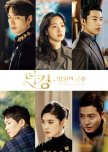
An “Eternally “ Forgettable Show
Kim Eun Sook has been an incredibly popular screenwriter over the years due to her past involvement in works such as ‘ Lovers In Paris’, ‘ Descendants Of The Sun’, ‘ The Heirs’, ‘ Goblin’ and ‘ Mr Sunshine’. Whilst admittedly the quality of her works have remained divisive amongst drama watchers and critics alike, it is almost guaranteed that Eun Sook’s dramas will generate a certain buzz and present a wide range of acting talents. Therefore when news was released that ‘ Eun Sook’s latest project would be bringing on a star-studded cast alongside an intriguing premise, it certainly seemed to suggest that ‘ Eternal Monarch’ would be a worthwhile watch. However, reality can often be disappointing and not even Lee Min Ho and Kim Go Eun could prevent the drama from descending into a cataclysmic spiral of mediocrity.
Undeniably, Eun Sook’s premise for the show had good potential upon paper. Parallel worlds, histories and doppelgängers can’t be claimed to be entirely brand new concepts within Korean dramas( note shows such as Duel , King of Two Hearts and W; Two Worlds for references ), however, the potential for a show in which one of Korea’s darker moments of history ( for those who don’t know , the 1910 Japan- Korea Annexation Treaty which played a part in ending the Korean monarchy , and the tragic Korean War of 1950-1953, which caused the divide of North and South Korea ) having never existed in one world with a still present Korean monarchy , did seem to suggest that King; Eternal Monarch could’ve been a generally enlightening and profound drama.
Sadly, Eun Sook wasn’t seeking to stimulate our brains with philosophical thoughts, centralising her efforts upon lacking “ cute” couple moments instead. It’s fair to say that Lee Min Ho and Kim Go Eun’s names as our leads within the show, offer a certain appeal for fans through memories of other stellar performances by the actors ( particularly Boys Over Flowers and Goblin) , however, Min Ho’s portrayal as Kim Gon sadly, was easily forgettable through his generic deliverance of lines and development as a character throughout the drama. Similarly, his costar Go Eun’s performance as detective Tae Eul/ her criminal counterpart , Luna, certainly wasn’t portrayed in an unbearable performance, however, her deliverance of lines preceding her reputation as a top -notch actress, was a mediocre performance to say the least ( equally parallel to her costar Eun Chae’s wobbly deliverance of lines in the drama )
. As for their characters, cynical cop and a smart King from a parallel world, isn’t something you see everyday, yet, for a show which centralises upon romance, there was nothing notably impressive within the build up of the two characters and their relationship. There were no moments of genuinely moving emotional trials , development , paced storyline or more importantly why either lead even decided to fall for one another at all. On a partial side note, the one joy which Eternal Monarch did bring for viewers was Woo Do Hwan’s comical portrayal as an easygoing intern at Tae Eul’s station and his counterpart , the cynical and confident bodyguard of Gon in his world.
On the other hand, whilst Do Hwan was possibly one of the few decent actors in the show, Eun Sook could have done a lot more with the storyline overall. If the show had focused less upon advertising the latest designer outfit on Min Ho as he swishes along the streets of Seoul in Tae Eul’s world , or a new chicken restaurant during a moment which could’ve been prevalent to the pacing of the storyline, then perhaps Eternal Monarch would’ve also offered us a greater explanation to exactly the unexplainable central reason behind the parallel universes , the intentions to exactly how two people can exist at the same time worlds apart in different dimensions or time zones ( note the whole unexplained reasons behind the boy with the yo-yo , the footage from the future and of course changing the timeline with Gon’s alternate self), and a well-written antagonist who didn’t fall short upon being simply a nefarious moustache twirling villain as well.
Was this review helpful to you?
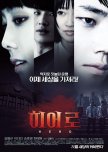
Will This Movie Serve As Your ‘ Hero’?
Kim Hong Ik attempted to ride off the coattails of the crazed vampire genre phenomenon during the early 2010s with ‘ Hero’; an intriguing but sporadic and low-budget vampire flick which will likely intrigue and unintentionally amuse viewers of equal measure.
The plot revolved mainly around underdog high school student Shim-dan (Kim Hyung-Gyu). Together with his best friend Eun-seok (Han Jeong-woo) , the duo are often tormented by relentless bully Cheol-seung (Kwak Min-ho). Nevertheless Shim- Dan has found salvation from his daily torture by trying to avoid Cheol-Seong wherever possible. Instead the main lead spends time watching his secret crush Mi-ah (Lee Da-in) ; too scared to approach her directly and often watching her from afar out of intrigue .
However Shim-Dan’s ordinary school life soon takes a different turn. One evening he ends up attempting to rescue a drunk girl Yoo-ri (Han Ye-won) from being assaulted only to discover she is a vampire. Rather than killing him Yoo-Ri decided to spare his life by turning him into a vampire also. Desperately trying to hide his newfound physical changes and abilities from his classmates , Shim-Dan’s secret becomes harder to keep after the transfer of Yoo-ri as a teacher at the school.
The acting in the series could admittedly be a mixed-bag. The main cast undeniably had natural onscreen chemistry together. However line deliverances could admittedly differ between scenes also.
Kim Hong Ik’s ‘ Hero’ is a vampire movie evidently aimed at a younger audience. Graphic violence and blood is rarely exposed in the series and thematic themes surrounding everyday high school life certainly indicated towards the audience’s aimed age demographic. Nevertheless it is important to establish that ‘Hero’ was surprisingly not based upon lighthearted and soapy teen-angst either. The greatest drive of the movie was arguably served through the comedy; alternating at times between professional satire and amateurish jokes. However sadly the alternation between professionalism and amateurism could often be seen in the screenwriting also.
One of the greatest problems which arose in Kim Hong Ik’s movie could often be found through struggling to establish a concise plot goal from the outset. Perhaps if the movie had tempted to place an obtrusive focus on simply Shim- Dan’s new life as a vampire and his gradual romantic relationship with Mi-ah, ‘ Hero’ could’ve felt as though it had a direct and clear plot beginning, climactic build and resolution throughout the movie. However sadly this was not the case with the outcome for ‘ Hero’ ‘s depicted plot line.
Intriguing relationship builds initially introduced such as between Yoo-ri and Shim-Dan were often abandoned by the halfway point whilst potentially quintessential characters were often left hung up by abandoned subplots before the halfway point. As a consequence entire sequences and seemingly built up scenes were often awkwardly cut through or flitted to another scenario in an attempt to draw viewers’ attention to another storyline; often feeling like a diversion tactic to reduce focus upon loose plot ends.
By the ending of the movie it was evident that even the screenwriters were aware that the plot had been exhausted due to lacking foundations setup from the start towards plot drive. The “solution” was given by the screenwriter by the finale of the film: enter the generic vampire final boss. Whilst arguably this scenario was a desperate attempt to clutch at wrapping some loose plot ties up, the ending felt sporadic and rashly thrown together to raise tension. However rather than acting upon coherent logic, it was odd that somehow all of the quintessential characters of the film were put under one roof without h rhyme or reason towards truly coming together.
A consistent problem which became apparent in these final conflict scenes became apparent through poor fighting sequences; looking neither consistent or slick onscreen.
Of course it is wrong to entirely condemn ‘ Hero’ also. One of the greatest writing dynamics of the film came through the friendship between Shim-Dan and Eun-Seok. As the movie progressed and events shifted it became apparent towards the natural causes of division which would occur between the two friends.
In addition to this there’s also the relationship between Mi-ah and Shim-Dan. The chemistry between both of the main leads was dynamic and gradual. It could’ve admittedly have been built up more but it did add a touch of surprising authenticity towards a main lead who struggled with his bloodlust towards his crush. Even Mi-ah had her moments of added complexity at times in the movie with her home life revealing that she struggled with her own problems also.
Several plot holes aside there is the OST also. The chosen soundtrack isn’t inherently dire per say but considering the mood and tone set during scenes it could often feel mismatched against storyline and taking away the deliverance of emotion, when silence could’ve delivered a greater result at times also. In addition to this there’s the amalgamation of the quality of filming in the series; low-budget but sometimes cinematic and at other parts in the film, arbitrary and rushed scenes added before the final-cut gave an amateurish feel towards the delivered result.
Overall ‘ Hero’ proved to be an intriguing premise with a decent cast and ensemble of characters. Nevertheless whilst the film delivered a compact conclusion, the added touch of lacking to wrap up loose plot ends didn’t deliver a truly emotional finale to the film. Amateurish screenwriting combined with filmmaking created a haphazard film filled with unexplored potential; entertaining in a way but never truly possessing concise build or plot either.
Was this review helpful to you?
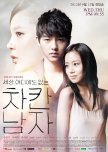
Let’s See How Many More Cliches We Can Cram In There..
Nice Guy (or “Innocent Man “depending on the translation ) is a revenge tale revolving around an innocent young man called Kang Ma-Roo ( Song Joong Ki) . After an unforgivable incident with his unrequited love interest Han Jae Hee ( Park Si Young), Kang Ma Roo’s life descends into bitterness and cynicism asa Casanova to pay for his sister-figure, Choco (Lee Yu Bi) ‘s medical bills and for a roof over their heads . A fated meeting with Jae Hee once again , leads him into hatching a revenge scheme by seducing Jae Hee’s cold-hearted stepdaughter and chaebol heiress ,Seo Eun Gi ( Moon Chae Won), however, revenge and love soon become intertwined as Ma-Roo finds himself falling deeper into an emotional whirlpool of the past and the present. Before I begin to analyse the reason behind my rating, I’ll start off by saying that this show could be surprisingly profound in parts . The drama exposed deeper levels of the characters’ consciences rather than a mere “ she’s the antagonist, so she is evil” and “ he’s the hero, so he’s always going to do the right thing”. In that respect, Kang Ma Roo is easily one of the most complex characters within the series; neither truly “ pure” and a knight in shining armour, nor beyond repair and a moustache twirling villain. Instead, he is simply human and is only trying to survive and receive justice for the wrongdoings of Han Jae Hee even if he has to harm others in the process. Similarly, it’s easy to write off Jae Hee as a “ femme fatale antagonist “ who is out to get Ma Roo , however, she does provide a similar reason behind her actions; survival. It doesn’t make her excuses forgivable, however, more profound moments in the series do reveal that Jae Hee has a family to look after, a status to maintain and feelings for Ma Roo which begin to bubble at the surface and drive her motivation out of revenge and jealousy. In a similar manner, Eun Gi is a spoilt and callous girl with few redeeming features, apart from a greater exposure beneath her facades towards having a good heart and her dedication to Ma Roo. Whilst the characterisation within the show is undeniably well-written, it’s hard to say the same about the general plot and the mixed bag of acting within the show as well. The early episodes within the show were simply nothing more than slow within the general pacing of the series. Whilst these episodes do set out the groundwork for the reason behind Ma Roo’s revenge and how he comes to meet Jae Hee again and Eun Gi, there’s little direction or premise towards exactly how the series will go. Once the pace does pick up after a couple of episodes into the drawn main premise of Eun Gi being in a manipulative relationship with Ma Roo, the scriptwriters go wild with cramming in as many cliches as they can into the storyline at once, rather than simply either only choosing a couple sensical cliches and developing the show with original takes, or not including them at all. Instead, we are left with the notable cliches which have been laughably performed in every known Korean drama before and afterwards, from suffering Male lead, rich female lead, Male lead will do anything to survive, illness, amnesia, heirs and fiancés just for good measure. Whilst the cliches in themselves can be done incredibly well, the show simply overdramatised many of these cliches into beyond ridiculous plot ventures later into the series especially regarding the clearly manipulative relationship which the writers try to pick up again through romanticism. Whilst this did expose a more emotionally vulnerable sides to Ma Roo and Eun Gi, it left out many inclusive details towards Ma Roo’s reasons for approaching Eun Gi in the first place. The ending of the show is more than a quick fix solution, than a cathartic completion for our protagonists and felt a slight let down in regards to the great potential which the scriptwriters could have played with after the final climax of the series. In terms of acting, the cast had certain moments of brilliance and laughable deliverance of lines as well. Song Joong Ki portrayed his role not so much through some of his mediocre deliverance of lines and angst brooding, but, through his usage of facial expressions in particular to express to the audience the emotional state of Kang Ma Roo was well -performed . In comparison to Chae Won, Si Young’s performance as Jae Hee , wasn’t enough for a standing ovation from her portrayal easily fading into the background, however, she did play the role with a level of some emotional complexity as a woman torn between survival and love in some of the more profound and touching rare moments especially between her son and surprisingly Eun Gi . Undeniably, Chae Won was one of the strongest actors within the show. Whilst like Joong Ki she had her wobbly moments, it was fair to say that her portrayal was played with a level of more than emotional complexity and humanity and quickly had audiences rooting for her by her expression of emotions.
Was this review helpful to you?
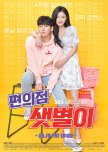
A “ Backstreet” Away From Ji Chang Wook’s Successful Roles?
In all honesty Backstreet Rookie isn’t an entirely unbearable drama to watch; the story concept ( although based on a webtoon) isn’t anything new from the “ oblivious and good looking” Male lead ( Ji Chang Wook) to the girl with a secret crush ( Kim Yoo Jung) and of course all the overused tropes seen and done before ( idols, bullying and impoverishment to name just several) , however, one of the saving performances of the show was surprisingly offered not through Chang Wook’s performance, but Yoo Jung’s fairly good acting as Jung Saet- Byul. Of course this isn’t to say that Chang Wook is entirely bad here at all. However considering his renowned rep as an actor, it is fair to say that ‘ Backstreet Rookie’ is one of weaker roles to date.On the other hand, there’s no beating around the bush that Backstreet Rookie’s sense of plot development, characterisation, and “ comical” moments were just poorly- written. In between the cheap budget special effects,
the drama has received mixed controversy for its outdated jokes and comedy moments. Whilst some may not mind this others may easily take offence. This naturally moves us onto the second problem of the drama; the actual story progression behind the “ chemistry” behind main characters of Jung Saet Byul and Choi Dae Hyun. There’s no denying that by sourcing its material from the eponymous webtoon, the drama had pretty much already sealed its fate to be inundated with classic romantic trope cliches(especially between the “ younger” female lead and the “ older” Male lead).
In all honesty, this isn’t actually main concern over this “ age difference” behind the pairing. Instead, it is more how the drama actually presented the two characters; Saet Byul’s “ feelings” for Dae Hyun through physically clinging on to him could verge at times upon harassment ( especially considering that he respectfully had a girlfriend) whilst Dae Hyun’s ignorance for the majority of the drama was fairly unbearable to watch. The cliche of “ obliviousness” is of course a classic trope in most Korean dramas, however, whilst most shows actually present the respected lead being able to soon recognise or misunderstand their own feelings, Dae Hyun’s ignorance became fairly insulting for both his girlfriend and respectfully Saet- Byul.
This isn’t to say that he should’ve given Saet- Byul , a declaration of his love and run into the sunset with her in episode one, however, it did become apparent how these misunderstandings occurred for Dae Hyun’s girlfriend and what may have caused Saet- Byul to act the way she did if Dae Hyun was sending off wrong “ signals”. This naturally led a lot of the actual relevant plot being directed by numerous cliches and the sometimes unbearable toxic behaviour of Dae Hyun’s parents at times in the show ( particularly towards still using physical corporal punishment against Dae Hyun even if it was supposedly “ playful” and his mother’s rude comments towards Saet-Byul also).
Respectfully from an acting perspective , the show is a bit of an odd and mixed bag; Yoo Jung is probably one of the few decent actors in the drama, closely followed probably by Ji Chang Wook and then his fellow costars who could have some lacklustre line deliverances at moments ( particularly Kim Sun Young and Eum Moon Suk). In regards to Ji Chang Wook, it’s fair to say that although Chang Wook wasn’t terrible within his performance and certainly added a level of less glamour in his role as a 30 year old man still living at home, his performance in Backstreet Rookie certainly hasn’t been one of his best and most challenging performances ( in comparison to Healer, K2 or even Suspicious Partner ) either.
Backstreet Rookie’s scriptwriting by Son Geun Joo, channels the bygone era of ‘90s and ‘00s Korean movies and dramas where comedy scenes and setups were often seen as the norm . Sadly Geun Joo seems to lack awareness towards changing attitudes in South-Korea in a show which feels neither nostalgic of old dramas, or retro but old-fashioned, clumpy and questionable in parts. The comedy will evidently differ amongst viewers but nevertheless whilst the romance has a slightly cutesy air to it, ‘ Backstreet Rookie’ is the epitome of “ I’m going to watch during a binge watching season because I’m bored” rather than a long-time commitment.
Was this review helpful to you?
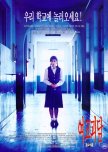
‘Whispering Corridors’? More Like Talking Corridors…
In retrospect ‘ Whispering Corridors’ is an oddly anomaly of a film. Released the same year as its more critically-successful and spine-tingling Japanese counterpart ‘Ringu’( 1998) , Screenwriter and director Park Ki-Hyung had been pushing the idea of the movie for numerous years beforehand in order to compete with the rising success of Japanese horror “Yurei “ ( ghost) movies in the Asian-film industry. However ironically whilst ‘ Whispering Corridors’ was a domestic box-office hit the film was neither truly a “terrifying” or well-executed due to a consequence of its patchwork and baffling narrative.
The premise of the film revolves around a teacher at an all-girls school who after stumbling upon the bizarre death of a pupil at the school several years ago is mysteriously found dead the next morning in a seeming act of suicide. Gossip soon begins to spread around the school towards the building being haunted by a vengeful spirit which new intern Eun-young (Lee Mi-yeon) who is, in fact, an ex-pupil and friend of Jin-ju, takes it upon herself to investigate, and comes up not only against a murderous spirit, but more importantly against the corrupt practices of the school authorities.
The acting front of the film is admittedly satisfactory to say the least- its not bad per say and certainly decent enough to watch through scenes, but poorly-paced dialogue deliverances and delayed expression reaction rarely added vivid realism to these moments either.
The horror elements of ‘ Whispering Corridors’ often felt as though there were reluctantly added by Park Ki-Hyung. Of course they exist in theory throughout the film from the presence of the ghost and the urban legends but rarely did they lack two quintessential elements for a horror film; fear and suspense due to lacking build-up or connected points in the storyline . Consequently the overture of ‘ Whispering Corridors’ felt as though it was a parody of the horror genre; over-the-top screams, dark camera angles and the classic “ blood on the wall” lacking anything but dread as further “horror” scenes also seemed to suffer from a farcical existence in the movie also.
Instead ‘ Whispering Corridors’ often felt as though it was supposed to be a social critique - a message which was surprisingly highlighted substantially in the movie. Park Ki-Hung seemed to provide an inherently strong anti-authoritarian streak; openly speaking out against corporal punishment, the impossible strive for perfection and exam results as well as notable taboos in South-Korean popular culture such as lesbianism, assault and corruption.
However sadly rather than these more profound themes helping to tie down the loose ends of ‘ Whispering Corridors’ this instead spiralled a patchwork narrative to take root frontal stage of the film with sporadic-jumps between subplots, heavy dialogues and poor-editing resulting in the film’s pacing feeling tedious. The ending did little to serve a sense of completion or spine-tingling chills for viewers with the outcome feeling more anti-climatic than satiable.
Ki-Hyung’s hand at cinematography was admittedly dated in places through low-budget camera shots and egregious editing at times, but it is praiseworthy to note that Hyung did experiment a lot with early day filming - techniques into Korean cinema such as long shots, pan shots as well as fade sequences throughout the duration of the film ( which are all still widely used today in the South-Korean film industry.)
Overall Park Ki Hyung’s ‘ Whispering Corridors’ is the movie which would’ve arguably done better as a standalone social-commentary movie, than a marketed “horror-flick”. Whilst the movie did admittedly inspire future filmmakers through its box-office success and experiment with the early days of Korean horror in the film industry, the evident comparison between the poorly-paced and mind-numbing narrative with an absent scare factor against its more spine-tingling and suspenseful Japanese counterpart cannot help but come into effect afterwards
Was this review helpful to you?

For a character bullied, humiliated and who has been manipulated numerous times by his supposed ''angelic'' Peach, Oh should have been a character who went through great development or was at least relatable through his more traumatic experiences. Despite this, Oh seemed the epitome of a ''stock'' male lead; played for some comical relief at times, and too obsessed with chasing his crush Peach with little explanation or reasons behind his affections or feelings as an individual apart from her psychical appearance making her seem ''nice''.
This naturally moves us onto our supposed heroine Peach. By default, Peach should have equally been an intriguing character; forced into a particular stereotype as the ''pretty and nice'' girl by her peers, in a clearly uncomfortable relationship with the school bully Copper ( Purim Rattanaruangwattana) and having the potential to find and escape through a gradual friendship to possibly something more with Oh. However, Peach was a fairly plain and quite shallow character, nearly constantly misleading or ''unintentionally'' manipulating Oh's feelings without a second thought. By the ending of the series, there is little actual relief or intrigue with the delivered fate of both these characters due to neither being portrayed as intriguing individuals, nor having a deep relationship with one another either.
Perhaps the one saving grace of My Dear Loser; Edge of 17 was screenwriter Backaof Noppharnach Chaiwimol ( director of Dark Blue Kiss and Our Skyy)'s classic mark of a fairly realistic( and ironically more intriguing than our main couple,) same-sex relationship between Oh's targeted friend Sun ( Wachirawit Ruangwiwat) and bully In ( Purim Rattanaruangwattana). Whilst beyond cliche and certainly not overly original, a note of appraisal must be given within portraying the difficulties and hardships of this relationship for both Sun and In. Sadly, however, this one decent relationship was undermarked by the main and lacklustre focus on our main pairing, making the delivered story of their relationship fairly underdeveloped.
Overall, My Dear Loser;Edge of 17 undeniably had a fairly accurate portrayal of homosexuality as a youth drama, however, the storyline, characters and certainly some of the acting was lacklustre and incredibly underperformed to say the least. If you're looking for a good teen drama, then look elsewhere as there are better dramas than this to watch.
Was this review helpful to you?


