




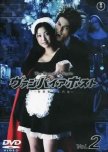
A Likeable Female Lead, But Certainly Cheesy Even By 2000s Standards...
The first thing to say about ‘Vampire Host’ for those curious or who have stumbled upon this drama by chance, is that if you’re easily offended by “ mild” sexualisation , low-budget special effects, dark humour or Matsuda Satoshi‘s questionable acting when he “ transforms” as his vampiric character Suou, then this series probably isn’t for you. All joking aside, ‘Vampire Host ‘ is a show which is a product of its time , but retrospectively it was not an entirely “ dire” drama either. In fact, against its many obvious cliches and tropes which emerged throughout ‘ Vampire Host’ , the two main characters interactions and personalities were fairly captivating for viewers.As a character, Rion is surprisingly a subversion of typical “ ditsy” or “ girl-next-door” contemporary drama stereotypes of the time ; she’s outspoken, curious and fairly intelligent, being able to point out and work numerous things ahead of Suou when they begin solving crimes . However, perhaps my biggest complaint about Rion as a character was that she had little backstory or interaction outside of necessary main characters , that allowed us to see Rion become more “ fleshed-out”. In addition to this, the scriptwriters’ choice to sometimes sexualise Rion during the “ cosplay” scenes, may also raise some eyebrows for modern watchers . Although it is easy to see the comical side of this rather than the drama actually making more lewd suggestions , it did feel a little out of place for some of these scenes with the notable “ horror and crime” undertones of the show.
The second primary character of ‘ Vampire Host’ is Suou; a mysterious, yet unconventional vampire working as a host in Tokyo. It was oddly refreshing for a drama produced during the heyday period of the vampire genre, to see Suou as an actual individual rather than the stereotypical “ mature and stoic” approach often taken in vampire shows. Suou is humorous , dim-witted ( at times) and easily irked by Rion’s interest in the “ supernatural”; ironically cynical towards the mysterious and ineffable crimes which are thrown their way. Yet, one of the biggest problems of Suou’s character can often be traced towards his ending decision in the series and his overall relationship with Rion .
On this note, it’s probably important to stress that if you are looking for an overt romance between Suou and Rion over the course of the drama , then ‘ Vampire Host’ probably isn’t for you. Although there are romantic undertones between the two characters, the drama is primarily focused upon the mysterious, morbid crimes that the two characters are exposed to over the course of the series .
Although the storyline has a main plot, the episodes were fairly cyclical and repetitive within their structure; a new and mysterious crime emerges, a victim or disappearance occurs which alerts Rion or Suou’s attention , the duo try to find more clues and confront the mastermind before finally solving the case. This is ultimately an easy storyline to follow, yet, the story-plot only introduced in the last couple of episodes, often felt rushed and lacklustre in the grand scheme of Thurber . Rather than spreading out or hinting towards this intriguing storyline in earlier episodes and scenes, the delivered felt more anticlimactic jigsaw puzzle, than something for viewers to happily take away with a sense of completion .
Overall, it is probably fair to say that ‘Vampire Host’ isn’t something which can be defined as a timeless classic; it is low-budget in terms of special effects, film quality and styling , the cliches can be seen as outdated as well as ridiculous, and the acting is certainly questionable at times as well. Nevertheless, there was an odd appeal towards the series within its intriguing characters and morbid plot focuses. This isn’t a drama to watch if you’re looking for something with actual visual and sensical quality, but it is a certainly a cheesy welcome break from heavier dramas which have focused on these themes in the past .
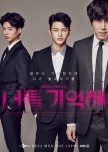
Nature of Nurture? The Ultimate Question of What Creates A Monster...
It is a debate which has puzzled, confused and bemused psychologists, philosophists and ethicists for centuries; is it our environment or innate what make us tick as human beings ?Why is it two children raised in different environments and circumstances end up as criminals?Suspenseful as it is thought-provoking, screenwriter Kwon Ki Young ( Suspicious Partner,Protect the Boss) helps to bring this question to life through the focus us upon selective amnesic and genius criminal profiler Lee Hyun ( Seo-In guk). A sudden return back to South-Korea after years studying in the United States, opens up new wounds when he meets Detective Cha Ji-an ( Jang Na-Ra) in search also of the missing, calculative psychopath Lee Joon Young who both took something precious from them in their pasts. In addition to uncovering this old case again ,mysterious prosecutor Jung Sun Ho ( Park Bo-Min) 's sudden involvement in Lee Hyun's case will uncover some dark truths that perhaps would have been better left uncovered...
With a surprising cameo of D.O. as the younger Joon Young (our surprisingly captivating psychopathic killer), there's little to actually fault about our main cast's delivered performances .Jang Na-Ra and Seo-In Guk were brilliant within captivating the humanity and angst of our individual characters and undeniably Park Bo-gum was captivating within his role as the calculative and mysterious prosecutor with a dark past.
The majority of the drama centralises upon the intriguing cat and mouse games between Lee Hyun and our killer with surprising twists and turns along the way. However, the oddest and probably most out-of-place subgenre within the show of thrilling mind games and traumatic pasts, has to be the romantic element of the show evidently between Cha Ji-an and Lee Hyun. Whilst it did attempt to relieve these more ''noir'' elements by adding the light-hearted edge of romance, the pairing between the characters soon became a little over-centralised in the show. This didn't necessarily take away from the intrigue, but it lessened the impact of the events in particular of the more suspenseful elements of the drama as well as Ji-an's past for viewers. In addition to this, there were some notable plot inconsistencies around procedures and in particular the slightly ambiguous ending . ( It is difficult to say whether this was merely an intelligent attempt relieve Lee Hyun's trauma, or just simply lazy story-writing .)
Overall whilst Hello Monster was flawed by its questionable pairing choices, some inconsistencies and ending, the drama was certainly an intriguing and captivating suspense story with a decent story premise, intriguing characters as well as good performances from our cast. Certainly worth a watch if you are looking for a suspense story with more ethical questions, in particular the belief of ''nature and nurture'' and what makes us human.
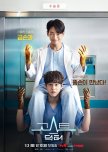
Will ‘ Ghost Doctor’ Truly Haunt You?
Rain is back. This time in a melodramatic medical-supernatural drama which whilst casting its net far and wide towards a wider audience demographic , isn’t without its flaws either.
The plot is set mainly around a working hospital. Previously mentioned Superstar singer-actor Rain stars as Cha Young Min; a first-rate doctor who is renowned in the hospital for his prodigal skills. However despite his impressive clinical acumen, Young Min is notorious for his cold personality and acerbic tongue directed towards colleagues and patients alike.
Nevertheless, everything changes for Young Min when he’s involved in a fatal accident. Whilst his physical body is rendered in a comatose state, Young Min discovers that he is now stuck as a living ghost anchored to the grounds of the hospital.
Perhaps by a whim of fate, Young Min stumbles upon a shocking revelation: he can possess the body of amateur resident doctor Ko Seung Tak ( Kim Bum). The grandson of the hospital’s founder,
Seung-Tak is nearly Young-Min’s polar opposite. He’s laidback, disengaged with his duties as a doctor but secretly cares deeply for the well-being of his patients and wards.
As Young-Min and Seung Tak are forced to share the same body, they begin to help one another grow as well as unravel suspected foul-play in their midst…
Screenwriter Kim Eun Hee is likely most known for her previous works ‘ Winter Sonata’ (2002), ‘ My Fair Lady’ (2009) and ‘ Live Up To Your Name’ ( 2017).
Similar to her previous repertoire of melodramas and cliche-ridden narratives, ‘ Ghost Doctor’ isn’t inescapable from its shoehorned storylines or some character archetypes. The villainous motives and goals of the antagonists could feel somewhat monotonous, whilst the attempts to influx subplots with romantic chemistry between the main leads and their potential love interests could feel vapid also.
Of course this isn’t to entirety critique Eun Hee’s screenplay. Whilst there were noteworthy niche moments , there were some refreshing takes upon niche character tropes; Seung-Tak ( as the “ affluent heir”) standing out in particular.
In addition to this under the directing reigns of Boo Sung Chul ( ‘ My Girlfriend Is A Gumiho’, ‘ The Heirs’ and ‘ Your Honor’), ‘ Ghost Doctor’ is able to maintain a crisp narrative with enough bromance, arbitrary medical knowledge terms and vocabulary and comic relief thrown-in order to keep viewers entertained.
Whilst there are notably moments where the series could darken quickly under the weight of the established supernatural and medical subtext, the series rarely delved deeper beyond a basic plot-level into these issues. Naturally this allowed more opportunities in order to offer lighthearted respite, but did provide fewer narrative moments in order to truly diverge further away from niche setups or tropes also.
Then of course there’s the discussion surrounding cast choices. Indeed, the casting choices of a-listers Rain ( ‘ Full House’, ‘ I’m A Cyborg, But That’s Okay’ and ‘ Please Come Back, Mister’ ) and Kim Bum ( ‘ Boys Over Flowers’, ‘ Mrs Cop.2, and ‘ Tail Of The Nine Tailed’ ) as the main leads will likely remain one of the major attractions of the drama.
Kim Bum and Rain offered fairly solid performances throughout. Whilst overblown script moments and dialogue was admittedly apparent at times in ‘ Ghost Doctor’, the duo’s onscreen bromance was one of the surprising highlights of the series.
Costarring alongside Bum and Rain was singer-actress Uee ( ‘You’re Beautiful’, ‘ Ho Goo’s Love’ and ‘ Marriage Contract’) as main female lead and Young Min’s old flame from the past, Dr.Jang Se Jin.
Whilst Uee’s performance was decent, her character’s development was admittedly greatly restricted by plot. Angst-ridden opportunities in order to explore the seemingly egocentric Young Jin’s backstory, gave way to notable inconsistencies between wasted character development moment for Se-Jin, as well as notably lukewarm chemistry between Uee and Rain onscreen.
Alongside Uee, there is also idol-actress Son Na Eun ( ‘ Twenty Again’ , ‘ Cinderella and the Four Knights’ and ‘ Dinner Mate’) as Seung Tak’s potential love interest Oh Soo-jeong. Na Eun’s onscreen chemistry with Bum was admittedly sweet in parts, but slightly inconsistent; lacking screen time in order to explore Soo-Jeong as a sentient character, as we as delving deeper into their potential relationship.
However, a shoutout must be given to supporting cast members playing the meddlesome “ ghosts” Im Bo Mi ( Yoon So Hee- ‘ Sword And Flower’, ‘ Witch’s Love’), Choi Hoon Kil ( CIIPHER’s Choi Seok Won- ‘ Phantom School’ ) and Hwang Kook Chan ( Han Seung Hyun- ‘Haechi’), with actor Sung Dong-il( ‘ Miss Hammurabi’, ‘ The Cursed’ and ‘ Pawn’) particularly standing out as mysterious ghost at the hospital, Tess. Yet similar to other characters in the series, the subplots and backstories surrounding the ghosts were only brought up when necessary; compacted and intriguing side stories, but nevertheless restricted within the compacted narrative.
‘ Ghost Doctor’ notably differs greatly between its first-part and second-half. The first-half spent time tried to build up dilemmas and characters, whilst the second-half attempted to heighten and intensify the obstacles set out for the main leads.
Naturally this did emerge as a double-edged sword for the execution of the narrative. It allowed some time for viewers to get to know characters and setups, but it could often feel as though by the halfway point , the intense and climatic buildup were somewhat fizzled out and disengaging for audiences .
Conniving Vice President Han Seung-won ( Tae In Ho) served as one of main antagonistic forces of the storyline. Whilst his limitations to fulfil his
role as one of the main plot obstacles are explained, Seung-Won was the epitome of “villainy for the sake of it”; heinous and manipulative, but rarely possessing an edge of fleshed-out characters, or decisive motives along the way.
As a consequence the latter-half of the series admittedly felt somewhat rushed and disorientated in parts. The attempts to drag out certain plot points and scenarios often led to the second-half feeling stretched too thin. The antagonistic and potential climatic buildup felt bedraggled in later episodes by an attempt to quickly wrap up events also.
Under the directing reigns of Boo Sung Chul, ‘ Ghost Doctor’ notably possessed a glossy tone. It did become apparent at times that the editing for the series was somewhat amateurish in parts. During certain episodes of ‘ Ghost Doctor’, a seemingly professional and slick sequence could be suddenly be debased by the presence of unsystematic editing in-between scenes and sequences.
Of course this isn’t to say that the cinematography was unwatchable or entirely mediocre. The filming quality was still professional, if a little uninspiring at times with limited camera angles and tones rarely standing out.
The accompanied OST offered viewers with an array of dulcet soundtracks . Whilst some of these tracks could admittedly feel a little generic, there were a small number of impressive compositions placed during key moments and scenes, such as CNU ( of B1A4)’s vocal and instrumental version of ‘ Fly Away’.
‘ Ghost Doctor’ is highly reminiscent of the offbeat series of supernatural and fantasy K-dramas which arose in popularity during the 2010s. Naturally anticlimactic and limited writing opportunities did serve as one of the drama’s prominent letdowns . However, whilst the ending certainly delivered a sweeter tone for viewers, lacklustre romance and certain writing moments may be disappointing viewers also. Certainly a decent binge-watch.
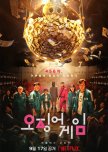
The Mad Pastel Infused Survival World Of Hwang Dong Hyuk…
Hwang Dong Hyuk’s’ Squid Game’ is a world where the corruption of capitalism and moral decadence takes allegorical form in the vivid pastel hues of the game arenas.
The “ fight to survival” genre is nothing new in the world of dramas. ‘ Squid Game’ itself comes off as a weird fusion between ‘ Liar Game’ (with the unusual twist of South Korean childhood games) joined together with the blood-stained violence of ‘ Battle Royale’. However the series isn’t without its own unique twists. Even before stepping into the nightmare-fuelled pastel world of Dong Hyuk’s ‘ Squid Game’ prominent messages about South-Korean society from social prejudice, xenophobia, racism, sexism, misogyny and hypocrisy litter their way onscreen.
Actor Lee Jung Jae could vary between overacting with certain line deliverances, as well as oddly heartfelt as main character Ki Hoon . Ki Hoon has hit an all-time-low in life and spends his time between struggling to get out of debt, avoid gangsters and get time to spend with his daughter. When Ki Hoon is given the chance to participate in the game for ₩45.6 billion by Gong Yoo’s brief cameo as the mysterious and suave diplomat for the games , he soon runs in with childhood friend Sang Woo ( Park Hae Soo) and believes the opportunity to compete to be too good to be true. However Ki Hoon is given a new perspective upon life through games and his seeming amorality becomes replaced by feelings of remorse and guilt towards his past actions.
As the series progresses the series reveals that many of Ki Hoon’s competitors (and even the game guards) have their own personal moments of flaws, strengths and ulterior motives for being involved in the game. Ki Hoon’s old childhood friend Sang Woo ( Park Hae Soo) stands miles apart in Ki Hoon’s eyes initially as an alumni of Seoul National University ( one of the top South Korean universities) due to being an intelligent as well as an analytical individual. However Sang Woo has his own reasons for joining the game due to being heavy in debt as well as his risky bets. Alongside Sang Woo and Ki Hoon is kindhearted immigrant Ali ( Anupam Tripathi) who feels indebted to Sang Woo in particular after helping him countless times, however, Ali hides his own reasons for joining the game also. Together their last close ally is an elderly gentleman No.1 ( Oh Young Soo) who despite seemingly joining the game as a death warrant for his illness, No.1 has a lot more to him as a character than initially meets the eye.
Alongside our main team is seemingly merciless North-Korean defector Kang Sae Byeok ( Jung Ho Yeon), violent gangster Jang Deok Soo( Heo Sung Tae), the foul-mouthed and vocal Han Mi Nyeo ( Kim Joo Ryoung) and sardonic outcast ( introduced not until later episodes) Ji Yeong ( Lee Yoo Mi).
Aside from the actual players there is also police detective Hwang Jun Ho ( Wi Ha Joon) who infiltrates the games as a guard in hope of finding the fate or whereabouts of his missing brother. There were many unexpected twists and turns with characters which will certainly keeps viewers on their feet.
However after the halfway point the screenwriting of ‘ Squid Game’ undeniably hit a slight rut. It wasn’t particularly that suddenly the drama felt slow-placed or lacked logic, but there were multiple occasions where plot moments often felt unexplained or lacked more depth. For example there is a brief subplot involving illegal organ donations of deceased players which whilst wrapped up quickly, questioned a lot about how the guards had established this trade for so long behind the frontman( the head honcho)’s back. Additionally there’s also greater questions about the guards and how they became involved, the VIPS ( aside from some questionable acting), how no one has ratted the existence of the games out and ultimately whether the game operators keep tabs on the surviving winner.
However the drama was undeniably quite profound and heartfelt at times . It wasn’t afraid to present the destruction of childhood and the dog-eat-dog world of South-Korean society. Whilst there were some flaws with the series failing to wrap up certain storylines or character arcs, the cinematography of director Hwang Dong Hyuk’s visionary setting is subtle towards more prominent messages, foreshadowing and hints towards the fate and motives of characters.The OST is composed wonderfully by Jung Jae Il who combines original pieces for the series with traditional Korean and orchestra instruments to create an emotional ambience during scenes. In addition to original pieces several classical music pieces were included with one of the most subtle homages being paid through ‘An der schönen, blauen Donau Op. 134 (Johan Strauss II)’ during several scenes. ( For those who don’t know this piece was also used in the controversial game-changer to the survival game genre, the 2000 Japanese movie ‘ Battle Royale’, which helped to inspire the series and is likely a nod and a wink to the film.) The acting front was admittedly a little wobbly at times but fairly good otherwise . Overall ‘ Squid Game’ is a fairly entertaining watch with prominent messages, intriguing characters and twists which will keep you on the edge of your seats. It is not one for the lighthearted.
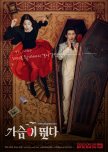
Can You Sink Your Teeth Into This Vampiric Romance?
There seems to be an odd resurgence in fantasy dramas with the vampire trope. I am not one to complain. Vampire shows and narratives can be really interesting for writing if approached well, and Heartbeat certainly had an interesting premise from the offset.Heartbeat was written by Kim Ha-na and Jung Seung-joo, and directed by Lee Hyun-seok and Lee Min-soo. The narrative focuses on Seon Woo-hyul ( Ok Taek-Yeon),
an ancient vampire who is desperate to become human and end his immortality . Having waited centuries to fulfil the wish of his beloved, Yoon Hae-seon ( Yoon So-Hee) to finally become human, Woo-Hyul enlists the help of his vampire friends Lee Sang-hae ( Yoon Byung-hee ) and Park Dong-seop ( Ko Kyu-Pil) to seal him in a coffin in order for him to finally become human.
In the present day, part-time school nurse Joo In-hae ( Won Ji-An) ends up accidentally awakening Woo-Hyul a day short from the ritual being complete. Now a half- human, In-hae and Woo-Hyul awkwardly end up living together, while beginning to slowly develop feelings for one another. However, nothing is ever simple in this relationship, and soon trouble looms on the horizon for them.
Heartbeat is a fairly lighthearted take on the fantasy vampire story. For the most part, the series is fairly easygoing and comical, playing out mostly as a slice-of-life and rom-com series. The fantasy element submerges from the depths in each episode with a small push to direct the storyline. While there are some more angsty moments in the series ( particularly around Woo-Hyul’s backstory), the series is fairly engaging on this part . However, where this issues lie comes through the second half of the series; especially in the very rushed execution and conclusion.
In many ways, this did offer a fairly good balance of genres. The comical setup highly relied on the polar opposite types of In-Hae as the cynical, cold yet surprisingly empathic individual to Woo-Hyul’s egocentric, , yet, surprisingly kindhearted role in the series. This dynamic did work well for the most part, though admittedly, building on the fantasy element and especially lore, was a little undeveloped at times. ( So many unanswered questions left hanging in the air over the vampires and their existence as well as their state of being.)
The acting of the series is decent. Ok Taek-Yeon really shines through as the main male lead. It could have been easy for Woo-Hyul to have become a somewhat irritating character with his misunderstandings and egocentricity at times, but, Taek-Yeon really adds a charismatic edge to the character through both lighthearted and more serious moments.
As a character, Woo-Hyul definitely grows on viewers. It could have been easy for the show to have fallen into old tropes with the immortal vampire being sullen or brooding for most of the series. While Woo-Hyul definitely has his more morose moments through flashbacks and backstory with Hae-Seon, his charisma definitely comes through with being able to remain fairly allured by the modern world. Woo Hyul is self-absorbed with his appearance and qualities, yet almost maintains a sense of comical naivety, to the point of annoying In-Hae beyond belief ( and leading to his shopping spree incident early on). However, despite often being egocentric, Hyul does show his kindness towards others in small acts even in the first episode .
Perhaps one annoying element of Woo-Hyul’s backstory is that while Hae-Seon is a major part of Woo-Hyul’s life, we do not see a lot else about his backstory and character prior to these events, or even in the short aftermath. Sans the necessary plot points, which could have been used instead to have shown the true impact of Hae-Seon’s influence upon his life and decisions .
Won Ji-An stood out as Joo In-Hae also, offering a fairly strong performance as the downtrodden female lead. Refreshingly, In-Hae is a character, who, similar to Woo-Hyul, is a lot more than meets the eye. She has her own personal demons ( which are touched upon slightly in the series though not to their full potential), and maintains a fairly upfront and straight- laced persona in front of Woo-Hyul. Despite appearances, In-Hae does have a softer side. Viewers see glimpses of this early on ( such as helping one student in the school after being bullied) and throughout the series during key moments. ( For example thanking Woo Hyul for taking care of her after she is bed-ridden from a fever.)
In-Hae does have her own potentially interesting backstory, but like some minor elements of the series, this was often pushed aside slightly in later episodes. This was not bad per say but it did put her backstory on the back burner a fair bit. The majority of In Hae’s development revolves around her potential romances, as well as glimpses into her softer nature.
Both main leads are interesting in their own right, and by far, enact as a major highlight of the drama’s storyline . Ji-An and Taek-Yeon have fairly good chemistry. Their characters have a good balance between being a polar comedic duo, while also learning to rely on one another and help each other out during times of the crisis. It was surprisingly sweet to see their relationship unfold in the drama and gradually develop during the series.
However touching upon the romantic element of the series, it is hard not to bring up the issue of the love triangle trope ( you could even argue love square or even pentagon depending on viewpoint). Having a complex romantic pairing and unrequited is not unusual in Korean dramas, and is a trope which is executed a lot within narratives. They are not inherently bad and can be diverse and well-written, but one problem they can often run into is whether they are truly necessary or well-resolved in the long-run.
In this case ( and for the sake of argument), love triangle/ square comes through Shin Do-sik ( Park Kang Hyun), an old classmate of In Hae and a successful real estate development specialist.
Do-Sik’s role in the series was pretty evident early on; he was to be the potential love interest as the second male lead, and the exact foil of Woo Hyul. Do-Sik is the epitome of the “ nice guy” trope at drift ; he is well-mannered, reserved and constantly looking out for In-Hae while his feelings remain apparent to everyone (except the female lead).
However , Do-Sik spends his time fawning over In Hae or practically stalking her from the shadows to the point of being more than a little obsessive. While in some cases, it is evident Do Sik is concerned about In Hae’s circumstances ( such as walking home drunk late at night) and mental well-being , he spends a lot of time watching her from the background or following her around similar to a lost puppy . Do Sik’s character arc only exists around In Hae, to the point of most of his flashbacks being centred around this too. It is a shame as while is not inherently bad, Do-Sik’s more interesting elements are often put aside and he becomes somewhat flat. The series did seem to possess some self-awareness of Do Sik’s character arc by attempting to involve him more in later episodes, but, a mixture of still being centred around In Hae at the end of the day did draw some further questions on this development as well as his antagonistic role in the series .
Another key side character includes Na Hae-won. Without major spoilers, Hae-Won is connected to the characters in more ways than one. She is a wealthy heiress who has returned from a long time of being overseas. She is an old friend of Do Sik and has an active interest in the old house. Naturally when she hears that Woo-Hyul and In-Hae want to turn it into a guest house, she helps to invest. Hae-won acts as a major driving force ( both negative and positive) within the relationship between the two main leads. It was sad to see the initial hints of Hae Won’s calm persona being driven out the window in the second half of the series, as well as her growing obsession over Woo Hyul. While I understand the series wanted development, it was cliche and sadly undermined her character in the long run.
Additional key side characters include Lee Sang-hae and Park Dong-seop, the goofy vampires and friends of Woo Hyul. Both characters enact as comedic relief in the series and while they are fairly entertaining, it would have been equally interesting to have touched upon how long they have truly known Woo Hyul, and why their friendship does run so deep. Despite this, both characters do show genuine care for Woo Hyul and do come to his aid in key moments.
Ko Yang-Nam ( Kim In Kwon), a catman being, is another key character and ally of Woo Hyul. Yang-Nam very much plays the role of the wise sage in the series. He is concerned over Woo Hyul’s predicament and begins to realise ( for conclusions he has come to even unknown even in the series), that Woo Hyul is in serious danger.
Rose ( Seung Yoo), a vampire and close friend of Woo Hyul and his friends, helps them out a fair bit on minor plot events, and Ri Man- Hwi ( Baek Seo Hoo), an antagonistic side character, who proves to be a thorn in Woo-Hyul’s side. Other side characters include the tailor Kim-Ok ( as well Young-ki) and his son ( Kim Do Geon), and the butcher Ko Ki-Sook ( Baek Hyun-Joo). There is a running comical subplot about Ki-Sook being determined to run out Woo Hyul and In Hae from the house. In all honesty while I understand this was meant to generate some laughs, it was a little irksome to see Ki-Sook constantly trying to annoy them. The fact that In Hae and Woo Hyul’s guest house could generate serious business and revenue into the area ( including for her business) seemed pretty reasonable to anyone, making it even odder than she was often condescending or rude to the duo with little reason aside from being petty . ( Despite Woo Hyul becoming one of her regular customers.)
The execution of the series was okay with a brisk sense of pacing and action and conflict development in early episodes . Perhaps my one complaint came through the romantic development. Don’t get me wrong. I like a drama to be well-paced, but it seemed the series often tried a little too hard on the trope of “ will they? Won’t they?” without giving us the time or opportunity to see these breadcrumbs in place. The ending seemed to push this romance full force before attempting to throw in a major “ plot twist” in the ending, with major questions arising over this arc development. This resulted in this second half feeling just rushed and anticlimactic and this in the long run, half-baked.
The cinematography was fairly good. It was fairly sleek for the most part and the CGI was okay too. My one complaint is that the palette schemes were a little uninspiring in some scenes and could have easily been used more carefully or frequently to match the emotional effects of scenes or key moments. The OST was fairly decent with some songs such as Hang Seung Yoon’s “ I Revive” being particularly catchy .
Overall, “ Heartbeat” is a decent romantic fantasy drama. The series has a decent plot premise and good cast, but struggled to develop and characterise beyond the limits of cliches and rushed execution. Overall, a decent watch for a binge session.
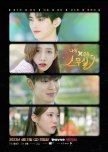
A Sweet Fantasy Web Series, Though Sadly Lacking...
My 20th Twenty is pretty much what the title suggests; Kang So Won ( Choi Yu Ju) was turning twenty during the millennium ( 2000). However, after encountering a bitter witch ( Go Soo Hee )who takes offence at So Won's actions, she is cursed to remain at the age of twenty forever.
While sounding like a dream come true to remain youthful, So Won finds her situation turning into a living nightmare. Her friends and those close to So Won cannot remember her after a year. She is forced to move from different jobs and places after a year ( due to the spell) and remains like a living ghost.
Now chronologically in her forties, So Won is desperate to try and find a lead about the witch and finally break her curse. After several mishaps, she meets cold and stoic Min Kang Hyun ( Jung Su Bin) and the kindhearted Jo Sang Wook ( Dawon). Despite bearing a close resemblance to her first love, Kang Hyun is the opposite of him in both temperament and personality. However, as the series progresses and So Won finds herself chasing further leads, she becomes more involved with the two youths.
For a short web series, My 20th Twenty has a surprisingly interesting premise: a girl is cursed to remain twenty forever, it is not all it cracks up to be, and she finds love along the way. It is simple, yet sweet. Naturally, it is fair to say the series was never going to be a tour de force example of flawless writing and execution. The characters are fairly cookie-cutter from other drama and pretty much ticks all the boxes you would expect from a short romance series; the oblivious, yet charming female lead, the stoic male lead and the bubbly second male lead, jealousy, and a hidden secret somewhere in the midst. It is a fair cliché series with characters only playing their roles to be assets to the short plot.
The acting is better than you would think, shockingly. Naturally, there are some more questionable and cheesy acting moments, but the main leads delivered fairly well, with all things considered.
The execution of the web series was one of its major downfalls. It would naturally be a rush, and try to fit in as much as possible into such a short time. Still, the heavy focus on the romantic factor for most of the narrative often left the more intriguing elements of the female lead's quest to find the witch in the background, leading to a rushed resolution. The ending was fairly sweet but was a byproduct of this writing direction.
Overall, My 20th Twenty is a fairly lighthearted and sugary web series with a romantic factor and a surprisingly interesting premise. Sadly, time restraints, a restricted budget and writing did mean the series felt a little easy to forget from short web dramas with similar plot scenarios and setups. Overall, it made an easygoing binge-watch, but little else.
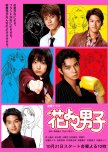
Reviewing In Retrospect; ‘ Hana Yori Dango’
Four years after the Taiwanese hit series ‘ Meteor Garden’, Japanese network TBS finally commissioned the rights for adapting their own series based upon mangaka Yoko Kamio’s ‘ Hana Yori Dango’.
Despite the critically-mixed 1995 Japanese movie sharing the same title, TBS’ ‘ Hana Yori Dango’ marked the first domestic and televised production adaptation of Kamio’s manga onscreen .
After the unimaginable success across Asia of ‘ Meteor Garden’, ‘ Hana Yori Dango’ was undeniably left in its predecessor’s shadow. Nevertheless whilst perhaps ‘ Hana Yori Dango’ did struggle to attain the same international success as the Taiwanese adaptation, the Japanese series was well-received domestically as well as amongst small circles of international drama enthusiasts at the time.
The series marked the breakthrough roles and the array of talents from several young and familiar faces in the Japanese acting industry ( especially Inoue Mao, Matsumoto Jun and Oguri Shun), as well as gain successful popularity through a sequel season and a movie adaptation also. However despite the drama’s praiseworthy reception for being one of the most “ underrated” adaptations, ‘ Hana Yori Dango’ cannot escape from its flaws either.
Similar to its predecessor( ‘ Meteor Garden’) and its source material, TBS’ ‘ Hana Yori Dango’ reimburses the “ Modern Cinderella” tale with “ mundane” main female lead Tsukushi Makino ( Inoue Mao). Makino is an ordinary middle-class girl who attends the elitist and and private Eitoku Gakuen through an acclaimed scholarship. However despite the prestige for attending the school, Makino is regularly sickened by the materialistic beliefs and principles of her wealthy classmates. Determined, Makino pledges that she’ll keep her head down until graduation.
However despite her obstinate decision, Makino’s plans are soon scuppered when she ends up befriending Sanjo Sakurako ( Sato Megumi). Sakurako ends up on the wrong side of the notorious Tsukasa Domyouji ( Matsumoto Jun). The conglomerate heir of one of Japan’s richest families and the ring leader of the school’s notorious clique, the F4, Tsukasa is renowned for his merciless bullying tactics . In particular, Tsukasa is associated with sending his signature “ red card”; the recipient being instantly labelled as a social pariah by the rest of the school.
Unable to sit back and watch her new friend suffer, Makino declares war on the leader of the F4. Nevertheless despite Tsukasa’s red card and bullying schemes , Makino finds comfort and determination to carry on through her crush on mysterious and suave F4 member, Hanazawa Rui ( Oguri Shun).
Meanwhile Tsukasa’s growing contempt and fascination for the female lead soon provides to complicate matters further, as Domyouji Tsukasa finds himself falling in love with Makino Tsukishi. As Makino finds herself torn between her complicated feelings, Tsukasa’s estranged and fierce mother Domyouji Kaede ( Kaga Mariko) proves only to complicate matters further…
Adapted to the small screen by a small screen of different directors ( Katayama Osamu, Ishii Yasuharu and Yamamuro Daisuke) and screenwriters ( Takuma Takayuki, Fujimoto Yuki, Takahashi Natsuko and Arai Shuuko), ‘ Hana Yori Dango’ has often been cited by aficionados of the franchise as one of the most “ faithful” adaptations to date. ( Although the series does notably adapt and tweak certain events from the manga in order to expedite storyline.)
The series is notably lighthearted and niche in parts. The comical elements of the series rely heavily upon sociocultural and sociolinguistic jokes which whilst offering certain comical relief , can be harder to grasp for audience members unfamiliar with Japanese culture.( One of the most notable gags in the series found through the original manga joke surrounding Tsukasa’s malapropisms, the “lessons” taught by Makino’s father [ Kobayashi Susumu] to her younger brother Makino Susumu [ Tomiura Satoshi] , as well as Tsukishi’s boss and dumpling store owner Sengoku Sachiyo[ Kato Takako]’s “eventful” past with famous celebrities.)
Nevertheless despite some over-the-top jokes within ‘ Hana Yori Dango’, the narrative could surprisingly take a wistful edge at times also. Domyouji’s estranged relationship with his mother is brief yet subtly tumultuous for audiences, whilst the throbbing teen-angst surrounding Makino’s feelings and Hanazawa Rui’s unrequited love for his sister-figure Todo Shizuka ( Sada Mayumi), is given a bittersweet presence within the events of the narrative.
On the other hand it’s undeniable that ‘ Hana Yori Dango’ isn’t a storyline inescapable from predictable and shoehorned tropes. The events surrounding the female lead’s “ dilemmas” as well as the archetypes of “ niche bullies” or “ twists” often led to predictable outcomes. As a consequence, it was apparent that ‘ Hana Yori Dango’’s heavy reliance upon themes surrounding bullying, assault and blackmail were
quintessential for the events of the storyline, but were given a ham-fisted approach by the writers.
Despite Mao Inoue debuting as an actress around the age of five, ‘ Hana Yori Dango’ is still considered one of Inoue’s breakout roles playing main female lead Tsukishi Makino. The young actress’ performance is admittedly slightly exaggerated in parts with certain line deliverances and comical dialogue exchanges often falling flat at certain times . Nevertheless, Inoue Mao was able to carry on through her performances during some of the drama’s more sincere and heartfelt moments with a dynamic charm.
As a character, Tsukishi Makino is notably headstrong, resilient as well as kindhearted. Whilst it is important to respect that other incarnations of the character are variable and independent from one another, it is notable that Makino’s inability to bend so easily at first to the will of Domyouji Tsukasa gave her a slightly more tactful and resilient edge at times than other versions. On the other hand similar to numerous counterparts, Makino could often feel as though she was somewhat dulled by her greater character drives and goals outside of her “ potential” love interests.
Costarring alongside Mao was Matsumoto Jun. A member of the famous ARASHI boyband, Matsumoto Jun’s performance as Domyouji Tsukasa was admittedly heartfelt as well as somewhat dull in parts. Jun’s comical or lighthearted exchanges could sometimes lack finesse. On the other hand Jun’s prior acting experience in dramas such as ‘ Gokusen’ seemed to come to good use during heart-wrenching moments of the series, by adding an angst-ridden charm to his onscreen persona also.
Domyouji Tsukasa is an interpretative character for screenwriters and directors alike. However Tsukasa’s character archetype has notably fallen into two categories throughout past adaptations; fractious, jovial and angsty, or satirical, brooding and unpredictable. As it happens Jun’s Domyouji Tsukasa notably fell into the latter category for most of the series. ( Similar to his manga counterpart.)Tsukasa did notably have his “ darker” character moments, but the screenplay was heavily focused upon presenting a more lighthearted as well as a “ complicated” familial scenario for Tsukasa. However similar to his manga counterpart and other adaptations, Tsukasa’s greatest character flaw could often be found through his inability to truly repent or be remorseful over his actions or treatment of others; offering limited character development at times for the male lead.
Then of course there’s Oguri Shun as second male lead Hanazawa Rui. Similar to his costar Mao Inoue, Shun’s acting career began during his childhood. On the other hand prior to his role in ‘ Hana Yori Dango’, Shun notably took on the roles of “unusual” characters such as his parts in ‘ Great Teacher Onizuka’, ‘ Summer Snow’ and ‘ Gokusen’.
Whilst playing the role as suave and mysterious Hanazawa Rui was certainly not a stretch for Shun, it seemed an unusual casting choice and decision for the actor to take on a “romantic potential love interest” role which could’ve easily been one-dimensional. Although Shun’s performance is somewhat limited in parts by dialogue and interactions, the acting surprisingly gave the second male-lead a charismatic and beguiling charm for audiences.
Hanazawa Rui’s onscreen counterparts have always differed. Whilst certain adaptations have depicted Rui as sweet, easygoing and somewhat flatline second male lead, others have stayed more faithful to the original manga by depicting Rui’s mysterious, cool-headed and taciturn personality. Naturally the Japanese version of Hanazawa Rui does make some nuanced changes towards Rui as a character in comparison to his predecessor and manga counterpart. On the other hand whilst Rui had his own character drive and a battle of ambivalent feelings, the second male lead could feel somewhat shoehorned into the plot through various scenarios as the narrative professed.
The chemistry between our main leads is admittedly variable. Whilst there are heart-wrenching and lighthearted moments where the onscreen chemistry between Shun, Inoue and Matsumoto could feel natural and concise, there were other moments in the series where this could feel limited and slightly stunted by plot.
Aside from the main cast, there is also Mimasaka Akira ( Abe Tsuyoshi) and Nishikado Sojiro ( Matsuda Shota), fellow F4 members, who whilst gradually developing an unlikely friendship with Makino and necessary at times for major plot dilemmas , could often feel somewhat staid and shoehorned into scenarios. Similar to the flawed position of Sojiro and Akira, there is also Makino’s best friend Matsuoka Yuki ( Nishihara Aki) and Tsukasa’s older sister, Domyouji Tsubaki ( Matsushima Nanako); supportive and kindhearted characters , but rarely having sentient character-drive also.
Hana Yori Dango’s narrative notably follows the first major arc of the manga with a fair degree of accuracy . ( Although notably certain minor events and characters are left out or tweaked.) The storyline is notably fast-paced during initial events and is mainly pacy in parts. Nevertheless by the halfway mark, the narrative notably slows down in order to focus on a dragged-out plot dilemma as well as the gradual events leading up to the finale. Whilst this wasn’t entirely a bad writing decision per say and did allow opportunities in order to focus on sentimental elements of the storyline, it could often create a slightly grating experience in parts for viewers by the second-half.
Under the directing reigns of the trio,’ Hana Yori Dango’ is notably an eclectic array of slick editing and shots as well as somewhat amateurish and sloppy editing techniques. Of course whilst it is important to review this in retrospect, ‘ Hana Yori Dango’ could still feel dated at times with its filming even for a 2000s drama. Nevertheless it is notable that despite some dated technology for modern viewers, ‘ Hana Yori Dango’ is one of the few adaptations in the series which helped to captivate the authentic wealthiness of its characters through flashing well-known haute couture fashion brands onscreen. ( TBS’ sponsorship deals certainty paid off well .)
The OST is also very memorable, especially the array of instrumentals- mostly variations of the same theme. Whilst some of these tracks could often blend into one another, one of the most striking tracks during heartfelt moments of the drama came through a euphonious version of the theme, ‘ Blue Mind’; climatic, heartwarming and surprisingly subtle.
Overall ‘ Hana Yori Dango’ offered viewers with a luxurious and fairly faithful adaptation of Kamio’s beloved franchise. Whilst modern viewers may struggle to relate towards the somewhat insipid presentation of themes, shoehorned tropes and dated technology, ‘ Hana Yori Dango’ does offer viewers with a somewhat simplistic and bubbly charm. The acting is decent enough and whilst there are some inconsistencies at times, the onscreen chemistry between Matsumoto and Inoue is surprisingly sweet and engaging. The ending of the series offered viewers with a cliffhanger. Whilst this did allow the drama to setup events for the sequel season, it did admittedly leave the finale of ‘ Hana Yori Dango’ slightly rushed in parts. Nevertheless ‘ Hana Yori Dango’ was a surprisingly decent adaptation with a surprisingly engaging charm and appeal for audiences.
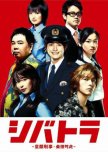
‘ Shibatora’; The Repetitive Drama That Enforces Every Trope…
Based on the manga series by Yuuma Ando, ‘ Shibatora’ ( alternatively known as ‘ Babyfaced Detective Taketora Shibata’ or ‘ シバトラ’) was adapted to the small screen by screenwriter Muto Shogo. Whilst Shogo’s screenplay was notably an amalgamation of angst-ridden topics and lighthearted comedy , the series did notably suffer greatly under the weight of pacing, character writing as well as plot-motivation also.
The series focused mainly upon main lead and recently promoted police detective Taketora Shibata ( Teppei Koike ). Forever being mistaken as a teenager due to his youthful appearance, Shibata finds himself being sent illicitly undercover by his new boss Sakura Chiba ( Miki Maya ) in order to resolve juvenile crime cases. However, Shibata hides a secret from his peers. Taketora Shibata possesses the ability to see the “ grim reaper’s hands”; an ominous sign surrounding individuals who are going to die within 24 hours. Alongside the help of his old friend and owner of alternative clothing store “SABBATH SABBATH” Fujiki Kojiro ( Fukiji Naohito), Kojiro’s employee Hakuto Shinsuke ( Tsukaji Muga) and previous case victim Hosho Mizuki ( Ohgo Suzuka), Taketora becomes determined to help save the young people involved in various crimes.
One of the most notable things to comment about the screenplay for ‘ Shibatora’ came through the parallel differences between the adapted TV series and ‘ Shibatora’’s original source material.
Of course as a standalone production in its own right, it is expected that ‘ Shibatora’ will take some different creative differences than the original manga. Indeed, Muto Shogo added particular focus on the darker subject matters of the series. However whilst Shogo did place some “edgier” undertones as the series progressed and the severity of crimes worsened, the impact and value of these events were somewhat inanely delivered also.
For those familiar with Teppei Koike’s works ( ‘ Gokusen 2’, ‘ Love Com’, ‘ Dragon Sakura’ and ‘ The Team Medical Dragon’ in particular), Koike’s zestful and sincere charm as main lead Taketora Shibata was well-suited and fairly convincing throughout the series. However, Koike’s costars notably brought forward a mixed-bag of acting talents. Whilst some of the supporting cast offering decent enough performances, other costars’ lack of acting experience and inconsistent line deliverances could be extremely questionable for viewers at the best of times .
Admittedly whilst the mixed-range of acting talents is a partial problem with the series’ untactful narrative, the screenwriting was one of ‘Shibatora’’s greatest pitfalls. Screenwriter Muto Shogo attempted to introduce a wide range of reoccurring characters and events from the original manga into the drama’s short timeframe. Whilst Shogo admittedly adapted the storyline in necessary parts such as combining the roles and backstories of certain characters in order to expedite plot points, this did notably give root to another problem; the storyline could often feel rushed.
The pacing of the series did present a double-edged sword; ideal for helping to present a fast-paced narrative rather than tediously dragging out events, but rarely presenting golden-opportunities to explore characters or solve weaker plot problems also.
For example, there’s the poorly-explained “ fantasy” elements surrounding Taketora’s supernatural ability throughout the series. Whilst admittedly this is a pitfall carried through from the original manga, Shogo seemed to particularly present this element of the series with lacking focus or depth; necessary as a quick plot asset, but rarely offering opportunities to explore Taketora’s backstory with more tact.
In fact Shogo’s tackling of the main lead’s backstory in the series was often poorly induced throughout the events of the storyline. Initially brought up as a seeming quintessential plot point, Taketora’s backstory is quickly passed off in passing dialogue by Kojiro ( an out of character writing decision also) instead. Perhaps if the series had foreshadowed or built upon the importance of Taketora’s backstory ( especially with all regards to the future events and the final “ antagonist”), then perhaps the ending of ‘ Shibatora’ could’ve been less anticlimactic and certainly fleshed-out with more depth.
Indeed this seemed to be reoccurring problem with ‘ Shibatora’. Even seemingly intriguing main characters such as Sakura Chiba’s personal vendetta for becoming involved in juvenile crime cases ( only mentioned several times), or the backstory and feelings of the supporting cast were rarely discussed or brought up in the storyline’s narrative also.
Instead the series’ eleven episodes notably became trapped in the pitfall of similar storyline formats. It became evident that each episode soon followed a pattern generic exposition, the possible case coming to light , a sudden revelation,the climax and then a final resolution. Whilst it is not of the question for a series to follow this basic structure when revolving around shared storylines, the lacking variation and ability to diverge away from previous episodes presented a somewhat repetitive and slightly tiresome formula for viewers.
Even in retrospect for a late 2000s drama, the cinematography under the directing reigns of Ishikawa Junichi and Iwata Kazuyuki was admittedly slightly worse for wear in parts . The somewhat sloppy cuts, editing and fuzzy long distance shots could sometimes unintentionally divert the attention of viewers away from necessary scenes and storyline. Nevertheless whilst the directors did sometimes struggle with delivering an impact throughout their field of vision behind the camera, they were able to present some brilliant moments of scenes and choreography also.
The OST of ‘ Shibatora’ arguably remained one of the greatest virtues of the drama. Admittedly, there were certainly tracks in the series which lacked a greater impact than others, but, the chosen instrumentals did often help to convey the emotional tones and themes of the storyline when plot could sometimes be greatly absent.
Whilst ‘ Shinatora’ admittedly covered darker subject areas and presented some adrenal-infused plot moments, the storyline was often weakened greatly by rushed pacing, questionable acting, lacking character depth as well as repetitive plot points. Perhaps whilst the blasting scores could often make up for storyline flukes by exploring the emotions of the characters, the lacking scope of character depth and backstory rarely allowed this to become a symbiotic asset. Perhaps for those looking for a quick and easy binge-watch then ‘ Shibatora’ is an ideal viewing experience. However for those wishing to indulge in an avant-garde, well-written and memorable detective and crime drama , then ‘ Shibatora’ is certainly not it.
A Classic Adaptation, Filled With All The Beloved Tropes...
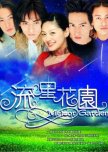
Along with its international cousins Boys over Flowers and Hana Yori Dango, and the recent eponymous 2018 version, Meteor Garden (2001) is often seen by international fans as one of the most “essential” and “ classic” versions out there . With the talents of Barbie Hsu as our female lead Shan Cai, Jerry Yan as our brooding male lead Dao Ming Si and Vic Chou as our second male lead Hua Ze Lei, it is no surprise that the Taiwanese version captivated a whole generation of youths by prominently kick-starting the drama adaptations with its own flare.The storyline is fairly familiar for those who have watched the previous versions ; poor girl Shan Cai and rich boy Dao Ming Si turn from enemies to lovers at a prestigious university. Rich boy Si is the leader of the clique F4 (Flower Four) and routinely bullies students who irritate him . Poor girl Shan Cai stands up for a friend and receives the dreaded red card (signal for the student body to bully a person) and surprises everyone when she does not back down from the repeated bullying incidents. Instead, Shan Cai declares war on the F4 earning their respect and rich boy Si’s affection alongside the interest of second male lead Ze Lei .
Yet like all of the adaptations, Meteor Garden still prominently has many things it did better than other versions and elements which weren’t as well tackled, either. Perhaps the most notable elements which still stand strong across all the versions are centralised upon the decision to “ age-up” the characters in comparison to most of their counterparts ( sans the recent Chinese version) , the more well-rounded complexity of Ming Si as a character and the interactions between Shan Cai and Ming Si feeling often a lot more “ natural” than other versions.
For those who may be unaware, most of the adaptations centralise the romance between the female lead and the male lead in high school. Although this has led many of the adaptations to explore more mature themes than typical “ sugary teen” dramas, it often felt questionable towards the exact nature of some of these themes in a high school setting. Perhaps to avoid as much controversy as well as being able to explore these themes for a more mature audience, Meteor Garden made the prominent decision of “ ageing-up” characters as university students allowing elements of the show to seem more natural within a young adult environment, rather than an immature teen high-school setting .
In addition to these themes of maturity and complexity, it still remains striking that out of most of the versions,
Jerry Yun arguably did possibly one of the best portrayals of making Daoming Si, a nuanced character. Yun is able to channel a level of complexity to his character than the “ stock comedy figure” taken in many versions . Frustratingly, he’s never given a chance to reconcile for some of his actions, but he’s still ultimately a well-rounded male lead; imperfect and often despicable at times , yet still a lot more than meets eye.
Parallel to Yun, Barbie Hsu is a refreshing change from the typical “ spineless” female lead in previous adaptations. Shan Cai is fierce, strong and able to determine her own wants and desires over the course of the series, leading her to maturely develop her relationship with Dao Ming Si from rivalry to close contact. Yet, as much as Barbie Hsu is undeniably a good actress,her acting skills did often come off as a little wooden in this adaptation, often resulting in some cheesy line deliverances and acting moments. In addition to this, a prominent complaint which may arise for modern day viewers is that ‘ Meteor Garden’ often normalised many scenes of physical abuse ( slapping and inappropriate touching ) against the female lead, which were neither raised nor touched upon as an “issue”.
The next prominent character to touch upon is Vic Chou’s role as the second male lead Zei Lei. It is often striking for a character who followed his manga version prominently ( not least touching upon the character having autism), Lei seemed a little lacklustre in comparison to his other counterparts. This is prominently because there’s little motivation or defining personality traits given to Lei which make him stick out or root him for prominently as a character. In Hana Yori Dango, Rui was mysterious and cool often leading to his true feelings being in the dark for viewers when it came to the female lead , in Boys Over Flowers, Ji Hoo was kind-hearted and even in the recent Chinese version, Lei is shown to be more evident within his motives for chasing Shan Cai. Yet in the Taiwanese version, his reasoning and personality often felt half-baked and consequently more of a “ stock” male lead, than an individual.
Additionally , it’s important to not gloss over the fact that Meteor Garden has all the shortcomings you’d expect from a drama of this bygone era — the music is inappropriate at times , it looks and feels outdated and its production values are bargain basement for a series ironically focusing upon the lavish and affluent upper-class members of Taiwanese society.
It’s probably fair to say that although every Hana Yori Dango adaptation is based on the same source material, it is outstanding how different the final products are and Meteor Garden is no exception . It is ultimately dated by fashion, age and certain tropes, but out of all the versions, still probably remains one of the most well-written in terms of the character bond between Shan Cai and Si of all the versions. Nevertheless, Meteor Garden’s ultimate flaws can additionally be found through pacing ( which ultimately snags at times before the interference of Si’s mother in the storyline), poorly written-tropes and questionable characterisation. Arguably still one of the best versions from the series, but not flawless.
A Sugary Sweet Vampire Drama
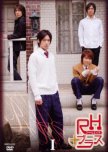
RH Plus was a show filled with a level of sugar sweet high school tropes, which undeniably left more questions than answers by the ending of the drama. In the beginning of the drama, the show focuses upon Makoto moving into a new residence , revealing that everyone ( including himself ) are all secret vampires. Now, the one thing which I did always feel as though this show could’ve gone into more depth around is the existence of vampires outside of the mansion. Whilst the script writers did have the benefit of being able to focus upon the centralised lives of Makoto and the other residents, there were many elements from the pasts of the characters which felt disjointed within the show, particularly the secret revelation behind Makoto’s parentage and of course, the head, Kiyoi’s past as the oldest vampire well. The latter, ironically being a major part of the series, however, there was little reason or explanation as to why Makoto’s mother and father ended up together in the first place and of course, why both parents made their decisions in the plot as well which would of course influence Makoto’s mental state for a major proportion of the series. This leads us to the next biggest problem . The unanswered questions. Naturally, a show can go through never answering these questions for viewers, however, there was little actual indication towards a sense of emotional appeal or relatability with most of the characters. Not least is the parentage of Makoto never truly brought to light in the series or shown to actually affect Makoto after the revelation, but, there are also so many questions regarding Makoto ‘s abilities as well which didn’t feel disclosed for viewers. Similarly, it would have been just as intriguing to have known more about Kiyoi’s past especially his path to vampirism. This leads us to another big snag in the series. How are vampires created? Now, this more of a general nag than anything else, but it felt a little annoying as to the fact that none of the characters were exposed towards if they had been presumably human or vampires their entire lives. Presumably, they were human once from Kiyoi’s comments, however, this also would lead to the more moral questions such as the youngest Ageha, and how these characters dealt with the pain and heartbreak of having to leave their human lives behind, something which just was dealt with at all in a show about vampires.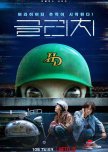
Aliens, Friendships and Corny Comedy: The Three Formula Ingredients of ‘ Glitch’.
Aliens,aliens, aliens: any k-drama fan will know that since ‘ My Love From The Star’ came riding on the hallyu wave, there’s been a certain infatuation in Korean popular culture with narratives focusing on supernatural love interests and smoulderingly sexy paramours from out of space. However ( as the title would suggest), ‘ Glitch’ is an odd anomaly in the equation of science-fiction in the Korean drama industry . The female lead is not in love with some hunk from the far reaches of the galaxies, nor is she an aspiring actress attempting to “make ends meet” or swept off her feet by the “ one”. Instead, viewers are made to question one major thing; is the little green man that the heroine begins to see in dreams real, or is she finally losing her mind, and how can an old friend from the past help with her boyfriend’s disappearance ?
Written by Jin Hansae ( ‘ Extracurricular’) and directed by Roh Deok ( ‘ Very Ordinary Couple’), ‘ Glitch’ tells the story of mundane office-worker Hong Jihyo ( Vincenzo’s star Jeon Yeo-been). Thirty years- old and still living at home with her parents, Jihyo is used to taking part of her daily drudgery at the office. However, Jihyo has a secret: after her boyfriend Lee Siguk (Lee Dong-hwi)’s disappearance, she has been receiving surreal visions and dreams of a small green alien.
Unsure of whether she is losing her mind or onto a possible lead, Jihyo enlists the help of old school friend Hong Bora (Nana), a hostess for an online show about outlandish conspiracy theories about aliens. Bora agrees to helping Jihyo as they attempt to find out answers to Siguk’s mysterious disappearance.
As proven with the chosen director and writer, ‘ Glitch’ is a show which aims high with its concept and ideas: its not afraid to be unconventional with its mystery sci-fi elements, unusual female characters ( especially those who enjoy smoking and are fairly indifferent to romance) , and an odd camaraderie which comes into place between them. Nevertheless while certain elements of ‘ Glitch’ can be perceived as purposefully fun with its genre-switching or surprisingly relevant with its address ( including towards the current issue in Korea of pseudo-cults and repressed mental health), this is admittedly where one of the show’s flaws can often be underpinned: the issue of the drama’s presentation as a comedy.
It shouldn’t come as a surprise that for a show about crackpot conspiracies and little green men in visions that comedy does play out a lot in the show. Naturally, it would be wrong to try and make out that for a show where this is highly relied upon, that it’s unwatchable or overly bad. ‘ Glitch’ is fairly quirky and witty with its style of comedy; things falling off walls, slapstick moments and bon mots exchanged between characters ( especially in the UFO enthusiasts club) . Fun at times but certainly variable for individuals also. However, the comic relief also brings about the issue of being heavily relied upon in large chunks of the narrative even when it was not always necessary or required. Although this issue will be explained further by tying into the problem of pacing for the show, ‘ Glitch’ struggled to get its feet off the ground in early episodes. The running theme of craziness vs. reality is a concept that has been tackled a lot in tv shows, but writer Jin Hansae almost seemed to be caught in a slight rut with how to lift this further by propelling events or exploring characters early on. Indeed, while there were many interesting plot points and characters ( including with regards to relationships and past trauma), attempts to enforce laughs in episodes often led to the major moments of suspense and tension feeling somewhat undermined and dissipated at times.
Nevertheless, it is hard not to talk about the show without bringing up the main cast. As mentioned previously, Vincenzo breakout star Jeon Yeo-been plays the main role as heroine Hong Jihyo. Jeon’s performance is fairly good. Although the actress admittedly feel a little enforced with her line deliverances ( although often as a result of her written dialogue), she did add a surprisingly likeable charm to Jihyo which made her character who you can grow to like in the frame of the narrative. ( Even if her character wasn’t always given the same opportunities to grow and develop also,)
One of the surprising stars of the series was Nana as Hong Bora; eccentric, somewhat over-the-top yet surprisingly sincere, there was something oddly captivating about Bora which made her a likeable character against all odds. She certainly had her grating moments as a character at times, but Nana really helped to embody an extra sweetness which will likely melt your heart .
Ryu Kyung-soo delivered a fairly consistent performance as Kim Byung-jo; a character well-rounded in his intentions but slightly less memorable in comparison to the dominating presence of the female leads. ( Especially with regards to his unrequited feelings for the heroine.)
As mentioned previously, ‘ Glitch’ heavily relies upon the essence of slow-pacing. This isn’t always necessarily a bad thing per say as it did allow for opportunities for suspense to build and for numerous questions and intrigue to build in the viewer’s mind. ( Including the notion about the two female leads’ broken friendship, the manifestation of aliens and the actual, true fate of Lee Siguk.) Nevertheless while slow pacing can be a blessing for a series, it does admittedly have its foibles; especially when it boils down to the issue of keep viewers hooked. A noticeable problem that has arisen a lot with ‘ Glitch’ comes through the dilemma of the series failing to really get going in the first few episodes or picking up the pace in certain scenes to enliven the elements of suspense and tension to their fullest. In particular, where major plot moments could’ve done with an element of quick-paced deliverance or shock value, was sometimes largely absent from the series. ( Especially with regards to the ending.)
The aesthetics of ‘ Glitch’ are surprisingly tactful. Director Roh Deok seemed to have a keen eye for engraving the show’s inspiration from naughties sci-fi classics. Through flashbacks to the era, warm and effervescent neons and hazy urban scales with a surprisingly familiar warmth (that starkly contrasts the cold and brutalist settings of sci-fi tales), ‘ Glitch’ is surprisingly stylish with its artistic approach. ‘ Glitch’’s OST wasn’t entirely bad per say but it was hard to really pinpoint any particularly mesmerising or standout tracks either.
‘ Glitch’ was an odd drama on reflection: it was evident that attempting to appeal to a wide audience of fans ( from sci-fi, comedy and mystery) but it often felt as though it struck a lot of loose chords along the way. ( Especially as the comedy felt somewhat enforced in parts also; including with awkward moments and dialogue exchanges too.) Nevertheless, the series did have an interesting premise and fairly good performances by our main cast as well as some stunning aesthetics. Perhaps the one thing ‘ Glitch’ could do with on reflection would’ve been better character writing as a lot of the characters ( including the heroines) rarely felt fleshed out. However, for those looking for something entertaining on the surface level and a quick binge-watch, then ‘ Glitch’ is likely to hit the mark exactly.
Strong Girl Nam Soon; One of The Worst Dramas of 2023?
While it is wrong to entirely compare the prequel and sequel as they do focus on respectfully different characters, due to the heavy similarities and world building between them, I will be using the original to compare the quality in writing and decisions taken by the screenwriter. ( Be warned this is going to be a long review.)
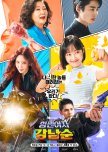
Strong Girl Nam focuses on a pretty much carbon copy setup to its predecessor, give or take with some new storyline and characters to make it “ different”. The main heroine is Kang Nam Soon ( Lee You Mi), a girl with super strength who grew up in Mongolia. Desperate to find her birth parents, she journeys to South Korea where she encounters billionaire and her biological mother Hwang Geum Joo ( Kim Jung Eun) and grandmother Gil Joong Gan ( Kim Hae Sook). Both women possesses superstrength as traditional with the matriarchal line of the family.
Despite a complicated reunion, Nam Soon’s happy ending is far from complete when she becomes involved in a drugs case and helps out Detective Kang Hee Sik ( Ong Seong Wu) who is gradually developing feelings for Nam Soon after his encounter with her early on. As Nam Soon becomes more involved in this mysterious case, she also encounters the elusively mysterious entrepreneur Ryu Shi Oh ( Byeon Woo Seok). Will Nam Soon be able to live happily with her family or she is in too deep with the investigation?
To give the shown one thing it could have been a pretty interesting premise.The first few episodes were interesting in setting up the rough concept of the series and did introduce our characters as potentially intriguing . In particular; the notion that there could be more representation of women across different generations was really fun also. The series’ major problem early on though came from not really knowing what it wanted to be. Strong Woman Do Bong Soon had fun balancing out mystery whodunnit, comic relief and romance in a way which worked well and gave the characters some room for development. Strong Girl Nam Soon tries doing the same but,unlike its predecessor, really struggles in balancing it out.
It would be understandable if the show was leaning more towards lighthearted fun, but the irony of the matter was that for the most part, the mystery element of the series was arguably just as dark in concept as the original. The series did attempt to offer some more “ dramatic tension” in scenes relating to the drug case setup, but a mixture of overreacting and being overshadowed by the comic relief sadly didn’t give the storyline that much of a punch.
Speaking of comic relief, the series is definitely indecisive . There are certainly a few jokes which occasionally land quite well ( one of my favourites being when Gil Joong Gan schools the cops and encounters Park Bo Young’s cameo), but for the most part, the series seemed to struggle with a mixture of gradually tiresome gags ( particularly directed towards male characters for no other reason other than trying to poorly imitate the situational irony from the original.)
Acting-wise was a pretty mixed bag with a mixture of overreacting and pretty wooden dialogue and characterisation . Byeon Woo Seok probably shone through the most in the series with his performance ( without spoilers) as a more ambiguous character, though was not given full justice either by reduced screen time either . Lee You Mi and Ong Seong Wu are both good actors, but the writing really didn’t give them a lot of justice.
Characters are another major post which has to be discussed. Kang Nam Soon was arguably one of the most underdeveloped character in the series and that is saying something for someone whose name is involved in the titles. Fundamentally, Nam Soon embodies the “ girl with a kind heart” trope. She is somewhat naive to the world but is ultimately out to do the right thing.
The problem is that Nam Soon doesn’t have a lot of focus or personality as a character. This is really ironic considering how much potential surrounds her. After all, there was so much possibility to talk about her experiences growing up in Mongolia more and her adopted family ( a notion Nam Soon quite happily seemed to forget in favour of the plot setup), possible complicated feelings surrounding her family abandoning her ( as well as evident insecurities surrounding her mother in particular) and of course trying to control her strength or experiences in the past. For the most part, Nam Soon pretty much breezes past with the idea of super strength or just happily moving on from a separate life and another culture (which hardly seems bothered by ) into another.
She always seems to win fights and rarely struggles with any major difficulties aside from a few “ tense” moments ( especially later in the series) which are rarely delivered afterwards. To give its prequel it’s due, one major development for the heroine was learning to control her strength and insecurities around it . While both characters have grown up in different circumstances, the lack of flaws or awareness Nam Soon actually possesses of her own situation or character , made her pretty one-dimensional in a way which shouldn’t have been the case. ( Her ending was particularly a bit of a last minute conclusion which just didn’t make sense considering her personal experiences and background.)
The next major character to talk about is Nam Soon’s mother, Hwang Geum Joo, who arguably had the most screen time for some inexplicable reason. ( More than the actual heroine.)There are some mixed feelings with this character. On one hand, her storyline was so heavily drawn upon it was had not to focus on her in the show. However, Geum Joo rarely struggles to be as likeable as the show wants her to be.
This seems to a major problem with some characters. The show wants us to like them, but in reality, it’s hard to really digress what it is about them which meant to be so intriguing when it was forced on viewers.It is a shame as Geum Joo had a potentially very interesting story; a woman who has made it in the world, living a separate life from her husband and son , struggling with the loss of a daughter and running a business could have all been excellent writing points to give her flaws.
It seems as though the series was heading in the direction at one point, but the writing had other ideas, by presenting Geum Joo somehow prevailing through it all as a “ cool vigilante” or rarely being questioned for her actions. For example, Geum Joo is meant to be a “ motherly” figure but is rarely involved in the lives of her children . It’s never really explained exactly why Geum Joo has a somewhat estranged relationship with her son, something which could have been developed a lot more, especially when Kang Nam In ( Han Sang Jo) pretty much hit the nail on the head in saying Geum Joo spends a lot more time with Nam Soon than him. While the show wanted us to feel pity for her, I couldn’t help but agree with Nam In’s point more . (Although not when we rarely see Geum Joo interact with the daughter she’s seemingly been searching for desperately beyond the first few episodes really.) More importantly, what was going on between mother and son to hardly be involved with one another to that extent ? Is this a bond which has just fallen apart naturally or has something caused it? Simple coverage on these matters could have been used well for her development, but were instead neglected and gave her little development onscreen.
Gil Joong Gan is more of a minor character in the plot but as the matriarch of the family, she does have a sideline plot involving a potential love interest. She has a good heart fundamentally; but her constant role in interfering and interesting or being used in the romantic setup does begin growing a bit grating. Her romantic setup did seem quite sweet initially especially as we seen an “ opposites attract” scenario, but Joong Gan’s lack of empathy at times, non consensual decisions and near-obsession over him did start becoming a little tiresome.
Kang Hee Sik has risen a lot of debate by watchers in being more of a background character than a male lead as he’s pretty forgettable. Hee Sik is made to embody the “ good detective” trope. He is kind-hearted and brave and committed to his job. Evidently his encounter with Nam Soon makes him develop feelings and that’s all there is really is to say about him. Hee Sik could have been a really interesting character considering his involvement in the case and going into more depth about his personal drive for becoming a detective. Instead, he’s pretty much really there for a potential romance with Nam Soon and a bit of dramatic incitement .
Romance in the show js a bit of a hard one to go over. The main leads do have some chemistry in more comical moments , but there wasn’t really enough buildup due to lacking character development overall. The ending conclusion was expected though felt a little old-fashioned in deliverance.
Speaking of main characters, there’s of course Ryu Si-O, an antagonist in the series and a major mystery. Ryu Si-O was arguably one character the series did get right in maintaining mystery and ironically had better chemistry than the male lead with Nam Soon. Sadly the writing didn’t give him full justice.
The series struggled a lot with having too many side characters and not enough time. For example we have Secretary Jung Na-Young’s ( Oh Jung Yeon) potential romance going on, Ri Hwa-Ja / Lee Myung-Hee ( Choi Hee -Jin) criminal backstory, vagrants Ji Hyun-Soo ( Joo Woo-Jae) and No ( Kyungri), and then HSC Finance Triple’s storyline and then the Drug Gang on top. There was too much going on in the background.Rather than trying to focus on just a few, the plot attempted to cram in multiple subplots without a lot of development or further conclusions.
Pacing wise the series takes a bit of an odd turn. The first few episodes were fairly brisk, but the halfway point really tried rushing through the rest of the series without a lot of thought over execution. The plot reveal on the “ big bad” was meant to be a big surprise but felt more like a last minute throw in due to feeling rushed and somewhat out of place .
Cinematography and settings were a strong point for the series though. Music was a little out of place, particularly the ending credits.
Overall, Strong Girl Nam Soon really struggles with coming of its predecessor’s shadow. It had so much potential to be a well-written series about lost family and coming together to uncover a case, but a mixture of poor writing decisions, characterisation and plain characters and poor pacing made the series feel like it could be arguably be one of the worst shows of 2023. While the series may appeal to some in its own way, it’s fair to say most kdrama fans are going to probably stick with its original over this. Overall, a poorly-written drama with few redeeming features.
Skate Our Souls Will “ Save” Your Soul From Typical Idol Dramas...
There’s no denying that Project ; Skate Our Souls does have a certain “idol” teen quality within casting a fairly “ good looking” and a “ young” actor such as Teeradon Supapunpinyo ( renowned for his roles in Hormones 2 and 3) to play our main character, a depressed high school student referred to as Boo throughout the series.Yet rather than playing upon his looks alone, Supapunpinyo’s appearance is fairly unrecognisable ; from clothes chosen by the stylist to hang loosely upon his frame to a buzz cut hairstyle accompanying his fatigued appearance, Supapunpinyo truly seems to step into his role throughout the series as a teen struggling with depression.
Yet contrary to the the unassuming appearance of Supapunpinyo as Boo, Toni Rakkaen skates onto screen impressively as Boo’s senior and a pro- skater, Simon with a vivid array of wardrobe choices and hair which seems to channel his inner G- Dragon ( particularly from BIGBANG’s music video Fxxk it).
It is made evident for viewers that from his appearance alone during their first meeting , Simon is seemingly everything that Boo is not; confident, cocky and certainly a vivacious flirt with Boo’s kind-hearted and worried doctor and psychologist Bell( Chayanit Charnsangarvej).
This would seem to naturally draw the conclusion that the show will take the cliche route of trying to enforce
a strange and sudden “ fraternal” friendship between Boo and Simon over the course of the series , with the former suddenly trying to help Boo to overcome his depressive thoughts, get together with his younger sister Fern ( Narupornkamol Chaisang)and for everything in the end to become hunky dory.
Yet refreshingly unlike a lot of idol dramas which would take this route , Boo and Simon’s relationship is complicated between a mixture of teasing and later revelations which plays a greater role in later episodes. This was a surprisingly intriguing development between the characters as individuals (including Fern), rather than just mere plot devices to get the story to advance.
On the other hand, perhaps the one compliant which should be noted about this series,is that the film quality isn’t brilliant. Whilst this does add a sense of realism at times to being like a fly-on- the- wall documentary of a fictional character ( Boo) ‘s experiences , this sometimes did not help with portraying the emotion or depth of some scenes ( sometimes this often didn’t help with actually portraying the problems for Boo during his moments of “spiralling “ in the show). Additionally there’s no sugarcoating as well that whilst our cast is fairly good, there are a couple of lacklustre moments of acting also ( even from Supapunpinyo during some scenes of his interpreted role upon “ depression” ).
On a more positive note, however, one aspect of the show which must be praised is the portrayal of a complicated and progressive relationship between Boo and his father ( Tom Phollawat Manuprasert) . In several early episodes of the series, Boo’s father is shown to realistically not be able to quite grasp what’s “ wrong” with his son’s sudden slipping grades and weariness at home . Whilst most idol dramas would write this off as Boo’s father being “uncaring “ and a “ villainous” character, he’s actually revealed to love and care about his son over the course of the drama . This relationship is dedicatedly presented as complicated and surprisingly heartwarming even in the final episodes.
Overall Skate Our Souls was a surprisingly more realistic and refreshing portrayal of teenagers and youths in Asian dramas with an intriguing plot premise of friendship, development and genuinely likeable characters. Certainly worth dedicating time towards and watching if you want a break from typical “ sugarcoated” idol teen dramas.
A Drama Which Certainly Doesn’t Disappear From Your Mind With The First Snow...
When skimming over reviews on this website for drama recommendations , I’m sure that most fellow drama watchers can agree that you should take what “ critics” sometimes say with a pinch of salt, especially when a drama gets 10/10 on all categories. Of course, it’s human nature that our tastes differ from one another. I’m sure most drama watchers have been in my shoes, where someone will blatantly say to you that “ this drama, is the best one in the world” , and when you come to watch it via their recommendations, you can’t get even get through the first ten minutes of it without internally screaming at the screen.Goblin is no exception . I remember the first time watching Goblin and as one of my first few Korean dramas , I was undeniably a biased fan. I denied a lot of evident faults which has arisen to my attention in the drama, because I had been enchanted from episode one by the show’s cinematography. ( As a fan of Ghibli Movies, the drama reminded me a lot of the detail behind characters and setting put into some of my personal favourites ) . For a long time, I remember maintaining this biased opinion upon Goblin , until, I gained a new perspective from a friend who had never watched Goblin ( though she had seen a lot of Korean dramas before) , and out of curiosity, I asked her to give her own honest feedback after watching it.
Her own thoughts on the drama ? She hated it with the passion. It surprised me a lot when she gave me her honest feedback on the show. We’d nearly always seen eye to eye on movies, shows and books, so, it was surprising that her opinion differed so greatly from my own. Out of curiosity, I asked her to elaborate on what annoyed her about it. Her list was certainly endless, but, it did help to bring to mind even at the time, the classic
Marmite slogan ; you either love it, or you hate it, and, Goblin is truly one of the two for drama fans .
I’ll be honest in saying that my thoughts on the show didn’t magically change overnight, however, my friend’s criticisms did make me rethink a lot about my biased views on the drama. As a consequence, I decided to rewatch it, and it was only through watching again without rose-tinted glasses, that I began to understand my original thoughts that I had buried down in place of my love for the drama, after watching the show again .
First off, I will agree with nearly all of the reviews, that Goblin is a fairly original drama . The blockbuster hit across Korea and overseas, does present a fascinating combination of Korean mythology in a modern day setting with intriguing characters, an unforgettable OST and of course beautiful backdrop settings as well. So, where can we find any faults, with it then?
First off, the episode lengths between 70-80 minutes. Of course, in comparison to some dramas, Goblin is about average for a Korean TV programme. It did come to my attention , however, that in a lot of drama reviews, few critics have actually bothered to mention simply slow- paced some episodes became when a “ short” storyline was paced for nearly three hours, rather than finished in one completed episode in order to progress the storyline . Arguably, the drama did use some of this time to establish some key techniques , not least introducing our protagonists and foreshadowing later events as well. On the other hand, it still remains prominent exactly how key writer Eun Sook and of course the cast, were able to truly establish our characters in this seemingly endless amount of hours as well.
Gong Yoo’s performance as Kim Shin, was fairly impressive. I’ll be honest in saying, Gong Yoo was not notably memorable in comparison to other performances that I’ve seen by actors, however, he still portrayed his role with a level of emotional appeal for viewers. Portraying a former general trapped in a cursed immortal body, I’m sure you can imagine the amount of raw appeal and questions of philosophy which were arisen by thoughts of immortality and morality within the show. On the other hand, it did come to my obvious attention watching the drama again ( and a shared criticism by my friend) , that Eun Sook had left out a lot of realistic qualities and characterisation techniques for Kim Shin. This is because Eun Sook had written not suggested any truly profound psychological or pondering qualities towards a man who has lived for nearly a millennium with “ no love interests”. Whilst I appreciate the romantic element of ‘ first love’ in the drama and of course concepts of chastity in Korean culture, it was beyond ridiculous for Eun Sook to even mildly hint that an adult man who had lived for centuries , had never had a one night stand nor interests in any woman before Eun Tak.
By far, Eun Sook did give Ji Eun Tak some story writing justice . This was explored brilliantly by Kim Go Eun taking upon a younger, yet arguably a more complex portrayal of an adolescent at the time and Eun Sook making
Eun Tak a more relatable and empathic character to audiences than Kim Shin . Sadly, this didn’t entirely mean that she was a more ‘ fleshed - out’ protagonist either. Whilst it was certainly a lot more believable upon Eun Tak’s passing fancies for Kim Shin and her old classmate, Eun Sook seemed to be focused a little too much upon Eun Tak as a ‘ younger schoolgirl ‘ for a major proportion of the drama, highlighting an unrealistic correlation between her naivety against her age, intelligence and circumstances shown within the show.
As a consequence, this does raise a lot of issues with the age difference between an emotionally vulnerable high schooler and an adult man as well. Am I being biased and arguing it would have been different if Kim Shin had been given to a “ young and fresher” actor like Sung Jae instead? No. The age gap is not actually the main problem, it seems. Whilst the issue of gaps certainly raised an eyebrow for me early on within the show, I can’t deny that the setup between the two characters does explore a maturation of different love forms between the two leads from friends to near family to a romantic setting in a somewhat gradual development for audiences. Where my criticism lies is certainly within the factor that neither leads are truly explored because of this age gap, as being realistic love interests for one another. There were no explorations of emotional trials, similar tastes or expanding their feelings realistically to one another at all within the show, even in the apparent emotional conclusion of the final episode.
Then of course aside from our main leads, there’s also the portrayals of the Grim Reaper (Dong Wook) , Sunny (Yoo In-Na ) and spoilt Chaebol heir Yoo Deok Hwa (Yook Sung Jae). With regards to his role as the Reaper , Dong Wook interestingly said in an interview once, his embarrassment at not living down his role in the show and it’s easy to see why . Dong Wook’s portrayal from the seemingly callous and sardonic figure to a soft-hearted soul, added to some more touching and humorous moments in a show centralised upon romance. Aside from his comically heart -driven romance with Sunny, the Reaper’s relationship with the Goblin was portrayed in brilliant fraternal-style for audiences which will easily make you laugh and your heart breaking within later scenes in the show. Although there was some out -of -place lines and cheesy acting moments, Eun Sook did undeniably do Dong Wook justice in this role, however, in a similar manner to Shin and Eun Tak, there was a lot of left out realism within the Reaper, especially psychologically.
It’s undeniable that Sunny and the Reaper’s relationship had a level of comical chemistry between essentially a naive man with lacking social interactions , and a social butterfly each seeking their own comfort within one another’s company. Yoo In-Na did give a genuine sense of authenticity within her portrayal as a healthy sister figure for Eun Tak as a character, something which thankfully didn’t drive downwards into the typical cliche of female animosity, however, in a slightly more honest manner, Yoo In-Na nor Eun Sook, truly add anything
jovially new to the cliche female flirt role of Sunny. Whilst she did play her role intriguingly later on within the show, for a high percentage of the drama, she was a perfect example of a ‘ stock female lead’; flirtatious , comical and a perfect plot device, but certainly not a sincere human being with with any exposure in flashbacks , relationships prior to any of the other protagonists or expressions of any sincere emotions.
In a similar manner whilst Yook Sung Jae doesn’t shine out as much as Go Eun or Dong Wook, his performance was still surprisingly well retained as the stereotypical “ spoilt heir” who shows a deeper side to his personality during the course of the show. My biggest complaint with Eun Sook’s characterisation of Deok Hwa was that there was a lot of brimmed potential with Sung Jae ‘s portrayal. Rather than giving Sung Jae any justice in a similar manner to In-Na, Sung Jae is left as the sort of stock ‘ clown character ‘ of the drama. What makes this even more ironic is that Eun Sook suggested later in the show a more complex and intriguing quality to Deok Hwa, which was unsurprisingly disregarded later that episode and once he had been of use to this particular storyline, Deok Hwa was nearly entirely disregarded as a character by the ending of episode 16.
In addition to this portrayal of characters and questionable storyline , there’s the other slightly more trivial complaint of excessive product placement. Whilst this doesn’t entirely take away from the originality of the plot, seeing a Subway or a placement for Paul’s Boutique in the middle of a scene which could have been used for original character progression and storyline considering Eun Sook’s missed links, did irk me a bit personally. Critically, I think it’s fair to say that I can only give you my personal thoughts on the drama. Goblin is one of those shows which you you sort of have to watch yourself to work out whether you love it or hate it. There will be some people who have entirely disagreed with everything that I’ve said in this review, and arguably some who have felt the same as well, and that, is perfectly entitled either way . Regardless of your thoughts on the matter, Goblin has strengths and faults for everyone, but it’s certainly a show you shouldn’t miss out upon as well.
See You My 19th Life; A Surprisingly Sweet Adaptation…
See You In My 19th Life is based on the eponymous Korean webcomic. When news arrived of the series receiving an adaptation, I must admit, like many readers, I was sceptical of the idea.Nevertheless, the series did offer some of the brilliant charm from the webcomic as well as offering a new take on the initial concept. However leaving out some key details did miss the mark a little, especially when it came to the execution of the series.
The drama is initially focused on nine year old, Ban Ji-eum (Park So-yi) who begins to remember her past lives. In particular, she can remember her past eighteenth life as Yoon Ju-won , the playmate and childhood friend of the wealthy heir Mun Seo-ha (Jung Hyeon-jun). When Ju-won died tragically, she was reborn as Ban Ji-eum, a girl surrounded by poverty and abuse.
Running away from home after her megalomaniacal father took away her money, Ji-eum meets restaurant owner Kim Ae-kyung (Cha Chung-hwa), and convinces her that she’s her reincarnated uncle Kim Jung-ho (Lee Jae-kyoon),as well as remembering her past incarnations .
Over the years, Ban Ji-eum takes time to cross paths with Seo-ha, the boy she promised to stay with in her past life. Now in her 20s, Ban Ji-eum ( Shin Hye-sun),has spent years trying to become a high-achieving individual in order to purposefully apply for Seo-ha’s company. However, fate has other plans. When Ji-Eun and Seo-ha cross paths, certain mysteries and deep wounds will soon emerge from the surface.
See You In My 19th Life was based on the webcomic of the same name by Lee Hey and was adapted to the small screen by director Lee Na Jung and writers Han Ah Reum and Choi Young Rim. The concept of the webcomic and the series is pretty straight forward: it is a fairly lighthearted romantic drama about boy meets girl with a fantasy twist. In typical Korean drama fashion, there are multiple surprise twists to try and keep viewers entertained, some of which lean heavily into the original work, others of which were taken into a completely different direction and leaving the series feel a little rushed in the twelve episode format.
The writers interestingly don’t really bother with the small details on the element of reincarnation for Ji-Eun. I suppose a lot of this came from the fact the premise is very straightforward about Ji-Eun possessing preternatural intelligence, skills and abilities from her past incarnations as second nature. While we do get to learn a little about her past lives, a lot of details were often absent or missed out for sake of the time frame, a shame for such a rich opportunity to explore how Seo-ha possesses so much knowledge.
The acting front was okay. Nothing particularly flawlessly outstanding, but Lee Bo-young delivered a good performance as Sang-a, the individual who help drive Seo-ha to coming back and running the hotel .
As characters, there’s a lot to unpack about the drama’s depiction. Ban Ji-Eum starts off fairly similar to her webcomic counterpart; calm, composed and collection, but the drama takes her personality in a different direction through being quite quick to fly off the handle at times. While I think it was refreshing to see Ji-Eum develop beyond just being composed and collected and have her own complex inner turmoils , it did sometimes take away from the witty charm of Ji Rum’s character and mystique. After all, Ji Eum is meant to be a tough nut to crack. Her ability to remain laidback and mysteriously charming while Seo-ha enacts as being naturally anxious and turmoil driven, allows the pairing to work. Without it, Ji Eum did not have quite the same screen time impression or character drive.
Adding to this ( and without major spoilers), there’s the issue of her reincarnations. We learn some of these past incarnations are very interesting individuals. However when addressing the biggest issue of her first incarnation ( something which was very pivotal to the webcomic), it is hard not to draw some obvious disparities between the two works. I don’t have a problem necessarily with the direction the drama took it in. After all, the series is only meant to be based on the concept, not a page for page adaptation. However, it is hard not to point out how in these late episodes, the way this past incarnation was handled and rushed did not truly give it justice for Ji-Eum’s character development and arc.
Then there’s Seo-ha. Compared to his webcomic counterpart, Seo-ha seems to play more active and dominant role in his potential romantic relationship with Ji-Eum. To some extent, this worked really well; Seo-ha is a traumatised and kindhearted individual, so it would stand to reason that he begins to connect with Ji-Eum over time. On the other hand, it is hard not to bring up the issue of how the drama tackled certain aspects of Seo-ha’s character development. Seo-ha’s mother and her circumstances, his childhood trauma and of course the ear issue, are all quickly played off at times for the romantic side, while only reappearing when it was necessary to add some drama and conflict.
Speaking of which, the issue over Seo-ha’s ear has remained a point of debate for fans and watchers alike. On one hand, I think it is a very positive step to see a Korean drama depicting a male lead with a hearing impairment even on the small screen, particularly in a positive light . However, I believe the director and writers could have easily have driven home more about the day to day issues for Seo-ha or its implications for his mental and physical well-being more than they did onscreen.
In addition to the main leads, there is also Yoon Cho Won ( Ha Yoon-Kyung), Ji Run’s sister from her past incarnation, and Ha Do-Yun ( Ahn Dong Goo). While the second leads get their screen time, it is a shame that the series cut off their subplots and potential character development in later episodes. As a result, their screen time and potential onscreen romance fell a little flat.
Perhaps one of the biggest issues of See You In My 19th Life came down to pacing. The early episodes seemed to struggle a lot with picking up a brisk pace. While it is understandable to have a slow first episode to explain the basics and establish the plot, the fact this went on for at least two or three episodes was a little concerning. After this point, the series did pick up slightly and was sable to be fairly entertaining. By the latter half , the series tried to speed run the major conflict of the webcomic. In all fairness having a twelve episode format is limiting to exploring a major plot in such a short space of time. However rather than accommodating the plot more succinctly or executing it a few episodes earlier on, the series rushes through major events ( such as the murder plot and important past life ) and seems to miss the initial purpose of some of the plot events to propel the romantic storyline. Instead, viewers are left with an odd imbalance between the romantic side of the series, and this odd thriller plot hole, leaving the themes and tone of the drama to feel a bit at odds with one another. The final episodes were a little rushed but did end on a bittersweet note.
The cinematography was fairly innovative in early episodes and did seem to pull every trick to make it eye-catching. Sadly this consistency was not the same in later episodes, but the series still possessed a fairly glossy and stylish tone. The OST was decent also with some good tracks such as “Here With Me” by Doyoung and “무음 (Silence)” by sunwoojunga.
See You In My 19th Life was a fairly standard and sweet romantic series. It was nothing particularly out of the box when considering the intriguing concept, but despite some notable issues over pacing and writing development, the drama was fairly engaging and remained a fun watch. Overall, a decent series for a binge watch.


